Ep 19. How not to burn out with Liz Bradford.
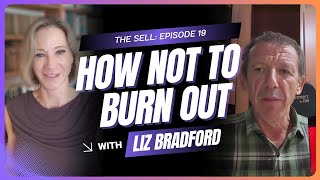
Liz Bradford, a former HSBC banker turned coach, explains how relentless targets and lack of relief drive burnout in sales. She uses a three-pillar model of physical, emotional, and social well-being, and watches for early signs like sleep disruption and loss of joy. The fix: treat yourself as CEO of your own life.
Chapters
Welcome to the Sell everybody Cool conversations with the most amazing salespeople I can find. Everybody, welcome back to the cell. I called this podcast Talking with the Coolest Salespeople on the Planet. I often meet people who say they're not salespeople, but I think anybody who can tell a story is a salespeople. Liz, I think maybe that's how I introduce you. You don't regard yourself as a salesperson, do you?
I do not. I would say I'm horrible at sales, actually, and to the point where I have an amazing coach who has gotten me much more comfortable with the concept of sales. So I owe her a great deal of gratitude. But. But no, I'm not what you would typically call a salesperson. I don't think so.
Why don't we start there? Because I love this phrase. Most people say they're not salespersons and when I ask them what is a typical salesperson? How would you describe a typical salesperson?
So I would say it's someone who is not afraid to ask, like do the ask piece. So I'm quite like, I could talk about the support that I and we give to clients. I could talk about the concepts, the themes, everything that we do as an organization. I really stumble when it gets to that point of the actual pitch and I don't know what it is mental block wise. We've done quite a bit of work on it and I've kind of gotten over it a bit. But also I'm naturally very introverted. I'm naturally a very shy person, which you wouldn't necessarily get from seeing my profile on LinkedIn or anything else that's easy to do when it's behind a screen. It's very different when you're face to face. And I think the best salespeople, I always think, are the ones who aren't friend to have the conversation, get to know people, everything else. Getting over that first hurdle has always been a bit of a challenge for me.
Isn't it fascinating, Liz? Eve, we don't know each other too well. I have seen you on LinkedIn. You're doing a fantastic job. But your job is speaking to people, right? Even though you say you're introverted, how does that. Is that a bit of a duality that you must like people because that's what you do?
Oh, no, no, I absolutely like people. So introversion, introversion, extroversion, ambiverion is all about where you get your energy and so it's an ambiverion is in the middle. So I'M probably over the years I've trained myself to be more in that middle of that spectrum because, you know, I've done big jobs in finance before. I've done. And to your point, every single day my job is now speaking to people one on one. I tend to find absolutely fine. So this I'm perfectly comfortable with. When I'm in a room pitching to a, you know, an entire HR team or something like that. That to me is terrifying and very, very overwhelming. So. But yeah, you're right. I mean people is my business. I think it's most of our businesses really. When you look at there's always an end customer. Even if you're in B2B, there's an end customer and that person is a person. So yeah. So I think that the two. And introverts can be very good at engaging with individuals because they listen a lot. Not that I'm doing a very good example of role modeling that now, but they do.
But Liz, that's the point. I always tell people sales is about listening. Often we're all too focused on talking and actually being. I haven't heard this kind of ambi. What's the terminology again? In between?
So introvert on one end. So super quiet. Gets their energy from being alone and restores and regenerates. Quiet time alone, walking, reading, that kind of thing. Extrovert we all know. And that's who I think most people would say are the typical leaders. The typical salespeople, the ones who love getting up and doing a presentation. And then ambivert is somewhere in the middle and they tend to oscillate a bit depending on the scenario.
I'm wondering, it's the first time I've heard that that the ambivert might be the right type of salesperson because the person that always speaks too much isn't necessarily a great salesperson because they're too focused on themselves. And maybe the pure introvert would struggle too much. The kind of middle ground the ambivert. I haven't heard that before. That's cool. It can be like a new type of salesperson.
Yeah, I mean, I guess the point is to get people comfortable and to learn more about them before you. You know, a sale is really trying to find the right solution for someone, not just pitch. And it's not a zero sum game. So having that ability is probably key.
Absolutely. I mean I talk a lot about that with different clients. But why don't we do this, Liz? Because what I'd love to talk to today you help executives not Burn out salespeople. I'm actually training a company at the moment and one person came to me and she's only been in sales five years and she literally said, I feel tired already. And she's like, do I have to do this for another 30 years? And I'm like, well, it's not for me to tell you, but let's find a way not. But before we get on to that, as you said, you worked at hsbc, you've worked at some of the biggest firms. Maybe just a little history of how you came, because today you help executives not burn out. I'm sure you'll explain it better, but what's your story of how you came to do what you're doing today?
So I've been in financial services for 21 years. I left a year ago almost to the day. And I kind of bought into the whole dream when I was growing up of like, do the corporate role, be the good corporate warrior. We all do all the hours God can send. And it was very rewarding for some time. And I do think, and I was literally speaking to a client about this this morning. We used to joke when I was growing up, people would joke about midlife crisis. And normally it would be the stereotypical here in the UK anyway. It would be like the guy with the Ferrari and the younger girlfriend and the second wife or whatever it may be. But you look back now and you realize actually we were being very unempathetic or non empathetic to people who were going through exactly what we talk about now, which is, is this it? Like where is my why? And my. I was very lucky. I had my midlife crisis quite early in life. So I burnt out quite spectacularly when I was 30. And that was after a decade of banking in London and I was working super, super hard. I was sleeping four hours a night for about 10 years thinking that that was enough and pushing through and I was progressing very quickly. So from every external indicator you would say I was successful. But I got to a stage where I was just so miserable and so angry all the time at work. So I would like wake up and already be having an argument with someone in my head. And I just had no perspective in real life. So I'd sort of disassociated from my real life, my relationships, my family and everything was work. But back then no one talked about burnout. Now obviously we bandy the term about all the time. This is before anyone would even dare say the word mindfulness because it was very much before that was in the common vernacular. And so I packed up my job, packed up my husband, packed up my life and moved to Australia thinking, I just need a change of scene. I also was like, I'm never going to work in banking again. And then five months later I got headhunted by another bank. And by then we'd spent quite a lot of money on beers in Thailand, on beaches and stuff. And I was like, oh, maybe I'll take one job for a little while. And it's a different environment, a different bank, it will be different. And then a few months later it became evident that I was getting quite close back to that precipice again. And I realized, well, it can't be the environment, it has to be me, it's got to be something about me. And I was lucky enough at that time to be on a leadership development program which introduced us to a coach. And I'd never come across a coach before other than on a sports field. And I do have an athletic background, so. But within the corporate environment. And she taught me about the three pillars of well being. Now people talk about four or five, but then it was physical well being, emotional well being and connected and social well being. So I got really, really into the first because I'm an A type, so physical is tangible, you're a runner, you know what I mean? Like get endorphins shape, you can see the results very quickly of what you're doing. So I trained as a personal trainer and had a side hustle while I was still in banking, training executives on the beach in Coogee in the morning, then cycling into work and doing my day job. Sadly, that was never going to pay the bills in the same way that the banking job was. So eventually one had to give. And then I moved to Hong Kong and I was always quite lucky within hsbc. They always gave me the opportunity of being very involved in things that I was also passionate about, so employee resource groups, that kind of thing. And I was allowed to set up a coaching program within the organization wherein we trained the leaders to coach people who are at a less senior level within the organisation. But we trained those leaders with coaches and that started to scale very rapidly. I think the number is now just under 35,000 people going through the program. At which point, just before that, to be fair, I thought, well, I probably ought to go and get properly qualified for leading this program. Incredible. Quite rightly, people would be like, who is this woman? She's not even a coach. So, yeah, so trained as an executive and organizational Coach absolutely fell in love with it. And it just became very clear to me that longer term, once you've taken care of, you know, you need to be able to take care of your bills and everything else, that, that's, that's where my passion lay. And so now I spend my time coaching executives who are either they don't want to say they're burned out and they maybe aren't burnt out yet, but they are under chronic stress. And this is, I think the sort of the pandemic that none of us talks about is that everyone is under chronic stress these days and we're seeing lots and lots of layoffs. So I would say my client book at the moment is 5050 between people who have either been laid off and are in the restructure process and want to work out what to do next and they've been given this opportunity of actually finding something that's a bit more purpose led or the survivors who have kept their roles for now but are now doing the jobs of two or three people and they are very, very tired and the environment is toxic and they're the ones that everyone is looking to, to lead and motivate teams that have been decimated and aren't sure if they will even have a job in five years. So both are very stressful environments. And so my job is to help people build their health, build their emotional well being, build their resilience up and then decide, well, actually what do I want to be when I grow up? Because we've got, you know, if you're in your 40s now, you're only halfway there at worst, really. So statistically there's a good chance you're only a third of the way there's when you look at what's happening in medical science. So it's a great opportunity for people to decide what they want to be.
What so much to unpack in there. What an ironic term, the survivors because I don't think the survivors know that the ones who got fired will probably turn out to be the ones with a better long term. But just to go back and if you're okay to share, what was it that you knew was, was there a moment you said, you know, you spent 10 years, you're getting more frustrated with work. You're not the best version of yourself. Was it literally one morning when you, you said you were 30 or was it a series of if you don't have to share. But, but because I think people do worry about burnout and they talk about it, people like how Will I know. Is it always some definitive single moment or so?
Very rarely is it one single moment and hopefully if it is, it's so big that you. I would hope that now we would catch it far earlier because people do talk more. I think if the. If Covid did us one huge favour. It's people are much more empathetic and they talk about mental well being more, which is great. Some people say, oh, it's gone too far the other way. But I'm a firm believer in being open and removing the stigma for that. So I hope we would catch it long before. For me, the moment was I was actually told that I was being fast tracked for a promotion and my husband came home. He wasn't my husband at the time, but he came home and found me just in tears at our kitchen table. And I just said, I cannot, I couldn't explain when he was like, what's wrong? Has someone at home ill? Like, what's going on? And I was like, no, no, no, I'm being promoted. And he's like, but this is what you do, this is what you love. Like you're always being promoted. And I was like, I just can't do this for another two years. I cannot commit to another two years of this culture, this whatever. And to be fair, like I'm still very good friends with a lot of people I used to work with. I probably wouldn't be if I'd stayed there and carried on working there because I don't think I was a very nice human when I was there. But it just, it wasn't the right environment for me and I wasn't thriving and I was barely surviving. But now indicators that people should be looking for or hopefully would alert you, whether it's about yourself or someone else, there are some very early physical indicators that can be sort of precursors. So things like digestive system issues. Sleep is an obvious one, but the vast majority of adults in the Western world certainly struggle to sleep these days. So I wouldn't say that that's necessarily it. But if you are struggling to sleep, certainly if you're waking up at 2am, mind worrying, can't get back to sleep is a very strong indicator that something else could be wrong. Withdrawing from personal relationships is a really critical one. So if you just can't feel connected with people that you know you normally get energy from, you want to be around, you care about is a real issue and then actually just really struggling to feel joy. So things that used to do it for you. So for me, I Always used to run every single morning, which you will tell me as a runner is not a good idea because it's going to lead to injury. But it was my release. But when I got to the stage where even like a quick 10k in the morning around the Thames before I went to work wasn't lifting me up anymore, that's when your adrenals are really, they're gone. They're just you, you're under so much adrenaline, cortisol, norepinephrine. I can never say it, but basically your hormones, your hormonal system is just burnt out. That's why they call it burnout. It's like your nothing's firing anymore because it's been firing for too long under chronic conditions. So I'll very be very, very brief with this plug draw, a very quick hand diagram. So we are amazing physical beings in that we are absolutely supposed to have stress in our lives. So trying to remove all stress is not a good idea either. We need a certain amount of stress to motivate us. So we call that eustress. But normally what will happen is you have the stress externally and then all of your hormones will go up and your sympathetic nervous system gets activated and you can perform at your best. So think like big pitch or presentation or whatever it is. That's what helps you show up at your A game. And then what should happen is it's over. You take a huge breath. So you know how we always take a big, deep sigh of relief? That's us activating our parasympathetic nervous system. And that is all of the hormones taking over. That mean you can calm down and consolidate what you've learned, consolidate the gains, feel safe. But the problem is in our environment at the moment, we're never coming down. We're always under that level of pressure. But that means we plateau because you can't keep going up and up and up, so you can't perform any better. But also you're getting no relief. And eventually hormonally, everything just effectively fizzles and it doesn't work anymore.
Is there a. Is the system broken to a degree in that? So you got a promotion? Did you get a promotion because you were forcing yourself to burn out? I'm interested because sales is a very input, output, sell more, work harder, call more. Is the system designed to push us to the point of burnout?
So I would say yes, the current system absolutely is. It's basically the industrial revolution. We didn't really advance human practices since then. And that was very Much a widgets based input in output kind of environment. I always get slightly triggered when people are like, but our company's different, we're a family. No, it's not. I can assure you the minute, the minute shareholders start asking questions or the board starts suggesting cuts, you're not a family and I come from a dysfunctional family, so trust me, maybe you should be grateful. It's not. But yeah, I think the current corporate system in particular, and I would suggest sales especially because it's so target driven and it's so short term because you're either going month to month targets or quarter to quarter targets. There's no drop off, there's no relief unless you work in an amazing team with an amazing manager who makes sure that you celebrate all of the wins, that you really do take stock and that actually performance is well rewarded. That's the other thing is when the goalposts change. So very often when you see an entire team burning out, it's because they've achieved everything that they were told they needed to achieve, but then they're set a new, higher level. And I'm imagining that probably happens quite a lot in sales, 100% because then your subconscious is just going, well, this is rigged, I can't be passionate about this. And I would suggest the lady that came to you and went, I'm tired, could see that the system inherently is not going to really reward, it's not going to keep its promise.
I think it was a really interesting point because what she said was, she literally said, liz, what's the point? And I'm, and I'm so, you know, I love sales. I'm like, sales is amazing. You want to do more sales. She's like, no, no, no, Ned, what's the point? Like, what, what am I doing this for? And I'm like, well, and again, I'm not her boss. I'm an outside sales trainer per se. And you know, different, you know, it definitely felt a bit more. And I agree. I love the, I love the fact now that we can all talk more. I mean, particularly as a, as a, as a 58 year old man. I mean, I was told at school 40 years ago, you know, suck it up. Right? Yeah, don't, don't say nothing now. Now me and, you know, I talk openly about stuff, but you know, it almost felt like this lady was trying to really search out that point. That point is that, hold on, so do I just keep working harder until I burn out or I make enough, like where, how do I, what do I do. And I honestly, actually, Liz, I wish I'd spoken to you before I spoke to her. I didn't have an exact answer. But there isn't an answer, right, is there? There is just. I mean, what you do today is give people choices. How do you describe it, Liz? Because this is what I'm interested in. Because salespeople, I think without saying it, the other problem with salespeople is that they're all, oh, I'm okay, I can do more, don't worry, da, da, da. And it'll be fine. And how do you. How do you talk them, how do you talk them into something that's more sensible?
So I think the key is it's not about talking anyone into anything. It's about. And I imagine you do this a lot in sales. It's about asking questions. And very often I will say at the beginning of a question, I don't actually want your answer to this. I just want you to think about it after this session and then it's asking the questions very closely related to what she had highlighted to you about how does this tie into your purpose? So we all have a purpose. It's not necessarily life changing, world changing. Everyone thinks that. Oh, to have a purpose. And again, I spoke to a client this morning and she was like, but I'm not entrepreneurial. I don't want to quit my job and go and do this or this or this or save elephants. And I'm like, you don't need to. Your purpose could be taking care of your family. But we all need a reason, because no job is going to be plain sailing all the time. We all need a reason that when it does get tough, that we can push through on it. So a lot of the stuff I do with clients is really working out well. How far away are they from what they would define as their purpose now? And that will change over time as well, because I think at the beginning of our careers, it's actually very valid to earn money. We need independence. We need to be able to adult in the world. We need to be able to pay our bills. If we start having families and dogs and, you know, mortgages, we need to be able to cover all of those. That's just being a responsible member of human society. So that actually is valid. But you and I have lived in places like Singapore, Hong Kong, Australia, London, where, let's be realistic, most people can cover their bills. Everyone I work with can cover their bills. They might have to cut back on some club memberships or private schooling or this or that if they do do a career change, which is a whole conversation about status versus purpose and that's a valid choice, but they can cover their bills at that point. You need to think about, well, and it's on Maslow's hierarchy of needs. Like what am I actually here to do now? I'm very sorry because I know that this is. You don't edit. But my doorbell has just gone. Could you bear with me for just one moment?
Don't worry.
Housekeeper. Now I'm just switching into housekeeper roll. Give me two seconds.
It is all good. Well, look, while Liz goes and answers the doorbell, which is the reality of life, I think it's this session is talking about, you know, the reality of sales. It's hard. There is burnout, there is endless targets which don't stop. And I actually talk a lot about somebody called Sisyphus. I think if you've seen some of my presentations before, they talk about Sisyphus, who's the guy that rolls the stone up the hill because he's been damned for eternity to roll a stone up a never ending hill. But there's a phrase in there that says we must assume he is happy. And what we mean is to say that life is part of the struggle and as Liz is describing is how you deal with those challenges, that is really important. And Sisyphus do we know he enjoys and I think you've probably seen it. It's the kind of Greek God looking dude rolling a stone up a steep hill and the hill doesn't end. Do we know he enjoys all of it? Well, we, we assume he probably doesn't enjoy all of it, but he keeps, he keeps doing it. He keeps working on that and keeps doing it. And so I think in sales it's important to understand that as you know, as Liz was saying, the targets go up, the effort gets more. I love sales. I, hey look, I do it for money too. Absolutely. Like you've, as this says, you got to be responsible, you got to do it for money too. But I, I absolutely do it because I love it as well. And that keeps it going. And that can lead to the point that, you know, it's okay that sales might not be for everybody. Right? It is, you know, the sales, I think is one of these areas that has a higher possibility of leading to burnout from that. So yeah, I would. Liz, I was just describing Sisyphus, you know, know the Greek God dude who rose rolls the stone up the hill. And I was talking about purpose. And why does Sisyphus Roll the stone up the hill. And he. Apparently we must assume he is happy. And it's such a. I've debated this a lot with people because why, why would he keep rolling the stone up the hill? There's no point. Right. He just let it roll on himself. Right. He. No, he is cursed. Of course he's cursed. That's the point. He is cursed.
You're right.
He's cursed because apparently he's. He slept with the wife of Hades who was like, yeah, yeah, a lot
of cursing because of women, basically.
Exactly.
Men not being able to control themselves around women. That's where most curses come from.
Exactly. That's, that's that, you know, that. That is even back to Greek times. But the point is that I read something that we must assume he is happy because sure, he's cursed, but why doesn't he just let the ball roll on him? Because if it's so terrible, rolling the ball up the hill. And I actually talk about this in my sales presentations. I'm like, we must assume you enjoy part of it. But anyway, Liz, you were saying that in the hierarchy of needs and you
know what, self actualization. So actually, like, what is the point? I'm going to ask you the same question that she asked of like, do I just do this, do my widget work, get my treat and just do this on repeat for like, by the time, you know, by the time most of us retire, we're going to be near on 80, maybe older. Because if you look at the creaking system at the moment and people really struggle to see why, and we do need a why. I'm not a particularly spiritual person, but we need something bigger to be contributing to. And that's a fundamental part of well being. If you look at the loneliness epidemic now, if you look at all of the stats around, if you're alone and you don't feel you're part of something bigger, it is a bigger precursor to, to early mortality than heart attack and cancer combined.
Interestingly, there was this Harvard study of a hundred years, you know, over 100 years, and it was exactly this.
Yeah.
Yeah. What's the most likely indicator of, of death? As you said, it wasn't health or it wasn't heart or, or wealth or education or whatever. It was the number of close contacts with family and friends you had on a regular basis.
Yeah. Which is really scary for introverts like me because I could gladly spend like three, four days just hiking in Hong Kong on my own, just me and my dog. But then you have to think about. No, I actually have to go and invest in real connection with people.
But jumping forward to today, you talk a lot about it on LinkedIn. I honestly, I'm not just saying it because you're on the show. Your, Your content's good stuff because you know that I don't read everything on LinkedIn. But you are, you know, you say you're an introvert, but you want to give people the opportunity to be a better. I mean, is it cliche to say to be a better version of themselves? I mean, for somebody who's an introvert, you are pretty determined to help people.
Yeah. No, and I. So I always put it, build better. So I think we can all build better versions of ourselves or just build better humans out of ourselves. And I just. The reason, like, I think when you do have a purpose, you can get over yourself sometimes. Right? So I used to. The very first presentation I did, I got up and I barely, like, no words came out for almost 60 seconds. My boss timed it. It's still a source of. And I've written about this on LinkedIn as well. And he'll comment on it and other people who are in the room will comment on it because it was genuinely, gut wrenchingly awkward. But now you could put me on a. You know, you can barely keep me off the mic when I'm on a stage or a panel because I'm talking about something I care about. And so this was going to be my next question to you. You are very passionate about sales, but that to me, because of your passion, tells me that there is a why behind why you're so passionate about it. So would it make any difference what you were selling? Or is it more that you're. It's the process of sales or what is it that gets you going?
Honestly, I think it's a bit of ego, Liz, if I'm trying to be very honest with myself, because I got good at it pretty quickly. Why? And, you know, look, you know, this is a, you know, a lot of family history session, but I'm the youngest of three. My brother and my sister love each other, but argued a lot. And I, My role was class clown. My role was entertain them both, be the peacemaker, be the entertainer at school. I mean, so it is getting a little bit, you know, on the couch type stuff, but, you know, so I'm 5 foot 10 now, but at 18, I was 5 foot 2. I mean, I was. And I got the piss taken out of me, like, relentlessly.
Right?
And I, I lived with Some fairly altered. My parents were fairly alternative. They were awesome. But I had big curly hair and. And I. What I found was the way to solve that problem was to be funny and. Or try. I don't know if I am funny, but to try and to make humor and to make people laugh and. And I think sales is a lot about that. So I quickly found sales that I was good at it. And honestly, Liz, I don't really care. I mean, I started my career and again put it on LinkedIn because everyone's been on LinkedIn. My first job was selling horse manure, selling garden fertilizer. Like, I sold shit on the phone. And within six months I was offered a job as running the whole team of selling shit. I remember thinking, I don't want my career talking about shit. And I'm like, oh, wait, what? That's what it is. Okay, come on, never mind. So I think it doesn't matter, Liz. I. Yeah, I think I'm at my best selling what I love. So am I the best version of myself selling what I really love, which is sales? Yes. Could I sell widgets off the. Off out of a factory just for the hell of it? I think I could. And look, let's be clear. I like the money that comes out of it as well.
Of course. So then when you're selling what you love and you're helping other people be better at it, are you selling sales or are you unlocking their potential?
Ah, look at you. You're great. The reality is not a leading question.
It's a genuine question.
No, it's good though. It's. Look, sales isn't a thing, right? There's no thing. There's no touchable, tangible thing. I actually, I wrote about it. I write a weekly sales letter, and my letter is. Is. I term it as poetry because it's, you know, the short line type stuff. And I wrote about sales theater this week, even though unbelievably, in the title of the letter I spelled theater wrong because clearly I don't. I don't spell check anything. And my friends were like, sorry, thetra, so what are you talking about?
I'm like, guys, at least they know it's not I.
Exactly. It was. It's definitely not AI, Liz. It was not AI. But what I said was, every meeting's like its own play. You're the director, they're the actors. Your job is to be able to move the meaning around, get them to speak, get them to enjoy it, get them to leave the meeting feeling great. So what I'M teaching them. You're right. It's not sales, it's listening, it's interacting, it's human. And do I love the feeling that I've given them a skill? Yes. I mean, you. Look, Liz, you do the same. You're giving people new skills. Right.
I mean, I think it's a massive, massive cliche. But, like, the reason I'm passionate about this, the reason I don't mind making a fool of myself, and trust me, there are plenty of people out there on LinkedIn who are like, shut up. But is if it helps unlock one person to go and live a life that they would rather live, and it gives them permission. And this is like, I get these DMs all the time of people who were just like, I'm not a client, I'm not this, I'm not that. I never like your posts. But reading this post, and they'll specifically reference the post made me go and make this change in my life. Like, that for me is enough. I'm good with that. That, for me is impact. And the fact that. And I hope obviously it works out well for them, but they've made that decision on the basis of being inspired and then reflecting on their own life, their own circumstance, and then taking control of it. Because I think that's the biggest problem. Going back to your question about the system and about even the question about pushing the rock up the hill. When we're in the machine and when you're sleep deprived and when everyone around you is conforming, you don't feel like you have control. It does feel like there's another, bigger power that's pushing you forward and everything is geared up. So, like, you'll find that people get to that stage where they're like, oh, is this quite enough? And then, boom, it's promotion time. Or boom, it's bonus time. Or boom. It's like the whole system is designed by very smart people to keep you on that wheel and getting people off. For me, I'm just kind of. And don't get me wrong, I'm not an anarchist. I'm not saying down with the system. I'm a capitalist. Of course I am. Like, it's not like I live in a hovel. So I'm doing all right. To your point, I appreciate being paid for my work, but equally, it's more about the impact and the fact that people are reflecting on their own decisions and making better ones.
I mean, I love it, it is great, but what's the. What's the alternative? So if we know that companies can't be families, not because they're full of bad, evil people. It's just the system derives shareholder value and capitalistic value and you know, all of that type of stuff. And that in the end drives purposeless work and feelings and burnout is apart from people stepping off that. Because as you said, Lizzie, we're capitalists. If everybody stepped off, what are we left with? So do you have a. I don't want to say an answer, but do you have thoughts about what we should be doing?
And I'm not. Don't get me wrong, I don't get on with a client and go, you should leave your job. I'm, I get on with the client. I ask questions about like, is this the right. Like you know, can you succeed? Where do you see this going? All of that stuff we just have to make, we have to consciously be making the decision all the time. And I always think Sunday is a good time for this. Is this still a good trade? If you work for a corporate, you are renting your time. So are you renting the right amount of time for what they're paying you? I've yet to meet anyone, certainly any of my clients who are working their contracted hours, for example, and I never did. So I'm not going to tell people they should. Of course my ex husband would kill me if I went on record and said that because he always used to nag me about it. But am I getting enough out? Is there enough? Am I growing? Am I earning enough? So you're either earning or you're learning or ideally both. And is there a future trajectory for me here or am I just being put to use on this specific thing? What's next? And it's no one else's job to take care of that for you. Like that is your shit. You deal with it and you make sure you're in the right position all the time. It's not a corporate's job, it's not a family's job, it's your job. Like you are the CEO of you and you need to make sure you're in the right role. So as you can tell, I'm quite blunt, I'm not a touchy feely coach at all. Because corporates and even other people, any environment with other people, everyone will take as much as they possibly can. It's not malicious, it's not conscious, but they will take until you draw a boundary. So it's really just about if everyone is going and drawing those boundaries, you will always have People like me in my first 10 years who will go and work harder and longer and you will feel left behind because those people are accelerating. But those people will also end up like me in that after a few years they're going to go, oh well that wasn't worth it. But they have to go down that journey themselves. You can't fix that. So it's really just about making sure that everything is a good trade and if it's not, making small adjustments until it becomes a good trade again, it's very rarely about quitting. I'll just go back very quickly to what you said before about the survivors and the people being restructured. I've yet to work with anyone who has been restructured with a package that gives them a couple of months to think about what they want to do next. Who, who is not in a much better place. Six months down the line, the survivors much more under threat, cortisol levels, much higher physical well being through the floor and absolutely burning out from chronic stress. So it seems like a terrible thing at the time to be made redundant. But honestly, increasingly we're all going to experience this because if you look at what's coming in the next few years, everyone is going to be restructured. And so building the resilience and realizing there is no shame in that I think is the biggest way we can help people right now.
It's really. I like this phrase you use, you know, is the trade worth it? You know, is it is your time, is the rent for your time. I did economics university and while I'm not a Marxist, the Karl Marx coined a phrase surplus value. That is the difference between what you're actually worth or your time is worth and what a company pays you. And that's what capitalistic and you know, takes out of you. Right? Because they have to take value out of you. They must be taking the surplus value out of you. They must be because why would they not be? They wouldn't hire you. Well unless it was a venture backed startup which don't work. But anyway let's not go down that path. And nothing against hsbc, great place I'm sure. But in essence that is, that is the trade and you know that they're not bad people. A corporate is not a bad person. A sales, you know, look, I've always worked in sales teams where they, their job is to take value out of me. I sell something, they give me less than the value they make and I have to be happy with that. Otherwise as you said, I got to take care of my own shit and go somewhere else. But, but, but, Liz, I think it's, it's very. What's the term? I don't like the term bravery. It's hard for people, as you said. Everyone in the system's walking the same way. Everyone's getting told the same thing. Super hard to make that choice, right?
It is. It's really hard. So I think, and that's why it's important that you surround yourself. Like, you have to counter that sometimes and surround yourself with people who energize you but also inspire you to do more like, more of what you care about, more of, like. And they might not be doing the same thing, but. And we have access now, podcasts, books, audio. But, like, there is no excuse to not be exposed to very inspirational thinkers and doers in the world. And so I think it's just about making sure that we're always checking in on, is this enough? Is it a good trade? And if it's not, who is living the kind of life I would want to and how do I get closer to them? And that. But no, of course it takes courage, but everything that's worthwhile is hard. We had this conversation before, right? So there's a reason why they call it character building. And nothing positive really comes from a being in a comfort zone for too long.
Because I think you, you, you talked about athletic, you talked about, you know, physical well being. I think you know, mental health, well being, social well being. But you're right, like this, this stuff isn't easy, right? It, it's very rare that you can just. I, I often tell people you rarely get lucky watching Netflix. Right. You know, that's, it's just, I don't think, I don't think it happens that often, right? Sitting and waiting. You either got to make the decision again. I come from a sales background. I was talking to some guy on a podcast and he was like, sales is easy, just work harder. I'm like, yeah, I know, but that's not. You can't just do that endlessly, otherwise you'll burn out. Tell me your business today. So has it been one year exactly since you've had the business?
So I had the business as a side hustle for about three years before I left. And then a year ago, I came back to the UK visiting my parents. I saw my mum was really sick and I was like. And the bank was amazing and they fully offered to support me and let me work from here and all of that, but I was like, I don't know how long this is going to take and I really want to be able to focus on my parents. So I made the decision to make the side hustle my main hustle and resigned from the bank at the time.
And how has it been going from side hustle to main hustle?
It's a really good question. It would have been very different had I not been very preoccupied. So. So you have children, I believe.
Well, they're 25 and 23, so they are. They occupied themselves at the.
When they were younger. I assume they took over your entire life and that was your 100%. Of course, I never had children. So for me, this was a very big shock when I was like, I suddenly had no control over my own time anymore because if I was needed, I was needed. So I started and I was trying to do calls and everything else, but then I had this bell so my mom could call me if she needed anything. The bell would go. And you're like, I'm so sorry, I have to go. And so, yeah, I mean, it's been a very character building time. I would say now I have zero regrets. So I've been able to focus fully on the business for the last two months and things are flying. But it was probably trying to juggle a little bit too much, not taking enough of my own advice for a while, if I'm being very transparent on it.
But, but, but Liz, you're never going to be able to take all your own advice. You are that a type person. Like it is. It is unlikely to believe that you can suddenly be completely okay with not doing the hard stuff and not doing too much. It's. It's not who you are.
No. But you also need to be able to catch that though, right? So you need to be able to say, right, actually this is just me reverting to type, which we do under pressure. So if you're under pressure, you always go back to your sort of shadow behaviors and the things that got you there originally. And so it's just. And again, that goes back to having the right people around you that are going to call you out and pull you back up.
It does indeed. We're coming towards the end of time. A couple of quick things, maybe just to shout out, who is your ideal customer? This is a sales podcast. I always like to give our guests the opportunity to tell who is your ideal customer that you think you could help.
So my ICP is typically between 35 and 55 professional either. And then it sort of branches two ways because I've got two kind of businesses. So one feels very stuck, feels like they're doing all the right things, working super hard but not getting the recognition they got earlier. And so they feel stuck there and they're typically around sort of director level or they've gone a lot further but now they are burning out and they are feeling that it's not really enough and a lot of their medical stuff is coming up so they realise they've gotten to a very status driven, amazing place and everything on paper is great for their careers but perhaps at home their relationships are a bit neglected or their well being and. Or their well being is neglected as well.
It doesn't sound like you'll be a shortage of people, 45, roughly 45 year old directors who are not feeling it's worthwhile. I don't think there's only one or two of those, Liz. Right.
I know it goes against all of the advice about niche but every time I try and niche it, someone will pop up and be like, actually here's an entire pocket of people that you need to help.
So.
So yeah, so I try and just keep it relatively broad.
Fair enough. Well look, it's been super interesting before we wrap up, are you running again? Obviously I can't let you go without talking about running given it's my passion. Are you? And a two part question. You said you came from athletics background. Was it athletics you did before or some other form of sport that you did previously?
So always solo stuff and in hindsight I really regret that. I wish I'd done more team sports when I was younger because you look now at some of the most successful, successful people that I admire and most of them have been in a team. Like they really know how to run a team from a younger age because they've been part of a team. But for me it was always solo. So endurance running, endurance cycling. I then did Hyrux, I believe. I haven't checked, but I believe I'm still the reigning female champion in doubles over 40 in high rocks in Hong Kong. It's very, very niche there. But yeah, so now, yes, I am still running. I have a half marathon at Goodwood which you would do in your sleep, but I'm just doing that with a friend. So I actually met up with my oldest, longest running friend. We haven't seen each other in 15 years and she's going through some stuff and I was just. And she said I quite fancy doing this. I'm like, yeah, let's do it together. So it's nice to have Something to train. Like, we go out, we run. It's more therapy for both of us than anything else. So.
Well, you know, on another time we'll talk about endurance running and endurance cycling
and, and nothing compared to what you do.
No, no, no. It's all about doing it. Interestingly, I had the founder of Hyrox on, on my running podcast. Previously. He had spent 25 years trying to invent races. None of them had stuck. He worked for Iron man, he worked for marathon, he invented races. And he said, you know what? I was like, how did Hyrox work? How did you know? He's like, ned, I tried for 25 years Other shit that didn't work. And I cannot tell you why Hyrox worked, but work it did. And like anything.
Success story.
Yes. You know, there's, there's like all of these. Oh, what? It just happened. Like he had worked for, you know, marathon and Iron man and these other things and tried so many things and he said, look, you know, I just kept, I kept trying and I was like, okay, that's great.
And good, good on him because I have to say, like, I know a lot of people who have started training for that and achieved massive gains on their physical well being because it's more approachable than some of the other stuff. And I think it's good on him for doing it.
And one last thing before I file a couple of questions. You said you're going to run with your friend who's going through stuff. Somebody told me something the other day that was really interesting. If somebody's going through stuff and you want to talk to them, you go for a run. Apparently it's easier to talk to them. You know why? Because you're not looking at each other in the eyes. Because you're running together. There's some. And I don't. You must know more about this because you're into this type of stuff more than me. And I remember when, Bam. When my startup was going bust, I ran with a really dear friend around McGretchie in Singapore. And, you know, it was definitely brutally hard. I had some mental health challenges going on. And I remember we just ran the whole time and we didn't really look at each other, but we talked and it felt so much easier because you can run without that formal sitting across. I don't know if that's real or not, but it makes sense to me.
I think it's, I mean, I've only got anecdotal evidence, but like, I always encourage my clients to do walking meetings when they're having difficult conversations with people as well, because it's the same thing. You don't have to look directly at someone. You're very present, but you don't, you know, there's, you're not sat straight across. It's not, not adversarial. And actually, interestingly, the last really big bike ride I did was a very much. It's a male led charity for Black Dog charity. But it was started because men in Australia, certainly two generations ago, a generation ago, were very much taught to not talk about things. Highest suicide rate in the world as a result. And the guys that started this group that do the cycle, basically because they're cycling together, they can talk because they don't have to look at each other or admit. And so I think there's absolutely something in it and I think it saved a lot of lives.
Well, honestly, good on, good on you for doing that. And it's great. And you know, when I see these stats that the leading cause of death in the Western world for men under 35 in Britain and Australia is suicide is, is heartbreaking. It's hot, it's. And anything that can help. Well, look, Liz, thank you so much for being on. As I mentioned, there are two last questions. And before I get to this, anybody who, who, who. Anybody who's 45 and doesn't know what to do with their life, please, please call Liz. You'll get an overwhelming number of calls from all the listeners. Maybe not, but I would love to chat. Two last questions. And they're just completely. Well, they're not random. I know what they are, but they're random to you. If you could live forever, would you? And why?
Oh, probably. No, I do plan on living to 120, but not forever. And just because I do think fundamentally relationships are the most important thing and the number of people you would lose along the way. I'm currently still grieving my mother. I wouldn't want to do this again and again and again and again forever.
You know, listen, here's.
I think that life is precious because it is. I always say life is short, but I think it's precious because of that.
So here's a. So thank you for your answer, Liz. And again, obviously there's no right, no wrong, but here's a really interesting thing. Sure. And I've asked this on all my podcasts from my Wealth Tech seven years ago, overwhelmingly. And yes, I've had more men on the podcast because there's, you know, generally more men in business or whatever. Not but, but let's say it's been 70% men, 30% women on my shows. Almost no woman has ever said yes, and almost all men say yes.
Well, there's a hormonal reason for that that we probably don't have time to get into. But that's 100% what's driving it?
Honestly, like I almost. No, but anyway, 100.
It will be testosterone related and then there's a societal factor in that. Actually, life is often actually a bit more challenging for women because they're doing a lot of. They're picking up a lot of the slack. So it's harder to think, do I really want to do this forever?
Do I really want it? I'm not doing no. Okay. And one last. In this. Well, you, you don't get to live forever, but let's say for the rest of your life. In this imaginary life, you only get to eat one food for the rest of your life. There's no health consequences to it. It's just imaginary. But you only get to eat one food for the rest of your life. What food is it and why that's so hard?
I'm a well being coach. I'm not allowed to say the first thing that came into my mind.
No, this is an imagine. This is an imaginary world where there's no health consequences or anything of any description.
No environmental consequences, consequences. No, no.
It's just an imaginary world where you
do any harm to anyone or my.
Nope, Nope.
No cheese. 100% it's cheese.
I love cheese. It's the best.
That's why I run it, so I can eat cheese.
And may I ask, is that French, English? You don't mind anything particular?
I really like a lot of the Australian cheeses because I was there for a long time and they've done a lot of work. But yeah, and I really like the French cheese as well. Also Italian. Like any cheese, really, as long as it's well made and it's not ultra processed. Like, I don't like the plastic cheese, but any proper cheese. Lovely.
Well, you may have that. And there is no consequence. And interesting. I had a gentleman on a couple of days ago from America and he said, I'll have a, I'll have a cheeseburger. He said, then there's no consequences. Yeah. I said, with fries? You know what he said? He's like. And he looked at me and said, no consequence. I said, no. He said, have multiple helpings of fries, please. I was like, well, look, we just made this up so you could have whatever you like. But, Liz, we will let you go. Thank you so much. It's been super cool to chat, good to follow along on LinkedIn. Enjoy your cheese, you're running, and I hope your business continues to grow. And look, you might not regard yourself as a salesperson, but I think you tell your story beautifully, and that's what sales is.
Well, you're very kind, and it's been an absolute pleasure, so thank you very much. Ned, for someone who is not very comfortable doing these things, you have made it fly by, and it's just been a very fun chat. So you're clearly very good at your job, so.
Well, as somebody once told me about podcast, it's a conversation, not an interrogation, so I follow along. Liz, it's been a pleasure. Thank you so much.
Thank you so much. Take care.
More from Liz
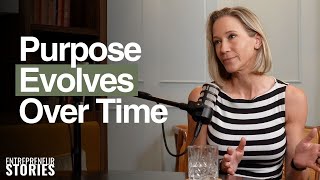
Liz Bradford | The Sustainable High-Performance Blueprint you NEED for Business and Life