Ask The Experts Inflammation
A nurse practitioner explains how chronic inflammation drives obesity, diabetes, heart disease, Alzheimer's, and cancer. She argues traditional medicine treats symptoms instead of root causes, then walks through nutrition, hydration, exercise, and stress reduction as ways to prevent and reverse it.
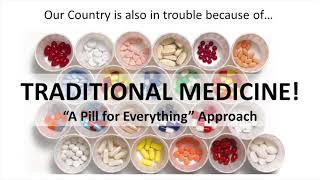
Thank you so much for allowing me the opportunity to come and speak with you today. I hear that you guys would wanted to know a lot about inflammation. Is that correct? Yeah, inflammation. So I put a ton of information that I would normally have an hour and a half lecture, an hour and a half talk into one hour. So we're going to fly, we're going to go through a lot of information and I would expect for you guys at the end to have some great questions for me and I hope to be able to finish in a timely fashion that you can ask me anything that you want to. So thank you so much for your time today coming out and I get to share the passion of what I do. Tell you a little bit about me. I am the owner of Total Nutrition and Therapeutics. It is a lifestyle medicine clinic. I have a functional medicine background. I do have a fellowship certification in anti aging and restorative medicine and I also have a master's degree in nutritional medicine. And so I am a nurse practitioner first who went back to school for a master's degree in nutritional medicine and then I went on to have my fellowship certification. So that's me. I've spent a lot of money at University of South Florida. I love that school there in Tampa. But they are very cutting edge when it comes to their medical school. Very cutting edge. And so they really teach the philosophy of getting to the root cause of a situation rather than symptom management. So that I hope that I can help you, if you're not already there, have that paradigm shift. But it sounds like you guys are already there, at least that that's what I've heard. So that is what I do. And that is also in the brochure. So today we're going to cover a couple topics. Inflammation. What is it? Its relationship to disease states, what traditional medicine is not doing about it, and how to take back your health. How many of you want to take back your health? Absolutely. Me too. So you're in the right room. Thanks for showing up today. All right, so warning, honesty and mature nature. Content in this presentation. Presentation contains brutal honesty. So we're going to cover some statistics that will actually cause harm to your health if we don't listen to them. So we're going to talk about inflammation at the root of most disease states. Did you know that 90% of the disease states that we treat today are actually a result of inflammation? 90% of disease states. So 90% of the time that you show up to your traditional medicine doctor, it has its roots in inflammation. Yeah. That's a lot, right? So what does that tell you? If we're not looking for the reason why you're inflamed, we're missing the mark. So inflammation, I think we have to start out with you understanding what that means because we throw that word around kind of like stress, and we don't really understand what it means. So inflammation is basically a natural response to an injury or infection. That's all it is. It's a good thing, we need it, it's protective. But you know what happens? It's a good thing gone bad. It's a good thing gone bad. So basically, chronic inflammation, it's that which does not go away. We have acute and then we have chronic. Chronic inflammation occurs when the body perceives a threat, it responds and it puts your body on high alert. So if the body is constantly in a state of high alert, what do you think happens to the body's ability to react and respond? Goes down. So your immune system gets suppressed and, and you can't fight. So we've got to get to the root cause of that. So these are the 90% of disease states actually that are linked to, if you will, inflammation. Did you know that cancer is an inflammatory disease state. Did you know that? Ms, Parkinson's disease, arthritis, allergies, a lot of these things. How many of you in the room know someone or yourself who's been to the doctor for one of these things? Right? So again, if we treat that thing in the middle, inflammation, your body's natural response, guess what we can deal with? All right, go ahead. So inflammation kills. Can we all agree? Absolutely. Are you willing to accept. Go back. Are you willing, are you willing to accept a life of pain, swelling and disease? Are you willing? Me neither. No. If you want to change your risk, did you know that you can change your actions? So that's my goal, is to send you out of here with one pearl today that you can put into action, hopefully to reduce your risk. Inflammation is the root cause of our illness and tiredness. And it absolutely can be reversed. Because if it couldn't be reversed, guess what I wouldn't be able to do every day? My fun job. Yes, Total Nutrition and Therapeutics is my fun job. You know, I worked 25 years in traditional medicine, 25 years in traditional medicine. I converted over about 10 years ago and I've now made it three years ago, my full time practice. Because it is my fun job. Because guess what, I get to see every day improvements. And I'm telling you, I go home and that is Such a much more appealing way to work. So let's start a little bit about what's driving this inflammatory problem in the US you guys probably know this already, but did you know that in our country, we've got an issue with obesity? We've got an issue with obesity from 1970 up to 2020. This is predicted that 74% of our population is going to be obese. We have to look around. 29% of US adults have a healthy body weight, 34% are obese. Right now, 29% healthy, and 35% are underweight. Did you know that you can be malnourished, either overweight or underweight? Right. Malnourished, Right. So we have some issues on our hands. This is an epidemic. Because of obesity, we now have diabetes. I am treating youngsters in my clinic, 8, 9 and 10 years old with type 2 diabetes. Type 2 diabetes. I would say that 100% of type 2 diabetics is lifestyle induced. 100% is lifestyle induced. That means that this issue, that relationship between obesity and diabetes is creating this epidemic. Yeah. So over 70,000 die yearly and more than 30.3 million people in the US have diabetes. 30.31 in four of them don't even know they have it. That's 25% don't even know that they have it. More than 84 million US adults, over a third have pre diabetes. Pre diabetes. Did you know you can have Pre diabetes for 10 to 15 years before you achieve or you get the diagnosis of diabetes? You know why that is? Because by the time you have a blood sugar over 126 on two separate occasions, you've typically had an elevated blood sugar for 10 to 15 years. Your pancreas has been working overtime to manage your blood sugar. So when does the issues with your eyes and your circulation begin to happen? And your kidneys in that pre diabetic state? So 90% of those people, of those 84 million people with pre diabetes don't even know they have it. Don't even know they have it. Diabetes is now the seventh leading cause of death in the US And I think it's under reported. I think it's under reported. In the last 20 years, the number of adults diagnosed with diabetes has more than tripled. More than tripled. As the American population has aged and we've become overweight and obese. These are the statistics. And you see, they run in tandem. You see, as obesity increases, you see diabetes increasing. Okay. They run in tandem. Yep, Yep. Go ahead and flip that over time as a Result of diabetes. This is what happens to the body. Lost eyesight, blindness, dialysis and kidney failure and sores and amputation. Yes. I used to work at a podiatry office and what did I see all the time in that waiting room? Diabetes. With. Typically with people with amputations, right. It's. They have poor circulation. They end up with a sore on the bottom of their foot. They don't know that they have it. That sore begins to ooze and it migrates up the leg. Usually it becomes a toe and then it's an ankle and then it's a knee. And they have this progressive loss of limb. And with that they have a loss of quality of life. Would you agree? Quality of life. So we've got to stop this. So now we've seen the relationship between obesity and diabetes. Let me show you the relationship of heart disease to both of those conditions. Did you know that at the heart of diabetes we have. Diabetic patients have two to three times increased risk of heart disease. Two to three times. 30% more coronary stents placed in 2011 in diabetics. 280,000 heart attacks annually. They have two to four times the risk of heart disease morbidity and mortality rates, death and dying as a result of heart disease. 60% higher or greater chance of dying from heart disease. Anybody want to guess why? Diabetics have a higher risk of dying from heart disease than just having heart disease. Sugar causes a breakdown in the way you feel things. Neuropathy. So the big one becomes the big one because they don't have those same triggers. They don't feel pain the same way. And in fact, women with heart disease, it's not typically chest pain. Their primary symptom that they come into an office with is relentless fatigue. It's fatigue that does not go away. Even though they have done everything. Okay, all right. And then now we're moving on to Alzheimer's. Alzheimer's. The relationship now between obesity, diabetes, heart disease and Alzheimer's. Now Alzheimer's, type 3 diabetes. Have you heard of it? Type 3 diabetes. So there's three different types of diabetes. There's juvenile onset autoimmune. That's right. Type two is lifestyle induced. And now we have type three. It is a relationship of that breakdown of your neurons to memory loss. And now there is a distinct link between blood sugar abnormalities and Alzheimer's disease and memory loss. Diabetics have quadruple the risk of heart disease and they have quadruple the risk of Alzheimer's disease. So would you agree now that inflammation and the four disease states that could impact your quality of life. And this is just four of them that I chose to highlight today. Four of them. Would you see or do you begin to see the necessity now of understanding what inflammation is and how to change it? We all agree? Absolutely. So the statistics are grim as it relates to Alzheimer's. 10% of 65 year olds, 25% of 75 year olds, 50% of 85 year olds will develop dementia and Alzheimer's. It is now also neck and neck, seventh leading cause of death. Scientists now call this basically type 3 diabetes. And the relationship has to do with insulin resistance, which is pre diabetes. Okay, so let's talk a little bit about traditional medicine. I was trained traditionally. Let me explain something to you. I do not fully abandon my traditional roots. In fact, I don't at all. I do respect that traditional medicine has its place and I think we all should respect that. However, I believe that we as medical providers have missed the mark and we have failed to understand the degree that nutrition plays and the role that nutrition plays in helping people live a better life. And so I like to say that I'm an integrative provider, traditional medicine trained with also a nutrition training and meeting somewhere in the middle, helping you optimize your life, helping you live better, look better, feel better and function at your very best. And everybody's best is a little bit different, would you agree? That's why my youngest client is 18 months old and my oldest is 89, because everyone's best is different. So traditional medicine, it's a pill for everything approach. We agree? Yes. Do we like that? No. No. Hospitals and doctors are in the business of treating sick people. What is our healthcare system doing about this obesity and diabetes epidemic? What are we doing about it? Yeah. Yeah. So our first thought. I'm going to tell you how we're trained in traditional medicine. When we go to med school, we are trained. First thought, what medical condition do you have? That's our first thought. Our second thought is, what drugs do you need? What drugs do you need? Pharmaceutical companies spend billions of dollars getting us to think that way and trying to get you to think that way. How many commercials do you see? About every drug. And it's becoming long. Right. And you could run your plane into the side of a building and you could drive your car off the ledge and you could. Let's keep going. Right. So we end up with polypharmacy. That means you get one medicine and then as a result of that medication, you end up on Another medicine for a side effect, and then it's another one. And no one's told you that it's a symptom of a side effect or an adverse reaction of that first pill that you've been placed on, because you don't have that gatekeeper. You don't have someone looking at those medicines with you. You don't have that guide looking at all those things to give you that, if you will, that guidance and that encouragement and also that education about those things. So obesity, diabetes, inflammation, equals, for a lot of people, prescription drugs for life. And they feel like once they're on them, they have to stay on them. And there's such a fear about coming off of them. Right. Our medical providers continue to treat the symptoms and not the causes. The symptoms and not the causes. Sickness care basically equals traditional medicine. In fact, Big Pharma says right here, a patient cured is a customer lost. And that's a truth to them. But is that a truth to them? It is. To them it is. And they spend a lot of money driving our protocols, driving our protocols, things that we are required to do and required to have conversations with you and required to write a prescription. And if we don't, it is. We are held liable for that. So that's absolutely true. Very true. So this is our own World Health Organization's quote right here. 90% of all diseases prevalent today are not treatable with orthodox medical procedures. What do you think about that? Pretty astounding. 90% of the things that we deal with today in traditional medicine are not treatable with orthodox medical procedures. So that should be empowering to you. It is scary, but I'm going to try to turn that around and hopefully empower you to understand that there are things that you can do and we don't have to rely on those pills, and we don't have to rely necessarily, again, time and place. But there are other ways to do things, and I hope to get you to, again shift that paradigm of thinking to more of an integrative, more natural, holistic approach. Did you know the typical American goes through more physical, chemical, and emotional stress in 30 days, 30 days than their grandparents did in their entire lifetimes? Stress? Who knew? Who knew? It starts when we're in our teens and 20s, but we didn't notice it yet. It keeps building, and then slowly we wake up and we begin to see and feel the results. You can't change our calendar age. In fact, I tell people all the time, it's not because we're getting old. It's the way in which we've lived our years. It's the things we've been exposed to. It's how we live. Age is just a number. It is just a number. The sooner you start, the better your results. It is not too late. It is not too late. Early hints of runaway health. I'm going to name a few for you. You cringe in front of the mirror because of growing bulges, fading muscle tone or even premature aging signs. Aches, pains or a foggy brain have become your closest friends. Your sleep quality is in the pits and exhaustion rules your day. Your workouts are, well, not working out so well. Your hormone balances are all out of whack. But you don't know what to do other than to suffer through it. And your doctor is worried about your numbers. Your single greatest weapon for warding off surgery or chronic illness is hope. And your lackluster performance with your partner is leaving them out in the cold. You're handling your quality of life problems with products from a drugstore and services of sickness care. Traditional medicine professionals. Your runaway health is leading to a very slippery slope. Chronic disease states such as obesity, diabetes, cancer, heart and even circulatory disorders, female problems, prostate problems, wheelchairs, canes, walkers. Quality of life, guys. Quality of life. Brittle bones, shrunken, stooped bodies. And a medical specialty designed just for old people. I can't tell you how many times I have people sitting in front of me and they said, well my doctor said, I mean I am getting old. What do I expect? What do I expect? I expect to live the life the way I want to live it and just wait until you're my age. That's what I would say to them. What's that? Sometimes they are. That's right. And you wonder and then you look down and they've got the bulges going on too, right? Hard bypass scars, the horrors of Alzheimer's. The life altering and often life destroying devastation of chemotherapy. One of my prior lives was working in the intensive care unit at HLI Moffitt Cancer Center. Dealt with a lot of people taking their last breaths, young and old as a result of cancer. Did you know that 95% of cancer is diet and lifestyle? Diet and lifestyle. Financial struggles for medical fees, drug costs and assisted living expenses. And I think we can all agree that runaway health is very costly. It's very costly. Your greatest investment is you. It's you. It's your health. So who hasn't gone to the doctor for some of these? And to treat these symptoms, you'll probably need to see a cardiologist, a rheumatologist, a gastroenterologist, a neurologist, an immunologist, a psychiatrist, and maybe a bunch of other physicians, too. I know we laugh about this, but how often do I hear it? I can't come today because I have a doctor's appointment with so and so, so and so and so and so. It's almost like our calendar becomes full of all of these appointments with all of these doctors. Quality of life, right? Or let me tell you, there's an alternative. You could get to the root cause of these things and really maybe look at functional medicine instead. The decision to feel better means taking a different approach. And I believe that you can. So the golden rule of habit change is you can't extinguish an old habit. You can only change it. You can only change it. So be the treatment in your own health. And I believe your body's ability to heal is greater than anyone ever permitted, or should I say anyone has permitted you to believe. I believe it can be done. Let food be thy medicine, and medicine be thy food. You guys have heard of this before, right? Hippocrates. That's not new. Every decision that we make with food either drives us in a direction towards better health or away. Hippocrates said it a long time ago. You may not have heard of this one before. When diet is wrong, medicine is of no use. When diet is correct, medicine is of no need. No need. Nutrients from the foods that you eat provide the foundation of structure, function, and integrity of every little cell. Did you know you're made up of trillions of cells? When your cells die, you die. When they're not getting the foundational nutrition that they need to live, they do die. And that's a small, slow death. So we can give that nutrient back. It's kind of like putting fuel in your car. How many of you would take off to a trip to Miami on a quarter tank of gas unless you had a Prius? But otherwise, it's not going to get you there, right? A Prius. You'll get there on a quarter tank of gas. You are what you eat. We've heard of this before. Every 28 days, your skin replaces itself. Every five years, your liver does. Every 10 years, your bones do. Your body makes new cells from the foods that you eat. Again, food is fuel. Eat right, feel right, you can combat obesity, diabetes, and inflammation with a healthy lifestyle, proper nutrition and support. And it's really as easy as the ABCs of wellness. So I set the stage for why you need to do it. And now the question is, how do we do it? So let's start here. A is for an understanding of wellness. So what exactly is wellness? Well, let me start by telling you what wellness is not. It's this crazy little scale. Right? That's the next one. Sorry, go back. Yep. Well, wellness is not. It's not this number. It's absolutely not this number. In fact, don't step on it because it'll make you cry. Right. Heck, they start weighing us when we're born, and they weigh us all the time, every time you go to the doctor's office. What wellness is, it's the quality or state of being in good health, especially as an actively sought goal. In fact, that's the Merriam Webster dictionary. So it's the quality or state of being in good health. I bet you if I went around the room and I asked each person on paper to define what health means to them, what it means to them, it would probably be different for each person. So I would say that before we can really make a goal for ourselves, we have to have a clear definition of what health looks like, like to each of us. So the one homework assignment I'll send you out of here today is to do some exploring for yourself. What health means to you, what does it look like? I'm going to give you my definition, and then that'll give you at least a little, I would say, hint of how to get started. So health to me is defined as getting up every single day and being able to have the energy that I need to do the things I want to do. So if that means I want to stay home for the day, hang out with the kids and play, great, right? If that means I want to go kayaking, hunting, fishing, do a run, I want to do what I want to do. So wellness to me is having the energy to do what I want to do. So I encourage you to think about what wellness means to you. But what you have to understand is that on the inside, this is what wellness looks like. You have all of these cells and they're either unhealthy or they're healthy. An unhealthy cell has a very impermeable membrane that nutrients can't get in and toxins can't get out. When you don't have a healthy exchange in your cells of those nutrients and those toxins, your cells begin to die. But a healthy cell has a permeable membrane. So the nutrition that you eat, the good quality food is digested and it's absorbed into that cell and as that, it displaces those bad things and they go away. So that's what wellness looks like in the inside. Some health indicators. Since I told you, it's not a scale, right? Because we just want to shoot the scale. How many times do you get on the scale and it goes up and you know you've been good. Right? And it goes up and you're like, I'm just going to throw in the towel. And other times it goes down and you know you've been bad. You know you've been bad. So you just want to throw that scale away. So you better have some good, successful tools and honest tools to measure your progress. Number one, it's energy levels. Energy levels. The better you eat, guess what? You're going to have more of energy. You're going to have vitality. You're going to have stamina. Maybe, just maybe, you need numbers. You're the kind of person that needs numbers. We do body composition analysis in our office, but there's some very, very inexpensive, if you will, tools that you can use in your own home. It's called a tape measure. Probably costs you a dollar. Right? Right around the middle, Right at the belly button. If it's going up, wrong direction. If it's going down, right direction. Right. And quite frankly, how do your clothes fit? I don't know about each of you in the room, but I know I used to have a lot of different sizes in my closet. Right? Comfortable clothes. When things are getting bad, not so comfortable clothes. But remember, simply focusing on losing weight will often compromise your wellness. Simply focusing on losing weight. I know a lot of skinny people that are very unhealthy. A lot. So you cannot judge a book by its cover. You have to have other ways of measuring your health and overall well being. I choose to use lab work in my office in tandem with body composition. And I'm talking about lab work that doesn't just identify do you have a disease state or not. It's lab work that helps to identify red flags of disease states. Looking ahead of time to help you begin to make those changes. So B is for knowing the basics of nutrition and wellness. So let's talk a little bit about food. Okay. A little bit about food. Basics of nutrition. I like to practice being fat. What? Lori? Fat. That spells fat? Yes. Because right food in the right amount at the right time leads to a reduction in body fat. Right. Food for you in the right amount for you at the right time for. So you cannot just eat the right food in the wrong amount. You have to eat the right food in the right amount at the right time. Timing is everything. How many of you battle with getting food in throughout the day? Anybody battle? I will tell you. The majority of people that I deal with have a hard time eating small meals throughout the day because that takes preparation and planning. Planning. So right food starts with protein. Lots of good sources of protein. Talk to me about protein. What do you think are some good sources of protein? Chicken, salmon, fish, eggs, hens, beans. Beans. Kind of controversial, but they do have protein in them. Anything else? That's good stuff, right? Those are good foods. Protein. You need protein. The average person loses lean body mass, muscle. When you don't eat enough protein, you will not have enough muscle. When you lose muscle here, where do you lose muscle? What happens when you're a vegetarian? Yes. So if you're a vegetarian, you have to find alternative sources of protein. You have to, because your body needs protein. Macronutrients, protein, carbs and fat are all necessary to keep the body burning. Amino acids are the building blocks of all proteins and that's why protein is so essential. And those amino acids are necessary for your brain to function the way it's supposed to function. Serotonin, norepinephrine, dopamine, those kind of things. So finding healthy alternatives for those proteins and filling in those gaps. Lean meats, as you guys mentioned, fish and poultry. Many of you may not know this, but we, most of us in the room need about 120 grams of protein per day. 120 grams. So to some people they're like, what is grams? Because we don't really measure that way, right? That's right. So the typical conversion is about 7 grams per ounce. So throughout the day we need to be making sure that we're getting 3 to 4 ounces of some form of meat, if you will, several times throughout the day. But the goal of this isn't just more meat. Let me explain this. It is the source of your food. It is where it comes from. Because I know a lot of people eating a lot of meat and they're eating bad food. Bad food, meaning it's not organic and it's not sourced properly. So grass fed organic. Absolutely. Local farmers know where your food's coming from. You need to know where your food's coming from. Vegetables. Five to eight cups of vegetables per day. Five to eight cups. We need vegetables. Why do we need vegetables? Phytonutrients, right? Vitamins, minerals. Phytonutrients are minerals. Our minerals. And quite frankly, many of us. How many of us are getting five to eight cups of vegetables per day? Yes. Yeah. So five to eight cups of good. Five to eight cups of vegetables measured raw, that makes it a little bit easier. Right? Measured raw. Right. Because they do cook down into half. Fruits. Fruits are good, but how many times do we eat too many of them? Fruit is fructose. Fructose is sugar, and we like fruit, but we have to be very, very careful. Although you do get a lot of antioxidant benefit from fruit, you need to limit your servings to two per day. Two servings per day. Okay, so that could be a half a banana. That could be a cup of berries. Because berries, you can have quite a substantial amount of berries. And that is a serving. An apple, palm of the hand. And I'm not talking Shaquille o' Neal's hand, I'm talking yours. Right, so yours. Fiber. We need about 25 grams of fiber per day. Fiber is absolutely essential for lots of things in your body, but most often it's most needed for your GI tract. You need fiber. You need fiber. It's extremely essential. If you aren't currently logging your food, in other words, you don't really know what you're currently doing, may I suggest there is a free app called MyFitnessPal. MyFitnessPal. You can download it on any computer or even on your phone. And you can spot check what you're currently doing if you're interested in knowing what you're currently taking in. And I think that's a great idea I've talked to you about. Right amount, portion size matters. And so it's very important for you to get the right amount of food. I know a lot of people that are in a state of unhealthiness and too much body fat from not eating enough food. Enough food. So not everybody that comes to my clinic is eating too much food or the wrong food. Sometimes they're eating really quality food and not eating near enough of it. So we do need to measure that. Right? Time, Timing is everything. Breakfast, break the fast. You got to get up. We need to eat first thing in the morning. That can be anything. It doesn't have to be a lot. It can be just a little bit of food. But we need to turn on that metabolism. If we want it to burn and work, we've got to feed it right. Fuel your body for the activities you're doing. Don't skip meals. We need to eat them throughout the day. And if you want to burn fat instead of store it. We really do need to feed it. And don't forget water. Don't forget water. We all need water. Why do we need water? Because there's only four ways that you eliminate toxins out of your body. Urination, defecation, perspiration, and respiration. Guess what all four of those need. Water. And a lot of it. You need half your body weight in water per day. Half your body weight in water per day. So right now, let's do a little math. I know right after lunch, how painful is that? Think about your weight. Cut it in half. Think about your weight. Cut it in half. That's the number of ounces you should be ingesting of water per day. Now, because we live in Florida, guess what? We have to adjust for heat and humidity. So we need more. We need about 20 ounces for heat and 20 ounces for humidity. So we do need to have more water in the summertime, right? Okay. All right. We got to reduce stress. I think we throw that word around, right? And. Oh, yes. And it's painful. I'm talking about this during Christmas, probably one of the most stressful times of year. This time of year, right? In December. But yes, stress. Whether it's good stress or bad stress, stress is stress. Stress is stress. New job could be good stress, but it's still stress, right? Christmas is fun. Usually have family coming in. It could be good stress, but it could be bad stress as well. But chronic stress has been linked to six leading causes of heart disease, lung disease, cancer, car accidents, liver disease, and even suicide. So we do need to take some deep breaths. If you don't practice breathing, deep breathing, I really encourage you to do that. That's extremely important. And like I said, any of these topics that you ever want me to go deeper into and have another talk, I'd be more than happy to do that, because I think I'm giving you a lot of information today. My goal is to skim that surface and give you a few things to work on. We gotta witness that fitness. We gotta get moving. We have to get moving. Lowers blood glucose levels. It improves the body's ability to use insulin. It reduces the insulin requirement. It reduces the risk of heart disease. These are all great things. Did you know that if you walk six days a week for 30 minutes, you also reduce your risk of Alzheimer's? Alzheimer's. Just walking. I have people say, but just walking? And I say, yeah, just walking. Exercise, circulation. Food is the most abused anxiety drug. And exercise is the most underutilized antidepressant so we need to move because it reduces depression. So what should I do? Because you know what? Exercise is a curse word for a lot of people. I tell them to exercise and they say, no, I can't do it, I don't want to do it. Just find a physical activity that gets you moving. Walking, dancing. I'm sure you have community things here. There's so much to do. Let's get moving. Let's do it. Okay, Let me just tell you, the recliner chair, it's not exercise. It's not exercise. Alright? So only 30 minutes a day does all of these great things. It alleviates depression and fatigue. It certainly causes a lot of your limitations and chronic disease limitations. To improve, it reduces inflammation. It works every part of the body, every single thing. Fact is, we have a lot of women in the room. So I wanted to make sure that you hear this. Women who spend 15 minutes, 15 minutes weight training will burn 100 more calories over the next 24 hours than women who only do cardio. So you have to do some form of resistance training. So that means that you need to do some squats, you need to do some lunges, you need to do even if it's just arm weights, even if it's the Velcro weights that go right around because the hands might be too stiff. And that's what you need to do, add some weights. After the age of 40, women begin to lose their muscle. So if we're not doing something to, to keep that from happening and to maintain our muscle, we will lose it. Remember, 20% is exercise and 80% is food. So I don't want you to lose sight of the value of food. 80% is food, 20% is exercise. So just get going. Once you decide what type of exercise you want to do, check with your provider, your healthcare provider. I do think it's important to do that because if you're just starting an exercise routine, I don't want something to happen. So you've got to make sure that everything is good with that heart and your breathing. Keep check for any limitations as well. And you should always know what might need to happen with your medications, should you be on medications. Because as soon as you start exercising and changing your food, guess what's going to happen with your medicine need. It's going to go down. So you need to be aware of what impact your medicines are having on you so that when you experience symptoms like dizziness or lightheadedness, you understand it's not the exercise in a bad way. It's the exercise in a good way to reduce those medicines. You can also talk with your local fitness clubs. So C is for change. We're now A, B and C. C is for the challenge of change. Because isn't change challenging? Isn't it challenging? Yep. And that's the reason why a lot of people don't do it. So you can't change what's going on around you until you start changing what's going on within you. Within you. And it all starts with this up here, Right? The decision to change. It starts with developing a new vocabulary. So I'm going to redefine a few words for you today. Okay? We're going to have a little fun with this. So diet. Anybody want to tell me how you define the word diet? Let's be honest. Stressful. Yes. What else? Stressful. Disappointing. Disappointing. Yes. Good one. I look at it as diet is just what I happen to eat. That's my diet. Exactly. But the worldview is exactly what you're saying. And so we have to start redefining it. So diet for most people means deprivation. It means disappointment. It means frustration. Oh, my goodness, I have to change. Right. So let's redefine it. The truth about it again. Merriam Webster dictionary. Okay. Didn't pull this one out of my head. Food and drink, regularly provided or consumed. It's habitual nourishment. It's what you do on an everyday basis to feed your body. That is how it is supposed to be defined. I promise you, if you change the way in which you define it, you will look at it differently. You will look at it differently because that's a change of your mind. Fact is, a healthy diet or consumption consists of eating the right food in the right amount at the right time. Again, for you, that's based on what your body needs. And everybody in the room needs something a little bit different. But the fundamentals are the fundamentals. You need protein, you need carbs, and you need healthy fat in your diet. So this whole no fat craze of the 80s, gone. Because you know what they did when they pulled fat out of all of those foods? What did they put in? They put sugar in and they gained weight. And did you not see what happened to the obesity statistics in that period of time? Yeah. The condition of being sound in body, mind and spirit. Well, heck, this is the definition of wellness. The condition, if you will, of being sound in body, mind and spirit. Especially freedom. Gosh, that's a great word. Freedom from physical disease or pain. So the truth is, the General condition. Here's another definition from Dictionary.com. the general condition of the body or mind with reference to soundness and vigor. Good health or poor health. That's how we use that term. Again, I really urge you to think about today what your definition of health is. And if it takes you pulling pictures out of magazines and putting them up, having a vision for your life, because you are the artist of your life. It's the choices that you make and that's what affects the outcomes that occur. Right. What does the word meal mean to you? So here's another word we're going to change up a little bit. What's it mean to you? The word meal? Eating too much food? Yeah, could be. Absolutely. So I'm Italian. What do you think the word meal meant to me growing up? Pasta. A lot of pasta. A lot of food. And you never turned down the cook? You never turned down the cook because that was a disappointment to them. Absolutely. So meal to me meant a 10 course meal. Everything was big. Large. My family was large. Yeah. All right, so what should it mean? The truth of the matter is a meal is the act or time of eating a portion of food to satisfy appetite. To satisfy appetite. The portion of food eaten at a meal. So I like to say a meal or a snack's the same thing. It's food eaten at a particular time. So let's take for a minute. What's the word snack mean to you in between meals? In between meals. And what do you think it means to the marketing industry out there putting. Putting the word snack on boxes. It means money, it means ooh, ah. Because what is it usually? Something snack, sweet, something little. A bar. Right. Salty. Absolutely. So if we change the word meal and we make it what we eat throughout the day, it changes the way in which we look at that food. And a snack, a light meal, Food eaten between regular meals. Food suitable for snacking. So what's the alternative to change? Not changing. Right. There's no passion to be found in settling for a life that's less than the one you're capable of living. No passion. Sometimes the smallest step in the right direction ends up being the biggest step of your life. The biggest step of your life. Tiptoe if you must, but take the first step and start moving. Small changes actually can make large differences. Big differences. And bottom line is if you don't take time for your health, you're going to have to take time for sickness. I had this conversation with one of my clients today and I said that if you don't start taking time for your health you're going to have to take time for sickness. So honestly, what's it going to be? It's a question we all have to ask ourselves and there's no judgment because we are just that. We have free will. Isn't that great? We have free will so we can choose it. Good health is worth it. I believe so and so are you. So what's your plan? Are you ready for a different approach with a provider that takes a closer look? One that will set up a plan intended to help you feel better, look better and maybe, just maybe function your best? When you are ready we definitely will help you. We do have at our clinic and it's not too far away from you guys. In fact I have some clients here from your own neighborhood that come to see but we do offer a free clinic tour. I encourage you to come out, check us out, meet our team.
More from Lori



Does Estrogen Cause Breast Cancer? Dr. Felice Gersh on Hormone Therapy, and Risk.






Spirulina in the Morning, Chlorella at Night? How to Use Algae in Your Daily Routine