february 2025 vip class 1080p
In this recorded VIP class, the presenter emphasizes the central theme of congruence—aligning values, beliefs, actions, and lifestyle—to achieve authentic well‑being. The session focuses on muscle as the "organ system of longevity" and the "currency of health," explaining why preserving and building skeletal muscle mass is essential for cardiovascular health, insulin sensitivity, and overall longevity. Core concepts include the relationship between nutritional protein intake, essential amino acids, and muscle synthesis; the importance of timing protein consumption within 30 minutes post‑exercise; and how body‑composition analysis (lean body mass vs. skeletal muscle mass) provides a more meaningful health metric than weight alone. The talk differentiates anabolic (muscle‑building) and catabolic (muscle‑breaking) exercise, outlines how cortisol and chronic stress can undermine muscle preservation, and offers practical recovery strategies—quality sleep, active recovery, hydration, and stress‑management. Specific tools such as the Power Plate (accelerated vibration training) and HMB (hydroxymethyl‑butyrate) supplementation are presented for enhancing muscle growth, especially in individuals with adrenal compromise or sarcopenia. The presenter also provides protein intake guidelines (0.8 g/kg RDA, up to 1 g per lb for muscle gain), tips for measuring protein portions, and a list of upcoming classes and resources. The overall message is that muscle health, proper protein nutrition, balanced exercise, and recovery are interdependent pillars of a congruent, healthy lifestyle.
Chapters
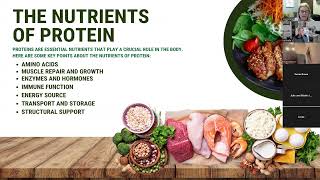
Here it is. Excellent. We got it. All right, so welcome vipers. It is February, the month of love and relationships. But it's also cardiovascular month. All about muscle and the heart. I hope that your month is going really well. As you know, we do record this class so that you can go back and you can listen to it in your portal. Our entire year right now is all on congruence. So let's get started. Everything we do, think, feel and believe has an effect on our state of well being. I know you believe that. I know you believe that. I certainly do. All right, so again, not to impress you in any way, shape or form, but just to impress upon you that these classes are super important to me just as much as my education is important to me. There's not a time that I don't delve into and probably to an excessive amount. A lot of education, a lot of reading, a lot of research, a lot of practical application. And so I, I don't take these classes lightly. I take them very seriously. I do them every month because I truly enjoy it forces me to dig into a specialty area for the month. So I really enjoy being able to do that and then being able to deliver really important content to you. I have an upcoming conference in April. It is our national conference and I'm already getting excited and prepared for what I'm going to do. Spending, spending time at the conference, actually connecting with other people throughout the world who are on a mission to do justice, improve the lives of others. But at the same time, I also get a chance to talk to a lot of owners of companies as well as those that are out there researching. So I'm already getting ready for that period of time in late April. So this year, everything that we put together in our curriculum is all about the word and congruency, right? Congruency, which refers to the alignment and harmony between one's values, beliefs, actions and overall lifestyle. I believe it to be true. And I hope that if this isn't already something that you have thought about, I hope that we are really prompting you this year to think about in the area of wellness in your life, right? In your relationships, in your health care journey, in your health as a whole, in every aspect of your life that you're looking at is, is there congruence? Because when there's not congruence, there is chaos. And so congruence, when one is congruent, one's actions and their behaviors are consistent with your inner beliefs and your inner values. And what that leads to is a sense of Authenticity and well being. So we knew it was a very important topic and it's been fun, it's been really fun to talk about congruence this year. So, so this month we're talking about understanding how your body composition and your muscle mass enhances your overall health. And I think that if you've been around TNT for any period of time, I believe truly that you have heard us say over and over and over again that muscle is the organ system of longevity. I know you've heard it before and this is the absolute truth. If there is nothing else that you walk away with today, I want you to walk away with a firm understanding that this is a very important conversation. That if you don't have muscle, if you don't have muscle, you're not going to have health. Muscle is the currency of health. You either have it to spend or you don't. And it doesn't grow on trees. Yeah, it doesn't grow on trees. So these two things, Muscle is the organ system of longevity and muscles the currency of health. You've got to have it to spend. So when thinking about overall health and wellness, it's really important to recognize a few things. And the, the most important thing that we're going to talk about today is that relationship, that vital relationship between your nutritional intake and your activity levels, right? And that relationship to muscle mass for long lasting, healthy habits and results. One cannot exist without the other. So let's take a closer look at muscle growth and the power of protein. So you all know this, but it does help to reiterate that protein. Let me move this over on the screen. Protein is the foundation of muscle gain. It is the foundation of muscle gain. This very essential component is, is a necessity for all your body's daily functions and uses. Despite a lot of myths that are out there, and I know that you have incurred, you've encountered some of them and if you haven't, I bet you heard of them before. There are a lot of myths around and misconceptions around protein. A lot. I mean, some of you may have heard, well, if you have kidney disease, you have to eat less protein, right? That's one of the myths that we deal with all the time. But they're all over, they're surrounding us. And despite all these myths and these misconceptions surrounding all of this, you should or should not eat. It is important to balance your protein, right? Your protein, your actual accrual of that protein with the rest of your nutritional intake on a daily basis. So it's not Just eating protein. You know, some of you have heard of the carnivore diet, which is a lot, a lot of meat and just protein. I'm not suggesting that you just eat meat. I'm suggesting that it's the art and beauty of a plate. You need a mixture, and in those mixtures you actually find protein, you know, right on that plate right there. It's not just that chicken on that plate that has protein in it. It's some of those vegetables, too. All right, so where do you look at? So all of you should have at arm's reach. I hope you do. If you don't, if you have a minute to get up and grab yours, I do think it's going to be important, as we talk about just this whole conversation, maybe to have it at arm's reach so that you can pull it back out. But where do you look? What. What biomarker are we doing on a regular basis to help you understand your lean body mass and how do we look at it? So this is your body composition analysis. I think you've always heard me say that I truly do not believe that health can be found in a weight. You know, I know a lot of overweight people that are reasonably healthy, and I know a lot of skinny people that are very unhealthy. Very unhealthy. So it's not about your weight. It truly is what comprises your weight. So where do we look on your body composition analysis for muscle? We look right here. You see the arrow. Skeletal muscle mass, skeletal muscle mass. We also look up here at lean body mass. Right? Lean body mass and skeletal muscle mass. Okay, so all muscle. All muscle is lean. All muscle is lean, meaning it's primarily made of proteins. Lean body mass. This number up here, lean body mass, is your total weight, which is right here. Right? Your total weight minus fat, including your organs, your skin, your bones, your water, and your muscles. So that's what that is. Right? Your lean body mass. Skeletal muscle mass, which is right here, is a part of your lean body mass. It's a fraction of it, and it refers to the muscles that you control voluntarily for movement and for posture. When gaining muscle, you are focusing on skeletal muscle mass. That's what you're focusing on. So this number right here is imperative to watch. Increases in your lean body mass up at the top can also come from water gain due to bloating, salty foods, or swelling. So not all lean body mass increases our muscle gains. Right. So that's why it is important. That's one of the things that when you look at yours, if you see lean body mass going up, but skeletal muscle mass is not going up, that likely means that you may be retaining water, you may be a little bloated, you may have recently traveled, right? You have thirds, we call it extracellular water, third spacing, all of those things. So it's really important to be watching this skeletal muscle mass with giving a little bit of attention to that lean body mass to really understand if you are third spacing or having that fluid. Okay, all right. So if muscles are the house protein, are the bricks, protein are the bricks that makes up the house protein. And amino acids are the building blocks of muscle tissue. They are the building blocks of muscle tissue. Your body has the ability to manufacture many amino acids. We manufacture. So we have a lot of amino acids, right? But specifically, specifically, nine of them have, have to come from food. Nine of them have to come from food. And those nine are off to the right. Those nine are off to the right. That's histidine, isoleucine, leucine, lysine, methionine, phenylaline, theanine, tryptophan, valine. Those are the nine essential amino acids that we have to get from food. The rest of them, your body can actually manufacture. It can manufacture that. So a diet that has mixed amino acids actually help maximize protein synthesis. What do you have to know about this? That muscle is not put on at the gym. It's put on in recovery. And it's only going to be put on or maintained if you're eating the proper amount of protein, which more specifically it's amino acids. Food is foundational to lean body mass, skeletal muscle mass development, food, and timing of when you eat that food is critical. Is critical. Eating a, a, a really quality protein that has amino acids, right? A variety of amino acids, or supplementing with shakes and things like that, right? It's not just having to chew and eat, it's a combination of those things. Getting that in within 30 minutes of every. Any workout, any workout is what makes your workouts even more beneficial when it comes to muscle. Now, did you get a good workout and you got your heart rate up and did you get benefit while you were at the gym? Absolutely, because you got a really good. You increase your circulation, right? You increase that heart squeeze. You got benefit. It's not you didn't get benefit, but you're going to get more benefit in respect to lean body mass, gaining that skeletal muscle mass. When you actually eat or drink a protein of some sort and digest it and digest it Right. To get the benefit of those foods. So where can these essential amino acids be found? Meat like beef and chicken and pork and lamb and fish like salmon, tuna and cod, and even eggs. For those of you that can have eggs and nuts and seeds like almonds and walnuts and chia seeds and flax seeds, it sounds like a lot of the foods, right. That we indulge in, that we eat. Right. That we get the privilege of being able to eat. However, we do know. And you're going to read it, right? I'm here to give you a educational experience that, that you're going to be reading out there. You can also get amino acids in foods like dairy, right? And like legumes, milk, cheese, yogurt, beans, lentils, and chickpeas. But again, those can be very inflammatory foods. So, yes, they do contain protein and yes, they do contain amino acids, but we do have to be very, very sensitive to the fact that for many of you, those foods are foods that we're not currently eating or may never eat. Right. So some of you will. You'll be able to add some beans occasionally back in. But when your body's inflamed, those foods can tend to contain ingredients like saponins and antinutrients that unfortunately will create a. A higher inflammatory burden and more digestion disruption. And so until those things are rebalanced, we really don't recommend those. Okay. All right. So I did get the question. I'll stop for a minute and answer this. Marcy asked, Workout, 30 minutes. Workout 30 minutes after eating. So actually, I may have said it wrong. You're supposed to eat within 30 minutes of your workout. So I do have some people that will drink like an amino acid shake prior to going to the gym. But it. When. When I was just speaking a few minutes ago, I was specific, specifically speaking about making sure that you restore those amino acids and protein stores in order to put on muscle. Muscle put, putting that on, happens in recovery. So within 30 minutes, I do get the question, how much? Right. And that does vary based on the workout. A person that's doing some heavy lifting, I know some of you on here today, do some heavier lifting. You guys may need to do anywhere from 25 to 30 grams of protein within that 30 minutes. If you're actually going to the gym or you're going on a walk or you're doing some resistance training, you know, higher reps, lower weight, you may only need to do about 15 to 20 grams of protein. So it does differ based on the exercise, but at least 15 grams of protein would be a minimum standard. Yes. And so Debbie did call clarify that too. Taking in protein within 30 minutes of exercise. Absolutely. To manage blood sugar, I try to work out after. So some people do eat and then go to the gym. They do do that. And there are some theories out there about doing both. I don't do well with that. I tend to have a lighter stomach and when I work out, I get a bit nauseated, so I'm not really able to do that. I have seen and as a trainer was trained, if you are wanting to cut, cut, meaning you're wanting to take off body fat and lean out, you really don't want to eat prior to going to the gym. So you want to be on an emptier empty or not empty, but emptier stomach. Now that may mean drinking an ignite energy, something that has amino acids in it. So they ignite with the amino restore. Right. Ignite with amino restore ignite has the electrolytes and minerals. It's a powder pack that you put in your water and you add the amino restore in it. It's light, it's not heavy, it's easily digestible. And that sipping that throughout a workout is good. It absolutely would keep your blood sugar nice and stable despite the workout as well. So I hope that answered it. Marcy, if there's anything else, please feel free to ask or even raise a hand and I'm happy to to answer that. So what are the nutrients of protein? Proteins are essential nutrients. I think we know that. Right. Your macronutrients are protein, carbs, fat, fiber, water. Right. So they're very essential to the body. All of those macronutrients are proteins, are essential nutrients that play a crucial role in the body. Here are some key points about the nutrients of protein. Number one, amino acids are the building blocks of protein. So it's amino acid than a bond and then amino acid then a bond, and then an amino acid then a bond. Right. So that's what makes up a protein. Those amino acids are also the building blocks of all neurotransmitters in your brain. So people that are on lower protein diets, standard American diet, they're more apt to have things like depression because those amino acids are critical to make every one of those neurotransmitters. And those neurotransmitters are essential for balancing, right. Your sympathetic parasympathetic, your nervous system. So those amino acids are super important for more than just putting on muscle muscle repair and growth enzymes and hormones. You need amino acids to produce enzymes, you need amino acids to produce hormones in your body. So a protein devoid diet creates hormone disruption. Many people don't know that it is. They're very essential for your immune health. They are very important in energy storage. They're very important in transportation and storage of that energy throughout the body. And they are critical for structural support. Muscle does that, right? It's structural support. So when you want to build a healthy body composition, you have to get the right amount of protein. But the question is, what's the right amount of protein? Right? We're going to cover that today, so you're going to have to hang on, we're going to cover that. So protein is one of the most essential components of muscle development. It's one of the most essential components of bone density, muscle mass and lean tissue. And that's just the beginning. In truth, protein is absolutely necessary for all, not some, all of your body's physiological functions. All today. While many people who care about health know that protein matters, most don't understand how or why. Part of that's because there are so many myths about the vital building block and how it works with your metabolism. And those myths are, they're still out there, unfortunately. So your metabolism involves a set of processes that all living things use to maintain their bodies. These processes include two very important things. So over the next couple of minutes, I really want to dig into a very important concept around anabolic versus catabolic muscle building versus muscle breaking down. This is a topic that we don't get to talk about very much in some of your visits and maybe you have these conversations with your coaches, but these are extremely important to understand. Both of these processes are essential, the building up and the breaking down. Both of them are. Both of them help organize molecules by freeing and capturing energy to keep the body running strong. Right? These phases of metabolism, metabolism, they actually happen simultaneously. But there's things that you can do to speed up one over the other, and there are things that you can do to slow down one or the other. And that's the stuff we're going to talk about today because you actually will and can, can and will break down muscle for energy. So some of you are doing a lot of really good things, but you're seeing muscle wasting and you're wondering why. Well, this is part of the conversation. So anabolic or anabolism, right? It centers around growth and building. So when we say anabolic, it's growth and building. It's this process of small, simple molecules that are built up into larger, more Complex ones. An example of this would be gluconeogenesis. Big word. You know what it means? The making of new glucose. That is an anabolic state, the making of new glucose. So this is when the liver and the kidneys actually produce glucose to help you when your body's crashing, right? The body goes, oh, need something made, we need to make it. And it knows how to do that and it does it really well, right? So that's anabolic, catabolic or catabolism. This is what happens when you digest your food, breaking it down, and the molecules break down into the body for use as energy. Large complex molecules in the body are broken down into these smaller ones. An example of catabolism, right, Catabolism would be glycolysis. This process is almost the reverse of what I just said of gluconeogenesis. So instead of making it, it's the breaking down of that for that utilization. So you make it to break it down. You make it to break it down. So understanding anabolic and catabolic is essential in training. So a lot of fitness coaches, a lot of people training for events, they have to understand this process very well. Luckily, we don't have to understand the minutia of it. You just have to understand the benefits of and, and the lifestyle and the things that you need to do to keep them always in balance. Because it's really about the balance. Since anabolism and catabolism are both parts of your metabolism, right, the speed, right, of. Of metabolic processing, these process affect your body weight. They affect your body weight. Remember, when you're in an anabolic state, you're building and you're maintaining your muscle mass. Anabolic building and maintaining. When you're in a catabolic state, you're breaking down or you're losing overall body mass, body fat and muscle. You may be able to manipulate your body weight by understanding both of these processes. And both the anabolic and catabolic processes lead to fat loss over time. So there's benefit for having a balance of these processes to not just break down fat, but also to protect yourself from breaking down muscle for use and energy. So one of the examples of that is when you're not getting adequate, and I'm going to say caloric intake for just for a minute, caloric intake, but specifically the right type of calories when you are living in a prolonged fasting state, right? That can be a great period of time to offload body fat. But the big but is for how long? Because at what point do we begin breaking down muscle? So using that to the benefit of what it's used for, right? Periods of time in which you're fasting to improve metabolism, you have to be really careful that you're not forcing the body to break down muscle for energy. So can be a bit tricky. It can be a bit tricky. Any questions? You guys doing good? Oh, okay. So if you do a lot of anabolic workouts, you're going to tend to shed fat and maintain or even gain muscle. Muscle is more dense than fat, we know that. So your body weight and muscle mass index may stay higher despite a leaner physique. Catabolic workouts, on the other hand, may may help you shed pounds by working off both fat. But you got to be careful at doing too much of them because they can also shed muscle. You'll weigh less, but you'll also have far less crucial and critical muscle mass. So what are some catabolic exercises? Things like running, swimming, biking, high intensity interval training and pilot plyometrics, those tend to be catabolic exercise. So anything that gets your heart rate up right, fast, get you sweating, right? That is going to be more catabolic, right? Breaking down. But we need some of that. But we have to be very, very particular about the timing of that. If you are right now super stressed out, not getting enough sleep, your adrenals are already pretty crashed, is that the time to be doing catabolic exercise? I just want to know. Food for thought, is that the time? What do you think? Yes. No, no, no, no, no. Because if you're already in a state of adrenal compromise, you've been running from the tiger a long time, right? Or you have been recently ill, right? And your body's already run down and you establish a lot of catabolic exercise or even honestly, in some cases, any. Any. It could actually create a wasting of muscle, right? So it is very important to understand that I'm suggesting that things that get your heart rate up have benefit. But just as there is the right food in the right amount at the right time, exercises the same way, it's the right exercise in the right amount at the right time for what your goals are, for what your goals are. So very important to know that. So what are some anabolic exercises? Things like weightlifting can be anabolic. These include exercises like bench press, deadlifts, squats, I would say heavier reps or heavier weights with less reps. So you're not getting your heart rate up. And when I say you are getting your heart rate up, you're getting your heart rate up from baseline, right? But you're not getting your heart rate up at that 140, 150, 160, that higher amount, you're in a lower zone. Heart rate maybe around 120, 125 or less. Heavier weights, less reps, body weight exercises, push up, pull up steps, resistance band exercises. Those are all very good anabolic style exercise. So if you're looking to build muscle, being in a catabolic state for too long can work against you, can work against you. So it can decrease your muscle mass and even compromise your overall health. Preventing catabolism is all about keeping good balance between your nutrition, your training, and your recovery. So for those of you who like to have. Which we should, when our adrenals are better, right, Healed and repaired, we should have a nice balance between catabolic exercise and anabolic exercise, right? We should have a balance between the two. Some of you, unfortunately, are at that place where it is that you, your, your adrenals are more dysregulated. And so we may use the sauna to get your heart rate up, right? So rather than exercise getting your heart rate up in the sauna, because if we get it up in the sauna, we're getting it up in the sauna for shorter periods of time, we're dilating blood vessels. It's a more controlled environment, right? And we may not have you in there 30, 45 minutes, we may only have you in there 20 minutes, but we're at least getting that heart, that heart rate up to get what's needed to improve circulation and get the benefits of that exercise. So whether you're a bodybuilder or not, your muscles are massive. Did you guys see that? Whether you're a bodybuilder or not, your muscles are massive. Together, skeletal muscle mass would be the largest organ in your body, taking up 40% of your total body weight. So your skeletal muscle is the largest organ in the body. When I say large, it takes up 40% of your total body weight. You've heard that skin is your largest organ system. That's true. By surface area, that is, it is the greatest. But by density, your muscle is. And they're not just for crucial walking, picking up things, and every other way you move. Muscles also may reduce your risk for cardiovascular disease, for diabetes, early death, and improve your metabolic health. That's because muscles process lots of glucose. More than 80% of the glucose that they process is from food. So larger muscles process more glucose. And when you use your Muscles, insulin sensitivities increase. What do I mean by this? One of the best ways to improve blood sugar control is what? Exercise. Exercise. Anything that you do to enhance muscle development is going to help you become more insulin sensitive. Insulin sensitivity is the opposite of insulin resistance. So if you want to have better blood sugar, we definitely have to move the body in some way, but again, in the right amount at with the right type, right. For the right length of time for the right person. So when you work out and you grow muscle, the muscle uses more glucose with less need for insulin. Right? So this is part of the theory. Less insulin is good. Too much can lead to insulin resistance. When cells aren't as responsive, as responsive to insulin, and blood glucose rises to dangerous levels, that leads to things like prediabetes and eventually type 2 diabetes. So the process of exercising creates a cellular improvement. The cell becomes much more capable of accepting, if you will, that knock at the door of insulin to let glucose into the cell. That's what it does. It makes that cell much more receptive. The opposite of insulin resistance is this whole terminology. If you haven't heard me say it before, you will hear me say it a lot. Insulin sensitivity, you want to be insulin sensitive, you don't want to be insulin resistant, you want to be insulin sensitive. When your body is insulin sensitive, your body processes more glucose and it process it more efficiently. And you need to be able to do that. Research actually shows that both strength training and building muscle mass improve insulin sensitivity. So the more muscle you have, guess what? The less risk of diabetes that you have. So that's just another profound reason why it's so important to focus on muscle mass when we lift weights and when enough resistance is applied, right? So it doesn't necessarily have to be weights. It's resistance, right? So when we have that resistance, we produce tiny, tiny tears in the muscle. Tiny tears in those muscle fibers. This is a really good thing. It's a really good thing. Without this micro trauma, without this micro trauma that takes place in the muscle every time you work out or do some resistance, there wouldn't be growth. So you got to tear it down to build it up. Tear it down to build it up. So what I was saying about that 30 minutes post workout, that's so imperative, it's because you want to rebuild. You want to heal those tiny tears. You want to build those muscle fibers back up, stretch them elongating and will elongate them and build them back up. So sorry, I went the wrong way. There we go. All right. So what many people do not realize is that the bulk of your progress that we make in terms of building muscle or losing fat happens during recovery. And I know I've said that multiple times in this last, what, 20, whatever minutes, but I'm going to continue to say it. Muscle is not put on at the gym. It is put on with your fork, with your shake, in the 30 minutes after you work out. So it is just important. Is just as important what you do at the gym as what you do afterwards, or what you do in your yard when you're working out, or what you do on your power plate or what you do in your yoga class, or what you do what you do. It's just as important the what is just as important as the after the 30 minutes after. And that window is very, very important. So it's during that healing process when our muscle fibers start rebuilding where they increase in mass and size. If they don't have what they need to do that, then the benefits of your workout are less. It doesn't mean that you don't get benefit. And I don't want you to hear me say that because you do get benefit. Anytime you get your heart rate up, anytime you move your body, anytime you do any of that, that's a great cardiovascular thing. That improves circulation, that definitely improves your circulatory system, it definitely improves your glucose sensitivity. You do get benefit. But the benefit for muscle mass happens when you fill it back up and you get that protein after your workout. So make that a must. It should be a non negotiable. A non negotiable. So think of a friend, you know that works out six days a week for two hours and they wonder why they're plateauing or they're even gaining fat when they're trying to lose fat. I know that none of you all know these people. I know a lot of them. I hear, I hear this story all the time. So think of that friend. I want you to remember. More isn't always better. More isn't always better. In fact, in many cases I've actually seen more gains and less workout of the more effective workouts, the more effective eating patterns. So working out too much can actually lower your testosterone levels while increasing cortisol peaks and cortisol levels. Cortisol is your stress hormone. And exercise is a form of stress, Good stress, right? But it's a form of stress. So when we are working out and we are tipping the thresholds of what might be considered too much, which is very different from person to person, I Can't sit here today and tell you that working out six days a week for everybody is wrong because I'm not going to say that. It's a very individual decision. What I am saying to you is that depending upon again the undercurrent, right. Of what's going on with the body. Have you recently been ill? What, what do your adrenals look like? Are you, do you have a low grade infection? What are your inflammatory markers? Like, what are your blood sugars like? Right. All of those things have to be taken into consideration. So when working out too much for you, it can actually lower testosterone levels while increasing that cortisol, which by the way, increased cortisol increases blood sugar because cortisol is a sugar peaks in that cortisone and cortisol, they naturally occur when we work out. Like I said, it's a stressor. But from a physiological standpoint, chronically high cortisol levels can negatively impact your body. So we are trying to really fight against that chronic. You know, I was that marathon runner who got up at 3am to get my runs in. As my runs got longer, I actually used to get up at 5. And as my runs got longer during training season I would start to get up at you know, maybe 3:30 or 4:00 clock to get my runs in because I was bound and determined to be home when my little baby, my, my girls got up in the morning because I didn' want them to suffer from my training schedule. And this was, this was many, many years ago. And this is actually part of my story. It was many years. I enjoyed running. I more enjoyed the time of just, you know, being out of breath and forced to really just kind of look at the surroundings. You know, I, I did it as therapy, I ran for therapy. But in that it took me many, many years to realize that in my marathon training seasons. And I to this day have all my body compositions that one day I laid all out on a table, laid them all out on a table. And I did my research project and what I looked at is every marathon training season I gained, I, I actually gained body fat and I lost muscle mass every single year. But on the off season I gained muscle mass and I actually lost fat. And it took, it took a very hard look in the mirror to realize that that training wasn't serving me. It lacked congruence. Yes, it helped me, I think being able to get away and in some respects relax. I know some of you would be like that is not relaxing, right. But it helped me in some respects Relax. But the reality was that it was actually not consistent or congruent with what I was looking to do, which was improve my overall health and well being. Right. So my cortisol levels were not great. I couldn't also eat for the amount of training that I was doing as well. And, and that's very common out there. Cortisol creates a surge of energy in your body. You feel good and that's part of the whole working out, right? It creates that surge of energy in your body. And it's common to see actually an increase in appetite or even cravings when your cortisol levels are chronically high. Typically, these cravings are for the bad foods. They're not for the good foods, sadly enough, they're for the bad foods that are salty and fatty and sugary. And these high cortisol levels have also been, they, they negatively impact your sleep, right, which then what happens when we're not sleeping really well, right? We're not recovering, we're not repairing, we're not healing. So it becomes this vicious cycle. Sleep is such a vital component to recovery, when that's off, recovery is going to suffer. And poor sleep plus unhealthy eating will do nothing positively to impact your body composition. So with this in mind, we need to be cognizant of our recovery patterns. And so I'm going to ask you a question of contemplation and I just want you to ponder it for a second on your paper. I'd like you to write down currently, just take a minute to do this, what you're currently doing for exercise, what you're currently doing. So if you're doing yoga, you're doing Pilates, you're walking outside, you're whatever it is that you're doing, write that on your paper, on the left hand side of your paper. And then on the right hand side of your paper. And then I, I actually, the neck right next to it, I want you to write how often you're doing that. If that's two days a week, if that's three days a week, how often you're doing that, how many days a week. And then I want you to, if you can, to quickly calculate the amount of time that you're spending doing it. The amount of time an hour, two hours, three hours, four hours, five hours, whatever it is, yeah. So what are you doing for exercise? How often are you doing it, the number of hours that you're actually doing it, and then the last thing on the far right of your paper, what are you doing for Recovery. What are you doing for recovery? In other words, how many days do you not exercise? Right. Which would be the opposite of the exercise, I would assume. Right. And I want you to date that paper. I want you to keep this paper because I want you to reflect back on this paper. Because based on what we talk about today, I would expect to see a few changes to this. I would hope for that. Maybe you guys are doing really good, you know, and maybe there's not going to be a whole lot of change, just a few maybe tweaks, maybe not. But I think some of you that are here today or those that are listening to this recording, I do believe that this was probably one of the hardest, hardest, hardest things for me to understand in my early days of transitioning to a more healthy lifestyle was where does exercise fit? What kind of exercise should I be doing? How am I going to actually utilize exercise to improve circulation and heart health, but not do something that's counterintuitive to my overall health and well being? And the reality is, is how am I going to do it in a way that I'm able to preserve muscle, preserve muscle and actually put on muscle? Because many of us sitting here today, we have very low lean body mass, we have low skeletal muscle mass. And as you heard me say earlier, it is the organ system of longevity, it is the currency of health. So if right now you're struggling with skeletal muscle mass and you're seeing a plateau of that, or you're seeing a reduction of that, or if and when I say a reduction, it can be natural and normal. When people enter into our doors at TNT and they have a significantly high body fat percentage and their, their weight is high, it can be very normal to lose some skeletal muscle mass. When you lose a large amount of body habitus, right? Because the larger you are, the more muscle you need to move yourself around day to day. So we do see a drop in muscle mass as weight is coming down, particularly in larger individuals, right? That would be natural, but that percentage of loss should be really low. But you guys listening to this today, your vipers, you've been around for a long time, right? So in that you've been on this quest for a long time. So in that your skeletal muscle mass, our goal is for you to it, at a minimum, maintain it. But our goal really is to build it. We want more, you know, I mean, we need to go after it, we need to be intentional about it and be excited about what we can do to actually see that happening. All right, so Debbie was Asking where does the power plate fit in? Power plate actually fits in, it's accelerated exercise. So the power plate is a really good way to do a five to eight minute workout routine on a full body vibration. Specifically power plate that actually vibrates on three planes. You look at it, you can't see it, but it vibrates on three planes. And while you are on the power plate, if you were to do any other types of exercise, whether that be push ups, sit ups, using your own weight, squats, bicep curls, tricep curls, that five to nine minutes of accelerated exercise, you can multiply that by four and, or up to five and so a five minute workout is like 25 minutes of a workout in respect to building, you know, to what you get out of it. So you amplify exercise in a shorter period of time. So where does it fit in? For people that have adrenal compromise, chronic illness and disease, they have the ability to work out in five to nine minute increments, not over stressing the body, but actually getting a better benefit. So I believe for people that have adrenal, significant adrenal issues, it is hands down the best tool in the toolbox and the best piece of equipment and it spans the lifespan. You're never too young for a power plate and you're never too old for a power plate. You're never too new to exercise or old to exercise. From NASA recovering astronauts who are coming in from zero gravity, to athletes in the NFL and NHL recovering to just us, right, us, us real people right here, it doesn't matter. I would say hands down, it's probably one of the best pieces of equipment out. So I don't know where you were leaning that question to, but I will say that that is, it's allows you to intensify exercise, do things that build muscle in less periods of time. So therefore less cortisol, less strain on the body and those types of things. Does it, does it also help with recovery? Absolutely. In fact there's algorithms and there's actual, on their, on their app they have specific workouts that exist for specifically balance, for, for strength, for mobility, for repair and for recovery. So it helps with recovery just sitting on it because it improves circulation and blood flow. Right. So for sure, yeah. So it's really good for every different type of exercise and recovery rest. All right, so I think I sped up. Okay, here you go. So the microdynamic, the microdrama damage, when strength training is natural, occurs for a very specific reason to aid growth. And so these damaged Muscle fibers repair and regrow and they increase in volume and strength. So however, growth and strengthening of muscles doesn't occur, as I said, during exercise itself, but rather during those periods of rest. During rest, the body repairs these damaged fibers through a cellular process where it forms new muscle strands called myofibrils. And in order to to do that, you have to have the right and proper amino acids. Without adequate rest, muscles don't have the necessary time to repair and grow. And this is where injury happens too. Because if you don't give your muscles ample time to repair and do the growth, then unfortunately you injure. So that is one of the ways. Power plate, again, it's used for people that have injuries too. So they can actually get on the power plate when they have injuries and they are working on repair at that same time. So proper rest and recovery is not only needed to support the biochemical aspects of muscle fiber growth, but it also affects important processes in the body that help with a healthy body composition. So what are some things that you can do? Here are some practical tips that you can do in order to get proper rest. To ensure that you have enough rest to get the value out of your workout, and in order to put on muscle, you have to prioritize quality sleep. Sleep is important. Maintain a consistent sleep schedule. We're going to be talking about this more in the month of April, that is stress and sleep month in the month of April. So you're going to have to tune in. That's going to be a lot of fun conversation. You got to create that restful environment and you need to limit stimulants. Avoiding caffeine, heavy meals close to bedtime, extremely important. You need quality rest. Recovery happens during sleep. Incorporate active recovery. Active recovery, right. So sleeping is not active recovery, but active recovery is engaging in low intensity activities. So for instance, if you're doing heavy lifting and you're wanting to put on muscle, and so three days a week you're doing, you know, some workouts to really do that. The days that you wrote down that you're either not exercising, maybe you could actually do something that's active recovery. Active recovery would be good, right? So engaging in low intensity activities like walking or even a light jog, a light job, yoga, stretching, swimming, or even cycling. And I'm not, I'm not talking intense cycling, I'm just talking spin, spin, go. Right. So keeping that heart rate and that lower zone not as low as a resting heart rate, but in that zone of maybe 100 to 120 a lower zone training, but you can do that with swimming or cycling. So active, recovery, quality sleep, maintaining proper hydration and nutrition. You've got to drink water. Water is what helps you take out and transport the bad stuff out, right? And then you got to put the good stuff in. So supplying your body those essential nutrients and fluids helps your body efficiently recovery. So water is vital and a balanced diet. Vitamins, minerals and macronutrients. So protein, carbs, fat, fiber, water, all of them are very, very important. And log, when you log, you know you cannot manage what you do not measure. I know a lot of people are like, I eat a ton of protein. And I'm like, how much? And they're like, well, I eat this or eat that, I'm like, no, how much? Right? So we measure our protein. We measure our protein after we cook it, right? We don't weigh it raw, we weigh it after we cook it. And that's actually what the. So if you're doing approximately three ounces of a cooked meat, right? Three ounces, that's approximately 21 grams of protein, approximately. Fish is going to be a little bit less. But you always weigh protein after cooking it, after cooking it. So you got a log and you do a total tally over the course of the day of how much protein that you got in. And that's a mixture of different proteins, not just your meat proteins, it's a mixture of all of your proteins. You got to schedule those regular, not active recovery days, but your actual rest days. So you need workout days, right? That would be great. Your workout days that are whatever you're focusing on. If that's heavier lifting, you need your active recovery days where you're working, walking and moving and maybe stretching and yoga and those types of things. And then you need your rest day or your rest days, depending upon where your body's actually at. If your body is right now in a state of heal and repair, your guts, a mess, you've recently been ill, then you're going to need more rest days, right? But as you get better, you need less rest days. I do recommend at least one day of complete rest. That doesn't necessarily mean that you don't stretch. I think stretching you can do even on your rest days, but you do need a day of really resting those muscles. Integrating rest days into your routine prevents over training and injury. Your risk of injury. Listen to your body. Your body knows if you are, if you have prolonged fatigue or even soreness, you need to allow time, more time for recovery and then plan the rest periods. Plan Them. That's what I just said. Put it on your paper. What are you doing? When are you doing it? Do you have enough rest and the counterbalance to your activity? And then you have to manage stress effectively. Chronic stress is one of. It's a deal breaker. It's a deal breaker, unfortunately. Catabolism and cortisol, right? So it's that breaking down of your muscle mindfulness practices, engaging in hobbies and doing things like that, having enough things that really fill you back up, right? Physically, spiritually, emotionally, all of those things are so key to managing stress and improving the way in which you. You're able to store. I, you know, I've been in this industry a really, really long time, and I have seen some. I've seen several cases in which individuals were doing a lot of really good things, really good things. But the one thing they weren't doing really well is mitigating and managing stress. And that it was the one reason why they never reached their goals. And so sometimes we have to hit the pause button to a few things to really focus on managing and mitigating stress. So right now, you may be in a place that even going to a gym or even having a structured workout plan is just too much right now. And I want you to give your body grace. If that's you, I want you to know it's okay. That doesn't necessarily mean that you don't stretch and you don't move, because I do think all of that's important. Those things are definitely important. But doing anything like a structured workout program of heavy lifting or even lifting, that may not be it for you right now. Give your body grace. Know your body. If you're not really sure if that's you, let's talk about that at your next appointment. Let's talk about it. Let's get a plan in place. I will tell you who's also very good at getting a plan in place that aligns congruently with your goals is Ryan. That is his sweet spot. He, I mean, he's really, really good. He's an athlete, right? He's an athlete by training. He's an athlete by lifestyle. He can't necessarily play ball like he used to because of illness. So he lived through this. So he has, you know, he has his own personal experiences and his, his knowledge from those times to really help you. So really lean in and like I said, give your body grace. I remember the day that someone told me that all I could do was walk. And I remember being so. So just walk you're telling me right now in my healing journey that all you want me to do is walk. You don't understand. I remember walking through a period of time that was. I was sad, I have to say that I was knocking on the door. Probably a degree of depression. I wasn't sure, am I going to gain my weight back? I mean, heck, exercise is how I lost my weight originally, you know, so I remember what that felt like. And I just want you to know is that, you know, I think movements, moving the body is really important. But getting back to the core ingredients of does it align with where your body's at right now? And then, you know, are you giving your body the rest? Are you getting that? And then from a nutritional perspective, are you getting the quality nutrients on board? Are you taking the time to. Does all of the things that you're currently doing, that you're doing, do they align with what you are seeking to achieve? So what is muscle wasting? A very important conversation. Muscle wasting, also known as muscle atrophy, can occur for several reasons. Disuse, Atrophy is when you don't use it, you're going to lose it. You've heard that before. Malnutrition, if you're not feeding it, you're going to waste muscle. So you got to get ample protein. Aging naturally, the older we get, the harder it is, the harder it is to maintain muscle mass, right? The harder it is because we've done a lot of wear and tear on our joints and sometimes it's joint pain and things like that that really, I don't believe it's chronological aging. It's the way we've lived our years and the things that we've done. Chronic disease states can lead to muscle wasting. When you are very, very sick, I will tell you, advanced conditions like ALS, advanced conditions like type 2 diabetes, advanced conditions will cause muscle wasting. In fact, if you look at any of the literature on advanced diabetes, advanced diabetics, they are not overweight, they are actually underweight and muscle wasting. Neurological conditions, diseases that affect nerves, that control muscles, those things can actually affect muscle wasting or create a chronic inflammation, endocrine disorders like hormone imbalances, and even cancer. Why? Because cancer is a metabolic disease state. When your body is in a fight to fight something, you will waste muscle. That is why end stage chronic diseases like cancer, there is wasting that happens. They're losing weight despite what they're eating. That is one of the key things that us as medical professionals are always doing. We're asking the questions, you know, do you notice that you're eating the same, but you're actually losing weight. That is a key indicator of underlying disease states. So muscle wasting. There is an ICD code to muscle wasting. It is called sarcopenia. If you have not heard me talk about it, it's extremely important to talk about it is low lean body mass. It is often considered to be age related. Right? Age related muscle mass loss. I tend to think it's more than just age. Right? You just heard me say all of the reasons. Advanced conditions of disease and not getting the right nutrients in. But age related loss of muscle mass and strength, primarily affecting older adults. But guess what, it's no longer just affecting older adults. We have young adults, and specifically some of those that are currently on a quest to just lose weight. And no one's coaching them on what kind of weight is important to lose. We don't want you to lose weight. We want you to have an ideal body composition, right? An ideal body fat and absolutely enough muscle. Common symptoms of sarcopenia are muscle weakness, reduce stamina, difficulty performing physical tasks. Several factors contribute to sarcopenia. You already heard them all today. Decreased physical activity, hormonal changes and inadequate protein intake. All of those things we work on here. We work on hormone balance, right? And that's glucose and that's insulin and that's your sex hormones, and that's your adrenal hormones. It's hormones. All of those hormones affect your muscle. And we have the ability to work on improving physical activity by putting good fuel in. And also you learn every day about eating more quality protein. Regular exercise is absolutely a piece of the equation, specifically resistance training. It doesn't have to be heavy weight, but we do have to do some form of weight or resistance training when we have conditions like sarcopenia or we just want to prevent it. So that is a piece of the equation. We have to do that. Very important. So how do you know if you have sarcopenia? You look right here at skeletal muscle mass. If your skeletal muscle mass is in that, that low box, that arrow down, you guys see that on the screen. If you're down there, you actually meet criteria for sarcopenia. Doesn't matter. Your age doesn't matter. So that's how we know. That's also how we know if what you're doing is actually working or not. Now there are, there is a period of time when we're detoxing and deloading where it is common to lose a slight bit of skeletal muscle mass. But we're preparing the body for what's next. So that when you begin to. When your body is, is, is getting healed and repaired and you're eating those foods that supply that good nutrition to your body, you're able to digest it, you're able to absorb it, and your body's able to utilize it to get that skeletal muscle mass up. It is not easy, but it is absolutely doable. So how do we know if we're getting enough protein? This is a new report that many of you are getting now when you get your next set of labs. It's called a functional health report. And there's a section on protein. Protein, albumin globulin, and your albumin globulin. Here is a perfect example of someone who has low protein, low albumin, low globulin, and therefore, based on just their lab work, we know they don't have adequate protein. Now, does that mean because they're not eating adequate protein? Maybe not. Maybe they are. Maybe they're not digesting it Right. So it's not just about looking at this report and going, I need to eat more protein. It's also looking at the gut. Both of them have to be done simultaneously. You gotta eat it, consume it, but also you've got to make sure that you are digesting it and you're absorbing it. I know we're up against the clock. If some of you have to leave, I completely understand. Please continue to ask any questions that you have. I'm going to finish the slides because I, you know, I would like to do that because it is recorded. So if you want to stay, by all means, if you have to go, I understand. So how do we know if you're digesting and absorbing? We know by looking at your stool kit. So on I want to say it's page four of your stool kit. We look at these intestinal health markers. We look at sciaticret and we look at elastase. Sciaticret tells us if you're absorbing fats. Elastase tells us, are you absorbing protein? So if your elastase is less than 600, then you likely need to improve. Do something to improve digestion. Perhaps that actually means that you need to just slow down and chew your food. Now, you're not going to raise your Lastase up from 200 to 600 with just chewing your food longer, but you might raise it from 500 to 600 by chewing more. Right. By preparing for that meal, by relaxing, going into your meal, by getting into a state of parasympathetic balance. Right. Rest and digest. Absolutely. So that's, you know, that's where we look. We look specifically there, when you're getting ample protein and you're digesting it, you actually begin to see your protein rise, your. Or sorry, your skeletal muscle mass rise. Smm. So anywhere in this next zone of that line means that it's good. But guess what? If we can get into this zone where it's above that is a plus. Plus. That's what we'd like to do. Now, that's hard to do. But is it doable? Absolutely, it's absolutely doable. So how much daily protein do you need? That is the secret question, right? That is, that's actually the, the key question. So it depends on what you want, right? But there is a minimum standard. The minimum standard, and this is by definition from the RDA, is 0.8 grams per kilogram of body weight. 0.8 grams per kilogram of body weight. So 2.2 kilograms equals one pound. Just so that you understand. But everything in nutritional medicine is based on kilograms. So this is why we're telling it to you in kilograms. So 2.2 kilograms equals one pound. So 0.8 grams per kilogram of body weight is the recommended dietary Allowance. I'm going to tell you this. If you want to put on lean body mass, if you want to put on lean body mass and you want to actually see the difference, you really want to aim for almost. Almost for most of you ladies that are on here today, because most people that are ladies, right, it's one to one. It's one to one. So that might be one. For every one pound of body weight, it's one gram of protein. For every one pound of body weight, it's one gram of protein. So there are, there's some research out there that just says just start out with a half because half the people aren't even getting there, right? So if you're, I'm gonna, you know, use for ease. If you're 120, £20, right, then you should start out, right, start out with aiming for 60, but you really should work that up to the threshold of 80 and then 90 and then a hundred, and then up to 120, up to 120. So that's. If you're wanting to put it on, put it on. If you're satisfied with where you are to maintain that you don't have to do as much to maintain as you have to do to put on. That makes sense, right? It should absolutely make sense. It's harder to put it on than it is to maintain it. So again, it becomes harder as we age, but it's not because of age. It's because of the factors that influence our bodies as we age. So here's a good example. Let's say you weigh 125 pounds and you're working to increase your lean body mass. You would need to set a target of at least. At least 100, 100 grams. And that might seem like a lot, but here you go. Here's some chicken, right, 43 grams of protein there. Maybe a can of tuna, 49 grams. Add a protein shake, which most of our protein shakes are. You know, depending upon which one you choose. This one, 26. This one, I want to say 24, let's say see, 21. This one, 21. You have the collagen proteins that are out there that have anywhere from 5 to 12 the synergy whole body does. There's lots of different options. And if you can't eat it, then drink it, right? So definitely augment your chew time with shakes. Have all kinds of options. For shakes on the left hand side, the GHI has a multivitamin in it. We're going to talk about the CPRO complete in a minute. You're going to want to hang on. We are doing a special for you guys that are vipers that attended today. Your synergy whole body collagens. This is a flavorless, tasteless collagen, all five types of collagen for hair, skin, nails, for mobility, for function. That's probably one of my favorites. I love to throw it in a cup of tea. I love to throw it in because you can put it in hot or cold. I like to throw it in cold coffee in the morning, should I have a cup of coffee? And that's definitely not a meal replacement, but it's definitely something that augments and increases protein in throughout my day because during the week, Monday through Friday don't have a lot of chew time. I just don't. And then you have the synergy pea protein. And then now we have the P protein complete, which adds a few other types of protein besides P into it. So we have the pea protein and the pea protein complete in vanilla. And then we have just the pea protein complete in the chocolate. And then we have the synergy bone broth protein, which is collagen protein with flavor. So we have lots of different proteins. But this is what I want to highlight today for those of you who are really struggling in specifically with lean body mass. You feel like you're doing a lot of things, right? Some of the things that you heard today, you know, maybe you're going to tweak and fine tune, but you're really struggling at getting lean body mass up and you fall into the category of sarcopenia. I want to make sure not to forget to tell you about a product that is the only product on the market today that they're actually using. Even post operatively and post hospitalization. It has research all around sarcopenia and the improvement of and the ability to put on muscle within just a short few weeks of specifically taking in a type of protein called hydroxymethylbutyrate. Hmb Hydroxymethylbutyrate. So this C proline hmb, it comes in a flavor sea protein lean complete V. It also comes in capsules. Some people use the protein, they use the powder in the morning and they use the capsules at night. Some people just use the capsules. It's really about what works for you. But it does need to. If you are really wanting to spend an 8 to 10 week period of time really doing one thing, one thing that's going to majorly change lean body mass. Keep your movement, be observant of your stress, get your amino acids in and all of those things, you want to keep doing those. But if you want to make one significant change, one of the things that I would recommend is consideration of this HMB protein. Seen, it supports muscle recovery following exercise. It helps to preserve lean body mass. It's the only thing on the market that has research all around significant gains in skeletal muscle mass in muscle wasting syndromes like sarcopenia. And it also contains a little bit of vitamin D that really supports calcium absorption and bone remineralization, which is extremely important because most people with sarcopenia actually have oxygen osteoporosis or osteopenia as well. The back of the bottle of the capsules, a serving size is six. It's six of them as a serving size. When I talked to the rep, the rep was explaining to me that four capsules is close to a scoop of the powder. Four capsules. However, when I read the back of the bottle, it really says six is equivalent to a scoop. And but I've actually seen significant improvements with four capsules and so I'd be good with that. So either a scoop of the powder or four capsules, I would definitely utilize it twice a day. If you're doing your own science project to see if it makes a valuable difference, I would incorporate it twice a day for an eight week period of time and I would get back on that body count machine. I want you to see the difference. I also want you to share with me what you observed during that that period of time. I want you to specifically tell me, hey, listen, I'm going to do this little study. I want to make sure that you look at my numbers. I want to be a part of that conversation with you because it's been really cool to see. So before making changes to your body, it's important to understand the facts. By examining the relationship between muscles and proteins, we can see how these essential components strengthen your bodies. With this knowledge, active individuals like yourselves can define their health goals and achieve long term success. So here's my resources. I will make sure that when this class is placed into your portals, I will make sure that the PowerPoint and the slides are there too, should you guys want to look up some of these extra things. And before you go, I did want to just mention a couple things. Like I said, I'll stay on for any questions. Fun in your kitchen is Debbie's class March 5th. It's all on juicing and blending. If you're like I don't want to juice, I don't want to blend, you can still come to the class because it's an informative class where you learn what exactly would juicing be helpful for? You may encounter a period of time that you can't chew and knowing about these for that period of time are really important. So whether you really are interested and you're going to start juicing or blending, maybe you're already doing some of these things or you're not really interested in adding them, but you're interested in learning for future use. Please show up to her class. It is on the 5th, it is by Zoom and she's going to use my new Nama J2 juicer and I think she's going to fall in love. Mark. Mark. My word, Debbie, I think you're going to fall in love. We're going to end up having to take and I just want to say also I'm actually having another Fun in the Kitchen classes coming Monday which is on Hard Healthy recipes. Awesome. So if you guys have not signed up for her class on this upcoming Monday, shoot a message over to scheduling at Enjoy. You know, you may not have much fun in your kitchen. You really may not be interested. But Debbie makes cooking fun. She makes it really fun and she does it really simply and so show up to her class. I know she enjoys when you guys participate and she loves the banter. So and then Thursday, March 6th at 12 is Mindy on Food Matters. So Mindy is our Food Matters coach. She's going to be talking about choosing healthy carbohydrates. Yes, carbohydrates can be healthy as an energy source. Improved brain function, muscle recovery, digestive health, heart health and weight. And then the mindset connection next month with Karen, really cool connection. Her whole topic is going to be on the question of what are you feeding your mind and spirit along with food? And this is the one that pulls in multiple clinics. It's completely, it's something new to tnt. We are trying it out, having some fun with it and learning, engaging other people who are on their health journeys throughout the US in and I just think some of the engagement and conversation is pretty cool. Other people have, you know, access to different things in different parts of the country and a lot of times they have some really good feedback that help us learn and grow. And then March coach connects with Coach Ryan. Why food diversity is so important for Gut Health. This is Tuesday, March 18th. You know, March is National Nutrition Month. So it is one of our, like, we have a lot of fun in March with you guys. So food diversity, because guess what, our VIP class is going to be on Gut health. Food diversity, Gut Health. That's going to be our VIP class. So some of the specials for March that are going to be, we're going to have an ignite energy 15% at one of our wellness Wednesdays. So be on the lookout in that in March. We're going to have an immune bundle coming up. So you guys are just going to have to pay attention to your emails. We're going to have some B12 shots, slim shots, biotin specials, and we're going to have a lab special. And you guys that are VI peers get to have a first glimpse at what we're having. But it's a P88 special. So if you guys have been on the fence about maybe getting your food intolerance panel checked on during the month of March, they're going to be $50 off of the kids. $50 off of the kids. So if you're phase one, phase two, it's 379. Our VIP are going to pay 489 for that. And it looks like 529 for guests. And we are going to be offering P88. If you have a friend, a loved one or a neighbor that is not a TMT patient, but they're interested in knowing their food intolerances, this is one of the first times and we'll see how it goes, that we are going to open that opportunity up. And so maybe you have a loved one who has, you know, is curious. So this may be an opportunity for them to get this test done. We really do encourage them to be close to the clinic, though, so that we can draw it here, we can have it drawn throughout. Through, you know, throughout the country. But Lab Corp and Quest don't. Don't do it. So they don't draw it. So it would be really, really. It would be more tedious to get that arranged. So I would recommend it for people that are close to the clinic that can get it drawn on a Tuesday or Thursday. We have covered a significant amount of things today. So how did you do? Do you have questions? Did you learn anything? Yeah. Yep. What's one thing you're going to do differently as a result of what you heard today? Don't all speak at the same time. Try to get more protein. More protein. I know, right? Yep. The Forever Quest, Julia. The Forever Quest. Yeah. What else? Someone popped off. They're like, I don't want to be asked. Focus on recovery more. Yes. Yeah. That's a hard one, isn't it? That's a hard one. Yeah. Timing the workout or the workout after and all of that, I guess just. Yeah, yeah. Focus on timing. Yeah, yeah. That 30 minute window is absolutely critical. So if you focus on nothing else, just making sure you get protein in that 30 minutes is critical. Yes. Sharon, I missed yours. What did you say? I'll look into the power play. Yeah, yeah. And speaking of that. Yeah, speaking of the power plate, if it's something that you're interested in doing, we have a rep that supplies those power plates and we get a really good discount on them. Oh, we get a really good discount on them. So if it's something that you're like, go online, kind of look at them, decide what you want. I really like the move. It comes in red and black. That's my favorite one at home. I have the. The bigger one that has like the hand things, but they didn't have the one without, you know, the one that was less. That's. That move is much more affordable and it's a really great product. Marcy just got one not too long ago. I love it. Yay, Mark. Yeah. Good. Yep. Marcy and Mark got it. Yep. So, yeah, so when you're interested, I hook you up with Ingrid, who is our rep for them, so she can answer any questions that you have. And then once you decide on what you want you let me know what you want. I let her know. You actually pay tnt because that's how we get our rates. You pay us, we pay them, and then they direct ship it to you, which makes it super easy services as well allow. You may share this information. I know this is still question. I should know this, but I can look it up. But how, how many ounces it's a. It would be per gram. I don't know what I'm hearing right now. I feel like I'm hearing someone's phone. Do y' all hear that or only me. Y' all hear that too? Okay. Yeah, I hear it too. Okay. Yeah. So how many ounces did you say is in a gram? Ask that question again. Yeah, how many ounces in a. In a gram again? Because most of the things you go by ounces, so you do. So basically every food is different. So the average protein, like chicken, chicken or beef, like your, your meat proteins, they're about 7 grams of. Of protein per ounce. About fish is less dense. So it's usually five or six, depending upon the density of the fish. Yeah. Yep. So I always say if you're eating Approximately, you know, 4 to 6 ounces at your meals each day of like your, your, your lunch and your dinner, and you get a total of anywhere from 10 to 12, then you're getting approximately, you know, 70 to, you know, whatever that is, ounces of meat of. Or grams in your meat protein for the day. So about 7 grams per ounce. But that's 7 grams per cooked ounce. Yeah. Yeah. Which is where most people, you know, don't know that. Yeah. Yeah. Thank you. Yep. And Michelle was hoping it'll be recorded. It will be recorded, so that's good. And it'll be. It's always placed in the last day of your curriculum content. So this month, February 28, is the last day of the month, so it will be placed in your VIP content on the last day. And I will have her put the PowerPoint in there too, just so that you guys have access to that PowerPoint. Because I do think there were some really good things in there that you might want to go back to as you're listening to see it. Yep. And next month, all about the Gut. You guys have given me some feedback on wanting to have more information on the GI map. You want to understand it better. And so I am going to spend some time talking about the GI map next month. So. Yep. All right, well, you guys have a fantastic rest of your night, a fantastic rest of your week. If you need any refills, since I have a captive audience right here, and I'm gonna actually stop recording.
More from Lori



Does Estrogen Cause Breast Cancer? Dr. Felice Gersh on Hormone Therapy, and Risk.






Spirulina in the Morning, Chlorella at Night? How to Use Algae in Your Daily Routine