Kelly & Lori Live – March 17, 2026 💬 | Functional Medicine, Wellness & Lifestyle Conversations
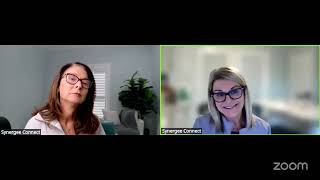
In this Facebook Live‑style video, nurse‑practitioner hosts Kelly and Lori Esarey (MS, APRN‑C, ABAAHP) discuss common challenges women face during perimenopause and how functional‑medicine‑based nutrition and lifestyle strategies can support hormonal balance. They open with a light‑hearted St. Patrick’s Day greeting before framing perimenopause as a "great remodeling" process, emphasizing a mindset of gradual, intentional change rather than a sudden overhaul. The conversation moves to why food quality matters after age 40, linking poor‑quality carbs, sugar, alcohol, and processed foods to blood‑glucose and insulin dysregulation, which then cascades to sex‑hormone instability. They cite real‑world data from continuous glucose monitors (CGM) and Oura Ring sleep metrics to illustrate how even a single high‑glycemic meal can destabilize metabolism for days, especially when compounded by sleep loss, dehydration, or over‑training. The hosts identify several frequent nutrition mistakes among women: under‑consuming protein, unknowingly eating too little, over‑reliance on processed “healthy” convenience foods, applying fasting protocols that work for men or partners without individualization, and failing to adjust eating patterns to hormonal life stages. They stress the importance of whole‑food, organic, grass‑fed, farm‑to‑plate choices, while acknowledging practical constraints and recommending a "bad‑better‑best" hierarchy. When asked for actionable steps for overwhelmed viewers, they suggest three starter changes: (1) prioritize adequate hydration with clean water and monitor intake; (2) make simple food swaps (e.g., homemade protein balls instead of packaged bars, almond butter for peanut butter, home‑made egg bites instead of coffee‑shop options); and (3) conduct a brief self‑audit of current habits to identify easy improvements, such as avoiding late‑night eating and ensuring a 12‑hour fast before bedtime. They also highlight the value of tracking water quality, sleep, and stress. The session concludes with an invitation to join their Facebook community for ongoing support and a preview of the next live topic on stress and sleep.
Chapters
I'm awesome in Mississippi, just a little chilly. We got a little taste of some warm weather and now it's freezing cold again, so I'm ready for spring.
I bet you are. Yeah, I woke up this morning and after getting all ready and walked outside and it was like, wow, we went from really nice warm like March weather to— it was definitely a little bit colder this morning, but this afternoon it's in the 60s here, so it's super nice. But it's great to be back on here with you tonight.
I know, this is always so much fun to get together on Facebook Live. And it is St. Patrick's Day, so happy St. Patrick's Day to everyone. I know, right? I had a green drink. I promise I have green on the inside, and maybe I'm green with envy or something like that too. I don't know. I love it. You're green.
A green shirt on.
Look, you know, on the camera is showing up a little gray. Okay, well, yeah, so Lori says she has a green— Lori says she has a green shirt on. Do you guys— I need a vote in the comments. Do you see green or not? Debatable.
Okay, that's debatable, but I trust you that you're green on the inside because you always drink green tea. I'm really proud of you.
I do, I do. We'll talk about that a little bit later tonight.
That is, so it's, it's going to be fun. So tonight we're actually talking about lots of different questions that you guys sent our way after last week, and that's awesome. We really appreciate those questions, but we have some fun ones tonight, like about food quality and why am I, as my life changes and I get older, why are the things that used to work not working now? So Where do you want to get started tonight, Kelly? You want to start with the first?
Yeah, I love— I want to say I love the questions. Thank you for sending them in. This really does help fuel our passion for what we're doing. We know you guys are interested, you're curious, you're really seeking, and so we're honored that you're here with us seeking here on Facebook Live. Um, just remember, we are nurse practitioners, but we may not be your nurse practitioner. So as we're giving this advice and we're talking about these topics, just always take in mind that We do believe in personalized medicine. You know, I do believe some of these conversations deserve a sit-down, and sitting down with your provider or sitting down with one of us to make sure we have clarity on what you're really asking and what you're needing. But we're going to do our best to answer these questions tonight. They're really, really good questions. And I'll say that, you know, when I started thinking about this topic, perimenopause, transition in life, and trying to understand through the lens of nutrition, like, what is best?
Right.
So I think about menopause or perimenopause as the great remodeling, the great remodeling. And I think if we frame it like that, things go really well because if you wait until menopause, then it's like, do we need to just tear the house down? Sometimes that's the way we feel. So if we approach it as like we're remodeling every month, every quarter every year and do some gentle work along the way, then menopause doesn't feel so daunting. What would you say about that, Lori? Do you like my analogy?
I do. I love the— is it called metaphors, right? So, and just things that you actually are explaining that people can envision. It really is a period of time in which we, if we really embrace it, it's an opportunity to refine. Um, it doesn't have to redefine, it just is, it's a period of being able to refine. And I think embracing that is just part of the journey. I think sometimes we just get so frustrated, like, why has it all changed? And we start kind of being very, really critical rather than embracing it with an opportunity to look at things differently. So yeah, no, I love your analogies. You always have some really good analogies. I love it.
Okay, good.
I do.
So where do we start, Lori? I think we should start with the question about why, why do things change? You know, why do the things that worked in our 20s and our 30s all of a sudden those same strategies stop working. You know, I sat with a 40-year-old today— she's 42— and she was like, everything was great until I hit 40. It's like every— all, all of her symptoms that she listed today started happening after 40. Yeah, so it is a great remodel. So why does food quality matter after 40? Why, why could we eat eating dirt in our 30s and smoking odds and sugar, right? And in our 40s, that just doesn't work as well, right? Yeah. Or maybe we could go— I think I hear this a lot, you know, eat really good during the week and then on the weekends I splurge, you know, starting with date night on Friday night and then friends at Saturday night. We go out with some friends and have another drink or eat out. And, you know, Sunday after church, maybe there's some excursions there too. That's always worked for me. Like, I've always been able to do that. It's been fine. And now I'm doing the same thing and it's not working. Do you hear those stories?
Hear it all the time. Um, we used to be able— in fact, if you read a lot of the books or a lot of the diet things that were very popular in maybe the early 2000s, it was, you know, have your cheat day, right? It was like approved, right? And we got away with that maybe in our 30s and maybe, maybe in our early 40s. But the reality is, is because what we know now about blood sugar dysregulation is oftentimes for days after, sometimes upwards of a week, those splurges impact us. And so we've made all this progress. We have— it's almost like the wood on the fire is stoked and it's burning. And when we have that, that cheat day or that sugar bomb, whatever you want to call it, whatever that looks like, it's like throwing water all over the fire and the fire goes out. And how long does it take to restoke that fire again? It takes days. And so the momentum that we're building, we don't get away with throwing water on that fire anymore. That metabolism and that— it's so important to keep that fire burning. So we don't, you know, we were—
That's a really good thing. That's a good visual too. And I think I'm so glad you said that about blood sugar dysregulation kind of being the catalyst for unfavorable changes that we see during that perimenopausal and even postmenopausal timeframe. And we learned about that. I don't think that was something that we could articulate until the last few years, but we learned that by watching continuous glucose monitors with patients and seeing, you know, a lot of stability. And all of a sudden, what happened? You've been unstable for 3 days, 5 days. Like, what, what happened back here? And it may have been one meal. And I would have never thought that was the case before. Yes, but seeing is believing, and hearing your stories and you guys being so vulnerable with us, sharing your glucose monitor, sharing your Oura Ring data, helps us see those patterns. Otherwise, you know, we may not be as keen on what we're saying today, but it's so true, so true, that dysregulation. So insulin dysregulation and glucose dysregulation are driven by poor quality food, whether that's sugar or alcohol or just food that's chemically laden, right? And so those, those things will cause a lot of dysregulation, hormonally speaking, and it starts with glucose and insulin and spills over into those sex hormones.
I think another thing we have to think about is that when we travel or our lifestyles are such that we're not sleeping as well, we just don't get away with things the way we used to. I mean, heck, we could stay up till 2 or 3 o'clock in the morning, right? And maybe it was right. The next day, possibly, that we rebounded. But the reality is, is unfortunately, lack of sleep is a major disruptor of metabolism as a whole. And we see that, like you said, I'm so glad that people share their Oura data because now that we have the ability to do CGM monitoring as well as Oura, you can see where there's that cumulative loss of sleep and then just the baseline blood sugars raise. Just their baseline, right? And then there becomes more irritability, meaning that, that one, maybe sweet potato. I'll just, I'll list that because that's a common food that people do like, and it is a healthier, it's very nutrient-dense, but it also has quite a bit of carbohydrates. But eating a sweet potato on a day that maybe we've had cumulative days of loss of sleep, you may see a not only higher baseline but a higher variability, a higher increase after eating that food. And you you wonder why on a day that you, you know, one day you ate that sweet potato and it didn't bother you that much, but on another day— and I'm just using that, of course, as an example of a single food— but, you know, you have to kind of take those things into consideration. Your lifestyle, the things that you're doing on the day-to-day basis, create this baseline. And when you are run down and you're not getting sleep, or you're not poorly hydrated, or you're overtraining, or you fill in the blank, anything that wears that body down, your sensitivity to blood sugar is going to be greater. And you for fat. I mean, fat is like this comfy little blanket when we're inflamed, and your body doesn't want to get rid of fat, unfortunately, in those situations.
Yeah, so food quality does matter, um, even when we're traveling and not sleeping well. It's even more so important, and it's harder to pull off, right? It's harder to pull off when we're traveling, um, but it is worth the effort in figuring out, like, what are nutrient-dense foods that you can go pull from to help support hormone balance, because supporting glucose and insulin supports your sex hormones, right? So, so important. Oftentimes that gets missed. You get just prescribed hormones. Let's just give you hormones. But if we're not working on the drivers of dysregulation, we're just possibly adding more fuel to an unhealthy situation.
Yeah.
Yeah.
So when we think about clean food, we think about organic, grass-fed, grass-finished, not just grass-fed, grass-finished, whole food. Not processed, farm to plate. The sooner that we eat it from the time that it's harvested, the more nutrient value that it has. You know, those are kind of those foundational principles when it comes to food quality that are so important. And a lot of times we can control a lot more of that when we're at home. But the reality is we do travel and we do go. So it's really applying that whole bad, better, best. It's doing more of the better things and it can't always necessarily be best, but it can definitely be a better options. So that is very, very important. I think the other question that I think is really important to cover that someone sent in, and this was awesome, uh, what are the biggest nutrition mistakes that you see women making today, Kelly? So if you had to choose one, because we—
gosh, I'm gonna say the list is so long because oftentimes I, I think that we are doing what our friend is doing, and I think that's mistake number one. Oftentimes, not always, But, and we get frustrated because what they're doing is working so well for them. And then we try to do it and it doesn't work so well, and then we're frustrated. So then we rebound and go grab a cookie or whatever, you know? And so that's kind of, I would say personalization is really important in regards to nutrition. The other thing I see is fasting. And I had an interesting conversation with a patient today. Her husband does one meal a day and was talking to her about fasting. You know, why don't you do fasting, right? And so we're sitting there doing her lab review today, and I was like, okay, well, these are the reasons why we wouldn't. She goes, oh, I'm not about to fast. That's his thing. I'm just wanting you to be educated, right? I'm just trying to tell you. But I love fasting. It's probably the number one tool that we have for a longevity strategy, but it's got to be the right time, um, and the right strategy for you, right? And females are very different than men when it comes to fasting. And so I see that oftentimes they will try to do what their husband's doing in the way of fasting because it makes it easier when they're doing the same thing. But those strategies don't always work. Yeah. Um, what about you, Lori? What do you commonly see?
Yeah, so those were good. Um, I think one of the common ones I see is under-eating protein. Oh, you know, I think, I think, you know, that's just so common. And I think those that actually even think they're getting enough protein, when they actually do the math and they do a log, they're still not getting it. So it's just very, very common where You know, we're not. We've been trained for so long, right? Maybe it's eat less. And, you know, so that was the kind of second one on my list is oftentimes unknowingly or knowingly choosing to eat less. And less isn't necessarily more, meaning in the way of better, you know. So we have to eat the right food for us in the right amount for us at the right time. For us. I'm with you. I agree with really needing an appropriate amount of time in fasting. Like, the body does need time to heal and repair, which means that not eating within 3 hours of bedtime, I think, is a very wise principle. You're gonna sleep better. If you're tracking on an Oura Ring, you will see that. You will actually see heart rates that are higher. You'll see recovery that's actually lower if we're eating too close to bedtime. And so having that 12-hour period of time, I think, is very reasonable. Um, not everybody can go longer than that. If you have blood sugar blood sugar dysregulation and you are, you know, you have much more sensitivity to or risk of hypoglycemia, unfortunately fasting longer than that while you have not yet done enough time on the foundational principles and getting your body balanced just yet, you won't tolerate that. But there are times going longer than that is appropriate for something that we're actually treating. And going back to what you said opening up tonight is that's where individualization and you guys actually seeing a provider is so important. You know, we're on here giving some general advice, but at the end of the day, these are core principles, but you really have to kind of get that check of your blood work and really be working with a qualified healthcare practitioner to get specific guidelines or specific recommendations for you. So those are two. I think the other one that I have on my list was over-reliance on processed foods, processed healthy foods. Oh gosh, yeah, right? It's like, this is healthy. I, you know, I had an example of that today of, you know, it's this protein bar, and I'm like, well, what is in that protein bar? Oh, but it has 30 grams of protein. I'm like, but is it in a package? Did you make it, you know, like, or is this something you purchased? And it was purchased. And when you look at it, there was aspartame in there, sucralose in there, and it didn't even give the type or the source of protein. And he's like, how do you get away with that? Like, and this was a husband and wife, right? So how do they get way with actually marketing that as a protein bar without giving more of the details. They do, right? These companies are not required to tell you the facts. So if it's in a package, don't rely on it. Whole Foods.
Yeah. So can we talk a little bit more about protein in general? Just because I think it is— because it's going to become the buzz because the FDA has increased the protein requirements for Americans. So I think a lot of companies are going to capitalize on making products that contain high protein. And that's going to be a buzzword. You're going to see it on labels. We've seen protein gummies, protein water, to your point, protein bars. You know, sometimes using a protein supplement isn't— is necessary, right? When you're working on gut repair healing, you may need a protein powder. But I really would encourage you to work toward getting your protein from whole food-based sources and not relying on convenience foods you know, for your protein, especially day-to-day protein intake, right? You're not going to win there. You're probably not going to absorb it well. It's just not a good strategy long term. Yeah, yeah.
And GF on the package doesn't mean good for you.
Are you sure?
Exactly. It's no good for you.
That was a good one, Lori Esarey MS. That was a good one.
Yeah, I did want to mention one more thing. Can I mention one more thing? Okay. And you kind of alluded on the last question too, Kelly, is not eating for your hormonal phases or your life stage that you're currently in. I think that is a very common mistake. What worked for us in our 20s and 30s are not going to work for us or is not going to work for us in our 40s and 50s. And so you kind of said, you know, not comparing yourself to your spouse. And I 100% agree with that because what works for men many times does not work for us. And that can be really frustrating, right? But what works for your friend may not work for you either. And it is very, it's very individualized. There are core principles. Whole food, farm to plate, that kind of thing.
Whole food. Eat real food.
Yeah.
And even going back to the spouse thing, because I do love working with couples and I like getting them on the same page. And the foundation is very similar. We need whole food. But how you eat that food and when you eat that food may look different and that's okay. We have to be okay with that. Yeah. So thanks for bringing that up.
Yeah. Yeah. The other question, if someone feels overwhelmed, you want to do that one or the other one? Yeah.
Our last question of tonight, and we could go on for hours, but you know, if someone feels overwhelmed and wants to improve their nutrition, what are the first 3 changes that you recommend starting right away?
Yeah, so I think it all depends on where a person's coming into the equation and what their goals are for their health and kind of where are they right now. You know, sometimes people are just, they're at wit's end, um, they're sick, very low energy, they have very minimal time, um, and energy to put something together. And you know, sometimes you just gotta start with the Honestly, the basics, right? Just, just keep the main thing the main thing. And, you know, honestly, I would start with water.
I was gonna say that. You stole mine, but it's so true. How many people do we see walking around feeling terrible and they're eating well, but they still feel terrible? And it's because they're not hydrating. And they think they're eating well, right? They are getting the protein in, they're doing— they're paying attention to things. but they're not hydrating well. They forget to drink water. So I was going to start with that one too. I love that.
Yeah. And then I think also when you think about water, going back to kind of your selection of, you know, where it comes from and stuff, is, you know, when you think about plastics and the role that they're playing, is really, you know, utilizing clean, clean water. We're not just talking about, you know, drinking just, you know, bottled water, water that's been thrown in your car, and, you know, water bottle's been heated up. It's really looking at whether that be bad, better, best, right? It may not be a filtration system that you have in your house right now. It may be, but choosing the best that you have available to you and then measuring. You cannot manage what you don't measure. A lot of people carry a water bottle around all day long and don't drink it.
Drink it. Yeah. So I was going to say too that we need to, we need to really talk for a minute about why Hydration is important for hormone balance. Yeah, they're probably like, what? We're talking about hormone balance. Why are we talking about hydration? But when you're dehydrated, even a little functionally dehydrated, right? Not dehydrated to the point where you need an IV, but walking around functionally dehydrated, that is a— that's a stress response. So it's tapping into abnormal cortisol production. It will affect insulin, it'll affect glucose, and it'll affect your sex hormones too. And so that's one of the easier things to fix, I think, is just retraining the body for hydration. So starting your day with a big glass of water. Sometimes people just forget to drink. Like, they have really good intentions carrying that water bottle around everywhere, and they just forget to drink because they, they've lost touch with their thirst signal. So drinking water first thing in the morning kind of helps get you more in tune with when I feel thirsty, right? And we really should be drinking before we feel thirsty. We shouldn't really wait until we're thirsty to drink, but we definitely need to be focused on hydration.
Yeah. And actually, I was just reading a research study on waking up in the morning specifically for women and drinking water and what it does for turning on metabolism. So just that one change alone could actually spark that burn that we're talking about, right, to keep your metabolism higher throughout the day. So a second change, or something that I think would be easy— er, maybe not easy to implement— is is to, to start looking at everything that you're currently doing. Um, and when it is something that's processed, it's kind of like, what can I— what's an easy swap or an easy switch, right? So I think we get habitually used to convenience and we start doing it and we land there and don't even realize it. So it may be as simple as a swap of peanut butter to almond butter.
Right?
That would be an easy swap for some. And it's a big difference on the body, you know, so kind of looking at easy swaps. What would be some other easy swaps?
Yeah, when I'm thinking about swaps, I think about, you know, what are you— I just don't believe a whole lot in snacking.
Yeah, right.
It's something when I, when I hear swap, I think about snacking, but that's not really your question.
Yeah, this swap could be like instead of a, you know, instead of a bar, like a protein bar, have you thought about actually quickly making some of your own protein balls? That's a huge difference.
Keeping them in the freezer and just popping them out.
Yeah, that's yourself, right? An easy swap of a breakfast instead of stopping by Starbucks to get the, you know, the eggs or whatever they have. You're like, you can actually make your own.
Make those egg bites.
Yeah, right. The egg bites. And you can choose, you know, cleaner ingredients. And then likely what's going to happen is if you're not stopping at Starbucks for that, you're also not getting that coffee that's laden with sugar, right? So there are things that you're currently doing in your day-to-day that are increasing your caloric intake and your lack of quality food and actually your finances, spending more money on things that you don't have to be spending your money on. So those are some of the things I think about.
And I would think that if you're just getting started with change, you know, start where you are. You may be on the journey, you may have already made some changes, and that's great. Think about, okay, what am I doing well and what could I be doing better? Like, what is an area I need some support in or some ideas around? I do think there's huge value in just kind of watching yourself for 3 days. What are my go-tos when I go for a snack? Am I hungry or am I thirsty or am I just bored or tired? You know, trying to figure out yourself. You know, what am I doing? Do I have what I need for meal prepping? Or, and then if I don't, am I just going to the pantry and grabbing whatever I can grab because I'm so hungry? You know, paying attention to those things will allow you to fix the upstream problem so that you don't have the downstream problems. So kind of figuring out like, what could I be doing to make my life easier and make my nutrition more impactful? Hormones need good quality minerals and enzymes to work properly. And if we're not properly fueled, that doesn't happen. And so you'll be constantly frustrated with your hormones if we don't get a handle on that one thing, which is your nutrition status.
Yeah. And when we think about food as foundational, you know, I think one of the things that you and I have talked a lot about in our clinics is we're not just the place to come to get hormone therapies dispensed. Or a place to come that can help you get hormones rebalanced. And because we're talking about food as foundation tonight, this is why we're talking about that. Because if food isn't right, and it's not about being perfect, but if it's not right, if the foundation's not set, it not only puts you at greater risk for problems, you're not gonna get the outcomes and you'll be really, really frustrated that what should be working isn't working. And so that foundation of what you eat, what you drink, how you sleep, how you move or not— sedentary lifestyles here— and then how you think, right? It's that positive attitude, that mindset, that mindset are just so critical to overall hormone balance, but just the joys of life, honestly. Yeah, you know, so keep food foundational, keep, keep your mindset positive. Definitely move your body. Make some swaps this week. We hope to hear back from everyone on—
I want to hear in the comments what you're swapping. I want to hear what you're starting with, right? What your goal is. I think just giving us feedback. Um, we'll be back on together, um, soon with another topic for April. And April, we're talking all about stress and sleep, which are really, really important foundational principles. So we'll be joining again in a few weeks. To talk more. So definitely send your questions in. And we also want to give you a personal invitation to join our Facebook community. You know, it's a place where you can come, you'll get notifications when we're going live, you'll be able to ask your questions and just meet other like-minded people that are on the same pursuit. Perimenopause is a remodeling process. Your brain is remodeling, your body's remodeling, and it can be better than ever.
Yes, embrace the and embrace this period of time. Yeah, massage it a little bit, right? Um, you know, it needs a little bit of help. Um, and then lean into community because community is where we grow, we learn, and we heal. And we know that. So it was nice having everybody on here tonight, and we look forward to hearing your comments and seeing you real soon. Bye!
More from Lori



Does Estrogen Cause Breast Cancer? Dr. Felice Gersh on Hormone Therapy, and Risk.






Spirulina in the Morning, Chlorella at Night? How to Use Algae in Your Daily Routine