Stay Ready So You Don't Have to Get Ready | Summer Travel Wellness Tips with Coach Ryan
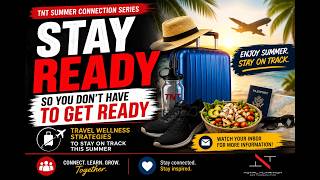
In this recorded session Lori Esarey, MS, APRN‑C, and Coach Ryan present a comprehensive guide to maintaining health and wellness while traveling during the summer. The presentation begins with an overview of how travel stresses the body—disrupting sleep, hydration, digestion, blood‑sugar balance, immune function, and stress hormones—and outlines the class objectives: travel without derailing health, smarter packing for energy, digestion and immunity, avoiding common wellness pitfalls, staying consistent, reducing travel stress, and returning home feeling better. The core of the talk is organized around a “foundation” framework (nutrition, hydration, sleep, movement, stress regulation, clean air/water, blood‑sugar balance, and mindset) and then dives into practical tactics: mindset shifts (avoiding all‑or‑nothing thinking), advance planning, a detailed packing checklist (reusable stainless‑steel water bottle, electrolytes, protein‑powder packets, nuts/seeds, trail mix, protein bars, digestive enzymes, magnesium, vitamin C, nasal spray, compression socks, blue‑light blockers, portable air purifier, mini‑medicine kit, etc.). The speaker reviews optimal travel snacks, hydration strategies (pre‑flight electrolytes, frozen liquids to bypass TSA limits), immune‑support supplements, sleep hacks (morning sunlight, sunset exposure, melatonin, blue‑light blockers, sound machines), stress‑reduction techniques (cyclical breathing, BrainTap app), air‑ and water‑quality tips, and how to navigate restaurants, grocery delivery, and hotel rooms. Differences between flying and driving are compared, with emphasis on flexibility, food control, and movement. A “non‑negotiables” list (hydrate, protein, sleep, movement, digestion, plan ahead) and a post‑travel recovery plan (light movement, sunlight, electrolytes, sleep, gentle stretching) are provided. The session closes with a reminder to enjoy the trip, connect with community, stay flexible, and use the provided travel‑tips checklist and upcoming live sessions.
Chapters
So we're going to be going through today talking all about getting you ready for travels. This is one of my favorite topics. I also have travel plans coming up as well soon too, so this is going to be a great refresher for myself too. I know we have a bunch of people that are going to be traveling here either this month, the upcoming months, so hopefully this will be a great refresher and or just some tips that you weren't aware of that can help make your travel plans much, much easier for the summertime. Just as a little reminder here, we do have— so of course we have the one today that we are all at right now. We also have two more coming up later on in the summertime. So we have Debbie's Life in Motion, which is going to be smart, realistic nutrition strategies for summer gatherings, vacations, cookouts, and restaurant meals. So that will be July 15th at 1:00 PM, and I will put a reminder as well at the end of the recording here too. And then we also have Bobbi's in August, and that will be Staying Strong Through the Heat. So simple strategies to stay active, maintain momentum, and finish your summer nice and strong. That will be Thursday, August 13th. And so Debbie's and Bobbi's will both be live in clinic and Debbie's, it looks like, will also be on Zoom as well. So can join from either of those spots. Unfortunately, mine is not live in clinic. Maybe one day I'll get down there soon, but not today. So we will get started here. We have our Stay Ready So You Don't Have to Get Ready travel tips. Again, this is presented by Coach Ryan, myself, if you guys have not met me, I am a coach here at TNT. I'm helping with all the lifestyle habits. And again, travel is definitely one of those things that I love to talk about. I used to do quite a bit of traveling. My wife and I, when I first met her, actually, she had a small little van, or it wasn't too small, but she had customized it so you could live out of it. Though she had built it for herself mostly, so it was a little bit small. Her and I did travel a good amount up and down the East Coast in that van. So preparing for traveling was of the utmost importance and kept us sane throughout all those different travels there. So definitely one of my favorite topics to talk about. So we will get into it here. So some of the class objectives from today, what you'll learn today. By the end of the class, you'll know how to travel without completely derailing your health, how to pack smarter for energy, digestion, and immunity, avoid common travel wellness mistakes, stay consistent without perfection, which is very huge, travel, reduce travel stress and vacation recovery, and return home feeling better, not necessarily worse. So let's talk a little bit about why travel impacts the body. Travel, of course, is super fun, but it can also be stressful, right? It can interrupt and disrupt your sleep, your hydration, your digestion, blood sugar balance, immune function, stress hormones, movement patterns. I mean, let's be honest, right? Like, you are not in your own environment. And just that in and of itself can be stressful. You're in a different area, you're outside your comfort zone maybe, maybe you're just in a different state or a different town or a different country, whatever the case might be. So that in and of itself is stressful, right? That's a mental emotional stress. It might not always necessarily feel that, but it is there and it is prevalent. And then the act of actually getting to that specific spot as well, that can also be a little bit stressful too. So if you're driving, long car rides can be stressful on the body. You know, we're sitting for long durations, we're not able to move. I always kind of go back to a story where I traveled up from down south and it took us like 6.5 hours to get somewhere that should have only taken like an hour or two or something like that because of traffic. And I just remember my back, my hip, all that sort of stuff being so, so sore because we didn't actually stop and take a break like we probably should have. So just that whole sitting, that aspect, being in the car, that can be stressful on the body. And then flying through an airplane, going through airports, being on the actual airplane itself, that is a huge stressor on the body too. So lots of different stress just from traveling in and of itself. And then you have to make plans and right, all these different things that you're not used to there. So yeah, very stressful on the body inherently. This is why planning is so, so important. Some of the common symptoms after travel or even possibly during travel: fatigue, bloating, constipation, brain fog, poor sleep, sugar cravings, feeling off. All those things definitely common, but of course it can be an exacerbation of certain symptoms you're already dealing with. So anything along those lines, definitely, you know, while you're traveling, it makes sense. But again, planning can really help to mitigate a lot of those, those different symptoms that you'd be dealing with. That is Lori Esarey, MS. All right, so we're going on vacation. I'm sure a lot of you again have vacation plans, travel plans, all of that. So again, we want to really get that land in a good spot here. So the foundation principle, I'm sure a lot of you have heard us talk about foundations, and it certainly applies here, probably even more when you're traveling, right? So your nutrition, your hydration, sleep, movement, stress regulation, clean air and water, blood sugar balance, all these things are the foundation to not only your health, but especially while you are traveling. And we're gonna dig into each section here as well too. I would also add to this list would be mindset, because honestly everything kind of starts from the mindset and trickles down into all these different categories there. So the mindset is going to be incredibly important. So, let's talk about the mindset, right? Vacation without having any setbacks or anything like that. I will say it's pretty common. I do see people go on vacation and it does seem to set them back. And it doesn't have to. Again, it's definitely going to be different from your day-to-day life, but it does not have to derail you. It does not have to set you back. It does not have to mean all or none thinking, right? I know, again, when we're in our own environments, we can, we feel like we have, you know, a lot more control and a lot more options and all of that. So we can do a lot more things. And obviously when we're traveling, we don't have all of those different options. So really getting rid of that all or none thinking will be very, very important. And just in general, right? The all or none thinking. I did a whole class on all or none thinking. That is one of the mindsets that I do see derails and hinders a lot of people's progress. So all or nothing thinking is definitely something that we want to, right, limit. Even if you're doing a little bit, you're doing something and that's gonna push you in the right direction there. Does not mean you're starting over or anything like that, right? Even if you didn't stick to your plan you wanted to or anything like that, I'm sure you still made better decisions than you would have prior to starting a TMT and learning all these different habits. And so those things are also meant to be, you know, you definitely want to be proud of yourself for doing those. You know, doing something is definitely better than doing nothing. And then also, of course, doesn't have to be feeling miserable afterward either. That is what we're trying to avoid. I definitely know that people can feel that way. It can take some time to get back into your routine and feeling good. And we want to minimize that time as much as possible. So instead, we want you to enjoy your experience. I would say this is honestly, if you take anything away from today, and it's one of the things that I make the biggest point of, when you're going on vacation, when you're traveling, especially when it's something that you're, you're not doing consistently, right? So say if you're going on a vacation, abroad or something you've been waiting for for a very, very long time. Maybe you're traveling to visit family or you're traveling with family or friends or whatever the case is. Like, enjoying that experience is incredibly important. Like, we don't want you to be— and the point is not to be stressed out the entire time. That stress is just going to lead to, right, you're not enjoying your full experience. You're going to look back and maybe have regrets on it. Like, that is not what we want for you at all. We know that that connection, you know, our whole theme for, for 2026, right, is connection because it's a huge piece of health and healing. We see it in the Blue Zones. I'm sure a lot of you have heard me talk about this, but those Blue Zones, for those that don't know, are those areas in the world where people tend to live to 100 more consistently than, than the rest of the world. So a lot of centenarians tend to live, and they just tend to be the healthiest places on Earth consistently. So there's a great documentary on Netflix about it. But essentially, right, one of the common denominators, common factors is that community, is that sense of connection. So having that, and, you know, if you're doing that while you're traveling, again, visiting friends, family, things like that, enjoying that experience, connecting with those that you're visiting and seeing and getting to, to be with, and especially if you don't see them all that often. That is incredibly important. So first and foremost, that needs to be at the top of your list. So if you take anything away from today, like that really needs to be there, right? That sense of community and joining in. I think it just can't be said enough. Of course, planning ahead. We already talked about that, how important that's going to be. Making intentional choices. I think with the planning, right, that is you being intentional. So they kind of go hand in hand there. And then also being flexible, right? Like, of course we want you to— we're going to go through a bunch of different things, right? These are a lot of different strategies, tools, tips, things like that. Not everything is going to be for everybody and it's not going to be for every situation. So I don't, again, want this to overwhelm and stress. Like, this is meant to give you some more tools in your toolbox for helping you travel, even if you just use one, one new one every time you go and travel. Just like with anything too, the more you do something, the easier it's going to become. So the more you're traveling, especially after learning all the different tips, tools, and tricks and things like that, it will just become easier and easier each time. So that is what we're here to do today. And of course, consistency beats perfection. I completely agree with that 100%. So some of the biggest travel mistakes Waiting until travel day to prepare. I would say this is probably the worst one there just because if you wait till travel day to prepare, chances are you probably won't prepare because things always come up on travel day. I know they do for me, right? Flights change, travel plans change, bad weather, whatever the case is, right? Things always tend to pop up at the last minute. So, really, really try not to wait to the last minute to do your planning and your prep. So preparing your supplements, your snacks, how you're gonna hydrate, your sleep, meal planning, immune support, travel documents, grocery and rest— restaurant research, all that good stuff. Try and do that ahead of time. I know it's not always feasible, but again, at least doing one of these things before will make all the difference in the world. Ensures that, that you are prepared. So let's talk about packing a little bit smarter and some things to pack and that you can pack. This is my favorite thing. I always have my reusable water bottles here. So reusable water bottles I think are incredible. This way, one, you have your own water bottle, you're not using other people's or anything like that, right? You're not having to use plastic water bottles or, or that sort of stuff. And, you know, while you're traveling, it's not the end of the world if you do have to use that. But this way, right, you know, you have something consistent you can fill in your own, right? You can carry wherever you go. And it's good quality too, right? We all definitely want to pick something good quality. Stainless steel tends to be the best quality out there, although there are some BPA-free plastic, you, you know, and that sort of stuff. But even that, I don't know if anybody has seen the newest microplastics documentary that's out there. I personally haven't heard really good things, but I know they talk about this and even the things that are quote unquote BPA-free, there's a lot of other chemicals inside of these plastic materials. BPA is just like a big name, right? But there's a lot of other ones that still are not great for our health and hormones. So ideally when it comes to water bottles, stainless steel will probably be the gold standard there. So this way you have your own thing and then electrolytes kind of paired right with that, right? I think electrolytes are one of, just one of my favorite supplements in general. I don't really consider them to be a supplement either. It's really just some minerals, but packing them while you're traveling can be really important, especially if you're flying. To help to rehydrate the body. And again, all those different stressors we talked about at the beginning and how it's, you know, can be stressing your body out. Electrolytes, we burn through our electrolytes very, very quickly. And if you have that supplement, if you have some of those packets, travel packets with you, you'll easily be able to replenish those. So keep you feeling good, keep you energized, and keep you from actually having to go to the bathroom as often too. Oftentimes I hear a lot of people say, oh, I don't want to drink too, too much while I'm traveling, so I don't want to go to the bathroom too much. I totally get that. Like, no one wants to have to keep stopping while they go to the bath, or, you know, keep stopping while they're traveling to go to the bathroom. Or, you know, if you're on a plane, if you're in the, you know, the seat nearest to the window and you're, you know, not sitting with people you know and having them to get up, you know, so you can go to the bathroom. So Not ideal for sure. The electrolytes help to eliminate you from having to go as often. And so they rehydrate the body super, super well. But again, at the same time, we want to ensure that you're hydrating properly because that will affect your body negatively and keep you, you know, feeling fatigued and low energy and sluggish and all those sorts of things. So protein powder packets. So, Obviously, I'm sure a lot of you are familiar with the proteins that we have here at TNT. Have a lot of really good proteins that we have. Some of them do come in like individual packets, and then we also have ones that, most of them, right, come in the big tubs. So typically, packing the big tubs is not ideal. Doesn't make the most sense and takes up a lot of space and that sort of stuff. Throwing them into a plastic baggie, Yes, I know, plastic, but that just tends to be the better option for the most part. Could always throw it in a container as well, maybe like a smaller, more compact container, maybe like a glass one. But again, glass could shatter, could break, might not be the most ideal in that situation. If there's a stainless steel one, that could be a little bit better. But in this specific situation, putting it in a plastic baggie You know, not the end of the world there. Throw your scooper in there and put enough scoops in there to last you throughout the, the whole trip. And that's something that can be huge, right? That can be your breakfast, that can be a consistent snack. It can be something you do before, say you go out to dinner. Like I know when traveling, you know, dinners tend to be some of the bigger meals and, and maybe the meals that we fall off our food plan a little bit more. So having a protein shake before you go out or on the way to dinner, it can help to mitigate having too much of that thing that maybe you didn't want to have too much of, or from overeating, or maybe it's that allows you to skip out on dessert then or something like that, right? If that's, again, something you were really wanting to try and do. So protein powder, super versatile, travels super well. We'll get into some other ways in a little bit on how to use them a little bit more, but definitely a great thing to pack. Of course, nuts and seeds, an excellent thing to bring. Trail mix is one of my favorite travel snacks. For those of you that I'm sure have heard this story before, when I traveled to Iceland recently, I packed a giant gallon bag of trail mix. So nuts, seeds, I did put a little bit of the Hu dark chocolate in there. Good quality dark chocolate. They have some little bits you could throw in there just to give it a little bit of sweetness, and obviously it's a good quality dark chocolate there. I'm so glad I had that for that trip. Not only for the plane, not only for in our hotel rooms and stuff, but in between locations, there wasn't much places to eat and that sort of stuff. So it really held me over throughout the day. And I went through the whole gallon bag, so it was well worth it and saved, I'm sure, a lot of money at the same time too. So highly recommend that. There are some healthier protein bars out there. Some of my favorite brands would be Aloha, GoMacro, Delio Valley does have a good quality protein bar as well. In general, not a huge fan of protein bars, but for traveling, like, they can definitely come in handy and they can be some much better options than some of those things you see at the, at the airport as well. Some different supplements to consider, digestive enzymes can be huge. Course we have those at TMT. You have like your DAO enzyme right there. So those that are dealing with more of these sensitivities and tolerances to histamine, allergens, things like that, especially in food if that's what you're dealing with, like the DAO enzymes are great for that. And then we also have your gluten and dairy enzymes as well. These are great for not only just traveling but also eating out just because you don't truly know what's going on behind the scenes in the kitchen. Unless they allow you to go back there, which I don't think is very common. So, right, just taking those just as a precautionary, like there could be some cross-contamination or if, you know, you are actually consuming some, some dairy or something like that. You have magnesium, so kind of going along with the electrolytes, right? Another important mineral. Vitamin C, helping with that immune support. The empty shaker bottle, of course, kind of goes, goes along with your protein powder there. Not something you absolutely have to bring, of course, but something that can be, can be beneficial for a nice on-the-go. I definitely try to bring one with me as well. It's not on the top of my list of importance just because you can throw a protein shake and mix it into kind of anything, but it just makes it easier. Compression socks are an interesting one for blood flow, especially if you're sitting down for extended periods of time, which a lot of us are while we're traveling, especially to further destinations. Those compression socks are great for helping blood flow throughout the body. This way, blood doesn't necessarily pool in our legs. And so, you know, a lot of times we get out of the car, get off the plane, our legs feel super heavy. It's one of the reasons we feel kind of drained as well after traveling because blood hasn't been circulating throughout our body as efficiently as it should be. So compression socks, an easy way to go about battling that. Blue light blockers, I'm sure a lot of you have heard me talk about those. Those are one of my favorite sleep hacks. There's many out there, of course, but blue light blocking glasses I have on here as well. I bring those everywhere I go. It's, it's a very, very easy way to get yourself into that rest, restful state for sleep. Again, it's not something you absolutely need. One of my favorite brands is TrueDark, but you don't have to go with that brand as well. Anything that has that dark orangey tint kind of mimics a sunset. That's what you're kind of looking for there, and it will help to kind of calm your body. So great in general, but also great when traveling. Let's talk a little bit more about light as well here coming up. Portable air purifiers, of course optional, but something that, right, wherever you're going, it can ensure the air quality is a little bit better. And then a little mini medicine kit. Certainly for, you know, traveling or if you're hiking or anything like that, like that probably comes a lot more in handy then. But anyways, definitely depending on the situation there. All right. So some of the best travel snacks, I know I talked about a couple already. Trail mix, I won't dive into that any further, but right, really the only two, as everybody knows, the two things that we're wanting to avoid would be the peanuts and really cashews if you can. If you want to throw a couple in there, right? Cashews just tend to be a moldier nut. All the other ones, especially ones that sit well with you individually, Brazil nuts, hazelnuts, walnuts, all those sorts of nuts, right? All, all those are good. Almonds, of course. And then you have the different seeds. So pumpkin seeds, sunflower seeds, those tend to be the, the more common ones, of course, but you can always mix and match some other seeds in there as well. And I've had some people do some like little bit of maybe some dried coconut. I would, I would really try avoiding putting too much dried fruits or anything like that in there just because dried fruits, right, they tend to spike blood sugar a bit more. So not the most ideal, but put a little bit of those coconut flakes in there. Certainly not, not a huge deal in general. And then I mentioned some of those dark chocolate chips, just add a tiny bit of sweetness in there. Some of the pre-made trail mixes that are out there, they tend to be heavy on the dark chocolate, so I wouldn't, I wouldn't necessarily go with those. Or if you did, just add more nuts and seeds to that to balance that out. So that way again, blood sugar stays nice and flat, but, but definitely some, a great option. Beef jerky, the turkey, you know, there's all the different jerkies that are out there. Chomps, right? Great brand. You, you have a, just a bunch of different brands in general. Epic's another great brand that has not only like the beef sticks and stuff, but they also have some different kind of jerkies. They have unique ones, I should say. So they have like buffalo, bison, elk. They have a salmon jerky actually, it's pretty good. So Epic is a really good brand as well. Paleo Valley, I'm sure a lot of you have heard me mention as well. They do also have those different meat sticks too. So a bunch of different options out there, but those are great for definitely traveling 'cause nice, you can get a lot of, you know, anywhere from 9 to like 13 grams of protein just in one of those things depending. So, you know, you get a good amount of protein, keeps you nice and satiated, blood sugar balanced, all that good stuff. Protein shakes, we already kind of talked about those. Hard-boiled eggs are great. Of course you probably need some sort of cooler or something like that. So it might not be the most ideal thing to take on an airplane as well. Might be a little bit smelly. So maybe, you know, that might not be the thing to bring on airplanes. Maybe before the airplane, I've done that. I brought them, you know, in through airport security and all that, ate them before I went on the plane. That's totally fine. But I would say maybe spare everybody else the egg smell on the airplane. Avocados are great. I know For those that haven't seen it, Kelly and Lori Esarey, they did a travel Facebook Live a week or two ago. So anyways, definitely if you go to the Synergy Facebook page, you can check that out. But Kelly was talking about avocados and she actually likes to just bring them and she'll just eat the avocado with the spoon there as well. Some people enjoy them. You can also put like some chia seeds on there too. I know my wife personally loves to do that. So a bunch of different options you can kind of just do with an avocado. Of course, fruits. So like some berries, those tend to travel pretty well. You can put them in a nice little container. And of course apples, all sorts of fruits travel pretty well, of course. But you know, the berries and things like that tend to have more phytonutrients, more fiber, all that good stuff. And of course pairing them with something. So maybe like some nuts and seeds, some nut butter, some seed crackers, even something along those lines to right balance the blood sugar a little bit as well. Paleo snack packs really can be anything along the, the paleo side of things. But of course your nuts and seeds with like say some, some jerky or something like that, you know, can all kind of be combined. So however you kind of would want to do that, that one's definitely versatile for sure. Throw a hard-boiled egg in there, whatever you like. And we already kind of talked about electrolytes. With the electrolytes, TNT actually just got the new Zymogen one, so I don't know if anyone's tried them just yet or anything, but they have the single-serve sticks, which I would recommend for traveling. You can get the bigger tubs, right? Like the Ignite Energy that we have. Although that's a bigger tub. And that's, you know, obviously you can travel with that too, but the sticks just tend to travel much easier. Like for my upcoming trip here, I'll be ordering the sticks just because, right, I can throw them like tiny little compartment and I can bring the amount of sticks that I need for the amount of days that I'll be gone. So much, much easier. I would definitely check out the Zymogen ones. I've heard really great things and I'll be ordering those soon as well. And then of course some things to try and avoid. I think a lot of these are pretty common and straightforward, but you have most things in the airport, right? Some of the airports are getting better, but most things, right, in the airport are not gonna be great. You know, lots of candy, lots of chips, lots of snacks, lots of processed foods, right? The highly processed protein bars. The sugary coffee drinks and all that sort of stuff. So that's mostly what they're selling at most airports. And that's why bringing things to the airport is going to be the most ideal. You can bring, in terms of food-wise, you can bring anything through security. They will let you bring anything through. I haven't heard of any other stories. If anybody at the end here has any stories they want to share where it's like, oh, I got denied, but I haven't heard that. Food is totally fine. It's just the liquids, that's the main, right? That's the big thing. And I've heard they might actually even be changing that coming maybe soon. But definitely food-wise, I've brought in whole meals through. I've cooked up some ground beef with some vegetables and, you know, done the hard-boiled eggs and things like that, brought them through. Or even, you know, if I had, if I'm coming home and I just ate out someplace and I, you know, had a leftover, I bring that through as well too. So, Anyways, this way you have a little bit more control what you're eating in the airport. Those airport prices are also astronomical, so it can save you a good amount of money too. All that good stuff. So definitely trying to, to get some of those things through. One of the interesting things as well that I had read about a while ago, and it's on the TSA website, so this, this is legit. You can freeze like a protein shake or anything liquid. So, right, the liquids are definitely the things that they don't allow you to bring through. But if you freeze it, if it's in a frozen state, they actually do allow you to bring it through. So you can freeze a protein shake, you can freeze just water, right, rather than having to buy the water there, which is like triple the price. You can, you know, bring a water bottle with you, freeze it, and then defrost it, like let it naturally defrost. Or if you just take, you know, go to the bathroom, run it under some hot water, that will help to defrost it as well there too. But that is legit. Unless anybody again has another story about that not working, haven't heard, love to hear it, but that one exists. All right, so some hydration stat— strategies. Talked a lot about hydration. It's gonna be huge. You definitely want to hydrate adequately, but also do it in balance so that way you're not necessarily going to the bathroom all the time. I talked about flying. Flying is incredibly dehydrating to the body. Planes are very, very, very dry. I think I had seen a stat once that they're actually drier than the Sahara Desert, which is kind of crazy. So, they're very dry. So, hydrating before, during, and after the plane is actually gonna be very, very important. But again, I definitely understand you don't want to be getting up and going to the bathroom all throughout the flight. So I would say actually probably for a flight specifically, it would probably be like right when you're taking off or like a little bit before, like not too far before, then definitely, you know, using the bathroom before you get on the plane and using those electrolytes. So definitely using the electrolytes while you're flying will help too, again. Utilize, maintain that water so this way you won't have to go until hopefully after your flight. Of course, if it's a longer flight, then it's probably inevitable, probably going to have to use the bathroom at some point on there, but right, it mitigates having to go as often. Drinking consistently though, just like any time, right, we want to be drinking consistently, but again, it's even more important while you're traveling because it's stressful on the body. Your body is going to be going through, through a lot of processes, a lot more that require use of water. Especially detoxing, right? We're— we talked about, I'm sure you've heard us talk about all the different ways our bodies detox through our sweat, through urination, perspiration, defecation, all things that involve water. And when we're traveling, right, not only are we under more stress, so we need to detox a little bit more, but we're also exposed to a lot more. Especially when you're traveling, you're exposed to a lot more, whether it's chemicals, whether it's radiation, all sorts of things that are uncontrollable. You're exposed to more. So we actually need to be detoxing more and ensuring our detox pathways are mobilizing very, very efficiently to keep you feeling good. And water is an incredible piece of that. And the electrolytes, again, help out with that process. Of course, limiting alcohol, that's a very straightforward one there. Alcohol is gonna do the complete opposite. It's going to dehydrate your body, stress your body out. And there's, right, lots of studies that show no amount of alcohol is safe or healthy for us. So not ideal, especially while flying. If you were going to be having any alcohol on your trip, I would definitely just wait until you get to your destination. That will be a much better option. It's almost like you're going to get double the amount of negative, negatives happening when you drink on an airplane or something like that. Limiting excessive caffeine, that would be ideal as well. Definitely is dehydrating, but then also, you know, kind of throws off the sleep schedule. Caffeine in general is still stressful on the body, so we don't wanna keep adding to that stress load. And then we already talked about bringing your own water bottle. And then just some common signs. So if you notice these things, then definitely make it a point to hydrate a little bit more. So headaches, fatigue, cravings, constipation, brain fog, all those sorts of things. Definitely with signs of dehydration. So some digestive support on the go, right? We talked about constipation, bloating, diarrhea, acid reflux, food reactions, all common travel digestive issues. So some things that can help, we talked about the digestive enzymes already. Magnesium is great for, right, helping to go to the bathroom. Ginger, very anti-inflammatory, fiber of course, right? We don't wanna overdo the fiber though in general. So if, you know, you were consistently at 10 grams of fiber each day before traveling, it wouldn't mean bumping up your fiber to the recommended 35 grams just for traveling. That actually could cause some GI distress just from that. So just adding a little bit of extra fiber, avocados we just talked about before, if those are sitting all right with you, a good source of fiber can definitely help with, with going to the bathroom as well if you feel a little bit backed up. Hydration, right, we won't touch on that any more than we already have, but that will of course help with, with going to the bathroom if you do feel like you're backed up. Probiotics, if you are currently on a probiotic, then of course, right, you want to try and bring all of your supplements anyways, but if you aren't currently consistently taking a probiotic, for whatever reason, then certainly this could be a good time if you tolerate them well to add that back in. Walking after meals, this is great for not only digestive support but also blood sugar balance. So highly recommend trying to do that whenever you can, whether you're traveling or not, but especially when traveling. Eating slowly, I think this is an underrated one, but I think it's very, very important. I am very I do this very often, so I definitely need to be taking this advice. Not only eating more slowly, but also being a little bit more conscious when you're eating too. So it puts you more into that rest and digest mode. When we're eating in a stressed out state, we're doing other things, we're eating way too fast, right? We're overwhelming our digestive system. All these sorts of things lead to some potential digestive tract issues, just extra stress on the body and things that, right, we don't wanna add even more to. While we are traveling. So, and you know, if you're traveling, usually maybe some, depending where you're going, some local cuisines and things like that. So I think definitely enjoying that to the fullest too. And that's being quite present with that as well. Some simple things too, like just taking a couple deep breaths before you go and have a meal or before you eat, or at least just a breath before each bite, anything like that, right? Can help to ensure that you're in that, that rest and digest mode. So, keep your body digestive system moving as it should. Some immune support while traveling, kind of talked a little bit about it already, right? Lots of different things that you're exposed to while traveling, especially on an airplane. So some different things to consider: bringing some extra vitamin C, some vitamin D, zinc, a nasal spray, saline spray, Hand hygiene. So of course, washing your hands, soap and water is gonna be most ideal. Of course, you can bring the hand sanitizers. I'm not a huge fan of using hand sanitizer all of the time just because it actually does end up killing good bacteria as well, and you can leave some of those bad, really like those superbugs, if you will. But using that on occasion, I think, can be helpful. Just a small tip with that. I wouldn't use hand sanitizer after, or I wouldn't ever take one of those receipts, right? I think I'm sure everyone's heard about the receipts. The receipts are covered in all those microplastics that are super penetrating to our skin. And so when you go and use the hand sanitizer and then touch one of those receipts, you're getting like double the amount of those microplastics and chemicals into your system. Not ideal. So I'd avoid the receipts anyways, unless you absolutely need it. But definitely not using any of the hand sanitizer before touching that if you think about it. Hydration, right? We already talked about all that. Sleep, we'll dive a little bit more into sleep here soon, but that of course will help with your immune system. That's when your immune system builds up. And then stress reduction, right? Gonna be very, very important. Stress reduction doesn't have to be anything too crazy. Like you don't have to be doing any crazy meditation sessions or anything along those lines. It can literally look like doing a couple deep breaths before you're eating or just throughout the day. There's something called a cyclical breath. For those that don't know, it's essentially taking 2 inhales, then followed by an exhale. And that actually has been shown to calm the body down very, very rapidly. So if someone cuts you off in traffic or something like that, or your travel plans changed, or, you know, we know what's going on with all the flights and things like that recently. Do a couple of those, right? It doesn't have to be a full meditation session or anything like that. And you'll feel yourself calm down a little bit more. And it will help you kind of get back into a state where you can think a little bit better, right? And maybe it will help you make some better decisions for whatever's kind of going on there. So stress management, especially while traveling, does not need to be anything crazy. Something I would recommend, and I've used this while traveling and will again for my upcoming travels, since it's a bit longer. There's an app, there's many apps out there, right? All the apps are great. There's one in particular called BrainTap. For those that haven't used BrainTap before or haven't heard of it, it's an awesome app that helps to kind of hack your subconscious in a sense and help put you into a rest and digest, a meditative state very, very quickly. It's worked incredible for me. I know there's a lot of people that have used it and also works very, very well for them. They use it, you can use it for a variety of different things, stress reduction, stress management, but also with sleep as well too. So a bunch of different things. The nice thing about that particular app, they have a free 14-day trial. So you can test it out, test, you know, see if there's anything on there that appeals to you that you like. They have a session for pretty much anything you're looking for and see if it works out for you. All you need is just some headphones like this. You don't even necessarily need the headphones. You can just listen to it out loud. They do work off binaural beats, so it's very, very science-backed and based. But anyways, just wanted to make that short plug there as well. That is called the BrainTap app. If anyone's interested in it, having any issues with it or anything, you can always send me an email and I will definitely, definitely get that answered for you. Clean air and water tips. So clean air, right? There's only so much you can do in certain places, but opening windows usually is a possibility. So, definitely opening that up and refreshing the room that you're in. Typically outdoor, the indoor air quality is much worse than the outdoor air quality unless you're in a, in an area, right, where there's like factories nearby, there's a fire going on or something like that, then of course indoor is gonna be better. But in most situations, the outdoor is better. So, opening up those windows, getting that fresh air in, if it makes sense to do it and you're able to. Always the easiest thing to do. And it's not like they have to be open all day long or anything. 5 or 10 minutes is a great way to go about doing that. Portable air purifiers are awesome. They make all different ranges and sizes and things like that. I know the Air Doctor, the one that I have personally, it's pretty small. You can, you know, especially if you're traveling via car, if you're on a plane, like, be not realistic, but you're in a car and you're traveling, a very realistic thing you can bring with you for sure. And then there are even smaller ones as well. So there's, that's a great strategy. If you're staying in a hotel, definitely you can, if you call ahead, you can actually call ahead, you can actually ask for a a high sensitivity, like allergy, high allergy room, essentially. So, what they're going to do is they're going to change a lot of the sheets. They're going to change all different sorts, like they're going to customize your room so that it's kind of built more so for like, again, the high allergy. So, better quality sheets. They might put an air purifier in there, better quality soaps and shampoos if they're giving that. So, they'll have a couple different things. Like that in there for you. So that's something you can, you can call ahead and ask for, and they usually have those options. Either there's specific rooms for it, or they're able to customize your room for that. So definitely put that on your list to do, because that is a very real option, and most hotels do have those options, especially when it comes to like the cleaning products. I know a lot of those cleaning products are pretty overpowering and can be tough, so definitely definitely wanting to ask for that if that's something that affects you for sure. And, you know, that kind of goes hand in hand with those avoid heavily scented hotel rooms. Sometimes it's unavoidable, but if you ask for that ahead of time, they usually are able to make that accommodation. And then we talked about the nasal saline rinse that can help with, again, cleaning out. And this way you can, right, you don't have things kind of clogging up sinuses or anything like that. In terms of water tips, right, definitely bring your own water bottle is going to be huge. But if you're able to find filtered water, that's going to be great. Not always an option. Typically when you're traveling, right, there's going to be stores and things like that where you can get some, some kind of water, right? It might come in a plastic bottle, but you can take that plastic bottle, just empty it right into your own water bottle. That's what I personally do if there aren't like, you know, you know, just filtered water or like pre-filtered water that you can go and grab. So that definitely is a good option. I prefer spring water. I usually recommend spring water over just plain old filtered water at the, the grocery store. Spring typically has some of those minerals already in there, so you don't necessarily have to worry about adding too, too many more of those. But that can be a great option as well. Of course, avoiding sugary beverages, that's gonna be most ideal. That's of course gonna make your blood sugar fluctuate. It's gonna cause cravings, it can cause fatigue, you can have a crash from it. Also it can, you know, disrupt your sleep and, and also the food, the other, you know, the food plan that you're kind of wanting to have as well. So definitely limit those. And you know, if you are having a sugary beverage, it would make sense to actually pair, like think of that like you having something that's a carbohydrate. Like we always say to pair your carbs with the protein and fat to balance the blood sugar. Kind of the same thing with the, the sugary beverages as well. Try and eat some kind of protein and fat if you are having that. And then of course prioritizing hydration over alcohol. That is pretty straightforward there. So some different airport restaurant hacks. We kind of talked about some of the different airport hacks already, but eating before you leave can be a huge one, especially if the airport's kind of close. This way, right, you don't even have to eat anything at the airport, on the airplane. There's usually not great offerings there for the most part anyways. You can eat on the way there if you're not driving. And then again, if you don't necessarily want to do that or can't, then you definitely can bring things through airport security with you. Bring a whole meal, bring snacks, all that good stuff. Highly recommend it. Saves you money and it'll just keep you feeling good. So in most situations, you're able to. It will make a huge, huge difference. In terms of some restaurant strategies, searching for restaurants ahead of time. I know it sounds like, you know, like, of course I would do that, but it can make all the difference in the world, especially like if you're wanting to find gluten-free options, right? Not all restaurants have gluten-free options, although a lot of them do nowadays. And I know a lot of us are really wanting to at least avoid gluten. So there is an app specifically called Find Me Gluten Free. Just type that into the App Store. It will pop up for you. And it will show you all the local restaurants that offer gluten-free items. And so you can look at the gluten-free items they offer as well. And so you can have a good gauge of, okay, like, you know, maybe these are some better restaurants to, to kind of pick from and choose from. Of course, you can always look at the menu. I personally always like to look at the menu ahead of time, even when I'm, you know, before I'm picking the restaurant, just to make sure there are things on that menu that I actually want. Even if it's gluten-free, I might not want those items that specific day, or I might not just like them in general. So checking out the menu, of course, is going to be huge, and most restaurants have the online menus. And then of course, most restaurants, they're accommodating nowadays as well. A lot of people are dairy-free, gluten-free, all of that. So do not hesitate to speak up and ask. It's actually very important. And they will ask you if you have an allergy or sensitivity. I usually tell them I have an allergy just because like I want no— I want them to take all the precautions. If you say it's a sensitivity or a preference, more so a preference, they'll ask. They might not take as many steps to make sure that you know, there's nothing cross-contaminating or anything like that. So, and you'll— it is a good thing to tell them too because you'd be surprised how many items have just some hidden gluten or dairy in it, especially dressings and sauces. They're commonly known for that. So definitely, definitely communicating whatever other specific needs other than gluten, dairy, if you have any other ones that you're trying to avoid. They are super accommodating I know a lot of people don't want to be that person or anything like that, but that is okay. This is your health, and it's very important, especially if you are definitely trying to avoid those specific things. So don't feel bad about that at all. And then again, a lot, a lot of restaurants, not only do they have gluten-free, dairy-free specific menus or items, but they're very, very accommodating nowadays because so many people are requesting and asking for those things. Of course, finding grocery stores nearby would be ideal and optimal. Not always an option, right, to be able to cook in wherever you're staying and that sort of thing. But if you do have that ability to, or at least store some food in a fridge, like, that would be great. When I went and visited TNT for the very first time and I stayed in a hotel and I didn't have a car, I used DoorDash and— or actually Instacart, I should say. There's all different things nowadays, but Instacart, DoorDash, you have Uber Eats, all these different things that only can bring you food from restaurants, which is nice. But they can actually bring groceries as well too. So I stocked up on some good quality snacks, had them in the fridge, used some things for some meals, you know, some snacks when I was hungry rather than, you know, going down to like the lobby or their little snack section or something like that and picking out something that's probably not going to be great. All right, flying versus driving. Talked a little bit about both already. So some pros to driving, of course, you have more flexibility, you can bring more supplies, better food control, right? In general, if you're able to drive to a place, it's going to be more ideal. Luckily, I think gas prices are starting to come down. Hopefully they continue to. I know that's a big factor as well. But of course, right, you can bring a lot more with you if you're able to drive. Like, it's more realistic to bring an air purifier, and you can bring some of your other tools with you as well. Definitely supplements, right? You don't got to worry about packaging them up and all that. So you can bring a lot more, and especially a cooler, right? You can bring a cooler, throw some ice packs in there, and bring a whole bunch of food with you if you're able to, snacks, all that sort of stuff. So even if you do have to stop along the way, you don't have to stop and grab, you know, most of those rest stops do not have great options, unfortunately. So you have all that with you. Of course, right, be sitting for a longer duration, it can be fatiguing, especially if you're driving and all of that. But again, definitely tends to be a little bit better than flying. But of course, flying is totally normal and an option most of us do, especially if you're going longer distances, of course. But it is incredibly dehydrating, as I mentioned. There's a lot more stress on your system. Just in general from flying, you know, right? We're very, very high up in the air, so that's just a stressful thing on our body. But just all around, it's a stressful event for us. Jet lag, right? Less control, especially food options. You don't see many great food options on airplanes. They maybe are getting better, especially maybe for more international ones. You can choose gluten-free and such, but there's not too, too many great options. So Of course, driving will always be the most ideal when you can. We talked about hotel stays a little bit. So just some things that can help with making your hotel stay a little bit better. Unpacking quickly wouldn't be something you absolutely have to do, but of course, right, getting in there, unpacking, so this way you can just relax and not have to worry about too, too much. Setting the room temperature, "wolt," which I know is kind of a general term there, But more so to like, especially, you know, for around sleeping time, you want that temperature to be between anywhere between 62 and 68 degrees ideally. Of course, it can be a little bit below, a little bit above that, but you don't want it to be too, too much above or below that because that will actually stress your body out a bit more. Most hotel rooms do come with blackout curtains, which is nice. So that is a great option. The only thing I've noticed with blackout curtains in hotel rooms specifically, they don't always like touch or they kind of always have like a crack and like, that one crack of light that's coming through happens to hit you right in the face somehow, which is always fun. So, you can take like just like a clip or something, nice and easy, and you can just clip those together, and then it will be truly blackout. I don't think bringing your own blackout curtains is realistic or anything like that, but definitely utilizing theirs. Heavy late-night meals, of course, right? That's going to affect your impact your sleep quality. Keeping those snacks in the room. If you have a refrigerator, of course, if you're able to cook there, even better. Of course, bringing your supplements if they have a refrigerator, especially if you have supplements that need to be refrigerated, then making sure you have a refrigerator there is important. So checking out that piece. And then, of course, some movement we'll get into a little bit. And then some optional things, portable fan, sound machine. Sound machine can be really helpful. Especially because they're super small. Of course, you can get the different sounds on your phone. I just personally think the ones in the machines sound like more realistic. And I don't know, for whatever reason, the phone sound— sounds like apps and stuff like that, they just stress my body out. For some people, works perfect, and that's great and definitely easier, but I prefer a sound machine. Now, the nice thing about the air purifiers is that they do have very different settings. And so if you put it up high enough, they it can kind of be a, a sound machine in and of itself to have some white noise there. So not only are you purifying the room, but you're also blocking out sound outside of, you know, your noisy neighbors and things like that. You can pack a little mini blender. The little Ninjas are great. There's other ones out there as well too, but you know, if you wanna add some fruits and things like that for your protein shake, the little mini ones are awesome. So definitely can do those. And then bring your own coffee setup too. So this way you have, your own coffee if that's what you've been consistently doing. There are obviously a lot of coffee brands that make like instant coffee now. For those that are using Four Sigmatic, that adaptogenic coffee, they do have an instant one as well. So you can definitely find the instant ones in your favorite brands typically as well, which is very nice. We talked about some jet lag and sleep recovery. So morning sunlight exposure is gonna be huge in general for sleep. Especially while you're traveling, right? Our bodies are very, very light-driven. So getting some morning sunlight exposure, especially if you're in a different time zone, this is going to help reset your circadian clock. And you'll get back on that time zone or in that specific area's time zone a little bit easier. So it will help with that jet lag. So definitely something to strive for is getting some morning sunlight exposure when you get to that new destination.. And on the other side of that, trying to also witness a sunset if you're— or being outside during a sunset in that new location as well. Both of those things will help to reset your inner— your circadian clock, your body's internal clock, and help you adjust much, much quicker. Of course, the hydration piece, right? Can't be over— can't be talked about enough. Super important. Magnesium, we've talked about already. Can use some melatonin as well, especially if you've been using melatonin. Especially while traveling, can be helpful. So that way it can help you get to sleep. You are in a different time zone, it can help you get to sleep a little bit easier if your body's still adjusting and not able to fall asleep as easily as you normally are. So that can definitely come in handy. Alcohol will disrupt, right, your sleep and recovery and all that. So really wanting to limit that, but hydrating at the same time, especially if you are drinking a lot of alcohol. Of course, limiting late-night caffeine, that will of course affect your sleep quality. In your body's ability to recover. And then moving your body, right? That's always going to be helpful with a little bit of that, that recovery piece. Movement matters, right? So talking a little bit more about that. This is not like, especially while you're traveling, you should not be striving for your normal exercise movement routine. That's not realistic. Of course, if you're able to and that's what you really want to do, awesome, great. But that's not typically realistic. So really trying to, especially wherever you're going, if you can incorporate movement into that. So picking like things to do that involve maybe a little bit more walking or a scenic hike or maybe a bike ride, whatever the case might be, but to enjoy that specific location that you're going to with the people that you're with, but also involve a little bit of movement. A walk on the beach, of course, one of my favorite ways to walk. But anyways, walking the airports, right? If you're at the airport for an extended period of time, certainly just walking around there. I like to do that and check out all the different things they have. Stretching during some layovers, you can do some light stretches, some great quick— Bobbi is an excellent resource for that, but also on YouTube, right? There's a plethora of videos for, you know, 2-3 minute stretch routines to help you with that. Hotel room mobility, right? This can be something you do in the morning time. I like to do it in the morning time, especially because I had 2 hip surgeries. But a little bit of some mobility work, 5, 10 minutes if that. So this way, the rest of the day I'm feeling good. My body's loose and all that. Morning walks, excellent way. So not only can you pair some movement in the morning, but also you get that morning sunlight. So it helps the circadian rhythm. So you can kind of stack those together, which is awesome. And bodyweight exercises is actually one, it's super safe, right? So we're not going to really risk as much injury or anything like that. Obviously, no weight, no extra equipment required. So you can do it anywhere. And right, just an easy way to get some movement in, right? Some air squats, some calf raises, push-ups, wall sits, you name it, right? And again, tons online, tons that Bobbi can offer as well. There is a program I'm sure a lot of you have heard me mention before. It's called MAPS. If you go to mindpumpmedia.com, they have a specific program called MAPS Anywhere. So this is a specific exercise routine built for those that are traveling and can literally be done anywhere— hotel room, somebody, or just a small room, anything like that. No equipment required, anything very, very structured, all that good stuff. So Just wanted to make that little plug there. But again, plethora of things out there, tons of apps and that sort of stuff. So just picking one thing or again incorporating it into your, your travels and doing something fun with the whole group. Some of the non-negotiables here, right? Hydrating, packing your protein, protecting that sleep, moving daily, supporting your digestion. Planning ahead. And this is an important one actually. Glad this is here. I wouldn't recommend starting any new supplements right before travels or during your travels. Just in case, right, there's any kind of reaction, even if it's a, you know, one that's super well tolerated typically, just doesn't make sense. So definitely an important thing. Don't start any brand new ones right before going on travels, especially if you're traveling far away. Right? So your plan for returning home nice and strong, or what usually can go wrong, right? Overcommitting. So definitely, right, keep that itinerary to a more manageable spot. Underpacking your essentials. So, right, we talked all about packing properly here today, but definitely ensuring you have enough. Not eating enough protein. I would say that's probably one of the big things, that and hydrating. If you can do those two things, or really focus on those, you will feel relatively good throughout your whole trip there. Right? Alcohol, definitely one drink can turn into a couple. So definitely trying to keep that limited and hydrating with that. Talked about the hydration already. Not having a recovery plan, of course. And then vacation mode for every meal. I think that's an important one too, right? It's not that you have to be perfect with your food plan or anything along those lines, right? That's not necessarily realistic. But every meal does not have to be something completely off of your food plan as well, especially if you have the protein shake there. At least, right, then you have one meal that is on food plan. So still doing better than having none of those. Returning home strong, your 24-hour recovery plan, right? Hydration, it's always going to be there. That sunlight exposure, we just talked about the importance of that. So especially if you're returning from a different time zone. Some light movement. So definitely nothing too strenuous when you're coming back as well. You want to promote recovery. Doing, right, some super intense exercise the week coming back and all that, especially if you've been gone for a while, doesn't necessarily make sense. So more of that walking, more of that gentle stretching, some deep tissue work, things like that. Maybe a little bit of some bands or some body weights. If you have a Power Plate, of course, using the Power Plate would be awesome. But nothing too, too strenuous. The electrolytes, right, go with the hydration there. I think having, especially this is where those grocery delivery companies can be really beneficial as well. You can set it up so that way when you get home, your groceries are already there for you, which is pretty nice. So you can do that. And then of course, just having your house in a good spot as well, like not having things all over the place, just so when you come home you don't feel like you have to do cleaning or organizing or anything like that, you can kind of relax a bit more. And then of course prioritizing your sleep, that will always be an important thing to do. Just a sample of a travel day routine, right? Protein-rich breakfast, protein, right? You definitely want that to be high protein, even if it's just only protein, right? That is going to benefit you tremendously. Adding some of those electrolytes in, ensuring you get your supplements in. At the airport, a little bit of water, some walking, maybe a protein snack as well. And then when you arrive, some light movement, a little bit more hydration, of course, nice balanced dinner. Especially like the days you're traveling, I think you really want to try and hone in on your food plan then as much as you, you're able to. So that's why the planning and the prep can help because those are the more stressful days. So This way it limits some of that stress and again, you're, you're going to recover much quicker those next couple days. And if you went off your food plan a little bit those other days while traveling, at least it wasn't the day you actually did the traveling. So it, right, it's not as stressful. You have your travel checklist here so you can take a picture of this if you'd like to. Of course everyone will get the recording so you'll have this as well. So you have your whole little checklist there that can make life a little bit easier for you. While traveling. So final takeaway, right? Definitely want you to be prepared, aware, remain flexible, but also be consistent, right? And again, most importantly, enjoying your trip. I mentioned this early on. You have one takeaway from this: enjoy your trip. Connect that community, that sense of community. It is just incredibly important. Everything else we talked about is going to be helpful tips, tools, strategies to ensure that you're feeling good throughout your whole trip. But make sure that you are enjoying your trip, connecting. If at any point you're feeling stressed out because you're trying to follow your, your plan to a T, right? We want you to reevaluate that and maybe keep some things in there, but maybe eliminate some of those things that are adding that maybe unnecessary extra stress and worry about that when you return from your trip. Trip because we want you to enjoy that. Awesome. So I wanted to just make a quick plug here for Debbie's— she has her Summer Connection series coming up as well on Wednesday, July 15th at 1:00 PM. So definitely reach out to get scheduled for that. Again, that will be live in clinic and on Zoom, so you can join either way., and it will also be recorded, I believe, as well too. So definitely join Debbie for that. Debbie's got, yeah, she got all the tips. So I know everybody will enjoy that one for sure. I know I ran a little bit over on time. I apologize. Like I mentioned, this is definitely one of the topics I do like talking about a lot. I know I talked about a lot today. I'm sure you're probably all sick of hearing me talk. So anyways, Does anybody have any specific questions, concerns that I can answer now? Or if you don't necessarily want it to be on the video or anything like that, which again is totally fine, you can send me personally an email and I will get that question answered for you. Does anybody have anything at all they can think of? Excellent. Well, now again, we went a little bit over, so I do apologize. This is going to be recorded, so again, I know we went through a lot of stuff today. We also have the TNT Travel Tips documents, so for those that haven't heard of them or seen them, I will have those sent out to everybody as well that was on the call here today. So we'll just send those out to you. But if you're watching as a recording and you want those travel tips, definitely send, send us an email at info@tntfitforlife.com or myself, and we'll get you over those, those travel tips. But I made a note to send those out to, to everyone that joined today, so you'll be able to check those out. It'll be a lot of what we talked about today, but again, you'll have the recording as well, so you can check that out. So I appreciate everyone joining today. I hope you have a wonderful rest of your Friday and weekend, and all those that have trips coming up, please travel safely, and I look forward to hopefully communicating with everyone soon. Bye, everyone.
More from Lori



Does Estrogen Cause Breast Cancer? Dr. Felice Gersh on Hormone Therapy, and Risk.






Spirulina in the Morning, Chlorella at Night? How to Use Algae in Your Daily Routine