Should You Start Your Own Accounting Firm?
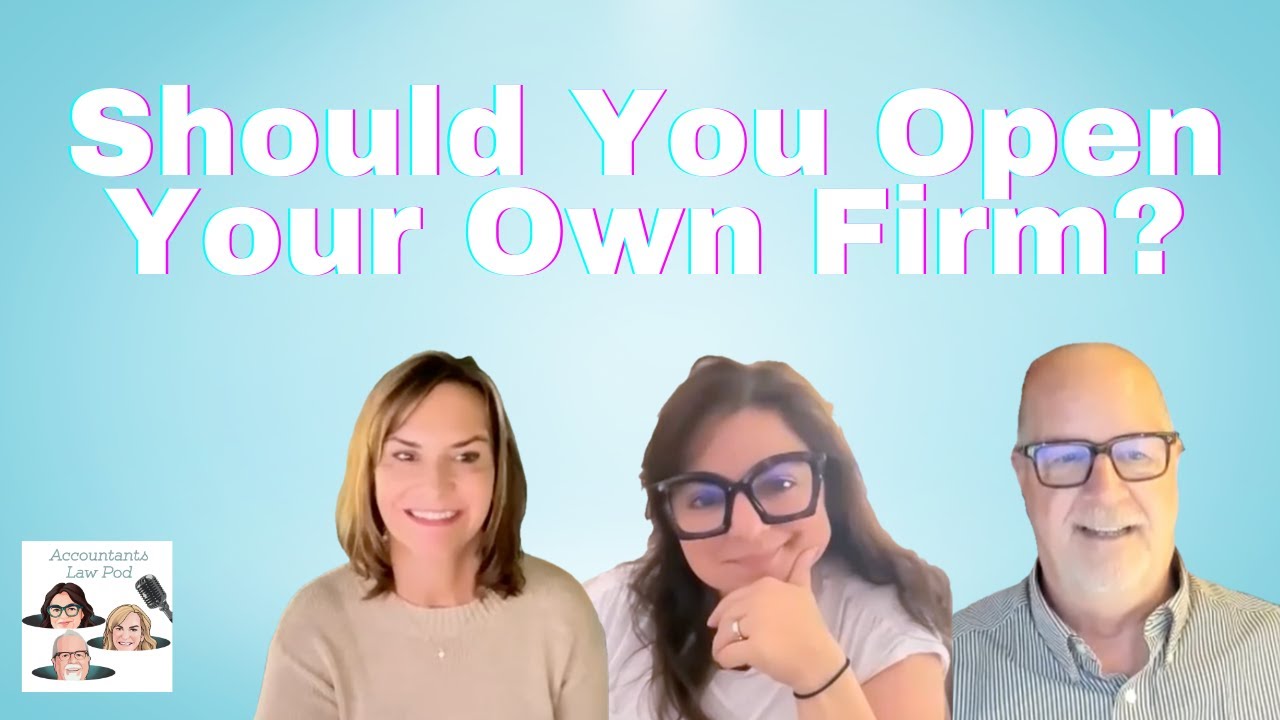
In this episode of the Accountants Law Podcast, host Lynda Artesani, along with co‑hosts Sarah Prevost and Steven Libhart, explore the decision‑making process for bookkeepers and accountants who are weighing whether to launch their own bookkeeping firm serving law firms or to work as a contractor/freelancer for existing firms. The conversation begins by probing personal comfort with leadership, liability, and decision‑making. The hosts discuss the practical steps of starting a business—choosing an entity (LLC, S‑corp), securing necessary insurance (E&O, cyber, liability), and complying with IRS rules distinguishing employees from contractors. They examine how to select a niche within the legal industry (family law, bankruptcy, personal injury, etc.) and the importance of documenting standard operating procedures, pricing, and sales/marketing responsibilities. The episode highlights the need for self‑assessment (pros/cons lists), the value of community resources such as the Law Lab, bar‑association classes, and mastermind groups, and the realities of client acquisition, work‑life balance, and the risk of over‑working. Listeners are encouraged to view entrepreneurship as a flexible path—one that can be pivoted, partnered, or abandoned without stigma—while emphasizing the importance of risk awareness, insurance, and legal compliance. The hosts close by inviting listeners to join the Law Lab community and subscribe for future discussions.
Chapters
Welcome to Accountants Law Pod, where accounting professionals and law firms converge, hosted by Lynda Artesani, Sarah Prevost, and Steven Libhart.
Welcome to the Accountants Law Pod. This week we're going to discuss if you're a bookkeeper or an accountant, whether you should start your own business and jump into entrepreneurship, or should you freelance in the a contractor for somebody and just maybe many somebodies. So it's going to be a really interesting topic, and I'm going to let Sarah kind of dive in and share her thoughts to start.
Well, it's always a good question. It's a starting point, I feel, to decide. One thing I will say, and I'd love your opinion on it, both Lynda and Steve, is do you— are you okay with being in a leadership role Taking chances, owning the liability, owning the decision process making. Does that make you squishy feeling uncomfortable, or does that make you stand strong and say yes? And if you're the squishy feeling uncomfortable, or if you're sliding on the in-between, I would give yourself the opportunity to, to take a track that's a little less front-facing and be that support role. And I know that I can speak for myself from when I saw it from my angle, and I see it in our team. And I know that Steve has had that experience as well and what that looks like. And same as Lynda, of course, too. So, but that would be the first question to ask. Steve, what do you think?
Well, I think the first thing to realize is to give yourself grace and permission to go either direction. Once you decide on a direction, you might decide that you want to own your own legal bookkeeping business, and then you realize that maybe you're not quite ready. And so you want to get some more training, it's okay to stop. It's okay to reverse and go the other direction. There's no hard and fast rule with any of this. Also, getting all of your procedures down. Sometimes it's more important to really think through what type of law firm do I want to work with? How do I want to do it? What are my standard operating procedures? Especially if you're going to own your own bookkeeping and accounting business that caters to lawyers, have as many of your procedures documented as you can before you start and know that they're always going to change and that you're you're going to make mistakes and that you can accept that and give yourself that grace. If you fall on the other side of the fence and you want to be a contractor, then, you know, find out who's the mover and shaker in your industry that you want to align yourself with and don't be afraid to go knock on their door. The worst thing they can say is no. The best thing they can say is yes, welcome. I'm going to help train you to do this and know that it's very fluid. You can start with a solo attorney. and work your way up to midsize or large firms, or you can dive right in and just be prepared and as prepared as you can to work with those mid to large size firms. And, and, you know, we've had lots of discussions amongst the 3 of us about different types of law firms. What kind of firm do you want to work with? Do you want to work with family law? Do you want to work with bankruptcy? Do you want to work with personal injury? Think about what each of those bring to the table and what it might mean for you and investigate how those firms operate. Look at different associations out there, the bar associations, learn the laws in your state for the attorneys that you'll cater to or any of the states that you'll work with them in. Look at associations like the Legal Administrators, the American Bar Association, all the subgroups within your local bar, and you can find a lot of business and a lot of learning opportunities for different types of attorneys by looking at the different associations. So there's a lot of different ways to approach it, but, you know, go in with an open mind and be fair to yourself, and I think you'll find your path.
I think, too, you know, I started out working at a job, didn't like it, said, you know what, maybe I'll just start doing this a little bit on the side. I was a subcontractor back in those days. It was desktops. You drove to the client, you did the work. you backed it up and you went on to the next one, or, or maybe you just did one a night because I had a full-time job. And then it became like I was aware that it was not just me going to do this work as a contractor, but this was my business because I have to allocate all that income and give it to the tax person to do my taxes. So I started to put it all together, and then at one point I'm like, gosh, this is kind of turning into a company. I was doing really well and I was getting a referral and a referral, and all of a sudden I've built this this thing that became quite a large thing that I had to let go of the full-time job. So it could start that way. But if you, you know, it depends on what you have. I have multiple clients at that point, and it became a job where it was a company, and I gave it a company name. And back then it was Rhode Island Bookkeeping because I was in Rhode Island and the name was available. And I'm like, oh, that's cool, it sounds bigger than what I was. And then it just grew from there to all of a sudden, hey, you need to be, you know, you need to be an S corp or an LLC. It acts like an S corp. At that point, I just kept growing, right? And ended up stepping into a different entity because I had made enough money that it made sense to do that. And then I did that. Once I was on a payroll, now I started to give myself a retirement plan. So it can start small. They call it the gig economy, right? Small, small, small side job type of thing, and it can grow into it. I was still a contractor to these people, but then I was not the contractor under Lynda. I was the contractor under Rhode Island Bookkeeping. So it really You could taste the waters of it. You could just step a little taste of it and have them just be— you're doing it as a side job as a contractor. And then if it starts to develop into more, then you can put it all together and call it a company and tell them you're hiring now Rhode Island Bookkeeping, in my case, not Lynda Artesani anymore. And then of course that comes with, you got to get, you know, now I'm not a sole proprietor. I'm now moving into— and you should think about these things if you own a home. You should think about all of the things you need to protect yourself. Because now you're moving into the place of I'm a corporation or I'm an LLC. I need insurance. And, you know, today you need cyber insurance, you need liability insurance, you need E&O insurance. So errors and omissions insurance. So there are expenses to that and you got to track them. Like when I was driving all around town, I had to track my mileage because it's a write-off. So there's a lot to think about.
Mm-hmm.
And sometimes it just starts off on a whim. And then it becomes something bigger. And, but it's exciting. But like Sarah, to Sarah's point, is that something you wanna do? And you said it, Steve, you can try it and not stay with it, but is it something you wanna do? And then if you're gonna build it bigger, you could stay a small company and be one person. You don't have to hire employees and add that complexity to it. You can just stay your only employee.
And I'll tell you, I've worked with someone who wanted to have her own business and then got into it and was like, whoa, wait a minute. I don't have the bandwidth to actually operate my own company, but I want to do this. And so we've worked together and she's just awesome. Just awesome. You know, so—
That's a great thing, partnering, partnering with somebody like Sarah and I did, right? I mean, you really have to have the same mindset when you pick your partner. Well, big time.
If I go back a minute though and, and, and throw out a couple questions, I'm gonna shake it up a little bit because For one, are you going to be— when you're starting out, is the election in your mind not so much entity type? Yes, we do. That's value, so much value to that. But is it more about, am I going to be that freelancer that supports other firms and I'm back office? What does that look like? Or am I going to work for one firm as a contractor? Because it feeds me enough. And what does that look like? Or is the opportunity to say, like, like kind of in a mutual space that both of you were talking about, am I going to just dip it a little bit in full-time W-2? Let's say we're dipping in, we've got a few clients, manage the expectation, of course, because availability of time when you can do the work and when deadlines are due. To your point, Steve, What entity— what practice area, I should say— would you be working to? Because some have more demands than others. So if you're— you gotta kind of know that. If you're new to that, I would just do the research like you were suggesting. But you've got these 2 tracks, and then from there the evolution is back to the kind of the original thought process of like, okay, I want my own business. I'm going to evolve towards the road that you said, Lynda.
Yeah.
What does that look like? How do I evolve? Where do I want to go? Mission statement, all the plans, all the values come into this. Or am I okay with being back office contractor? And that's fine too. There's no wrong answer. It's just you have to really kind of, like you said, Steve, you got to stand and understand it to be able to move. You got to try it. Try one of them. Now, if you tried one and you moved to the company side and you're running a company and you realize, My life's taken a turn. I can't do this anymore. Then you've got to have the exit plan. Then you got to find somebody to work with, like to the point we just had about partnership. So there's a lot of questions inside just being that person. And I think where I struggle is I see a lot of the programs out there that's like, yes, we can be a bookkeeper. You can totally do this.
Yeah.
Yeah. But what happens to all the other stuff? Especially when you're dealing with legal, you're very exposed right on the nose.
But there's also another side to it, Sarah. So say you start out, you get a firm wants to hire you, you get the job, you're hired, you're working, and they say, okay, you're a contractor, I'm making you a contractor. They don't want to pay the taxes, let's just say. And then all of a sudden, I want you here 9 to 5. I want you here. You have to be careful how that works because there are specific IRS guidelines to who's an employee and who's a contractor.
Good point.
So you need to know that because it's very specific. And I'll tell you, there's a lot of times I've seen it working with clients over the years. I mean, I actually fired a client because they were crossing the wrong, you know, they were not doing that. They were having people come in and working at specific times at their place and they were not, they were employees. And the guy didn't care. He wasn't going to change it. So That can be a thing.
Oh, much better. What do you think, Steve?
I think that, you know, something, a couple of things we should talk about here. Number one, take a piece of paper and write down your pros and your cons about yourself. Really be honest with yourself. Why did you decide to do this? Where are you at in your growth with this? And what does that mean? What's, what are your weak points and what are your strong points? That'll help you make a lot of decisions. That'll also help drive you into education that you might need or want. And also maybe, Lynda, talk about the Law Lab, places to learn. You know, I'm in Colorado, and as a member, a vendor member of the Bar Association, I can take discounted classes at the bar. I can go into a class with lawyers and learn how to do filings with the Secretary of State if I want to, you know, and that helps me understand how a law firm works. So there's a lot of resources available. You don't have to make a decision right away when you decide to do this. Get to know yourself first, like Lynda's path. You know, back in the old days, I'm the same as Lynda. We would go and visit the client's office, work on their QuickBooks Desktop, and then drive to the next location. And, you know, that got to be awful because you'd be stuck in rush hour traffic going, I'm not making any money sitting here in the car. Now, with the life that we have with online, So easy. With Zoom and all the different things we can do, it, you know, we've become that much more productive. To Sarah's point, there are a million and one apps out there. It's so exciting to get the squirrel syndrome and just try every app that there is. But really sit down and figure out who you are, where you are, what you are, what you want to be, what your strengths and weaknesses are, and then start aligning yourself with all of these different things that I've mentioned to, to start your path.
Mm-hmm.
And entrepreneurship takes guts. And I think you really always have to think about, you can try it, and if it doesn't work out, so be it. You just go get a job. It's okay. You know, it might be, it might be worth it. And it's a lot of work. And the temptation is to like, you just keep wanting to crank out the work because you're getting the money for it. You also have to think about how to price the jobs. I mean, there's a lot to it, right? There's not somebody handling the things that you have to handle. You have to go and price the jobs when people come in. come to you. You got to do the pricing, the quotes. Sarah and I spent a lot of time doing the quotes, meeting with clients, all of that stuff that's extra, that's to get the job.
Mm-hmm.
That's the other piece of it. So you really have to think about, are you good at that? Are you a good salesperson? Because you're going to be your salesperson as that new entrepreneur. You wear every hat there is. There's, you know, you are everything. You're the advertiser, the marketer, all that goes along with it. So it's one thing to start small and just be a 1099 subcontractor. You do the work whenever you, you have the time and you get it done your own timeframe, and it's another to start to build a whole business. They're 2 completely different things.
Mm-hmm.
And you might start with that one small thing and say, this is kind of fun, I think I can do another one. And maybe you have a full-time job like I did, and then eventually you have to let that go. But it just starts kind of like the snowball going down the hill, and all of a sudden it's like a big snowball, you know? And you need to really start to look at all the other pieces. It's not like Sarah said, and I know exactly what you're talking about. I can visualize them. There's a lot of people out there that say, we'll get you into bookkeeping, we'll get you from the ground. A lot of them do, like moms and stuff, because it's a great job for moms. But there's a lot to it. And I think— and I'm sure they teach that too. And the ones I'm thinking of, I bet they teach how to do that part of it.
Yeah, but there's some really good ones.
It's an investment in yourself. So know that that's an important piece of it. And it's worth taking a chance. I'm really happy that I did it. I mean, I still love what I do. I didn't like working for people. I don't think I could ever go back. So I think that I like working and I also like—
I like—
I have a tendency to overwork. So does Sarah. I always have to tell her, stop it, take Saturday off or take, you know, and then she does it, but I have to call her out. So, you know, you have that mentality. I think that's a Type A mentality that makes a good business person.
Yeah.
Yeah.
Personality, taking stock in yourself, I think of what you both are saying. And like Steve said, just Take out that piece of paper. And for— I'll just speak for myself instinctively. I just hit an area that I was like, you know, I don't even know all the skills that I need to know. I just know I have them. And I'm just going to— this is what I'm going to do. But that's my own self-confidence. That's who I am to me. I understand that that's not everybody.
Yeah.
And I get that. But I also, you know, we all have it. We all have our— I don't want to call them weak moments, but we always have these moments where like, huh, am I— what is this? What the heck is going on?
Working on the holiday. Yeah.
Do I need to reach out to someone? SOS. But I, I do feel like the valuable kind of concrete feeling, because we see this movement happening so fast in our industry. just run out and open a business and just— you could do it in a heartbeat because COVID really changed a lot more of it very quickly. That's awesome. But when I take stock and listen to like people that have done this and maybe sold, okay, why'd you sell? What was the interest? I want to understand that because it really kind of helps cement me. Am I, am I still in a good space for myself? And I can appreciate, like with both of us here, all 3 of us, Do we want to be where we are? What does our our journey look like? Is this part three, part two in our journeys? Like how many businesses, how many things have we operated and owned? Which I know that we've all spoken to it. So it's it's fine. Like whatever path you choose is fine. You just I feel like the good concrete thing is know the laws. Give yourself the opportunity to take stock, and truly I feel like what. What you said, Steve, was you just—it's okay if you've decided a year in, six months in, you're like, "Yeah, this is hard. I'm okay. I gotta find another path. I'm okay being a W two. Fine. So be it.
Be the best W two there is.
Yeah. Yeah. And there's people who start out, and they're one thing. And I think of a friend of ours in particular, Sarah, that they started out doing one thing, you know, being. tax. And then they're like, this is not for me. And they pivoted their whole business and they, they just rolled into a whole brand and it started all over again. So you can reinvent the wheel and reinvent yourself in a new way if it's not what you want to be doing. You get doing it, you're like, this is not where I want to be. I don't want to be doing this work. And we know some people that have done that. And you could start fresh and anew. And yeah, you kind of do a little bit of a drop. Well, just like even changing to a niche, right? Changing to a specialization.
Yeah.
You know, Steve's always been this, but both of us were not. And to do that work and specialize and change from being, oh, anybody can come be and work with Linda Artesani, to wait, what, you're not a lawyer? I'm sorry, I don't do that anymore. It's a big deal. And it's not a, it's not a light switch moment. It's a gradual. So, but you know, you build up to that and it's really, that's a pivot. And that's a pivot that you can make if you're doing one thing and you're like, I'm just going to do this. And then all of a sudden it's like, nah, Doesn't really work and it's not bringing me joy. Does it bring you joy? Does it excite you? If it excites you, that's, that's why you do it. That's why you want to get it.
What does our favorite friend say, Seth David? I want to be excited enough to get out of bed to do the work, right? Like, there's something to that. And when you said— when he first said that a few times, I'm like, okay, I don't follow, but okay. But now, now we get it.
So true.
So true. So true. Yeah.
Well, let's take a step forward and pretend like you've decided you're going to start your own business. And so you do a lot of the things that we suggested today, and it's your first day and you're ready to go. And guess what? The busy bus doesn't pull up to your front door and a whole bunch of people jump out and go, I want your services. And that's a big letdown. I think we've all been through that at some point or another. Especially when we start out, it's like, oh, I've only— I have no clients, or I have one client, or I have one that might sign up with me. You know, you really need to focus on patience, grace, balance in your life, scheduling time out for yourself so that you can be healthy, so that you can be focused, so that you can have the energy to do what it takes to do this. Because in any given day, you might be called upon by 4 or 5 clients with, you know, 10 or 15 different problems going on, and other days are really quiet. And, and I'll know in my own— I know in my own business that I had a really hard time letting go of the work when the business grew big enough.
Mm-hmm.
And I started bringing people in to work with me, and I wanted to do the work, but then I found that I was getting really frustrated because I'm the front-facing person in our company, and I get contacted a lot throughout the day. As an example, this morning I was in a meeting with one of our lead people in the company, and we were really focusing on a client's books. And I kept getting phone calls and emails and emergencies and all that sort of stuff. It was hard for me to let go of that daily work. But once I did, once I did, I learned I like to teach people. And that's why I'm on the faculty at the Bar Association and, and things like that. And I turned it around and I'm like, have fun with your teaching. These guys want to work with you. They want to be on your team. They want to talk to the clients. They want to absorb all this like a sponge. Once I let go of that, man, the business really took off.
Yeah.
So, and it still is, and it's exciting. And I, you know, I did a consult with an attorney yesterday, and it was nice to be able to have all that time to spend with him. We didn't end up taking him on because he was tire kicking and didn't want to pay, you know, the money that was— that should be paid for the value of the work. But that's okay.
Yeah.
And you'll have a lot of those when you're brand new in this business.
Yeah.
Now let's pretend like you're on the other side of the fence and you want to be a contractor. Really explore the details of the firm that you want to work with, and they should do the same with you. Make sure it's a really good fit and that, you know, do they have their procedures in place? Are they available when you run into a problem with a client and you need somebody else to take a look at the books with you? Or maybe a client's not getting you the data that you need because they know you're working for this company. You are not the company. So they go, ah, I'll get it to her when I can. You know, those sort of things. Know that you've, you've got— you're with a firm that's going to support you 100%.
Mm-hmm.
That's what the magic pill is in all this, is that there's that synergy that's going to happen and that excitement. And know that you'll make a mistake, and when you do, just own it.
Mm-hmm.
It's easy to make mistakes with accounting. We all know that. And, you know, none of us are perfect. We make mistakes all the time. And so own them and the client will appreciate that. But I'll tell you what, when they finally come to us, they're ready to make a change. They're ready to, to get it out of their office and, and offsite and with a company that's focused on doing just this kind of work. So I'm not sure where I'm going with all this, but it's just the passion of What side of the business do you want to be on?
You know what I thought about?
That's why we started this podcast, is so we could share all of our excitement with all of you with what we do every day. I mean, you're probably sitting here watching us going, okay, they're going around the clock and they never stop. Sometimes.
Sometimes.
Yeah.
But I'll tell you what, I get up every day and I want to do this.
Yeah, you do. Visually, what happened in my brain as you were talking was I was thinking of those, uh, what is those marionette?
Yeah.
And like, what, what arm is gonna get raised today? What string am I gonna— what is gonna show up that I'm gonna have to hide my eyes and go, why, why did you show up today? But your personality will, you know, and your maturity and, and who you are In that business, and, and you'll evolve even in, like you said, just being okay with evolution of things too, where you go. So I— it's such a good conversation. It's such a good topic. I, I just don't know sometimes when I hear— and I'm sure you feel the same way— when you hear the struggles from others, or they're just starting out in the excitement, and you, like you said, the, the party bus doesn't show up, and they're like, Well, what do I do now? And you get antsy. You know, that might be the path where you sort of backfill in. And how do you do that? What works for you? So it's so many avenues, so many opportunities. But I really do feel it's understanding the kind of the regulations and the rules of what you're starting and feel confident with whatever that is, whatever path you go, because there's no wrong answer to it.
So, well, and here's the thing too. Sometimes when we're new and starting out, we have to take a client that knows how to just fog a mirror. Yeah, well, we'll take them on and because we've got to pay the bills. Yeah. And but know that there are people out here to help you get through that, that awful time because that's not a very comfortable time when you just have to take them on because they can breathe and that's about it. And you're having all these struggles and you're trying to learn and all those sorts of things. This would be a great time to talk about the Law Lab, Lynda, and what its purpose is and what we see in there with people who are new as opposed to the ones who've been in there for— who have been doing this for a while and the safety that's there.
With the Law Lab, truly, we've got a lot of great minds. We've got people of many law firms, some that don't have a lot, some have one, some have none, and they join us because it's something they want, a path they want to go to. But we're there to assist them in learning the industry, learning what you need to know. We have vendors come and show apps that we think are great to add to your app stack, your technology stack. But also with the Law Lab, it's great because it's a collaborative group of people. Some people have even met inside the Law Pat— oh my goodness, the Law Lab.
It's fine, fine, fine.
It's too many laws, right? The Law Lab. And they've met and they've grouped up and they've done work together, which I think is Fabulous. I mean, Sarah and I think it's great that we've created this space. And Steve, you're a big part of it as well.
Yeah.
It's just a great spot for people to come to get to know us. We talk about business things too. We don't just talk about trust accounting, which is the other fun part of it. But I think it's important to meet, get in these mastermind groups. That's how Sarah and I even met each other in a mastermind group.
Yeah.
But another thing to consider too with entrepreneurship Many great businesses start when the economy is not that great. And I know of a few people who started when it was not a great time to start a business, and they flourished. So don't be afraid of that. If you lost your job and you're like, what am I gonna do? You can try it out. We always, you know, we've already mentioned multiple times that you can pivot and change and do whatever, but it does take a risk. It takes guts. And usually that kind of person You know, and really go with it and make it successful. And if it doesn't work out, you try again.
The biggest word you said is risk. It is understanding. I mean, when you were talking, Steve, earlier, it was like I just finished watching Air and I was like, it's risk, right? And I was like, yeah, that's— I'm comfortable with that. You know, depends on where it is. Not every barometer I'm okay with, but I have to be okay with the risks I'm taking. And same with all of us as business owners. It's the same on freelancing. So, yeah.
Well, maybe within the legal industry you want to niche down. Maybe you're a person who really likes puzzles, so you might go out and sell yourself as somebody who can do nothing more than clean up trust accounting for law firms. You clean it up and you go to the next one, or you get hired by people like us who own our own bookkeeping and accounting businesses in the legal industry and people that that love to do cleanups and market themselves as that. We love you. You know, you're, you're great for us because you can jump in on a project and it might be 3 months before we have another one, but you're out working for somebody else. That's niching down in this industry. Or maybe you want to work with just a certain type of law firm, maybe solo law firms, and you build 5 or 6 of them. You know, take the numbers of all of your expenses and all of the things that you need in your life. And find out what you would want to make and work backwards from that number. That'll give you a lot of answers as well. A lot of help you with your path.
Well, these are all such good, good— this is a great topic. Topics like, I love that. I love that it was actually recommended by our behind the scenes lovely Tierra.
Yes.
Who helps us all the time and does a fantastic job in our world. So if you want more, please subscribe to this podcast or our YouTube channel by searching Accountants Law Podcast.
Pod.
Gosh, we're saying pad over pod. Or following the links in the show notes that we'll have up for you. If there are questions, topics, requests, guests that you want to suggest to us, please let us know. You can email us at info@accountantslawpod.com or send us a message to the website. That's also www.accountantslawpod.com. And If you are interested in the Law Lab, there is going to be a link on our site. If it's not there already, you can click on that. You're welcome to join if you're interested. There will be places in there that you can kind of meet with the community, check us out. It's, it's a lot of fun. If it's not for you, totally understand. We get people ebb and flow depending on what's going on in their lives. So listen into next week, and thank you so much for joining us today.
More from Lynda

Client Responsibilities in Legal Accounting #lawfirms #legalaccounting #EngagementLetters




Stop Burning Marketing Money - Track Your Leads #lawfirms #legalaccounting #profit #kpi

Boost Cash Flow In Your Law Firm: Adjust Pricing & Collections #lawfirms #legalaccounting




