EP 12: Finding Financial Freedom In Real Estate with Veena Jetti At The Best Ever Conference
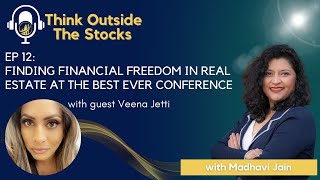
Veena Jetti moved from corporate real estate into multifamily investing and now mentors others. She says passive investors should vet sponsors carefully, avoid overthinking deals, and stick with a few trusted partners. A family medical emergency showed her why passive income matters.
Questions this video answers
March 30, 2023
Search her first and last name 'Veena Jetti' (spelled V E E N A J E T T I); Facebook group: 'Mastering Multifamily with Veena Jetti'.
Chapters
People ask me, what is the secret? Right? It's showing up and it's really hard work. Like that's it. That is the recipe for success. There's no secret formula here. There's no secret sauce here. It's those two things done consistently over time.
Are you frustrated watching your hard earned money ride the knee jerking Wall street roller coaster? Are you looking to diversify into alternate investments and set them on autopilot to achieve financial freedom? It's time to learn the ways of the wealthy. It's time to Think Outside the Stocks with your host, Madhvi Jain, an immigrant from India and ex IT professional who will bring you industry experts to illustrate a passive and holistic financial approach to build not just passive income, but also your generational wealth. Madvi is on a mission to change the financial trajectory of one family at a time. And a thousand more to go.
1.
Are you going to be part of this vision? And now, without further ado, here is the host of Think Outside the Stocks, Madhvi Jain.
Hi, everyone. Coming to you live from Teera podcasting booth at the Best Ever Conference. I am Madhvi Jain from Think Outside the Stocks. And I have here with me Veena Jetty from.
So excited to be here.
I'm so excited to be here with you. And one of the things Rina, I quite honestly see about this conference is the number of women around in here, in audience and on the stage. It makes my heart so happy.
I love it. You know, the organizers, I know them, they're wonderful and I think they have a commitment to seeing more women on stage and more women represented. So I'm very excited about that too.
Yeah, absolutely. And one thing I like about you, Veena, is that you are that representative of the woman power on the stage, everywhere. What you have done, it's been super inspirational.
Thank you. Thank you. I appreciate that. You know, when I see women at these conferences, it makes me happy because it makes me feel like we're actually seeing change.
Yeah, absolutely. And I actually got to present and you got to judge me.
I know, I know. Who knew I was going to be such like a judgy McJudgerson?
No, no, but you were a great judge. So for those who don't, we had a bit slam competition here where there were about 70, 80 participants, I think.
So there were 80 people and you were one of 16 that were chosen.
That's awesome.
Yeah, you did a great job.
Yeah. Thank you so much. I mean, I think I remember the evening before you just said that you just are presenting to me. Think about that. And I had that in mind. I love that. And you know, you have so much confidence oozing. I think that helped me a lot.
So thank you so much. This was all you. This was not me. You did this on your own. You walked out in your white power suit and you, like, gave it to the audience. I loved it. I thought you did a great job.
Thank you. And I think what was essential for me when I was doing the bit slam, that it's not about winning.
No.
Yeah. And for me, it was about my out of the box, out of the stock strategy to put it out there. Because quite honestly, Veena, I think that what's happening around us right now in the market, these are the challenging waters.
Yes. Right.
And I think that we have to think differently. And as a woman, we do always, always bring in that different perspective to things. Absolutely. And I wanted as a community to think about that solution. So when I'm talking about that, diversified funds. So for the listeners who don't know what I'm talking about, think outside the stocks has a diversified fund where you can come in at different times and pick and choose your investments. It's not a blind pool. Typically in a fund, it's a blind pool. I think that's what our investors need right now.
Yeah, I love that. I think, I mean, who doesn't want control over their own portfolio, Right? Like, who doesn't want to say, yes, I want multifamily. No, I don't want this asset class. Yes, I want short term rentals. No, I don't want. I mean, I think that that is something that is different than how it's normally been done. And what I actually loved about your pitch yesterday was you went through your personal story. Oh, it was very powerful. Yes. I mean, I loved it. And it was just a. I won't go into. I won't tell your whole story. But generally you told us about how you lost everything and started over and you are here where you are today. And I think that's so inspiring for people who are starting from zero or who have a lot of adversity. Right. Like you're an immigrant and you came and you lost everything in this country without a safety net and then built it back up. And that's incredible. Not a lot of people can say that. But that means that if you can do it, they can do it too.
Absolutely. And one of the key things I thought of sharing my story quite honestly, Veena, because I think we all have a very uncommonly Common story.
I see what you did there.
Right. Because we think that, oh, it's so unique. I don't want to share with the world because it's so personal, but every tidbits of the story are related to you, related to everyone, you know, the listeners. So that's why I wanted to share that. And what happens is sometimes we have a mindset thing. We think that this is one thing is limiting me. That's the reason I cannot do it. Yep. So that's the reason I want to. I want to share my successes, but I want to share my failures. Yep. Right. And with that, if I can do.
It, anybody can do it. Listen, people ask me, what is the secret? Right? It's showing up and it's really hard work. Like, that's it.
Those.
That is the recipe for success. There's no secret formula here. There's no secret sauce here. It's those two things done consistently over time.
Absolutely. So on that note, Vina, tell me your story. And, you know, I'm sure. And I know your story, but I'm sure our listeners would love to know that where did Vinha really came from and what were your struggles? What did you learn?
Yeah. So I'm the daughter of two immigrants who came here with, you know, like, every immigrant story, right? Like, they came here with $26 from India where they, like, walked uphill both ways in a foot of snow to school barefoot. Right? Like, my parents told me that story so many times. I would tell my friends that they said this and be like, oh, yeah, my dad told me that story at dinner last night too. It's like the typical immigrant story. And so I'm the daughter of two immigrants. My mom is actually a very successful real estate investor in her own right. But I'm the first in my family to have invested in multifamily assets. She built their portfolio on single family. And I went to college. I got my degree in finance. I graduated when I was 20 years old. And my mom was like, okay, great. Like, can come work for the family business. And I was like, mom, I'm an adult and I have a degree. There's no way I'm coming to work for you. And she was like, okay, you know, like, bird, fly out of the nest then. And so I went and worked in corporate real estate, and I made a lot of money for a lot of other companies. I learned a lot. I worked for some of the biggest companies in the world after college. And I ultimately left Corporate America in 2012 when we paid taxes as A married couple for the first time. And I was like, that must be.
Ouch.
It's like, mom, why did I just pay all this money in tax? It was like multiple six figures. And so she was like, oh yeah, you have to quit your job and you have to be a full time real estate professional because this is the most tax efficient way to be investing money. And I was like, okay. And like whose mom tells them to quit their stable, high paying job? Right. So she encouraged me to quit and I did and I started investing for myself. I was investing in single family homes. There was a week where I bought like five houses in one week. And I was like, this isn't even a little bit sustainable. I. How am I going to do this all the time? Also I hate it. So there was that. Yeah. Because I didn't like having to chase tenants for rent. I didn't like that they would like call me at 2am and be like, our faucet is leaking. And be like, okay. Oh, I once had a tenant. This is a true story. I once had a tenant call me and complain to me because the garbage disposal was too loud.
Oh my God.
And I was like, too loud? Is it like just going off? Like what? What do you mean? And she's like, when I turn it on, it's loud. And I was like, oh my gosh, please don't ever call me again. Right. And so that's when I realized I needed more scale so that I could have a manager in between me and the garbage disposal. And so then I started buying multifamily assets. We exited. Now we've exited a bunch of deals, but we exited our first deal after three and a half years. But the first deal I ever did, I had to raise $1.2 million. And that was a hard. I cried myself to sleep every night for six weeks straight.
Oh my gosh, without a doubt. It's hard.
It was so hard. But after you do the first one, the second one gets easier and then the third and then the fourth. And actually it's not that it gets easier, you get better. And so now we close these like really big deals where if you had asked me 10 years ago if I would buy a hundred million dollar property, I'd have laughed at you and been like, who are you talking to? And looking over my shoulder for who you're talking to. Right. But today it's like I actually find buying $100 million property a lot easier than being a mom, quite frankly.
Yeah. The scalability wise, right.
It's just yeah, it's so much more scalable. Absolutely. Absol. Absolutely.
Yeah. I love that story. Thank you so much for sharing. First of all, and it's not just that you created this path for yourself, but you are mentoring people. That's what I like about it. You know, about women, we are very nurturing in a way. So when we do it. And that's exactly. We think outside this talks. My strategy is that when I found out about this strategies and I do the infinity banking and the commercial real estate and I was mind blown and was restless, I was like, I got to bring this to community. I think that's the nurturing part in us. So did you feel that? And why did you start mentoring? Why did you feel that? It's essential. And you are doing great in mentoring and making difference to so many people's lives.
Thank you for that. I love teaching. I love teaching, but really what it was for me is it's multifold. So first, again, I never would have thought I would be doing any kind of mentoring or building a community, but I think it's so important that we have a space not just for women, but for women and men and minorities and people that are underrepresented to feel safe and comfortable. And I think that that's when you actually get better output from everybody, regardless of gender, race, religion, ethnicity. None of that matters in this community that I wanted to build. But more importantly, I feel like if I don't help someone else, then I am taking advantage of the person that are the people that helped me. Right.
Wow. That's so powerful what you just said.
Right. It's your responsibility when you achieve success is to reach back and pull the next person ashore. Right. And my ask is always from the community. And anybody in my community knows this. My ask is always, when I teach you something new, go out and teach two or three more people, because that's how I can increase my impact. I can't do it alone. I can't reach 10,000 people, a million people, 100 million people, a billion people all by myself. I need you guys to help me. And so I always ask for you to go out and you teach us that we get in the mindset of paying it forward.
Absolutely. And exactly what you're thinking on the same line. Right. I have the same drive. And I think, you know, we are driven by that Go Giver philosophy. Yes.
I love this philosophy.
Yeah, yeah. And the Go Giver is about adding that massive amount of value to massive amount of people.
Yes.
So you are now creating your you know, little minions to go out there and do that massive impact. And it's kind of that domino effect.
Yeah.
You one person, as a, as a person, you cannot impact. So let's just create.
We have to do it together. It's collaborative yet again.
And what I like about this world, and I come from the corporate world. Right. I work for, in a consulting environment 16, 17 years. What I love about this world, that there is so much of collaboration, there is so much of peer support. Yes. And I believe in for my investors also that let's all do this together if we want to. If you want to learn what I'm doing, I'm. I want to teach you.
Yeah.
Exactly the way you want, want to teach people. Right. And I believe that there is so much power in the community that as a community we all rise with a high tide.
Yes. A rising tide lifts all boats. I totally agree with this.
Yeah, absolutely. So on that note, you know, think outside the stocks is again, it's not just the outside the stock philosophy of investing and implementing, but it's about not that tunnel vision. It's not just the finance, you know, like passive income, financial freedom, but it's about that growing, preserving, protecting and passing your wealth to next generation. That's what I believe in. And I love to ask that your core is multifamily and you're doing so much about it. But how do you vina jetty think outside the stock?
Oh man. Okay. You're going to like put me on the spot and I know. But you know what I think is.
So good to share?
Absolutely. No, no. What's so core to it, right. Is the reason why it's such a great concept is because it's diversified.
Yeah.
Right. You're not putting all of your eggs in one basket. For me personally, like I invest into other asset classes. I don't just. I invest the bulk into multifamily because that's what I know do live and breathe. But I also invest in other asset classes. Right. Like I have self storage in my portfolio. I have new dev in my portfolio. I have tiff lending in my portfolio. I have. Gosh, I can remember all the things I've invested into over the years. Short term rent or not short term rentals, single family rentals. I actually want to be in the short term rental space. I haven't actually moved into it yet, but scalable, right? Yeah, yeah. The thing is, is though what I know is I don't want to be an expert in any of those things. So I just Find people that are like me in those other arenas and I just put my money with them.
Absolutely.
I don't want to know anything about how to build a house from scratch. I want to know the people that know that, but I don't want to know that myself.
I think the leverage that you're talking about, it's so important to understand. It's the leverage of two things that you have to do. The leverage of T, that's time, and the leverage of T is a talent.
So you don't have it TNT time and talent. Right.
So you, as women, we think that we need to know everything. We need to do everything.
You need to know the right people.
Right. You just need to identify the talent to leverage. Exactly. And I love that, that you are putting that message out there. So, first of all, thank you so much for sharing what other asset classes that you invest in. So passive investors looking for investing into different asset classes. What is the three things that you would say that they should look for?
First and foremost, vet the sponsor because you are betting on the jockey, not just the horse. Right. A great sponsor can take an okay asset and make it a great asset. A bad sponsor can take a great asset and make it not so good. So spend the majority of your time vetting the sponsor. That's first and foremost. Second is don't get into analysis paralysis. Right. Like that is so easy to do. It's overwhelming to absorb the amount of information out there. Don't do that. You. And oh, the third is you don't need 100 sponsors that do multifamily. You don't need 100 sponsors that do self storage or mobile home parks or whatever you're investing into. You need like two really good ones and then just keep betting on them over and over and over. Right. And a good sponsor is going to communicate with you. That's going to be the biggest key. Because it's like getting into a relationship or a marriage. Like, you still have to talk to this person for like five years or whatever the life of the investment is. And that can be a very long time.
Yeah, I love that analogy. It's a relationship. And when I think outside the stocks, when I'm looking at growing and bringing the asset class, I look at, first of all, the talent, right. That they are doing it for years and they have the talent to even address the challenges, not just to manage it, but to address the challenges and the different tides that we are seeing. And what you're saying is so important that it's a relationship. You don't need hundreds of them. And that analysis paralysis. Right. So typically investors look at the investment first. I think that's the sponsors first. And that's where I start that look at the sponsors, their values, what are, what are they doing first? If they are putting the investors first, are they doing the underwriting? You know, conservatively. Those are the things important for me to see as a team first. And that's how I get the investments outside the stocks. And then it's about investment. And what you. Another thing that you said is analysis paralysis. Right.
It's so easy to get.
Absolutely. And then I always say that, you know, they. About taking an action is so important. If you don't take an action when you are looking at something, it's forgotten. So it's not the time to take action is not, you know, today or tomorrow. It's now.
Right now.
If you don't take it now, it's gonna be forgotten. Absolutely. So on that note, I would love to tell you, the listeners that how can they get in touch with you?
Yeah. So if people want to find me on social media, it's just my first and last name, Veena Jetty. V E E N A J E T TI or my Facebook group, Mastering Multifamily with Bina Jetty.
Right. And what is that one final message that you would like to give to passive investors? And I'm gonna ask you, I have a rapid fire round right after that. Okay, so we will go on that. But I would love to have, you know, just your input on. What is that one powerful question.
If you want to build generational wealth. I'm not talking about like making money in your lifetime.
Yeah.
You have to be investing and making investments and you want to be smart about those investments, but you can't want to be so smart that you want to know everything. This is along the lines of analysis paralysis. You just need to know and trust that the sponsor you're investing in, you're investing in them. Right. That you're investing with, but you're investing in that team. And you want to know that when things are going wrong, they are going to step up and lead you through whatever turbulence there is. Because nothing ever goes right on a deal. If you. And this is actually a really great vetting question, maybe I'll give you this as like an extra bonus.
Okay.
When you're trying to vet a sponsor, ask them for. This is the single most powerful question. Tell me about a time where things did not go according to plan and how you handled it. You're gonna get one of two or, and or three answers. Right. So the first answer you're gonna hear is we've never had that happen. That's never happened to us. Okay. That immediately tells me you are a liar or you just don't have enough experience to have had anything go wrong yet. So that's problem for me. Right, so that's going to be the first answer or the second answer you're going to get is, oh, you know, like some kind of very fluff, high level answer about like, oh, we, we missed a check in the mail and so we deposited a week late. Like, okay, that's not really what I'm asking about here as an investor. Right. But the answer you're looking for from a really experienced and good sponsor is yes. Okay, here's an example of when we plan for a B happened, here's why B happened, but here's what we did to fix it. And this was what the outcome of it was. And moving forward, we've mitigated that exact same risk from happening again by doing abcd. That's the answer you want from an experienced and good sponsor.
I love that. I love that, Veena. Because that's so important. If they haven't seen any challenges, then what they have seen.
Exactly. I don't want them to learn the challenges with my money.
I know. Exactly. So thank you so much for sharing that last powerful bonus for us with us. And with that, are you ready for.
The episode stretch or is it. What kind of rapid fire is this?
It's just going to be like a snowball question to you. All right. What's the most fun thing that you have ever done?
Oh, the most fun thing. I've done a lot of fun things, so it's hard for me to pick just one. Okay. So my kids and I, this must have been about a year and a half ago, we stayed in this giraffe. It's called Long Neck Manor. It's like a giraffe home. It's like. Yeah, it was really cool. So it's this like big suite and it's built around the giraffe.
Like come out or something.
Yeah, there's like. So there's these huge windows and you can see all, like all three of the giraffes out of the windows. But they come in there at night and then in the morning they open this little tiny door and like near the baseboards. And they open the door and then the giraffes will stick their face into your little living quarters and you can feed them, like, lettuce and carrots and stuff. So that was actually pretty cool. And I got to take my kids there. They adored it.
I'm gonna get that address of the place.
Yeah. So it's in Texas. It's like near hill country Texas.
I'm gonna check that out.
It was so cool. I love that.
And, you know, I. You know, from what you are sharing, I think the life is about experiences and memory.
Yes.
So I love that. Thanks for sharing that. All right, ready for the next question?
Yes, I'm ready.
It's going to be three. Okay.
Okay, I'm ready.
All right, the next question. And it's kind of a little sentimental. Okay. Okay.
Hope I don't cry.
What is the most sentimental thing investor has ever said to you?
Oh, I had a lot of those over the years.
I'm sure you do.
Oh, gosh. I'm trying to think what the most as hard, you know, And I. I get mostly they're very similar in nature. Right. It's because of you I've been able to do X, Y or Z. Right. Like, so that. And that a lot of times is like, I've been able to retire early. I've been able to stop working a second job. I have been able. Oh, I'll tell you. I'll tell you.
I got as.
I'm like, thinking through all that I found, and it wasn't actually an investor that said it directly to me. It was another mutual friend of ours that said it to me. And so there was somebody who was an investor, passive investor in one of my early deals. This must have been, I don't know, like eight years. I was a long time ago. And she invested with me passively. Had never heard of multifamily, passive investing, multifamily in general. She just didn't know this was an option. And she invested with me. And then now I found out, and I didn't know this, but now she's doing her own deals.
Really.
And she told our mutual friend, she said it was because of Veena that I found out that this is something that I too, can do. And now I've built generational wealth and financial independence for, like, my kids and my family. My husband doesn't have to work work the way he works anymore. And I was like, wow, she didn't even set out to do this. But because this door was open for her, she, like, she walked right through it and she slammed it behind her on the way there. Because she's like, I'm not. I'm not doing anything else anymore. I'm just going to invest in multifamily. And I. But I just love how powerful that story is.
So profound. And it's like, you know about the direct impacts you're doing, but these are the indirect impacts that's happening. It's. This is kind of coming to give you.
It does, it does. This is, this is actually what breathes life into me.
Okay. And now the last thing, I think the most fun question. What's the scariest thing that has happened to you?
Oh, this one might be wrapped in the sentimental thing. Oh, gosh, I'm about to end this on like a low note, but I'll bring it back around.
Okay. Okay.
So I have twin daughters. And when one of my daughters was eight weeks old or 10 weeks old, she spiked a fever and we took her to the hospital and the they, they did some testing on her and they caught a tumor on her liver and told me that it was a very aggressive pediatric cancer.
Oh my gosh.
Yeah. If you want to know how to like shatter a person's world in just one sentence, that's the sentence you say to them. And I still get emotional when I think about it, even though it was so long ago. So they wanted to do follow up testing. And one of my good friends, and I don't know what I did in life to deserve her in my world, but I am so grateful to have her because she's a pediatric radiologist. And I immediately called her and her husband. They're both physicians. She's a pediatric radiologist. He is a pediatric radiation oncologist. And they're married to each other. And I called her and said, hey, Kate, this is, this is what I mean. I wasn't this composed when I was saying. I read.
The emotion.
Yeah. And so I called her and I asked her to if she would mind looking at the images and just tell me if I needed to go get a second opinion. And I hate asking, you know, doctor friends for these, like, drive by consultations because, like, they don't want to take that kind of liability on. Right. And so she, she got together with a team of like 5, 14 radiologists that all looked at the images that night.
Wow.
And she comes back to me and she goes, veena, there's a differential diagnosis or an alternative diagnosis where this is a benign vascular tumor. I was like, great, I want that one. Then she's like, yeah, but here's the challenge. You are in a situation. We had a biopsy scheduled for the next day to Confirm the diagnosis of this being this cancer. It's an infantile hepatic hemangio endothelioma. And I'm probably the person on the planet that knows the most about this tumor because I have read every single paper on this tumor that's ever been written. But she's like, listen, your doctor said they think it's an ihh. They want a biopsy. We had a schedule to confirm the diagnosis and then start chemo and radiation treatment. Right? She said, but we all think that there's a very strong possibility that this is actually a benign tumor, which is an ihh. I said, okay, let's biopsy it and then see if it's benign or not, and then we'll know what to do. She's like, well, it's not that easy because if you biopsy, it's such a vascular tumor that if it's benign, there's a risk that she can hemorrhage and bleed out and die. And I was like, awesome. This is like the best decision I have to make for my 10 week old baby. So I have to choose between biopsying and potentially letting her bleed out if something goes wrong or we, if it is a cancer and we don't biopsy, then we can just let the cancer metastasize and that could be a worse outcome. Right. And so I'm, you know, as a mom, what do you, which one do you choose? Right. Yeah. I couldn't, I could not make a decision because I just felt both had so much gravity to them and I didn't know which was right. And so I turned around and I said, you know, Kate, if this was your daughter, what are you going to do? She said, listen, here's what I recommend. She said, let's hold off on the biopsy. She said, let's start doing ultrasounds on the liver with dye so that we could, it would light up differently. And I don't know all the technical terms for it because I'm not a doctor, but she said, let's do that and let's monitor it really closely. And I was like, okay, if this is the course of treatment, this is the course treatment. Like, I have to, I have to make a decision here and my husband. I made the decision to follow Kate's recommendation and turns out she was absolutely correct and it was thankfully a benign tumor. But that period of time where we were living in limbo was hands down the scariest thing that's ever happened in my life.
I'm. I'm so grateful that you shared this and then you know what you have gone through.
Yeah.
As a mom to make that decision, the right decision for your kids because their lives are not a hand.
Yeah.
Right.
So a lot of pressure.
Thank you so much for sharing your vulnerability. Because what happens that, you know, we all see that, you know, powerful woman. Look at the success. Look at. But this is what happens. This is what manage. This is real life. And you know, I'm so grateful that you shared that. And I'm so even more grateful that it turned out to be banana. Everything is all right. You know, it's different for us to suffer ourselves.
No. Yeah. She was 100 out of 100 times, no doubt about it.
So I'm glad that that's over. And she's, she's. Yes.
Now she's healthy. And I mean, the irony of it is if she hadn't spiked that fever, we might not have ever even known she had this tumor. Because most people just don't know. We just happened to be in like it was like a series of events. It was like the perfect storm to lead to this. But you know what? I will say what was interesting about that moment is in like that one sentence that my whole world just like collapsed upside down. It turned upside down. But in my mind, you know, my, my thought process is, okay, Vina, you're a problem solver. How are we going to solve this problem? And I'm like tackling it like it's a business decision, right. And I was like, okay, we're going to sell everything we own here in Texas. I'm going to find out where the best hospital is in the world. My husband's going to quit his job. I'm going to quit working. We're going to move to Cleveland Clinic or wherever it was, Right. Like Boston Children's or CHOP or wherever it was. It didn't matter to me. And I was like, we're going to move there and we're going to get her the best care possible with the best doctors. And what was so powerful to me looking back at that moment now is it never once crossed my mind, how am I going to pay for our life? Because I had created all this passive income that if my husband or I never worked, we would be okay. At that moment in my mind, I had sold everything, including my parents house, my in laws house. I'd moved all of us to tackle this problem together. But the power of passive investing is that I could make those split second decisions and not even think about the financial burden that doing any of Those things would have had because of multifamily and real estate.
Wow, that's such a powerful thing that you just said, Veena, that, you know, life gives us curveballs.
Yeah, it does.
And it's unexpected. That's the thing about curveballs. And instead of being ready for it, if you have your things in order already, it just helps so you can focus on the right things. Absolutely. And I think that's a great note to end our show on that. You know, if you are looking at creating that passive income, not because you want just financial freedom, look beyond that. Look beyond that. What if life starts happening and it.
Will, it happens to all of us. And I hope it's not this for anybody else, but it could be something else.
Right.
It could be a divorce, it could be a move, it could be an expansion into a business that you weren't even thinking about. Right. Like, it can be good things and bad things, but all these things happen.
Yeah. Like I said, right. We all have uncommonly common story.
Yeah.
That's what it is. I love it. Yeah. It's just those challenges. And be ready for it and be, be ready with what your strategy is going to be. So if you are listening to this, we are live from Best Ever conference and we had such a genuine, such a heartfelt and such a wonderful conversation here with you. Beena. Thank you so much for your time. I loved it. And Think Outside the Stocks people. You can check us all on Think Outside the Stocks and Veena and the Y Funds.
Yeah.
So be in touch. Don't wait for that. Taking that action. Just take your action right now.
Take action now for sure.
Absolutely. Thank you so much.
I do appreciate you.
Thanks for tuning in to the Think Outside the Stocks podcast. If you enjoyed today's episode, please like and subscribe. Maadvi is on a mission to change the financial trajectory of one family at a time. With a thousand more to go, we hope you'll be a part of this vision. Please join our growing community. And to get your journey started, visit thinkoutsidethestocks.com to download your free guide on active income with passive real estate investments. If you learn something new, please share it with one person today. And if you have 60 seconds, please leave us an Apple review to help us reach more people like you. Tune in for the next episode.
More from Madhavi

The "Holy Grail" Real Estate Strategy Most Passive Investors Miss | Featuring Glenn Hanson

Be fearful when others are greedy, and greedy when others are fearful. #shorts

Building Recession-Proof Wealth Through Mobile Home Parks & Self-Storage with Matt Ricardella

The "Holy Grail" Real Estate Strategy Most Passive Investors Miss | Featuring Glenn Hanson


Think Outside the Stocks: Breaking the Financial Fear Barrier with Liz Faircloth


Why Health Is Your Greatest Financial Investment | Chris Orestis with Madhavi Jain


The #1 Retirement Killer That's NOT the Stock Market (Most People Miss This)

EP47: Private Credit Explained: Stratus Financial’s Impact Investment Model | Brandon Interview