EP 39: Money Market & Multifamily - $650 Million Perspective! ft Omar Khan
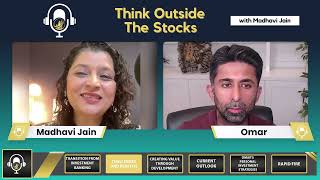
Interview (host: Madhvi Jain) with Omar Khan (founder, Boardwalk Capital) about multifamily real estate investing. Omar explains his background in finance and real estate, argues multifamily is cyclical but attractive long-term due to income, appreciation, tax write-offs, and secular underinvestment in affordable housing. He outlines a thesis favoring ground-up development in secondary/tertiary Midwest markets (to create value where supply shortages persist), cautions investors to vet sponsor teams and financial strength (deep pockets, ability to carry recourse debt), discusses financing (no one-size-fits-all: match business plan to debt type), and notes a current pipeline (~$150–170M) and plans to acquire 400–500 units soon. Practical advice: focus on team, buy cheap enough to withstand rate cycles, and act during periods of fear/uncertainty if you have an experienced platform.
Questions this video answers
October 9, 2024
Madhvi (Madvi) Jain
Over $650 million
Close to $150 million
About $150 million to $170 million
Chapters
Look, the biggest risk investors have is that they're going to partner with people who are not subject matter experts and who do not have deep pockets. Unfortunately or fortunately, depending on how you look at it, this is a business where you just need to be a rich person as a sponsor because you need to have deep pockets. That's just the way it is. It's always been this way. That's the way the business is. So, so if you're not working with partners that have great financial strength, do not have deep pockets and by the way, also have, have the ability to source the right piece of land, then have the ability to go horizontal and vertical on that piece of land, have the ability to sign on recourse debt which is personal guarantees and then the bank accepts those personal guarantees and then they can't do this over and over and over again. Those for investors are the bigger challenges.
Before we go ahead, just a little bit, 2 cents from my lawyer that this is information and education purpose only. If you want to engage with any of our guests, including Shauna, please do your own due diligence. And I am not particularly a financial, legal or tax advisor or investment advisor. So please seek your own team and maybe Tashana would be one of that team members. Right. And also we, you know, we'll have some examples for educational information purpose only. So keep that in mind. These are point in time. These are not representative of any real information.
Are you frustrated watching your hard earned money ride the knee jerking Wall street roller coaster? Are you looking to diversify into alternate investments and set them on autopilot to achieve financial freedom? It's time to learn the ways of the wealthy. It's time to think outside the stocks with your host, Madhvi Jain, an immigrant from India, an ex IT professional who is who will bring you industry experts to illustrate a passive and holistic financial approach to build not just passive income, but also your generational wealth. Madvi is on a mission to change the financial trajectory of one family at a time. And a thousand more to go. Are you going to be part of this vision? And now without further ado, here is the host of Think Outside the Stocks, Madhvi Jain.
Hey, hey, hey. Welcome back to Think Outside the Stocks in another episode with your host Madhee Jain. And we have a very special guest here today. We have Omar Khan from Boardwalk Capital. He's the founder and managing director there and we have many, many interesting things to talk about. Omar, welcome to Think Outside the Stock Show.
Thank you, Madhvi. Thank you for having me.
And as you know, I like to jump in and talk about three interesting facts about my guest Omar here. He comes from a strong financial background. He's been a CFA charter holder for 10 plus years. The second fun fact is actually he has advised $3.7 billion in capital financing and M and A transaction as well as he's also advised securing 50 plus million in equity from private equity and institutional capital. So with that depth of experience, Omar has various assets across the board. He is multifamily syndicators and he's closed over 450 million transactions in various states. So Omar, welcome again to think outside the stocks and let's jump into this conversation.
So, Madhvi, thank you. But a lot of those numbers I think need to be updated. We've transacted over 650 million and raised over about close to about 150 million in equity.
That's amazing. You're so busy working that the numbers are old. You're moving fast. That's great to know, Mar. Thank you so much, Appreciate that. So, yeah, with that, let's jump into a little bit about your story and how you have come here. I always, I'm curious about your background. You know, you come from financial background. So tell us a little bit about what you did in your previous life. What led to the multifamily syndications and how are you doing now?
Well, I mean, my background is in finance. I worked in investment banking. Then I worked on the buy side, which is the client side as well. I was running and structuring deals. About eight to 10 years ago, I moved from Canada down here to the US and we started running our own transactions. The big reason for getting into real estate was the tax write offs and scalability. At least multifamily wise. There's many other verticals you can get into. So that's what it was. And from there on end, I mean, by the grace of God, you know, we just kept putting one foot after the other and now we're here. So I wish I could tell you there was some secret of success because if I knew, I'd be more successful. But it was just having good experiences, meeting the right people, having the right partners, and just keep putting one foot after the other.
That's great, Umar, thank you so much. And you know, our listeners today are passive investors. Most of them are, you know, heavily, heavily invested into stock market. And of course there is comparison. You know, we talk a lot about diversification outside of the stock market. I mean, we are not here to slam any type of Investments. Right. Every everything has a place in their portfolio. But diversification is the key. So if you can help our listeners today just to understand that, you know, what are the challenges in the stock market that you faced, you know, typically and why you thought of in diversifying into real estate and over the period of time, what are the advantage that advantages that you have seen?
Look, I didn't really face any challenges, to be very honest with you. I was investing broadly in broad market indexes, ETFs, mutual funds. But it was just that from a business point of view, starting a mutual fund company is much harder and scalability is much harder than than I would with the type of work that I'm doing now as a developer and acquirer. So for me it wasn't necessarily whether I had issues at stocks or public market securities versus private securities. It's just that a starting a business in public markets is much harder. Number one. And number two on the private market side, what I wanted was to get tax write offs as I initially told you. So that was also very helpful. So for me it was less to do with public or private market securities and more to do with the fact that where I've said I could add the most amount of value and not for just for ourselves but for our partners, our investors.
Yeah, I think that's amazing because I think tax is one of the biggest driver what lead the stock market investors into real estate. And we of course have seen over the period of years that there are many tax write off that real estate investors can get with that. I love to talk about the multifamily and that's your expertise, that's your spotlight today. So let's talk a little bit about multifamily and the multifamily market where we are. I know with the interest rate hikes that happened very quickly over last couple of years, we saw that the market sentiment has changed. Right. So a big discussion topic when we have expert like you today we think outside the stocks is talking about is multifamily even the right investment right now. So let's talk a little about that. What's going on into multifamily market and why are we here? What led us here?
Well, first of all I am going to have a biased answer because I am a multifamily developer and acquirer. So it's a bit like asking a barber, do you need a haircut? The answer is always yes, yes, you need a haircut. So in my case, particular case, look, I can give you our thesis. Everybody has a Different opinion on it. Unlike the what the vast majority of people think, real estate is a very volatile and cyclical industry. It has always been the case that it is volatile and cyclical. And by the way, not just here, you look at Asia, Europe, Australia, anywhere. Because real estate is. The fortunes in real estate are highly tied to which way your interest rates are moving. So while it is a great investment long term, and by the way, even in the medium term, it's a great investment to have depending on the short term. Because sometimes two years can be really short or they could be really long. If you're in pain short term, there is going to be always a lot of volatility in real estate or by the way, like any other investment. So if the answer is, hey, I want to come and I just want to slip in one or two years and I don't, I don't want to create value or I can't create value medium to long term, then yes, you shouldn't be investing in multifamily. But then again you should, you shouldn't be investing at all because you're a speculator, you're not an investor, right? But if you have a niche, you understand how the mechanics of the business works, you understand where the pain points are and you understand how to pull the right dealers at the right time. It is still a very lucrative niche. Ever since these interest rates that everybody keeps talking about. You have to put this into context. When interest rates were close to zero, nobody said, oh my God, the real estate values are only going up just because interest rates are real. Because it's not like you live in Austin or somewhere, right?
Yes.
Yeah, it's not like Austin house prices. Austin houses suddenly became so much more cooler and prices went up. No, the biggest reason was interest rates were close to zero. So people were just paying crazy money for houses and prices went up. Similarly, now you are seeing a lot of price correction in a. I'm just using Austin as an example. Phoenix is even worse than Austin. Now when interest rates are up, people realize, well, maybe the thing isn't worth what I thought it was worth. But long term, if you hold a house or say an apartment building in Austin for 20 years, you, the chances of you making money are very high. So medium to long term you are going to continue making money. It is a great vertical to be in. You have income, capital appreciation, depreciation, write offs and most importantly what you have are secular tailwinds helping you. There is a chronic underinvestment in affordable housing. Number one, our housing starts and multifamily construction over the last 10, 12 years have not kept pace with the demand. So even though today, these days we're seeing a massive supply happening, you have to put it in context. For 10 or 12 years, we did not see enough supply to match demand. So declining supply, rising demand, when prices went up in the short term, supply is catching up. So along with interest rates. So prices are either going sideways or downwards for a little while. But ever since, interest rates have been going up. Multifamily starts nationwide, not just in say an Austin or a Phoenix. Phoenix is really badly hurt, by the way, are down. So this means if you look out to 2026, even end of 2025, middle of 2026, what you are seeing is once this supply glut is absorbed, which by the way, it is getting absorbed at a very fast pace because demand is still up, right? What you have again is a massive shortage because you don't have a lot of units constructed from 2022 all the way to 2024. It's not like, you know, you make supply happen once and you're done every year. The supply has to keep pace. So you had a lot of supply coming 2020, 2021. But 2022 to 2024, till right now, construction starts have gone down over 50 or 60%, which means if you look out mid to late 2025, going into 2026, you are back into a situation where demand is very high, supply is very low. But to take advantage of that, you have to have the financial and operational ability to survive. And a lot of people that were speculators, not investors, will not survive. But by the way, this happens in every industry. You could be in stocks, you could be in oil and gas, you could be manufacturing. When you don't know what you are doing, bad things happen.
That's a very great perspective. It's almost like, you know, there is a bubble on one side and there is a gap on the other side, right? Because of, you know, whatever the environment we are in, if the constructions are kind of slowed down, that's creating that gap. And that is not going to inject right now because that gap is going to inject a couple of years later when there is construction supposed to complete. So that's, that's a very great way to put it in. Again, we talk about housing and affordable housing, especially in multifamily housing, is that housing is always a need, right? It's not a want. So people are, it's. There's no choice. They need to have that there's so much population moving across the street and coming from the outside as well. All these people need place to see, to stay. So I think that's really important. So you bring up a great point there. Now looking at the interest rate environment, right? I mean in current market there's of course, you know, with the, with the bridge date and with the fixed date there's always kind of a debate about what, what is the right way to do it. But it's also depending on the cycle and it's again, that is also very cyclic. Right. So can you let us know about your thesis around the fixed interest and the variable and what, what is for the.
I'm going to tell you this. Every single person that tells you right now that oh, floating rate debt is bad or fixed rate debt is bad, whichever, whichever. If they go to one end of the spectrum or the other end of the spectrum, either they are stupid or they think you are stupid. And I'll be very clear. The reason is because everything is dependent on the context of where we are.
Yeah.
So think about it this way. If you are say in 2012 getting fixed and I mean you had the ability, we don't have the ability to look forward, right? I mean we have to take things as they are.
There is no crystal ball.
Crystal ball. So a lot of times people that are people that provide very, these simple solutions just do this and you will make money or do this. They are, well, that are not professional people. Look, it is very contextual. If you are in 2012. Now look, we can, we now have the luxury of looking back and you take fixed rate debt, that is a bad deal to get because it would be very onerous for you to get out. Similarly, if you're in 2021 or 2022 and you have floating rate debt now looking back, we can say that would be a bad decision because you should have gone for fixed rate debt. So there is no one answer. Because if there was one answer, everybody would be doing it and we would never have any problems. It is always contextual and you have to match your business plan with your financing plan. If your business plan is to hoard something for 20 years as an example, getting short term financing on it is not really the most intelligent thing. But if you have a distressed, dilapidated or extreme value add or opportunistic type asset, then getting long term fixed rate financing on it is also not intelligent because you need to fix the asset first before you put permanent financing. So all these conversations people have between bridge or Fixed or floating. I think a lot of these people are unsophisticated. They just go to some guru or they've read something somewhere and they want to sound intelligent. It is very contextual and because if there was one answer everybody would be doing it. But there are. Life isn't that simple basically.
Yeah, you're spot on Amar, because you know, that's what I see that there's always kind of pros and cons to it, right. So for example, the fixed date, you know, you have to take the yield maintenance in consideration. You have you know, the prepayment penalties if you have the exit coming quickly. So something like a deal value if you have the variable over floating and then you have the rate cap. So it's a cost that you have to, you know, always look into the current market cycle. When I see the deals going in and somebody who is still doing the very boat and they have strategies around it right again that deep value are versus what they want to stay in long term. If we see somebody going into fixed rate and again if the rates change, I mean there's one third of the people predicting that rate might not change, it might go up. And if you are going to fix there is other compromise that you have to do and maybe you know, bring in a press component so that you have to balance it out with what you are providing to your investors. Because otherwise the investors return are going to get impacted severely. And what had happened over the period of last few years that in investors have gotten used to seeing that, you know, 2x in five years, right. So that 16, 17, 18, even 20% are you know, annualized returns. But now it's hard to give that. So the syndicator team, they have to, I mean you guys have to kind of look into again like you said in the, in the context of the deal and what you want to do with it, with that. You know, I, I know you are a lot of into construction now and bringing up this instead of adding the value. Creating the value. Let's talk more about that. What is your thesis about creating the value and not just adding the value?
Look for us, basically about three, four years ago, close to four years ago, we started realizing that and this was when interest rates were really low. There was two items. One was we were like again, we didn't know at the pace which interest rates were going to go up. Because if I did I'd be, I'd be really rich. Right. I did not know that. But there was that still that fear. Okay, what happens if Rates go up. That was one fear. And the other fear, basically fear or trepidation, was that what we were seeing were because interest rates were so low, we were seeing lots of people that were not professional, do not have a proper organization, were just speculators, guys or girls that went to some real estate conference and now want to do their deal because they want to be a big deal and they want to quit their jobs. Right. They were grossly overbidding for assets, at least in our opinion. Other people could have different opinions and we felt we don't want to be in that competition, number one. Like I don't want to be in a competition with somebody who just wants to do a deal, because I guess that's just number one. Number two, what we felt was that the only way to create value in that sort of market was to develop, but develop in secondary and tertiary markets, not primary market. I live in Dallas. I'd love to develop in Dallas. It'd be very easy for me to do projects, but I would not be competitive in Dallas. Like I would not be adding the type of value here that would help me get returns from my investors.
True.
Therefore, we had. We. They had to start developing and we had a. We as a partnership, we have very experienced. Two of my partners are extremely even more experienced on the development side. And secondly, what we saw was the only way to add value, as I mentioned, was in the secondary tertiary markets, which had an extreme supply shortage. So if you're looking at Austin, Phoenix, especially as I mentioned, Tampa, Jacksonville, they have the opposite problem. They have high demand, but high supply. In a lot of the secondary markets, for instance, we're in Sioux Falls, South Dakota, a lot of the Midwest, what you have is still very robust demand, but not a lot of supply. Because speculatively supply has not. When you're in that type of market, that's where we are able to create value. To give you an example, our hard costs of construction are made to 1 30,000 mid low to mid 1 30,000 a unit. Wow. This is for new product.
Amazing.
People are buying 60s, 70s, 80s vintage deals. So look at anything from like 50 to, well, I guess at least 50 years old or more for a higher price than we are building new today. So why wouldn't we just want to buy, have a newer product for a cheaper price? So that's the way we feel we're creating value because look, even if this current interest rate environment persists, we are still cash flowing in this environment. And if interest rates go down, we can always get out of Our construction loans. So that's the way we look at it. That's the way we create value. But to do that you have to have a good team around you. Investors need to partner with the right people. And a lot of these people that are part timers, you can't just be a part timer and do developer. Right. You have to have the entire organization and you have to have top talent at every level.
Spot on. And I think, you know, I also have noticed that, you know, there's a lot of kind of it's mayhem in the market, right. There is a lot of distressed properties. And especially when you hear about, you know, syndicators turning their keys to the banks. Those are the, you know, most, most of the time I see that, you know, coming from the coaching programs or they have not been full time or they have been doing it for a short term. It's very important to kind of have seen that some cycles of the market cycle that different challenges. Because I believe that in a different market has different challenges. Based on the syndication team's experience. That's what's going to define that. Whether they're going to able to handle that challenge. Nobody saw that this challenge is going to come in. But tomorrow, a couple of years down the line, that could be completely different challenge. Yeah, so it's very interesting that you know, you're creating value and you're creating this ground up construction. So give us, give us a little bit insight into it. And when it comes to construction, a lot of things come to mind. Right? There is, first of all, there is a horizontal place and there is a vertical phase.
We do the exact thing we do. Horizontal, vertical, everything.
Basically that's, that's great. And you know, what are the different, let's talk about challenges or risk in both the phases. So would you be able to a little bit elaborate on that?
Look, the biggest risk investors have is that they're going to partner with people who are not subject matter experts and who not have deep pockets. Unfortunately or fortunately, depending on how you look at it, this is a business where you just need to be a rich person as a sponsor because you need to have deep pockets. That's just the way it is. It's always been this way. That's the way the business is. So if you're not working with partners that have great financial strength, do not have deep pockets, and by the way also have the ability to source the right piece of land, then have the ability to go horizontal and vertical on that piece of land, have the ability to sign on recourse debt, which is personal guarantees. And then the bank accepts those personal guarantees and then they can't do this over and over and over again. Those for investors are the bigger challenges. Not a 20% IRR number versus a 15% IRR number because somebody could show you a 30% IRR number. And if you lose all your money, it's all the same. Right. So you have to carefully assess from an investor point of view, the biggest risk you are taking is not the project but the team you are investing in their expertise and financial strengths.
Spot on. Spot on, Omar. Because even we think outside the stocks, that's our belief is that, you know, every deal starts with a team, right. In the best in class sponsor. And these two objectives that you said that that's really important that number one, their expertise. Right. Because the passive investors get to be passive because the syndication team has that expertise. It's not just the expertise but the enough amount of experience that comes with it. They have enough connections to be in those markets. Right. And the syndication team itself, Right. You know, a good syndication team can take a, take a good deal and make it better, but a bad team can take even a good deal. But that just turns doesn't turn out to, you know, a better deal. So I think that's really important when we do our due diligence and by the way, think outside the stock. The due diligence is the core of it. And it starts with the syndication team. We have you know, at least 20, 25 point checklist for our syndication team to vet them even before start looking at their investment. So that's spot on. It's a very important thing. And especially in the current market, the interest rate hikes has been so sudden. Those who did not those deep pockets and they just basically depended on their fees coming in from a deal and moving on from the fees to fees to fee structure. And suddenly when they had, you know, four properties, 10 properties that had problem into it, the insurance just couldn't turn back and you know, support those properties. So having those deep pockets is really, really essential. So share with us what your outlook looks like almost half of the month. Where do you see?
So we are, look, we have a pipeline of development projects that still cash flow in the current today's high interest rates. So our pipeline is about 150 million to about 170 million right now. So we're going to continue to develop those out. Those are all in the Midwest. The reason is because even in today's market, as I mentioned, those projects Pencil very hard for projects, especially developments to pencil in say Texas, Georgia, Florida, Arizona, these types of areas. So that's why we're going to do those. We also talk with lenders because we have a great track record. We got a great asset management and property management platforms that we are also in talk with lenders to take over properties that they have lent on. But the existing sponsors for whatever reason are not performing or cannot perform or sometimes things happen. I mean bad things can happen to good people as well. So we are also looking at portfolios to acquire. Hopefully we'll have some. We'll have about four or 500 units in the next, hopefully the next two months additional that we are going to acquire. So that's what we basically do. But we don't take a position on where the interest rates are because that's frankly above my pay grade and I don't have a crystal ball.
Right, right.
Yeah. We only do projects which we feel can work in under today's environment. And if they work under today's environment, we'll do.
Yeah. And I think what is the biggest fear that actually do you see that losing it coming up? Because you know, a year back some investors were holding their 4G retired. They were holding just putting their money in the savings account and losing to inflation as well. So have you seen in the market, is it moving a little bit better? And institutional money is also sitting on the sideline. Where do you see that capital just on a higher level vision moving in this market?
It's very hard to raise money right now. So I feel like investors are going to keep holding their money tied whether they're retail or institutional fear and uncertainty. Look at everybody thinks institutional capital is some magic thing. They do and they're very intelligent. They have the same issues that retail capital people fear and uncertainty cripple the ability for people to make a decision. But we also know that during the toughest times, that's when you find and when it's impossible to raise equity. Those are also the times when you find the best deals because so tech, if you think about it psychologically, our minds are telling us, oh my God, the world is ending. We don't even know if it's going to be around tomorrow. But at that exact peak of that sentiment, that's when you find the best deal. So raising money is going to be hard. You're going to see more distress. But this is a time if you want to make real money, this is the time you put your foot on the gas bell. But again, you can Only do that if you've got a great platform like ours, your experience, your tenured, you understand capital markets, real estate operations. Because if you're just a bunch of one or two guys, it's going to be real hard as operators for you to function. So investors really need to look out for that. But I understand investors are very varied. Some of them have been burned by some sponsors, so I can understand where they're coming from. But unfortunately none of us has a time machine. We can't go back. So we have to only look forward and see, okay, can we make better decisions than we made yesterday or the day before or a year before? And as long as we keep making better decisions, we don't let our emotions take over all the time, we're going to be okay.
That is such a great advice. I think there is a lot of fear that's driving and you know, just keep looking forward and spot on that you know, the biggest opportunities and investments are going to be seen in this market. And we have started seeing that, right. We have started seeing big discounts also coming in the same properties, you know, a year back and a couple of years back, which we're selling probably 20, 25% higher, we started seeing those discounts. A lot of operators were not able to sustain and you know, just before they give the keys back to the banks and you're looking for those kind of deals, right, the portfolio deals as well. So there's a lot of those coming in and the opportunities gonna get created. I think 2008 these opportunities got created in the single family. Whoever I actually took that chance and jumped into the single family market. They made really great amount of money. Some of these short sales and you know, foreclosures that they, they could acquire. But same same situation for multifamily apartments.
I think, look, it's the same everywhere. It's the same in investing. Anytime there is fee fear and uncertainty, that's the time you get the best deals. But unfortunately, instead of buying low and selling high, people end up buying high and selling low.
Yeah, yeah, I think that's, that's an important factor. And especially with the environment we have in interest rate environment, right. There is not so many transactions happening. And once that kind of loosens up a little bit again this cycle and probably the prices both in single family and nothing and then it start going up. And you know, at that time if you can refinance, if you have bought. Right. If you have bought it low and can refinance during that time, I think you will Be in a better position, both single family and multifamily as well.
So I think, yeah, look, basis is, basis is forever. Interest rates can go up or down. So basically you bought something. If you buy it cheap enough, you'll be, you'll be fine. But it requires somebody to take action sitting on your hands. Wait. Everybody thinks they can time the market. There is nobody on the planet that can time them on market.
That's a great advice. Thank you so much, Omar. And I think with that, you know, there's, you know, there's so many things that we can talk about today. But we're going to move to our next segment, which is, which is my favorite segment and with your experience in all the different asset classes and markets, would love, love to know about, you know, how you invest in diversifying your investment portfolio in different asset classes. This segment is called that. How do you, Omar, you think outside the stock so that my audience, our audience can actually get the tidbits from it and learn from it. So, Omar, how do you think outside the stock?
Well, my answer is going to be really boring. Most of my net worth is tied into my real estate businesses. But any funds that I have, on top of which they're not a lot, I just go invest in a broad S&P 500 ETF, which I guess is a bunch of stocks, I guess. And that's it. I've already, I, I try to keep things simple. I don't overcomplicate them. I have my real estate business. That's where the bulk of our investments and net worth is.
Right.
And any funds on the side, we just buy the S&P 500 index.
Yeah, you have bulk of it on things that you can actually control and a little bit kind of spread across any asset class that has been interesting for you that you have seen in the past.
I'm a very boring person. I keep things very simple. I have, I like to mind my own business. So I'm just in a business that I have which I think is lucrative. I keep it there. The rest is broadly diversified. I don't do any of this other stuff. I'm not saying it's bad. It's just that I feel there's only so many hours in the day so I should focus my energies on which I feel are the highest ROI items and the rest should be broadly diversified so then I can go to sleep at night. There are many great businesses in the world. I don't have to invest in all of them.
That makes totally sense. Amar, thank you for Sharing that simple and boring is better sometimes as much as we keep it. So with that we have a small short round which I call it the rapid fire round. And it's just non business related, personal related some fun questions that you can ask you just for answers for that. Are you ready for that?
I hope so.
Absolutely. So you know, one of my most favorite question is that what is the travel destination that you really, really like and you know that, that you see yourself going back to or one of the top favorite travel destination that you have.
Look, we travel frequently, but I think there's so many. I'm the type of person that thinks there's so many things left in the world to go to and see that I have only had good experiences. Last year we were in Japan and the year before that we were in Canada. The year before that, where were we? We were in Asia, some like Dubai and then Hong Kong. So we travel frequently. But to be honest, there are, because there are so many other places left. I would not necessarily go back to a place not because I've had a bad experience, it's just that I would much rather take that time and go to a newer place and have that experience with my wife and kids.
Yeah, I love that. The second question I have that. What's your favorite thing when you're not, you know, doing real estate syndications or not working on a business? What is your favorite thing to do if you have time to do that?
Oh yeah, no, I have some time. Look, I have young kids, so I try. I don't give them as much time as I should, which is a failing. But I try to spend time with my wife and kids. And again, I'm a very boring guy. I'm a creature of habit. I have everything's on my calendar scheduled out. So yeah, during those times, usually it's just spending time with my wife and kids and a few friends that we.
Yeah, yeah. And then I see that you are a reader. There's a lot of books behind you. Any of the favorite or top favorite or top three?
Oh, no, these books that are whatever. I don't know if somebody can see this. Whatever is the rotating dust. There's no favorites. Each book is just. I like to read novels, I like to read whatever. There's a lot of financial history stuff. I read them every like year or so. I cycle out my books, donate them, get a new bunch of books, read them, donate them. So there's no like one favorite.
You can say, what's your current favorite person?
I mean, look I'm reading. What am I reading right now? I was reading like the. What is it? I'm reading a book on. This is called. It's not a favorite. I'm just reading it right now. This is called the Shadow World. It's Inside the Global Arms Traitor. So this is arms dealing and all of that stuff. Would I say it's a favorite? No, I'm just reading it. So it seems like an interesting book.
The Shadow World. That's interesting.
Yeah. So it's an interesting book. I'm going to finish it and hopefully then I'll know if I like it or not.
Yeah, absolutely. Well, that. This is great. With that, we have come to our conclusion of the show. Again, we are so grateful for having you on the show. Thank you so much for your time again and look forward to. Forward to talk to you soon.
Thank you so much. I really appreciate it. Bye for now.
Thank you so much. And listeners, thank you so much for listening to this show as well. I hope you there's a lot of learning and takeaways from this show as well. And thank you so much. And we'll see you around next in the next podcast episode. Thank you so much.
Thanks for tuning in to the Think Outside the Stocks podcast. If you enjoyed today's episode, please like and subscribe. MADVI is on a mission to change the financial trajectory of one family at a time. With a thousand more to go, we hope you'll be a part of this vision. Please join our growing community and to get your journey started, visit thinkoutsidethestocks.com to download your free guide on active income with passive real estate investments. If you learn something new, please share it with one person today. And if you have 60 seconds, please leave us an Apple review to help us reach more people like you. Tune in for the next episode.
More from Madhavi

The "Holy Grail" Real Estate Strategy Most Passive Investors Miss | Featuring Glenn Hanson

Be fearful when others are greedy, and greedy when others are fearful. #shorts

Building Recession-Proof Wealth Through Mobile Home Parks & Self-Storage with Matt Ricardella

The "Holy Grail" Real Estate Strategy Most Passive Investors Miss | Featuring Glenn Hanson


Think Outside the Stocks: Breaking the Financial Fear Barrier with Liz Faircloth


Why Health Is Your Greatest Financial Investment | Chris Orestis with Madhavi Jain


The #1 Retirement Killer That's NOT the Stock Market (Most People Miss This)

EP47: Private Credit Explained: Stratus Financial’s Impact Investment Model | Brandon Interview