EP 7: Inflation: Friend or Foe?
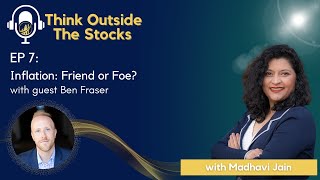
This YouTube podcast episode ("EP 7: Inflation: Friend or Foe?", Feb 19, 2023) features host Madhvi Jain interviewing Ben Frazier (MD/CIO at Aspen Funds) about inflation, recession risk, and how passive investors can position outside the stock market. Ben differentiates the stock market (sentiment-driven) from the broader economy (slower-moving trends), outlines COVID-era drivers of recent inflation (large fiscal/monetary stimulus, labor force reductions, supply constraints), and explains the distributional effect: inflation transfers wealth from savers to borrowers. He recommends real assets—particularly industrial real estate, housing/multifamily, and energy (oil & gas)—and highlights the power of fixed-rate debt, rental-growth tailwinds, and monitoring real vs. nominal interest rates when allocating capital. The episode closes with guest contact info and a rapid-fire personal segment.
Chapters
Inflation is not, not neutral, right? It is going to benefit some and it's going to hurt others. And the real simple way to think about it is inflation, you know, hurts savers and benefits borrowers. And so, you know, the way we say, you know, inflation is a transfer of wealth from savers to borrowers.
Are you frustrated watching your hard earned money ride the knee jerking Wall street roller coaster? Are you looking to diversify into alternate investments and set them on autopilot to achieve financial freedom? It's time to learn the ways of the wealthy. It's time to Think Outside the Stocks with your host Madhvi Jain, an immigrant from India and ex IT professional who will bring you industry experts to illustrate a passive and holistic financial approach to build not just passive income, but also your generational wealth. Madvi is on a mission to change the financial trajectory of one family at a time. And a thousand more to go. Are you going to be part of this vision? And now without further ado, here is the host of Think Outside the Stocks, Madhvi Jain.
A little bit about Ben. Ben is a managing director and chief investment officer at Aspen Funds, a boutique investment fund focusing on macro driven assets. He he's also co host of Invest Like Billionaire podcast. And prior to Aspen, Ben actually was working as a banker. He worked with a commercial lender, one of the top SBA lenders in the nation. He was also a commercial loan underwriter, underwriting over 125 million commercial loans. So he actually comes from the perspective of the underwriter and brings that subject matter, that risk management perspective of a commercial underwriter. Prior to that he also worked in a boutique asset management firm and he managed the institutional accounts and helped them grow their institutional accounts from 3 billion to 7 billion. Ben is an MBA and specializing in finance. So please join us to welcome Ben to Think Outside the Stocks podcast.
Yes. Thank you so much. Looking forward to it.
So Ben, today we have our passive investor in our mind and our audience today, they are busy professionals. They are, they like to invest passively into real estate, syndication and other aspects of it. We want to take a look at kind of a, you know, dive back into our economy a little bit. You have such tremendous, tremendous perspective over the economy and what we are going through. It will be great to discuss it in kind of a path, right that what happened, how did we arrive here and at the end of it take a look at it that in your mind what asset classes are recession resistance and what you would advise our listeners to focus on.
Yeah, I love that you Start with the economy, because I think it's a very important place to start. You know, a lot of investors feel, you know, maybe inept or unable to understand where we are. And, you know, the different parts of the economic cycle really should inform our investing strategy. And so, you know, one of the things that we do at Aspen Funds and we focus a lot on our podcast, the Invest Like a Billionaire podcast, is economic trends. And, you know, the whole idea behind that is, you know, if you're in a rising tide, the rising tide is going to lift all boats. But conversely, if you're in a tide that's pulling out, you know, those, those boats are going to hit the rocks. And no matter how good you're, you're working with your investments, you're fighting against the trends, right? So it's important to understand where the trends are and understand kind of the really big picture kind of macroeconomic picture. And, you know, a lot of times it's not as complicated as it's purported to be. And I think, you know, there's the media and all these, you know, talking heads try to make it seem complicated. Right. And financial advisors as well. Right. They have a vested interest in having you be reliant upon them to get your information. And, you know, not necessarily a conspiracy, but it's, you know, an inherent bias that I think makes it more difficult for kind of the average investor to understand what's going on. But all that to say, you know, I think some of the things that are going on right now, you know, just to really break it down very simply, you know, we have our economy and our stock market first. I like to differentiate between those two. Right. Because.
Okay.
You know, one of the things that I think a lot of people conflate is the economy is the stock market. And they're related, but they're not the same. The stock market is really driven by sentiment, and sentiment is a fancy word of, you know, emotions, right. And the expectation of the future. The stock market is very volatile, and so it's going to go up, it's going to go down based on information that's being, you know, know, delivered every, every day. And it can, you know, sentiment can change very, very rapidly. Well, the economy is very. It's. It's different, right? The, the economic data can all can inform the perspective of the stock market. But, you know, the economy, I kind of view it as this, this big cruise ship, right? It's, it's this massive, you know, trillion dollar, you know, economy that is moving in certain directions, and it can take, you know, different directions, but it takes a lot to move it. And so a lot of times you can identify underlying trends that are occurring. And even though there's, you know, a lot of volatility, a lot of up and down in the stock market, you know, there are certain trends that you can identify in the economy and can make good decisions, you know, based off those trends. So that, that's kind of our approach at Aspen Funds. And I can get into how we, you know, use or why we use that approach and all that. But you know, that that is kind of the basic viewpoint that we have.
I love that, you know, separating out the stock market and economy that I think and that's the perspective that, you know, we have to keep in mind and we think outside the stocks. That's what we like our listeners to focus on is just a different perspective. And there is a lot of alignment in our, our thoughts and our values. When I really love that thinking back, it feels like almost like a plot unfolding, right? Like a story unfolding. Starting from happened in 2008, we saw the biggest collapse of housing market. It has been. We had been our longest expansion cycle ever since. Right? And there comes Covid and I remember this fear, this, you know, kind of confusion what right around the COVID timing, thinking that okay, there is going to be recession, there's going to be, you know, the collapse with, you know, just there's so many trends set with COVID We just learned completely different way of living in the same planet, right. So let's go back and it's kind of like that plot and the story and put together what happened, right? So, so in your opinion, you know, what are the things that started unfolding from COVID Why did we not collapse at that time? And you know, what kept us afloat and, and that's what kind of had led us into what we are today, right?
Yeah, absolutely. I think it's important to remember the economic cycle, right? So there's periods of expansion, there's periods of over exuberance and then there's generally some type of retraction, disinflation, if you want to call it that. And sometimes it can cause recession, right? So I think it's important the word recession gets thrown around a lot. And while we may be headed into a recession, it's possible it's not number one guaranteed. And there is a technical definition which is two consecutive quarters of negative GDP growth. GDP is the gross domestic product and basically the sum of all goods and services sold. If there's a negative growth in gdp that means the economy is shrinking. And if that happens in two consecutive quarters, that is a technical recession. I think the important thing to think about that is, you know, we. The most recent true recession and long recession that we had was the Great Recession of 2008, 2009. But that was somewhat of an anomaly. That was not only a banking crisis, but it caused a real estate crisis. I mean, it was, you know, the waterfall effect impacted every kind of sector of the economy and globe. And that's not necessarily guaranteed in every recession. Right. We actually technically had a recession during COVID right? And there was obviously some challenges. There's high unemployment for a period of time, but it was not the same, you know, depth and length of.
We had it like for two months or something.
It was a very, very quick recession. And there's reasons why. And we can get into that. But. But ultimately, the point I want to make is the word recession causes fear, right? It causes investors to lock up and to get worried. And while it is important to always kind of have your head on a swivel and be trying to understand what's going on, a lot of times the best opportunities actually arise through the recessions because a lot of times there's less competition, right? Looking for assets, there's things that you can look at and find the underlying trends that are maybe contrary to what the media is saying, or the fear and the blood on the streets, so to speak. So there's a lot of ways to position yourself to be successful even through a recession. And I'm sure we'll get into that here in a little bit. But what I think is going on, I think just the real basic kind of things that are happening in the economy is we had or have been having very high inflation, right? So inflation is basically the. The decreasing purchasing power of your dollar. It means that different goods and services are getting more expensive over time. And it's really being driven by a few things. You know, the kind of two big things that I would say that that's being driven by is one, we had an exorbitant amount of stimulus being pumped into the economy after Covid, which is part of the reason why I think it was, you know, shortened. And the severity of the recession was not as deep as it could have been because there was a lot of stimulus and extra support. Businesses and individuals through the kind of deepest part of that. And then the second piece of that is we've talked about this a lot on our podcast historically, but we had a very High unemployment rate at one point. I think it peaked around 15 to 16% early on in Covid. And then obviously we kind of came back through and PPP loans helped businesses continue to support their payroll. Well, what happened is after Covid, the unemployment rate just plummeted again. And there was, I think the number was somewhere around 4.6 million employees and workers that are contributing to the economy actually left the system for a variety of reasons. The most predominant being early retirement. They're kind of at the end of their career and hey, it's probably time for me just to be done and leave the workforce into the early retirement. And then the other big piece of that was dual income families that, you know, because of this really high labor market, really strong labor market, they're able to get big raises, right, even through all this craziness. And so, hey, we can actually now go to a single income family and the other spouse decides to stay home. And so it removed about 4.6 million jobs, laborers from the job market. And what that does is, creates a really, really, you know, tight labor force. So wages are being pushed up. The supply chain was being extremely constrained. And so from those factors, kind of both on the demand side and on the supply side, right, it's caused extreme inflation and inflation. You know, we don't want too much inflation, we want a little bit because we like to feel, you know, the wealth effect of inflation, you know, moderately. But extreme inflation is extremely devastating to an economy because over time the purchasing power of our dollars decreases. And you know, if we have, I think it's about 8% inflation for a period of, say, 10 years, the purchasing power of our, of our dollars decrease by, you know, something about 50, 50% or something. So it's, it's extremely devastating to the, you know, savers and those that are, you know, currently retired or aren't currently actively earning income. It's very, very devastating. And so the, the Federal Reserve, their whole goal, they have kind of two mandates. One is to keep inflation around 2 to 3% on average per year. And the other is to keep, you know, high employment. And so, right, we have, we have a very high employment rate, you know, low unemployment rate, but we have very high inflation. So they are using interest rates to be the financial lever to try to slow down the economy. So what we're seeing right now is as the Federal Reserve is increasing interest rates, this has been the fastest rate increases in history, at least in the past 50 years. And it's something that we've not seen before. And so the market is really trying to digest, you know, one, how long is this inflation going to be here with us? And then two, how does the market adjust for such extreme increases in borrowing costs? Right. Because part of what has driven this economic cycle to such a long economic cycle and such a great economic cycle for real estate investors especially is really cheap money, really low interest rates. So, yeah, these are some of the factors going on right now.
No, that's, that's very interesting what you point out here, Ben. You know, during COVID time, you know, these salaries are high, wages are high, employment is high. People are also saving a lot of money. Right. They're not spending as much, their savings are going up, they have more purchasing power. The housing, the house boom is kind of pertaining to that. They're just throwing money and purchasing houses. So everything is just going up. So the economy is kind of going up consistently. And I can see that inflation coming in. And another point that you bring in that, you know, the interest rates, the interest rates, we have seen this kind of interest rates a few years back, but it's just, I think how quickly they ramped up, it's kind of a hockey puck growth, and that's what impacted. Right. So right now we are talking about inflation and recession. Everybody, these two words, you know, going with the new year 2023, it just feels like this is on everybody's mind right now. And again, we think outside the stocks. I like to look at things a little bit differently, kind of out of the box. That's the philosophy. So let me ask you a question. Is inflation a friend or a foe?
Yeah, it depends which side of the coin you're on. Right.
Take us to the right side then.
Yeah. So if you're a saver, we already talked about, if you're one that's just hoarding cash, that is a foe for sure. Because again, inflation is decreasing the purchasing power of your dollar. If you're a borrower, Right. A lot of people are concerned about debt and you know, you should use debt wisely. But in a period of inflation, having fixed rate debt is actually a very, very powerful tool because the principal balance that you have to pay back is the purchasing power of your dollar is going farther. Right. And it's paying back a decreasing amount of principal. And so it's very valuable as a borrower. And then on the other side of that, as real estate investors, which both you and I are heavily into, real estate inflation is generally a big beneficiary to, you know, inflation protected real estate, which most inflation or Most real estate is benefited by inflation and the way that it does is through generally rental increases. Right. And to the individual tenants and you know, say residential properties like multifamily or single family and other asset classes that are, you know, going to have the ability to adjust rental rate increases, you know, without long term contracts. So it's definitely, if you can navigate some of the challenges, you're smart with your debt and you're in a asset class that is inflation protected. You actually have two major tailwinds supporting the real estate in those scenarios.
That's a great perspective, Ben. So essentially what we saw even during COVID in terms of apartments and multifamily, we saw the rent growth, you know, 12, sometimes 16% in some of the areas. Right. I think that perfectly in alignment with what you're saying, that as inflation is growing, so is the rent growth. So rent growth is kind of directly proportional to the, to the inflation. And just going back to what you were saying some time back, right? If we have 8% inflation for 10 years, we have, you know, the dollars, the same dollar valued at 50, you know, just a 50%. But on the flip side, if you are borrower and you have that loan amount, say 100k, your effective loan is 50% left because now you are on the other side of inflation. Right? So that's, that's very interesting point. I heard you saying that this is the, you know, the massive wealth star transfer from saver to the borrowers in, in America right now. So can you elaborate a little bit on that?
Yeah, exactly. It's, you know, inflation is not, not neutral, right? It is going to benefit some and it's going to hurt others. And the real simple way to think about it is inflation, you know, hurts savers and benefits borrowers. And so, you know, the way we say, you know, inflation is a transfer of wealth from savers to borrowers. And so you want to be, you want to be smart with your debt, right? You don't want to just take up, you know, obscene amounts of debt with floating interest rates and very high LTVs. You want to be smart with it. But you also want to understand the power of using debt right now. And with fixed interest rates at conservative loan to value ratios and being able to manage with cash flowing opportunities and getting through these kind of turbulence. You have two really great factors helping you out here. Again, you got top line revenue growth through rental increases because inflation is benefiting that and then the payback of your debt is good going down as inflation is benefiting you. And the purchasing power of that dollar is going down. Those, those dollars are paying back more over time. And so, yeah, as a real estate investor, it's a really great time. And the other kind of point, you know, we've, we like to bring up too, and what's really unique about where we're at, even though interest rates are much higher than they were a year ago. Right. We're still in, we're still in a negative real interest rate environment, which has happened very, very few times in recent history. And what that means is we have our nominal interest rates, which is, you know, the, the, the fed funds rate, which is about, I think, 5% right now. And you have your real interest rates, which takes out the impact of inflation. So it's your nominal interest rate minus your inflation rate is your real interest rate. Right now, inflation is higher than your nominal interest rate, which means we have negative real interest rates. And that has not happened very many times in history. And in fact, when you go back to the 80s with the last kind of period of really high inflation, inflation was actually, you know, interest rates were very, very high, but inflation was lower than the interest rates. And that's generally how it's supposed to be. Right now. We're inverted. And what that does is it's very, very beneficial to those that are buying assets. Because if you can have an asset that is benefiting from inflation and, you know, close to the same inflation rate, but your borrowing is much lower than inflation, again, you have those two tailwinds that are benefiting you, and they're both in the right, you know, directions. So it's, it's another kind of way to look at it. And I think over time, we're going to see inflation continue to slow down. And I think we'll kind of normalize real interest rates. But even still, even if inflation goes down into 5% range or something, you're still close to a net zero real interest rates. And so it's something you got to think through. You can't just look at these two different things in a vacuum. You got to look at the overall picture. And that's a really helpful tool to look at, is real interest rates.
Thank you, Ben. That's a great perspective. So essentially what I hear you saying, that to combat this inflation, to fight the inflation, to be on the right side of inflation, real estate is still a good approach to invest. In fact, real estate is a great approach to invest. But you have to be careful about what lending you are going into. Right. The lending, borrowing is going to be A key here. But what are you borrowing? Are you borrowing a fixed rate? Are you borrowing you a variable rate that's kind of managing that risk, right. Providing that hedge against that inflation there. So that's kind of segue into my next question in this recessionary environment, what are the asset classes that you see? If you were to name two or three asset classes that we can think about it, which is little bit outside the stocks, outside the box that we haven't thought about. Can you care to elaborate on that?
Yeah, absolutely. So we had a recent webinar called Investable Megatrends and we were looking at what are we seeing as, you know, trends in the economy that are going to occur for the next decade plus. And some of the things that we're trying to look at are these kind of we call megatrends, right. Not, not just short term things that are happening, but actually, you know, long term trends that you can position yourself in as an investor to be a beneficiary of and get on the right side of all these, these factors. Right. And inflation included. And so some of the things we're looking at, some of our top two or three, I would say asset classes are industrial real estate. And we can get into why we're also still big believers in housing. Right. And so multifamily investing we think is still going to be very good. Now it's getting harder and harder to find the right deals in multifamily because it's been so institutionalized and there's a lot of money chasing those types of deals. But we're still a big believer on the fundamentals behind the housing. There's still massive of shortages and then the other other is actually outside of real estate. But we think there's going to be really big opportunities in oil and gas and, and just energy in general. And we can get into why if you'd like. But those are kind of our top three asset classes, I would say.
That's interesting. The last one is very, very interesting and I would love to actually deep dive into all three. But I think today's segment is kind of coming to an end. I would like to have another episode with you where we kind of dig deeper asset class and just the whys about it. We are going to go into our next segment which is kind of, you know, why the think outside the stocks show exist. So in this segment I'm just going to ask you, Ben, Ben Frazier, as an investor outside the stocks, how do you think outside the stocks?
Yeah, yeah. So I'm thinking Very much outside the stocks where I have pretty much a zero allocation to the, that's anything publicly traded right now and that'll probably change over time. But you know, I'm a principal of Aspen funds and we co invest in all of our deals alongside of our investors. So my capital is disproportionately allocated to all the deals we're doing. But I believe in them, I love them and so I don't mind. So yeah, real estate is a big part of that. Energy is another big part of that. I love, love energy and there's a lot of opportunities that we can, we'll talk about later. And also a little bit into vc. So have done some VC and some angel investing. Have some small allocations there, but most of it's in real estate. Second biggest would be energy and then, you know, venture capital. Kind of more the fun pile of money to, you know, throw some big potential wins. But not if I lose. It's not going to end the world. So.
Right, that's very, very interesting. I mean not a single dollar in stock market and with your background in MBA finance, I think you have seen the other side of it, the stock market. So that's very interesting that you don't have any allocation in stock market and everything allocated to real estate. That's great. And I think you are on the right side of this environment that we want to be in. Before we go into our last segment which is going to be kind of a rapid fire round, I would love for our listeners to know that. How can they connect with you?
Yeah, absolutely. So best way would be to go to aspenfunds us. That's our website. We also have a podcast, if you like podcasts, called Invest like a Billionaire. You can check that on any podcast platform.
Thank you so much. And then this is going to be my favorite segment. It's called Rapid Fire. Just some quick questions and just a 60 seconds or over a minute answer for that. So there you go. Are you ready for it?
I'm ready.
Okay, perfect. So Ben, so my first question of the rapid fire round is that, you know, what is your best investment?
Yeah, you know, so I view, you know, I have a lot of investments that I really like, but I would say probably the best investment that I've made is into self education. I think one of the, you know, best ways to grow your net worth is to educate yourself and to really understand one how to calculate risk, how to measure risk, how to understand the risk you're taking, which risks you're comfortable with, how to really identify good investment opportunities, to really be educated on the economy and how to position yourself as an investor. I think those are some of the best things you can learn and you'll always have to be learning, but it's going to make, have it have a exponential impact on your net worth.
Wow, that's a great answer. I think there is a lot to take away from that answer. My next question is going to be what is the first thing that you do every morning?
Yeah, you know, I have four kids and all younger and they like to get up early. So I have to force myself to get up early to make sure I have some time to myself. And so yeah, I try to do, you know, meditate and just have time of reflection, just have a quiet hour, hopefully if I can, in the morning of just kind of setting myself up for the day. So, yeah, just kind of taking space, not checking emails, not jumping on the phone and just kind of have clear brain space before kids wake up.
Right. And what is the most heartwarming thing an investor or a student has, you know, said to you?
Yeah, you know, I think I have a very similar passion probably as you, where I want to help people get into really good investment opportunities outside of the stock market. And so for me, my, you know, most, the joy that I get the most is when I hear investors say, you know, this is my first investment into real estate or other things. And it's just been a great experience and I'm just so excited and it's, you know, it's everything I thought about and hope for. And that's really exciting to me as someone who is trying to pave the way for just individual investors. You know, we work pretty much exclusively with individual investors, not big institutions because I think there's a huge need there. So that's probably my favorite thing to hear.
That's, that's great. And one book that you would recommend to our listeners today, I mean, if.
You haven't read Rich Dad, Poor dad, you know, it's kind of a classic. I always kind of go back to that. Some of the basic kind of thinking in that book is very foundational to a different approach to building your net worth. And then I actually just read a recent book I loved. It's called the End of the World is Just the Beginning and it's about Peter Zion and it's talking about geopolitical and demographic changes over the next kind of several decades. Very, very interesting trends going on again, kind of big picture trends. He's a little doom gloom, but still some really great data and so I've really enjoyed that book recently.
Love that I'm going to pick that book and see how it goes. So thank you so much again for being on this show. I, you know, immense, immense level of knowledge that was shared today. So I hope our listeners got true value and just kind of managing that fear. These two words, the recession, inflation. Recession, inflation kind of tossing around right now in media and everywhere. I hope you kind of got a little bit more perspective into and some direction that what we can look into. We are going to have another episode so that you can get a little bit more details on the thought process behind why Ben is proposing this three different asset classes. So thank you so much for joining again, Ben. I'm so thankful to have you here. So you heard Ben. It was such a pleasure to have Ben talk about inflation and recession and to just kind of help us navigate through this turbulent times. And for those who tuned in today and listen in, thank you so much for being here as well. I hope you got a little bit more perspective, a little bit out of the box perspective towards the recession and inflation and how you can actually have inflation on your side or you could be on the good books of the inflation and be that real asset investor, right? In terms of real estate, if you invest in real estate, you can be on the right side of the inflation and if you are getting experience from the rent growth, if you are getting the, you know, the equity built, that's going to be on the right side of this inflation. So if you are actually just sitting on the sideline, saving your money in the bank accounts and not putting into an investment, just kind of challenging this period, the turbulent period that you are in. Ask yourself one question. What is that dollar value for me in terms of me saying putting this money, just keeping it in bank account, what is happening to that money? That money is eroding to inflation. So think about it, think differently and you know, think what you can do so that your money, that lazy money works harder for you. Again, thank you so much for tuning in. We will have been on our next episode again so I'm hoping that you can join back in.
Thanks for tuning in to the Think Outside the Stocks podcast. If you enjoyed today's episode, please like and subscribe. MADVI is on a mission to change the financial trajectory of one family at a time. With a thousand more to go, we hope you'll be a part of this vision. Please join our growing community and to get your journey started, visit thinkoutsidethestocks.com to download your free guide on active income with passive Real Estate Investments. If you learn something new, please share it with one person today. And if you have 60 seconds, please leave us an Apple review to help us reach more people like you. Tune in for the next episode.
More from Madhavi

The "Holy Grail" Real Estate Strategy Most Passive Investors Miss | Featuring Glenn Hanson

Be fearful when others are greedy, and greedy when others are fearful. #shorts

Building Recession-Proof Wealth Through Mobile Home Parks & Self-Storage with Matt Ricardella

The "Holy Grail" Real Estate Strategy Most Passive Investors Miss | Featuring Glenn Hanson


Think Outside the Stocks: Breaking the Financial Fear Barrier with Liz Faircloth


Why Health Is Your Greatest Financial Investment | Chris Orestis with Madhavi Jain


The #1 Retirement Killer That's NOT the Stock Market (Most People Miss This)

EP47: Private Credit Explained: Stratus Financial’s Impact Investment Model | Brandon Interview