EP24: Building A $9M Real Estate Business Before 25 with Caleb Johnson
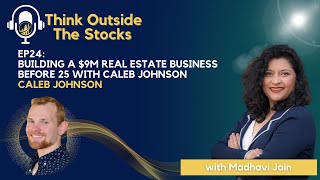
Caleb Johnson built a $9M real estate portfolio before 25, starting at 18 with a $300,000 house-hack in Phoenix that generated $1,200/month cash flow. He sold it for $540,000, used a 1031 exchange to buy a 16-unit in Oklahoma City, and now owns properties across Arizona, New Mexico, and Oklahoma through joint ventures.
Questions this video answers
$300,000
$10,500 (≈3.5%)
$3,500
Approximately $1,200 per month
About two years
Chapters
I got started with a house hack and like you pre alluded to earlier, and that strategy, really breaking it down is you live in a single family home or a small apartment. So two to four units and you rent out one of the units or excuse me, you live in one of the units and you rent out the other ones. And I did that in a sub market of Phoenix, that's where I'm based out of now. And that market was Apache Junction, where that property was located. And Apache Junction at the time was probably a C minus neighborhood, but it was gentrifying, so we were able to sell it at a much higher price than what I bought it for. However, there was a lot of learning lessons, I guess you could say along the way and experiences like kicking out the drug dealer through an eviction process and a hoarder and, you know, living with mice and roaches because of the hoarder and what they brought in.
Are you frustrated watching your hard earned money ride the knee jerking Wall street roller coaster? Are you looking to diversify into alternate investments and set them on autopilot to achieve financial freedom? It's time to learn the ways of the wealthy. It's time to Think Outside the Stocks with your host, Madhvi Jain, an immigrant from India and ex IT professional who will bring you industry experts to illustrate a passive and holistic financial approach to to build not just passive income, but also your generational wealth. Madvi is on a mission to change the financial trajectory of one family at a time. And a thousand more to go. Are you going to be part of this vision? And now, without further ado, here is the host of Think Outside the Stocks, Madhvi Jain.
Hey, hey, hey. Welcome to Think Outside the Stocks, another show with your host, Madhvi Jain. And today we have a guest today who before he turned 25, had a $9 million real estate portfolio. And he has had a very, very interesting journey as well. So, Caleb, welcome to Think Outside the Stocks podcast.
Maharvi, thank you so much for having me.
Absolutely, Caleb, I'm so excited for our discussion today. You know, we had a chance to talk about a little about your story and how you had come, but I have so much to learn from you. Caleb. You have been through real estate starting 18 years of age. Incredible. I wish I could get started there. And interestingly, you also have implemented a strategy called house hacking, which I had thought about it, but it was too late already for that. So it'll be really, really interesting to go over that and just your journey, your path to what you're doing today in multifamily real estate, the scalability of it, you know, the investment strategy that you have. Let's talk about all that and our listeners for sure will learn so much from you. So before we get started, I like to describe my guest with three fun facts. The first fun fact I already talked about it is that you had incredible, incredible 9 million worth real estate portfolio even before you turn 25, incredible journey. The second fun fact is of course the house hacking, and not just house hacking, but very interesting tenant best that you had, including a drug dealer. So would love to know about how you dealt with that situation. And the last one is that you had kind of a secondhand but still in depth experience about the stock market crash and how it impacted your family and why you kind of started your journey from there into real estate. So with these three fun facts, let's just jump into your story. Tell us little bit about you that I may have missed.
Well, I really appreciate that intro. I myself am really looking forward to hear this guy. He definitely was very in depth. So I appreciate that introduction. And Madhvi, my story like you mentioned, began when I was 18 years old and the way I got turned on to investing was because my parents, and not because they were wealthy by any means, but actually somewhat the opposite. So they went to a day job 9 to 5 and I saw the life that they had and I knew I did not want that for myself. I really saw that come into fruition when my mom had surgery and she had to be out of work for about three months. During that time she was going to heal and recover and then dip into her savings during that time. At the end of three months though, she was not healed properly. So she had to make a tough decision to either go back to work and make money because she did not have any income coming in, or she could stay home and recover properly. But that would prolong her retirement by years. She was around six years old at this time and so she made the decision to go back to work. And I would actually see her come home in tears because she was just crying and so much pain and so fast forward actually a few years and with her experience in the stock market again getting close to that retirement age of around 65, she has a stock portfolio and during kind of out of COVID just some turmoil, some volatility in the market on the stock side, her portfolio dropped 20, 30%. When she's getting close to that retirement age. And that's one reason that now I do believe Diversifying in stocks is a good wealth strategy that we should use and at the same time diversify. Right. Don't put all your eggs in one basket because like my mom, she lost 20, 30% of her retirement and so that really affected her decision making process and how like what age she could actually retire at.
Wow, what an incredible story, Caleb. And just looking back at the pain points, you know, seeing your mom firsthand and so emotionally attached to that story, right? The two layers of it, the health emergency that she had and she had to still go back and I, I call this handcuffs. Right. We constantly are exchanging the time with money, especially with the W2 jobs. I was a part of a corporate environment too. So first that pain point and I have had my struggles of health too, so I know exactly what you're talking about. So with that and also going into the retirement age and what happened to your mom, I think exactly what happened to people who are retiring in 2008. Right. And that's when we see this culture of even after retirement, continuing to work. And that's so painful, especially as kids, to see our parents go through that. Right. So thank you for sharing that story. But incredibly, you took that story, kind of created a silver lining for yourself and you learned from it and what to do in your investment journey. So tell us a little bit more deeper into your investment journey here now. How did you get started in real estate?
I got started with a house hack and like you preluded to earlier and that strategy, really breaking it down is you live in a single family home or a small apartment, so two to four units and you rent out one of the units or excuse me, you live in one of the units and you rent out the other ones. And I did that in a submarket of Phoenix, that's where I'm based out of now. And that market was Apache Junction, where that property was located. And Apache Junction at the time was probably a C minus neighborhood, but it was gentrifying. So we were able to sell it at a much higher price than what I bought it for. However, there was a lot of learning lessons, I guess you could say along the way and experiences like kicking out the drug dealer through an eviction process and a hoarder and living with mice and roaches because of the hoarder and what they brought in. So just a lot of exciting stories. And one specifically was when I was first moving into that property, my mom was helping me and across the road there was an alleyway and this gentleman was running through the alleyway and we Thought a dog was chasing him, but actually turned out a cop turned the corner and was chasing this guy down.
Oh gosh.
So we had the door open and so we shut the door. My mom's freaking out and the cop ended up arresting him. But when we left that property, we, we drove down a couple roads and found out that they had just done a drug bust or something like that. And there was swat, several cop cars in front of this house. So it was definitely not an easy experience by any means. But definitely looking back on my life, I wouldn't change that for anything.
Wow. Wow, that's scary. That scale of that's really, really scary to live in that neighborhood, to get through that phase of your life when you are house hacking. Thank you for sharing that. And maybe those are the kind of experience that kind of built for you and you know, swayed you away from that. You know, the being a landlord or being a, you know, rental real in the rental real estate as such. Now going back to house hacking though, let's talk a little bit more about that strategy so our listeners can understand what it is. And you know, there listeners who are basically renting an apartment probably now looking forward, you know, they have great jobs, looking forward to get that first house. And typically it's the single family house that they go into. Right. So this is like a precursor activity before they actually go into that. And the house hacking not only helps you to kind of create that opportunity before you have that down payment or extra money to get to the single family. So the entry point there is, there is the barrier to entry is little lower. Right. So that's one of the incredible advantage to it. What are the other advantages that you would say that house hacking would have and the listeners should consider if they're especially renting an apartment space right now?
Well, house hacking is when you, yeah, you live in that one property and you only need 3.5% for the down payment. So compared to 25% which could be tens of thousands of dollars, you only need 3.5%. And I'm not a loan officer, so actually speak to your loan professional before taking my advice. But my experience, that's what I needed. I had work history for over two years and that was another qualification. Or let's say someone does not have that work history for two years. You can still co sign or you can have someone co sign the loan for you. So let's say you bring down the 3.5 for the down payment and then you have the co signer help you with the Other qualifications. And there are. So it's a lot more flexible, like you said, compared to a conventional loan.
Great. And then what is the. I mean, you know, if you don't mind me asking, what was the price for the house that you went into and, you know, what was the portion that you had to pay and what was the portion that was covered by the tenants? You know, is, did the mortgage get covered? Did the insurance and the property taxes get covered? Can you just. In terms of percent, even if you don't mind, give us that breakdown.
Yeah, So I bought the property for $300,000. That was the purchase price. My down payment, I think was $10,500. And then I needed about 3,500 in reserves. And then after about eight months to a year, I was still working at the time and paying off the. The difference because the mortgage was not being covered yet. So I had to renovate the units, bring in more tenants that were paying higher rent. And then once I did that in about eight to 12 months, that's when the mortgage was actually being covered. And I was even making some spread on the top, so around $1,200 in cash flow.
Wow. So not only you did the house hacking, you actually did the fix and flip strategy as well in your rental. Incredible. So how long did you hold onto it and when you sold out, what percent of the profit that you got through it? And where did you use that profit? Did you buy another property from it? Or how did you kind of, you know, scaled up from there?
I believe I had refinanced that property and but long story short, probably hold that. Held that property for two years and really bought it at a great time. And so we rode the appreciation wave and sold it for 540. So the net profit that I made was. Are just over 170 grand. And then I use those proceeds through a 1031 exchange, which meant I didn't touch any of that 170. I just deferred the capital gains on that to another investment. And so all $170 went towards another investment. And that's a retail facility. And we still own that property today.
Inspiring. Inspiring. So now you have this property that has this high capital gain and you had 170 grants which is coming out of this property. Tell me what age was, you know, you had 170 grand coming as a profit?
God, I think I was 21 years old, maybe 22.
Oh my God. Oh my God. Incredible. And then now you apply another advanced strategy to it, which is the 1031, which essentially lets you move this into the next property, which you have been holding it till now, but now you're not paying taxes on it or deferring your taxes. Right. So it's kind of changing, taking that kind of a profit out, investing into a bigger, better property and continuing that, that kind of spread that you are talking about, which is the cash flow in simple terms. And now you have, you know, come out of the property, the neighborhood that you didn't want, didn't want it to be, but at the same time from the gentrification, had all the benefits from it. And now you have scaled up. So now tell us, did you scale up to a multifamily yet or how did multifamily start coming into the picture?
So multifamily came into the picture around the same time that I started that I sold that property. And so I believe it was December of 2020 when I actually started learning about apartments and started taking that seriously. And my first Property was a 16 unit in Oklahoma City. And I'm out of Phoenix again. So Oklahoma was more of a cash flow market at that time, still very landlord friendly. And I did a joint venture for the acquisition of that property, brought in a few, I think three total partners. They brought some equity along with some experience. And we still have quarterly phone calls and updates to those investors.
I see. Wow, nice. Really nice. So thank you. So now let's talk about your multifamily reach. And you know, to this date, where are your multifamily assets? Are they, you know, still focused in Arizona or do you diversify during different kind of a geographies nationally? And what is the criteria that you're looking for when you're going into the multifamily investments?
So today we own two properties in Arizona, South Arizona, Tucson and Casa Grande, Arizona. And then we own three properties in New Mexico, one in Albuquerque and two in Las Cruces, and then one other property in Oklahoma City. And whenever the criteria that we're looking for for these investments, first we want to look at the market, that's number one, are there jobs moving there? What's how many units are coming online? And when I say that how many new developments in a multifamily are being done and completed in that market? So that way we know, okay, what's our demand going to be? Is the job growth going to outpace that growth, that new, those new builds, and then we'll look at crime. And that's really submarket to submarket. And then from there we want to focus on 50 plus unit apartments that still have a value add component. So more meat on the bone usually south of year of construction of 2000. And so 1970 through 2000 is the vintage of property that we want to acquire. And with that meat on the bone.
That's excellent. That's an excellent strategy. So with this and of course the challenging period that we all are sitting on right now, I always call it as a trifecta with the high interest recession looming and just, you know, the prices of multifamily fluctuating so much. Right. So what is your strategy to navigate this market cycles at this moment?
Well, we're being more conservative on the underwriting, making sure we aren't projecting large rent growth, really just nominal over the duration of the hold expenses. Our expense escalator is probably five years ago would have been 2%, but now it's 3% and yeah, and then we want to make sure that we're conservative on other aspects. The capex budget, how much we're planning to have in renovation. The debt side of that is really important as well. Making sure interest rates, we're getting fixed debt and not getting bridge loans. Like I know a lot of loans are coming due in the next year to 18 months. And so we want to make sure we have fixed debt, but preferably agency. But we just want to make sure that the business plan, once we acquire that property and going into it is sufficient to hold off any roller coasters or volatility in the market best we can.
That that totally makes sense. Thank you so much for sharing that. So with that multifamily strategy, you know, we. You are still looking for the diverse geographies that you mentioned before, right?
That's right.
Excellent. So with that, you know, it's very interesting, I was looking at your podcast show. You have the podcast which is very apt, you know, from trial to triumph. Right. So in this journey, you know, what do you think was your. The biggest period that you went through? Of course, your house hacking seems to be the, the period which was trying that period for you. But what is the biggest lesson that you have seen looking back that you have learned and what is the big learning that you have had through that experience?
Is this more on a personal level or multifamily specific?
Anything, anything that you want it to be.
All right, I love it. So I would say more on a personal note is that I can be somewhat of an isolationist, which means I can honestly judge people too quickly and I can isolate myself from them because and honestly, Madhvi, in complete honesty, it can be because I can think that I might be better than that person, which isn't always the case, which isn't the case at all. Because I can always learn something from somebody. And if I had learned that five years ago, shoot, when I was growing up, if I would have known that from the beginning, that would have saved me so many hardships, heartaches, and saved a lot of relationships and I wouldn't be where I am today. I would have been much farther along in my journey.
Wow. It's incredibly brave to share that experience, Caleb. I really appreciate that. I also personally feel that I learned so much from people that come in contact with. And look at you. I have so much to learn from you as well. You know, how you have just built up your journey through experiences. So thank you for sharing that experience. So with that, I'm in such a wonderful conversation. Now we are going to move to our next segment. And typically in this segment it's more about that holistic perspective. Now think Outside the Stocks is not just about one particular commercial real estate asset class, multifamily as such, but it is about a bigger, better, different perspective of life when it comes to the financial strategy. It's about growing, preserving, protecting and passing your generational wealth. And I know it's too early for you to start thinking about generational with, but you are ahead of us in many, many ways already. So you might actually have a clue for us to pick it up from. So tell us, Caleb, that how do you outside of the real estate, think outside the stocks? How do you diversify? How do you protect and how do you kind of create that guards around your wealth generation process to grow, preserve, protect and pass your generational wealth?
I think it would come down to speaking with others and seeing what other opportunities there are in the market. I know right now there's cryptocurrency, that is a really big thing. There's Amazon warehouses where you will invest in part of a square footage of this large industrial building that Amazon owns, but they call it an Amazon store. And so that can be set up like a syndication model. And there's so many other ways. You know, I invest in gold and silver and so making sure I'm diversified in as many aspects as I can within reason. I want to know something about that industry and not just make a bad decision. And Madhavi, a second point to that is I want to know someone in that market that I know like and trust me. And for me, starting off it was so important to find a mentor that had done what I wanted to do so they could come alongside of me and make sure I wasn't going down the wrong path and wasting time and money. And so for me, finding that person that's in that market or that asset class that can kind of, that I can even just bounce questions off of very quickly is really crucial and something I look for.
Wow, that's incredible. You know, instead of reinventing that wheel, what you just mentioned about mentorship, that is so, so important. I actually had one of my coach on the, you know, one of these shows, the episodes, and he talked about turning the kids into days and that's such a, such a punch, right? It's, it's the experience that they built on that they have learned through the decades of the, you know, their share of learning lessons. And if we can have plug in the mentors and kind of rise together with the high tide, that's an incredible way of looking at it. So thank you so much for sharing that. Now again, you know, with the, with this think outside the stock segment, the next segment is going to be, is going to be rapid fire round. But just before we get there, let's talk about how can listeners get in touch with you, what you are doing, your incredible multifamily journey. How can they be, if they want to be part about the investment part that you bring in out, how can they get in touch with you?
I appreciate that. And probably the best way is going to redseacapitalgroup.com and you can actually book a direct conversation with me through my direct calendar link. Otherwise you can check out the podcast at from trialtotriumph or we're on all social media like Instagram, Facebook, LinkedIn and you can find us there.
Sounds good. Thank you so much for sharing that. And I will have all these notes in one of the, you know, in the show notes corner where they can access this really, really quickly. So with that, that this is the, the last round and that's the most fun round. I love this. And it's called a rapid fire round. It's just, you know, three questions, quick questions and good 30, 60 seconds or take your time to answer that. So that's essentially what the rapid fire round is going to be about. Are you ready for that?
I'm ready. Let's do it.
That's incredible. Thank you so much. So let's start with the first question. You know, in your life, you know, Caleb, I mean, I see the personality outside of the real estate. What is that one word that your friends describe you with, or rather you would describe yourself with.
I would say honesty or integrity. And that's, I think if someone doesn't have that in business, that is, they're going to fail ultimately. So that's, that's something I want to take pride in and really just bless with.
I love that. And in looking at you in your personality, that's, that's kind of, you know, what it reflects. You ooze that honesty. So thank you so much for sharing that. When it comes to my second question is when it comes to mindset, what is that one thing, that one shift that has helped you with this incredible journey and what you have built today, what would you say that.
I would say for me, it's not quitting. So there's a quote that I love. It's called, it's if I quit, it will last forever. And I know as long as I don't give up, then I'll win eventually. And the only way that I can fail is if I quit.
Wow. So it's kind of like a long journey, but success, the journey towards the success. I love that there's no failure. You just have a longer journey because you had that learning experience per se. I love that. Thank you so much for sharing that mindset. And with that, what is the next five years look like for Klom?
Well, I wish I had a crystal ball. Madhavi, that's a really good question. But I still want to grow on the real estate side of our company. I want to look at diversifying as well. I love self storage, mobile home parks, something that requires less repair and maintenance. But today I'd say we still want to grow the multifamily side. And also it's not all just about the real estate or the business side. I want to grow personally and helping others, you know, be it at church or ministry, going to seminary, that's something that's on my plate. So. So growing that side of my development as well, I really see blossoming in the next five years.
Thank you so much for sharing that. And with that, actually, even though we are at the end of the third question, would you mind sharing that side, that path of yours? How are you planning to getting involved more into the community and how do you plan to give back and what do you have, you know, that path for you kind of scaled up?
I love that question. And I would say, you know, going to church, I'm very involved today with the youth, with seventh grade boys. And that age is such a great age that they're still very you can still influence them easier than you can an 18 year old, because at least in my experience, I knew everything when I was 18. So at 12 or 11 years old, they can still be influenced. And so I want to be that right role model. I think there's such a lack in the world right now of positive male role models. And so if I can be that for a lot of these boys that are going through divorce or hard times at home, I want to be that and just really show the love of Christ and that it's this world is just going to go to dust eventually. And so we can't take anything with us and all that we can take is the relationships that we have.
That's a great vision and it's a part of a mission. So I really appreciate you sharing that and this has been a wonderful, wonderful conversation. You shared a little bit of you with us today with your journey, with your story, and also what's important for you. So thank you so much again for being on my show and thank you so much for sharing yourself with us.
I appreciate the opportunity, Madhavi. I really enjoyed it. So thank you for having me.
Thank you so much.
Thanks for tuning in to the Think Outside the Stocks podcast. If you enjoyed today's episode, please like and subscribe. MADVI is on a mission to change the financial trans trajectory of one family at a time. With a thousand more to go, we hope you'll be a part of this vision. Please join our growing community and to get your journey started, visit thinkoutsidethestocks.com to download your free guide on active income with passive real estate investments. If you learn something new, please share it with one person today. And if you have 60 seconds, please leave us an Apple review to help us reach more people like you. Tune in for the next episode.
More from Madhavi

The "Holy Grail" Real Estate Strategy Most Passive Investors Miss | Featuring Glenn Hanson

Be fearful when others are greedy, and greedy when others are fearful. #shorts

Building Recession-Proof Wealth Through Mobile Home Parks & Self-Storage with Matt Ricardella

The "Holy Grail" Real Estate Strategy Most Passive Investors Miss | Featuring Glenn Hanson


Think Outside the Stocks: Breaking the Financial Fear Barrier with Liz Faircloth


Why Health Is Your Greatest Financial Investment | Chris Orestis with Madhavi Jain


The #1 Retirement Killer That's NOT the Stock Market (Most People Miss This)

EP47: Private Credit Explained: Stratus Financial’s Impact Investment Model | Brandon Interview