EP30: Building Real Estate Empires and Thriving in Short-term Rentals with George Salas
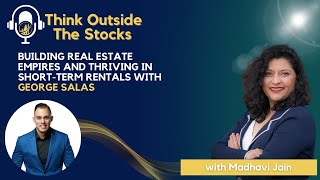
Podcast episode (Dec 16, 2023) featuring host Madhavi Nade Jain interviewing George Salas about his immigrant journey from Peru, setbacks (lost $400k as an LP), move into real estate (first flip 2018), and building an STR-focused portfolio (scaled to ~55 doors at peak; current owned portfolio ≈ $7M with 18 doors). George explains a five-step STR playbook (market selection, property selection, staging/design, marketing/pricing, guest experience), underwriting rules (screen for ≥20% purchase-price return and prefer properties yielding 3–5x rent/mortgage), data tools (AirDNA, AllTheRooms, STR Insights, Matchvisor, PriceLabs), and risk management (avoid HOAs, check zoning; sell if regulations change). He also discusses wealth-structuring via trusts, creative finance (sub2, notes), mentoring influences, and contact georgesalas360.com.
Chapters
The number one step is to really finding the right market. Right? You've got to find the perfect market. And that step essentially is the most important thing you could do. I'll break it down in just a second. Number two is once you find the right market, you've done your analytics, if you looked at the data, now you got to find the right property in that market. Okay? So you've got to find the perfect property. Perfect, perfect market. First, perfect property. Now you stage it and design it. Right? Creating the perfect combination of amenities. Right. Furnishings, value, what we call perceived value. Right. And then from there you turn it over to make sure that you implement the marketing strategy. Right. And this is you after you put together the package, the house. Right. We implement the perfect marketing strategy. And that's really just sort of going into your Airbnb account and then creating the best marketing, the best pricing strategy. Right. The best booking strategy so you can fill up your calendar.
Are you frustrated watching your hard earned money ride the knee jerking Wall street roller coaster? Are you looking to diversify into alternate investments and set them on autopilot to achieve financial freedom? It's time to learn the ways of the wealthy. It's time to Think Outside the Stocks with your host Madhavi Jain, an immigrant from India and ex IT professional who will bring you industry experts to illustrate a passive and holistic financial approach to build not just passive income, but also your generational wealth. Madvi is on a mission to change the financial trajectory of one family at a time. And a thousand more to go. Are you going to be part of this vision? And now without further ado, here is the host of Think Outside the Stocks, Madhvi Jain.
Hey, hey, hey. Welcome back to Think Outside the Stocks. Another episode with your host Madhvi Jain. And today we are going to talk to George Salas from Empress Capital about six figure short term rental, the short term rental market which nowadays in a lot of discussion. So we will have an interesting conversation with George here today. But before we go ahead and I do want to mention that this is information and education purpose only. Whatever we are providing as an education on this podcast, please be sure to do your own due diligence on it. Consult your tax professionals, your lawyers so that you can implement this strategy in your financial structure. George, welcome to Think. I'll set this talks. I am so excited to have you.
Well, thank you so much Marjavi. I appreciate you having me here on your podcast. I'm excited and by the way, I love your energy. I always come and bring you with energy. I'm like, finally, we are matching. Yes. Thanks for having me here.
I know, I know. Absolutely. I'm so excited about it. So I, Josh, I'd like to introduce my guests with three fun facts. And so I want to go back to those three fun facts. Fact number one, George came here, he's an actual immigrant. And you know, I often say, Josh, that we have uncommonly common story. I came to this country as an immigrant too, and many of our listeners did too. So you came to this country 32 years ago from Peru and you did not speak a single word of English. Right. I mean, look at you, where you have gone and how the growth has taken you up. Absolutely fabulous. So that's the fun fact number one, that in Peru he stayed in an adobe house. That's quite interesting, George. The second fact about George, George is a true giver. Not only he learned the ways in this country to leave American dream and utilize the real estate investment, especially the short term rental, he is actually coaching and mentoring thousands of people on this strategy. So, George, thank you so much for doing that. And the third fun fact is that George and me, we match our frequency really, really well on our perspective and the perspective listeners, you know, that I always talk about, you know, looking back from the eagle's eye perspective, not from a frog in the pond perspective, but about growing, preserving, protecting and passing your generational wealth. And George here has done tremendous, tremendous well in creating that strategy. That's financial structure for his family. So we'd love to talk about that also. George, again, thank you so much for just being here and adding this value to our, our listeners today. Are you ready to jump right in?
Let's do it.
Absolutely, George. So let's go back and talk about that immigrant story. You know, just tell us little briefly that has that journey has been for you. I know, you know, you came to this country, the land of opportunity. You were a bartender at a point, and then you started into real estate. You know, Covid did a number for many of us. So take us through that story of yours, George.
Yeah, absolutely, Madhavi. So my journey really started when I was six years old, right? So I'm sitting in my adobe house. Well, this is actually I was born in Lima, Peru, and from there my parents got a divorce. So I'm sitting in my dad's house and my mom pulls us over and says, george, I need to talk to you and your brother, okay? So she brings us into the room and she says, we're gonna go visit your grandma. Go. So this is 25 years ago. I came here 23 years ago. Not 32, but 20. Yeah, 23 years ago.
I just got it. Other way around, huh? It's not 32, it's 23.
Yeah. And I'm getting busier myself. So I'm sitting there and mom goes, okay, George, we're gonna go visit Grandma. So we go visit Grandma, we don't tell dad, and we never see dad again for years, okay? So that's how the whole story happened. So she didn't want to tell dad because she knew that he wouldn't let us leave. So we go at six into this completely different small little town of 50,000 people. We move into my grandma's house, which is an adobe house. And for about eight to nine years we lived there. But the fact was that half of the house had collapsed because you have big rooms. So it was an adobe house, right? So it had tile on top. And one day, rain started coming to the tile. And then when you have rain coming through the tile, we didn't have enough money to go hire someone to fix it. So I'm telling you, like two times, it rained. And then the whole roof had collapsed into the middle of one, the living area. A few years later, at 15, I got the opportunity to move here to the U.S. my mom did this online dating thing in 1998ish 97. She was one of the first people to do that. And she met someone, they visited for a few years, right? And then in 98, they got married. We moved here right before the new millennium, in 1999, right? 2000.
Right.
That was the whole story of us coming here. Now moving here, I'm wearing freaking socks with sandals. I am. I don't know any English. I, you know, I have the accent. I didn't know anything, right? And the first thing I remember is, like, the cars were big. The cars were much larger than in Peru. That's what I remember. It'll never go out of my mind, right? Fast forward a few years. I'm actually graduating from high school, getting into working, right? And then all of a sudden, I go into the hospitality industry. That's how my whole, you know, realm into the hospitality industry, my whole entrance, right? I was a bartender, I was a waiter, and then I became an event promoter, right? So here in Houston, I used to market and promote, like, over 70 nightclubs, bars, restaurants, venues over a course of 10 years. So I did it for 10, 10 years. Okay?
Incredible.
Yeah. And now at year seven, Madhavi I had saved about $400,000, right? And then I wanted to so be a business owner, right? And I was already a business owner, but I wanted to be an investor and build my own venue, be at the top of my industry. I didn't have the skills to really come in and invest. Like, I should have done my research, right? So I wouldn't invest it into another operator as an LP. And I invested $400,000 Madhavi, right, as an LP over a course of two years, okay? We built out this beautiful, gorgeous, 1.3 million dollar venue. This is like 2015, okay? We build it out, we launch in less than two years later, they shut down the operator. I did not do the proper due diligence. I trusted the people. I didn't understand about investments. I didn't really. I knew that how to operate markets, how to promote market, right? But I didn't really know that how do I really invest. So point number one here is every investor needs to do their due diligence. They need to pair up with the right people, right? So, lost everything. So I'm sitting there in my apartment at the time. I don't know what to do, what have you. I am broken. I lost everything I ever saved. So my friend Brent out of Houston gives me a call. He's a flipper. This is in about September, November of 2017. I lost everything. Just a couple months later, gives me a call, says, george, come to my flip. So in Cypress, Texas. I go to his flip. I drive for about 40 minutes, and then there's people there, right? There's about 10 people, right? And then he just says, guys, I want you to come to see this flip. And then he takes us through the flip, and then we go into one of the bedrooms, and he's essentially big room, talking to about 15, 20 people through three hours of really pounding us what need to do, what we need to do with our lives. And the real estate's the path and the way to go. He's not trying to sell us coaching, nothing. He was just bringing value. That was my breakthrough to go into real estate. Okay? The next day, boom. I said, I'm gonna do this at an internal breakthrough, right? The first breakthrough was calling me. Now I'm like, very, very motivated to go. And this is the solution. This is it. I've got to go in real estate. So I started studying, taking, buying Audible books about, you know, about real estate. Going to meetups and networking with people and meeting the top dogs, bringing value to them. Go to seminars $197 seminars for three days. That's buying courses that I could afford. And with about $5,000 in my pocket, I started real estate. And I did my first flip in 2018. Okay.
Right, in 20.
And then that year I went to do about 15 flips along with about 20 wholesale deals. Okay. Or maybe a little bit less, because I'm talking about two years. And that's about two years, about 35. Two years.
Incredible.
In that year, I brought in about $350,000 in revenue for my new business. Okay. Part of that was short term rentals. Right. I was investing into these flips out of my own pocket, and that really didn't have the money to do it. After we would turn one, you know, partner with another person, and then we would take the money and invest it. But then I was like, okay, well, I've got to have something stable. I got to have some cash flow that comes in to me every month so I can pay the bills. Right, Right. So that's when I landed into short term rentals. Right. And I, I realized that I needed the cash flow. So that was a cool model. I started with rental arbitrage, Mount Hobby. Okay. Rental arbitrage is renting a property and subleasing it. So rent these multifamily apartment units. And that's the whole. The beginning of the story. Fast forward to today. You know, we've built out 7 million, almost a $7 million portfolio that my wife and I own. Right. We have 18 doors between the several strategies. We also do some notes and we have some properties that we're still doing a couple arbitrage, but owned about 7 million in real estate. And now we're here, we're obviously launching new businesses and really just expanding our portfolio through the same method of wealth creation, long term vision that you talked about at the beginning. Right. So now I get to hang out with awesome people like yourself at Masterminds.
Yep. Yeah. And we get to hang out with you. But wait a minute. Let me just get my head wrapped around that entire story that you just went through. So here you are. First of all, separating parents, that must have been really like nightmare. Right? It was just like how slowly your mom broke that news to you and suddenly, poof, your dad is gone. Right. But also, you know, from that adobe house to get, coming to this country, thinking about cars being so big here and just starting from scratch, building this event management business, and my goodness, saving $400,000. That's not a joke. That's not a joke at all. So incredible. But what's incredible is that losing that, all of it, and then rebuilding from it, my God. I'm just going to take a pause here and commend you for that step. Somebody has to say this to you. You did incredible. And look at you. Just probably, you know, five, six years later, you know, you're here with, you know, seven figure businesses that, you know, multiple businesses that you have formed and you have a beautiful family. I had a chance to meet them, your wife, your son. And you have done incredibly well. So kudos to you, George. You know, we have so many golden nuggets to just listen to this story and how you have just come back, kept coming back again and again, rebuilding yourself. Great job at that. So let's talk about the short term rental. And you mentioned a little bit about the, the rental arbitrage, right? There was a lot of trained a few years back, I think pre Covid typically that this rental arbitrage were happening and people were, you know, teaching a lot of actually coaching sessions were going on about doing the rental arbitrage and the pros and cons about it. So let's talk about a little on that. That what are the pros and cons? And having done that, do you still recommend that? And you know, there are a lot of people actually got burned by that strategy as well. So let's talk a little bit about it before we go into, you know, what you're currently doing and how you have built your portfolio.
Yeah, absolutely, absolutely. So we started doing short term rentals in August of 2018. Right. So the first 10 properties, I rented them from a multifamily operator out of San Diego, but his property management company is here in Houston. So I took out these 10 units, eight at once and then two after, or two before, and then eight after $800. And before the pandemic, my $800 rent rents were bringing me anywhere between 2000-27, $2,800 a door. Right now that's revenue and you take about 25, 30% in operating costs. Right. So now you're making a thousand dollars a door for renting and spending $5,000 at putting together this SDR, this short term rental. Right. So at the time the model was great. Okay. And Covid happens a year and a half, two years later, and then the entire industry shifts. Right. So we had at the time 40 doors, okay, 35 or 36 of them at Hobby where these one little bedrooms made a couple of twos, all rented with two three year leases in A two mile radius. And then now you have even all the guests, all the people that book these properties, they're gone for a few weeks. Right. Because the entire city is locked down. So that was sort of, you know, like another knock in the face that I received because I didn't realize that when I was going into this business model that I, number one, shouldn't have got so many of the same type of units all around each other because downtown was closed while my, my houses, I had two or three houses at the time, were actually performing well. Okay. So that's a little bit of the story of how the whole thing went through. Then from there we scaled to even more. We went up to 55 doors with about 15 to 20 houses and still kept a lot of those, the smaller units until the leases ended. And that's when we started our shift in 2020 transitioning to what? The portfolio is now all single family houses, performing a lot of six figure per year properties. And that was a transition. Now to ask you your request, would I recommend this to anyone or not? Okay. I go back to does it make sense? For me, it made sense at the beginning that the numbers don't lie. Right? The numbers are one thing and we don't get emotional about them. So the numbers worked at that time. But if I would have known that Covid was going to happen, no one knew that then I wouldn't have done that strategy. I also didn't know that I should go into actual deals that which I underwrite now differently, that I should be getting 3 to 5x my rent or mortgage. So these properties only brought around 2x on average. Right. So 2000, $2500. So it wasn't that bad. It was between 2 1/2x on average. Now our properties bring 3 to 5x and I don't do it unless it does that. Right. And that's 3 to 5x your rent or your mortgage. So as we switched to strategy, I actually scaled the portfolio to 55, right. We, we did over $1.2 million that year. And then all together we almost hit our first seven figure year in 2021. And then we realized that we should just give up the stragglers, the ones that are still struggling by 2022 and not making us enough profit. So we started getting rid of all the small units, every single one of them. Okay. So we turned 40 small units into a lot of the houses that we have now. We took some of the, some of the furniture and used it and then we sort of transitioned to less, but more profitable sometimes. But Javi, less is better in this case. This is a perfect example for that. Right? So. And yeah, I mean, that's pretty much it. Yeah.
Thank you so much for sharing that. And having answered that question, my next question would be for our audience. Right. These are the passive investors. They're, you know, sometimes they think that what is better than being a landlord? Maybe be a landlord for a short term rental. Right. So for them, you know, and you are a coach, you are a mentor, so you know how to simplify things. Very, very simplified. Can you explain your short term rental strategy? I mean, you have a lot of lessons learned from, you know, going through the COVID going to the rental arbitrage. You kind of moved from that smaller properties to now bigger and beautiful properties. I have seen some of these pictures. You know, your wife does a phenomenal job at decorating it and just that high end look to it. Right. So can you just simply simplify your strategy and take us through that. How do you get, for example, let's start from how do you identify a particular property? How do you purchase it? How do you implement this short term rental strategy? What you look for, and I know you, like me, believe in a lot of data analytics, and you have your strategy, the numbers behind it too. So just take us through it, please.
Absolutely, absolutely. So I'm gonna break it down into five simple steps. Okay?
Okay.
The number one thing, to identify properties and to really launch an SDR for if one of our passive investors listening here wanted to do their own or like I want to go active and a lot of people do. Right. The number one step is to really finding the right market. Right. You've got to find the perfect market. And that step essentially is the most important thing you could do. And I'll break it down in just a second. Number two is once you find the right market, you've done your analytics, if you looked at the data. Now you got to find the right property in that market. Okay? So you've got to find the perfect property, perfect market. First, perfect property. Now you stage it and design it. Right? Creating the perfect combination of amenities. Right. Furnishings, value, what we call perceived value. Right. And then from there you turn it over to make sure that you implement the marketing strategy. Right. And this is you after you put together the package, the house. Right. We implement the perfect marketing strategy. And that's really just sort of going into your Airbnb account and then creating the best marketing, the best pricing strategy. Right. The best booking strategy. So you can Fill up your calendar. Right. And then also your listing. Right. Photos and all the marketing that you want to do. Including photos, including titles, descriptions. Right. Including really little points that make it seem. And you're going to take what you created inside this property, everything that looks good, and you're going to make it viewable and desirable to the eye. So that's your perfect marketing strategy. Number number five is essentially your optimization in guest experience. Right. So. And that could be outsourced. So if you're a passive investor wanting to do a deal. Right. And then outsourcing it afterwards. Right. The best way to do it is really understand the numbers at the beginning to create an actual market selection strategy. Right. Getting the right property, staging and designing it to the highest standards, creating a marketing strategy and then essentially handing it off to a team or a host or somebody that can manage it for you and create that five star guest experience. Experience. Okay, Right. I could go deeper if you would like me to.
No, I love that. And you know, quite interestingly, passive investors typically, you know, look at a listing probably in the mls, right? That, okay, there is this whatever house or condo or something. Can I make a Airbnb or a short term rental with that? And getting it, furnishing it, designing it and putting it on Airbnb and post that. I mean, those are just the three steps to get into it. But number four and number five are really, really important that you mentioned here. So that's really, really helpful. Let's go back to, you know, if you can elaborate the step number one a little bit more. What is that? You know, the market analysis or data that you look at that can help you. And of course there's some financial data also about the property, right. That is it going to. You were mentioning about 3x in a, in a few minutes back, right?
Absolutely.
So let's talk about that. What is that strategy to identify the property itself?
Absolutely, absolutely. Okay, so we've got a two step approach, right. Number one is we screen a property, okay. And it's really easy to screen it, okay. If you know how to read the data, the first thing that you do is, hey, will this property make me either of these two? Number one is, will it make me 20% of my purchase price or more? We screen our properties by seeing if this property could potentially make 20% or more. Right. So when we go into a market, we look at the data. Let's just say you send me a property, right. I go and look into the data for that zip code or market and then that Data will tell me immediately. Right. If I know how to read it, of course, that this property could make it. And I do the comparison between both. Right. That's if the property comes to me first.
Okay, and where are they looking at that data? Is it a specific website for this data?
We use several. Okay, there is your most popular one everybody knows is going to be Air DNA. They just upgraded their platform to a much higher end platform. I like it a lot. It's giving you lots of ratings right now. You're not going to trust one platform only. Right. We also use a tool called all the Rooms, which just gives you the data a little bit differently. Right. We also use a tool called SDR Insights. And SDR Insights is more of a market research tool rather than a property level research tool. Right. And then in addition to that, we use another tool called matchvisor and even Price Labs, market dashboards. And then how we do this whole strategy. Right. Oh my God, George, you're telling me so many things. Right. And I just don't know where to start. Right. Start with like AIR DNA. And it's really, really easy, guys, right? Start with Air DNA, get an account, and then look around your. Get your city. So what we do is when we're underwriting our own properties, we'll look at what's the lowest and the least amount of revenue we could bring. What's the lowest? Cash on cash and the lowest. Right. Based on what could. Something that could happen. Right. Or maybe things don't perform as well. The market gets oversaturated over the next, you know, few years or whatever. Right. And that's how we underwrite. But in reality, every time we underwrite a property, we're passing that number because of what we do in the property and all that. It's because of what you do on the back end. Right. The market could tell you one thing. Oh, yeah, you could do well. You could do well. You could say you could bring 80, 90, 100,000. If you don't know how to pick the right property, Madhavi. And you don't know how to stage it, design it and furnish it and just blow up that. That value inside the property, then it doesn't matter. The market does not matter. So each area of this business, each pillar, it's so important because if you go into a great market, but your real estate prices are way too high, you're in the same boat. If you go into a great market, you don't know how to look at the data and you don't Pick the right property with the right number of bedrooms, with the right number of bathrooms, with the right amenities, which this is what the data is telling you. The data does not line. It always tell you where you need to go. If you know how to read it, then you go and pick that type of property. Now, when you're choosing the property and when you're choosing your market, we also have a two step approach there. We want to, we want to ensure that the real estate market has grown in a linear way, right. So basically it's been stable over the last five years, right? Along with the 2007-2012. Because if we go buy into a market that fluctuates quite a bit, what's going to happen is you might be inflated, you might be buying at the highest point and then whenever a recession happens, your values will go down and now you are screwed because you want to sell in a couple of years or you might not make it. So all these little factors in there are so important, I couldn't even tell you which one is the most important because they're all important, right?
So I love that.
Concise.
No, no, definitely. I mean, just not going by what market is telling you, but actually, you know, putting all these numbers, all these statistics on a different plane and looking at it. So tell me, what is that sweet spot that you have found? I mean, is it that, you know, one bedroom, two bedroom condos, is it bigger families or you know, bigger just houses, rich houses with good amenities. What is the sweet spot of the, you know, the range of houses that you see that you really like As a strateg.
Fantastic question. So our sweet spot is determined by the market. In Houston's case, my sweet spot is a four to five bedroom house, right. And especially with the interest rates being where they are right now, four to five bedrooms for us with pools, amenities, outdoor kitchens, hot tubs in large backyards work very well in Texas. Another market like Austin might be a water view, right? Water view, lake view up in the mountains. Completely different sweet spot, completely different price. And most, most, most likely it's always going to be the sweet spot in every single market. But hobby lands anywhere between the four and a six bedroom, right? Anything 1, 2, 3, 1, 2, 3 bedrooms, it's too saturated, right? People they build, you know, like builders will build out, you know, way more three bedrooms that they'll build, four, five, six, right? So the bigger it is, the harder it is as an entry point for an investor to come in and build out a six figure property, right. And you know how that is. This game is about supply versus demand. And right now the US has 1.53 million listings, so it's extremely saturated. But guess what? When you go down even deeper and you're fine, you're doing the process that I'm telling you, right? By creating a reverse engineer acquisition by going to the market first, selecting the best areas, then going even deeper and more niche to selecting the right little spot, to finding the right property in there at the right price and then creating an amazing, amazing listing by staging, designing furnitures, then you are mitigating all the risk. Right? Because at the end of the day, business is about how much value you bring to your customer and to your client. Right?
Yeah, I love that. And you know, I was actually going to ask your question. You pre answered my question. My question was going to be that, you know, when it comes to this Airbnb and supplies outpacing the demand and there's so much saturation happening, what is that strategy that you're applying? But it looks like you already talked about that niche that you have created and how you can get to those kind of houses. And you know, come to think of it, these are the kind of houses I would like to hang out with. The families that, you know, our friend circle here or when I go to conferences, you know, hang out with few of people like you just share in Airbnb. And you know, I was in conference in Portland last weekend and that's what we did. We had an Airbnb four bedroom house and wish we had, you know, a few more bedrooms because people did want it to join and you know, kind of have that connection of staying together and connecting together. So love, love that strategy. Thank you so much for sharing it. I'm going to have one more question. I know there is a around in news about the saturation. We talked about that already. Another question is about the city audience and then them changing the rule. Can that impact something that you've already had it in your portfolio and what if the rule suddenly changes on you? What is that impact? And do you exit that? How do you, how do you manage? It's kind of, you know, the risk that you have in that business. How do you manage that?
Absolutely. Great, great, great question. Everyone's first question is actually always that when I tell them I'm a short term rental operator, right. They're like, well, what about this Dallas thing or this New York thing or this other, you know, Atlanta, right. Banning SDRs, you know. So to answer that question, right, when we're doing our market selection, right? And really understanding the markets. We have built into our thesis to go after non HOA homes. First step is really when you invest into any markets, you cannot invest in an HOA unless you want trouble at some point. Right now I have personally been sued by an hoa. So we don't invest in hoas anymore, right? And because I went through it, right, I dealt with it and then we have to like, oh my goodness, spend an additional $10,000 hiring attorneys. And that's because when I started I didn't know. Now if you're out there and you're wanting to invest in short term rentals, single family home, just stay away from HOAs unless the HOA allows short term rentals. And you're going to have a lot of markets that are vacation rental markets, not metro. Most residential zoned metros, urban, suburban or even rural, they don't allow it. But now within each metro market there are a lot of unrestricted areas. Now let me give you a quick example of what when I did invest in hoas, how it all turned out. Okay, we went and bought a property. It was a 60,000, 70,000, I think $70,000 purchase. This is a $200,000 house, right? And we put another 50 to 60,000 in there. Now we're at 150, right? We have some equity, okay? We staged the property, we launch it for two years. We had it as an sdr. And all of a sudden the HOA decides to shut us down. So they start sending letters. We didn't listen to them. Now we have like threats of $200 a day. And we went and our team dealt with it, right? I dealt with it personally. So we essentially ended up getting sued. And then we decided to sell the property about two and a half years later. We only spent an additional $10,000, but this house was making about 80 grand a year for two and a half years, right? And netting around 25, 30% of that. Right. It wasn't like your typical six figure property. But now we've taken cash profits for two and a half years, Right, of around 50 to 60. So it was worth it in that case. But if you're going into something retail or there is no build up equity, you're going to be on a negative, you know, when you spend all this money, that's a different scenario. So I would look at a scenario by case, by case scenario to make that decision, but I would just not invest and I would really go to the hoas. Like we have I have an attorney on retainer that looks at the HOA bylaws before we invest, if we invest in hoas, but we rarely do that. So now the Dallas and Atlanta, these are cities that are banning STRs, but only, only the residential zoning, right? Not the commercial zoning. That's how we're looking at our approach. Just to, just to make it a.
Little more clear now. That helps a lot. So essentially, be very careful about the zoning, the HOAs when you're selecting the properties, that is your property selection criteria. And if something changes, this property may have given you a good cash flow, a good revenue, so you just bas go back and sell it. So that kind of an easier exit strategy so you don't get kind of, you know, stuck with the property that you can't do a short term rental anymore or your strategy anymore. Thank you for sharing that. So with that, sadly, you know, we kind of are running to the end of this particular portion of our podcast today. Next portion actually is very exciting. But before we go there, right, I hope audience, you have had a little bit fun. I mean, Josh comes here with so much energy and so much knowledge about the short term rental. So hope this gets you excited until you kind of also give you some facts instead of just looking at media and what they're telling us. But at the same time, also remember that we are not promoting any particular strategy, any particular operator. This is just for educational and information purpose only. So please, please do your own due diligence if you want to apply these strategies that are being discussed on this podcast. So with that, our next portion of this podcast interview, George is actually my, one of my favorite, and it's actually a question, a question is that how do you, George, think outside the stock? And by that what I mean is that you have this tremendous strategy about creating this holistic picture of growing, preserving, protecting and passing your financial wealth. Right? So let's talk about that. That how do you put this protection? How do you grow the wealth that you have and how do you make sure that there is just this tight lid on this whatever wealth that you are creating? You have, you know, gone through a phase where you lost 400k. So how do you protect your wealth? How do you grow your wealth? How do you make sure that it's passed to the next generation? And I know, you know, I talk a lot about infinite banking. So if you have followed that strategy, any tax strategies, estate planning strategies, please give us a spill.
Absolutely. So I am using a strategy right now which involves a trust. It's a sophisticated trust where I put my assets, especially any assets that are owned by my wife and I. Right. So in order for us to protect our wealth, grow it and pass it on. Right. First we've got to have a foundation, right? So this trust for us is a foundation where it doesn't apply if I have partnerships or if we create a syndication or a fund. Right. Just applies if personally. Right. The income comes in or the property's owned by my wife and I. Right. So that's where we have our personal portfolio. So we have the foundation. Right. So for me, that's first you got to really figure out what's the best foundation for you and your family. For us, it's a trust where her and I could be the trustees and decision makers, right. And then we can have our son as a beneficiary. Right. So and then this trust has tax benefits, it has asset protection benefits, and even has state planning benefits because it's all built in. It's not one of your simple regular trusts. It's actually a very sophisticated trust. So that's the first thing. Okay, then number two is really understanding what's going to be the best operating strategy for us. Right. At first was fix and flipping. We were trying to figure out how to fix and flip. I was actually not married at the time, so I was trying to figure out how to fix and flip it. So we were not married then, right. And I was trying to, was trying to do wholesaling and that was okay. I made decent money, right. So we, I've done 30, 40 deals, you know, when it comes to doing those two strategies, right. And then I try to figure out this creative finance side of things. So that worked for us. And that actually is subject to creative finance, which I haven't really gone into creative finance. Sub 2 is an acquisition strategy. So now we're acquiring sub 2 and exiting as 2. Two different strategies, right? The ones that fit our market selection criteria and all that, we convert them into short term metals. The ones that don't fit, we convert them into notes. Right. And notes are passive, right? So trust owns notes in short term rentals, right? And it produces cash flow, which is passed down and also has lots of equity, right. Which is passed down if anything was to ever happen to us or when we do pass, right. One day we're all going to pass, right. Then our son is going to be part of that. Right? So that's two steps right there of how we're creating wealth. And then for me, it's essentially it's growing at a 10x level. Right. I'm an action taker. I'm a 10x type of guy. Not by doing more, but by doing less. By collaborating with people like you is how you truly grow with your community. Right. With with just people inside our race masters community which is a mastermind that we're a part of. Right. So that's my goal there and that's my three step approach to creating, you know, growing, creating, preserving and passing on wealth.
I love that. Absolutely love how you have created that structure and looks like your diversification is within the real estate but you are just doing it different asset classes and with the creative financing with the notes and with short term rental, that's kind of a triangular approach, kind of a traffic approach that you have. So thank you so much for sharing that. In the next session I'm going to ask you a question that if our audience would like to reach you, how can they get in touch with you and a little bit more about you and what you're doing?
Absolutely. I've got a very simple way. It's my social media connect with me page. It's georgesalas360.com right. That's it. G R G S a l a s360.com and I've got awesome cool things, really easy to navigate there. You know we can connect there any of my social medias.
Perfect, perfect. And I'll also post the link in the show notes for our listeners today. So with that it is kind of the last round of the show and it is actually the most fun round. I ask short questions about you, your life, just giving a glimpse into what George as a personality is. Right. And just 30 to 60 seconds, really quick answers. So I call it a rapid fire round. Are you ready for that?
Let's do it.
You got me nervous. Oh my God. You know you're gonna, you have added so much value already and you're gonna be fantastic in the next round as well.
Thank you.
All right, so let's get started. The first question, I know you kind of not holistically just think about the wealth creation but the holistically about your personal development too. So tell me the one turning point, one coach, mentor, guru, book or seminar that you really, really admire that has changed the path you are on especially in terms of that self development that you have gone through.
Absolutely. So I work with two gentlemen at a very close level. It's like five of us and this is a in 2020 and 2021. Okay. Their names, their group at the time. Right. And they are like my mentors for everything. Right. One gentleman was great at speaking, branding, marketing. The other one was just really good at selling a relationship at Zen ness. Their names are Ray Perez and Dave Vanhus. Right. I went under their mentorship for a full year, and this is a $30,000 mastermind. Right. And they tell me everything about everything. Right. That. That they do in order to really build their entire lives. Right. And what they've done. So I really went deep, deeper into. So these two people have made a huge impact for me. Right. The other one, I would say is Hunter Thompson has changed the way I think about things. Right. That's our current.
Current.
Our current.
Absolutely. Right.
Made a big change for us. And it's all in this. In this game of real estate, capital raising, you know, fun world.
Right? Right. Love that. Thank you so much for sharing. My next question is, what's the most insane adventure that you have done in your life?
Oh, my goodness. I'll never do this again. But I jumped out of a plane in 2012 for my birthday, and I was like, my. My hands were sweating, but, Javi, they were so cold. It was sweating. I was like, holy crap. I've never sweated in my hands like this unless I'm running, and I will never do it again. But it was great. It was adrenaline, full of rush, and those things you don't get all the time.
Right. And I believe, looking at your son's age, that you did this before becoming a parent.
Yes. And I have a lot of pictures.
Yes. Yeah. Being a parent changes, as I'm sure that, you know, when you have. You're trying for some insane adventure, you think about our kids now. Right. Absolutely. So. And with that, you know, just. Let's end on a sweet note. What is the best moment with your family? And I know you're a very, very family person. What is the best family moment? That you close your eyes and that gives you the energy and, you know, to keep doing what you're doing.
Absolutely. The actual best moment that I. Every time I think about it or we talk, my wife and I. Right. Was when we went to Universal Studios for her birthday. I took her. I booked this really nice hotel, and it was kind of like our plan was to go to Disney. She loves Disney, always want to go to Disney, and she'd been to Disney a bunch of times. She just wanted to go with me. So we had to change plans and spent four days at Universal Studios a couple years ago. And it was great because we were able to do what we wanted to do do just at a different place, right? And then we connected with no interruptions at a one on one level for four days and we didn't have to worry about work and this and that, right? It was just us taking real down to earth vacation, right? And then having the thrill, the moments of rush and fun with chilling, right? Because we went on these really cool rides and that's awesome. But we also went and sat down to have food and talk about our future, talk about who we want to be. So that was the best moment with, you know, with her and the best moment with us too, right? My son was one that was so dear to my heart and that was when he was born. I was there and all of a sudden my wife could not, she couldn't have the baby, right? Because we were there in the er, in the, in the hospital and we, she had to do a C section and that was like, oh my God. So that when he came out and he was in my arms, right? Like that's the most connective moment that I've had with him, you know, and that was beautiful. But at the same time it was, you know, it was a little crazy because of everything else happening. But that will be, that moment will be always in my heart.
Love that. Love that. The kid's birth is so magical. I got goosebumps when you were telling me about that. Yes. Thank you so much for sharing it. And with that we have come to the end of this show. I could just keep on having this conversation on and on with you. Maybe we'll hang out a little bit more. But thank you so much for being on my show. It's such a pleasure and honor to have you. Thanks for adding value to my listeners today. You know, we learned a lot about short term rentals and nuance of that. Thank you so much again.
Thank you.
Thanks for tuning in to the Think Outside the Stocks podcast. If you enjoyed today's episode, please like like and subscribe. Maadvi is on a mission to change the financial trajectory of one family at a time. With a thousand more to go, we hope you will be a part of this vision. Please join our growing community and to get your journey started, visit thinkoutsidethestocks.com to download your free guide on active income with passive real estate investments. If you learned something new. Thanks for tuning in to the Think Outside the Stock Fox podcast. If you enjoyed today's episode, please like and subscribe. MADVI is on a mission to change the financial trajectory of one family at a time.
More from Madhavi

The "Holy Grail" Real Estate Strategy Most Passive Investors Miss | Featuring Glenn Hanson

Be fearful when others are greedy, and greedy when others are fearful. #shorts

Building Recession-Proof Wealth Through Mobile Home Parks & Self-Storage with Matt Ricardella

The "Holy Grail" Real Estate Strategy Most Passive Investors Miss | Featuring Glenn Hanson


Think Outside the Stocks: Breaking the Financial Fear Barrier with Liz Faircloth


Why Health Is Your Greatest Financial Investment | Chris Orestis with Madhavi Jain


The #1 Retirement Killer That's NOT the Stock Market (Most People Miss This)

EP47: Private Credit Explained: Stratus Financial’s Impact Investment Model | Brandon Interview