EP31: Christian Catron's Eco-conscious Strategy for Sustainable Development and Financial Security
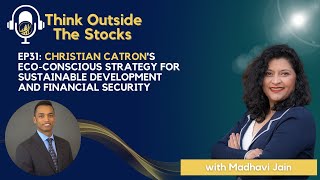
This content was created by ❇️ Madhavi Nade Jain. This content was uploaded by ❇️ Madhavi Nade Jain. This is a YouTube video titled "EP31: Christian Catron's Eco-conscious Strategy for Sustainable Development and Financial Security" created on December 23, 2023. It features a conversation between Christian Catron and ❇️ Madhavi Nade Jain discussing sustainable development strategies, adaptive reuse in real estate, and financial security through renewable energy projects. The discussion covers Christian's background, his transition from healthcare to real estate, and his innovative approaches to real estate development and investment.
Chapters
We also are thinking about how to ensure that we have a planet that's available to pass on to the next generation. And what does that mean in terms of how we're utilizing resources? And so we're very keen on renewable energy, both with the buildings that we acquire, but then also in helping developers, solar, wind, energy, storage developers get started on their projects. And so I'm excited to talk about renewable energy as well as commercial real estate and the things that we're doing with regards to adaptive reuse.
Are you frustrated watching your hard earned money ride the knee jerking Wall street roller coaster? Are you looking to diversify into alternate investments and set them on autopilot to achieve financial freedom? It's time to learn the ways of the wealthy. It's time to Think Outside the Stocks with your host Madhvi Jain, an immigrant from India and ex IT professional or who will bring you industry experts to illustrate a passive and holistic financial approach to build not just passive income, but also your generational wealth. Madvi is on a mission to change the financial trajectory of one family at a time. And a thousand more to go. Are you going to be part of this vision? And now, without further ado, here is the host of Think Outside the Stocks, Madhvi Jain.
Hey, hey, hey. Welcome back to Think Outside the Stocks, another episode with your host Madhvi Jain. And I have a very, very interesting topic to discuss here with our very perfect guest about it, it's Christian Carton. But before we go ahead, I do want to mention that this is information and education purpose only. Whatever we are providing as an education on this podcast, please be sure to do your own due diligence on it. Consult your tax professionals, your law, so that you can implement this strategy in your financial structure. Christian is from Austin, by the way. So Christian, welcome to Think Outside the Stock show.
Thank you, thank you for having me. I'm very excited to be here and looking forward to jumping into a lot of fun topics today.
Absolutely, Christian. So three fun facts about Christian. You guys know that I love to introduce my guests with three fun facts. The first fun fact is he's actually West Point graduate from the military school Christian. We will love to know more about that and your experience there. The second fun fact is more like most of us, he comes from a corporate career. You know, he used to manage at the time people, 500 team members. So we would love to know Christian, that how did that journey from the corporate world happen to be into real estate? And the third fun fact, which is a very, very important One is that Christian is one of the few people who is thinking about two important aspect of real estate. Reusing the real estate that's not being used, for example, the office spaces and how it can be multipurpose. And the second important aspect is thinking sustainability. Yes, we have to start thinking sustainability because we have to start thinking about what is this planet that we are living for our next generation. So, Christian, I am so great grateful that you're thinking about that. You are one of those, you know, key pioneer people who are thinking about that. With that, let's jump into your story with this introduction.
Yeah, no, hey, like I said, thanks for having me. Madvi. Super excited. You know, I'm here in Austin, Texas. I have a company called Redeem Investments. And we're a company that specializes in really two main areas. One is commercial real estate, and then the other is renewable energy projects with regards to commercial real estate. Like most people who get into commercial, we started off in value add multifamily. And recently we've pivoted actually based on demographic and economic trends that we've seen in the market to doing something called adaptive reuse, like you talked about. And we could talk about that here soon some more. But we also are thinking about how to ensure that we have a planet that's available to pass on to the next generation. And what does that mean in terms of how we're utilizing resources? And so we're very keen on renewable energy, both with the buildings that we acquire, but then also in helping developers, solar, wind energy, storage developers, get started on their projects. And so I'm excited to talk about renewable energy as well as commercial real estate and the things that we're doing with regards to adaptive reuse.
Wow, this is going to be a fun conversation. But before we go ahead into real estate, share your West Point story with us.
Well, you know what's interesting? I often tell people that I am like you. I'm a first generation immigrant. I was born on a dirt floor in a third world country which was the Philippines. And I was a product of an American sailor and my mom was a local. And sadly, he ended up not being involved for the first 37 years of my life. I actually met him at the age of 37. Seriously, that's a whole nother story for another day. But when we came to the United States, I grew up in San Diego, which is a Navy town. And then I decided when I was thinking about college, you know, I had plenty of options in California, where I grew up, I grew up in San Diego. But at the end of the day, I got this really cool opportunity from this school that apparently you can play Division 1 football. You can, they'll pay for all of your stuff. They give you free food and they give you free clothes and they give you a free place to live and you have a guaranteed job and they pay you while you're there. So I'm like, that's a pretty good deal and you get a really great education. So when it came down to it, I really realized that, man, I have this desire to serve my country. And because, you know, knowing where I grew up and where I came from, I felt an obligation to want to at least serve this country in some capacity that I now am a citizen of, you know, and so that's really how it came to be that I got to go to West Point and was able to play football there at least for my first year before I got injured. And I have to tell you about how all of these injuries that I got from football in the military actually prompted my desire to go into a career in health care once I graduated. So that's how I got to West Point. It's a very highly selective process and there's a lot of things that you need to do in order to qualify to get there. But it was a huge blessing for me to be able to go and to gain the experiences I had there and really the lifelong friends that I met and then, you know, although my military career was short lived, I certainly learned a lot about leadership and about time management and caring for other people. So a lot of that has carried forward into my corporate career and then.
Now what we're doing in real estate, that's incredible. Thank you so much for sharing that. I mean, growing up without having a father figure and I can see your dedication to your family. We have met few times, so you know, that highlights actually shines through it and just that, you know, the dedication that you have for the country to thank you for serving, by the way, you know, really respect that. But out of necessity, heading to the West Point, such a prestigious school and coming out of there, I'm sure, you know, I would love to sit and chat about all the stories, the injuries and you know, especially your 37 year, you know, growing up that growing the childhood without having that father figure, that will be some interesting topic to dwell on for sure some other day probably. But let's jump into that corporate career and the healthcare career. Tell us a little bit about that. And you know, if. How are things going? If they were Going great. What did made up vote into Real estate world?
Yeah. No, man, that's a great question. I think, you know, there's a lot of things that you. I got to learn at West Point that I was able to transfer those skills to corporate world. And really, I remember one of my first bosses was at a pharmaceutical company, and he's the one who convinced me that, hey, you've been learning about leadership. You've been practicing leadership. Sales and leadership are synonymous. I was like, what are you talking about? When I think about sales? Because that's the first job opportunity that I had. When I think about sales, I think about the used car salesman with the slicked back hair. You know, oh, gosh, that's not what I want to do. And he said, no, he said, that's not it at all. He said, sales and leadership are all about influence. All you're trying to do is influence somebody to make a decision that they otherwise may not make, and sometimes they don't realize that it's a decision that they ought to make. And so after I realized that, I was like, huh, okay. And so that's how I got started in the corporate world. First sales, and then sales training and then management, business development. And then I went to business school here at the University of Texas McCombs School of Business, focused on healthcare operations. And really. So almost spent almost two decades in health care before I transitioned from health care to wealth care is what I tell people. There's reasons why I did that, but it was a really. I mean, I enjoyed the career in health care. I think what I realized was, as I continued to be successful and get promoted and my earning potential increased, my taxes continued to increase as well. And so I wanted to. I did some research to figure out, man, how can I reduce my tax liability and how much I'm paying in taxes and. And everything pointed back to real estate as a really great way to do that. And so that's really what prompted my transition from healthcare to wealth care. But then using real estate as the vehicle to be able to help other people to mitigate their tax benefits and to generate passive income and generational wealth and all those things that drive us to getting into real estate. So that's how I transitioned into doing that.
Interesting. Healthcare to wealth care, how? Very well put. I love that question. And it's interesting, right? Pain points that we have. Pain is the biggest catalyst of the change, right? So the pain point that you had about your taxes and what. What can be changed? Real estate coming to your life, say you know, grateful for that because now it looks like you are making that difference in many others life too, right? Not just in your investor's life, but also, you know, this concept of adaptive reuse, right. I often think that, you know, look at the area around us, right? We are building new houses, we are building new apartments, new homes. There's const constant shortage of workforce housing that is affordable for people. Not just affordable for, you know, the layer of people who are, have issues about affordability but also a little bit above that, right? That layer, the workforce people, they also have this humongous issue. But at the same time on the other side we have this now offices or retail space malls, you know, they are being, being empty. So much money has gone into it, so much material has gone into it. And this thinking about from sustainability point of view, these are emitting these, you know, negative gases and it's still contributing to our environment in negative way. So if we cannot reuse them, what's the point? Right? That is one thing that I really admired about you when we talked first time. So tell us about the adaptive reuse and what is this concept? And you know, how can an office turn into different use and what is the different use that you are actually thinking of?
Yeah, no, I get really excited talking about this because I feel like we have a chance to do a couple of things all at the same time. One is to, you know, help the planet by not having to apply and expand our carbon footprint, but use what's existing at a property and then repurpose it so that we don't have to increase the size of our carbon footprint. And so what that's one piece is how it's impacting the planet and the environment. The other piece is man, if you can buy stuff for cheap right now and turn it into something else, that's always a good thing. And as we know in commercial real estate, the value of a property is, is directly tied to the income that it's producing. And so some of these demographic trends and economic trends that we've identified is people don't want to work from the office a lot. They prefer to work from home or at least have the flexibility to go back and forth. Forth, right. Well, the problem with, the problem with that is an employer is not going to lease 10, 20, 30,000 square feet anymore only to have a couple of people coming into the office a couple of days of the week. And so oftentimes the rental payment for an office, that lease payment is one of the largest expense line items because not only are they paying the base rent, but they're also paying for their portion of the expenses, the operating expenses of building. That's just how these leases are designed.
Right.
So that poses the question of, well, how do we get on the other side of that, where we're the owners, we're getting the basement paid to us as well as covering the operating expenses. And so what we do and what we've identified is in certain markets, there's a need for various different types of assets. Sometimes the local community might need a hotel, sometimes they need additional housing, sometimes they need retail restaurant. I'll tell you as an example, just about a month ago, we met with city close to us in a secondary market of Austin. And what's occurred there is that it's become such a popular place for people to move to that the population has grown by 40%. Meanwhile, those people still have to drive 20, 30 minutes away to get shopping and medical care and schools and things like that. And so they don't have these local amenities. So what happened is the city or the economic development corporation locally purchased a plot of land and their hope is that some developer will come in and build what their community needs, which is retail, restaurant, entertainment, but then they also need some medical. And so I said, sign me up, I'll help out and we'll do that. So in that case, it is a new development with what they need. In Most other cases, 90% of the time, you know, we're buying a building and the city needs us to turn an office into a hotel, for example, and they're even willing to provide some real dollars to incentivize us to do that, as well as property tax abatement, as well as hotel occupancy tax abatement. So they're really invested in partnering together. It's almost. It really is a public private partnership. In other markets, there may be a need for apartments. Right. And so there is 170,000 square foot building in Houston, Texas right now that we just received the feasibility report back from the architects. And it's going to be an amazing project where we're taking this beautiful brick and glass hotel, this rectangular, rectangular office building, and we're turning it into 124 Class A apartment buildings.
Interesting.
And it's going to have a really swanky restaurant. And then in the back, it's almost like a mini lifetime fitness. They have an existing fitness center with all brand new equipment. You walk in here, my being, you still smell like the rubber from the equipment. And then we're Going to put a pool on the outside. And so that's the concept there. And so we're taking again, what is a building that's been sitting vacant for almost two or three years, really post Covid. And that's really what prompted a lot of this is with COVID people learned that, hey, I can still work from home, I can do my job. And employers found that out too, that they can maintain a level of productivity that they were happy with. And so why continue to spend all this money leasing out this space when they don't need to? And then the one last piece that I'll mention as it relates to other uses is in light of this hybrid, you know, sort of transition Flex workspace, we've actually partnered with the largest co working hybrid office operator in the world. And so we've signed multiple agreements with them to take over the space that we're buying and completely turn it into a hybrid co working space where people can come in and they can do a podcast recording, right? Where they can have a conference room for their team. So that way instead of spending a lot of money every single day, it's just that one time, or they might even rent a 200 square foot executive office that they come to three days a week. They have a concierge at the front that greets their guests or their business associates, and they don't have to spend a whole lot of money in order to have that type of a setup. So there's a lot of different uses that we have identified to be able to turn these buildings into. And there's really not a whole lot of competition right now in terms of acquiring these buildings. Sometimes 20 to 30 cents on the dollar. Maud. Yeah. And so we're excited about this strategy and it's one that I'm happy to share with people because while we feel and we see a very long Runway for our company to be able to execute this strategy, I also see the impact of being able to repurpose other buildings and have other people do that because of its impact on the environment. And not having to always build something, you know, concrete is very harmful, you know, to the climate. And so, yeah, I think there's a lot of opportunities ahead.
I love that. I love that, Christian. And you know, I always think about things in kind of a triangular way, right? Like a trifecta. I had been talking about this, about this trifecta, the current market trifecta to our listeners. We talk about the high interest rate, the inflation. Inflation is kind of getting in control and the high Interest rates. Right. The recession looming. Right. So that trifecta has kind of helped us to pivot into some other strategies. And the way I'm looking at your trifecta here is that you have first of all identified this opportunity of adaptive reuse. That that's the biggest thing. The second thing is that you actually have figured out that this is that the huge discounts available. Talking about discounts, I'm listening about maybe 20, 30% discount, but you're talking about 20, 30 cents on the dollar. That's the cost, that's, that's a steep cheap discount. And then the third thing that you're thinking about is that gap in that specific market. What do people really need there? Right. And then bringing in your kind of that strategy, whether it's multi kind of a system where they have, you know, some living, some medical offices, maybe some restaurant, or whether it's the workplace. I mean taking a workplace and turning into a workplace that is more feasible and more usable. I think that's a brilliant, by the way. And also the, the housing, because housing is the biggest problem in our country today. Right. So kudos. That's kind of a three prong approach that you have there. It always, you know, I like to educate my listeners a little bit more about that. What does it really mean that okay, we're gonna reuse, right. So can you walk us through that? If you have this office building, right. I'm thinking about maybe putting an apartment instead of office building. Now suddenly you have to think about the walls, the plumbing, the kitchen and the, to, you know, everything. Because now it has to be a safer place for families to live in. Right. So can you walk us through that? And what kind of, I mean, how expensive is it? Because I've looked at some of this project and you know, it's the dollar conversion of what money is being spent and what actually can the revenue can make up for that. Especially these office spaces. They are really expensive per rent, per square feet. Right. So throw some light on that, please.
Yeah, no, it's a great question. The first thing that I'll say is not every building is going to be suitable for a certain asset class. Meaning you can't look at a building and simply say, oh, I'm going to turn that into an apartment building. Because there are certain requirements by code that you need to have. And so for example, in order for a building to be turned into an apartment, you have to have windows that are accessible. Right. And you can't do. So that's one thing. In order for us to turn an office into like a medical office building, like a surgical center, for example. Well, there's certain height requirements and parking requirement that medical office building needs to have in order for it to be able to be turned into an office building. Right. And so there's certain things to be aware of. Now anytime you're thinking about turning office building into either an apartment building or a hotel, you now have to think about, well, there's actual human bodies that are going to be living and occupying this space, which means there's got to be restrooms. Right. Which means that there's a kitchen area, means that functionally it has to be able to allow people to be able to sleep there and be occupied by people. And so there are things related to mechanical engineering, plumbing that typically is not widely distributed in an office building that would need to be either an apartment or a hotel. Just because every single room, every single unit rather has to have those components for water and drainage. So you have water in and then you have drainage out, and then you have, you know, certain levels of electricity in each of the different units that need to be provided there. So that's different than if you just had an office building where you've got partitions and walls and things like that. And there's not a need for any kind of water or plumbing coming into each of those separate spaces. So those are some of the considerations. Now one of the easier things arguably is if, let's say that there was a building very close to some apartment buildings and there's a lot, it's high density and there's a, there's a vacant building in and amongst that community. Well, you know, instead of turning it into yet another apartment building, maybe what you do is turn it into a self storage facility.
Right, right, right.
Because now that people need a place to be able to store their stuff. Well, if you're talking about putting up partitions and just simply a garage door that opens up and down or door that locks, that's not a very costly project as compared to installing the mechanical and the engineering or the electrical and the plumbing and, and H vac system and all these different things. Right. So yeah, I think really depending on what the suitability of the building is important. And then working with the local municipality is what our preference is. What we don't want to do is go into a community and say, hey, we're going to build a hotel here or we're going to turn this building into a hotel. When that city, their intent is not to draw necessarily people Staying over in their community, what they'd rather do. And again, I'm thinking about this local municipality, what they'd rather do is to create some local amenities so that demand that's flowing out of their community can be satisfied within their community. So they get to benefit from the sales tax revenue and those types of things as opposed to neighboring cities and all the cool restaurants and shopping and activities, entertainment and movies. Those are the things that some communities may want. So really understanding what the community needs and coordinating that with what existing buildings could be turned into is super, super important.
I love that you're working with the cities and the counties locally because their growth and if they are interested in cities growth and they have a future plan for the city and bits and pieces that you are contributing to that plan, you kind of tying it and growing that relationship connection with the local city and the counties. Right. I really like that approach because with that, you know, first of all, you are contributing to that growth. You're creating that value by addressing the gap that they have. And they are also interested in providing you some advantages. For example, you mentioned some time back about tax abatement to the listeners. If you don't know what tax abatement is that you know, this is because you're contributing to cities growth. The city actually does provide you some concessions or sometimes, you know, huge discounts on property taxes. That's a great way of working with the city. I love that question. And I also like that, you know, when it comes to the buildings and what you're trying to convert them into, that you're looking at the feasibility study first that okay, is it even feasible to turn this building into something that is needed, that is wanted. And then second point is that addressing the gap, I think that seems like, like a foundational to your thesis that okay, what is really this community in need of and if they do not have it, let's try to provide it. Whether it's a self storage, whether it's restaurant, whether it's medical office. So again, I like that. And overall you're thinking about how you can contribute not just to the city, the county, but how can you contribute to the community. What can you do for them to give that gap back and then also intern your investors. Right. That this is what you're contributing with this whole thesis. So I love that about it. Any other, you know, criteria or expenses, for example, that you're looking at in terms of just making sure. I mean, what is the studies that you're looking at that as an end product that, okay, this is going to make it happen.
Yeah.
Because expenses could be a huge component.
No, no, absolutely. I think the thing that we like about this space is whether you're talking about a medical office building or retail tenants, as the landlord, you're able to pass on operating expenses to them. Right. And it's normal and customary, and that's sort of what they expect. Of course, the trade off there oftentimes is that there's a certain amount of tenant improvements that the owner has to put or allocate as a budget and provide to the tenant so that they can fit out their space in accordance with their needs. And so there's a partnership there in a way. But from an ongoing expense standpoint, you know, it's really great for the owner not to have to worry about, you know, who's going to cover these expenses because the tenants have a prorated share of ownership in those expenses. One of the things that we're exploring that I'm very excited about. And so it's one of these things that it's somewhat aspirational right now, but we've started engaging with micro grid developers. So again, more on the renewable energy side of things. But really it bridges the two sides of our company where we have commercial real estate and then we have renewable energy. Because what we're doing with each and every building that we acquire is we're effectively turning it into its own power plant, its own micro grid, so that it produces enough energy for it to be sustainable and carbon neutral without having to rely on energy from external sources. Okay. And so what happens is for the tenants that we have in the buildings, oftentimes we're able to provide a discount from what they would be paying otherwise getting their energy from the local utility. So that's very helpful for them. And so, you know, we're helping to reduce the overall operating expenses and then it's less that they have to pay in order to be in that. And so that's one of the ways that we can be competitive when they're trying to determine where should I lease space if I have to lease space. Okay. The other way that we're partnering with these types of developers is they'll look at the overall cost of that renewable energy infrastructure, and oftentimes they will fully cover that cost so that as the property owner, we ourselves don't have to cover that amount of cost. That's that was originally budgeted into our capex, into our construction budget, if you will. Our partner, this micro grid developer partner, will come alongside us and fully cover those costs. So that's a huge, huge advantage when we're talking about repurposing some of these buildings and making sure that they come back online, but that they're even more advanced and innovative than other buildings around it from an energy production standpoint. So we in the course of doing that would help these buildings become convert from being energy consuming only to being energy producing and then make it sustainable in that way.
I love that. And the sustainable aspect is, you know, one of my favorite aspect when you have bought in that point because, you know, we have to start thinking about this, you know, being carbon neutral, being zero, and love that the microgrid concept that you're bringing in. So not only that you're sustaining your community with the renewable energy, but you are also kind of thinking of giving back to the grid. So that way it's more energy that's getting produced and more energy is being used for this planet. Right. So love that. Any other sustainable component that you are thinking of bringing in the model when you're trying to convert this. Adaptive reuse investments.
Yeah, I think. One last thing that I'll mention. I actually went up to Fort Worth last week to meet with the owner of a hotel that did exactly what we're doing with our properties. He took a 17 story office building, historic building in Fort Worth, partnered with the city, got some historic tax credits, but he has turned that office building into a high end luxury hotel. And we had lunch there and it was amazing. But one of the things that he did with that building is that he converted it such that all of the power within the four walls of the building is ran over Ethernet. So power over Ethernet. So the very same plug that you use to plug into the back of a computer or your WI fi router, imagine if there were no power cords that you needed to mess with in terms of putting into an outlet, but you simply plug those things into the back of your machines or into your. Yeah. And so what it does is it significantly reduces the load and the energy requirements of the entire building. And so practically speaking, what that means is you have almost maybe 60 to 70% reduction in what your utilities cost would be otherwise. And so, yeah, we're looking at different ways like that to help reduce overall operating expenses. So then we can pass those savings on to our tenants. But then also looking at ways to just be more efficient. If the building needs less energy, that means it's less load on the grid or there's less load on the energy that's being produced by the solar and all the components we have in the building, which means that there's more energy that we can then sell back to the grid. So it really works in tandem to have more efficient system within the building so that you can use less of the capacity that's available and then share that and have a nice income stream as a result as well back to the ownership of the property. So it's a really good deal all around. Anytime you can couple something that is economically viable with something that's also environmentally sustainable, man, that's a win win situation historically. Sadly, it's not always worked out that way. And I think people can be tempted by the allure of the economic side of things to the detriment of the environment. But now there are ways to be able to do both. And so it's really exciting times for us.
Yeah, I love how you're coupling that because you know, yes, you are right that when it comes to the sustainability and what is the cost and expense associated with and how does it impact the noi or the profits coming from that particular property. Right. I love that you are able to manage that. And with that, you know, as I would love to continue this conversation for my listeners, I'm sure that they are also curious about it. Unfortunately, we are coming to the end of this, you know, little chat that we are having. But incredible what you are doing, you know, you are identifying a gap that the community needs. You are identifying the ways that you know, a particular property that's sitting empty without any purpose for a few years to use it, the, you know, that adaptive reuse of it, partnering with the counties and the local government so that you can create value for them as well as keeping that balance between how this kind of initiatives, even the renewable and sustainable component that you are bringing in can still make sense monetarily. So keep doing that, what you're doing and best for your growth. But with that, please do tell our listeners that. How can they get in touch with you before we go ahead into the last two segments, which are most interesting segments of my show by the way. But how can they get in touch with you if they want to reach you?
Yeah, no, first of all, again, thank you so much for having me. I'm really, really grateful for the opportunity to share about what we're doing. People can go to our website, redeeminvestments.com or they can send an email at investorsdeeminvestments.com and we can engage that way. So happy to connect with folks and see how we can help.
Thank you so much for sharing that, Christian. And listeners. You know, you just got information from Christine. Also, keep it in mind that, you know, we are bringing different guests like Christian here who are experts in their field, but please make sure that you know this is just an educational and information purpose only. This podcast is trying to enlight you different options outside of the stock. So if you decide to invest into any of these things, please do your own due diligence. Consult your tax, cpa, lawyers, financial advisors, whoever you need to consult before you get into something like this, this. But let's jump into our next segment with that Christian. I always like to ask my guests that, you know, just think outside the stocks concept. Right. It's not just the outside the stocks, but outside the box as well. Right. I think about not just about growing your wealth, you know, not just the returns but or passive income, but it's about growing, preserving, protecting and passing your generational wealth. So what do you do for that, Christian? We would love to know that. How do you diversify outside of the stock market? I know real estate is your favorite tool, but how do you diversify even outside of the real estate? How do you protect your family's wealth? And you know, I also am a big believer and practitioner of for infinite banking. If you're using any of that and how do you utilize it, we would love to know it all. So let me ask you this question, Christian. How do you, Christian, think outside the stocks?
Great. Great question. You know, there are many books that will inform and educate those who are really interested in knowing other means which they should and can be investing. And really, I think what I discovered early on, going back to what I mentioned earlier, the very first boss who hired me when I got out of the army, sadly, he was near retirement himself. And then 2008 comes around and immediately, almost overnight, 30 to 35% of his retirement savings were depleted. And so he had to work even longer in order to try to get some of that back. And I vowed I don't want to be in that position, you know. And so I think there may be a place for some folks who want to utilize things like a 401k and some retirement accounts like traditional IRAs and Roth IRAs and things, especially if you qualify for certain investment vehicles. But at the end of the day, I think what I really like about real estate is just being able to physically tangibly hold on to it and know that it's a real asset. And so I think that's part of the reason why I really like that. I have started exploring recently, investing in some companies who have high growth potential. And then finally one of the things that I'll tell folks who there are some people we've been blessed to come across who can readily write significant amount of investment dollars anywhere between 250 to a million dollars. And it's well with their means to be able to do that. Part of what I've inquired of them is there an interest perhaps in trying to. And I'll tell them, like I said, if someone in my position who is a sponsor for these types of deals is being honest with you, they'll tell you that and they're really wired by the SEC like the entirety of your investment could be lost. These are high risk types of investments. These are the risk mitigating factors that we're putting in place and how we're addressing that. However, one of the best ways that I found that can help mitigate risk is if someone first, first sets up an infinite banking system to put that money into that system and then be able to turn around and pull it right back out because they have immediate cash value in this policy, it is insurance vehicle obviously, and then they're able to then start using that. The beauty of that is if for some reason, one way or another, God forbid, that capital is lost, it's still almost there, the shadow of it is technically still in the this policy whereby it continues to grow compounded with the interest as well as the dividends that's there. And often my view, you can tell me the audience better than I can as far as what those rates of return look like right now. But then also there's a death benefit, right? And so if that money that was deployed, God forbid something happens to you, that amount would simply be extracted from the death benefit payout and the remainder of it would go to your family. Right. So finally, you know, oftentimes if it's structured properly, these types of policies have living benefits. So that, you know, should something happen with your health and things like that, you've got a way to get covered. That value in itself is significant enough to warrant, you know, really exploring setting one of these things up. Because if you were to go and get long term care insurance and disability insurance, that can be pretty costly on an ongoing basis. So. So there's a lot of benefits to setting up an infinite banking system, one of which is to help mitigate the risk of what could occur when that capital is deployed. And so yeah, that's how I think about sort of investing outside of stocks and then mitigating risk and helping to ensure that there are additional value added benefits to the same pool of money that if you invested it into the stock market directly, it's not guaranteed to grow over time. It's not insured. You know, there's no way to recover any kind of loss and certainly no death benefit and there's no living benefits and there's not these other benefits that come with that. So I really like that system and it's one that I've recently adopted for myself and for my family. And so I really, really like that approach.
Thank you for sharing that. You know, you're one of the few people who have actually implemented it. It's very surprising for me that, you know, it's such a foundational thing. I always tell my listeners that this is like concrete foundation of your house. No matter what happens, you know, even if it burns down, the foundation really stays there. And I love the perspective that you put in as you know, how you are thinking as how securitized that, you know, in terms of your investments that you have kind of that shadow. Everybody gives kind of a different perspective about it and love your perspective that you just put it in forward. So thank you for sharing that. So with that, we have come to our last segment, which is kind of a fun round. I ask some questions and you know, quick answers to that, like maybe 30, 60 seconds or even a minute more. I call it a rapid fire round. If you are ready for it, we can jump into it. All right, Christian, so let's start. My first question to you is going to be. And you kind of have answered that, but I would love to ask you this again, that what is that? You know, especially growing up in the childhood, who's that one person or one thing that was said to you that made tremendous amount of difference in the way that you looked at life and things just changed from there.
Oh my goodness. If it's rapid fire, for some reason, the thing that immediately comes to mind is my uncle, my uncle Robert, he also came from the Philippines, joined the military and just super, super smart our working and someone who I really looked up to. And so what was interesting is when I graduated from military academy, now I was an officer, he was enlisted. And so even though he was 16, 17, 18 years older than I was, he had to salute me. We saluted each other, you know, and so I was his superior at that point in terms of rank. But he was, he was my inspiration, I think, to really do well in school and, and to ultimately join the military as well.
Absolutely love that. And now, Kriya, let me go on the other side of you and ask you that. Who do you think you have influenced and changed that, you know, kind of a life path? I'm sure many people look up to you, but, you know, somebody must have come to you and said that, Christian, this is what you did to me and this is what has changed my life path.
Yeah, no, that's a great question, too. I think one of the guys that is a fellow West Point graduate who did an internship for us, he decided to pursue his MBA and asked if I would write a letter of recommendation for him. And I did. And he's now in his second year at Wharton getting his mba, which is a really top program. So I remember just having some of kind conversations of how grateful he was to have the opportunity to be an intern with us, all the things that he learned and now how he was moving down this path, dancing his career. And so I told him, I said, don't get too comfortable because we may have you come back here and rejoin us in the future.
Absolutely. What a wonderful feeling that must have been. Christian. I'm sure my third and the last question is going to be, it's about your family. Family. What is the most memorable moment or one of the memorable moments with your family that you remember, especially when you close your eyes and that gives you the energy?
I feel like we've had so many great moments.
Exactly right. So many moments.
Yeah. I think one of the moments that I treasure most for my family, as I mentioned to you, my humble beginnings and where I was born about five, five years ago now, I was able to take my family, a very American family, you know, blessed with all the amenities that we have here in the US I was able to take them back to where I was born. So that way they can see my family there and they got to visit and they got to better understand. And honestly, it was at that moment that my wife tells me, like, wow, I really realize now why it is that it seems like you're being indecisive, but really just being considerate. And your family, everybody here, they seem so slow in making decisions, but they're trying to come to a consensus and care for everyone as opposed to, you know, at least where she grew up in New York. It's very much like directed, let me do this, I want to do this. And I don't, you know, I could care less about the impact everybody else. That's not the community I grew up in. It's Very communal and everyone cared for each other as if it was, you know, your nephew or your niece, as if it was your own child, you know. And so I was really glad that my family got to see and experience that when I took them back there.
What an incredible experience it must have been. Thank you for sharing that. You know, one thing that we have, both of us have in common, and I'm sure our listeners too, that being immigrant to this country, right. We come from really humble backgrounds. We have seen a lot growing up and just, you know, as a nature, right. We know I come from India, you come from Philippines. We're just hard working people really, you know, we just work really, really hard and just that, you know, having a big backing of our big families, I mean valuing the community, the family around us, I think that's what makes us who we are. And we are really the kind of, you know, per people. So that's incredible. Thank you for sharing that again. I had such a pleasure having you, I think, outside this talk show. And thank you so much for joining and sharing your journey, sharing what drives you, sharing your mission. Thank you so much. And listeners, I hope you got a lot of stuff today listening from Christian, but think about, you know, it's important really for us to collectively start thinking about what is the planet that we are leaving behind for our kids and their next generations. Right? So sustainability is a big component and real estate, it's high time that we need to start implementing that. And thank you so much, Christian for doing that.
Marvi, thank you so much for having me. I really, really am grateful. Hopefully I was able to add value to your folks and looking forward to doing it again soon.
Absolutely. Thank you so much, Christian.
Again, thanks for tuning in to the Think Outside the Stocks podcast. If you enjoyed today's episode, please like and subscribe. Maadvi is on a mission to change the financial trajectory of one family at a time. With a thousand more to go, we hope you'll be a part of this vision. Please join our growing community and to get your journey started, visit thinkoutsidethestocks.com to download your free guide on active income with passive real estate investments. If you learn something new. Thanks for tuning in to the Think Outside the Stocks podcast. If you enjoyed today's episode, please like and subscribe. MADVI is on a mission to change the financial trajectory of one family at a time.
More from Madhavi

The "Holy Grail" Real Estate Strategy Most Passive Investors Miss | Featuring Glenn Hanson

Be fearful when others are greedy, and greedy when others are fearful. #shorts

Building Recession-Proof Wealth Through Mobile Home Parks & Self-Storage with Matt Ricardella

The "Holy Grail" Real Estate Strategy Most Passive Investors Miss | Featuring Glenn Hanson


Think Outside the Stocks: Breaking the Financial Fear Barrier with Liz Faircloth


Why Health Is Your Greatest Financial Investment | Chris Orestis with Madhavi Jain


The #1 Retirement Killer That's NOT the Stock Market (Most People Miss This)

EP47: Private Credit Explained: Stratus Financial’s Impact Investment Model | Brandon Interview