EP46 : The Truth About Life Settlements | Passive Income from Insurance You Didn’t Know You Had -2
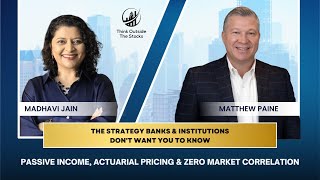
Matthew Payne of LifeCap explains life settlements, where seniors sell life insurance policies for cash above surrender value. The US has roughly $14 trillion in death benefits in force, with an estimated $230 billion of policies eligible for secondary sale. Investors buy these portfolios for actuarial returns in the mid-to-high teens.
Questions this video answers
About $14 trillion.
About $700 billion per year.
High hundreds of billions to low $200 billions (commonly cited; episode references $230 billion).
About $4.3–$4.4 billion in 2023.
A 1911 US Supreme Court ruling that a life insurance policy is private property.
Chapters
I don't think people realize how big the insurance market is. There's approximate, this is an estimate, about $14 trillion of death benefits in force today. 14 trillion, that's. I can't write 14 trillion out. I don't. Wow, 14 trillion. On average, this is an average, about $700 billion in death benefits.
Are you frustrated watching your hard earned money ride the knee jerking Wall street roller coaster? Are you looking to into alternate investments and set them on autopilot to achieve financial freedom? It's time to learn the ways of the wealthy. It's time to think outside the stocks with your host Madhvi Jain, an immigrant from India and exit professional who will bring you industry experts to illustrate a passive and holistic financial approach to build not just passive income but also your generational wealth. Madvi is on a mission to change the financial trajectory of one family at a time. And and a thousand more to go. Are you going to be part of this vision? And now without further ado, here is the host of Think Outside the Stocks, Madhvi Jain.
Before we go ahead, just a little bit 2 cents from my lawyer that this is information and education purpose only. If you want to engage with any of our guests, including Shauna, please do your own due diligence. And I am not particularly a financial, legal or tax advisor or investment advisor. So please seek your own team and maybe Tashana would be one of that team members. Right. And also we, you know, we'll have some examples for educational information purpose only. So keep that in mind. These are point in time. These are not representative of any real information. Hey, hey, hey. Welcome back to this second part with Matthew Penn here, our expert in the life insurance and the secondary market. And we are going to talk about very very interesting aspect of life insurance that I bet you may have not heard about. And even if you had heard about it, not known about it in this much depth, this is going to be a lot to unpack in this episode. And what if I told you that There is a $230 billion secondary market where life insurance policies trade like stocks generating returns in the mid to high teens for institutional investors, a market so large that a pension fund, endowments and hedge funds are quietly positioning themselves to profit from one of the most certain outcome in life and that is life itself. Well, welcome back to part two with Matthew Payne. We are diving into the secretive world of life settlements with institutional family office investors have been using for number of years where your unwanted life insurance policy might be worth far more than what you have ever Imagined. So Matthew, welcome back and wow, what a. What things we unpacked in the first episode and we are going to unpack in second is it's going to be mind blowing. So thank you so much and welcome back to Think Outside the Stocks.
Thank you very much. First time I've ever heard the sentence or the words life insurance and mind blowing used together. It's not the most exciting subject on the planet. So it's nice when you get in people who are enthusiastic.
I know we have to. I always believe in thinking outside the box. That's what my companies think. Outside the stocks. It's not just the stocks but outside the box too. Looking at the same thing a little bit differently and you know, just scratching under the surface there's, you know, it's under the iceberg. There's a ton of information under it. But, but those who are joining in and haven't listened to the first episode, please go back. I would encourage to go back and listen to that. But a real quick introduction about Matthew. Matthew is a seasoned financial, financial industry veteran with 24 years plus experience in financial and in insurance industry. He specializes into longevity oriented investment structure and the secondary market of life insurance. That's his core specialty and we are going to talk about that today. He's a co founder and managing director of LifeCap holdings and works with institutions and family offices to provide the bespoke longevity based investment structure. So Matthew, let's dive into. I'm excited about it and I hope you are too.
Absolutely. Thanks for having me back. I appreciate it.
Absolutely. So let's talk about to start with this $230 billion hidden asset. Can you elaborate a little bit about this industry and just lead us to understand in a very basic manner what is the secondary market and what is the asset that we are talking about.
So I'll kind of clarify a little bit of the numbers that you've put out there and kind of put it all into context. So the secondary market for life insurance is really just a market that was established roughly about 25 years ago. Although the law to do this has been on the books actually since 1911. And I think that kind of takes people back a little bit. So 1911, the US Supreme Court ruled that a life insurance policy is private property. And as private property you can do with it as you choose. Just like any private property that you own, your car, your home, your jewelry, jewelry, your artwork, whatever it is, you can trade that, you can sell it, you can do with it as you choose. So but from that Part up really for the next many decades, nothing really kind of happened. From the understanding that life insurance is an asset. It just, it just was the normal of what people thought, which was I have life insurance, if I no longer want it or need it, I would lapse it or surrender it back to the insurance company and that was it. But in the late 1990s really this industry of this called the life settlement industry was established first. There was before that was this thing called the viatical world. I think maybe it's important to bring up because people will have questions on that. Viatical was really created kind of around that time of the AIDS epidemic where individuals that had that horrible disease had a very, very short life expectancy. It was a terminal illness, there was no cures, there was no real treat. And it was the ability for them to sell their policies right there for immediate cash. They were selling it for very, very large sums of money as a percentage to their death benefit because they needed that cash immediately to take care of their medical expenses and their comforts until to the end of their lives. But really what that kind of turned into is this industry called the life settlement industry, which is simply the selling of a life insurance policy typically from a senior. Meaning when I say senior I really mean typically ages 60, 65 years of age or older of an individual that no longer wants or needs or can afford their policy anymore. Instead of lapsing it or surrendering it, they're going to sell it into the open market, into a very highly regulated market for an amount typically much greater than their cash value, less than their death benefit, but around there that they can then choose to do with that money as they wish to medical expenses, long term care, anything in their retirement years. This has garnered a lot of attention because now you look at this asset, I, you know, as an investor, if I'm investing in these pools of these policies that they've purchased in the secondary market, the payment of those where your return is generated is on mortality. It's on, you know, a certainty of an actuarial certainty versus what goes on in the economics of the world or the political environments of the world that can very much affect how stocks and bonds and mutual funds and things of that are, are valued. This has actuarial certainty to it that will happen. It's just a matter of when. And so there's been a lot of interest to that because it is a diversification tool as a tool, an investment tool that's non correlated to the rest of the traditional stock market as a way to Invest in something, as you mentioned, that has attractive return potential, attractive returns, but yet really not tied to anything else that's going on to the market. So that's a very 50,000 foot view of the market. And we can, throughout this podcast series here, we can start to unpack a little bit of those things and dive deeper into it. But that's kind of the general idea of the marketplace.
Wow. Ton of questions there. But let's start unfolding from the fundamentals of it, right? So if somebody, and the secondaries market, right, is, is derived from a need, if somebody wants to surrender or no longer want to pay into it or access the cash value that's sitting in there for whatever reasons, right, where they have like a terminal illness, whether they have something else, of course there are some, you know, strategies built into it that they can access some amount of money. If they have terminal illnesses, they have, there are some riders, but we are talking about kind of surrendering it to a third party kind of selling that product just like, you know, probably that lottery ticket. Sometimes they get that, they sell it and they get, you know, some, some money that is present value instead of the, the future value of the death benefit. So they access something that's better than their cash value and less than their death benefit. On the, and on the investment side, the investors are looking at the actual table and looking at that when that money can materialize. And in the sad term that I would say that when the person is possibly could die and based on how many number of years and how many payments are to be paid in this policy, them taking over that payment and taking over that death benefit, kind of a right as well, is what we are talking about, right? Just kind of breaking it down. So the one question is that when it comes to the secondary market, right, if somebody has a product to sell, how do they approach it? That okay, sure, I need this money. Who do I go to? Where do I access this?
Well, I think many probably have seen commercials on that. You can't watch CNBC for longer than probably 30 minutes without seeing one of those commercials. One of the most prevalent is a company called Coventry. Many people heard the name or know that name, Coventry, as the firm that buys these policies. Coincidentally, Coventry is actually the largest company in this space and they are the ones who created this space. So they, they're the ones that started this thing 25 years ago and by far the largest firm participating in the space and really has driven much of the regulations and the requirements that are centered around business practices and everything. That has to do with this asset class. So you can see commercials by them and others and you can call them directly and be engaged by a member of those organizations. I'm sure they've got floors of people that take those phone calls and help those individuals. There's also an intermediary market called the settlement broker market. So settlement brokers, think of them not that dissimilar to a mortgage broker, an intermediary, an in between person. They would go to a settlement broker and then the broker would go out and find the buyers that are, they're looking to buy the policies. I think it's very smart though for someone that is interested in doing this to first approach their financial and insurance professional and say, hey, you know, I am in a situation where I may no longer want or neither can afford my policy. And why I say that is because first and foremost I'm an advocate for keeping policies. I want people to keep their policies if figure out a way to keep that policy, you know, because the benefits of having that policy is incredible. And we talked about that in the first series of this podcast. And so first let's try to figure out a way, can we salvage it, change it in a way that we can still keep it. But if we've done that and it just simply is a policy that we no longer want or need or can afford, then working with that financial and insurance professional to go to a broker or to go to the coventries of the world, then that would be the proper channel to then go out to see what is my policy worth? Is it worth more than what the insurance company is willing to buy? And in many cases it may not be, but at least you have found that out. And then make a decision from there, whether it's keeping the policy and restructuring it, or giving it back to the insurance company for their value or selling it to a third party for their value. And now you've got choices and you're able to make those choices because you become educated with the different ways in which you can exercise your next steps.
Absolutely. Education is the key. Just evaluating, first of all, understanding what option A, B, C that you have.
Right.
And C might be the, the last option that you want to, you know, surrender to the insurance company. But there's, you know, multiple options between that, those, those areas when, when you can't afford or you can't afford to continue to pay. So I understand from a seller perspective that there is somewhat need that, you know, that they have to sell it, that there is a need or some Kind of inefficiencies in their life. Something has changed in their life, they want to sell it. When there is a seller, there is a buyer. Right. So there's a buyer market to it. And you alluded that to the investment world that they're buying it from the investment perspective. So let's talk about the investment thesis perspective that if you, you know, if somebody listening to this and thinking about that, hey, I would like to invest into this life settlements market. So what is, what is the investment thesis behind the life settlements? Sure.
Before I wanted to bring up two numbers because you brought them up and so I wanted to clarify that and then we'll get into that investment thesis. So you brought that number up of 200 odd billion. Just to be clear, the insurance market is enormous. I don't think people realize how big the insurance market is. There's approx. This is an estimate about $14 trillion of death benefits in force today. 14 trillion, that's. I, I can't write 14 trillion out. I don't. Wow, 14 trillion. On average, this is an average. About $700 billion in death benefits go away every year. Meaning people lapse or surrender them every year about 700 billion. So of that number, 700 billion. And there was studies when they saw how many are out there and how many are lapsed and surrendered. Studies went out to say well, of the policies that are out there and of the policies that are being surrendered and lapsed, how many could qualify for sale in the secondary market? And that number is about. Is what you were kind of quoting, which is. It's, you know, varies depending on the Reese, you know, the, the research people do. It's in the high one hundreds to low 200 billions markets. You, you use the term 230. I've seen that number before as well. But that's about what they say the market size is meaning of policies that have the potential to be sold, but simply. But they haven't been. Then that's the key.
Right? Right.
So there is not a supply problem in the industry. There are plenty of policies to buy. There's not enough investors to come into this space. So that's why we're talking about what is the investment profile. What is the, what is the reasoning for this? Because if we get that message out there, more investors will come. So let's go then to your, your second question or your main question which was what? Why is this attractive to an, to an investor? Why do they want to build first.
And foremost before you actually get there? You brought up A very important point, that there is a gap, there is a market gap, there are people who need to sell this and there are people who do not have enough information to learn from it. And when I met you first, Matthew, and you talked about that, that you and me have a responsibility to educate this set of people that yes, there is something like that exist whether they go and invest, whether they go and, you know, do something about it, but at least the education, at least understanding that there is this big black box that exists that you completely are unaware of and providing more in depth education. So you and me have a responsibility here. And I truly appreciate you, your zeal for education in this market, in this thesis. So thank you so much for again being here. I know it's the middle of the episode, but it means a lot for me to decipher this for our listeners today. Please go ahead.
Well, thank you. You're helping by inviting me onto this podcast and sharing the message. So why is this investment profile attractive to institutions and those that build investment portfolios? Well, first and foremost, it's what I alluded to earlier, which is this is truly a non correlated asset. It's based on certainties. So what's the famous line? There are two things certain in life, death and taxes. And so the, the ultimately when there's a portfolio of these policies and we receive money from those, it's because of a mortality, an actuarial certainty that has happened. So it isn't necessarily predicated by market fluctuations or, or political things that are happening. It's based on that. So that first and foremost got people's attention. You know, that's a very interesting asset that we're not seeing anything else in our portfolio that we're investing in that looks like this. So number one, there, number two, it is a highly regulated and great foundational structure investment program there is. First of all, I mentioned the 1911 U.S. supreme Court ruling. So that established that this is a legal transaction that can happen with an asset that is an individual's personal asset. Fast Forward into the 2000s when there was different firms, the national association of Insurance Commissioners, the National Conference of Insurance Professionals, that put together regulatory frameworks that says in this, you know, in this industry, in these transactions they need to be regulated. The buyers have to be registered in the states that they're buying policies that's all actually governed by the national association of Insurance Commissioners. If you as an individual are selling insurance in a state, you have to have a license with that state that's issued by the Office of The national insurance of the naic, the national association of Insurance Commissioners by that state's insurance commissioner. Same with this industry. They are regulated by those same insurance commissioners. They have to be registered in that state, they have to be licensed in that state. They have to follow the rules to protect the sellers. The contracts are outlined and what needs to be in the contracts, what disclosures, what transparencies. So anybody that's putting together portfolios of investments really like regulated industries. Because then everybody knows the rules of the game and they don't get changed. And so that was another major reason why in addition to the non correlation was a great foundation of highly regulated environment where the participants are all licensed, bonded and ready to go. And then you brought in then attractive returns. This is not an asset class that you typically are going to see tremendous returns, meaning the 20 plus rate of return, you know, percentage rate of return. That's just not how these are profiled. But it gives a reasonable targeted return for a reasonable risk profile that attracts people that are not necessarily trying to swing for those great grand slam home runs, but maybe wants to have just an appropriate balance of risk and reward. This is an asset class that, that benefits to that. And then the market size, which we talked about, you know, a $14 trillion size, 700 billion lapsing an estimated high 100 to low 200 billion in eligible. And in 2023 the industry bought about 4.3, 4.4 billion. So they're not even scratching the surface of what's available. And what they need is more institutions, more people coming in to develop and build the portfolios, more investors to come into and invest in this asset class. For all the reasons that I kind of outlined of why investors are looking at this, especially the institution and the family offices.
Yeah, yeah. Thank you for laying that foundation of the investment thesis for it. So the way I look at it is that there are more sellers than buyers. And so the buyers now actually get to evaluate and while creating a portfolio which essentially a portfolio of different life insurance policies from different people. Right. So when you're evaluating and building that portfolio now you just have a choice into looking at and actually running that actuarial table and see what numbers and I'm sure that there's an underwriting criteria and financials linked to it to select and put that into portfolio. So that's number one. And when it comes to any investment. Right. For me. And when I'm looking at what from my investors, my number one question always is that is there a capital preservation to it? Right. So the capital preservation. If that question is answered again, no investment could guarantee, right. There is whole life product dividend paying, there are guarantees built into it. But you know, when it comes to investment now you're kind of going, when I look at that pyramid structure, you're going up to the pyramid, the control is going down and the, the risk is kind of going high. Right. So this is like beginning to form some risk. But there is a risk reward ratio. So there is the conservative returns. Little bit better than what probably a dividend paying whole life is going to pay you. But now you're still into the life insurance bucket, but you're getting a little bit better return at lower risk. So it's a risk reward ratio. I mean it's not your cryptocurrency or something which is highly speculative and you're going to give you a high returns. But this is where the diversification of the portfolio comes in picture. And listeners have to think about it from that perspective that between my guaranteed 4% growth or 5% growth and the speculative 20, 30% growth, there is something in between. And that kind of sits classically here. So love that. Thank you for sharing it. But one question keeps on coming to the mind and let's address that elephant in the room. You know, for me to not just put my investors money, but even my money into something that's tied to a death. So I'm, you know, in, you know, in a hypothetical turn, I'm just looking at somebody's death benefit materializing and that can materialize only after death. So I question the ethics behind it. Right. That you know, the whole investment kind of strategy is leaning on somebody passing away, which is a very sad part of it. So how could I let my investors, how could I let myself invest into somebody into something which is, which is ethically, I don't feel right about it. Can you, you know, answer that elephant in the room?
Well, I mean, I get that question a lot, of course. And you know, I have been focused in this asset class almost solely really since 2018. I have given hundreds and hundreds of presentations all over the country, from every corner of this country to thousands of individuals. And, and, and this is a question that comes up almost all and every time I give a presentation or a podcast talk. Look, we understand that, you know, on the surface that can, that can, you know, there can be people that interpret that in different ways. Look, I mean, it's an inevitability. I mean we all want to live forever, but the reality is that we're not you know, but there's nobody here that I don't have ever met that wouldn't have loved to have a family member live longer than they did. Or, you know, what I wouldn't give to have my mom or dad back here on this earth. But it's inevitability. You know, funeral homes, you know, they make their money off of an inevitability and we're perfectly fine with that. And they're doing a good service in a, in a respectful manner. But let's look about it from an investment standpoint. So let's think about that for a moment. Is there anything else out there in which the payment is predicated on actuarial science and that the issuer benefits financially if early mortality happens, which is kind of what I just described as life settlements. Right. Is there anything out there that looks like that, sounds like that? And you think about that and you go Social Security and I don't know too many investment accounts that are bigger than our Social Security. Social Security is 100% predicated on actuarial science. Social Security says if you are going to retire and draw Social Security at age 67 or at 70 or whatever that time, based on actuarial science, we're going to give you a life expectancy of X. And now they're not doing underwriting on you like we do in the life settlement world, but they're just taking actuarial data and they say, we think at 67 or 70, you're going to live this long. And based on the amount of money you have that you've put in your account there, we're going to pay you X, you know, whatever that Social Security payment is. What they're doing is they're saying there's a 50% chance that you're not going to live long enough to get to that break even analysis, you know, that amount. There's also a 50% chance that you're going to live longer if you pass away earlier. Social Security wins, right? They don't have to pay as much out they are, they benefit from early mortality, but they are 100% predicated on the amount of money you have and actuarial how long they're going to pay it. And we as a country are very much dependent upon Social Security. Think of other ones. Pensions. Pensions play the exact same method of payment schedule. A pension is predicated on actuarial science. The pension says if you decide you're going to withdraw your pension Starting at age 65, 67, whatever it is, we're going to pay you an X dollar amount per month, per year. And we're going to expect you're going to live this long X period of time, 10 years, 20 years, whatever it is. And they know actuary that 50% won't because they'll pass away earlier and 50% will, will live longer. And they balance that out. So we are as a country, as a society know this is happening all the time. Fixed annuity. We see it in our world, this is just packaged in a different way in the sense of putting a portfolio of policies together again, actuarial based, predicated on mortality, based on the pool of dollars that we have in our portfolio and making some assumptions based on underwriting on what kind of return we're going to get. So it's just a different way of structuring the same thing that we've seen for decades with pensions and with Social Security.
You changed my mind about, you know, looking at Social Security. It's a very different perspective. Thank you for doing that. So going back to the life settlement, right. You know, I understand the actual science behind it better now looking at the people who are selling these policies, right. And like you said that, you know, there are more people want to sell this than people who are trying to buy it, right. So of course that selling of it is coming from the need. So who are these people we are serving and what kind of value are we adding back to their life? Because if they're selling which is as strong as a life insurance, which is going to pass as a death benefit, that means they have some need to utilize it in their lifetime right now they have more need for that money right now than it will serve as to their heirs as a death benefit. So who are we serving and what kind of value are we adding to it?
Sure. So we are, we typically see, and I'll probably give you some averages because that's always a great way just to kind of help put it in perspective. But average always means there's a little bit on one side and a little bit on the other. So that's why we always call it an average. But typically what we're seeing in this space is individuals that are, as I mentioned earlier, or I might have mentioned it in the first part, which is seniors typically ages 60, 65 years of age or, or older. So these are people that are more in their retirement years is the, are the people that are typically selling their policies. Seniors ages 60, 65 and older. Again, they may, for whatever reason they no longer want, neither can afford their policy anymore. They go through a process in which an underwritten analysis happens on them to sell their policies. So not only are they looked at from an actuarial, but there's actual individual underwriting that happens on the person themselves. So they just, they, they pull their medical records, they pull their medications. So they get a good understanding, the buyers are going to get a good understanding of that specific individual. What is their life expectancy, what are the things that are going on? So they really are only buying policies from seniors that tend to have more health related issues. So a 75 year old that's a marathon runner is not a policy that's typically going to be purchased in this marketplace. A 75 year old that has significant health issues, maybe a COPD, emphysema, neurological disorders, cardiovascular, are going to be more likely to sell their policies. So older individuals that are unhealthy typically are the ones that are looking to sell these policies. What do they do with them? Anything that they so choose they can do with the money. It's their money. There's no regulation, there's no saying you have to have it in this type of account or you know, you can do with it as you want. What we've seen or what we know is typically people use that for their retirement needs, whether it's helping them with long term care. And long term care can be many, many things. I'm not talking about just specifically long term care insurance. I'm talking about things you need to for care. It could be supplemental income for retirement, again for medication purposes. People can use it for whatever reasons they so choose in their senior years is what they're using it for. Because as you stated, maybe they have an immediate need that's more pressing than having a death benefit need. Again, the reality is I want people to keep their policies until the death happens. I think that's critically important. But the reality is, is that most policies don't. Most policies are surrendered or lapsed before the death benefit is recognized. And so if they're going to let that policy go, they are a senior, they're, they're in an unhealthier situation and they find themselves in needing of cash for whatever various reasons. That's who we're seeing and we're helping and that makes a huge impact. I'll tell you a quick story. So we know this couple, we met this couple. They were in their later 70s, early 80 range. The gentleman was in a wheelchair. He had served in this country in the military and he got out and had got a, you know, a Great life. And now they're in their retirement years and he was just failing in health and they were living on a limited budget. They just simply couldn't afford their policy anymore, just got too expensive. And we've seen this time and time again in by the tens of thousands. You see this all the time, these stories. And they were about to lose their policy because they just simply couldn't afford the premium payments anymore. We were able, the firm that I was working with at the time, we were able to come in and not only we were able to buy that policy from them, but we actually worked out a deal with them for them to retain a partial death benefit for them. So they didn't sell all of their death benefit to us, they sold a portion of their death benefit to us, more than 50%, but they were able to keep a portion of the death benefit and we paid them for that policy. So these people, literally within two months of losing this policy, we came in, we bought the policy for them, which provided income that they very much needed because of the things that they need to do for his wheelchair and ramps and things of that nature. And they were able to take care of that and the family was still able to keep a portion of the death benefit to value them at that time in the remainder. We bought and continued to make the premium payments on it and took care of it. So to sit down and talk with them, to hear their story, to see the tears in their eye of joy and thankfulness that we were able to come in at the last minute and help them, really sent the message home of why we were doing this, why we're providing this opportunity so that investors now are looking at a way to have a non correlated appropriate risk return profile. And you're also doing significant good to the seniors of America. That's a pretty powerful statement that why I think it's attracting a lot of investors to come to the space.
Yeah, yeah. Thank you for elaborating that. It's a kind of a win win situation. It's not like, you know, you're taking the policies that, that they needed. But you know, financial hardship is one of the, the, the hardest thing to manage. And especially when you are in your senior year, you're retired and you can't go back to work because of your health condition or different factors. And if there is an asset which you can, which can bring you this income or which can bring you this expenses, probably you will have for your, you know, medical needs, for example, I think that's, that's A service that's a value add service because if they didn't need to sell it, they wouldn't be in that market to sell in the first place.
Right.
They are in the market because they really need that and that money could do more good to them than just passing the death benefit to their heir. So we are actually changing their lives, especially the seniors when they are not in their earning age and they can't just go back and the jobs are getting more and more tough this time as well. So I think I can see that as a win win situation. That ethical question I had. Thank you for, you know, giving a perspective to that, that people who need it are in the market to sell it. And by investors getting this, you know, non correlated asset which is, you know, not fluctuating with market, not fluctuating with stock market political pressure, but it's tied to a certainty which is the death. And that's how, you know, kind of capital preservation also comes in picture. So it's kind of a, you know, the full picture of it. So thanks for you know, painting that picture. And with that I would love to discuss what you do and I think, you know, your participation in the investment world is incredible. And if somebody, you know, wants to invest into the life settlements, how can we help them? And you know, I'm definitely looking into working with you in getting the life settlement that this kind of like risk balanced investment in my, in my fund so the investors can have an option for a highly weighted investment option in life settlement in my fund as well. So let's talk about, you know, your work and how do you help in identifying this, this good investment and what's the due diligence? I think due diligence is like a whole big topic, but at least like give a glimpse of it that what does it involve to find this asset for investors.
So I started LifeCap because I wanted to provide education, you know, pull back the curtain or whatever analogy you want to say, lift up the hood and help institutions, family offices, pensions, endowments, foundations, hedge funds, every, you know, the institutional world to really, truly understand this marketplace. First and foremost, it's gone through significant transformational change over the last 25 years as it's learned. Every new asset that comes to market needs time to learn to learn the nuances. In this case, it took longer than you would normally expect in an asset class because a lot of it is interpretation. You're interpreting life expectancies. And strange as this sounds, the industry or insurance actuarials themselves really didn't have a strong understanding of life expectancies of seniors. We're real good actuarially understanding what is the average lifespan of somebody born today, somebody in their, you know, youth or 20s or 30s or 40s. But very little information was known about those individuals and life expectancies in their 60s, 70s and 80s, and especially with different ailments and different conditions. And so there needed to be time and observation of all these conditions to start gathering data to get a better analysis of what is a good life expectancy of seniors. And so that's taken time and early on we saw a lot more volatility. There was investments that did well, there was investments that didn't do well, you know, because it was all just a learning curve. So first and foremost, it's educating people as to what has happened over the last 20, 25 years to where we come to today as an investment option. So I help in getting them to understand that aspect of it, because it's extremely important. And then also what type of investments. There are many, many ways in which people can invest in this asset class. If you could start with more of a traditional fund, but then you can, like many different assets, you can have, add leverage and increase risk and increase targeted returns by adding leverage. You could add a hedge and different variations of hedging, which is decreasing risk and decreasing targeted returns. So the spreads on which a portfolio of these types of policies can earn can be as little as 5, you know, 5, you know, 5% and upwards of high teens, you know, and the spread can be different depending on leverage or hedging. And all of those elements that are associated with this investment really, really is educating people so that they can decide institutionally wise what is the most appropriate for them versus being stuck with just one way and saying, does that work for me or not?
Interesting. Very, very interesting. So in terms of, you know, again, this is a, is a huge topic about selection, the investment selection, the fund selection and the due diligence. But just in terms of the future, where do you do, where do you think the future of this longitudity investment is going? And especially the technological impact. Right. How is AI and big data is impacting this life expectancy model?
Sure. Well, we see consistently pretty strict, pretty steady growth in the asset space as we're getting the word out. And more education and more institutions are learning about it. We've even seen even things such as sovereign funds that are now starting to invest in these. A lot of these people don't even know who's investing them because they're done by their private portfolios. There are certain companies out there, you know, Berkshire Hathaway has made it known that they have portfolios in this space and. But you don't see what they're doing because it's private, it's their fa, it's the family money. You know, from, from that perspective. But we're going to, we're seeing pretty steady growth as we're seeing more and more institutions starting to learn about the space as the development of the portfolio has become better, better underwriting, better ways to diversify. Like we learned a long time ago that if we owned 100 stocks, that doesn't necessarily mean we're diversified, right. What if all 100 stocks were large cap? Or what if, you know. So we learned that even owning volume doesn't necessarily translate into diversification. Well, this industry needed to learn that too over the years. How do you diversify? Well, instead of the stock market, which is large and mids and small caps and different asset classes and sectors and different structures, in this industry, it is components of a policy and components of the individually insured that we use to diversify. So there's diversification diversified amongst the insurance carriers. So you're not overweighted under any insurance carrier. In your total portfolio, you could diversify amongst the attributes of the insured, males to females, smokers to non smokers, the types of underlying ailments that are affecting them. You don't want to be overweighted again in COPDs, emphysemas, neurological disorders, cardiovascular weighted in life expectancies. You don't want to maybe be too overweighted and a certain year, so you spread that out. So there's all sorts of ways in which we've learned through the years how to better diversify this portfolio so that we can achieve the desired outcome that we're looking to. To achieve.
Wow. And this from the sounds of it, it looks like there is kind of a tertiary market too, right? I mean, when this portfolio, somebody is building it, is there a tertiary market where this, you know, kind of swaps happen and it kind of gets sold? And that could be an exit too, right? I mean, people just don't have to wait for the portfolio to start returning based on the actual debts happening, but it could be just the exit of that entire portfolio. So do you want to elaborate a little bit on that?
Sure. So that's a fairly significant size market is in the tertiaries. And that's typically institutions that are looking to get rid of their entire portfolio or portions of their portfolio, they may be rebalancing, they're doing all the techniques that they do to manage their assets. And so then they bring those policies back out into the space called the tertiary space. And therefore other institutions and family offices can buy up a portion of those, some of them, all of them. And so that's a very robust marketplace that allows for the potential for an institution that has a portfolio that may want to sell off just the tail end of it, the very end of it, if they're finally, you know, they're coming to the end of it or maybe they see other opportunities and they need to free up cash so they're selling a portion of it so that they can invest in other endeavors. But yeah, so the tertiary market is very robust. It's actually much larger than the original market of buying and it's very, very active. And that's how a lot of institutions find their policies is through the tertiary markets than it is just going and working directly with a provider to buy the policies.
Wow. Wow, thank you so much, Matthew. As I indicated in the beginning of this episode, it is a mind blowing episode even for me. I have learned so many things just from the education that you provided today. So with that, I mean I literally can have this conversation with you for hours, but we have talked a long time and I truly appreciate your patience through that. So with that we have come to kind of a final portion of our, you know, this podcast, the two part series. And in this series I do actually, you know, when I talk to people like you, experts in this industry, I always wonder that, you know, how do they, how do they diversify, how do they think outside the stocks and how do they plan to grow, preserve, protect and pass their generational wealth? And I know, you know, large portion of your this is going to be life insurance or life settlements, but I would love to know from you, Matthew, that how do you think outside the stocks and do you have any stock portfolio? Again, we're just talking high level, no numbers but you know, how do you, how do you manage risk in, in your portfolio and make sure that generation after generation it's, it's going to stay intact because that's everybody the listeners needs to start looking at.
I think it's really important obviously to pay attention to tax ramifications on any investment that you have and understanding that if there's components to an investment that provides tax advantages, I'm always looking for those types not to monopolize my entire portfolio, but to definitely balance so that when there are opportunities that I look at that have a higher risk return profile. I'm really typically balancing that out then with some tax advantaged, more fixed income or lower risk profiles. So for me my philosophy is always a balancing portfolio philosophy of when I want to take risk. I'm always then also looking to balance that out because not everything is going to work. And so that's a case key philosophy that I have so that I'm able to continue to build my portfolios and grow my worth. And then of course, as you mentioned, taking advantage of vehicles like insurance so that I can pass on wealth to my family. So those are key things I think is really important. So I don't shy away from those lower producing or lower interest rates products because to me those are hedging strategies and balancing to more riskier portfolios.
That makes sense. Thank you so much. So with that we have, you know, our next round which is the rapid fire round. But before we actually go to the rapid fire round, how would you like to, you know, like if listeners wants to get in touch with you, how can they reach you?
Sure. Well, I think the easiest way is just to go to my website, lifecap.com l I f e and go to life there. It's got my phone numbers, my email address and they can contact me that way and learn a little bit more about what I'm doing.
That's fantastic. Thank you so much. And with that, you know, it's kind of a fun round. We talked a lot of, you know, strategy in depth. This is kind of a fun round. But this is, I call it a rapid fire round. I just ask, you know, a few quick questions, you know, for about life, about you and some things about your strategy too. All right Matthew, so are you ready for the rapid fire round?
Yeah, absolutely.
That's amazing. So give us a one story that in your life that you know, that has touched you the most when it comes to what you do and somebody who has come to you and told you that how much impact this has your work has done on their life.
I appreciate that question and it is not and I think a lot about that and I think that the biggest impacts have not to do with financial but more of understanding and helping people. And so the story, you know, a story that came to mind was with a financial advisor, I was down in Florida and was really kind of just struggling and maybe towards the end of his career but didn't in his mind didn't feel like he needed to, you know, stop and retire but was really struggling and, and I started working with him at first because I was just educating him on the space. From there, that turned into this kind of relationship that we developed through the years of really reframing how he provided advice and education to his clients. And he really found a new passion of bringing investment strategies to his clients because he started doing it in the form of an education versus, you know, selling or pitching or something to that effect. And so that really resonated with me. It really was warm, warming to me, warming of with my heart that, you know, fostering, leading with education and understanding that empowering people to make decisions is far more important than ultimately what, you know, the choices they make because they're going to be making choices for all of that, you know, the change. Things are going to change all the time. And what's good today is not going to necessarily be good tomorrow. But having that core foundation of education and having someone said, hey man, you changed the way I did business and you revived my career based on giving me a new way to go to my clients and connecting with them on more of an emotional, connected level, really changed the way he did his business. And that really affected me a lot and really gave me the momentum to continue, continue on with this mantra of educating, allowing people to make decisions based on accurate information, based on not just taking somebody's word for it, but digging in themselves. And at the end of the day, you know, that makes for a happier, happier client. And beer.
Love that. Love that. That's an education, is the foundation, and I live by that as well. There is a tremendous, tremendous satisfaction when you educate someone. You know, I think, and especially who do you educate?
Right.
If you educate a man, you know, it's probably educating an individual. But I believe if you educate a woman and that's she's the one who's going to bring it to the dining table. The discussion. You're educating families. So, you know, we are doing our job in educating families one step at a time. That's some something that that's common between us. Thank you so much for sharing that. That's incredible valuable. My second question is, what is the most strangest question that you have gotten asked about the life. The whole life settlement investment?
If. If they hire people to go out and terminate people within the portfolio, hire the hitman to come out, out and take out the insurance. That's probably the most ridiculous question that I get, but I get that frequently.
Oh my goodness. How do you answer that, people?
That this is a highly regulated industry. These are corporations and family offices that are buying portfolios. It's just, that's, you know, that's just not, you know, that's just.
Yeah, it's, it's not mafia buying the portfolio and trying to.
Yeah, but I get that question often.
That's hilarious. That's hilarious. Thank you for sharing that. And one, one personal last question that you know, when you are not into your business world, your life, settlement work, what do you like to do? And you know, where do you like to go? What are your hobbies?
Appreciate the question. So we're, my wife and I are empty nesters. So our kids are grown and, and out of the house. We are fortunate that we have a, a beautiful home in the western side of western valley of Phoenix, Arizona. So we love to go hiking in the mountains. We're right at the base of a mountain range called the White Tank Mountains. So we often hiking in those mountains or lately we've been able to experience hot air balloons. So that was kind of a fun experience.
Oh, very interesting.
Recently. Love, love that my wife and I are very much explorers. We love to experience new things, going to new places, experiencing new adventures. So if somebody says, hey, let's try this, we're usually the first ones to step up and say, let's go know. We love breweries. So my wife and I, for fun, started a Instagram account called Middle Aged Brewery Junkies. So we just go, we love to just go have fun at breweries, meet the owners, meet the locals. So we've been to breweries all over the country just for, if we're traveling there for, for vacations, we're always trying to find some breweries and stop by. We love doing that. My wife is an avid, avid pickleballer because I think it used to be when you're in Phoenix, Arizona and she's dragging me into that sport. So I am very amateur and very beginnerish. But you know, I get, you know, a professional wife to teach me. So that's, that's a, that's the advantage there. So love to do it. We're very, very adventuresome. Love to experience life, love to embrace new things. And most importantly, we get to see our children now that they're adults experiencing their new adventures in life and experiences. And that's a great thing.
Love it. Love it. Matthew, looks like you not only believe in the life insurance, but you don't settle in, in life settlements, but you actually are living your life fully.
Absolutely.
No pun intended. Exactly. Exactly. So here I, you know, issue that you continue enjoying your life and continue Enjoying educating people from the bottom of your heart and I look forward to learn so much from you and there are many ways that we're going to stay connected and you know I'm looking forward to to see where this takes, you know, our journey and even my investors journey to next level. So truly, truly appreciate you joining us on Think Outside the Stocks for this two part wholehearted series. And I hope listeners you have you know got a lot from this this series as well. If this two part series with Matthew Payne has shifted your thinking about life insurance and longevity investing, well you are not not alone. He not only provided the risk balance profile of this investment type but also provide the the ethics and the the knowledge behind it and that why this could be adding value to different people. Well, we have gone from a conventional wisdom of buying term and invested into difference to discovering a 230 billion institutional asset class that most people never knew existed. So, so here is what you need to do right now. If you own a life insurance, first of all identify if you are using it efficiently. Because you know, with infinite banking concept, it's just not about a concept of building life insurance, but it's about overfunding, making it an efficient vehicle for you so that it can create the guaranteed growth and also a sustainable generational wealth that you can pass to your heir, something that can use in your lifetime as well. And secondly, if you are thinking about surrendering a life insurance product, think about it twice, there could be a significant value that you may not have known about it. And lastly, you know, think about how institutional investors are managing this, are managing this different kind of asset class and putting their money into this investment well vehicle and a common person, you know, everybody who's listening who has made a significant value in their portfolio and are looking for the diversified option can also look into this investment option as well. So most importantly, if you have learned something new with this two part series, we'll know first about learning about the life insurance itself, the core of it. And secondly, does life insurance settlement market how you can get a significant value if you want to sell it and how you can as an investor make a consistent return as well. Share with your network. Don't be just the only one person getting a benefit from it. Share with your network. This is a type of alternate investment knowledge is exactly what separates sophisticated investment investor from rest of from everyone else. And before you go, leave us a five star review. If you like this episode, what other hidden markets or investment strategies that you want to explore, let us know. Remember the best opportunities are often hidden in plain sight. This is exactly the kind of institutional quality inside that builds real wealth. Until next time, while we are exploring more options for you, keep thinking beyond the conventional wealth wisdom. Not just think outside the stocks, but think outside the box as well. And thank you so much for joining and listening in.
Thanks for tuning in to the Think Outside the Stocks podcast. If you enjoyed today's episode, please like and subscribe. MADVI is on a mission to change the financial trajectory of one family at a time. With a thousand more to go, we hope you'll be a part of this vision. Please join our growing community and to get your journey started, visit thinkoutsidethestocks.com to download your free guide on active income with passive real estate investments. If you learn something new, please share it with one person today. And if you have 60 seconds, please leave us an Apple review to help us reach more people like you. Tune in for the next episode.
More from Madhavi

The "Holy Grail" Real Estate Strategy Most Passive Investors Miss | Featuring Glenn Hanson

Be fearful when others are greedy, and greedy when others are fearful. #shorts

Building Recession-Proof Wealth Through Mobile Home Parks & Self-Storage with Matt Ricardella

The "Holy Grail" Real Estate Strategy Most Passive Investors Miss | Featuring Glenn Hanson


Think Outside the Stocks: Breaking the Financial Fear Barrier with Liz Faircloth


Why Health Is Your Greatest Financial Investment | Chris Orestis with Madhavi Jain


The #1 Retirement Killer That's NOT the Stock Market (Most People Miss This)

EP47: Private Credit Explained: Stratus Financial’s Impact Investment Model | Brandon Interview