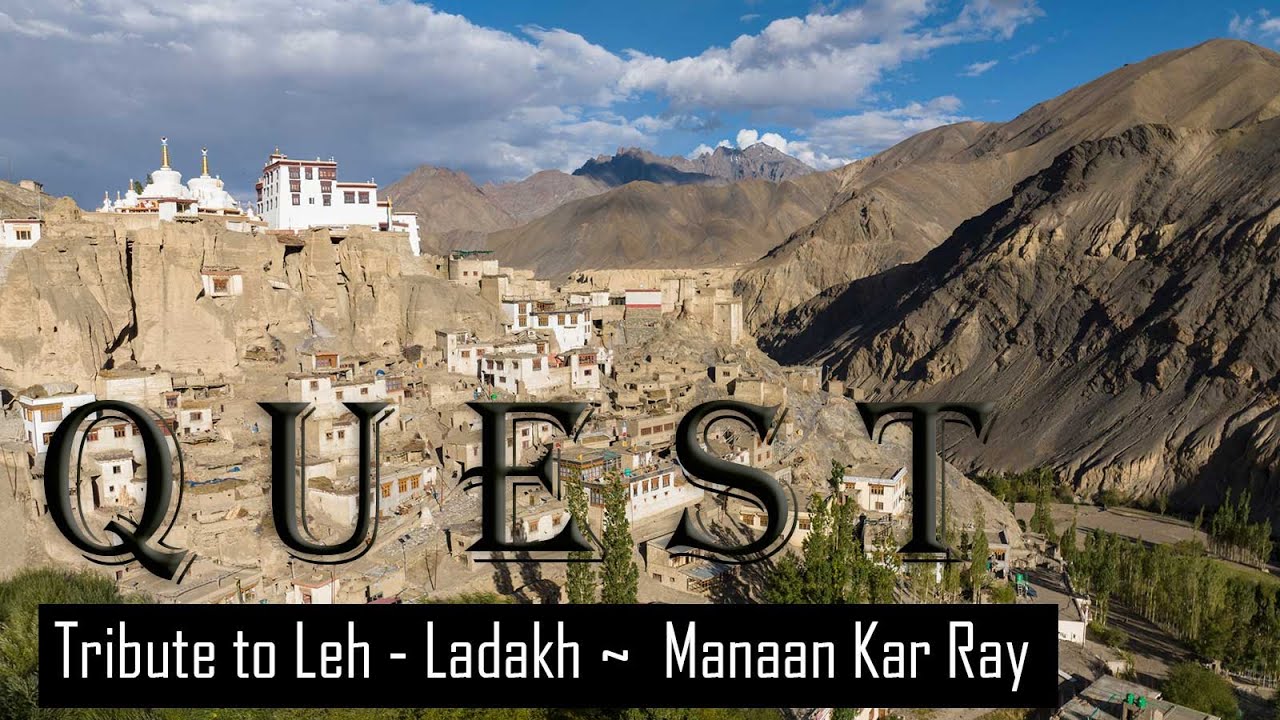
Manaan Kar Ray films a high-speed drive through the Himalayas with driver Zeeshan, navigating narrow mountain roads at 60-70 km/h between Leh and Dras. The route passes remnants of the 1999 Kargil War: bunkers, walls, and shelling sites near the Line of Control, with the Dras and Suru rivers converging below.
Chapters
All right, here we go, showing you a bit of driving in the Himalayas, how it is like. Well, I've got with me Zeeshan, who has been my driver for the whole of the trip. It's a pretty amazing driver because we've We drove down from Leh to Kargil yesterday. We left quite late because it was raining in the morning, and he drove over, well, 230-240 kilometers from Kargil to Leh. And today we have just been to Dras, and we're driving back towards Leh. It's quite a long drive. Look at the way he takes these turns. We're driving at around 70 kilometers an hour on these mountain roads, and he is almost like a motorbike rider. So he turns left and right as he takes these turns at a pretty high speed, and often you'll get cars that are coming towards you from the other side as well. Look at him, he takes this turn and then back we are, you know, gets into position. Doesn't slow the car down really, he just turns almost as if he's a biker. Say hello, Zeeshan. Hello. There he goes, gentle turn again. And you can see there's a car that's coming from the other side and they zip past you. And every now and then he will take a phone call as well amidst these mountain roads, which makes my heart stop. But he is some driver. He's been driving from the age of, I guess, 18 or 19. He said he's 26. Look at him, just gently swivels around, takes a turn. And again, and here we go again. Look at it. So Leh is 249 kilometers, Khardung's 19 kilometers. We are coming up to some army trucks as well, which are coming from the other side. You'll most probably see these trucks whiz past beside Zeeshan's window. Um, and these army truckers carrying load, people all the way, and these Roads are pretty amazing. Border Roads Organisation maintains them. You know, in Hindi we would say "Himalay ko chirtte huye, ye raaste aapko Thrace se Kargil, Kargil se Leh tak pochayenge." It is pretty amazing, pretty amazing, and it was quite a sight to see today. The Thrace War Memorial. We are heading back towards Kargil, and from there to Leh, hopefully we'll get some drone time. Somewhere in the middle of it. So, uh, enjoy the drive with Zeeshan. At some point you can see— yep, Zeeshan's taking this truck. He will take another, and you can see there's another car coming from the other side. You know how dangerous these turns are. So the truck in front signaled, yep, it's okay to go, and off you go. It's pretty amazing, this kind of driving. And often you'd get bikers, as you can see, coming from the other side as well. And now you can hear a mobile phone, and he's going to— he was tempted to take it, but he stopped taking it because I'm recording. But, uh, every now and then he will pick it up. You can see there are cars coming from the other side. And what a view this is! It's pretty much mind-blowing. Okay, I'll turn the video around. There you can see him. There he goes. So we're coming up to a right turn. See how he will take this turn. His body leans to the right just a little bit, then goes to the left again like a biker. And all of this at 60-70 kilometers an hour. So to my left is is the Dras River, and when it meets Suru, you'll get the confluence of the two, and then we'll go off towards Pakistan. I'm assuming this is— must be one of the tributaries of Indus as well, and at some point it will meet Indus. So in 1999, there was a lot of shelling that would happen over here. That's why they have built this wall, so that the army vehicles cannot be seen from the other side. So we're very close to the line of control with Pakistan, so they they have sight of this particular road, and that's why they have built this wall over here. This is the confluence. of Suru River and Dras River, and off it goes towards Pakistan. This is very close to the Line of Control, and in the distance you can most probably see the little bunkers as well from where they used to do shelling during the Kargil War.