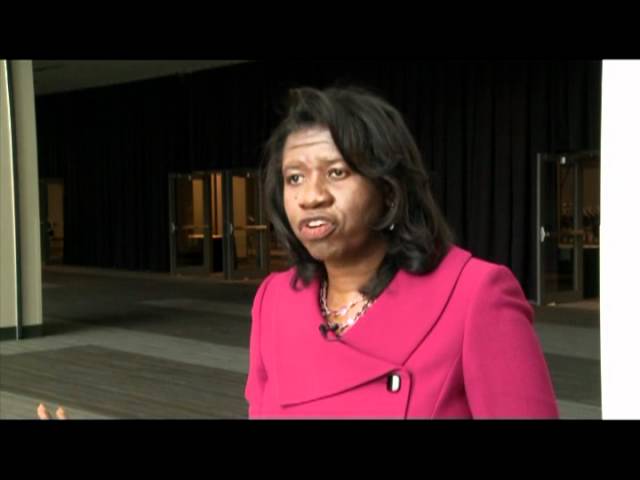
In this interview, Margaret Spence of Douglas Claims and Risk Consultants, Inc. explains how employers can lower workers' compensation costs and improve workplace morale by implementing a structured return‑to‑work (RTW) program. She emphasizes that many companies excel at paperwork but lack a cohesive process, and that employers must take ownership of claim management rather than relying solely on insurance adjusters. Spence outlines a team‑based RTW model that includes the employer, supervisors, the injured worker, treating physicians, and the insurance adjuster, stressing the need for clear policies and communication. She describes common pitfalls when RTW is neglected, such as rising premiums, damaged employee morale, and a culture that encourages claim‑settling over rehabilitation. Finally, she offers three concrete actions for employers: (1) create an injury‑day “blueprint” that sets expectations and reporting rules; (2) provide physicians with a combined regular‑duty and light‑duty job description to streamline medical clearance; and (3) proactively address ADA, FMLA, and post‑maximum‑medical‑improvement (post‑MMI) scenarios in coordination with the adjuster to ensure a smooth transition back to work.
Alright, just go ahead and tell us your name and spell it out.
Margaret Spence. M-A-R-G-A-R-E-T S-P-E-N-C-E.
And give us the name of your company and describe in layman's terms what your area of expertise is.
Sure. It's Douglas Claims and Risk Consultants, Inc., and we are based in Florida. And part of what we do is teach employers how to manage claims effectively. One of the things that we found is employers are either great at doing paperwork, but they're not very good at the process, or they don't have a cohesive plan to manage their workers' comp program. So part of what we do is go in and educate them on how to manage workers' comp effectively, what processes they need to have in place, and how they can implement strategies that lower their overall costs.
Next. Okay. All right, so you help companies, you know, create plans to get injured workers back to work, and why is it important for companies to plan ahead?
Sure. A key part of what we do is return to work implementation. About in 2008, I wrote a book called From Workers' Comp Claimant to Valued Employee. It was specifically geared to Florida employers, walking them through the process of the injury management process and injury management steps. One of the things that we recognized that employers didn't understand was that they control their destiny in terms of workers' comp cost. And it's up to them to put the policies and procedures in place to control the overall cost. It starts with effective policies. It starts with a return to work process. It starts with the medical management side of it. You can't push everything onto your insurance adjuster or your insurance carrier to manage injuries. You have to do an effective job yourself of monitoring and managing the process.
And who all should be involved in this plan? Who are the different components?
Okay, return to work is a team approach. To the return to work process, and let me describe the team to you. You have the employer. From the employer standpoint, part of what the employer should do is have policies in place that address return to work. So, for example, they should have written policies that they can hand to an injured worker after the accident that says, these are the steps that I want you to follow in order to get you back to work. They should have clear policies for their supervisors and managers. So from the employer side of the room, the employer needs to be on the team, the supervisors and managers need to be on the team. Now, the injured worker has to be a participant in the team. You then move one step further and you go to the physicians, the physicians who treat the injured worker at the very beginning of the claim and the ones who manage their, their, their injury from the beginning to the end. So that's another key factor in the team process. The other factor is the adjuster, the insurance company. I think one of the frustrations that I've had, especially when you're managing workers' comp, is you'll get the adjuster who doesn't quite understand the dynamics of the employer's workplace, whose goal is, "Let's close the claim. Let's close this down right away." And the employer's goal is, "Well, why can't I keep this person?" 'Here.' Or you get vice versa, where you get the employer who says, 'You know what, he was a bad apple to begin with. Now that he's injured, this is going to be my excuse to get this injured worker out the door.' And then you have the adjuster who's pushing back, saying, 'I want you to keep this person working.' So unless you create a cohesive team that everybody's on there, you don't have an effective return-to-work program.
What are some of the pitfalls that companies fall into when they don't get injured workers back to work in a timely manner?
Well, beyond the cost factor, everybody looks at, well, you know, your premiums are going to go up, your cost of risk is going to go up. Okay, so we can all talk about cost, but one of the things that we don't focus on enough, and let me, let me give you the dynamic of what I'm talking about. Employee morale is essential to creating an effective team. Okay, employee morale is the only part of creating a team. If you have a cycle of settling claims, a cycle of injured and out the door, what's to prevent the next person from doing that? Okay, um, if you are okay with saying to every injured employee, go home and stay there, what are you setting up the rest of your workforce to do? Okay, if you bring the employee back to work and you put them in the corner and they're counting paper clips, they're not doing productive work. Now you have the rest of your staff looking at this injured worker saying He's got a cushy job. I want that job. So if you don't create a return-to-work program that is effective, you can't just bring people back to work, okay? You have to say, okay, what can the employee do? Where can we put them? Where can they be most effective until they're able to go back to their original work area? But it's a tone that you set throughout your organization. One of the things that I say to employers is this. If you settle every claim, all you're setting yourself up for is for the next person to walk in the door. Word's out on the street, if you come to work for XYZ Company, you're gonna get a check. And so that's the kind of employee you attract. You attract employees who know that if they come to work for you, you have no system in place, they can game the system, and now the cycle starts all over again. So beyond the fact of cost, it has to do with the environment, the work environment that you're creating. And as much as we say when we settle claims that there's, you know, confidentiality, nobody will talk about their settlement, that's not true. They're friends, they're buddies. And envision this: I'm working next to you on an assembly line, you get injured, and I'm still working every day. I see you driving a brand new car a couple weeks later. I see you driving— your wife has a brand new car because you've settled your workers' comp claim and now you're throwing money around left and right. I'm thinking to myself, are you kidding? Why am I doing this? So you affect loyalty to the company, you affect morale,, and you don't create a continuity for other employees. So that's the negative side. It's not always about the cost.
And what are the top 3 things to think about when making a return to work program? Top 3 things.
Okay, top 3 things. The day the employee's injured, the employee needs to know your expectation, period. So even if the claim is not one where the employee is going to be off work, I recommend that employers create what's called a blueprint, a piece of paper that you put out 10 or 5 rules that you want the employee to follow post-accident. Bring me your doctor's notes, um, report to your supervisor, this is where you go for medical treatment, whatever the list needs to encompass, but it needs to also encompass two things: how they're gonna report back to work how they're gonna let you know their medical status, and the fact that they need to adhere to the restrictions not only at work but at home. Okay, so that's 3 things that need to be on that, that sheet. So that's part 1 of the return to work process. Part 2 is that the employer needs to be able to communicate with the physician. They need to communicate the light duty job that's available. One of the things that I recommend to employers is that they give the injured worker the light duty job on a sheet of paper with the regular duty job on the back of that same paper, the job description. So the injured worker is now taking the job description into the doctor's office. The doctor is then able to flip both sides and say, okay, you can't do this job, but you can do the one on the back., and the doctor is immediately signing off on it. That would be part 2 of the toolkit. Part 3 of the toolkit is addressing the ADA exposure, the FMLA exposure, and what settlements could do within the organization. So if you're, if you're going to create the return to work, you need to have a post-MMI plan. Okay, so for example, You have an injured worker who may not be able to return to their pre-injury job. Now what? You can't plan that when the employee walks in the door with the note that says, "I can't do the regular job." You're getting an idea as you're going through the claims process that the employee cannot do that job. You're getting an idea. So you have to begin the planning process immediately. And you have to work with the adjuster to help you navigate the process so that they're constantly communicating where the employee is on the spectrum of return to work with you. Yep. Good.