Deploying Telemedicine, Tele-Physical Therapy in Workers Comp
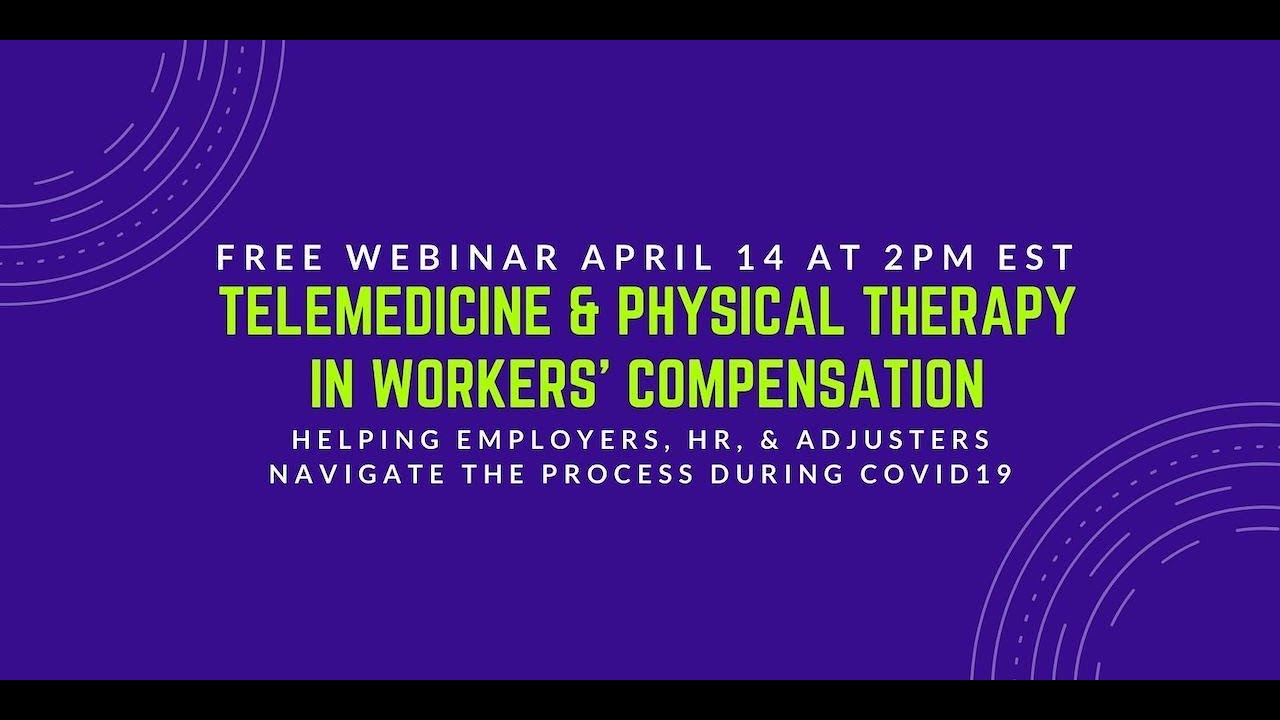
The webinar, hosted by Margaret Spence, convened a panel of experts—including physicians, claims directors, and managed‑care leaders—to discuss the rapid deployment of telemedicine and tele‑rehabilitation within workers’ compensation during the COVID‑19 pandemic and beyond. Participants highlighted the broad benefits of virtual care (accessibility for underserved or transportation‑limited workers, increased accountability, and higher satisfaction), and stressed the need for rigorous data collection to prove outcomes such as return‑to‑work rates, injury‑type responsiveness, and provider performance. Reimbursement uncertainty emerged as a major barrier, with varied CPT codes, modifiers, and payer policies creating confusion; the panel called for unified advocacy to secure parity with in‑person visits and to give employers choice of vendors. A strong emphasis was placed on coordinated legislative action, multi‑stakeholder collaboration (employers, legal counsel, medical providers, TPAs, and vendors), and the creation of real‑world studies to shape policy. The discussion concluded with a commitment to ongoing education through future webinars covering multi‑state regulations, occupational therapy, managed‑care tele‑PT, and workplace accommodation, underscoring that telemedicine is expected to remain a permanent component of workers’ comp care.
Chapters
Okay. All right, so we are live on YouTube. Yay! So I'm gonna start the broadcast and let everybody in, so it'll take a couple minutes for everybody to populate in from the folks who are waiting. So let me start. We will let everybody in. Start populating. Hi everyone, welcome to our webinar today. Our room is filling up with happy people.
Yay, happy people!
We're glad our moderator's happy.
I'm telling you, man, the moderator— I posted this thing on Twitter a couple of nights ago. Welcome, everyone. I posted this thing. So I'm having my own party. So I've had a martini. I've had a glass of wine. I've had blah, blah, blah. And then I put at the very bottom, I'm chasing it with almond milk. And somebody actually thought I was really drinking. And I said, seriously, if I said I'm chasing it with almond milk, none of that went with almond milk. So anyway, so welcome everyone. We're giving the webinar a few minutes for everybody to populate in our room. We have almost 200 people registered for today's event. And we will start in 2 seconds. I came prepared with my Starbucks. I wanted to feel like I was still in an office, even if I'm only dressed from the waist up. You don't want to know what's from the waist down. So I'm going to start with humor. We have to laugh today. So I came prepared with Starbucks, so I'm, I'm raring to go, um, got my Starbucks going on.
So anyway, you want to mute everybody?
Yeah, I will. Yeah, I will in 2 seconds. Let me mute everyone, and I'm gonna leave Dr. Nelson— I'm gonna leave you unmuted, and, um, And then— okay everyone, um, as we get started I want to take this time to introduce everyone and to talk about why we're here today. So we are here today Hang on 2 seconds, my slideshow is going really fast. We have Dr. Susan Nelson, we have Claire Musselman, we have DC Campbell, and we have Katherine Benavidez and Max Topper with PhD. What we know today is And the reason why we did this is what we know today is that the COVID-19 has upended workers' comp and how we manage workers' comp. And it's completely different from what we expected in the past. In the past, what we got was medical treatment on site in person. We had injured workers walking in the door, seeing a physician. What's happening today is COVID-19 has forced the workers' comp system to think differently. We are no longer able to just send people to the doctor. Some offices are closed, some facilities are not seeing patients. We've long resisted change in workers' comp. We've long resisted being on the cutting edge in healthcare. Telemedicine has always existed. So today's program is focused on deploying telemedicine into the workers' comp system. For many of you, it's the first time that you've used telemed. For some of you, you've used it a lot. What we are going to do is a pretty holistic view of the process today. We're going to hear from Dr. Nelson from a physician standpoint and her view of treating injured employees remotely and the benefits and drawbacks to her medical treatment. We're going to hear from Claire Musselman, who's going to talk to us about the carrier perspective. Claire is with Continental West. She is a director of workers' comp claims for them. And she's going to discuss that as well as the partnering company that she's working with, which is a partnering with Berkshire around telemed and deploying that in workers' comp. We are totally honored today to have DC Campbell and Katherine Benavides with us.
Both—
DC Campbell came out of the Texas Workers' Comp system, and he's now worked with IMO, and we're looking to get some perspective from him and from Katherine around what Texas got right. And then we're going to talk to Max Topper, who's with Physicians Health Center, and Max is going to discuss the challenges that she has had trying to figure this out as a vendor. And if she's having issues figuring it out as a vendor, I can only imagine that as employers lawyers, you're doing the same thing. And for all of you who don't know me, my name is Margaret Spence, as you can see from the screen, your happy host. And, um, I've been in workers' comp a little, um, probably 30 years, and I've been running my own consulting practice for 21. I work with clients around effective workers' comp injury management. And for those of you who think I'm a little dyslexic, I also run a women's leadership development program, so I have two sets of webinars going on LinkedIn Don't worry, it's only me. Anyway, having said all of that, Dr. Nelson, you're up first. Tell me from a physician standpoint how you are integrating telemedicine and what that's looking like in your practice.
Hey, for someone— I fall under the category of someone who has had never done telemedicine before, so it's kind of— this is all new COVID-19, the telemedicine, all this is new for all of us. It's new for everyone. And pretty much we're told, okay, this is how it is. We're going to do telemedicine. This is what we have to do. Patients don't want to come in. And literally that day or the next day, it was set up because we need to do something, you do it. And we set it up, of course, with with the help of my trusty team, with Maxine and Zachary. Before, we would do— because I had, with the safety council, the different types of telemedicine. The only thing we had done before would be the triage only. Sometimes they would call, OK, we have— company would call, we have a patient. And their finger is cut off and we have it in a cup. Well, that would be something, you know, maybe they should go to the emergency room. Maybe we would have triage like that, lifted something, and because we're on call, we have someone on call 24/7, so that would be the kind of calls we would get, you know, at 2 or 3 in the morning. They injured their back, what should they do? So that would be kind of like a triage. And we would be comfortable with that. And we also had the, you know, the opportunity at that point, they should go to the hospital or we'll see you first thing in the morning. Well, we don't really, we don't really have that anymore. So the types of patients that we would, we would see, so we would have that for the recheck only. That would be another type. That would be for follow-ups. And we've been doing a lot of those now. They came in initially before all this started, and they weren't afraid to come in. They would come in for their initial visit, and then we would do the— they didn't want to come for a follow-up, be like, you know, they have no-show, they've missed their appointment, they missed their appointment. And we would call them up, hey, we can do, we can do your follow-up. Via telemedicine. Okay, great. And we would do the rechecks that way. And if they need to do another follow-up, we can, we can do it that way. One and done is something that, that, that we don't do, just, you know, see them the one time and that's it. Usually for workers' comp, you're not going to have that. You're going to have an initial visit and then you're going to have follow-ups. But the most is what we do, and we're going to be doing now is comprehensive would be that we would see, which we've been doing now, since we're, we're further into it, we're going to see the initial visit, and then we're going to see the follow-ups. And if they need to be referred for any studies, we would, we would go ahead and do that. But the challenges—
who—
okay, which patients could we see for telemedicine? Obviously, if they're known COVID-19 positive, obviously we don't want them in the office and they shouldn't be here. They should be home on their 14-day quarantine. So they shouldn't be here anyway. But if they did have an injury, we could go ahead and see them, no problem. We can see sprains and strains, minor burns, we could, especially with the video, we can see the minor burns. If they have minor cuts and scrapes, we could, we can take care of that via telemedicine. What gets a little bit, a little bit tricky, if they have a fall and we don't have, we don't have any X-ray or they would need to be sutured.
That's difficult, right?
And then it gets into the tricky part. We can say, you know, go back to the old days when we didn't have X-rays and we would only have, you know, our palpation skills and our eyes. But now we're not really having that because we're having a patient via video. But we've been doing many follow-ups. They've been doing— they've been working great. Even we've had 2 or 3 initial visits now, and they've also been— and they've been slip and falls. And, you know, we'll tell them to put ice, uh, and then ice alternating with heat. We'll have them take Tylenol, um, and then we'll see them in a week or, or sooner. And if they have any questions, they can always call us. We have an app that's wonderful that we're using with telemedicine. And we can message them through there. We can do the video through there. We have our office manager set everything up and have people help them to download the app because everyone— we haven't really had any problems, but not everyone is so computer savvy. If you think that I set it up, no, that's why we have Zach. That's been working great. And we've also had ones that really were not able to do the app and we didn't have video and we did it on the phone and that's also been working.
Been good, yeah. So from a standpoint of of treatment. If I'm an employer and I'm making this eeny meeny miny moe decision— so this is, this is typically what would happen. I'm doing this eeny meeny miny moe, you know, the person is an essential worker, they're now working, something's happened to them, they've come in, they've reported the injury. It sounds to me like the telemed has 2 or 3 different phases. It sounds like it would fall into possibly triage. It could then fall into a comprehensive. And then it could go to a follow-up type of follow back up. And then all else fails, the person would come into the office. So if I'm the employer, how do I navigate this process?
OK. Well, first, we're pretty much offering it. Max could probably help me out with that. Pretty much offering it to everybody. They're reaching out to different— to the companies that we deal with and having that set up because it should be offered to everyone. They have an injury. I think Max would be better able to speak on how they get to us in the first place.
They are contacted, and most of them are in touch with me because I'm in close touch with my employers and my insurance partners. But what they wanna know is, can my person use telehealth? And I say, yes, let me take, send you what information I need, the patient's name. Of course, we're gonna need to have some patient, history, and then we can contact this employee. Give us this employee's phone number, and we will set up an appointment with our doctor. It's really quite easy, and they're making use of it. If they have a preference of English, Spanish, Creole, we'll accommodate that with the appointment with the doctor. We'll be trilingual ability. So we're, we're making that work.
So from an employer standpoint, what I'm hearing from both of you is an employer should rest assured that if telemed is the option, if telemedicine is the option, they could use it at various phases of the process. The other key thing that every employer wants to know is, and both of you are answering from a Florida perspective, Am I still getting my DWC-25? Am I still getting my status updates?
Yes.
How does my status update impact now? Because one of the questions that has come up in a bunch of the, the other webinars that I've watched is, which doesn't always seem to get answered, is, is continuity of care continuing with the telemedicine process? And that's the question. If, if I were coming normally, is my continuity still there?
Oh yes, because we would only be doing telemedicine if it's the same standard of care as if they were coming into the office. Uh, everything is the same as far as workers' comp-wise with the DWC. Every visit gets, gets dictated. Every visit gets a DWC and a follow-up, and the follow-up would be with me. Um, We're also doing it in two of our other offices. And Max is trilingual. We have someone in the Florida City office. And it doesn't have to be just because they were seen at one of our other offices doesn't mean that they can't— we can't do telemedicine at a different office because the doctor in Florida City speaks Creole. So that's wonderful. If you have someone that was seen in North Miami, we could have them do telemedicine in Florida City so we can use Creole. I speak English, obviously, and Spanish. So we can do it that way. The other doctor who's doing it in Kendall speaks English and Spanish. But it would be continuity. If I see them for the initial or even for their follow-up, it's going to be me. I'm going to be doing the— I'm going to be doing the follow-ups. They could always, like I said, they could always contact me before with, with the messaging. Our, our application also has a messaging capability if they want to, you know, speak, and that'll go to me and also the office manager. So I don't know if it goes to Maxine as well, but it'll go to the two of us. So if they want to be seen sooner, if they say, you know what, I'm feeling great, I want to be discharged or, you know, I'm really having a lot of pain, I need to be seen sooner. And for example, if it's a shoulder, you know, I still can't lift my shoulder, I'm still having a lot of pain, we'll go ahead, which we've done, we'll send them, we'll send them for an MRI, and they don't have to come in for that. We'll, I'll write up the referral. And we'll get that set up, our office manager will get it set up. And so everything is the same, the continuity of care, The DWCs will be filled out, any referrals that have to be done, that will, that will be done. Everything is, is the same, the same. And if we feel that they would have to come in, or if they need to go to the emergency room or the urgent care, we would direct them that way. Or if they had to come in here, we now, which we've been doing with a lot of patients, they'll wait in their car. And then when it's their turn, we call them and they'll come in. But we really haven't had a— as far as telemedicine goes, I don't want to jinx myself, but everything has been running very smoothly. The patients are happy, especially with the video. The telephone call is one thing, but when you actually see them, it makes— it really makes it— makes it—
makes it—
makes a difference.
And they're very appreciative because they want to be taken care of. But they don't want to come in for obvious reasons.
So has any plaintiff attorneys reached out to you because we're doing telemed? Have you had any experience with that?
No.
Yay! It's a question. I mean, I think that—
but I mean, I'm sure a lot of them are listening or they're have their— but there hasn't been— like I said, if we can't provide the same standard of care, then it's not to be done. But it has been. It has been.
And it's been working out thankfully. For everyone on the webinar, if you have any questions during the webinar, you can always put it into the chat. And I will ask any one of the panelists to answer it for you. So if you have a question for Dr. Nelson before she goes, I'd love to have you ask, put it into the chat, and I'll ask her the question. So Dr. Nelson, what's the one takeaway that you want people to know? Because I think there's been an underlying fear, especially here in Florida. I can't see this person. I was talking to an attorney friend of mine a couple weeks ago, and she's like, I don't want to do any hearings. I've got to see this person in I've got to have this person's eyeballs in the room and blah blah. And you know, we are very, very narcissistically possessive in workers' comp. So my question for you is, if we're still stuck in we've got to see this person, I know there's a way for them to come in, but what's the positive thing that you want to tell employers about telemed to ease their anxiety about the technology?
Okay, I want them, them to know that their employees will be taken care of, which, which is what they want, what the patients want. They'll be taken care of. The main things they'll be taking— their injuries will be taken care of, and they don't have to worry about any of their, their fears about walking into a doctor's office, even though, you know, with workers' comp, it's not like walking into an urgent care with a bunch of, you know, sick and coughing people, but the fear is still there, and I understand it. So they have the best of both worlds. They're taking care of, and they don't have to worry about, as they would think, putting themselves in harm's way. And if, you any of the employers would have any questions, or if they're not sure if it would be appropriate for it to be with telemedicine, they give us a call. As Max knows, as we always joke around, but it's not really a joke, I'm always available. I will be found. Bathroom, knock on the door, I'll be out to get any calls from anyone if they have any questions, how can be taken care of. But just want the employers to know that their pay— that their employees will be taken— have excellent care. There will be no lapse in care. Actually, it'll be better. We've had patients who haven't been seen. They've been no-shows since January or February. They've been afraid to come in. And I see them today, and they're, you know, through telemedicine, and they're thrilled that this is this is available to them.
Okay, so we have two questions, a couple questions actually. Um, the first one is, the first one is something like stitches, they have to come to the clinic. So there are still parameters. Um, if the person needs stitches, they've got to come in. Uh, but if it's a strain, sprain, maybe you could do that through telemedicine. Is that correct?
Yes, for— and, and, and the good thing is I would be able to, because sometimes they'll call You know, my employee has, has a laceration. Do they have to come in? Well, without seeing it, you know, it would be hard to say. Now we could physically see it like, oh, you know, though we can see an abrasion that they can take care of. But if it's something that needs stitches, they would have to go to the urgent care. Yes, for minor burns, they wouldn't have to come in, but for something more severe, they would need to come in. Or possible fracture, obviously head trauma with loss of consciousness, they would have to come in or go to the emergency room. But I don't want to give a specific percentage, but most things, most workers' comp, which are, you know, lumbar sprains, knee contusions, you know, in that realm, they would be— we would be able to see them. Another thing would be, would be eye injuries or possible corneal abrasion or foreign body in the eye, that they would need to be seen.
So one of the questions was from Melissa. She asked if the workflow— she asked about the workflow. So for example, the employee starts off coming to the clinic and they're treating, let's say, in Homestead, and now they're transferring into telemed. So the workflow or the patient flow continues in terms of you're documenting their treatment treatment, I think is the question that I'm getting. And so the other question that she asked is, how can I be assured if the person is switching between one or more facilities or going from telemed to onsite and back and forth between telemed and onsite, how am I sure that their medical records are being shared?
Well, I can only speak for, for us, uh, for our clinic, we have the computer system and all 5 of our offices are there.
Um, I did also— they go into a portal and everything is in the portal, whether it's telemedicine or if it's a physical brick-and-mortar visit, it's all in our portal, right?
And everything, if I see someone from another office I print— I can print out the records and look at the previous visit, and then I'll dictate a note and there'll be a DWC generated for that visit. So there will be— there'll be continuity. There will be no, you know, lapse in treatment. Um, it would be the same as if they were coming in. If they come in and then they want to do the telemedicine, it's, it's the same. There'll be a dictated visit, there'll be a DWC, there'll be restrictions placed on the DWC.
Everything will—
everything would be, would be the same.
So we have a couple more questions, and then Claire also had, um, had a question. So the first one is, um, what happens if, let's say, the person didn't start off care with your office? Right, let's say they went to the ER as first point of care and now they're coming to you. Would you want them to come into the office if they've gone somewhere else, or would you be able to take them from an ER visit or another provider visit to telemed, or is there a gap in between? How would you transition someone who didn't start care with you?
Well, that's a great question, and I had one like that on Friday. It was a firefighter who was involved in an altercation with one of the family members of someone he was trying to help. He first went to the emergency room. I saw him for the initial visit. We had some of the initial history, and I spoke to him. And then we had him sign— we had it scanned to him to his email. The release of records. So when I saw him again on Monday, we had the records from the hospital. So it was very easy. We saw the records for his next visit. So it was a very, very easy transition. We could get the records so they can go from the emergency room or urgent care and see us very easily.
We have a question about orthopedic care. And I'm probably going to defer a part of that question both to Claire and Catherine and DC Campbell. But here is a part of that question. Question. If you need to refer someone out to ortho, let's say they are a telemed patient, you've seen them a couple times, they're not progressing, you, you've gotten diagnostics and it does seem that they need a referral out. How is that being handled? What are your key partners doing about that? How do you transition the person when we're seeing them from a telemed standpoint?
That would be the same thing. We will get— we've had a couple of those where we have the MRI report says, OK, this has— patient has a tear or a herniated disc, and they need to see a specialist. The same thing as if they were in the office. We write out a referral. We'll give it either to the office manager or the personnel who's in charge of the referrals. Call the insurance company and get that authorized. So that would be the same. There would be no difference with that as far as getting someone to a diagnostic if we felt it, or get someone to a specialist, to an orthopedist, or any type of specialist. So that would be exactly the same.
Okay, and, um, Clara, you had a question?
I did. I was just curious, do you feel that in the telemedicine space that injured workers are more— I guess, are they more detailed with their complaints than they would be if you're in like a traditional brick and mortar? I guess I'm looking at it from the standpoint of since you're not going to be physically in the same place, I feel like we would hope that people would be more diligent about describing their injuries, describing their pain points, whereas sometimes I don't think people are very good at doing that and they're not very articulate with what's actually bothering them. So I was just curious from your perspective if you think that people do a better job of articulating what is actually wrong because they're not face-to-face but in this telemedicine type avenue.
Yeah, definitely, because that's, that's all we have. We have the history, um, and patients will go into— even on the phone without, without the video, we had a couple that, that weren't able to do it through the, through the video. And they would describe the accident and the history would be so much that you wouldn't necessarily need the diagnostics. You would have so much of the history and it— and more detailed and better. And I definitely have noticed that because a lot of times things are left out. And of course, the last thing that they say, oh, by the way, Those are things that you have to worry about, but definitely, because that's, you know, that's all they have. They have their history, explain what happened. So they're definitely being more detailed, and that's definitely a big help when that's pretty much all you have.
Yeah.
All you have.
Yeah.
Catherine, I saw you raising your hand about the ortho.
Yeah. Yes. I just wanted to make a couple of points is that what we're finding out is the orthopedic specialist still wanting to see more traction with more orthopedist specialists coming into the telemedicine market. What we're— what we are finding out is that when they do want to come in, they're making it very clear that they want the— to have the authority to identify obviously what needs to be telemedicine or what can continue. In a telemedicine process versus when they do need to schedule a one-on-one visit per se in the clinic. So, you know, that's important. The other thing is the utilization of medical case management in the telemedicine process when a specialist is involved to kind of ensure that the steering and the comfort level of the injured employee and the coordination of all of that is smooth for them so that it's a good experience for them. Overall, if you really think about the question that happened earlier, and I was just sitting here thinking of the dynamics of an injured employee and any of us that really, we hate to go to the doctor, right? We don't want to go to the doctor. But when in your home, there's a psychological comfort perhaps and a comfortable, safe environment that you may see a little bit more of a comfort zone in terms of giving their true opinions or answers to the questions that a physician may be asking them. Same for a therapist being able to ask them. And that would be a great quality improvement study almost to see what their satisfaction is. And if complaints are going to be a lot less, um, in their own home environment, getting tele-rehab or getting telemedicine, telehealth.
In their own home. Yeah, yeah.
So it's interesting, Catherine, that you bring up the comfort zone because this was a topic 2 years ago at National— the National Work Comp Conference out in Las Vegas where we were discussing this as it— does it— does the comfort zone vary generationally where you've got some people that are always going to be very cognizant of wanting to be in that brick-and-mortar space, whereas some of maybe the younger or newer generations into the workforce are much more comfortable with that because FaceTime isn't something that's new to them. And so they have that different types of comfort. But I also wonder about this, and Dr. Nelson, please hop in whenever. Do you feel that there is a disconnect then in the relationship that you have with your patients, or do you think it matters?
Great question.
Yeah.
As far as I've only had— now that I've said this, but I've always had positive experience and even generational 'Cause I've had some older patients that I guess we've walked through how to download the app and some younger ones as well. But the comfort level was good. Like you're saying that they're in their home and they feel more comfortable. And the thing is they're very appreciative that we have this for them. That they don't have because the fear is, oh my gosh, I got hurt, I don't want to go into the office. And they have this, and I've only had very positive responses. So I think if a study like that was ever done, I mean, I think the experience that I've had have always been positive and appreciative.
So I think another thing that pertains to this comfort zone also is Okay. So we always talk and we all talk about this on how patients in a doctor's office tend to retain what, like 35% of the information that's communicated to them. So if you put them in a comfortable setting, such as their home, and I understand that the first time people use telehealth, it can be unnerving because it's something new and we're trying this out. But if you're in an environment that you're comfortable with and you're chatting with like Dr. Nelson and you've got that rapport and it's established, I'm almost curious if people do retain more because you're being more articulate with what this, which, with your symptoms and what's bothering you because you're not face-to-face. So you have to be more descriptive. And then from that standpoint of actually hearing Dr. Nelson, because all of the other animosity that might approach being in a facility is now gone because you're in your own home. There's almost like that safety with the screen versus feeling like super vulnerable in a physician's office.
Yeah, yeah, it's great.
Margaret, Margaret, even the psychosocial component of comfort, as Claire just mentioned, you know, think about the family members who have to get their injured employee, their— or not employer, from an employer perspective, or family member that has to take their injured son, daughter, spouse, you know, a family member to a doctor's office. And just the stress reduction of that whole dynamic is when you really look at the big picture, there's so many positives about telemedicine.
Absolutely. Absolutely. Well, Dr. Nelson, I know that you have patients to see, so I'd love— we appreciate your taking the time to pop in with us and totally appreciate everything you brought to the discussion. And I'm sure we'll do more of these.
Okay.
Thank you. Thank you, Dr. Nelson.
Thanks.
I want to go ahead and sort of keep this discussion going. Claire, I want to hear from you about how you are retooling your adjusters to move to this space, because I don't think it's natural for adjusters. It's speaking for as one who sat in the adjuster desk, it's not natural for me to let you go see the doctor by telephone. Um, and so how are you working through that with your adjusters, and what challenges have you seen?
So the first thing that I thought was the easiest part thing was to actually ask them and our whole team who's actually used telehealth, because if you've used telehealth, it's a lot easier to get an injured worker to come along with you because you've already gone through all the scary stuff. So, you know, as a mom I have used it for my daughter. It is so much easier than trying to get everybody in the car and get to the doctor's office and, "Please don't touch that," and, "Get your hands out of your mouth," and, "I just need a prescription." We all know what this is. And so when you try and use it and put yourself in that vulnerability space of, okay, people don't know what they don't know, and really try to empathize with them. We, we openly talked about, okay, who's actually used this before? And if you haven't, what were your hurdles that you felt that made you not want to be a part of it? So kind of going with what Catherine said, going off of that psychosocial components, what are those components that we can then help our injured workers overcome and have their employers also come alongside so that we are working collectively as one team to help introduce something that is very new and unknown into this space and then provide these sorts of resources and options. But if we weren't going to do— I've, I've always kind of been in this mentality, if I'm not going to do it, I don't expect I expect you to do it. Started with like that whole mirror effect of, all right, if I've used it, here's been my experience and this is how I could talk someone through it. And if I haven't, here's why I've been fearful of that, or this is what was nerve-wracking for me, or hey, if we're going to teach our parents how to use this or our grandparents, what does that look like? And what would be their challenges or concerns? And kind of looked at it from that space before even trying to introduce it to anyone else. And the more education basis that you can provide people— like, I thought Dr. Nelson did a great job of saying no. Like, I still feel like I have a great rapport with my, my patients. Think about it from this standpoint: how many times do we go— I'm queen of broken bones, and I've seen more orthopedic surgeons probably in the past 5 years than anything. And a lot of times when I leave their office, I'll call a nurse case management friend and a nurse What do you think about this? And I'll trust her opinion or his opinion over just seeing my surgeon, and that's all done over the phone, and it's just me reporting what I feel or the ailments that I'm personally facing. And so putting myself into that dialogue of, right, how descriptive can you be with the incident? What happened? What are you feeling? All right, can you move your body in these capacities? And really trusting what their opinion has been, I think, is also something to take into account because we all go to to our— I call it our board of directors or our—
Yes.
—trust in this space. And so it's really not that different. You just have to be very good on the psychosocial side of coaching people through this and saying, hey, I empathize with where you're at. I understand why this can be scary. And you know what? Here is what I'm going to do to checkpoint with you to make sure that you know that we're in this with you so that if you do feel like something is not going well, tell me what those pain points are and let's walk through them together, whether it be— a lot of times it's a breakdown in communication. So the employer will be like, yes, telehealth sounds like a great idea, let's go forward with that. But then they're not very good at articulating it to the injured worker right away. And that's where we should come in and be partners, whether you're on the telehealth side, you're on the insurance side, you're on the employer side. We all have the same end goal. We want somebody that's back to life, whatever that looks like for them.
Right. Exactly.
Again, we're all in this space together right now. This is a very ever-changing dynamic. I don't think we will go back. I think we'll just continue to move forward. And like I said, we started talking about this a couple years ago when this became like a newer thing back at National Work Comp, and we were talking about whether it was generational or if it's just a comfort level, if it's jurisdictional, what are we looking at? And now it's one of those situations where we just need to come together, figure out the best ways to help each other cope and then help each other move forward with, I understand that you're in pain. Let's find a way to get you out of this pain, or let's find some resolutions. Let's get you treated, whatever those treatment options look like. And then if there's any discomfort, talk to me about that so that we can work together as a team to help you move through this process.
Process. Yeah, I agree completely. So one of the things that, um, that we've been running into, and I say we because I've had a couple of clients call me with this, where their insurance carrier is still stuck in the old way. And so they've been reaching out and saying, well, how do I get them to do this? And I know Max has probably experienced this where, as an employer, the employer is struggling to get the carrier to embrace telemed or embrace a particular vendor or to approve telemed. So from your perspective, what have you been saying to your employers who are insured through Continental West and to help them navigate this more effectively?
So with our So we, the group that we, we have partnered with is MedCall and we chose to go with MedCall because they're actual emergency room physicians that'll do our triage. So this is purely for like our triage standpoint. And the whole idea behind this is like our, we tend to be more in the Midwest and there's not always, there's a lot of times there's rural or there's not a lot of cities that are around right away. So to be able to have global access 24/7 is a huge thing and you can just again, we've talked about this, like just downloading an app and you can have immediate medical care. And we, if you present it in the fashion that this is a benefit that we have for you, because we want to take care of you, it is our job to make good things happen for you. We care about you as an employee. We've hired you, we've onboarded you. And it needs to be a conversation that is more on that care, compassion, and concern approach with we want to protect you. And as an insurance company, you know, your job is to protect the livelihoods of humans. That's kind of the basis for what this is supposed to be. And so from the educational standpoint, and we've seen a much bigger buy-in coming, and it's probably been right before this whole pandemic. But when you start talking about like the satisfaction of your employees, if you have somebody that is able to then treat and they feel like they're being taken care of, and you keep those lines of communication open, they're going to have a better experience in working for you as an employee, and there is that increased satisfaction, which reduces the liability because you don't have it as much, um, from like the animosity standpoint. Like, okay, we can't get you into the physician's office for 24, 48 hours, but here's what we could do right now. Let's call whatever the telehealth is. Let's get it. Let's get somebody on the phone right away. And then, you know, I've always said this, um, doing the right thing for people pays off.
It does, yeah.
So if I, you know, again, we talked about like cutting your finger off, obviously is going to need a little bit different type of triage health than, all right, I sprained my ankle, can I do right now, like, it's going to be really hard for me to get to point, from point A to point B, what can I do in the meantime, and let's triage that so I don't have to go sit in an ER for 4 hours or whatnot, or if I even have the capacity to I don't want to pay for an ambulance. I know it's just a sprained ankle, or whatever those might be. You can really help alleviate the fear of the unknown by having a resource like that. So I would encourage all employers to be able to have something, whoever you want to use, whether it be a nurse triage or a physician triage, it is another tool in your pocket for you to genuinely care for your employees by having resources that take care of them.
Absolutely, I agree with you completely. So Catherine, my question for you is, um, and for those of you who aren't familiar with Catherine, um, and DC Campbell, um, Catherine is the CEO of IMO, Injury Management Organization, and they run a network in Texas as well as, um, physician groups that are participating in her network. So one of the questions that was posted in the in the chat, and you happen to be in Texas, which is where you guys are cutting edge. You actually made a law, unlike the rest of us. So, um, the, um, the, um, one of the, the questions that was in the, um, in the chat was, I have a 60-year-old employee who, um, one needs to see an ortho, and the ortho will do the initial maybe in telemed or the doesn't want to do the initial in telemed, wants to do the initial as a physical appointment. What are you seeing? Because I think your group has had a longer span working within this space.
Right. And it goes back again to which physicians— you know, in the network environment, it's so much nicer because you're able to really manage and control the, the level into which, which providers, whether they be special most, again, our primary care physicians are, can, and are already doing telemedicine, but also to reinsure that we've got contracts that protect us for any kind of security issues, that we really are documenting them in a contractual arrangement to ensure that they, that we know what they're doing. We've demoed their links, their processes, their triages, if you will. And then we're able to custom that with our network clients, our non-subscriber clients, because in the state of Texas, you can opt out of workers' comp. I think we're the only state that can do that. The only one. Oklahoma tried. Oklahoma tried, successful. They're not really, they're not doing it. But anyway, we've had a lot of experience with the non-subscribers as well. And we're able to really manage that with the providers. Now, For the cases that are non-network cases, and there are physicians that are out there that want to do and are doing telemedicine, uh, are really steering in terms of the same physicians that maybe we've contracted in the network and able to utilize that leverage that we know that they're doctors who are legitimate and that they are able and that they're equipped to do telemedicine. So the network has given us a great extension, I'm going to say, of credibility to move into the telemedicine process in Texas. But to your point, back to the comment of the triage, you know, I believe that education, just as Claire was saying, is so critical on all levels, levels of the telemedicine. You know, we do triage for some of our clients. And then maybe the telemedicine group might have its own triage, or they might be using a different party, different completely independent vendor. And regardless of who's doing what, the continuity of education between all the parties is extremely critical. The triage is very important when we're actually visiting with the injured employee, getting them comfortable with the process of scheduling that. Making sure that we're letting them know that these physicians are credentialed, are contracted, you know, or maybe they're already treating with a doctor that's not doing telemedicine and that doctor cannot offer telemedicine, then we're able to kind of work with them and let them go get treated by a telemedicine physician. And unfortunately, those providers who are not jumping in the wagon or figuring out how to become equipped to do this, are not— are going to be lagging with the actual progression that I think we're going to see ongoing. This is not going to stop 90 days from now. We're going to see patients that want to continue telemedicine and employers that are going to see satisfaction of the outcomes with this, people getting back to work sooner. You know, there's not going to be any excuses of not being able to go back to work just because you can't go see your doctor and progress forward. Progress forward.
Yeah, that's true. That's true.
So off of what Catherine's talking about, I completely agree with what she's saying. And from the educational standpoint, absolutely. I also think, and maybe you guys can agree or disagree with this, but since we've become into this more remote space where we are doing a lot more communication through video and much more verbal communications, we're now without body language, which can be important. Position, but I think people are also listening more. Like, you're trying to actively hear what is being communicated on the other side. And when you're in the physician component, that's huge because a lot of times people are not listening to the full directives that are coming down for them or the restrictions or whatnot. And when, again, the education helps alleviate the fear, which can really inhibit people's healing process. So really taking the time to focus on the communication and the education elements right now are what I think will change the industry to move forward in this state. Yeah.
Right. So DC, I'm ready for you. So here's the deal. Every state except Texas— and I keep saying it because I'm saying it for all of you from these other states. My office does work in 16 different states. And one of the challenges I had yesterday was going in and trying to figure out what the Florida rule was. And then I went into the Georgia rule. And because there was a gentleman on our last webinar, and Georgia actually has a rule that says an employee must be seen physically, like in the door, by a doctor, right? And so I went on to the NCCI website. And for those of you who are not familiar with the National Council Compensation. It's ncci.com, I think. In their trends page, they actually have a map of the 50 states and the territories. And they are tracking legislation that has just popped in. Like, we woke up, COVID-19, and now we're needing to pass some new laws. OK, workers' comp, here we go. And guess what? 90% of the legislatures are out. Out. They're not there, including Florida. So Florida tried. I mean, I'm just saying, you know, hey, I love the Sunshine State. Gotta, you know, gotta love us down here, sunshine. But, um, so what, what in essence happened is, um, they're now suddenly going out to make legislation. So DC, what was it that Texas did that, that everybody else is figuring out?
Well, before I get directly to that question, I want to back into some of what I've heard in the last 45 minutes or so, which is very interesting from Dr. Nelson, Maxine, and Claire, and Catherine, of course. What we're listening to is the process of change. And that's true. We're always changing. And we don't want to forget that there was a time when doctors made house calls. And I'm trying to remember the tribulation and the fear fear of the unknown, as Claire mentioned. The first time Dr. Smith had to tell Dr. Brown, I can no longer come to your house to see you, I'll come to my clinic. And I can imagine Dr. Brown saying, what is a clinic? I don't think I can do that. That is too traumatic for me. Change always brings about the kinds of discussion the kinds of processes that we're talking about. And so when we first started talking about telemedicine in Texas, and I think that's where you wanted to go with it. Yeah, it was 21 years ago. Wow. At the Research and Oversight Council, uh, with my colleagues Jerry Higgins and Ward Evans, we conducted a research project on the possibilities of something called telemedicine. And clearly, the medical benefits and the cost benefits were very apparent, very compelling. Bridging the gap between— bridging the distance between an injured employee and his or her doctor, compressing the time between the injury and the medical care. I mean, just think of the benefits. And medical science tells us Early intervention will lead to early recovery. And so there are benefits for the injured employee as well as for the business aspect, which is reduced cost. Yeah.
That project was conducted 21 years ago. Oh my God. And we're just now figuring out that we need to do tele— I'm just saying, okay. No commentary here, Margaret. It's only the moderator.
It just had to wait for its time. The timing was based on two things that we observed. First of all, the lack of laws to support it. We didn't have laws that said, yes, you can have reimbursement for talking to someone on the phone. The other was, what kind of phones did we need? We needed to have good quality video, good quality sound, had to have some degree of confidentiality and privacy. Privacy around that conversation, which we didn't have in 1999. Flash forward to today. Essentially, 90% or more of working Americans own a smartphone. 99% owns a cell phone, but of those, about 95 to 96% are smartphones. So we bridge that technological gap. As of 2019, that goes with the number. In terms of the laws, 2 years ago Texas passed the laws allowing injured employees to seek care through telemedicine and be reimbursed, uh, for those doctors to be reimbursed. But there was some restrictions, of course. Some of the physical therapy codes Some of the MMI and payment rate and codes were not part of it. I mentioned laws and I mentioned the technologies. Those were the two things that needed to be in place for us to have widespread participation in telemedicine. That was not the case. There was a third element that came upon us just in the last few months, and that was a global pandemic. All of a sudden, there was that impetus It was necessity coming together with what we had in place. We had some laws, but we certainly had the technology that could handle the pandemic, that could keep that social separation that we wanted to have in place, but we didn't want to stop medical attention. Clearly, telemedicine answers that. But I also want to make it a point that we should not say that telemedicine is the answer answer for coronavirus. Telemedicine is an answer for a whole full range of medical issues that can be— so we're hoping, and it's unfortunate, but we're hoping that one day the coronavirus crisis will be behind us. But let's not put telemedicine behind us as well, because the compelling reasons for having telemedicine still exist.
I agree, because, you know, one of the things that just a little instance. I traveled before coronavirus. I was traveling a lot. My 91-year-old dad lives with me. And so at the end of February, while I was still traveling, he developed what initially I thought was a stroke. And then it wasn't a stroke. And then it ended up being his foot was swollen. I did my workers' comp hat adjuster to his doctor's appointment, which is probably a bad thing. And the doctor said, oh, it's, um, it's, um, eczema. And I said, no, it looks like cellulitis. And he looked at me with the 'when did you get your medical degree' quote. And it turns out it was cellulitis, um, along the way. But had I had telemedicine And of course, my dad is 91. Had I had telemedicine when I kept telling the doctor, no, no, no, his one big toe is red and his ankle is blue. And I'm telling him this and he's like, that's not possible. I'm like, but I'm looking at it. If I had telemedicine— and this is how I think we have to view this process— if I had telemedicine on February 20th, I wouldn't have flown back. To take my dad to the ER if I could have just said, shine the light on your foot and let this doctor see what is going on with you. So I think it's— I think in the long and the short run, from a workers' comp standpoint, we often get injured employees who end up in the ER because they don't have anywhere to go. Like, it's 4 o'clock in the morning. The pain is now at a level 10. Maybe I don't need to go to the ER. Maybe I could reach the 24-hour telemed doctor. And have that discussion with the doctor. So I agree with you, DC. I think it's, it's one of the things that we have to evolve to. So as I was preparing for this, I went out on Work Comp Central, um, and they have, you know, great information on Work Comp Central. It's, it's such an amazing resource. And I found a couple articles that were written in this last week, and two of them apply to California One of the California things was, um, apparently within California they decided to reduce the fee reimbursement for physicians by 29%. So they've made the telemed reimbursement less than a regular reimbursement within a doctor's office. And so the doctors are revolting. There's a doctor, Dr. Thompson, who posted, um, yesterday in fact about just how hard that's going to be for her to implement telemed. So, DC, what, what happened different in Texas that made this work? And then I'll come to Max so that Max can tell us a little bit about the challenges that are going on in Florida. But DC, what, what made the telemed law so important in Texas?
Well, it, it met telemedicine halfway. This is until this pandemic. It allowed for reimbursement for certain services that could be conducted for injured employees through telemedicine. It excluded some codes. For example, there were some physical medicine codes and practices by physical therapists and occupational therapists. The reason for those restrictions was that Texas laws or Texas workers' compensation reimbursement laws are linked to CMS. Okay, has passed as a law, then by Texas statute, it's an automatic implementation in Texas. This recent month, maybe about a week or two ago, CMS said we're going to expand the codes, which was good news. I saw that the provider type PT, OTs, and speech pathologist, those would not be included in the practice and provider types. We believe that that could go further. We, if we extend it, we know that there are reasons that physical therapists and occupational therapists and also speech pathologists can also participate in the system. There's no reason why not. So we're trying to reach out and we're trying to to raise the voice of reason in this time, that this is something that ought to be implemented, not just with the restrictions we have, but to open it up to all of the appropriate provider types, all of the appropriate services that can help not just injured employees, but everyone in health, group health, telehealth as well.
So Katherine, is the reimbursement the same in Texas as it is for telemed as an office visit, or is it different?
It is the same. Um, you know, we all know that each state has a medical board, right, that requires medical or dictates the medical rules. And for workers' compensation, wherever the patient is, obviously, is when they need to see a doctor. It is that state's medical rules that will apply. For the Texas workers' compensation, as DC was was saying, when we acknowledge the need for physical therapy, occupational therapy, call it tele-rehab, tele-PT, tele-OT, you are going to come up with— see a lot of different names out there. Those therapists are able to utilize the same CPT codes and utilize a modifier to indicate that it was telemedicine. And when we talk to our physical therapists or occupational therapists, and we, we really understand how they're treating. Most, as we know, musculoskeletal injuries can be treated through tele-rehab or telemedicine with a physician. And when you talk about like, because people ask, well, how does that work then for therapy? You know, when you're not having hands-on, Margaret, and I'm probably answering a different question for you, but if you don't mind.
Yeah, but no, please go ahead and answer because that one is in the chat as well. Yeah.
The initial evaluation can be performed visually, uh, assessing their range of motion, assessing their pain, identifying verbally, what's your pain level, looking at their grimaces, identifying all the tools that you would use in a clinic would still happen through tele— tele-rehab, providing instruction to assess their strength, their endurance. Can they push, pull, carry, as we've mentioned in your last webinar, The therapist will use functional activity to measure their active range of motion, and then from that verbally guide perhaps the palpation and the triggers to instruct them therapeutically then how to do their exercise and what to do with their exercise by utilizing activities at home, whether it be through Mulligan or McKenzie exercises and demonstrating that. And with that, expand their education, because obviously, uh, it could be, you know, a written-out stretch program or specific exercises that they do 3 times a week. It should not really matter if the therapist is going to do tele-rehab and still do 2 times a week or 3 times a week and do it through tele-rehab. You know, because they're not doing anything any different. Even to the point of instructing the patient, the injured employee, to touch and identify specific instructions of where the pain is. You know, the therapists out there that are going through, you know, going through the motions of really identifying the right link to do this really I keep hearing of a common one called Doxy.me, Doxy.me, which is a HIPAA-compliant therapist software that's utilized from several therapists that we've been noticing they're using the same one, which I think that's interesting because that kind of validates the common structure outcomes of documentation. Documentation, by the way, is also no different. The forms you mentioned in Florida for IMO or Texas, rather, it's WIC forms, you know, with their number 7369s, whatever their forms are, are still required. With our telemedicine doctors, those forms are given to all of the appropriate parties within 30 minutes. Whereas in the non-telemedicine, we are definitely waiting much longer to get those forms. So we're already seeing some advantages with communication reports, discharge reports, weekly reports from the tele-rehab models. Those are all occurring and very specific to what that treatment plan is with those. So active range of motion, the tolerance of the injured employee, setting up active assessment with them is very critical and can still happen with tele-rehab. Mm-hmm.
So one of the things that I'm going to be doing I have a couple webinars that I'm working in the pipeline. I reached out to the president of the Occupational Therapist Association here in Florida, and I'm actually going to do a webinar with her on April 30th to describe what a therapist would do, because I think that employers need to be comfortable knowing that from a therapy standpoint, a therapist can describe to you what would happen in teletherapy. And so I reached out to her. She was, you know, amazingly wonderful in accepting the invitation. And I wanted to, to do a program where I had somebody, you know, all of us are practitioners. But then, like Dr. Nelson, we have a doctor who's come on board and who's told us from her perspective, I wanted to get some therapy hands-on. And one of the things that, that I got from her is very clearly the technology's there. There's no reason to not do it. The therapists who aren't doing it now should bend the curve, as our new word is, and start doing it. There's lots of— where, as DC said before, there wasn't a lot of technology technology 20 years ago when we wanted to do telemedicine, but we had to go forth and do that. Claire had to leave us. She had another call, but we appreciate her input that she brought to our session. I have a question from Mary in our chat. It says, what is the document the doctor's argument that they should be reimbursed at the same rate? Is it because they still have the overhead costs at the time, at the time during COVID to conduct an in-office visit as they do for telemedicine? So I would— I'll answer that, Margaret.
And I think maybe Maxine might want to do a response to this too. But when you think about A professional therapist, a physician with their license, their license or their credentials do not change whether or not they are in a clinic or they're behind a phone or a video with a laptop. It's the same professional that's required and the fee should be the same. There should not be a discrepancy of that. If you want the same result with better satisfaction, then you should be paying the same, you know, for the expertise of what you're getting. You're going to end up saving a lot of money just because they're going to be probably back to work sooner and the satisfaction of their cares could be better.
So there might be— and there's also the right way to do something and the wrong way. You could, you could do a, a nothing program on telehealth where you don't follow HIPAA guidelines and you're just kind of throwing something together. And who wants that? Because that's not quality. But if you're going to do it right, then they should be paid for their time.
Well, and also think about it. It, you know, I run a business, I have overhead. My overhead's not going to change if we do telemedicine 30% of the time or 60% of the time. There'll be patients that will need to come in the door. And I think that's just so critical. Uh, just real quick before we forget to say it in Texas, us just most recently, a couple of days ago, we then get notification that the allowability of the tele rehab to occur was really only for the next 120 days. So I, we are with IMO and maybe some of our carriers and our providers, we want to push that it's a permanent availability and allowances for the therapist to continue tele rehab when the case is appropriate. And for these physicians too to continue this. It's not gonna go away in 90 days, but it, like DC said, it really should never go away and have the availability that it does in the telehealth, GroupHealth side of things with workers' comp. One of—
Just quickly add to the comment about the justification. I wanna take a look at one word, value. What does a doctor practicing telemedicine, what value does that doctor bring to the medical marketplace? So there's value to the injured employee. There's immediate, almost immediate care, faster access, faster recovery. That injured employee will be back to safe productive employment sooner. There's reduced medical costs because of course that, that cost of treatment will be low. That injured employee returning to to work sooner reduces other costs like income benefits that needs to be paid. A telemedicine doctor practicing like Maxine says with the highest quality goals and intentions and practice patterns will bring value to the medical market that will benefit not just employers, but the injured employee as well.
As well, yeah, I agree. And I think sometimes when I work with organizations as a consultant, consultant, and I'm going in to talk to them about their program cost. I think in workers' comp, we often fight over the pennies when we are losing the dollars. And that is— that's what I've seen in my 30-year career in this industry. When I sat in an adjuster's desk, I would have employers fight over giving an employee an MRI, an MRI that at the time could be negotiated at $500 $1,000, and we would argue about that. We'd pay legal fees, we'd jump up and down, only to end up to have a judge slap our hands and send us back to do the MRI anyway. So I think sometimes we as workers comp professionals and as employers, we want to find a reason to fight about something. And so when I saw that California in fact had lowered the rate for telemedicine the first thought I had is, what's the difference between the telemed visit and another visit? Are you still asking me to fill out the same forms? Are you still going to expect me to be deposed if an attorney is represented? Are you still going to expect me to do continuity of the employee's care? Are you still going to expect me to monitor and manage that person? And oh, by the way, on top of that, doc, go pay for the technology to be able to do telemed. So, so we have to be realistic in our expectation. And one of the frustrating things for me— and you guys who know me know that I have no parsing of the words— one of the frustrating things for me in the state of Florida is that in 2018, there were two telehealth bills specifically focused on workers' comp that went up before our legislature, and there wasn't enough backbone and muscle in our system to allow those two bills to advance. And now we're in the middle of COVID-19 and nobody really wants to take it on. So all the states are grappling with it. I think someone posted in the chat that Indiana has a telemed first, telemed diagnostic and then specialist is what Kayla posted in the panel about Indiana. And they're basically bringing telemed on. I have a question, a follow-up question from Mary, is, are the reimbursement rates in Texas lower? We're hearing that is a response from the provider. Mary, can you elaborate a little bit more, Mary, in the chat? When you say you're hearing that as a response from the provider, can you explain that a little a little bit more, but I'll go ahead and ask Katherine to address that, or DC. DC, actually specifically, when you were in the throes at the DWC trying to get this done, what were the parameters that you worked within to get this law brought forward?
Well, I was not in the rulemaking that brought this out, but clearly the goal was to treat a telemedicine doctor on the same par as one who was treating injured employees. So the fees are essentially the same. And I don't want to give the impression that Texas has solved all of the problems. We still have challenges ahead of us. We still have some provider types that are not in the system. But clearly, there was no effort to make a distinction between a telemedicine doctor and a non-telemedicine doctor, as long as they were providing the same services. Right.
What I saw in this— one second, Katherine, and you could tell me if this is correct— what I saw is in the billing and reimbursement, there's like a modifier, right?
You have to use 0.02 or 0.02.
There's a modifier to the telemedicine versus not telemed. I think that's what I saw in the process. So if I'm an employer and I'm looking at selling— because our audiences for us in WorkComp, our audiences sometimes a trifecta, sometimes it's 4 people, sometimes it's 20. If I'm trying to sell my organization on implementing telemedicine and deploying it, what are the key things besides this is good for continuity What should I be saying to my manager, my boss, my CEO about implementing telemedicine, not just now during COVID but post-COVID? Katherine.
OK. I didn't know if you were asking me or Margaret Spence.
Yeah, yeah, yeah. No, no, no. It's you.
It's for you.
You know, that's such a great question. And it's deserving of probably lots of different angles to answer it. To say that if I was offering personally telemedicine, I would think that the very first thing that we would want to do is obviously serve the community, not only through COVID-19, but serve the community, injured, those that even have transportation issues perhaps, you know, and even that kind of stuff is going to happen even more now with unemployment being so high. People will need to be staying home. Home, maybe they're not going to have transportation for whatever reason. You're going to have a lot of different reasons to say the telemedicine is going to be a great advantage and a benefit out there. Accessibility, showing, you know, people are at work even, and obviously many of us can work remotely. We can exercise the telemedicine, the telehealth, as we do, just as we do in the group health side for workers' compensation or occupational health injuries, building up their value as we've talked about, building up their confidence that they're progressing and they're not static or decreasing within their endurance, strength, or rehabilitation or range of motion, increasing satisfaction. I would say accountability as well. Accountability to the injured employee that they are really doing their exercises. You know, I think in the past when they went into the clinic, perhaps they were given a home program, but perhaps telemedicine or tele-rehab is going to ensure accountability that you're seeing improvement measurably, subjectively, or objectively through the tele-rehab process that would occur. So there's just so many So many advantages of getting someone staying at work, return to work, progressing their health, and back to a productive life.
Thank you. We plan to make this a data-intensive effort as well. It's not just saying here the benefits. We're going to be collecting the data. We're going to be analyzing it. And we're going to be looking for the provider types that are producing the best results, the What are the kinds of injuries that are most responsive to telemedicine? Satisfaction levels, return to work rates. Those are all the measurements that we're going to have in place to ensure that, yes, we are measuring and we are reporting the results of telemedicine. Right.
Yeah. And I think, wouldn't you agree, Max, that it's probably a good idea to go ahead and, and do some studies even at your clinic level level so that when you're deploying telemed, you can have some real-world studies. We had this many people who came in under telemed. This is how fast they returned to work. This is how— and so on. I think that data is going to be the key critical piece for us moving forward.
I agree. And what we're going to have to focus on when this COVID is over, when things slow down a bit, is really getting solid contracts with the carriers and the TPAs because right now we're doing telehealth, but we don't have a firm handle of what we're going to get paid for these because unlike what we're talking about in Texas, they're being paid the same as a brick and mortar brick-and-mortar visit, we're really being told so many different CPT codes and so many different modifiers. Everyone I've called is giving me different information. And so I'm not 100% sure how the reimbursement is gonna go. I mean, we're gonna go forward and keep this going. We're gonna start this week doing after-hours telehealth because we We got a request from a lot of our employers for after hours. We're also finding there are those people who can't do the telehealth. They have a flip phone. They're old school and they don't have the smartphone. So they're asking, can we just do it as an audio call? Well, it's gonna depend on the injury and what the treatment would be, but Dr. Nelson will have to make that decision as to whether she can accommodate a straight audio call. There's just a lack of computer savvy. You know, we're dealing with all types of employees. We're dealing with municipalities. We're also dealing with people in sanitation. We're dealing with every, every type of employee who's out there. And we want everybody to have the benefit of telehealth if they can do it. Right. We even had one person call us desperate that we had referred them to an ortho and the ortho would do telehealth and they couldn't figure out how to do it. So we actually had that patient come into our office, set up an admin person in an exam room quietly with our laptop and set them up with the ortho in our room to try to get that visit to take place. So we're willing to, to do whatever it takes. For these employees. We just hope that the carriers are going to treat us as if it's a real visit and not just, you know, being on the phone with somebody.
Right.
Yeah. I think it's our responsibility, all of us, to get that same common word out politically to the governors, to the legislators, the state, you know, the Division of Workers' comp offices, and also to make sure that the other physicians in your communities or therapists or in your communities, the associations of PT, OT, that they're all endorsing this and moving it because it's going to take a huge push while the window is open. We need to kind of, uh, ensure that that door is going to be open because the window's open right now. There's a big need obviously because of COVID But it's a big need regardless of COVID you know, that we do look at this. And I think we're going to have to push forward with our partners, our vendors, our legislators, our representatives out there, and really make an impact by spreading the word.
Yeah. I think in all honesty, COVID-19 has shown us the holes in our existing system for medical delivery and in general. You know, just as a big picture, I keep hearkening back and I keep feeling like I'm telling this broken record story about my trip to Jamaica a few weeks before the COVID ramp-up and the difference in how a quote "third world country" dealt with it versus a first world country and the differences between the two and how one is seeming to rise like cream and the other one is sort of floating. So I think I think that, that this is, this has highlighted some of that. I also think that within the workers' comp space, what this has done is an opportunity for us to come together both as employers and vendors and key partners, because we really have to decide what this legislative agenda is going to look like. I think in the past, we've either been passively accepting whatever ends up on our legislative agenda within in the workers' comp space, or it's being driven by one group or the other, and not always an overall group. But for telemedicine, I think we can find a united front between employers, the legal side, the bar, both plaintiff and defense bar, as well as the medical providers, the vendors, the ancillary vendors who are impacting and coming together to make this work. So I think if— one thing that all of you take out of this presentation today is that, as Katherine said, as DC and as Max has said, and we've heard from Claire and Dr. Nelson, is that we have to have a united voice on telemedicine. The rules that get written around telemedicine is our book. It's our pen. It's our ability to write it in there, or we can sit passively by and allow this genie to go back into the bottle. And for me, I personally think, which is why we're continuing to do these webinars and we're continuing to bring this to the forefront, I think that we have to be willing to stand in the position, this is good for everyone in this industry. I don't really— I know that there's downsides and there's always going to be that. And the industry is not as riddled with fraud as some of the other insurance vehicles. But I think we have to really stand pretty solidly on reimbursement for physicians should be the same. Telemedicine should be accessible across the board. Employers should be able to have choice with their telemedicine vendor. I don't think that any TPA or administrator or insurance carrier should select a particular vendor for you. I think just as we have been selecting vendors in the past, I think we need to do that and take control of our programs. Even if you are not in a self-insured or admitted or in non-admitted carrier situation, even if you're in Illinois where you don't get choice of medical treatment, I think you still can have telemedicine when the employee has choice of medical treatment. It could be given to them as a sheet and say, here are 5 telemedicine vendors you could call before you go to see the doctor. I think as employers, we have to be a lot more proactive. I know for each one of you, I want to give you all a chance to sort of wrap up where we are and give me your sort of last words on what you think we should all take away from telemedicine. And there was a last question in the chat from Mary, and she said what she's finding is providers who are not being reimbursed the same don't want to participate in telemedicine. And I think that's what we will have happen if we don't really create some unified front. So Katherine, you get to go first.
I just want to reiterate to that question that Mary just said that Again, it just reminds me that the providers have got to be first and foremost proactive in asking and showing and educating so that they're working with us and being able to promote, you know, telemedicine to be acknowledged, to be reimbursed, and utilized out there ongoing. But thank you, Margaret Spence, for allowing IMO to be on this wonderful panel with all these experts with us. I appreciate you taking the time to do this, Margaret, as a consultant, very well known out there in the communities and the different states. Telemedicine, in my closing remark, is here to stay. Even if it doesn't— even if the states out there do not come to par with specific regulations or rules or things, this COVID-19 has pushed us there to wake up and kind of move in that direction. And I believe that the parties will— the more we see and the more traction we get and the results, what we measure for outcomes, we'll be able to promote that continuously, uh, politically as well. Um, and we intend to do that as a managed care company because we see the savings and the satisfaction that could come out of it. For the injured employee. So thank you again.
Yeah, and DC, some final words from you.
Yeah, I think I will say some of what— we don't say that word for word— clearly I think telemedicine is here to stay. It reduces the time between injured employees and the doctors, reduces the distance between them, has all of the possibilities that come with with early intervention. And I think that's one of the key things we need to say with that. It's unfortunate that this COVID-19 had to come along the way it did. We hope telemedicine can help with a stop to its spread. But once COVID is gone— not gone, but certainly maintained and managed as H1N1 or even better— that the compelling reason for telemedicine still exists. And going forward, we should see an expansion We should see uniformity in reimbursement. We should see the same incentive for medical participation going forward. Thanks for having us. We appreciate it.
Yeah, no, I— this has been fabulous. I really enjoyed it. And Max, my partner, for those of you who don't know, Max and I have been joined at the hip for, oh God, over 10 years. We've been doing emerging trends for— we started it 10 years ago and then I left Max and Max keeps pulling me back in. So here we are.
You know, it's interesting because years ago, what kind of— or not even years ago, pre-COVID, one of the constant things I would hear from an employee or a patient was, you know, the doctor didn't even put his hands on me. And that would be one complaint I would— nobody wants anyone's hands on anyone anymore. You're right. Perfect. My doctors always would put hands, lay healing hands on that individual. It's all over now. So what I would say is, like I was saying to the panelists before, I'm so anxious to be able to get a fee schedule, a fair fee schedule. And when I was walking with my husband last night, I said, I'm gonna ask Siri. I'm gonna get on to Siri on my iPhone. I'm gonna say, Siri, what's a fair fee schedule for telehealth workers' comp Florida? And she sent me all these articles. Of course, there is no fee schedule right now, so we need to get that going and work together on that.
Absolutely, absolutely. So I want to just end the webinar, the the way that I started it. We are really committed. Max and I have been doing this commitment to our community in workers' comp by running a very free seminar for over 10 years in Miami every quarter for 150 people, and Max more committed than I am most of the time. So we want to thank you for participating in the webinar. I want to just do a super quick, um, uh, hang on one quick second. I don't have it up, but we, we're going to do a couple different webinars coming up. I'm doing one with the multi-state attorneys. We have 5 attorneys from across the country who are going to participate, and we're going to talk about regulatory changes outside of the state of Florida. If you have multi-state operations, we are going to be doing that at the end of the month. I have the webinar coming up with the president of the Occupational Therapy Association. I'm doing one with Bart van around managed care within tele-PT. And I'm also going to do one with my great, wonderful friend Alicia Thompson. She used to be with Macy's. And we're going to talk about job accommodation pre- and post-COVID, how do we accommodate injured workers or people who are seeking accommodation? So we'll be doing that as well. And we have one other scheduled in May. I'm like the Energizer Bunny where I'm doing HR Workers' Comp, the trifecta around working from home and all of these wonderful people we sent home who are now injured. So stay tuned. I will send emails out and I'm sure that Katherine, Max, and I will partner again in the month of May to do another event highlighting both. If you aren't familiar with Max's organization, it's Physicians Health Center. It's physicianshealthcenter.com. Katherine and DC is injurymanagementorganization.com, right? Yes. Okay, so, and, and my website workerscompseminars.com— workcompseminars.com is coming back online But you can reach out to me at MargaretSpence.com, and I'm on LinkedIn, and so is everybody else. Thank you all for participating. Thank you. We absolutely appreciate you, and thank you for being here with us today. Take care and be safe out there. COVID-19, don't let it get you. Be safe. Take care. Thank you. Bye.








