E18: The Limits to Women’s Success: Mindset, Scarcity, and Disempowerment
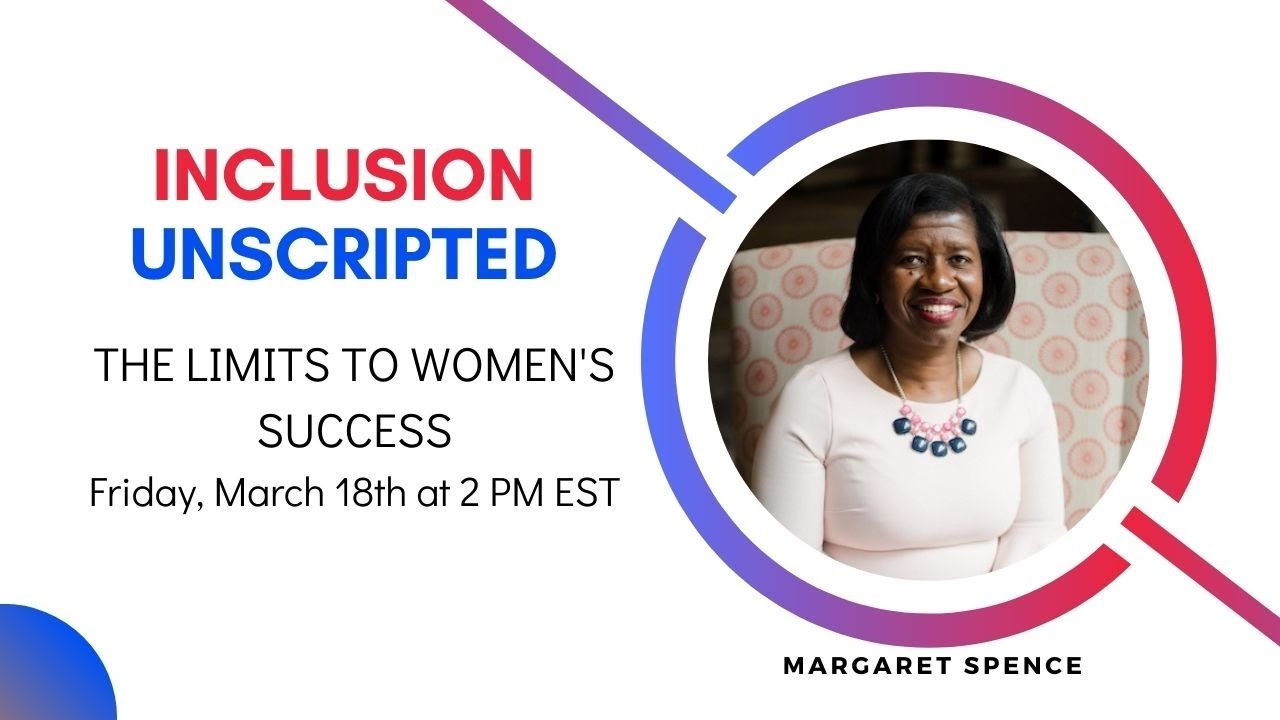
In this Inclusion Unscripted livecast, host Margaret Spence explores why women’s success is often self‑limited and reinforced by organizational structures. She opens with a personal story about receiving the book Before the Mayflower at age five, illustrating how early exposure to Black history shaped her identity and commitment to DE&I work. Spence then defines a "scarcity mindset" that women internalize—driven by societal expectations of perfection and by programs that present leadership opportunities as limited, one‑off slots. She argues that intra‑gender bias, competition, and “boys‑club” assimilation further suppress collective advancement. The episode critiques women’s leadership development programs for unintentionally reinforcing scarcity, citing examples such as single‑seat promotions and mentorship plans that pit women against each other. Spence calls for a mindset shift: women must view another woman’s rise as their own opportunity and actively champion each other. She recommends key readings (Minda Harts’ Right Within and The Memo, and her own Leadership Self‑Transformation). Finally, she announces the launch of the Inclusion Learning Lab community—a safe, peer‑driven space for DE&I professionals featuring webinars, cohorts, mentorship, and the Power of Equity program—inviting listeners to join and continue the conversation.
Chapters
Hey everyone, how are you? Happy Friday! It is, um, Friday and I'm excited to be here. Margaret Spence Inclusion Unscripted, live on Friday at 2 PM Eastern on Instagram, uh, Facebook, uh, LinkedIn, and YouTube. So we're here today. For those of you who've never joined us live before, Inclusion Unscripted is where we are talking about diversity and inclusion and women's leadership development, all of it. But what I know is we're not just talking about diversity, we're living it. And there is a huge difference between living diversity and talking diversity. A lot of us can talk diversity. We could say we want diverse people, we want diverse women, we want to have women's leadership, we want to have all this stuff, but it's a whole nother thing to live diversity. And that's where we would like to see organizations go. Inclusion Unscripted is built on the premise that we have to live more boldly, more powerfully. We have to show up bolder in the rooms that we are in. And we have to ask for what we want. We have to be specific about what we need to be successful. And we have to create space to have tough conversations, even when the audience doesn't want to hear what we have to say. We have to find room to have tough conversations about equity, equality, inclusion, belonging, thriving in the workplace. So I'm Margaret Spence, and I'm happy to be here. I am a voice for diversity and inclusion, a voice for women leaders, a voice for doing what's right, even when it's not popular. I started this podcast and livecast every Friday to say things that need to be said in the space of diversity and inclusion, to say what needs to be said around including others at the table, not marginalizing them when they show up in the spaces, not inviting folks to the table and not wanting to hear their voice, but to fully include us human beings, all of us, in the discussion around how we feel that we belong. How we feel that we are engaged, how we feel valued in the spaces we occupy. So this week, um, I want to just share a couple stories, um, and then share some big news that we have going on. But, um, first I want to just share a little story. When I was 5 years old, um, my dad and I were walking in Harlem. My mom and my dad and I were walking in Harlem. And in Harlem, back in the early— well, mid-'60s, mid to late '60s, there was a lot of bookstores that weren't really stores. They were guys that had books that they sold out of the back of their cars. And they would set up these card tables in the middle of the community. And you would walk by and they would try to entice you into buying their books. And there was a lot of books that we really couldn't access as people of color, right? We couldn't access them at that point in the mid to late '60s. And so my dad knew that I was an avid reader, and I was literally 5 years old when this happened. And he said to me, "I'm buying you a book today. I'm buying you a book." And so he picked up this book that for the average 5-year-old would probably be monumental. It would be monumental for you to pick up this book and hand it to someone at 5. And most of you would never think of handing your child a book like this at 5 years old. So here's the neat thing about the journey and the story I'm telling you is because I still have that book. 53 years later, almost 54 years later, I still have the book. So I went to my bookshelf and I pulled out the book and I want to share it with you guys. This is the book. The book is called Before the Mayflower: The History of the Negro in America from 1619 to 1964. And it was written by Lerone Bennett Jr. And as you could see, the book is pretty tattered. Um, it's got lots of bent pages. Um, I have a paperclip that's probably been in the book for 30 years. But my dad and I read this book, and it doesn't have a back cover anymore. My back cover is gone. So I've had this worn book for 54 years, and I read it about 10 times. And I said to myself this today as I was preparing for the show, I said, you know, I think that sometimes when people see where you are today, they don't always understand that you've been on a lifelong journey. My dad gave me Before the Mayflower when I was 5 years old. This book lists Black history in its most raw form. This is probably a first edition Penguin published book, and I read this over and over from the time I was 5 till the time I was about 15. And this book became the stable of how I framed my existence as a Black woman in America. This book became that. It taught me the history that is often forgotten. It taught me about the challenges of being a Black woman. It taught me about the challenges of being a Black person in the United States. This book right here. And to understand that I read this book as a 5-year-old, as a 6-year-old, as a 7-year-old. My dad and I read it together. And I've come full forward to today where I'm doing this work. And I had to ask myself, how did I get here? Over the last several weeks, I've asked myself, how did I get here where I am today on this podcast talking to all of you? What got me here? What was the journey to here? And in honor of Women's History Month, I want to talk about the limits of success and how success is limited for us as women, how we limit our own success, how we stop our own journey, how women as beings, as human beings stop each other's growth and why we just need to stop it. I don't know how else to say it, but I really hearken back to the journey that my dad put me on from the time I was 5. And one of the things that he said to me was, you have to show up in the room smarter than everybody else. You have to show up in the room with a level of perfection. Because if you don't show up in that room with a level of perfection, you won't be taken seriously and no one will give you the opportunity. So there isn't a Black parent out there in the world that doesn't tell their, their children, or Hispanic parents, or an Asian parent who doesn't tell, or Native American, um, parent who doesn't tell their kids, to survive you have to be darn near perfect. And in this world, especially for women, the world has not always been an open place for us as women. It's not always been a welcoming place for us as women. And when you have the intersection of woman, mother, daughter, wife, sister, niece, when you have the other intersections, caregiver, when you have those intersections, the world doesn't always treat us equally. And when you layer on top of that diversity, meaning I have something that's not regular, I'm diverse in some way, whether that is physical diversity, meaning you could see that I'm a Black woman, or neurodiversity, where you cannot see that I have a, um, a disability, and/or a disability that I have, seen or unseen. As women, we judge each other based on the lens that we have been given. And for me, the lens that my dad gave me was a lens of understanding your history and your context. But for many women, we don't fully support other women because we haven't figured out who we are as women. And so organizations, employers, get to create scarcity mindsets for us. And because organizations create scarcity mindset, we fall into the scarcity mindset traps that have been set for us. As a Black woman, Black achievement is considered extraordinary. Black achievement is considered, oh my God, exceptional. She's an exceptional woman. No, I'm a woman first. I had to be exceptional in order for you to see me. There's a difference, but at the end of the day, I'm still a woman. For many women We haven't figured out how to help each other, and we don't fully help each other. We don't fully embrace how we help each other. We just don't do it. We try to do it. We try to do it in the best way we can. Let me, let me give that caveat out there first. We try to empower each other the best way we can. But then, as a woman, we run into these brick walls that often cause us to second-guess who we are. It causes us to think and rethink our purpose and our opportunity and our lens of potential. And when a woman becomes a boss, becomes a leader, there's a couple camps when a woman becomes a leader. A woman will be fully woman, or she may decide that she wants to join the boys club. And when she joins the boys club, she's putting aside her intuition as a woman to join the boys club. So today on this episode for Women's History Month, we're gonna unpack the limits of success for women. How we as women put limitations on ourself personally, specifically us, and then how our species called women put additional limitations on top of us and then how those limitations turn into just bad behavior by women. And it's acceptable bad behavior by women. So we're going to talk through that. I have over the years had lots of adjectives and verbs and nouns to describe who I am. I've been told, oh my God, you're aggressive. But would you ever say that to a man? Would a woman say to another— to a man who shows up in the room boldly— would a woman say to a man, God, you're aggressive? We may think the man's aggressive, but we're not going to say it. But women have no issues saying to another woman who is showing up in her full self boldly, you are just too aggressive. We don't have a problem saying that to women. We don't have a problem having that said about us. And even when it affects us deeply when it's said, we still have women who feel the license to say it to us anyway. When, as a woman, we speak up in a room We're often told that we're intimidating. And so we get these labels that are added to us by our own kind, not by men. See, here's what I know. We could say that men hold all the seats at the table and we are scratching and clawing to get a seat at the table. And we are navigating to have a seat at the table. But here's how this looks different. What happens when the women have the seat at the table and we as the fellow women are still scratching and clawing to get our way in the room? What is that all about? Why is it that women cannot fully support other women? Why is that? Why can't we fully support other women? Why is that? Why is it that we can't fully support other women? And so the question I ask is, if you are a woman, what stops you from fully supporting another woman? Is it jealousy? Is it that you think she's going to get something that's entitled to you? You feel intimidated by that woman showing up in that space? Or do you feel that it's important that you limit a woman's success in order for your success to rise? What is the issue that we graphs and grapple with as women? Because if we're going to end the bias, break the bias, stop the biases that occur for women, we have to first stop the bias that we have within ourself for our own women. The biases within ourself for the women that are showing up as women. What is our bias towards a woman that stops us from fully supporting and championing her up the ladder? I ask a question often when I do training with women, and I'll say, "If you are a woman leader and there is a woman in your ranks that you think could be the CEO, would you empower and train her to be the CEO and knowing that she's going to step over you and become the boss?" And that's when people say, "Yeah, I would do that." No, you wouldn't. There isn't a woman out there who would pick out a subordinate woman on their team who they thought could be the CEO and champion her to move over her in the ranks and become the CEO or the boss. There isn't a woman that would do that. There isn't a man that would do that. Even human nature says you're my competition. Human nature says I should rise, not you. I've been here longer. I've earned my keep. I've been in the trenches. I should— I've, I've got this. Human nature says that. Human nature tells us that we should be the one ascending. Even if we don't want the role, we should be the one moving up. Because it's just so untenable for us to have another woman moving over us or climbing over us to get to where she rightfully should be. So until we are able to say to each other as women, I will support your rise, and it doesn't matter how you rise, It doesn't matter if your ability to rise leaves me behind. I will support your rise. Until we could say that out loud as women, we will never end our own internal bias that we have towards each other. Because our own bias is much more catty and intense than a man's bias against moving us up. Our own biases as women is much more intense and forthright and laden with, uh, scarcity than anything a man could do to us. I have watched on teams where a woman is on a team being led by another woman, and I have watched just how dysfunctional the team operates, how the women gaslight each other, how the women put each other down, how they scratch and claw for positions, and how they deliberately go out of their way to sabotage the other women. And they do it with what I call the lipstick on a pig, pretty much. You do it with a smile, you do it with happiness, and you stab a woman in the back. So if we are doing that to ourselves as women in this Women's History Month, if we are doing that to ourselves as women, what do we expect from the guys? Let's ask ourselves that question. If we are annihilating each other as women when it comes to opportunity, when it comes to growth, when it comes to movement, how do we expect men to view us if that is what we present with? So the question is, what do, what do we need as women to be successful? To not show up with our scarcity brain, to adjust our mindset to see that one opportunity for one is an opportunity for all? What do we need to do as women to show up there so that we can support each other fully and not support each other from a place of scarcity? You know, it is a mindset shift. It's a mindset shift. It's a shift where we say as women, I can fully support you because your opportunity is my opportunity. But here's what the other side of this coin— this coin has two sides. Organizations use women's leadership development programs to instill the bad behavior against women and women against women. See, women's leadership development programs fail women because we fail to do one thing, which is help everyone in these programs understand that there isn't a, we're picking one out because you're absolutely better. We're putting you all into the pool The opportunities will come and we will frame opportunities different than one person being plucked out and feeling that they're superior. See, oftentimes when women are put into women's leadership development programs and then they get a title out of it, they get an air of superiority. Well, I did this, I did this. I went into this women's leadership program and I got my title. But the reality is the women's leadership development program reinforced the mindset that only one of us has an opportunity. It reinforces the mindset that there's a scarcity of opportunity out there. And so we, we do performance plans and we do mentorship plans and growth plans for women, When the reality is the languaging that we're using for these growth plans and these opportunity plans that we create within organizations reinforces the fact that women need to fight every day for something. You must fight for it. It reinforces the fight. So what ends up happening is that we fight against each other. We fight against each other. We go into the trenches thinking we have to fight because there's no other way. That's what we go in. And so the scarcity mindset and the scarcity process, the scarcity process that's built into how women move through leadership ranks in organization, Meaning there's only one spot up the ranks for you, and we're letting one woman in. I remember mentoring a young lady that was going into a dental program, and I was mentoring her for about 4 years, and she finally got accepted into dental school. And when she went to talk to the dean, the dean said to her, "We had one more spot for a woman. We had one more spot for a woman, and we gave the spot to you." So that just reinforces, hey, there was a scarcity. You're the chosen woman. Be grateful that we gave you the opportunity. Be glad that we picked you out of the bunch. Be glad that you rose. Now that mindset gets planted in this woman. It's planted. If you remember my beginning of today, I talked about the fact that my dad got me this book. My dad went out and got me this Before the Mayflower book when I was 5 years old, and I was reading it because I'm a ferocious reader. I've always been an advanced reader, always been an advanced reader. So when my dad handed me this book, he set a mindset in my mind. He set a mindset. When he set the mindset, did I know that 50 years later, what the seed he planted in me, 55 years later, I would be doing this work? No, I didn't know that when I was 5 years old. I had no idea. But here's what happens. When we plant the seed of scarcity in a woman, we actually empower the behavior, the bad behavior that women have against each other. The bad behavior. We reinforce that bad behavior because we've said to the woman, you're the chosen one. And then when the woman fails, which inevitably she will fail, because we will pick her but not give her support, we will pick her and not give her coaching, we will make her a leader and not provide her with effective feedback so she could be the best leader she could be. We will select a woman and move her into the ranks of, of executive leadership and leave her lonely in that role. So she's questioning her level of, of, of competency because she's so alone in the role. So we build an entire process to empower women around scarcity and affecting how you view yourself as a woman. And so this is the reason why over the years I've looked at major CEOs, major companies, women that I have looked up to and thought, these are my role models of who I would want to be if I were a corporate CEO. But when they retire, they're always replaced by a man. And oftentimes they're replaced by 2 or 3 men. And I asked myself, why does that happen? Why is it that women cannot empower each other so that our successors are prepared to take on the role that we are vacating? Why aren't we grooming our successors better as women? And when a woman rises, why aren't we totally vested in making sure that the person who sits in the desk behind us is the only option when we move out of the role. Why aren't we doing that? Exactly. Tell me why we don't do that, because I'm still at a loss as to why that doesn't happen. Because, you know, for me, there is a structure behind everything. We talk about diversity and inclusion, but there is a structure built behind it. There is a distinct structure built behind the rules and things that we put forward. There is a structure, and, and we have not figured out how to dismantle the structure. We haven't figured out how to dismantle the structure. We are still building upon a structure that empowers scarcity. We are still building upon that. We're still building on a process that empowers trauma in the workplace. We are still building on that structure. We are building on a structure that says, when I get the seat, you will not support me in that seat. When a Black woman, Asian woman, Hispanic woman, a white woman, any woman, Native American woman gets promoted into the job, what structures are given to her so that she can be successful? Have we asked women, what do you need to be successful in your role? What does success look like for you? Can we define that so that you could see, okay, this is what success looks like for you. Here's what we're going to do to support that. Here's what we're going to do to support that. But we don't do that. Instead, we traumatize women, and for Black women, we triple traumatize Black women when we are trying to rise in an organization. We triple traumatize us, and then we get to say, well, I don't see what you're seeing, Margaret. You're the only one seeing things this way. While we are being traumatized in the workplace because you've set up programs that create scarcity and affect our mindset, and we claw at each other to get from point A to point B, and you don't support us and we fail, then you get to say, wow, we gave a woman an opportunity and she didn't make it. Or, "We gave a woman an opportunity and she just couldn't succeed." Or, "We gave a woman an opportunity and she just happens to be Black, and boy, we thought she was prepared, but she wasn't prepared." And that is what we do. And as a consultant, I will walk into organizations and I will see that behavior and I will call it out. And when I call it out, I get labeled as well. I get labeled. So the labeling of a woman isn't stuck on you being an employee. The labeling of a woman happens even when you're not an employee. Even when you're not an employee, you know, women will be accused of overreacting. We'll be accused of not being calm. Um, we'll be accused of doing something wrong even when we didn't do anything wrong. See, we will be questioned about what is happening to us rather than people saying, why is this happening to her? We need to fix it. It's always the reverse. It's always the reverse. So in today's episode, as we've talked through, how do women limit their own success? How do women limit your own success? So I always want to give some tools that I want you all to, to take away from these podcast episodes every week. As a woman, we need to understand our own upper limits. What is stopping us from being successful? What do we need to be fully successful in any role that we're put in? What are we asking for? What support do we need to ask for when we are trying to get into additional roles? What does that look like? What trauma are we experiencing today that will only get enhanced when we move into other roles? What does that look like? We have to ask these questions. And if you're building leadership development programs, and if you do not ask the question, what would limit a woman's success in in this program? If you don't ask that question, you are not building an effective leadership development program to support women. This episode is— these episodes this month are really geared towards Women's History Month, but they apply at any other time of the year because every organization has a focus on new employees coming in, empowering the current employees, building women's leadership development, building D&I programs. You all have the same mission, but Nobody honestly is getting it right because we don't ask bold enough questions and we're too darn scared to think outside of the box and the silos that we live in. You know, this last 2 weeks I've pulled out 2 additional books that I want to share with all of you. The first one is by Minda Harts. It's called Right Within: How to Heal from Racial Trauma in the Workplace. This is for women. And I had to pull this book out, and I posted a thing to Minda on Twitter when I was in the middle of the throes of a situation over the last 2 weeks, and I had to pull this book out. You know, we have to learn, and one of the things that this book reinforced— and I'll hold it up again so everyone can see it right within. How to Heal from Racial Trauma in the Workplace. One of the things that this book reinforced for me was how to champion and support women, and how to get— how to be a champion that supports women, and how to not let ourselves, when we are in situations, go down the tunnel that people want to pull us into. This book, I posted to the author, I said, "Minda, this is an excellent book. It is now on my go-to reading as a woman, as a woman of color. It is in my go-to reading." But we could replace woman of color and add woman to this, honestly, because women are gaslighted every day in organizations and they don't have a place to go when they're gaslighted. They don't have a place to go when they're gaslighted, and this book speaks to that. But Minda's first book, which is The Memo: What Women of Color Need to Know to Secure a Seat at the Table, is the holy grail of career management for women of color. It is the holy grail of books for women of color, and I would add, which I don't normally promote my own book, but this is my book, Leadership Self-Transformation: 52 Career-Defining Questions Every High-Achieving Woman Must Answer. And the book right now is open to the question, do you have clarity about who you are as a woman? In order for us to move ahead, We must have clarity about who we are as women. We cannot operate where we don't support another woman. We cannot continue to operate that way. One of the reasons why we make little to no gains— every year Lean In puts out a report, other people put out reports about how women rise and how they're struggling to rise. What they don't evaluate is the deeper number. As a woman rises, how many other women is she mentoring, championing, supporting, and moving through the continuum with her? Where is she using her voice to empower another woman? When she's gotten a seat at the table, how loud and how vocal is she about how her other women in the ranks are suffering or being excluded? When a woman is given a seat at the table, is she adequately using her voice to champion someone else, or are we too scared that we might lose our spot, so we lose our voice and we forget who we are and we forget the fact that we need to be championing other women? That is the key. That is the key. Because sometimes when we get the position or we get the opportunity, we lose our voice. It's like our tongue got cut out. We don't have a voice anymore. We become validators of bad behavior within organizations. But here's what I want to say to all of you as women this Women's History Month is we cannot validate bad behavior in an organization. We, if we are given the opportunity to be in the room, we must use our voices in those rooms to advocate for the women who are still sitting in the ranks who are being underappreciated, undervalued, underutilized, and underpaid. And if we cannot do that when we rise, then we might as well not rise. Because if we're rising to be window dressing for the organization, to say, "Hey, look, there's Margaret, the Black woman. We gave her a job." We put her in executive leadership. There she is, but we've silenced her. If that is the role you're taking on, then more power to you. But in these roles that we get opportunities for, we must learn how to use our voice and we must learn how to use our voice so that we help other women navigate the pathway better. I don't want to leave this world of work and leave behind a situation where women are still struggling to figure out, can I say what I need to say in a room? Because if I say it, I might be fired. And if that's the organizational leadership pipeline that you're building as an HR leader, stop building it. You don't need to give women a seat at the table if when they get to the table, you don't want to hear their voice. We don't need the seat that badly. What we need you to do is pay us. We could stay right where we are and you could keep the seats up above us and do whatever you want to do there. But if you let us in the room and then you silence us or you marginalize us or you feel that it is effective to shut us down, then you are doing a disservice to every other woman who has been given or trying to be given an opportunity. I said several podcasts ago, you cannot have our skill and not our ambition. Let me caveat that even more. You cannot have our skill and our ambition and shut our voices down. Because if you take our skill and our ambition and you promote us and then you shut us down, you've done us a disservice. So the takeaway from today is simply this. It's simply this. The limits to success starts and ends with your mindset as a woman. If your mind is telling you that you live in an opportunity zone that is scarce, then you will not champion another woman to move up. But if your mind tells you, I can fully support another woman, then you will go about your business of making sure that you support women fully. You will go about your business to make sure that you support women fully. That's the key. We have an opportunity and we have a choice as women. The choice that we make as women is simply this: I as a woman will support another woman, and if I see that woman failing, I will put my arms around her to make sure she is successful. That is what we have to do to end the bias for ourselves, within ourselves, within ourselves as women. That's what we have to do, and we cannot do it with superficial garbage where we say, oh, your dress isn't right. No, give me the empowerment skills so that I can be better. I can be the best. I can know my value. I can feel my value. I can express my value. I can show up as a valuable woman in the organization. That is what we need to be doing inside of women's leadership development programs. What we don't need to do is validate a position and validate a spot. What we have to do is empower a voice Empower a value, dampen scarcity, shift mindsets, and empower women to feel that we can all sit at the table together. That is the key. That is the key takeaway. So as we end the bias, stop the bias, we gotta stop the bias within ourselves as women. We have to stop our own bias before we ask other people to stop the bias against us. Because if we are our own detriment, if we are our own detriment, if we are what stops our success, then there is nothing to be successful about. You see, we can't be successful to be successful. We have to be successful in standing in our truth and our power as women. So as Mai Sine says, in a world where we can be anything, be kind. We have to exhale and inhale and inhale and exhale our greatness as women. We have to do that for ourselves. We have to do that for ourselves because if we don't, we don't get an opportunity to do that any other way. So before I go today, I have something I want to share with everybody. I'm going to be doing a live event next week. Um, and if you have any questions, post it in the comments. I'll be back in the comments later on. If you're on LinkedIn, Facebook, or YouTube, I'm happy to answer comments. So I have been working for the last, 9 to 10 months on building a community for diversity inclusion managers. We are done. The community is finished. I am so excited about this community that I've built. This is the Inclusion Learning Lab community. We launch on Monday, the community. It is a safe space. We have webinar cohorts, we have student cohorts, we have peer group mentorship groups. We have an inclusion cafe that includes articles, hot topics, the ability to ask for help, reading lists, advocacy and action. We have a ton of things within the Inclusion Learning Lab community. And so I want to just invite you to join me on— I think it's on Tuesday or Wednesday that we're doing it. We're going to post it out. We're going to post it up and I want you to feel free to join me. Just to give you just some idea about the community, we have microlearning labs, we have DE&I research, we're building out an ERG leaders cohort, a chief diversity officer cohort, and some industry focus areas. We have peer groups within the community and if you are a Everyone, everyone can join as a free member in the community. You'll get access to the Inclusion Cafe and our webinar cohort. And then our paid members will get the Power of Equity cohort and the courses that go along with the Power of Equity. So I am so excited about this community. We are finally ready to launch. I am beyond excited about it. And we launch on Monday and I will absolutely be doing a demo of the community, taking questions, and we're going to do a couple of, um, sort of community open house where I'll invite folks to come and kick the tire on our community. This community is built for diversity and inclusion managers. This community is built around empowering and supporting those of you who are doing the work of diversity and inclusion. And this community is not about me. It is very strictly about us finding a place where we can go to and feel that we belong and we belong there. Um, and we can, we can find the support because here's one of the things that I have totally experienced myself. The loneliest job in an organization the loneliest job in an organization is the diversity and inclusion manager, director, coordinator. It is the most lonely role in any organization. And so the Inclusion Learning Lab community is here to create a safe space so that those of you doing the work of DE&I can find this safe space. And so we wanna invite you to come and join. We want you to be a part of our course cohort and a part of our webinar cohort, But we want to invite all of you to join the Inclusion Learning Lab community. And I will post some information on LinkedIn on Monday, and we launch live with the community on Monday. So I'm looking forward to this and having you come to the extended part. And what we will do is at the end of our live podcast every week, we will actually go into the community and continue the discussion in the community that we started on the weekly podcast. So thank you all for joining me. Margaret Spence, Inclusion Learning Lab. Inclusion Unscripted is our podcast. And if you wanna get more information about the community, you can go to inclusionlearninglab.com/community. So here we are, we've come to the end and thank you again for joining me on Friday at 2 PM. I took a break last week, I'm back this week. We'll be here for the next several weeks until I feel like I need to take a break again. See you next Friday, everybody. Take care, have a great weekend.
You're like a circle that floats around me, keeping me safe and sound. And when I fall, you tied a rope to me. You're blessing me every day. I was down with an illusion like a sparrow with broken wings, but now I shine with your reflection on me. I'm getting back up on my feet. That you showed up—
Take care, everyone. See you next week.








