E7: The Chief Diversity Officer Window Dressing
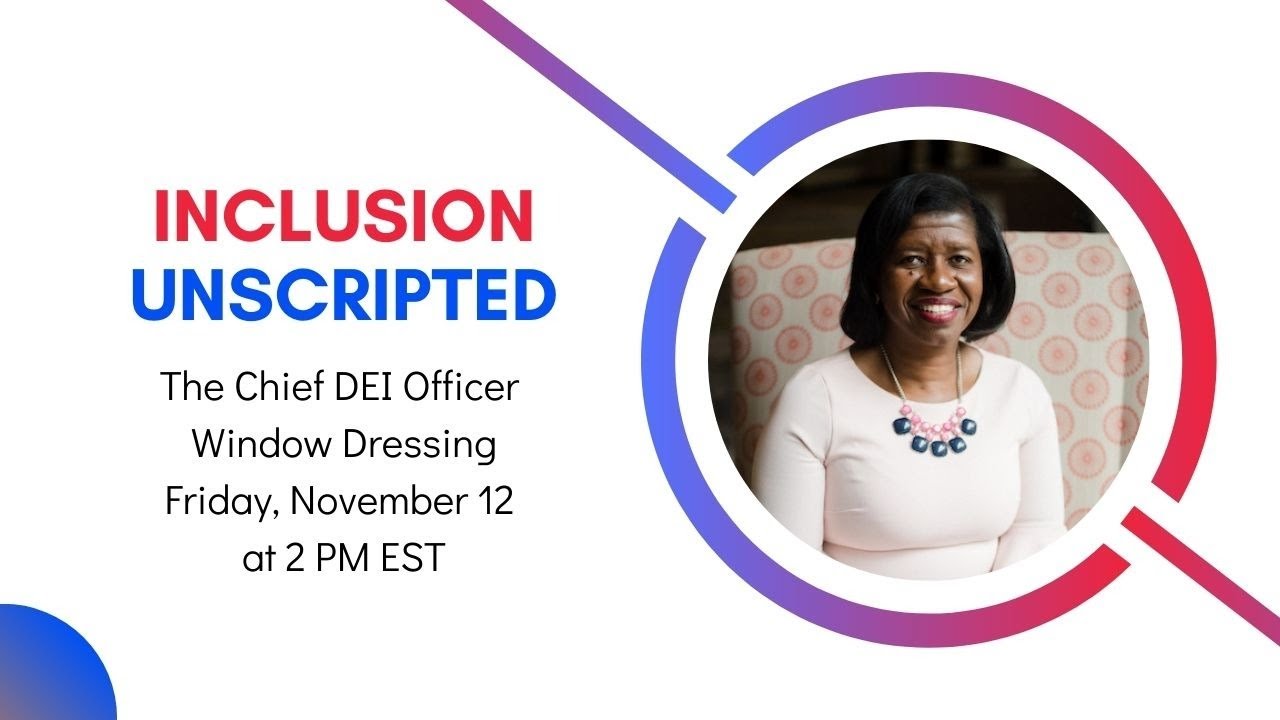
In this live LinkedIn podcast episode, Margaret Spence, founder of the Inclusion Learning Lab, examines the rapid proliferation and high turnover of Chief Diversity Officer (CDO) roles since the George Floyd protests of 2020. Drawing on her own tracking of roughly 800 DE&I professionals on LinkedIn and data from a Russell Reynolds report on the S&P 500, she highlights that the average CDO tenure is only 1 year and 8 months, with half of incumbents having never held the role before. She argues that many hires are “window dressing” – high‑visibility announcements and media blitzes that lack substantive organizational support. The report identifies key failure factors: unclear success metrics, insufficient infrastructure, lack of CEO and board commitment, and a disconnect between DE&I mandates and business objectives. Spence stresses that DE&I cannot be a one‑person job; it requires a strategic, consultative approach, internal grooming pathways, board‑level authority, and measurable benchmarks. She shares her consultant perspective, describing how she quickly assesses organizations, co‑creates strategic DE&I plans, and emphasizes the need for ongoing coaching and cross‑functional partnership. The episode concludes with a call to action for HR leaders to redesign CDO hiring practices, build supportive infrastructure, and engage the Inclusion Learning Lab’s resources, including an upcoming webinar on becoming a strategic DE&I director.
I'm getting back up on my feet. That you showed.
Hey everyone, happy Friday. I'm so happy you're joining us live for Inclusion Unscripted, our live podcast here on LinkedIn every Friday at 2:00 PM, and we're trying to stick to the 2:00 PM timeframe, so I'm happy you're able to join us. If this is your first time joining the Inclusion Unscripted podcast, my name is Margaret Spence. Margaret Spence. I'm the founder of the Inclusion Learning Lab, and the Inclusion Learning Lab is here to be innovative and create a safe space for diversity practitioners to be able to become advocates, to learn, and to develop strategically. A little bit about Inclusion Unscripted. We are just that, unscripted. We're a safe space At least I think we are a safe space to discuss diversity and inclusion, equity and equality, and women's leadership development, career development, and just to say what needs to be said as it relates to professionals of color, as it relates to any of our marginalized groups. It's where I want to create a space for all of us to, to hear a different lens about diversity, equity, and inclusion. And really just talk about what matters most and not be so scripted and not be so on point, really just saying what needs to be said from the heart. So thank you for joining me today. And our topic, our topic, oh my God, our topic, our topic today is, ah, I'm gonna take a deep breath. It's a deep breath moment. Our topic today is Chief Diversity Officer Window Dressing. Oh dear. Yes, that is our topic today. Chief Diversity Officer Window Dressing. A lot of organizations have added Chief Diversity Officers since the George Floyd murder in 2020. A lot of organizations have gone out and said, we need folks internally doing DE&I work. And they've added people to their roster. They've added CHROs, they've added CDOs, Chief Diversity Officers. They've added, they've incorporated the role in the CHRO role. They've also created diversity manager, diversity directors, strategic diversity managers. All of this has been sort of a hyperfocus since George Floyd and the corporate social responsibility things that have come from that. But what I have been tracking personally, because I'm, I think on LinkedIn, I'm connected to about 800 people who have DE&I as their job title. And so I also follow them just to get a sense of what they're doing, what they're posting, what kind of challenges are out there. And for all of you that don't know, I have been a consultant now for 22 years, and I love being a consultant. I love working with organizations. I love helping to build inclusive spaces. I started my career creating inclusion for disabled and injured employees in the workforce, really tying HR to that lens. And I've now moved over more and more into just doing inclusion in general, inclusion across the board, because inclusion doesn't necessarily have a one track. I tell everybody that is in the insurance sector, a lot of you thought, well, Margaret works in the insurance sector. The honesty and the honest work is that I've worked in HR as a part of the work that I've been doing around workers' comp and inclusion. But now that I've launched the Inclusion Learning Lab and I'm taking this work to a higher level, one of the things that I've been tracking is how HR manages and monitors chief diversity officers, HR directors, HR managers. How often do these people stay in the role? How often do they quit? When they quit, what are they doing? When they're with high-level organizations, what is the frame-up when they go from a Chief Diversity Officer role to something else? So what's been telling for me in the work that I've been tracking and in my just minor tracking of people, what I've noticed is the Chief Diversity Officer is not staying put in the organization. They're coming in. Most aren't lasting a year. Some are lasting a year, but most aren't lasting 24 months. This is pre the George Floyd, "Oh, we need a chief diversity officer." This is pre that. Fast forward since last, probably August, so a full year, I've watched certain people that I consider to be DE&I influencers. Folks that I look up to, folks that I feel are champions and are working diligently in this space. And I've been tracking sort of Black women chief diversity officers, and I've been tracking just anybody else doing the chief diversity officer role or the diversity director role. And it's been an interesting Interesting process. Some are not lasting 6 months. A lot of the chief diversity officers are leaving within 6 months to start their own company. A lot of them are switching companies pretty quickly. Many are quietly disappearing from the organization and there's no follow-through. Like we put out a huge press release about hiring a chief diversity officer and the press release went out, and the Chief Diversity Officer got hired, but now the person is gone and the company didn't say, well, we lost our Chief Diversity Officer last week. Of course not. That wouldn't be a sexy press release to put out. So in essence, the Chief Diversity Officer role is on rotation. It is on rotation. And then I went on to Medium and I read this amazing article, and I'm going to try to find it and put it into the chat. If not during the live, I'll actually put it in after the live. But I found this article that said, "How to Lose a Chief Diversity Officer in 6 Months or Less." And it was a compelling article around exactly how to lose a chief diversity officer in 6 months or less. And it was well-written and put onto Medium. And I thought, you know what? This article sort of sparks this conversation and this discussion today. Are organizations creating the diversity director role, um, for window dressing? For window dressing? Are they replacing them for window dressing? Is it the fact that they basically put out the press release, all of you get excited, you post all these congratulatory things on LinkedIn? Oh my God, I'm so happy that you got the role. I can't wait to see where you go with this. I can't wait to see what's going on. I can't wait. And then silence. So I— not statistically, I just started keeping a pad on my office desk. And I would write down— I'd go on to LinkedIn, and I'd see these postings. And I'd write down the name of the person who got the job. And then I'd go back and look. So for example, there was a chief diversity officer assigned to either AIG or Marsh. And I recently went on to her page and I noticed that she was gone and she had opened her own, I think, consulting firm. Don't quote me, but I think that's what had happened. And I thought, okay, well, here's another one. So the question that I have in the chat right now, are they being replaced? They are not being replaced. So that's the other part of what we are not seeing. They are not being replaced. And when you go to the corporate website and you try to do some deep dive, because there was this big fanfare around hiring a chief diversity officer, there was all of the fanfare and all of the rollout. And the real, the bigger organizations did a complete media rollout. Some of them even had the chief diversity officer being interviewed on CNBC. So one of the things that I do, I'll tell you my little secrets as I go, I'm interconnected into the business community. I watch CNBC and Bloomberg all day long. I have it on my screen on a TV in my office, and it's at a low rate, and I watch it because one of the things that we have to get good at as professionals of color is understanding the pulse of organizations and the pulse of the marketplace that we're operating in. So we tend to be tactical.. But we have to move to being way more strategic than we are right now. So a lot of these organizations roll the chief diversity officer out with a huge media blitz onto CNBC and Bloomberg, and they had really canned questions. What do you think your goal is? Where do you want to go? What's going to be next? Blah, blah, blah. And in the case of Facebook, for example, their chief diversity officer shows up on either Bloomberg or CNBC all the time. In the middle of their whatever crisis they have going on at that particular moment. So is it window dressing is my question today. So I went out and I started doing some search as I was preparing for this because I don't want to come here and sound like if I'm ragging on Chief Diversity Officer, I'm not. I'm actually going to do data analysis of this. And at the end of the live, when I post it into LinkedIn, I'm going to post a couple articles underneath this live video so that everyone can see the articles that I went out and pulled. So I went out and I pulled an article on what defines the top 500— the S&P 500 chief diversity officer and what do they need to succeed in the role. That was the first article that I pulled. And one of the things that this article did, and it was done by Russell Reynolds, Okay, and they're one of the huge data warehouses that collect information on chief diversity officers. The tenure, the average tenure of a chief diversity officer is 1 year and 8 months. 1 year and 8 months. They're gone within a year and a half or so, which means that at a year, the person has figured out they're not gonna make a difference in the organization. They're not gonna make an impact, the organization is not moving in any kind of direction that they could think of moving, and they have been set up for failure. And they make a career move and they start looking for their new opportunity at year 1. Because if you leave in 18 months or so, or 20 months, that means that you started planning your exit not in 20 months, but you started planning your exit probably a year into the role. So the average Chief Diversity Officer is unhappy within 12 months. That's my conclusion from the data that was gathered by Russell Reynolds. 50%, from their data, of the folks who are in the chief diversity officer role have never been in that role before, ever. And here's why this is so important for me as a consultant. I'm working with organizations across all specters. All of the various areas. And I'm working with them. And one of the things that I'm saying is you need to hire a chief diversity officer, or at least you need to hire a diversity director that rolls up to your VP of HR or your chief diversity or your chief CHRO.
Okay.
And so, and thank you for the question in the chat. Could they have found a better position? Well, the data and the analysis that Russell Reynolds did is that they're burning out fast and they're leaving, not necessarily to stay in that role ever again, or they're just burning out to leave. That's what the data has shown. And so the question that the report said is they're analyzing why they leave. What is making these CDOs leave organizations? And one of the things that they're saying is there's a high expectation, but there's no bar or no requirement on how you're going to be successful. That is one of the key things that this report has shown. What they've shown is there's a disconnect between DE&I mandates organizational culture and business objective, and it erodes the effect and the sustainability of DE&I for the chief diversity officer, and their efforts are not necessarily valued. So that is what is causing them to leave. Whether they're going on to another CDO role or not, they are leaving the current role to not take this role again. What I have seen in my informal, as I said, how many of you connected to me that do D&I, what's your current job? I don't go into all 800 or so people, but I'm going into the top ones that I sort of watch and the top folks that post on LinkedIn all the time. And what I'm seeing is they're going out and opening their own consulting practice because maybe they think they can make a better impact outside than inside of the organization. That's what I see. So having said all of this, there were some questions that came up for me that I think HR needs to answer. I think all of you in the VP of HR role, the CHRO role, Director of HR, if you are the key person thinking about hiring a chief diversity officer or diversity director, recognize that if you don't hire the person with a method of success, with some benchmarks on what success should look like, you're really setting this person up for failure. Because this Russell Reynolds report says one of the main things is lack of support. The CDO doesn't have support. Within the organization and the existing infrastructure. And this is really telling. The existing infrastructure doesn't serve the strategic goal of the Chief Diversity Officer or the diversity leader. And so we haven't really created an environment that somebody could come into and exist. Yes, the question from the chat, most of them have never been in the role previously. Yes. Because one of the things that this report showed is that because there's such a need for DE&I practitioners, DE&I managers, there's a shortage of people who've actually been trained to do DE&I. So they're taking folks and some organizations, and I could tell you this based on organizations that I consult with, I'll be asked to write a job description for a DE&I manager or director or chief diversity officer from the consulting lens. And I'll write the job description and somebody will say, you know, I think Harriet over there could do this job. What make you think that that person is qualified to do this job? If I'm struggling as the consultant to get buy-in, if I'm struggling from the consultant side and I'm outside and I work strategically in tandem partnership with my clients, if I'm struggling to navigate the landscape of the organization as the consultant, how do you think the Chief Diversity Officer who doesn't have the emotionally, business ground-level intelligence about the organization is going to survive, especially if they've never done this job before. I think that's the most telling part. You know, there's an assumption that if you're Black, if you're a woman, if you're LGBTQ, if you're Latinx, if you're AAPI, you're diverse, you should be able to figure this out. Come on down, make this work. When the reality is, even for me as a consultant, I am constantly learning and training on DE&I because I have to look at my own lens and say, do I have some jading issues in my own lens as a Black woman and how I relate with the other marginalized communities that I have to serve as a DE&I and inclusive consultant? So even for me, I'm still constantly learning and growing in this, in this process, but I have, I come at this from a different lens of success. So the question is, if you're looking to hire a DE&I director, for example, let's start at the lower level, a DE&I manager, what is success for that person? If you're managing this process, what does success look like? Does the existing structure support success for diversity and inclusion, or are you just putting a person in and hoping that they survive long enough so that something can come out of their role? And that's, that's key. And what are the roadblocks that are going to be created that currently exist in the organization that's going to prevent a DE&I manager, director, officer from being successful in the role? What is that? And here's the bigger part. Do we have clear CEO-level, CEO-level commitment to the DE&I process? That is the only way for this to be successful. One of the things that I feel, and this is a personal feeling, okay? So I, I want all of you in HR to hear this part of it. I feel that if you're going to hire a Chief Diversity Officer, meaning an executive level person, they also need a seat on the board. They need a seat on the board of the organization. Chief Diversity Officers cannot just report to the board, or go to a board meeting and lay out your beautiful PowerPoints and say, this is what we've done and this is the initiative, you actively need to have board presence. Do you need to stay for the entire board meeting and discuss all the nitty-gritty of the organization? No, but I think in order for Chief Diversity Officers to be effective, to be successful, they need to have that title, plus a seat on the board. They have to. They can't report up to the CHRO who has the seat on the board. They have to be in tandem, the two of them on the board together, making strategic talent decisions about the organization. It, it has to be a twofer. And so one of the most telling things that came out of this Russell Reynolds' report is that the DE&I infrastructure has to be addressed at the same time that you're addressing the position of Chief Diversity Officer. The infrastructure. What is this going to look like? What is this person walking into? What is the lay of the land? Are they going to have access to information to do the job successfully? Are they going to have strategic partners within the organization that's going to champion the work they're trying to do? Who is going to be the gatekeeper and the person that puts the off-ramp on what the chief diversity officer wants to do? Is it the other executive leaders? Is it the other regional presidents? Is it the other HR folks that are going to say, "Yeah, yeah, yeah, that diversity idea was great. They hired you. Go away." Go away nicely. Go back to your office. Do some initiatives. Build an ERG. Because that's what I think HR has in their mind. So let me ask the question. When you think of a chief diversity officer, what do you think the position is? That's my question for those of you watching this live. When you think about a chief diversity officer What is your perception of what this role really is? Because I think we have to start there. We have to unpack the strategic part of the chief diversity officer. We have to unpack that piece. Why do they leave? But what is the investment and how does the CDO fit into that investment? What's the DE&I investment and how does the CDO fit in the investment into the diversity officer? And I think that is the question. That is the question. Because again, this very clear report says a couple things and I'll read them because I think they're actually important. In order for CDOs to be successful, we need to have transparency and clarity around the stakeholder role. We need to have timelines and objectivity. We need to have facilitation and knowledge transfer within the organization, and the transition and development of the CDO has to be brought up to speed with the organizational knowledge and the leadership skills. Meaning if the person walks into the role and they don't have the experience, there has to be also an investment in bringing them up to speed. They've got to be able to access courses and classes and institutional knowledge that they may not have coming into the role. That is what this report is basically saying in a nutshell. There has to be key milestones and timelines that transition them to being strategic leaders. That's what it's saying here, you know. Um, thank you, Rhonda, for joining. I appreciate you for being here, and thank you for, for participating in the chat. And the recording will be posted as soon as I'm done, so I'd love to hear your feedback as you continue to watch this. I think we have to set a different lens for success for a chief diversity officer. One of the other things that this report says, diversity is not a one-person job. I think that is the most telling thing that can occur right here. Diversity is not a one-person job. Fostering organizational-wide receptiveness and commitment to DE&I efforts. Is essential for the DE&I director or the chief diversity officer to be successful. Um, the other question is, when we make the decision to hire the person, do they have the subject matter knowledge to be effective in the role, or are we going to give them time to build the subject matter ramp while they are making strategic changes within the organization and what does that look like. And they are also recommending, just as I have, and I didn't see this part, it really says, what is the board of the role? What is the role of the board in supporting the Chief Diversity Officer? And yes, accountability for compliance, education of the company and about the company and be collaborative. Yes, Brenda, thank you for saying that, around the different areas of the business unit. And so we have to basically say we're not, and I agree with you, Deborah, we're not checking, and I thought I'd post this here. We have to have a truthful discussion around What is it going to take for chief diversity officers to be successful in this role? What is it? We have to be honest about this. Thank you for those of you who are participating in the chat. We have to be honest. I don't think that we have honest discussions around what is success. But here's the other part and one of the reasons why we launched the Inclusion Learning Lab, and the community that we're building is who is going to support this person when they feel that they are out on a limb? Who is going to support them? You know, because if HR is struggling with DE&I in general, you're struggling with talent issues, you're struggling with remote workers, you're struggling with meeting talent acquisition and talent development goals. You're struggling with all of that. Who is there to support the Chief Diversity Officer, especially if they are the only one in the organization? You know, if they're the only one there, who is supporting them? And so that is, you know, That is a question because we can't throw a person into the role. As this said, diversity is not a one-person thing. It's not a one-person role. But we also need to recognize that if we have only one person in the role, where is their support system? Where is their support system? And for those of you who are just joining us, my name is Margaret Spence and I am the voice behind Inclusion Unscripted. We are here on LinkedIn Live, 2:00 PM Eastern every Friday to have bold, thought-provoking discussions around diversity, equity, inclusion, and women's leadership development, where we're actually asking the tough questions that we don't necessarily want to ask ourselves and really to shine a light and a mirror on DE&I inclusion and empowerment within this space and focusing a lot on HR and how we do that. And Kimberly, this is a great question. Thank you for asking it. Should the CDO be an internal candidate? I often think it should be an internal candidate. I think it should be. It should be a position that is groomed over time. Let's frame that up for a little bit, and thank you for asking this question. I think it should be groomed over time. Maybe the person starts off as the DE&I manager and you allow them to build a team under them, and then you move them up to the diversity director, and then they get to replace themselves as the manager., and then they're working through all of the systematic things within the organization. And then we say this person is now primed and being groomed by the CHRO or the VP of HR to become the CDO. Maybe that is the path we should be taking rather than throwing the person in immediately to the CDO role especially if they've never done it before. And I know from a corporate governance standpoint, a lot of publicly traded organizations feel, you know what, in order to get in front of this discussion on diversity and inclusion, let's just put a CDO in. That solves the problem. Let's put this person in place. But there has to be a gradual shift. I, as a consultant, let me back up a little bit and just talk about my role a little bit and not to push my role, but to give you an understanding. I will go into an organization and I will do a complete composite evaluation of that organization very quickly, very quickly. It doesn't take me a year to evaluate an organization because one of the key things about me as a strategist is I go in and I sort of quickly embed myself in the organization and I find out things that I need to know. And then I build a framework for a strategic plan. And the strategic plan is not written in granite. A lot of DE&I folks feel that their strategic plan is written in granite. You gotta follow this and follow it off the cliff. And if you don't follow this, then you're not doing this effectively. And once I do that, I create the strategic plan for the organization. Then I turn that over to the organization and I say to them, customize this plan for you. That's what I do. The plan is not my plan because one of the key things about being a consultant is that I am not in your organization every day. Everything has to be customized within your realm. Okay? So that's how I'm working as a strategic business partner, a strategic DE&I business partner with the organization. And then I'm giving you the initiatives, the process, and supporting the organization. Maybe the role that we need to have with the CDO is more of a consultive role. The CDO comes in as a consultant, but an internal business partner consultant. Maybe that is the role. And maybe we are thinking about this in too much of a, um, must have now, must fix now, must process now, must create now and giving this person the runway of a year to be a strategic business consultant to the organization versus being the immediate CDO that comes in with a game plan and a run. You've gotta fix this mess that's been here for years and years and years and years. Maybe we need to frame it up differently. One of the things that I am working on right now, I'm actually building out a webinar. We're going to do the first part of it next week, November 18th at 2:00 PM, and I'm going to broadcast it live. I'm going to put up a link, an event link in LinkedIn sometime later today, Becoming a Strategic DE&I Director. I'm building this really for HR folks. What does this need to look like? And building it really for folks doing DE&I, because I think that the level of involvement that I have as a consultant, I think my lens as a consultant within organizations is imperative. I've basically honed my lens by being in the trenches with the companies that I worked with when I was on the workers' comp side and consulting in that space. Space. Because in order— I'll give you the example of how my lens is framed for inclusion and DE&I work. For years, I spoke at the SHRM conference on DE&I and ran a lot of programs through the Society for Human Resource Management around dismantling the silos that we create in DE&I. And I developed that lens because I was working to get disabled employees included in the workforce. And that is a hard road that we forget about when we're doing the work of DE&I. Disabled employees are underserved as a population of at-risk and underrepresented groups in every workplace. And so the work that I did for over 20 years was that work. I wrote a book in 2008. So think back just how far back I've been doing this work. So a lot of folks think I've been doing this yesterday. I started doing this a minute ago. Let me tell you, let me take you back to 2008. In 2008, if you were injured on the job and you had a massive disability, The employer could say, "It's been great, goodbye." And so the first book I wrote is "From Workers' Comp Claimant to Valued Employee: Helping HR Include People with Disabilities in the Workplace." That was my first foray into formalizing inclusive language for people. That was my first foray into this. So now I'm years down the road and I'm building this much more strategically to include all the other underserved groups. And I'm saying, okay, if I'm a woman, how is this, how am I being underserved in the organization from a consultative standpoint? If I'm Black, how am I being underserved? If I'm Latinx, how am I being underserved? If I'm LGBTQ++, how am I being underserved? If I am Latinx, how am I being underserved? But I come at this from a lens of who has been traditionally excluded. That's the lens that I come at it with. And I'm focused in on who has been excluded. Now we fast forward to DE&I. It is imperative that the DE&I, the chief diversity officer is a consultant to the organization. And you're operating at this really high level strategic high level where you're building the process, but the Chief Diversity Officer or the Diversity Director has to have a team to do it. For me, I often work with the DE&I Council and the Chief HR Officer or the VP of HR because diversity overlaps with talent strategies. It overlaps with talent acquisition, talent development, leadership development, the consciousness of bias that's built into managers. So you cannot operate in a silo to do this work because it touches and overlaps every single area. It even overlaps how we procure and allow diverse vendors to participate in our process. So if we are hiring the chief diversity officer, they have to initially come in in a consultive role, and then we need to build supportive processes around that individual. We can't just throw people into the CDO and say, yep, we are okay that they're gonna be gone in 18 months. We're totally happy that you're exiting in 18 months. We just can't do that. And this Russell Reynolds report is so validating for the work that I want to do in terms of training HR and training diverse people doing the work of diversity to understand how do you shift your lens from this tactical process person to being a strategic DE&I director. How do you become a strategic DE&I business partner? Because that is the level that I work with within organizations. When I work with an organization, I say to them, I, first off, I say to the organization, we are going to do this together, not Margaret the consultant telling you what to do. We are going to do this together. We are going to build this program together. And I constantly check in with my clients How am I supporting you to make this work? I think if we are making a true commitment to DE&I, first we're going to homegrown our DE&I managers, whether we're going to take them out of HR and groom them into this. But this work requires a level of passion and purpose that no other role requires. I could tell you, I have hit deep depression doing the work of inclusion. When I was working with injured workers and watching organizations exclude people because they had a disability, it was hard and painful for me to watch it. And so fast forward, now I'm working with this additional lens additional group that I'm pulling in, what I'm saying is this work is hard. And on my own team, I am dependent on Inigo. He's on my team to say to him, Inigo, I'm struggling. I'm struggling with this. And yes, this is your question is on point. How do you connect DE&I and cross-cultural initiatives? We have to make sure that that's happening. And so the CDO has to be more of a consultative role rather than a process role, rather than a task-driven role. And half of the issues, I agree with you, comes from lack of cross-cultural knowledge. It is, but the diversity, the chief diversity officer has to be supported. Whether that means that we give the chief diversity officer a coach, coaching CDOs, that is a role that I don't think we even embrace because the stress of trying to meet the commitments of the organization, the commitments of the board, the commitments of the role, and then not seeing immediate gratification. So here's what I would say. If you're in HR, And you set out and you say, okay, we're gonna meet our hiring goals. We're gonna try to hire 20% of the people that we need to hire. Great. Okay. So you get to set that people process goal and you could hit it quickly. What is the goal that the DE&I director is going to hit where they feel that they are successful within themselves? What is that goal? We are really wearing out. We are, we are really wearing down people who are doing the work of DE&I and not giving them any benchmarks that they could say, you know what, here's a key milestone that I've accomplished. And it can't be setting up ERGs. It has to be key. Here's a key milestone that we've accomplished to get more women into leadership. Here's a key milestone that we've accomplished to get more young professionals into our organization and young diverse professionals. So we have to really step back and ask ourselves, what are we setting the CDO up for? So as we sort of come to a conclusion of today's program and thank you all for, for hanging with me today. And again, we are here every Friday at 2:00 PM Eastern unless I have a conflict. And sometimes if I have a conflict, I'll be a little bit earlier, a little bit later, but I plan on coming and doing this program every single Friday. And I'm even going to be here Black Friday. I'm going to do a program Black Friday around maybe career development or something like that, really as a reset for Black Friday. But again, we have to connect the what's in it for the chief diversity officer and what's in it for the organization. We have to ask ourselves, why do we need a CDO? And what are they going to be able to get from this? And why do we think this is important? And we, we have to be more supportive in how we view the role. Should we bring the person in and say, "We want you to uncover everything that should be uncovered in the organization. Uncover it all. And then once you've uncovered it, then let's see how we can build a strategy." But we can't set Diversity managers, directors, or chief diversity officers up for failure. I think that is the key takeaway from this is we can't set the chief diversity officer up for failure. I'd like to encourage all of you to go to the Inclusion Learning Lab. Our website is inclusionlearninglab.com because this is what I am trying to do with the Inclusion Learning Lab and with these live events every Friday is just create a space where we can learn with each other collaboratively and we can grow doing the work of inclusion and creating greater inclusion for everyone. I thank all of you for joining me today. I appreciate the comments. I appreciate all of you for just engaging around this Chief Diversity Officer topic. Um, I'll be live again next Friday and please stay tuned, um, for the event that we're going to do on Thursday where we're going to talk about becoming a diversity and inclusion business partner. And what does that really look like? Because I don't think that we've ever evaluated DE&I from a business partner lens.. And all of you in HR, you know that we evaluate HR from the business partner lens. So thank you again for joining me. I'm so excited to be doing these every Friday, and, um, I am empowered by all of you that join me live. Take care. See you next week.
And when I fall, you tied a rope to me. You're blessing me every day. I was down with an illusion like a sparrow with broken wings, but now I shine with your reflection on me. I'm getting back up on my feet. That you showed up was—
Bye everyone!








