The Long-Term Impact of Exclusion on Black Girls & How It Impacts Future Career Goals
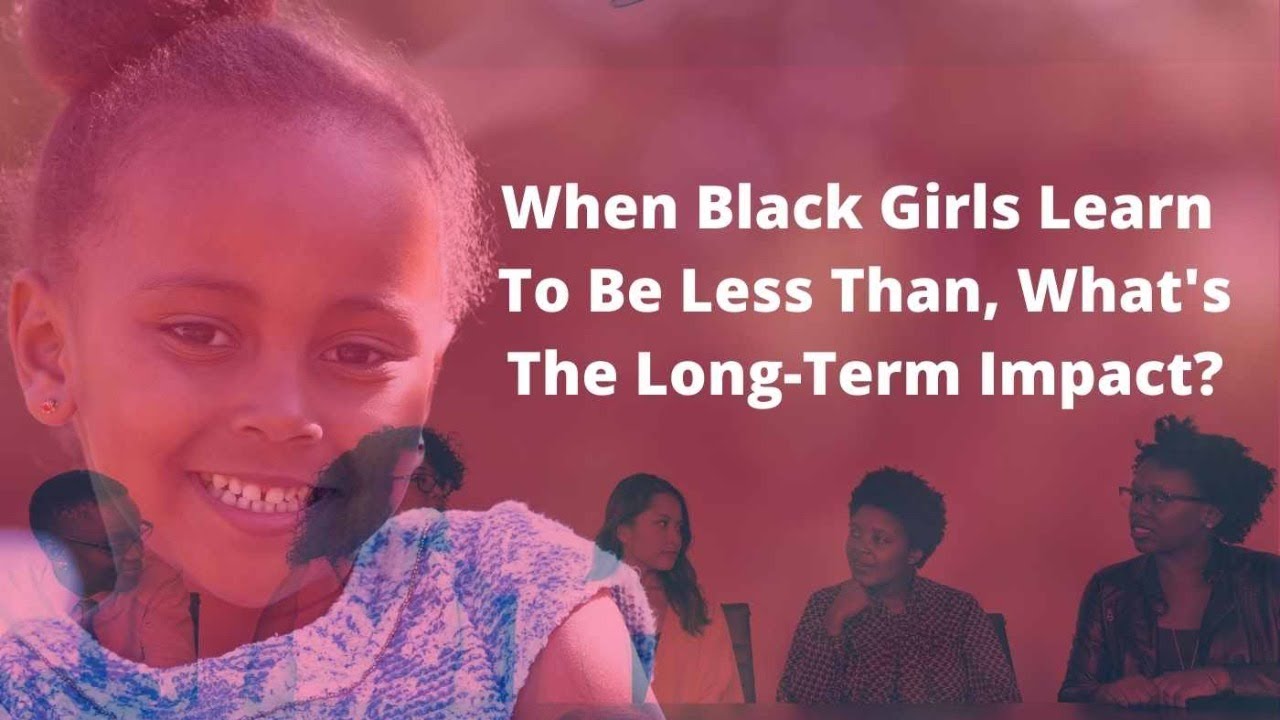
In this live interview hosted by Margaret Spence, founder and CEO of the Inclusion Learning Lab, the conversation centers on Shahana Lee’s master’s research into the experiences of Black girls attending predominantly white independent schools. Lee, an 8th‑grade dean, athletic coordinator, and math teacher at the Berkeley Carroll School, shares how her own childhood experiences of exclusion motivated her to study belonging among Black female students. Together they define belonging as a safe, inclusive space where students see themselves reflected, can speak without judgment, and have a seat at the table. The research reveals that Black girls often feel at the bottom of the social hierarchy, experience subtle micro‑aggressions (mispronounced names, being overlooked), and perceive a “cool” factor that can temporarily boost acceptance but is unstable. Historical context—stemming from the original purpose of elite independent schools for wealthy white men and the incomplete legacy of Brown v. Board of Education—continues to shape present‑day dynamics. Participants discuss the “placeholder” syndrome, where Black individuals are seen as token hires whose failures are generalized to the whole group, and how socioeconomic gaps within affluent school environments exacerbate feelings of otherness. Representation emerges as a pivotal lever: hiring Black leaders (e.g., a Black head of school) and diverse faculty dramatically improves students’ sense of belonging. Practical recommendations include intentional curriculum that centers equity, budgeting for inclusive extracurricular access, early affirmation of Black girls, and creating ongoing spaces for honest conversations about micro‑aggressions. The interview also fielded audience questions about monitoring anti‑Black micro‑aggressions and addressing intragroup socioeconomic differences. Lee outlines her future plans to expand the study to more schools, publish her findings, and eventually offer consulting services. The dialogue underscores the long‑term impact of early exclusion on career trajectories and calls for systemic, proactive changes in both education and corporate settings.
Chapters
Oh dear, all right, so it's going— it's not going to LinkedIn, but it is going to Facebook. And okay, I think we are, we are live on Facebook and we are live on YouTube. Um, we're having a little technical difficulties with LinkedIn, but we are live nonetheless. Thank you for joining us today. My name is Margaret Spence and I'm the founder and CEO of the Inclusion Learning Lab. And we're honored today to have a guest, Shahana Lee, and we're going to talk to her a little bit. I want to tell everybody a little bit about Inclusion Learning Lab, who we are, what we do. Inclusionlearninglab.com is a place for diversity leaders to learn and commune and research and come together. Diversity wins when inclusion is elevated. We help organizations and diversity leaders redefine inclusion for all stakeholders through advocacy, learning, research, and creating a DE&I community. A little bit about us. Our mission is to dismantle the silos that create exclusion. Build organization capacity to become more inclusive while supporting the diversity practitioners who carry out that mission. Individuals work every day to build inclusive spaces, and the last ones to contribute to public policy and research are diversity leaders. What we want to do is amplify and bring diversity leaders to the forefront, allow research that is being done in the diversity community to have a home and an ability to have a voice within that that community and we want to give diversity leaders a chance to lead the change we want to see. Because oftentimes we are only consumers of diversity versus the ones driving diversity. People are telling us what to do and we go out and do it versus us driving the diversity practices that we want to see. Thank you for joining us today. If you have any questions about Inclusion Learning Lab, you can visit our website. Before I get started, I want to tell you a little bit about myself first. I guess I should, for those of you who know nothing about me. My name is Margaret Spence and I've been in HR and the consulting space for 22 years. 22 years ago, I left corporate and I started my consulting practice, C. Douglas and Associates. We work in a couple different spaces around women's leadership development, diversity and inclusion, and we also do HR and risk management compliance. So that's who we are. So let me tell you a little bit about Johanna Lee. She is the 8th grade dean and girls athletic coordinator and math teacher at the Berkeley Carroll School, a pre-K through 12th grade independent school in Brooklyn, New York. Previously, she was the middle school equity and inclusion coordinator and served as a part of the admissions team. She graduated from the University of Massachusetts Amherst, and she earned her bachelor's degree in biology with a minor in African American studies, and her master's in public health with a focus on community health education. Through— originally on a path to become a doctor towards medicine, She made the transition to education through her passion for coaching and a desire to support students who felt unseen, which is a good part of what we're going to talk about today. Most recently, she graduated from the University of Pennsylvania School of Leadership with an MS Ed program. But the real reason why she's here today is the research that she did a part of that program. Her research during her master's focused on the experience of Black girls in predominantly white independent schools. Um, since graduating, she's continued to pursue the project through additional research and fostering meaningful conversations with students and educators. She's passionate about the student experience. She believes that seeing and understanding all aspects of each individual student is the key to not only student growth but creating a truly inclusive school community. So this is my pleasure to have you on today. Did I miss anything? Did I, did I, did I miss anything about what you did before now?
No, I think that was pretty encompassing. Thank you for having me. I'm so excited to be here and have a chance to share some of the things that I've learned and I'm continuing to learn with everybody that's signed on right now.
Yeah, great, fantastic. So for everyone that's on, if you want to comment, our chat is live. If you want to ask questions, please go into the chat and we have— we will answer your questions as we're going. So the first thing I want to ask you is, tell me about the research that you did and what the basis was to do the research.
Yeah, so to start, a little bit about me. I was a Black girl in a predominantly white independent school, and I think a lot of the things that I experienced while within that community really shaped who I was, both positively and negatively, as I was growing up. In the back of my head, I always wished that I had a little bit more support, a little more understanding and compassion, a little more cultural resonance, but that didn't always exist as a kid. And so in the back of my head, that was always in my mind. And so when I went back and decided that I really wanted to be an educator, it was important for me to be the person that I didn't feel I had while I was growing up. And so this research really stems from some of the experience I had, and I really want to see— all of this change has happened since I was in school. I really wanted to take a moment to see, well, how are the students feeling about this change? Because Often as educators, we are doing the best that we can for students, and we think that we're impacting them in the most meaningful ways. And more often than not, we are doing things that they can't see the benefit in as yet, right? Um, but I do think that there is a piece of like understanding really, is our message reaching the students in the way that we intended to reach? So I really want to study the feeling of belonging of Black girls within predominantly white independent schools to see whether we shared an experience from all those years ago when I was in school, how their experience might have changed, what aspects, and how they're feeling about their existence within that space. And so that's what really led me to this topic, um, and the interest and reason why I have so much passion behind it.
Wow, yeah, that's a lot. Yeah, so tell me what was missing for you. What did you think that you didn't get as you were in, um, a predominantly white school and you were growing up and evolving from a child into a woman? What did you miss there?
I think there is a general understanding, um, and I think a lot of it is cultural, um, misconception of who I was as a Black girl, um, within that space, and not necessarily having everyone understand exactly what I was bringing into that space or what I needed them to support me through within that space, or how the little— the subtle things. So how not knowing my name or confusing me with another student, how that impacted me over time and lessened my feeling of value within that community, um, I think is something that really resonated with me. And it wasn't until I was an adult that I really was able to pinpoint these, um, specific instances or, um, ongoing situations that kind of made me think like, oh, this is why now I don't necessarily do these things in the way that or confidently step into these things in the way that I would like to. And it really took recognition of that experience when I was younger to really push me forward as an adult.
Got it.
Wow.
Yeah. That's pretty deep because I think that we often, you know, feel that our children go through school and we're just, you know, shuttling them through there with education. But it's all the other parts that we don't think about that becomes the long-term impact. So when you made the decision to start the research, what was the foundational basis for the research that you did?
Yeah, so when I actually really wanted to start the research, I, I, my umbrella was too large. So I was starting with, I wanted to understand the experience for people of color in independent schools. And it was just too much for me to tackle as one person. And so I wanted to find a subset within people of color that, one, that I could relate to, you know. I think understanding as a researcher the, the people that you are speaking with is often important. And so I decided that Black girls really were the group of students that I wanted to focus on if I was going to start my research small and then expand. And I thought this was important because in the back of my head those experiences were still there. Um, as an equity inclusion coordinator at the time, I was really focused on trying to build, um, equity inclusion within our school community. And so I thought that this was important. If we start with Black girls, then we can expand out and understand the experience of other students as well.
Wow, interesting. So when you fine-tuned, picked your topic, picked the lane you wanted to get into What was the, the things that started showing up for you in the research?
Oh, so many things showed up. Some of them I felt like I could predict. Some I had no idea were going to come up. And I'll say the, the overarching message is that Black girls in these communities still do not feel like they completely belong within these communities, regardless of the support systems that schools are putting in place to try to level that field for them. I think some of the things that came up that shocked me were things like repeatedly without a question being asked, Black girls were saying things like they felt like they were at the bottom of the social ladder in terms of the school. And they made reference to like the Black boys being accepted right as they came into the school and Black girls having to prove themselves to be accepted into that community and maybe alter who they were. And so some of those things are heartbreaking and shocked me, right? Because in my mind I was thinking, oh, students of color are having a similar experience. The Black students, whether male or female, should be having a similar experience within that school. But Black girls repeatedly were telling me that they just felt like they were less than. And I think a lot of that plays into the historical context of independent schools, right? When independent schools were formed, they were created for rich white men, right? And when we, uh, when desegregation happened, right, um, there are a lot of pieces to that that weren't necessarily translated. So we were told like, yes, open the schools for everyone, they should be shared, like Black students, white students should exist in this, in the same space. Um, what wasn't taken into account was how the educators within those space would nurture the those Black students within that space. And historically, that carries through generations, right? I like to talk a lot about Brown v. Board of Education because I feel like it is an anchor point for everyone, right? Everyone has heard about this in school. You've learned about it. At least you've heard the name of the case. And so when you learn about that in school, you think of it as history. When I certainly was growing up and learned about it, I was like, oh, that happened so long ago. I didn't have a context for Well, it wasn't really that long ago, right? 1954 was when that case was passed, and that, that really is in present day. It's not really history yet. And so just layering how that impacts us in our current day, you really do need to understand the historical context and that we are not that far removed from that point. So some of these feelings are rooted in that deep historical context.
Yeah, it's true. You know, I'll give you an interesting an interesting, uh, story. I came to the United States at age 3, and when I arrived here from Jamaica, um, I went to Our Lady of Victory, um, school in New York in the Bronx. And that was a private parochial school in that day. And when I arrived in that school, um, the nun, which was— who was our teachers, sat me next to the radiator. Literally my entire existence was next to the radiator, and the radiator would go off and it would have this steam flying out of it, right? And so half of me was wet the entire day, and I would go home with this half-wet person every day. And my mother, when I was 6 and a half, almost 7, she said, "You're going back to Jamaica. I can't do this anymore." I can't do this exhaustion of, um, trying to raise you in this environment. And to understand the context, this was in the '60s, right? And so I get a lot of people, which is a lot of people will say, well, you know, I don't know why you're fighting. Like, I had this guy on LinkedIn today, um, he says, well, I've been— I vote, and I'm saying I'm almost 58 years old. Within my lifetime, I wasn't able to vote in the United States. When I arrived in the United States, we couldn't vote. So people think, oh, that's not, um, it's, it's like a million years ago. It's not a million years ago. And so I still don't think that we fully circled Brown v. Education in its full context for what it was supposed to do to support us we were asked to assimilate, I think, versus the system trying to figure out how to help us, you know, become a part and belong within the environment. So tell me a little bit more about the research as you continued, and I really want to hear about when did the girls feel that they didn't belong there? When did that come up for them?
Yeah, so I think, um, before I share that, it's important to just discuss a little bit about what their definition of belonging was. So I do we have a shared definition, which I've been using as the baseline for what belonging means to these girls. And it's a combination of all of their words put together. There was a lot of repetition in what they said. And so they defined belonging as a safe space where I'm able to talk freely and share my feelings without judgment. It is being included and having people that look like me, both adults and kids, as part of the community. It is having the ability to be who I am without being judged. It is having a seat at the table for real discussions. It is feeling welcomed and like you are valued within the space. It is feeling like others see you as a part of the space. I think anyone can come into a place and feel like they belong when they are nurtured by the people around them. And so it's that piece about being nurtured by the people around them. And in what ways are we nurturing Black girls in these predominantly white spaces so that they can feel confident and like they belong and like they really are a member of that community? And so that's really what I wanted to hear from the students directly. When I started speaking to students, they shared some things. Of course, there are always inhibitors to feeling of belonging. You're not gonna belong in every single space that you step into, but if we're creating school communities where students come for the majority of their day and spend the majority of their life, then they should feel like they belong within that community. To a high extent. And so some of the things that the students brought up, one girl said something along the lines of she feels closer to belonging within the community because Black is mainstream now. And that's something that really resonated with me. It's one of the quotes that sticks with me as I go forward because she essentially was saying she didn't feel like a part of the community until it was quote unquote cool to be Black. And so now her peers are starting to see and get to know her because her culture— her culture is cool, and they want to know more about her and see her fully now. And I thought that was really interesting because, as you know, society moves through these waves, right? So what's cool now is not necessarily going to be cool next month or in the next year or 5 years. So what happens when it's no longer cool to be Black? How do these girls fit into this space continuously um, right? I work in a K-12 school, so this was a high schooler, so she feels like she fits in now because it's cool. But what about the girl in 3rd grade coming up? Will she still feel like she fits in long term? Um, and these are the things that, like, I really want people and educators and, um, really leaders— you don't have to be a teacher to really see the impact of this, because I think it carries outside of the school walls, because these girls graduate our schools and go on to work for companies around the world, right? But just understanding that you are the support, you can make someone feel seen, you can support them when they don't feel like they have that support. And I was listening to a podcast the other day where someone was saying that they chose their career in acting, and the only reason they picked that career was because a teacher pushed them to do that. And that the teacher's job was to teach them whatever subject it was, I can't remember exactly, but the teacher went above and beyond in that case and said, "No, I see something special in you." And just letting someone know that you see something in them, particularly for Black girls who don't often get seen in these spaces, can make a world of difference. This person went on to say that their acting career is all based on that one moment, right? And that was when they were 13 or 14, so these things carry through for the entirety of Black girls' lives.
Wow, wow. Yeah. Did you ask the, the students who were in high school that gave you that definition or put— helped you build that definition when they started feeling that it was cool to be Black?
Yeah, so I didn't ask them that directly. A little bit of that did come up in the conversation, and so this research has primarily been girls between 7th grade and 12th grade. The reason for that is just that I do think that this occurs at younger ages. I just think that I need to reframe my questioning and methods in order to speak to younger students because they just don't have that ability to articulate in the same way what that feeling means. They said that it became cool over time. And so the girl who actually gave that definition had started our school in middle school. And went through and said essentially that in middle school, you know, everybody's trying— she like defended a little, she said everyone's trying to figure out who they are, they, they get cool by making fun of people and picking apart those that are different. And she said she was a Black girl, so she was different, so that's where it was. She couldn't articulate whether it was because students had matured, right, and understood that there were these differences and they should embrace those differences, whether it was learned, because our school has done a lot of work towards making sure that students are really understanding the impact of everyone's belonging, and/or she couldn't say if it was just because now in social media and stuff there's so many trends that involve Black people. She was saying that on the media you do see more representation, and so that helps with the understanding of just understanding Blackness. But she did say that, that— and I agree— can be dangerous, right? Because there is no one Black story. And I think historically everyone has looked at Black people as like, um, as one item. You know, if a Black person does this, then that's how the next Black person is going to act. If this girl can't succeed in this class, then the next girl that comes into my class probably is going to have the same struggle. And we know that that is just not true. It's about breaking that mind frame and almost hamster wheel that has been created historically.
Yeah, and that hamster wheel continues. I call us placeholders, is what I call us when we get into the organization, because when we get into the corporate world, we become placeholders. I've given this one Black person an opportunity to walk in the door, so now you're in, Margaret. We gave you the blessing, we slapped you on the head, you're approved. Okay, but If I mess up, then you get to say, well, remember we gave Margaret that spot and she screwed it up. Whether they say it out loud or not, they imply it. The applicant that comes behind me is now worried that, oh, I'm not hiring her. I'm looking at 5 candidates. Nope, we gave a Black one the opportunity and they just failed in that spot. Consciously or subconsciously, that does come up. Even though people may not admit it. But I know from an HR standpoint, if I give out 5 candidates and only one of them is Black, the Black candidate will not get hired. LinkedIn did a lot of research around this even and said, if you don't have a good vast array of people in the candidate pool that's presented to managers, they won't hire you. I think that placeholder syndrome starts way earlier than we even think about it because your placeholder sometimes in the school system.
Yeah, and I think that that's very interesting because if you look at the trajectory of that Black person who got into that position, right, if they were, let's say, the Black girl in 6th grade, right, and they were told at that time that they didn't fit into this community, or maybe not told directly, right, a lot of this happens subtly. So it's the little things of like, oh, you can't sit with us at this lunch table, or 'Oh, we're all going to our weekend house, but like you're not invited' kind of thing. It's those little nuances that are often overlooked that stick with students long term. And so that girl now grows up thinking that she doesn't belong in these predominantly white spaces and moves into college, right? And perhaps goes to a predominantly white, um, college as well, right? Those things are being reinforced and reinforced and reinforced over time until that becomes a piece of that person's identity. And so when they go to the workforce, right, they feel nervous because they've already been told that they don't belong. And we know that the workforce is run predominantly by white people in high-powered positions, right, currently. So when they get into that workforce, you don't know where they're operating from, right? Did that mistake come because they were so nervous or didn't ask the question because they already felt like they didn't belong and this was a privilege to be here? All these things I think go into play and it starts so young. And especially educators, because that is the field that I'm in, really have the power to turn the viewpoint of these Black girls around.
Mm-hmm.
Yeah.
And you know what I find when I'm working with Black women leaders and I'm now working to empower them to take on executive leadership, there's always this stuff that's in the background. You know, and I'll be coaching and coaching along, and there's still this hesitance. And you realize that years before, this woman was even— was told to be quiet, to be silent, to not show up the way she's showing up, not be as bold, not— you know, all the things that you were told not to do. And now you're in the workforce and you're trying to move into executive leadership And when you're coaching a person who is there, um, you have to do a lot of work to clean up the baggage that has been placed on that person from before, you know. So it's just, um, it's just, it's just interesting. Yeah. Um, we have a question from someone in the audience who said, um, now they're curious um, who's checking non-Black students' anti-Black microaggression? Um, who's checking on anti-Black microaggression? So that's, um, so if students are in the school system and they're facing microaggression, which is now beginning to create the layers, what happens?
Yeah, so I think, uh, that question has a couple layers, right? One, that's going to depend on the institution. Um, the school system that that is in. I'll say that what schools are moving towards recently is really incorporating equity inclusion work into the overall curriculum. So this isn't like a, oh, we're dealing with one instance, right? Just like the bias was taught over time, right? These things need to be taught over time to students. And so yes, there are the moments where like a student needs to be checked, like Sometimes that's a conversation, depends on what is done. I know students that have been asked to leave institutions just because they're not upholding the values of that institution. But I really do believe that it's education that really is at the forefront of this, right? Students need to understand that this is something, and particularly white students that need to understand that this is something that affects their Black peers in ways that they don't have to think about. And so it really is the educational piece that comes over time, and just the support from adults, right? Students often mimic the behaviors that they see adults carry out, whether that adult is showing that behavior intentionally, or if it's a subtle behavior that the student is just picking up on. And so the adults in the system, like the school system, really need to start to think about how those subtle movements or the subtle ways that they speak to students really get passed on and what messages are actually followed in those tone, in the tone of their voice or the words that they're saying as they go through their day-to-day. So it's really about bringing consciousness and awareness to that. And I mean, along those lines, I don't, are there other questions, but—
Yeah, so there was another question around intragroup socioeconomic differences. So I wrote one down that said, so for example, if you've placed a student into a predominantly white school, a Black student into predominantly white school where the, the other students are very affluent and I am not, and I get to drive off to my country club on the weekends and I'm going golfing or swimming or whatever it is, and, and I don't have that, um, access. I'm not in that circle, and, and no time am I going to get into that circle anytime soon. How does that affect the psyche of the student when you— when we're placing them in that situation?
So I didn't look as much at the financial, um, pieces of that, but I will say that that does impact the student psyche, uh, more than I think it had been realized in past years. And if you look at what schools and institutions are starting to do now, um, they can't control what happens with families going to their country houses and that sort of thing, but they can control in-house what happens. And so a lot of schools have started to create additional budgets for things like school trips where previously students would have to say like their parents would pay for that trip, whether it was, I don't know, like a trip abroad, you know, schools go to like France studying French and that trip abroad, the parents would pay a portion of that. Well, now you can apply for aid for those trips in a lot of schools so that it is not on the parents and families and that will not be an inhibitor to students experiencing the same thing because they just can't afford it. And so I think that's one of the conscious areas where like, or a change that can be made pretty easily where you can start to take these things into account to start to build students to feel like they actually are a part of the community. Because how sad is it if your friends are going off and you just can't go simply because you can't afford it? We don't want to take those opportunities away from our students when they're within our communities, right?
Absolutely. So within your research, what was the key takeaway that you got, and what, what do you want to say to other educators about the research that you, that you've done?
So my school is in a little bit of a different situation than other schools. I will say a key piece, we just hired a Black head of school last year, and she's in her second year now. And I will say that made a tremendous difference. While I was interviewing these girls in my school system, they were saying things like, because she exists and people have to respect her, they now will respect and see me as powerful. And because she can walk and have her fro out within the school community, I feel like I can let my natural hair out too. So representation, it's this age-old argument about representation matters, and I understand that every school is not going to have a head of school, but in the teachers that you are hiring, in the teachers that you're promoting into leadership roles, is— are there Black women in those spaces so that Black girls can see themselves reflected as that? One of the younger students I interviewed at one point said that she never thought that she could be be a head of school because she had never seen one, a Black woman as a head of school before. And so just that change by our school hiring a Black woman in that position, it made a world of difference. I think for schools who aren't in that position, right, we're fortunate to have had that opportunity. I think it really starts in the education and having the time for setting aside time, right? It's not just gonna happen by itself. You have to be intentional about this. You have to address the issues at hand and understand where it comes from in history so that it doesn't repeat itself and you can move forward from that point. But it does take the intentionality because if you are just thinking passively like, oh, we're going to address these things when they come up, it will not change the experience of the Black students within those communities. Got it.
Got it. Yeah. One of the things that we're doing with the Inclusion Learning Lab is creating this, attempting to create this public-private partnership with educators because I think that, you know, we, the assumption is let's just hire people, get them through whatever education they need to and let's hire them. I think it's my view that we miss an opportunity to deeply partner with schools to give, um, children exposure to industries and exposure to what is possible for them, um, early enough. I think we do it way too late. And so in that vein, um, what do you think needs to happen earlier? What would you— if you had the wand and you could say, okay, this is the change I want recognizing that while New York has a lot of independent schools and they have a lot of private parochial schools and they also have the schools that parents are paying tuition, I'm in Florida, we have private schools, straight private, we have charter schools make up an enormous part of our school system now, and then we have public schools, um, and, and in between there are some hybrids of that, but they're mostly charter and private public. That's the categories. So within that context, what would you like to see happen and when?
So the when is easy. I would like to see it happen as soon as possible. You know, I think as we can make these changes like today, um, I think that just helps long term, the sooner that those things can happen. I think that there are complexities within those systems, right? The difference between public and charter and private are wide-ranging, and what you can do and how easily it is to shift systems really depends on what school system you are in. I think that the easiest thing is an affirmation of Black girls, Black students, students of color, all students, right? Make sure that those affirmations are being shared across the table. I think that there's this notion of the sense of possible selves, and there's been a lot of research done around this idea of possible selves. And it's just the notion that as you grow up, you have these wide dreams, right? You say, I want to be an astronaut, I want to be a physicist, I want to be a gymnast, I'm going to be an NBA player, whatever that might be, right? We know that kids at 3 and 4 have 1,000 things that they're going to grow up to be. Well, How are these things being broken down? At what age is it that the student says, oh, it's not possible for me to be a physicist, and why? Well, some of those things are just because they are not exposed to physicists that look like them. So just exposing students at young ages and helping them to believe that they really can be what they want to be and belong in every single space that they step into, um, it's really that confidence push, um, as much as possible. I think is really the start to changing some of these things that we've seen historically.
Wow. Yeah, that's a great point. I think that through the lens of possibilities, our framework and our program is what's possible. And that's really it. For me, that's the question I always ask, what's possible? And within the corporate sector, that's what I ask, what's possible here? Because oftentimes people don't think of that. What I say a lot to HR leaders is we don't hire people based on positions. We hire people based on what they could possibly do for us. And if we stop thinking of positions, then we do spend time empowering people to live up to their own possibilities. That's not what always often happens. So it's interesting to hear you say, um, you know, how, how you, you frame that and shift that into, you know, how we need to do things a little bit earlier. I think it's a lot of support. What I got from you is a lot of support.
Yes, yes.
Yeah. So are you going to continue the research? Tell me where you're going with the research.
Yes, you know, I'm trying to interview as many, uh, Black girls as I can that, uh, attend predominantly white, um, institutions. Just to get a sense, you know, I know that there is a shared experience, but that experience will change potentially from institution to institution. So I'm trying to increase that. For me, the numbers aren't the biggest thing, right? It's about how many Black girls can I speak with who feel like their voice are being heard, like they're being seen and understood, and getting their voice out there. I do have a background in science, so I understand why the numbers are so important to so many people. And so I do think that it is important for me to extend my research pool and continue to do that, um, so that the data does support, um, my findings more thoroughly. Um, and so I'm excited to continue this research, and I'm excited to continue speaking to kids because, you know, kids really teach us so much. There's so much to be learned from the, the youthfulness of their, like, their mind frames. Um, and so it's really empowering for me to be able to sit down and hear their viewpoints on things and often they challenge me in ways that I just didn't see, um, and so I'm excited to continue that.
Yeah, yeah. So are you going to eventually publish the research? Are you going to eventually lay it out so people see it? What's— is that—
I mean, I hope so. Um, I am still teaching, um, which does take up a good deal of my time, um, but I do hope that as it expands that I will have enough to publish, um, with some solid like background behind it. So everyone can look out for that hopefully in the coming year.
Yeah, wonderful, wonderful. So if people, if you want people to remember one thing about your research, what do you want them to remember and take away?
Yeah, the one thing I think, I'd say the very, the most important thing I think is that each individual person, like, you have the power to make a difference in somebody else's life. And that is as simple as helping a student to feel like they are seen, like they are heard, and like they belong. And so those things happen in, in small interactions. Just saying hi to a student, how is your day going, is helping them to feel seen and heard at the same time, and like they belong within that community. So just making those subtle differences, I think, is the one thing that I would really push everyone to do. And it doesn't have to just be in schools, right? In the corporate world as well, just acknowledging the existence of, um, everyone within your space, I think, is super important for, um, their overall success.
Yeah, okay, fantastic. And, um, we're pushing to make changes for Black girls because As you said quite well when we first spoke, Black girls become Black women. As we push to make the change, what's the biggest change you want to see happen when a Black girl shows up in kindergarten?
Man, I think kindergarten is tricky, right? I think when Black girls shows up in kindergarten in a predominantly white institution, the adults within that space need to be aware of their subconscious bias that might exist. Are you treating this child differently in any way, right? And I think most people, um, would say no, they're not. But then in the subtle actions that occur, um, you would say yes, this child is being treated differently. And, um, I go back to that piece about Black girls feeling like they are at the bottom. I often get the question of like, why are you only focused on Black girls? Why not the Black boys, or why not the Asian girls or the Asian boys? And the truth of the matter is, is that if the Black girls feel like they are at the bottom, if you pull the line of where the bottom is, it elevates everybody at the same time.
Wow.
Um, and so I think that is super important to keep in mind.
Yeah. Wow. That's, that's so powerful. Um, I have to say that because that is often the question, you know, why are we focusing on the Black male, female, you know, why— especially when I'm working with our program Employee to CEO Project, when I'm working with Black women around leadership development, why are you only focusing on Black women? Because again, if a Black woman gets an opportunity, um, everybody gets an opportunity, you know. And so that's super powerful. So someone in the chat asked, will you be doing any consulting work with schools based on the research?
I hope to expand to be able to do some consulting work. The trick with consulting work is that they have to want you to come into the school. So if anybody is listening and would like me to have a conversation with students or adults within your school community, I'm more than happy to do that. But I do hope to do that down the line as well.
Great, great. And are you looking to ask other schools to allow you to come in to consult continue the research? Is that a part of what you're looking to do as well?
Yes, so you never just want to barge into somebody else's community, and so part of it is the formality of it, of requesting that I can speak with students. These students are underage, so you of course have to get waivers and that sort of thing to work with them, and so that process takes a little bit of time, but I am hoping to continue to expand in the future, and it's, it's in progress, let's I would say.
Yeah, yeah, yeah. So where are you personally headed from here? I know you've just finished a degree. What's your big goal, big dream?
Whew. I mean, my big dream is to continue to impact as many communities as I can, you know, and in any way that that can be, whether it's through consulting, whether it's through different leadership opportunities. I'm not 100% sure what that vehicle is as yet. Um, but I do hope to continue, um, growth within leadership in, in schools and really have the chance to help as many students and work with as many students as I can. And so that is really where my passion is.
So yeah, yeah. So as we sort of wrap up, is there anything else that you wanted to say that you didn't get to say, or any other part of the research that you want to bring forward? Tell me.
Yeah, I think I— this— so this research is pretty, um, deep, and there are a lot of layers to it. And I think there's no way that we could talk through the whole thing today in this short amount of time. Um, we already talked about the, the, um, takeaways, but I think one thing I always like to leave people with, things that they can do as institutions or companies or that sort of thing, um, and the things that these students have reported back, which I think carries through to adults as well, is just creating space for these conversations to happen. Education happens when we learn from each other, right, in the most impactful way. Because you might think that I'm going through my day perfectly fine and this little joke that someone made didn't impact me in a way, but actually sitting down and having that conversation where I can be honest and say, no, actually that was that was hurtful, um, I think is really the key, um, on the surface level, you know. So I would say the one thing is to continue having the conversation, um, continue putting Black girls and Black women into leadership and spaces where their voices can be heard, and really just look inward at what you can do individually, um, to support, see and empower Black girls.
Yeah.
Wow. Yeah.
I think when I reached out to you and said I want to interview you, I saw the video that had been posted on Facebook and I said I want to interview you. A bunch of colleagues said, well, why are you starting with Black girls? Why are you starting with girls? You're the Inclusion Learning Lab. You're working with HR and leaders and so on. But I don't think that, that there's a thorough evaluation, which is what I appreciate about what you're doing, that there's a thorough evaluation of how early it is that we start feeling othered in our own body and how long-lasting that is as we continue through. I don't know that we, um, we truly appreciate the depth of pain that is carried around by Black women and Black men, you know, as a dual personality. And so I appreciate the work that you're doing. I think this is just amazing. It's amazing. I have sons, I didn't have a daughter, but this is absolutely worth doing because as a young girl I struggled in that space, you know, I struggled a lot in that space and I did not feel comfortable with who I was until I was out of the school system, you know, it took leaving the school system, you know, being done, complete, I'm finished to really appreciate who I am, so yeah. Yeah, I think— yeah, go ahead.
I was just gonna say, I think long term I do hope to, um, conduct interviews with, um, other people of color who are not just Black girls. I think I would like to expand, um, it's just, um, how you expand. You have to be careful because you don't want to, um, negate a part of what you— what I've done so far as I create expansion. And so right now I'm still early enough in the process that, um, an expansion I think would crush some of my ability to continue, um, with the research that I've started. So I don't want to just go too quickly.
Yeah, and I think it's worth taking the time, and I think it's even worth coming back if you want to come back again in 6, 9 months. You've done more research, you've found more things, and you think it's impactful. I'd love to have you back for round 2.
Awesome, I'd love to come back.
Yeah, yeah. So, so I want to go ahead and wrap up. Um, how would people reach you if they want to reach you? I know you're on LinkedIn. Um, how else would they reach you?
Yes, I'm on LinkedIn. I have, um, email always. I'm always on my email checking that, so you can always email me and I will get there. I'm in the process of trying to create a Twitter for just this research where I can put some quotes that I'm finding and seeing up, and, um, all that will be linked on my LinkedIn page.
So yeah, fantastic. And Instagram would be great as well. Yes, yes, as well. Yeah, fantastic. Well, thank you so much for joining us. So let me go ahead and, um, and wrap up with everyone here. Are there any other questions? We had some questions in the chat. Um, we are live on LinkedIn. Um, and thank you, uh, Jessica. Um, and, um, And, you know, we are really excited to, to have you back for round 2. So for all of you, if you want to stay in touch with me, I am also on LinkedIn, Margaret Spence on LinkedIn. I'm on Facebook, which you're— we're streaming from now, and I'm on YouTube. And we will be doing the bringing additional researchers to the table every week, every about every 10 days, and really highlight research being done by Black people about Black people. Because oftentimes what I find is that we have white organizations doing Black research and then deciding how they should present that research to us. And our goal with the Inclusion Learning Lab is to do this differently. I want to hear Black voices and the research that are being done around Black people and bringing their voices to the table So thank you so much for being here with me today and kicking this off. And again, thank you for all of you that joined on YouTube and on, on, um, on Facebook. We had some issues with, with, uh, with LinkedIn, but, um, but thank you again for joining us. Yeah, so thank you. Yeah, thank you.








