Episode 10: The Changing Faces of Feminism and the Battles That Still Lie Ahead with Rochi Kale
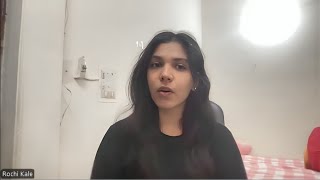
This is a recorded YouTube interview (Matriarchal Voices) between a host and Rochi Kale (recorded Feb 17, 2025). Rochi describes her book — a non‑fiction, journalistic long essay inspired by her interest in feminism and Taylor Swift — and recounts becoming more deeply involved in feminism after an online harassment incident as a teenager. She summarizes the 2012 Nirbhaya gang‑rape case in Delhi, describes the resulting Nirbhaya Fund (cited as 100 crore INR) and one‑stop centres, and critiques gaps in implementation and ongoing safety problems for women in India. The conversation reviews feminist history (proto‑feminists → first wave suffrage → second wave and Feminine Mystique) and contrasts liberal and radical feminist positions, while offering practical advice (avoid cancelling women reflexively, create safe spaces, read and amplify women’s work, 'microdose' feminist conversations) for building broader support.
Chapters
Foreign. Good evening everyone and welcome to today's episode of Matriarchal Voices. We have someone very special with us here today from India. Her name is Rochi Kai and she's an author. She wrote a book and she also has worked for NGOs for women's education and she also interned for a while in women's in a women's prison while she was writing her dissertation. So she has basically seen a lot of things and learned so much and she's here to share all of that with us today. And she's a very strong supporter of mastriarchy. And plus she's also, we can call her driving force behind modern feminism causes. She is going to teach us so much. And so I hope that you stay tuned until the end. And now, without any further delay, here is Rochi. Hi Rochi.
Hi. I'm so happy to be here. So excited.
So Ruchi, do you want to start by telling us about what inspired your books and what you wrote about so. So our audience can get to know like your background a bit?
Yeah. So what inspired my book was my love for women as in feminism and also Taylor Swift. So it is like a child of my love for Taylor Swift and feminism both. I've just took her life as a base on how the society reacts to women who are basically rich and who don't look like the perfect victims, but they are in a lot of ways and how society reacts to them. So I've just taken her life as a base and then spoken about it mostly.
Did you write it like as a kind of project or was it like a novel kind of book?
No, it is a non fiction book, like a journalistic work essay. Just very, very, very long gated essay about Taylor Swift and her day and feminism. That's it. It is very basic feminism. I'm not wrote about intense theories because I feel like a lot of people when we are trying to indoctrinate them in feminism, I think we need to give them very basic understanding. Not because they're stupid, but just so that they get interested.
Yeah, I know, because like feminism is something that has been misunderstood right along, I feel. And I think that anything that we can do to help people understand like what we are really trying to say and what we are really supporting is a step in the right direction. So what can you tell us about like what you've learned about feminism and how it has changed over the years?
Okay, so when I was very, very young, I was a very vocal feminist, like from when I was 16, 17 years old. I had the Internet. It was not like what it is today, but I still used to follow feminist pages and comment on them. And then once I remember when I was 17, I. I had a private Instagram ID and I got fully attacked by one MRA page. Like they took my. That DP from that little circle and my name, and thankfully Insta took it down after a few hours. But till then, a lot of their followers had gotten my username and my picture, so they fully attacked me. Like DM'd me and stuff like that. So then, and. And foolishly I tried to explain them, oh, no, I don't mean this. And they were calling me all kinds of slurs and I was trying to explain to them their why, oh why I commented this on this because I believe I thought I'll just convince them like that. But then I realized it is not the way to go.
What do you mean by MRA page? I'm sorry, I haven't heard the men's right.
So sorry. I'm really sorry. Men's rights activist pages, okay, there are pages who are against feminism, but. But they are against women. They just post very, very hateful things.
Okay.
And I don't know from where they found my id, I guess from the comments, and then they attacked it. So that made me go very, very, like deep into feminism. Before that, I was very casual with it. Like, okay, no one should rape, no one should take down. Very, very simple. But after that I was like, no, I need to get into it. I need to read theories and I need to go deep into it. So that is how I like started reading more about it and getting into it a lot more after that.
Yeah. So that experience would have been like really horrifying for you, I guess.
Like, how bad did it get?
Did you get like a lot of hate from other people as well after they posted about you?
Yeah, yeah. All their followers came into my DMs. They were a big page and I had a private Instagram at that time. They were a big page. So yeah, so they just came in and started sling slurs. Basically. No one had said those kinds of slurs to me before that. It was horrible. But also in a way, because of that experience, I got into feminism. Like, I started reading more and talking to other people more. So, yeah, I would say it was a good thing, I guess.
Yeah. Is it after that that you decided to go to NGOs and work on women's education and try to support women more? Was it after all that you can.
Say it Made it stronger. But I don't know if you remember the Nirbhaya case that happened in Delhi. It was very famous and I think that it changed a lot of women in India. Like that made a lot of women feminists. Like that particular incident made a lot of women feminist. So I, I was sensitive towards feminism from that time. I was very young, I was in school from that time only I was sensitive about feminism. But obviously this happened personally to me. It was not as horrible, obviously. But this, when this happened to me, I was like, no, I have to get into it. We just can't exist as women. We can't exist apolitically as women. Everything we do is political. Just our existence is political. So we have to study it, we have to do something about it. Convince other women also to join in. So that is how. Yeah.
Do you think like you can briefly tell our audience a bit about the story that you mentioned just now? Because I know a bit about it as well. I think also said that she knows like, but maybe there might be people who haven't heard it and I think it might help some people.
Okay, so in 2012, December in Delhi, there was a. There was a girl who was out at 10pm she had gone to watch a movie with her friend or boyfriend, we don't know that, but it was a man and she had gone out with him. And then at night she. At 10pm she was out. She was looking for autos and rickshaws but they were not available. And then there was a bus. And the conductor in the bus said he'll take her to some destination, wherever she asked for. And then her friend, her male friend and she got into the bus and she was gang raped in the bus. Very, very horribly, very, very brutal. Like it was one of the most brutal incidents of rape. It was the. It was all over the news. The outrage was so bad in every city of India. There were candle marches and protests and demands for safer India. They were also a lot of policies also came along after that. There's a Nirbhaya fund which is 100 crore fund that government gives for. For women that includes a lot of things like one stop centers. One stop centers are centers which are with the hospital. And one stop center means that when a woman is raped or has faced any kind of abuse, she can just go there and she'll find a police personnel there, a medical advisor, a psychologist. Everyone just under one roof.
Okay.
All of these things came come under Nirbaya fund and because of that incident, incident, all of these things also Happened and now how much of it is functional, how much of that fund gets used is another story altogether. But yeah, but yeah. So there, there's also Netflix series on this incident, Delhi crime.
I watched that. I. That's, that's how I learned about it anyway. I didn't know about it from the news. I think a lot of people would have learned about it from the TV series. And watching the TV series, it was really bad. So I can just imagine.
Yeah, yeah.
So that, that's one incident. But yeah. So how is feminism in India in general? I know that you all face a lot of problems.
Feminism in India. I am someone who is very. I'm not cynical. But, but the state of women in India I don't think has gotten any better. I mean, people hide it. There are a lot of laws meant to protect women from different, different situations. But I don't think that it is my opinion, I don't think that we have had a proper wave of feminism in India. It is purely my opinion. Like there have been incidents like the Nirbhaya one. And then the Nirbhaya fund came. There has. There was another incident in 1997. Bhavri Devi case. That was also gang rape case. She was on duty. She was trying to protect a child from getting into child marriage.
Okay.
Yeah. And then from that one act came, which is prevention of sexual harassment at the workplace. And it came in 2012 or 13. So there are different, different acts which are introduced to protect women, but not a proper movement. I don't think it has happened proper. Like we can say there was first wave in America during suffrage. I don't think that sort of wave has hit India yet. I mean, people might disagree, but it is just my opinion we are just better at hiding things now, I think. But how much can you hide when there is. Just now there was a case where. And so I am from Chhattisgarh originally and just now a Chhattisgarh High court judge said that a woman, when she get. Gets raped by her husband and she died and she dies, the man is still, still not held accountable because there's no legal rape in India. There's no protection from legal rape in India for women. So just now, just now it is a trending news story that he walked away. The man walked away. After killing his wife, he walked away. So this is the current state. I mean, obviously we have made some progress, like I said, with the sexual harassment at the workplace and nearby, a fun and domestic violence act and all of this stuff. But I don't think that it is being implemented properly. Even today. I can't go out at night in Delhi. I can't go out. It is a fact. So yeah, I don't know how much has changed. Honestly.
I think that going out at night is like a universal problem for women global. Unless you're like in a party kind of city where there is nightlife going on. But even then I know that women get drugged and then taken into unwanted situations. So really there is no escape from not being able to work out at night.
There are safer cities compared to like Delhi for example. Mumbai is a lot safer than Delhi. But. But it doesn't guarantee anything. It doesn't guarantee anything. Like just, just going out at night is a, is a privilege, a huge privilege that men just take for granted.
But anyway, I don't think they see it as a privilege. They just.
Yeah, but it is.
It's just like they don't see night and day, basically. So what kind of small scale feminism is going on right now? Because I know that there are more and more people waking up to the problems that women are facing in India. So I think that even you have been very vocal about it and you're working towards it. So like, how is the progress? How, how difficult is it for you to do these things.
Small scale? Obviously there are always organizations set up for helping women and they do help women for sure. Like this. There's one Apnea organization in Delhi. They help women, they rescue women from prostitution rings and then they help women stand on their feet. There are small, small organizations. And then what we can do is I think nowadays people have stopped convincing women into feminism. Like back during the first waves and the second waves, a lot of feminists would convince other women be feminist to be in the moment. And I think right now we are very like, we just. I, I don't want to use the word, but we cancel the women who are not, who call themselves I'm not a feminist or they say anything negative. We just, we don't try to take them in our movement. I think convincing should come back, make a comeback in the feminist movement. And I try to do, do that around me. Like I try to tell women I like, I like to give real life examples like, see, this is happening. This is not happening to a man, but this is happening to a woman. Yeah. And it is nothing more than feminist if you acknowledge that, that. And then I think convincing was a huge part and I think it should come back. And that is why I think I also wrote the book, the book that I wrote and I took Taylor Swift as a base because I know a lot of women and young girls are listen to Taylor Swift and are Taylor Swift fans, and I am obviously one of them. And I, I think to more women, if more women read very, very basic level of feminism, very, very basic comparisons between how men are treated and women are treated, I think they'll be more interested in fe rather than we just being hostile and acting like we know much more than them and we are some sort of higher beings for being feminists before them or something like that.
Okay, so that feminist ego coming in.
Yeah, exactly. I don't think we should have that.
Yeah. So I won't consider myself like an expert on any of the topics. So I also know what you're talking about. Like, I feel like sometimes there are so many negative forces behind it. Like, there's so much stuff out there that can easily convince someone not to be a feminist. So I think that is the biggest issue because a lot of people make like, very convincing points. You know, like when you listen, if you don't actually have a working knowledge of, like, what's really going on, a small video, a certain post, you see something can easily throw you off the rails. So people who are on the fence about feminism are very easily derailed, I think, because of social media.
This is why I say don't depend on social media. Depend on the older feminists. Like, go back to what the first way feminist feminists were saying, the second way feminists were saying, and listen to them. Then I think your opinions are strong and you're confident in your opinions. You have better language to explain what you feel. And just one social media post can't convince you to be feminist or be anti feminist.
If you have a proper background.
Yeah. If you have a proper base, proper setup, and you know all the points, you know the negative points, you know the positive, you know everything. I don't think one social media post can convince you to be anything.
Yeah, but then it's not just one because, like, you know how the algorithm works. It'll start bombarding you with stuff, like, to convince you whatever you're trying to read. So what do you think was more effective? Do you think the first wave was more effective or the second wave or modern feminism? Like, how do you view it? Like, what do you think is better? What do you think worked or has anything improved?
All the waves had different agendas. Like, before first wave, we had proto feminists. We used to call them proto feminists. Before first wave, like, women used religion they would make convents and try to build something women focused. So we can't. We can't ignore them. Also, like, there was Mary Wollstonecraft who wrote A Vindication of Rights of Women. I think you've heard of that text.
Yeah.
So that came before the first wave. And if we start from there, women have always tried to. Women were always feminists in that definition.
Right.
They were always trying to do something for women as a group. Then when first wave came around, we all know it was about the right to vote, suffrage. So we can't say that that wave was not that way, was better or was worse. It had the. It fulfilled its duties. The agenda was to get right to vote, and they got it. And a lot of people think first wave feminism. When I talk to people about first wave feminism, almost everyone knows it was about. Right, it was about the right to vote, but they think it was some cutesy, fun protest where women were like, yeah, I need the right to vote. And then they got it. The men were like, yeah, but people don't know that women have died in prisons. They fought so hard for the right to vote. It was. It was dangerous for them to speak out. There was a lot of propaganda against them. And a lot of women at that time also were against feminism. It's not just the men. Women were also, like, saying, we don't want the right to vote. Our husband can decide one vote for the family, and stuff like that. There were a lot of posters against them. But they still did it, right? They did not need all women. They needed a lot of women. And so, yeah, this image of cutesy protest, it's cutesy. And they just asked for right to vote and they just got it. That is not true. Women have suffered very much just to get the right to vote. And so obviously, we will say that the first wave was successful in that way. If you look at it that way, right. We will say it was successful then. Then second wave, before second wave. I think second wave, it is accepted that started around 1950s and 60s. But what happened was a lot of men were coming back from World War II, and all the women who had assumed their roles, all the male roles, when men were gone, they had to go back to. To their house work, and they had to go back to kitchen, and they had to go back home, take care of the children, they could no longer hold those positions. But obviously, once you have went outside, once you have felt that freedom of, like, being outside, earning money, talking to other women, they did not want to go back Inside. And then they were like, no, now we can't go. You can't just throw us anywhere you want.
Hey, wait a minute. What are you doing?
Yeah, so that, that time there was this book, the Feminine Mystique.
Okay.
Have you heard of it?
No, no, no, you have not. Okay.
It is a very famous feminist book and a lot of people say that that book triggered the second wave.
Okay. Was it written about how they were trying to push women back into the household?
Yes, it was about a lot of things. It was about the education of it. Let me think. Author was. Betty was. Betty Friedman was the author. And she wrote about a lot of things. She actually went and interviewed all of her ex college mates classmates who were now housewives.
Okay.
And she interviewed them and then she found out that none of them were happy being housewives. Yeah. And there was the problem. She called it the problem that has no name. It was the despair that all of the women were feeling being inside. She critiqued a lot of things. She critiqued education system. She was like, give women also equal rights in education. She critiqued a lot of things, like just societal norms. The, the, the traditional rules. She could. She, she basically her idea was that doing household code and being housewife should not be a career aspiration for women. That is what she argued.
Women shouldn't be like out dreaming of being housewives.
Yes, exactly. You should not be dreaming of being housewives. They should, they should want to go outside. And she criticized all of these aspects. And this book, this book till Today is very famous. If you have not read it, I think you should definitely go through it. You, you don't have read it cover to cover. You can pick the paths that you like. You can leave it.
It's like, it's not a continuous, continuous story.
No, no, it is not a story. It is a non fiction book. She also founded an organization which fought for equality, but the dissent was so much that she also had to resign from her post. Yeah. So that is how I think the second wave began. I mean, I don't think it. Most people believe that is how second wave started hitting. Because women were just tired. They wanted more than just the right to vote. Right. They wanted to go outside also. And in Second wave. And in Second wave, we also got a lot of things like birth control. And the, The Equal Rights Amendment act in America was very popular. It did not pass, but it was very popular demand of women at that time. And also what happened was at this time feminists entered the academia and all the stories started coming out the feminist theories that we talk of. So now there was liberal feminism, there was radical feminism, there was socialist feminism. Everyone was like, because women were entering education, they were doing PhDs, they were writing, they were getting better. Yeah.
Suddenly they were taking over.
Things started becoming a problem now, now that we have this much theories and literature to read, imagine we didn't have any of it. We would not have been talking about it right now.
I know. So this feminism has got, like, so much. Like, it has achieved so much.
Yeah.
But still people, like, don't understand it. And people still, like. Like to joke about it, like, to think that it's a game. And that is, like, really sad, I.
Think, because this is why I'm passionate about the history. I'm like, please learn the history. It is not about the memes.
I know the memes are taking over. That's the whole issue. Like, they're allowing people to ridicule it, like, not to understand it properly, not to really get an idea about what it's all about. It's just that that word has become. Yeah. It's like, become an insult, basically. It has turned into an insult.
It was used as an insult always. They would call. Even during the suffrage, they would call women. Oh, these are just ugly lesbian feminists. And they were always looked at like that.
Yeah. So what we are trying to do, and what I know you are trying to do, is you're trying to give everyone, like, a proper idea of what it really means and why we're trying to, like, bring feminism up and matriarchy up. Because.
Yeah, I just want.
Not just hurting the women.
Right. I want it to be fun. I don't want to be all serious, but I. But that does not mean. It's just memes. Yeah, Yeah.
I mean, like, when are people going to realize that it's not just women who are going to benefit from this? That is what I. That is the main.
They are enjoying their life. What can we say? Yeah.
No, I mean, like, the male loneliness epidemic and all these things are all because of their own.
Don't believe it's true. Sorry. I just feel like if they change their ways, they'll find women. If they change their ways a little bit, they'll find women. And in India, when they say male loneliness epidemic, I'm like, why are you killing female babies then?
It still happens. Yeah, yeah.
Female feticide, female infanticide. Every time you hear a story of a baby, of a baby found in trash, it will always be a female.
Like, why? Why still? I mean, it's all. No.
Then. Then it is hard to raise a girl. Then you have to give dowry. It's a liability.
Then someone should be like, looking at removing the dowry system instead of like getting rid of the girls.
They're trying very hard, but it's not happening. Now they call it gifts.
I think misnaming things, renaming things and trying to cover things up is a like the biggest crime, bigger than patriarchy and genocide. Like we rename something to make it sound better and then pretend that it never happened.
But this renaming is also very like, official and stuff like that. In reality, people still call it dowry, only it's legally, they can't call it. But if you are in the family, like last year only I went to a wedding and when we entered, they had this huge car on display.
Okay.
Yeah. And it was gift from like the bride to the groom's family or the groom, whatever. They still have these huge displays still. But everyone knows it's dowry, but they just will not say it officially. They'll not say it. But in family gatherings when people are sitting, chatting, everyone knows it's the age, basically.
What do you think we should start doing? I mean, I'm not. I'm working at matriarchy times. I'm working for them, with them. But I know that I'm not doing as much as you are in terms of trying to.
I'm not doing anything.
No, I mean, like, even your writing, you wrote a book. I mean, that's more than what a lot of people have done. You actually took that passion for trying to make a change, trying to make a difference, and you put it into words. You wrote a book, published it, and I'm looking forward to reading it, actually. And I just want to know, like, what is something small that people can start doing to start being more supportive to feminism and trying to like, help other women? And what is a small thing that you suggest people can start doing?
I honestly think the smallest thing is obviously, in today's culture, don't immediately cancel a woman if she says something that is a just one thing that is a little bit out of line according to you.
Like, try to listen.
Yeah, try to listen a bit. If nothing, try to create a space around yourself that is safe. Right. At least someone near you should know that you are a safe space. That. And we often hear people saying just randomly, oh, I'll be there, I'll be there, but what are you doing for it? Right? You have to make sure you say something when someone is making a misogynistic joke. I Always don't confront a misogynistic joke. But my friends know I'm uncomfortable with it because I say it. I'll say that I'm uncomfortable. So whenever something happens, they know I'm the one who will believe them. I'm the one who listened to them.
Okay, like someone who they can trust, basically.
Yeah. And don't, don't just cancel women on, on the Internet also just because they said one thing that is wrong. You can disagree with women, but you don't have to unfollow them at every point. Try to follow more women than men. Try to consume more media made by women than men. If you read books, try to read more women's books. If you watch movies, try to watch more movies made by women so that I think your mind is also work. Whatever you know, we watch affects us so much, but we don't accept it, I think. And in 2024 I tried to only read women. And now in 2025, if I start reading a book, I can tell if it is written by a man or a woman because they describe things so differently. The way they look at world is so different. Try to be more female focused in every way. Read more women. If you're good at writing, start writing. If you watch a lot of movies, try to watch more movies with women. Try to surround yourself with women and most importantly, build self respect. I think a lot of things will change for women if they build self respect. Because the self respect is so low wherever I go. A lot of women, they just don't want to come in front and they don't want to speak and they are constantly thinking about how they are looking and how this happens. And I'm just like, give it up. Just be confident in yourself. Try to build your self respect. A lot of things fall into place when women are confident like this. Just completely stop taking shit. When they are confident to build your confidence, try to build other women's confidence. That is I think enough. Everyone does not have to be an activist, an open organizations. Everyone even can't do that. I can't do that. I can't open organizations because obviously I have to earn money to other things. Just I think these things are fine. And the most important thing that I believe in is start convincing women. I know it sounds very hectic and if obviously if it is taking a toll on you, don't do it. Try to microdose feminism to women like oh, you know that man was staring. It does not feel nice. Or just microdose them into okay, yeah, That I do that. And I think women have stopped doing that. So I think we should do that. As feminists, it is our job to bring more women into feminism.
It's. It's like a real big responsibility, I think, for people who actually know the truth to tell other people. But then there are circumstances where we want to tell them, but they are so convinced in the other way that we sound stupid trying to tell them something.
Some people, you can't do it.
Yeah. Like, they make you feel stupid. And then you start second guessing yourself and you're like, did I say something wrong? Did I say the right thing? Like, what about women who are actively against feminism? Like, do you think there's any. Like, I don't know, like, what the reason is? Like, I can't think of any reason that someone would be against it. Because to be against something, you should know about it. Like, you can't be against something if you don't know about it. So these women who are against feminism, they actually must be knowing something about it. So what was it that made them feel like this is not something good? That's something that really confuses me.
Very hard to get into their heads. The men also know that these women are stupid. I'm just like, just laugh it off. What can we do? Like, what are you going to tell them? Like, I think we don't need all women. I think we need a lot of women together. In any moment, in any wave, we always know that there were women opposing that there were women opposing right to vote. There were women opposing all of these achievements that feminist movement has achieved. Women will oppose it. And we have to accept it, and we just have to move forward believing that we need a lot of women. We don't need all women because all women are never going to be feminists. That is what I have accepted. I've seen also. This is why when I was reading stuff and then I realized that there were a lot of opponents and descenders of this book that I told you, the Feminine Mystique. A lot of descenders were women of that book. They opposed this book and they said we didn't, don't believe in stuff like this. We want to be housewives. We are happy to have children. We feel content being inside our homes. And they were women. But, but at today's, in today's time, when we are talking about it, we are talking about the book, right? We are talking about how that is a important feminist text. We're not talking about them, we're not talking about the dissenters So I think we have to work, we have to look at things like that. You have to work like that, believing that we will be more relevant later.
Okay, I'm going to, I'm going to ask you something. I don't know if you can answer it or not, but I think it will help a lot of people. People if you can. So now you mentioned that there are women who say, I like being housewives, I like having children, I'm not a feminist. Like, what is the. Can you not do all those things and be feminist also? Like is that's. But have. Wanting to have kids doesn't mean that you are not a feminist. Right? You can still be a feminist. So why have people like put it in black and white? Why are they saying like you're either a feminist or a housewife? Why has that happened? Why do you think that has happened?
I think because obviously earlier it was forced on women. Earlier being a housewife was something that was non negotiable for women. They had to be housewives. Then when feminists said, no, you can't just be a housewife, you, you women are meant for a lot more than that. They can do other things, they have other interests and other things will satisfy them. They can't just be restricted to domestic slavery. Basically, it is what that is. So now at this point, personally, I never suggest women be housewives. And if they are housewives, I feel like they should have some amount of money or some resources in their name separately from their husband's bank account or their father's bank account, a separate sum of money I feel like they should have if they are choosing to be housewives. Housewives, they need to be smart about it. But then I think because of that, because of that notion, because of, because of how feminists always said that no, you just can't just be housewives. Women are much more than that, I think because of that. The notion that feminists don't like women who have kids or feminists don't like housewives, I think it came from there. But in reality, I think feminists work for all women. So it does not matter if you want to have kids. Feminists, especially radical feminists are the only people I see who talk about mothers the most. The problems of mothers and pregnancy. And feminists also bought in the maternity leave and paid maternity leaves.
That was also something that feminists.
Yeah, yeah, feminists called for paid maternity leave. So how can they be against women being pregnant if they're asking for maternity leaves?
Like that doesn't come up as much as the fact that they asked for birth control. So I think it's how the media has highlighted one thing more than the other that's causing all these problems with people's opinions.
Yeah, I think most things about feminism are not highlighted or they're highlighted in a very wrong way. So, I mean, they'll do it because they don't benefit from feminism. Right. They'll do that. They'll misquote the feminists. They'll highlight some things, they'll push certain narratives. It is, I think, our job to counter them.
So now that we know, like, there are different types of feminism like you mentioned, like, do you think you could tell us a little bit about what's the difference between the radical feminists and the liberal feminists?
Yeah, so we'll go back to the second wave for a little bit. Okay. Then we went back to, like the women entering academia and making theories and stuff like that. So what happened? Feminism split up a bit into different. Different types, different categories. Liberal feminism was the one that talked about equal rights. Equal rights between men and women. The. I also, I think I mentioned about the Equal Right Amendment. Yeah, you did, yeah. That they were bringing out. So liberal feminists were used, huge champions of it. The oral contraception, like you said, said that also liberal feminists were championing the radical feminism. Radical feminism had different views on few things like porn, like a prostitution, like surrogacy. So radical feminists were completely against the porn industry. They said that it is the recipe for rape. You're basically showing men how to rape. And they were against prostitution. They said women, women's bodies cannot be, like, bought and sold. With respect to prostitution and surrogacy, both radical. That was. That was what radical feminists believe. Liberal feminists believed in individual choice of women. Like, if they believed, if women wanted to do that, they should have the right to do that. So, yeah. So when radical. Imagine a radical feminism as the type of feminism that looks at women as a group and what is good for that group.
Okay. So liberal feminists care about individuals.
Yeah. So they are like, okay, this is. If this individual thinks this is good, then it is good for them. We can't question it. So there was also, I think you remember the bra burning feminist that everyone talks about.
Yeah.
So there was no bra that was ever burned.
Okay.
Bra burning protest was actually a protest against Miss America pageant. And they were. They were. They were basically throwing things in the dustbin. All the. All the things that oppresses them. Like they were throwing makeup. They were throwing different things. And there was one journalist standing, and one woman took off her bra and threw it. That. That oppresses her. And then that journalist wrote about that particular moment of her throwing brush.


