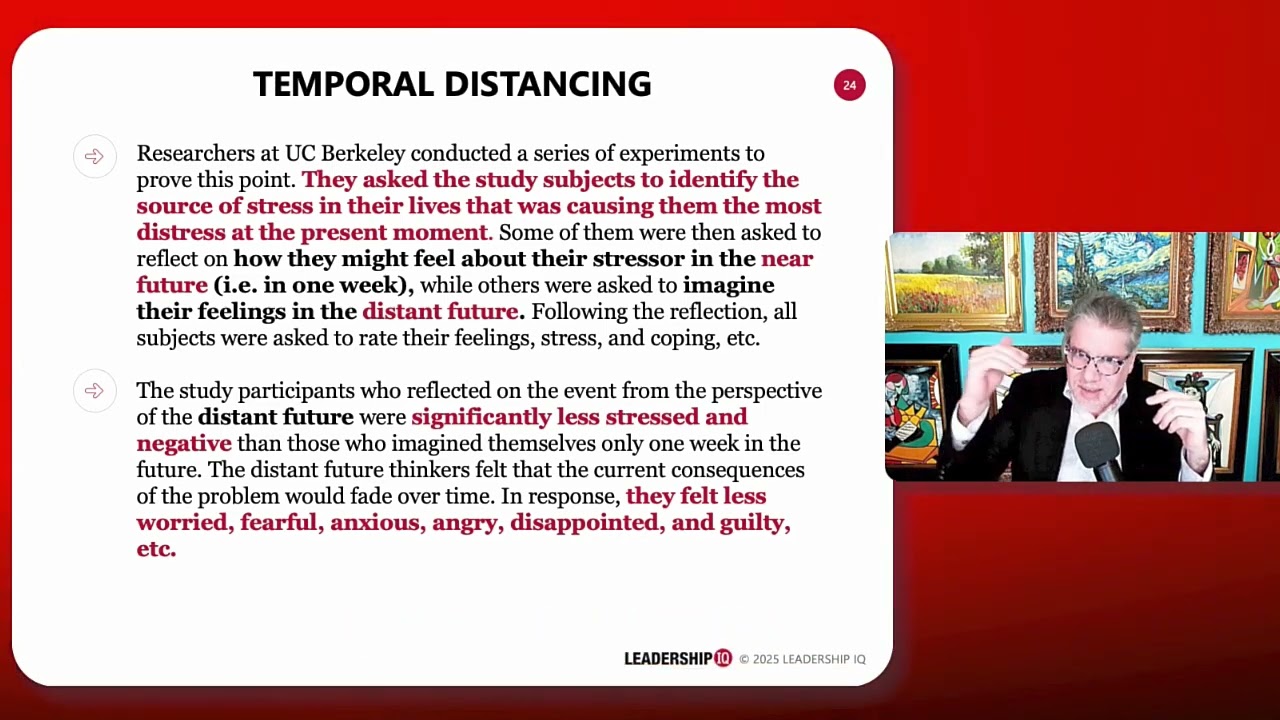
Mark Murphy explains a Berkeley study showing managers can stay calm during tough coaching conversations by imagining how the problem will feel six months from now. This temporal distancing helps you focus on facts instead of emotions and keeps the relationship intact.
Chapters
There was a wonderful study done at Berkeley where researchers took people and split them into two groups. They asked all the people, both groups, they said, we want you to think about the biggest source of stress in your life right at this moment. So what is it? Is it a romantic partner? Is it a boss? Is it a friendship? Is it stress at work? Whatever. What is causing you the most emotional stress right now? Then they broke people up into two groups and they said, Group A, we want you to think about how you're gonna feel about this stressful thing a week from now. The other group, they said, we want you to think about how you're gonna feel about this stressful thing 6 months from now. So either think about it in the near future, that's a week from now, or in the distant future, say 6 months from now. Here's the thing. When people thought about this stuff 6 months from now, they were significantly less stressed. They felt less anxious, they felt less angry, they felt less guilty, they felt less worried. Some studies have found that actually blood pressure goes down. This phenomenon of temporal distancing— you're basically putting yourself distant from the thing that's annoying you right now. So you have an employee, you've coached them on how to get their error logs done, and they messed it up again. There's still typos in that memo. Oh, I'm angry. If I think factually, it strips out the emotions, and then I think to myself, okay, my goal here is to create change, get them to make a change. And I want to think about this 6 months from now. What do I want my relationship with this employee to be like? Well, I want them to be doing great work. I want to not be annoyed. I want us to have a cordial, solid working relationship. I want to not have to check up on them constantly. I want them to be self-aware and double-checking their work. Okay, if I take this situation, I think factually, I strip out the emotions, and then I go, 6 months from now, where do I want to be with this person? Okay, now I am ready to go approach this person and sit down and have a conversation.