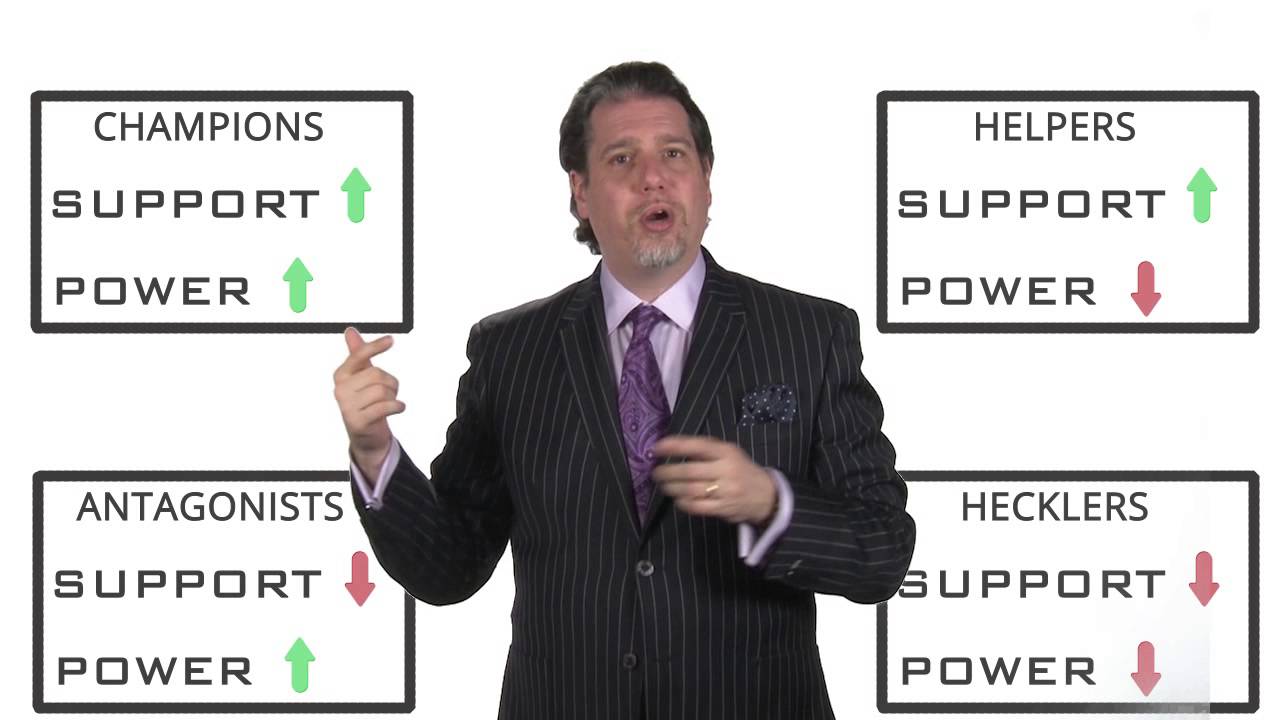
Map your stakeholders by support level and power. Start with champions and helpers to build momentum, then address hecklers and antagonists. Confronting powerful detractors early creates a well of angry people that kills confidence in potential supporters.
Chapters
When you're trying to build buy-in for a project or a proposal or some new initiative, who should you start talking to first? Well, think of the political landscape in your organization as basically having two axes. On one side, we've got the amount of support that people have for your idea and for you. Some people are going to support you, some people aren't going to support you. But then we also have the amount of power and influence that people have. Some people are very powerful, some people not so much. People that have great support for you and great power, those are your champions. People that have great support for you but not so much power, those are your helpers. Now, people that have low support for you and also have high influence, those are your antagonists. And people that have low support for you but very little influence, those people are your hecklers. Now, so you got basically 4 groups of people. Some are totally fired up and supporting you, some are fired up and supporting you, they just can't do much, and you have vice versa, the opposite. Get into that. Now, who do you start with? Where do you build up your support first? Do you go after the people who are kind of against you, your antagonists, and try and convince them? Actually, no. You want to move from a position of strength. So where you want to go first is either with the helpers or the champions. If you have champions, start there first. You want to build with the champions, then move to your, to your helpers. If after that you've gotten your base show basically sewn up with the champions and the helpers, then you can move on to the hecklers, and don't address the antagonists until last. Here's why. If you go to the antagonists first and you basically make your pitch and they're not convinced and they're not gonna support you, what you've just done is you've built up a well of angry people. You've basically shown your helpers and your champions that there are people who are against you. And when you go to them now, knowing that there's a base of people that are not in support of you, it makes it harder for a champion to buy in, because the champion's going to say, listen, I would have supported you, but now that you've ticked off Bob over there, I don't know, now it's dangerous for me. Before, it was easier for me to support you because you hadn't irritated everybody so far. But once you irritate people, it makes it harder for your champions and your helpers to get on board. So when you're trying to build power, trying to build influence, build support, support. You want to move from a position of strength. Get your champions and your helpers built up and then bit by bit go after the hecklers and the antagonists because they're more likely to be convinced if they see that you have a big base of support behind you already.