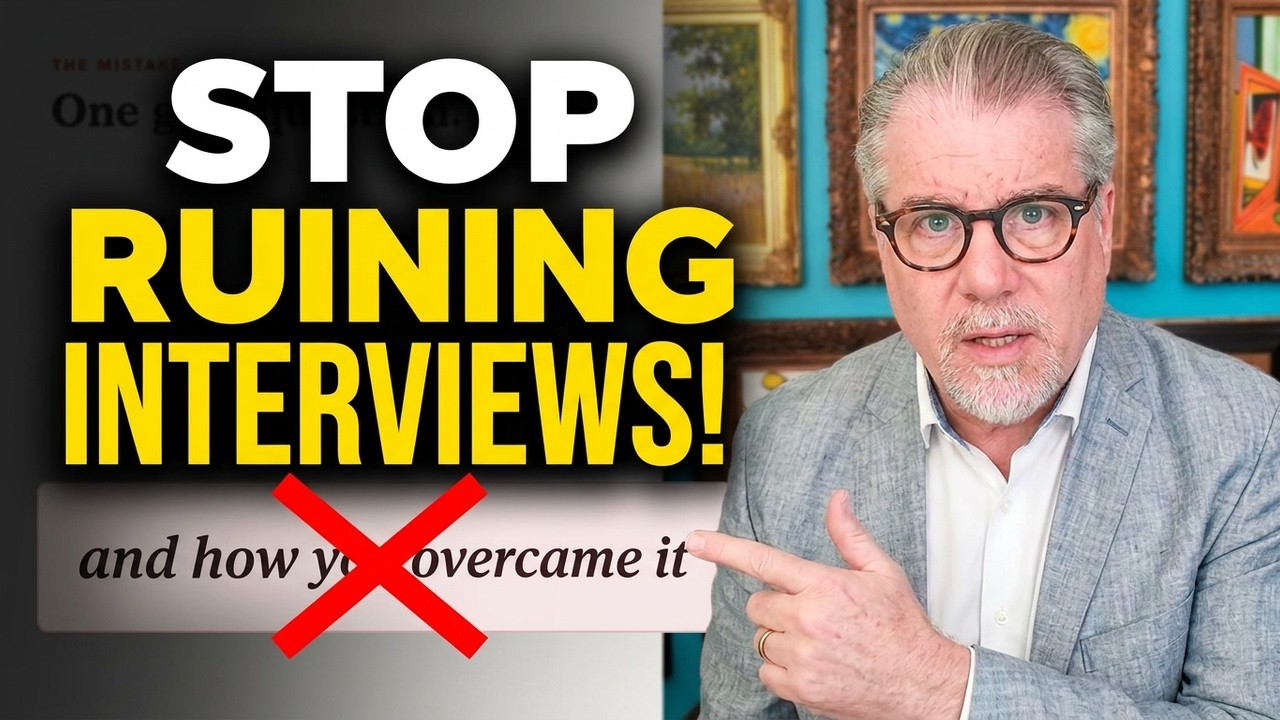
Mark Murphy explains how five words like "overcame" or "adapted" ruin behavioral interview questions by steering candidates toward polished answers. Ask the raw situation instead, then stay silent. What they say unprompted reveals if they're a problem solver or problem maker.
Chapters
Hi, I'm Mark Murphy, author of Hiring for Attitude, and I want to show you the single most common mistake people make with behavioral interview questions. And the thing about it is it's made almost entirely by good interviewers. Well-meaning, experienced people and senior executives ruin their own questions without ever realizing it. Let me show you how. Here's a solid behavioral interview question: Tell me about a time you faced a difficult situation. Good question. But watch what almost everyone does to it. They cannot resist adding a few words on the end. Tell me about a time you faced a difficult situation and how you overcame it. And there it is. That's the mistake. And it just absolutely destroyed the question because think about what you actually want to learn here. You want to know what this person does when things get hard. Maybe they overcame it, or maybe they freeze, maybe they panic, or maybe they point fingers, or maybe they wait for someone else to fix it. That thing, The maybe they don't do anything is the entire reason you asked. And the second you tack on, and how you overcame it, you've told the candidate, only give me the version where you come out successfully. You've basically handed them the ending. You see it everywhere once you start looking. Tell me about a time you balanced competing priorities and did so successfully. Well, now I'm never going to hear about the 9 times they didn't do it successfully. Tell me about a time when you had to adapt to change and what you did. Well, what if they didn't do anything? What if they just sat there paralyzed and frozen? Wouldn't you want to know that stuff, like, before you hired them? Here's the way I like to think about it. There are two kinds of people in the world: problem bringers and problem solvers. Ask a problem solver about a problem, and with no prompting at all, they will tell you how they solved it. It's just automatic. It's just who they are, really. Ask a problem bringer about that same problem, though, and they'll tell you about the problem, and then they will stop talking. That difference is absolute gold in an interview, but you only get to see it if you stay out of the way. The moment you add, "And how did you solve it?" to the end of your interview question, you've erased the line between the two. Now everybody looks like a problem solver because you told them all to sound like problem solvers. And it's not just the endings. Watch your verbs too. Words like "balanced," the word "overcame," The word adapted. Every one of those smuggles the answer into the question. I don't want to know about a time you balanced competing priorities. What I want to know is about a time you faced competing priorities, but then I need you to tell me whether you balanced them or dropped them entirely. So here's how to fix your behavioral interview questions, and it's, it's almost stupidly simple. Ask them about the situation. Then just stop talking. "Tell me about a time you faced a difficult situation." Period. Cover your mouth if you have to. Let the silence sit there. Let them, the candidate, fill it in. Because how they fill that silence, whether they walk you through what they actually did or drift off into what one should theoretically or hypothetically do, that tells you more about this person than a whole page of polished answers ever could. The hardest part of interviewing isn't asking a clever question. It's actually resisting the urge to rescue a candidate from a really hard question, especially when you see them struggling with it. Now, fixing this one habit will genuinely improve your interviews tomorrow. But great behavioral interview questions are just one piece of a much bigger puzzle. Knowing which attitudes to hire for in the first place, building questions that reveal them, and being able to tell a good answer from a bad one the moment you hear it, right? So that's what we do at Leadership IQ, because based on my book, Hiring for Attitude, we help companies do this every single day. So if you're ready to let— stop letting, you know, great resumes with terrible attitudes sneak into your organization, visit us at leadershipiq.com, and we'll show you exactly how to fix your hiring for good.