052: The power of a positive mindset, ft. Hayley Marie Sparkes

TV presenter Hayley Marie Sparkes talks about how gratitude shifted her mindset after childhood surgery left her with a colostomy. She created a vision board during the pandemic combining goals for love, career, and travel, and now practices daily gratitude, visualization, and subliminals to manifest what she wants.
Chapters
What are you doing on Tuesday the 26th of September, 2023? Because myself and Francesca Amber are coming to the Barbican Hall in London. Our event is called One Night Stand, and this one-night event is all going to be about manifestation, crystal healing, and ridding your limiting beliefs to help you achieve your goals. We've curated an immersive experience that will leave you feeling inspired and empowered throughout the evening as well. We'll also have interactive exercises, we'll have empowering discussions, and the opportunity to connect with like-minded individuals on a similar journey towards personal growth and manifestation. There'll even be an opportunity for you to ask questions as well. This event is your chance to break free from the shackles of self-doubt and unleash your inner greatness. It's time to release those limiting beliefs that might be holding you back and step into your true potential. And if you want to come on your own, by all means do that. Single tickets are available and seating is totally unreserved, so you can even meet up with your spiritual friends and sit with them as well. Head to @kanni_crystals on Instagram and click the link in my bio. Tickets are limited, so secure your spot and be part of this transformative experience. Don't miss out on the chance to manifest your dreams and achieve your goals. We can't wait to see you there.
Hi everyone!
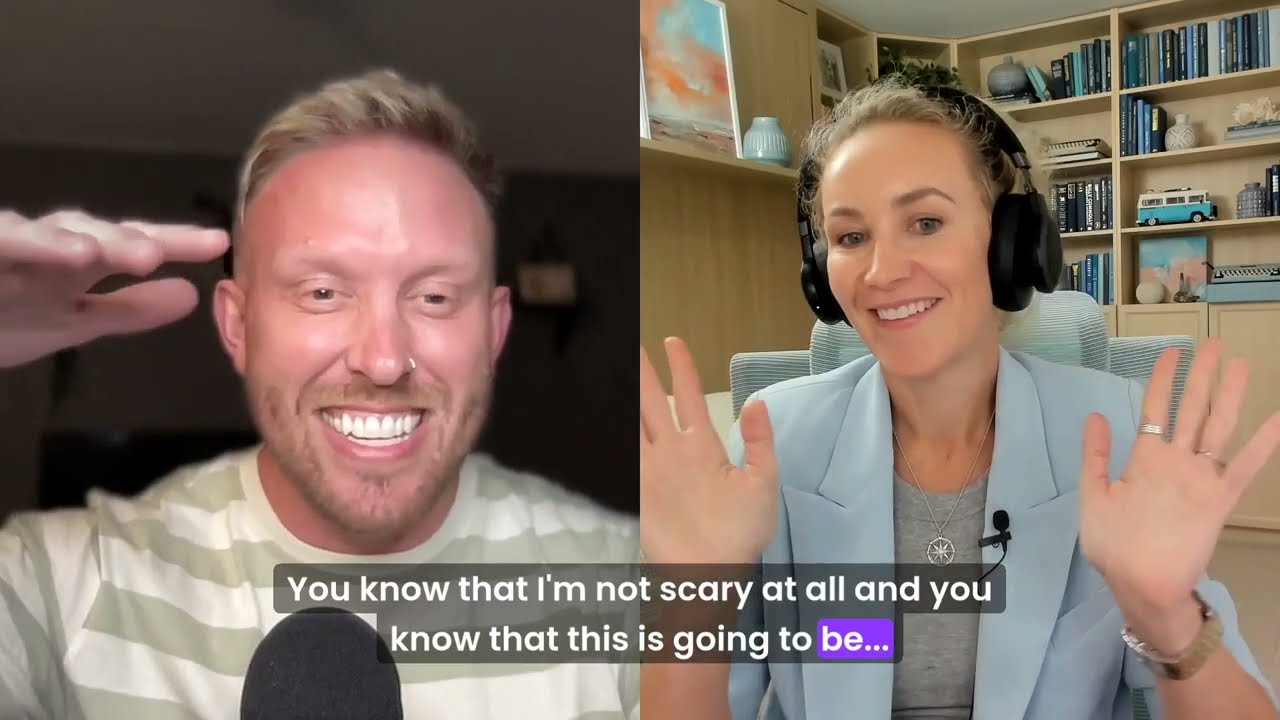
Thank you so much for joining me on another episode of Canny Crystals, the podcast. My name is Mart Tweedy, I'm your host, and this week I've got an extra special guest. I've got TV presenter Hayley Sparks in the show. Hayley, how are you?
Oh, I'm really well. I am so excited to be here. I am one of your regular listeners, so thank you so much for having me.
No, thank you so much for being a listener. I absolutely love it. Um, so Hayley, you've got quite an interesting story, haven't you? Especially around when you were a teen, and it's something that I was really interested in sharing with my listeners. So just for— just to put this into context for everyone else, Hayley suffered with IBD and ulcerative colitis when you were a teen, didn't you? So do you want to, like, talk us through that, Hayley, and just talk about how that affected you?
Yeah, sure. So I was diagnosed at 7 with ulcerative colitis, and it was really rare because that particular illness normally tends to come on in your 20s. But so sort of for it to happen so young was extremely rare and it took a long while for them to diagnose it. But yeah, to be honest, I lived a completely different life to the life that I live now. I got so bad to the point really where I was completely housebound and right at the end before it sort of, you know, reached a point where I had to have emergency surgery, I couldn't even sleep in my own bed anymore because I would collapse on the way from my bedroom to the bathroom. So I had to sleep in bed with my parents so that every time I got up to go to the toilet, they could assist me to the toilet because I'd become that weak and ill. So it was really challenging. It made school life really difficult. Missed tons of school, couldn't do the normal things we take for granted. I was on a wheat-free, sugar-free, and dairy-free diet. At one point, I could only eat pears and potatoes. Like, we used to try everything. Oh my gosh. Didn't have access to the internet back then. Then. So used to try and find specialists, and I was on a lot of steroids and medication, and my parents were desperate to try all the alternative therapies to try and help me get off these really strong drugs, which have a lot of really negative side effects. So, yeah, it was definitely a really challenging time. And I think it's a condition that, well, anybody suffering with anything to do with that sort of thing, people find it really embarrassing, don't they? And we shouldn't. But I used to feel like really humiliated on a regular basis because I'd have to leave the classroom when I was at school and I might be in the toilet for 2 hours, like sat there in pain, potentially like bleeding and things. And then I'd have to walk back in and everybody would look at me and I just wanted to die.
I was going to say, I think especially being so young as well, being 7-year-old, people talk, don't they, like kids, because they're so naive, they don't know what's happening and they're just curious more than anything. So people will have said random things, but probably not anything bad, but yeah, it probably would have looked weird to them, like you saying, like sitting on the toilet for an hour and things like that. So when did you actually get a colostomy bag fitted then? Were you in your teens then?
So I was 14, and as I reached that point of sort of collapsing and, and, you know, being literally had become housebound, I was taken into hospital and it became apparent that things were at a really sort of make or break stage. And I was just rushed into emergency surgery and my bowel was basically, you know, like how an appendix can burst, but if you get it out in time, you're okay. It was like that with my large bowel was about to rupture. So I didn't know this, but they sort of said to my parents at the time, like, we don't know if we can, we can save her because it's at this point we don't know if we can get it out in time. So it was all like really terrifying. And I woke up in intensive care, couldn't feel my legs. I literally had a million tubes in me. And, and yeah, but as I got better and understand what was happening, I didn't know. I was introduced to the fact that obviously I was very grateful they'd saved my life, but I had this colostomy bag at 14 and I couldn't believe it. I thought it was a joke. I thought, and I don't want to cause any offense to anybody that lives with a colostomy bag. I'm just sort of being honest about my teenage brain. I thought, I thought, yeah, this can't be real. Like, they can't expect me to live like, like this. How do they expect me to be able to have a life with this situation? So it took quite a lot of adjusting to, to having the stoma bag. Yeah.
I was going to say, so how did you manage to cope? Because was it— I'm assuming it was painful as well. So how did you kind of cope with, you know, like the stomach pains and things like that and just even having the colostomy bag on you?
Well, because of everything I've been through, I was like 5 and a half stone. I was in a wheelchair because I was so frail and weak because I'd been so ill prior to having the Stoma Bag. So I literally, I feel like almost like I was reborn, if that makes sense. Like I had to have help to learn to walk again. Obviously I had to regain weight. I was, yeah, I guess like just so weak and it just took such a long time, but because the operation had removed the, the part of the bowel that had the colitis. As I started to get better and obviously I came off all my medication that had stunted my growth and caused me a lot of problems, and I could eat whatever I wanted for the first time in 7 years. I could eat chocolate and bread and all the things that we just take for granted. So I had to have a gratitude for the stoma bag and appreciate that it literally gave me a life I'd never had. I didn't have to rush the toilet anymore. I could sit in with my classmates and not sit right by the door. I could go on school trips. I could walk to the newsagents, all these little— I could go on a car journey and not be panicking. And so because of the life that it gave me, I had to learn to appreciate it and be grateful.
It's so nice as well that you're saying that you were so grateful and had all this appreciation for it, because being 14 years old as well, it must have been so hard with peer pressure and things like that to even drink some alcohol. You can't have alcohol, like beer and lager and things, can you? With IBD. So I'm just thinking, like, back when I was 14, 16, I don't think I was appreciative for anything. I wasn't even appreciative for the roof that I had over my head, you know what I mean? Because you're just going to school and you're coming home, you're seeing your friends. So I think it's really inspiring that you've actually been appreciative at that age. So did this last for 2 years? Is that right? Did you have your surgery at age 16 to have that removed?
Yeah. So I do. Again, I count myself incredibly lucky because not everybody is in a position where they can have the reversal to remove the stoma. But luckily, because I just had the colitis and I didn't have any Crohn's disease, they said that we'll be able to take this bag away and they create— it's really, really clever what they do, but they basically create like this little— they call it a J pouch, but it's the intestine that you have left. They change the shape of it so that— and then sort of sew it up to your muscles and like your rectal muscles so that you can eat normally and go to the toilet pretty much normally like a regular person. It will never be obviously 100% the same, but it's phenomenal how they do it. I mean, it's a massive operation. It was still quite a big decision because it was, I think, 6 or 7-hour operation. The recovery time was significant. And at the time, back then, they would say things to me like, well, we can't guarantee what control you'll have and, and this and that. They didn't really sell it to me at the time. And I was thinking, oh, brilliant. So I could go through all this, like, put my life on the line, and then what if I have problems? But luckily for me, I have been incredibly lucky and I genuinely, I just feel like I live a completely normal, healthy life and I just feel so fortunate and it was like the best decision that I could have made. So yeah, I literally do feel like a miracle every day that they've been able to do this for me. I'm incredibly grateful.
Yeah, I was going to say, that's so lovely to hear. So you're 39 now, is that correct? Do you mind me saying your age? Yeah, not at all. No. So obviously Obviously when we got talking and things like that, I read into you because I obviously did a Google search and like typed your name in and all these articles came up. So I just want to ask you about what happened to you in 2020, because what actually made you make this vision board that you're so infamous for? Because was it during the pandemic or was it just before the pandemic?
It was during the pandemic, um, yes. So Yes. So fast forward after obviously everything we've discussed, I've been so lucky to have— like I said, it's like I live two completely different lives. The first half of my life, almost, to be honest, is just— I just want to block it out. It was just so awful and it wasn't really a quality of life at all. But then after the surgery and after sort of healing and everything, I went on to sort of fulfill my dreams to work as a TV presenter. I did a degree in fashion, I worked as a stylist on TV shows, I traveled around the world, and I trained as a makeup artist and did all this cool stuff. And I was just absolutely living my best life. And then, like for all of us, pandemic hit, and I had these travel documentaries in Thailand coming up and all these amazing jobs. And of course, understandably, everything came to an end. So it was, I was so great again, I was, I was doing, playing gratitude game, and I was so grateful that I was well and healthy, but I couldn't obviously ignore the fact that my life wasn't really going the way I wanted it to, and I'd had to move out of my rented accommodation, move in with family, and there was just all sorts of stuff going on. My, my Instagram got, um, targeted by hackers and I got blackmailed, and my only source of income at the time was my Instagram, and I lost everything, um, didn't have any work, didn't have a partner. So yeah, so I thought, you know what, I'm going to take matters into my own hands and I'm going to do something positive. So I created this vision board board in January 2020 with all my hopes and dreams, and I thought this will give me something positive to focus on and it will remind me that there are good things to come. So yeah, that was the start of it.
So what did you actually put on your vision board? Was it— did you do like a physical vision board or did you do like a digital one? What did you actually put on it?
I did a physical one. I, um, I did use magazines, but I found photographs really helpful because it's quite hard to find, um, things through magazines. So I would just put things in, um, into Google and then print them out as photos and, um, on a massive glass frame. And I really enjoyed doing it. And I had all areas. I had like the charity work that I do with the Pink Ribbon Foundation and stuff on there that I hope to get back to. I had an area for my love life, um, because I've been sort of looking for love for 7 years since my ex-husband cheated on me. So I had a love life area, I had a presenting travel area, I had a dream house on there, um, there was, yeah, every area of my life that I could think of. And I also put a lot of gratitude on there as well. So it wasn't all about, I want this, I want that. It was also about the appreciation that I had my health, I had my friends, my family. So it was a bit of a mix of the two.
It's nice that you've said as well about, um, areas on the vision board, because that's not something that I've really given any thought to. Usually I just get like something to do with me love life, something to do with me money, something to do with family, do you know what I mean? And I would just whack it all on the board in a jumbled up order. But now, now actually you've said that, it probably makes sense to like focus on key areas. So maybe split the vision board into like 8 parts maybe, and think, okay, I'm going to put everything to do with love here, everything to do with finances and money here. It kind of makes more sense, doesn't it? Because then you're able to focus your energy on those things without it being jumbled up.
And I have what I call a butterfly brain, so my, my brain is very overactive and I have like a million thoughts at once. So for me, I work really hard to try and, um, whether it's making like to-do lists or when it came to a vision board, making sure it isn't all jumbled up like my brain is on a daily basis. That really helps me to focus. So I'd, yeah, I'd definitely say that would be a tip that might be helpful because it just makes anything that makes it really clear and obvious what it is you're trying to achieve, I think that's a good thing.
And through your vision board, you were able to manifest your dream home in Essex, weren't you?
Yeah, that I'm sat in right now.
I can't believe it.
Yeah, it was, it was about 6 months after that I, I really reassessed my board, and it was one of those moments where my mouth kind of like dropped open, and I just thought Wow, I've, I've pretty much— everything's happened. Like, bear in mind, like I said, I'd not been very lucky in love since, you know, my ex, my ex-husband had cheated. We got divorced, and I was really hoping to find someone. It just hadn't worked out for me. I'd met my partner really quickly after doing the dream board. We'd bought this dream house together in Essex. Um, it was everything, you know. We both sold the houses that we owned and moved in together. I had a vision for a presenting job in Mauritius, that was booked and in the diary, it may well have happened at that point. There was even, even little things that I hadn't anticipated. So I wanted to get a contract with this fashion brand and I put that on the board. And I'm also an ambassador for the Pink Ribbon Foundation, which is an amazing charity that raises money for those affected by breast cancer. So unintentionally, I'd put the fashion brand and the charity next to each other on the board, and I suddenly realized, wow, um, they came on board as a, like, a partner of the Pink Ribbon Foundation. So they pay money monthly to be involved, and they'd created a whole big collection so that every time something sold, they raised money. And I was like, I didn't even predict that, but it happened. They were next, they were next to each other on the board, and we just had this massive press event with loads of celebrities and was raising all this awareness and money. And I thought, you can't make that up, because I didn't even plan that to happen.
No, I was going to say, there's no coincidences when it comes to Law of Attraction. It's like you've manifested that, you've, you've brought that to fruition, do you know what I mean?
Wow, it was amazing. Made me so happy. And it also just made me think, well, I don't really want to keep this to myself because my friends and family that I talked to about it, they were all then sending me pictures of their vision boards for their things that they wanted to achieve, and they were like, we're trying it, and they're asking me for help. And I thought, oh, you know, it might be worth, um, you know, maybe sharing this a little bit more on a wider scale because maybe enough people don't know about it. And I thought, at the end of the day, what's the worst that can happen? You've got nothing to lose.
Exactly.
By giving it a go.
That's how I always think about anything to do with the law of attraction. You're not harming anyone. It's not like you're running around like shouting insults at people or anything like that. It's, it's, it's all in your head, you know what I mean? It's being positive and being grateful like you were saying earlier. So how did the law of attraction come about for you then, Hayley? Like, do you think that you've actively manifested things in the past, or do you think that you've just consciously started to realize that's what you were doing like in later years now?
I think because of the, the health challenges that I had, I didn't know anything about the law of attraction. But my mom in particular, I look back and I think, wow, she gave me so much good advice, which actually sort of plays into that now because it was so challenging to get through. She would say things to me, for example, like, um, you know, when I'd just be so down and like I just had enough She would say to me, like, Hayley, you have to think there are people so much worse off than you. And I think at the time, well, I don't— that just makes me feel worse. I don't want to think of people that are in even more pain than I'm in. But she was right. And, you know, she'd say, yes, you've got this difficult condition, but you're alive and you've got this and you've got that. And she would make me appreciate what I had. And I always used to think to myself, I have to be grateful for for what I've got, because there is always someone worse off than you. And if you, if you kind of have that, then rather than just being in pity for yourself, you're like, actually, you can appreciate all the things that you do still have. You've got a loving family, you've got amazing NHS workers that are helping you. So I feel like my mum was really good with that, and she used to encourage me to do visualization and, um, try and like imagine my body healing and things like that when I went to sleep. So she'd given me so much great advice. And, um, so those seeds were probably sown when I was young. And then, like most people, I discovered the, the book The Secret when that became popular and read that. And I thought, wow, this kind of blows my mind, and this is really fascinating. And I've always been like a sponge for information, and I love learning new things, and I have an open mind. And so From that, I then investigated the science, and I learned about quantum physics and all the scientific, um, evidence that can be linked to certain parts of manifesting and, um, how our brain works. And then I discovered all these celebrities or athletes or people that have achieved greatness that had actually used the Law of Attraction, whether they knew that's what it was or not. Or, I don't know, done a drawing of them winning the Olympics when they were 6, and they went on to win a gold medal. There was all these things that were coming out, and I was like, wow, Wow, this is, this is a whole new world. And it just really excited me. So I've just been trying my best to learn about it and, you know, discovering people like yourself, like listening to your podcast. It kind of just expands, doesn't it? And then you've got Feng Shui, you've got all these different other elements, spirituality, obviously crystals I've always loved. So it's a really nice, not a hobby, but it's a really nice area of interest, I think, to have in your life, because there's just so much to learn.
There is. And I think spirituality is just so vast, isn't it? Like you said, there's many avenues. When I've been looking at booking guests on the show and things like that, I've started branching out into kind of not like high-end celebs, not like Lady Gaga or anything like that, but I've been researching people that have got like an interest in spirituality. Um, so for example, like Holly Willoughby, for example, um, Fearne Cotton and things, they're really, really interested in spirituality. And the fact that there's something a bit more to the world than just the black and white that we all see. And when I've been doing that, I've been quite surprised when I've been researching celebrities that are interested in spirituality and the law of attraction, of the names that are coming up. So some of them, like, I was just shocked to find that someone would have that kind of opinion, if that makes sense, because they don't come across like that on TV, or they don't come across like that in their music and things like that. So it's really interesting to see how mainstream spirituality and especially the law of attraction has kind of become in the last few years, isn't it?
I agree. And even I don't know if you've heard the story about Jim Carrey, but he wasn't successful as an actor. And you know that he wrote this check for— I think it was like a million dollars or something. A million dollars. That's right. And carried it around for years. And then he got his first film and he was written this check for the exact amount. He was really ahead of his time. So yeah, I completely agree with you. More people are into it than you would think. And like you say, they might not necessarily— their public persona might not necessarily be the kind of person that you think, oh, fits with someone who's really spiritual. But I think people are really switched on. And you don't necessarily even have to be somebody that's got a spiritual side. I feel I'm a bit of both. I'm so open to all of that. I love it. But I also do really love psychology, science, information about the brain, neuroscience. So, but, but there's, there's evidence and there's information and on both sides. So you can, you can be, have a scientific brain and you can still be really into it, if that makes sense.
Definitely. So just going back to visualization, because you were touching on it there, um, when you visualize, is that something that you do in bed at night, or do you tend to like set yourself like 5 or 10 minutes throughout the day, that kind thing, just because I've been recently reading that you should visualize first thing in the morning or last thing at night because your body's— well, your brain's about to go into a theta stage, I think it's called, and it's kind of more susceptible to open and open basically to these ideas and the visualizations that you're bringing forth. So what's kind of your routine through the day? Do you kind of just drop visualization in here and then, or do you dedicate some time at the start of the end of the day?
I tend to find that the end of the day is good for me. I try to do my gratitude in the morning. Well, I always do my gratitude in the morning. I have a little light box in my dressing room that says gratitude and abundance. I switch that on in the morning, and when that's on and I'm doing my hair and makeup, I'm going through in my mind all the things that I'm grateful for. And I also just try to do that naturally throughout the day, whether it's I'm driving to work and I'm grateful for my car, I'm grateful that I got to work safely. Um, but then the evening, that's when if I want to visualize, I'll normally try and do that as I'm falling asleep. Um, I'm massively into, um, subliminals, which I know you have some amazing ones. Um, so I tend to listen to that, or I will have, um, meditations on YouTube that I'll try and listen to as I fall asleep, um, for different areas. And a lot of them encourage you to perhaps visualize certain things. So it might be that I'm listening to an abundance one and they will encourage you to visualize what you're trying to create in your mind. So for me, I find that time that you fall asleep, as you said, I've learned about the science of it. So for me, I think that's a really good time to do it.
Yeah, I agree as well. I mean, at the minute, Johnny's away on holiday. I know we briefly spoke about this just before we started the episode rolling, but Johnny's away on holiday this week and he's gone away because he's gone to see his mom, basically in Malaga, because she migrated out there. But I was supposed to be going, and obviously I just couldn't afford to leave my business. But I quite enjoy the time when he's away because he's a really light sleeper, and if he hears anything through the night, he's up. But when he's away, I don't have to put my headphones in for me subliminals, do you know what I mean? So I can literally just put them on my laptop at the side of the bed and I press play. And you know what it is? My dog is sleeping all the way through with my own subliminals on every night. So I've got the wealth and abundance and the success one looped all night And usually he's out 2 or 3 times a night for a wee. He can't hold his bladder. And literally, ever since Johnny's been away and I've had this subliminal on through the night, he slept all the way through. And I'm like, is this one of my superpowers? I don't know if maybe he can hear my voice, maybe, like, subconsciously. You know what dogs— dogs can hear something else. And I'm thinking maybe he's hearing my voice and that's settling him a bit more.
Maybe it's soothing him. Yeah, I— it's funny because my My dog makes, um, I don't know, like little snoring noises, little breathing noises, but that— I tune into him if I can't sleep. I listen to him breathe because it's one of my favorite things in life. I'm so obsessed with him. Um, but they are so in tune with us, and I think that must be really helping him. Maybe you need to— this could be a new, um, avenue for you to record subliminals for dog owners. That's a really good one.
Well, do you know what it is? I've been asked a million times, do you do dog collars with crystals? Do you do subliminals for for dogs and cats and things like that. And I'm like, I'm missing a whole avenue here. I don't know what I would call it though. What could I call it? I don't know. Put it out there, send us a message, let us know what you think I should call it.
Yeah, the listeners will come up with some great ideas, I'm sure. But I actually, in all seriousness, I would buy that. I would love a little crystal collar for my dog. He's elderly now, he's like 15, bless him. And anything that I could do to just kind of like help keep, keep him in like tip-top shape and health. And I'd, I'd love that. So yeah, maybe for next year you need to put this on your vision board.
Yeah, I was going to say, because we know that crystals directly can affect animals as well. It's like Reiki, people do Reiki on animals as well. And I think especially my dog, he's got quite bad separation anxiety, and I think it all comes back down to the pandemic. Obviously before the pandemic we were leaving him 6 or 7 hours a day and he was absolutely fine. But now we can't go to the shop without him being sat at the front window shaking. And he doesn't eat anything while we're out anymore. He doesn't drink or anything. It's like he's actually got separation anxiety. And I think maybe a little crystal-encrusted collar or something with like a howlite or an amethyst might calm him down. I don't know, but I'll look into it. That's a little avenue from my vision board, like you say. Love it. So speaking of anxiety and things like that, so obviously I'm going to touch here on mental health. So obviously with you having quite a traumatic past with when you were a teenager and things like that, how is it now having gone through all of that in the past? Did you feel the need to ever go through therapy or anything like that? Or do you feel that you've now got kind of an unbeatable mindset now that you don't feel that you need therapy?
I mean, to be honest with you, I think every single person would benefit from therapy, and it is definitely something that I would be keen to explore 100%, because even the happiest of people, we've all got things that we could improve or work on. But for me personally, to be honest with you, when you— sounds dramatic, but when you literally have come back from the brink, you know, you— when you have had a near-death experience, I think everybody says the same. Or if you've been suffering and then that suffering has gone, you can't even put into words the way that it makes you feel. It's kind of like another level of appreciation because until, like, like we all feel, well, we've all experienced it with the pandemic. You couldn't have realized how much you would appreciate giving somebody a hug or just going to the shop to buy food or to a restaurant until it's taken away from you. As much as you think you appreciate it, I don't think you really do until it's it's actually gone. So for me, I was so— it was like my— it was like life was illuminated. All these things, like eating a piece of toast, for example. So when I was younger, I remember had friends that, you know, when people didn't eat their crust, like children didn't eat their crusts of bread.
Yeah.
I had friends that like wouldn't eat their crusts, and I would secretly be sat there thinking, do you know what I would do if I could just eat your monkey crust of bread? Like, because I really missed— I couldn't have bread for 7 years. And so just eating a bit of toast was like euphoric. Just doing the most basic things that you wouldn't even think about, to me, was like the best thing ever. Like sleeping through the night, getting back to my own bed, going to sixth form, doing my A-levels, going to university, like traveling around the world, getting on a flight, getting on a bus, like anything. Like, it was just so amazing. So I felt superhuman. I, I felt just so, so happy and grateful and I felt strong and my body was getting stronger. And I— it was like a new lease of life. I hadn't really known what like a normal life was like before. And it was like I was experiencing it for the first time. So I think because that gave me so much happiness, I at that time didn't really feel like I had anything to be sad about.
So I think there's something so powerful as well with what you were just saying there as well, about when you're trying to feel grateful and you're showing gratitude. Because this is something that I get questions about all the time. So people will DM me and they say, how can I be so grateful for the air or some hot water and things like that? And I ask them to imagine what their life would be like without that. And people always say, I've only woke up, I've only been up an hour, how can I be grateful for something within the first hour? And then I'll say to them, but what have you done within that first hour? You've woke up in a bed for a start. What would your life have been like if you'd have woke up on a floor? Do you know what I mean? And it's trying to like get them into the mindset of what would your life have actually been like if you physically hadn't had that? So even just getting a hot shower, what would it have been like if you hadn't had water at all? What would it have been like if you hadn't had any breakfast because you couldn't afford food? We've got so much to be grateful for in life. And I think there's something so powerful there in visualizing what your life would be like without that thing, because it's only when you actually visualize your life without that that you're actually truly grateful for what you've got in life.
I agree. And I would start by saying you woke up today. Like, there will be people that haven't woken up today. But I, I— don't get me wrong, I know that if you're in a bad place it's really sometimes so hard to dig deep. And don't get me wrong, I know I probably come across like a positive Polly, and I am in general, but I have been to some really dark places where my spirit's been completely broken. Like, before I nearly died, I literally had given up. Like, every little bit of hope in me had gone over the 7 years. I— it just eroded, and I hadn't— I, I— my spirit literally felt like it had just died. So I know how hard it is when you're at that point to even think about being positive about anything. But if you can just dig deep and just carry on with it and think about everything you could possibly be positive for, it honestly, even if it's like each day you feel 1% better, that's still 1% better than the day before. And then do it again the next day and you might feel 2% better. So I completely agree with you to think that there's nothing to be grateful for. Honestly, you've got, you've got to look at what's happening around the world. You've got to think about these poor people in Ukraine and, you know, in third world countries that are going through the toughest, toughest time. And yes, it doesn't stop, stop us having problems that are valid. But I think context is so important. Like, one of my tips would be, you know, I do so much driving for work and my presenting jobs. I'm here, there and everywhere. I used to get so frustrated in traffic jams. I used to think, I've already got a 4-hour round trip today and now I'm stuck in traffic. And honestly, I completely reframe it. So if you can reframe that negative thought, so I think, I'm listening to Candy Crystal's podcast here, I'm chilled out in my car, I've got Mart Tweedy's lovely voice is keeping me company, I'm learning something interesting today, I'm not the person or people involved in the accident or breakdown, like I'm lucky, I'm safe in my car, I'm relaxed, all my needs, you know, I'm warm, and then all of a sudden I've gone from this like, oh, negative energy, I'm gonna be late for work, it's why me, it's unfair, and suddenly I'm like, do you know what, I'm happy as Larry, I've got my podcast on, I'm in my car, I'm fine. So if you can reframe, find a way to think about your negative situation and reframe the way you think about it, it will change your life.
I totally agree. So what other manifestation tips do you have then? Because obviously that's a great one about raising your, your positive vibes and things like that and reframing things. What other tips could you tell my listeners basically about how to manifest and, and some of the things that have helped you in the past?
I think it's really important to surround yourself, if you can, with positive people in your life. Um, or if you don't have friends that have like a positive outlook, listen to podcasts with people like yourself that are just full of positivity, full of tips, full of advice. Um, Francesca Amber, you know, we love her. Um, find these people that really inspire you because you always have access to listen to all these inspirational people, whether it's podcasts or YouTube. They are out there, and I find that such a great way to learn and different tips, because different things work for different people. Um, obviously vision boards I find have really worked well for me. I think I'm quite a visual person. I also think, um, like writing things down, breaking things down into, into different, um, lists or segments is really beneficial as well. And because I think sometimes it's really easy to forget what we actually want. And then if you can take, like, maybe if it's like once a month, just take your notepad out if you can. If you can sit in the garden or be outside or be in a park or something, like, I find for me that really helps me to focus on what I want. I would always say to people as well, other tips is like, we do have a gut instinct, and I think so much of the time we don't listen to it. And Often people will say, well, I don't know what I want, but often you know what you don't want because your body will react or you'll have a gut feeling. Or if there's a person in your life, every time you've spent time with a certain friend, you come away feeling drained. You'll know. And I think that you need to tune into yourself more. I always remember when I, I used to work in fashion and do other things, and I really wanted to pursue my dream as a TV presenter. And I was really lucky at the time, I was friendly with the singer Alexandra Burke, who's a wonderful person. She's very much into this way of life. And I remember having a chat to her and saying, well, you know, I've got this nice job in fashion and beauty, like, should I leave? And what do you think? Do you think I should just go for the presenting? And she said to me, she said, Hayley, why are you asking me? She said, you already know the answer. She said, stop looking for other people to give you the answers because it's inside already. And I've always remembered that. I found that so profound because I am the kind of person that does like to get advice from other people, and I'm not saying you shouldn't do that, but I never thought of it like that. And I thought to myself, you are so right. Why do we always do that? We know it's, it's within us. I think we just don't tune into our inner voice or our gut feeling enough. And I think if you can just like almost retrain yourself to tune into your body, it will, it will then help you to be guided towards the things in life that actually you're drawn to, that actually make you happy. And then I guess my other tip would be find out what the little things in life are that bring you happiness, because we're not always necessarily going to be at a time in our lives where we have money to maybe buy the things that we think will make us happy. But what are the little things in life? So for us, I'm sure you agree, being with our dogs, definitely best thing ever if you're an animal lover. Or you might like— I know it sounds pathetic, but I absolutely love my little cup of green tea in the afternoon. It just makes me happy. It's the smallest thing. And I love going for walks, and I love music. For everybody, it would be completely different. But I think if you can tap into those tiny little things, things that don't cost money that make you happy, or phone call with a certain friend or a coffee with a friend, you always feel good. Write them down or work out what these little things are and plant them into your life as much as you possibly can, because that doesn't cost you any money and that will raise your vibration. That will make you overall a happier person. It'll make you appreciative. And then I think it will help you manifest like the bigger things that you want. And just never ever chase the money, always chase the happy. I live by that. Don't— I think so many people spend their life thinking, oh well, I'm going to chase this promotion because when I get more money, I'm going to get a better car, I'm going to get a bigger house, I'm going to go on like really luxurious holidays. And then I've met so many millionaires throughout my career that are absolutely miserable people. And I know most people think they know this, but we're in this like society where it's like, you've got to have this dress, you've got to be this dress size, when you get there you'll be happy. And it's like, oh, it's so wrong. Like, the way that we're fed everything in society always drives us to think that material things are what make someone happy, and it honestly couldn't be more the opposite of that. So find out the things that don't cost anything in life that make you happy and just do them as much as possible and just follow your heart. Do what makes you happy and never chase money.
Yeah, I totally agree with that because I don't know if you've heard the very first episode, I think it was, of Connie Crystals, the podcast where I spoke about I'd worked for the NHS for years and then I left my job because one of my friends had opened like a healthy eating restaurant and he offered me quite a large like promotion basically on my salary. And I took that job and I lasted maybe 2 or 3 months, and I was coming home every day crying my eyes out because it was so stressful. And it was honestly probably the worst 2 or 3 months that I'd had, like, at that point of my life. Like, I'd never felt stress like it, and I'd never come home and just lay on the bed and cried into my pillow straight after a shift. It was, it was horrible. And I think all I'd done there was chase that money, and that's before kind of spirituality came about for me. So I've learned to kind of— it's not the be-all and end-all now. And yes, it is nice, and yes, you can afford to do like activities and things like that, but sometimes some of the best things are free. Like, I've been quite stressed lately, especially with my new website and things like that. So my website's not been doing what it should and things like that. So I've been quite kind of frustrated with it, and I've been getting myself quite vexed, and I've been trying to learn all the teachings from my life coach about how to keep my anxiety and things at a low. But some of the best things that I found that have helped me is, like you say, sitting on the couch with a cup of green tea with my partner, with my dog, just watching a little comedy or something, or watching someone's stand-up gig just to make you laugh. I know he's not for everyone, but I absolutely love Jimmy Carr. And I do. I can literally sit and watch Jimmy Carr or Joe Lycett or anything like that. And I'll sit and I'll put something like that and it really raises my vibe because it forces me to laugh. And I spoke about this in my episode last week as well, about the medicine of laughter and things like that, and how just even forcing a smile can basically make you feel better inside and release so many endorphins. So just by watching a little stand-up, it's free. Well, I mean, you have to pay for Netflix or something like that, you know what I mean? But it doesn't cost much and it doesn't cost you the earth. But it's really helping to raise your vibes. And I think that really helps me with manifesting as well.
I agree. I totally agree with that. And when I was ill as well, like my family would try and change the tone sometimes, like take the mick out of— you could look at a situation like really seriously and all you can find the funny in pretty much everything. In every situation there is fun to be had. And my mum would just say to me, like, don't take yourself too seriously. Be always be able to laugh at yourself, be able to laugh with other people. And I completely agree with that. And one other sort of tip for listeners that's just come to mind that I think has really helped me is often we have a lot of really well-meaning people in our life that say, for example, you want to leave a job or go for a promotion or change a career, whatever it could be, anything. And their life experience leads them to say to you all the reasons why you shouldn't do it. And they're often saying that because they're trying, they think they're trying to help you. They think they're trying to protect you. So, for example, when I wanted to leave my the jobs that I had after my fashion degree, and I really wanted to leave my job, set up a company so that I could pursue presenting. I cannot tell you the amount of people that gave me 101 reasons why I would never be a TV presenter. It would never work. It was really competitive. I didn't live in London. I didn't know anyone in TV. And I remember this sentence, and I said to them, I don't know how I'm going to do it, I just know that I will find a way. I just know that I'm going to do it. I don't know how, I just know I'm going to do it. And I was so single-minded, I was like, I will figure this out. And obviously I have been in a position that I've been able to do that. And I would say to anybody, if you have a vision, whatever it is, and anybody tries to tell you that you can't do it, just remember that, just that you don't have to know how you're going to do it. You don't have to have all the answers. All you need to do is like every day take a step in the direction of where you want to go, and then the next day take another step, and sometimes you might have a step back, but that's fine. If you keep focused and you believe in yourself, I don't care what that dream is, you will eventually get there, but obviously you have to block out outside noise. If it's a good piece of advice, I'm not saying don't listen to it, but just be aware that often people aren't brave enough to follow their dreams, So people will come in and they will try and put you off and they will try and stop you. And I'll just say, do not listen, because if I'd have listened to that, I would have not be doing what I do now. Like when I wanted to get a dog, people tried to put me off. Best thing that's ever happened to me. I used to have a horse. It was my absolute dream to have a horse when I was a kid and we didn't have any money. And I got to my 20s and I bought a horse. People tried to put me off, you know, unfortunately he had to be put down, but it was the best 10 years of my life with my horse. So I think of all these things in life And I think, wow, if I'd have listened to other people, you know, my horse, my dog, my career, 3 of the things in life that have brought me so much joy, I wouldn't have had them in my life. So just be mindful of that, like, listen to yourself. My gut feeling was, I was like, I will make this work, and I knew I would, but I didn't know how. Doesn't matter if you don't know how, you'll find a way.
I think when you start to listen to other people as well, they start to project their fears and their belief system onto you as well. And I think you've got to stand strong and stand in your own power and think this is my belief. I'm going to reaffirm to myself day in, day out that I am going to make it. And that's what gives you the faith and the hope to actually progress and actually reach and achieve your goals. Because I'd still be working in the NHS if I'd have listened to all my family and friends, do you know what I mean? I wouldn't have left. I mean, I think when I'd gone to my Nana's one afternoon, maybe last year or something, I said, oh, I'd started up a little side business. And I was like, you never know, one day I might even leave the NHS for it, you know what I and straight away she just said, don't be so stupid. And she just quashed my dreams like that. And I mean, she's very old-fashioned, my nana, bless her. And she didn't mean any harm by it, but she was obviously— yeah, she meant well. She totally did. She was probably just worried that, oh my God, if he leaves the NHS, he's not going to have an income and he's going to be kind of putting on us to kind of support him. Do you know what I mean? He's got a house, he's got a mortgage, he's got a partner. But they didn't see kind of my passion and the kind of the want and the need that I actually had for this business. And then as soon as I did leave the NHS, I didn't even tell them for 2 months because I knew fine well what they'd say. And as soon as I told them, again, obviously I got, you can't do that. And I went, well, funnily enough, I left 2 months ago. And they were all in panic mode. And I think my Nana even had a slight little argument with me one day, and she was like, you can't make a living selling rocks. And I was like, it is so much more than that. She just didn't understand it. And I think because she didn't understand it, she had this fear. And this, obviously she was projecting that fear onto me by saying I couldn't do it, but I just kept having to raise the wall up and just like put it to one side and be like, no, no, I love you, but on this occasion you are wrong. And I just had to prove them wrong. And then every time I was going over, I was like, oh well, like when I had my £30,000 month or something, I didn't get a, oh my God, that's amazing. I just got a, oh, okay. And it just kind of quashed that. So I think she was kind of like, okay, he's actually doing all right for himself, but I'm not going to say that, do you know what I mean? So, yeah, I think you've just got to—
satisfying.
Yeah, you've just got to put that security up and kind of block people out that are going to be kind of Debbie Downers and mood hoovers and just kind of push them to one side. Take their advice and things like that, but don't let it, like, quash your goals and dreams.
Honestly, I couldn't agree more. People also think, like, you have to stay in one lane. So You know, I've sort of transitioned into TV presenting, but I did my degree in fashion. I learned how to be a makeup artist, and I've, I've kind of done that as a presenter as well. So it's great. And now I do a lot of travel, which I really love. But sometimes people think if you start off as one thing, like, you know, you're an NHS worker or you work in retail or you're an optician, whatever it is, it's almost like that's your lane, stay in that lane. That's who you are. And it's like, no, well, what if I want to work in the NHS for this period of my life, but then I want to go and retrain and cut down trees for a living. I don't know why, just random examples, but people will often see you as one thing and they don't— or you might want to do like a lot of different things. You might want to be a podcaster and you've got an amazing business. Why can't you do a little bit of everything? But people are often like, want to put you in a box or have you like in one lane and stay in one lane. And I think I think that's, um, something to be aware of as well. And you will always— if you follow what feels right, what makes you happy, and you divert yourself— if something comes up and it's like, I've got a bad feeling about that, or I'm not sure about that person, or like you said, you were crying in that job, obviously that was telling you, like, that was a clear sign, like, this isn't my path, like, I need to change path and adjust course. And I always say to people, like, don't worry if you try something and it doesn't work out. Like, the most successful people in life— like, I don't know if you listen to Stephen Bartlett, his podcast, I Am CEO, but he said yesterday— I was listening to him on, on the way to work— he said, I failed more than anyone I know. Like, my first two businesses completely failed. Like, I've had so much failure, he said. But what I learned to do is I fail quickly. I fail quicker than other people, and then I move on. And he's like, so many people procrastinate and put off doing things, and then they figure out like years later, well, that didn't work. He's like, I get failure out of the way quickly. And I thought, what a good tip. Like, don't let failure get you down. Failure is feedback. Like, things— I've had loads of bumps in the road with my career, but I always had this feeling inside, it was like, just keep going, because you get rejected all the time in this industry, and you have to to dig deep and not take it personally and just think, you know what, like, this wasn't my time. I've missed out on the most amazing dream jobs. I've got down to the final two and then all of a sudden they've gone in a different direction. You have to learn to pick yourself up and just carry on, believe in yourself and trust that when the time is right, the good things will come. And that is quite hard because rejection's hard, failure is hard, but I think the people that go on to successful are the people that are really good at dealing with failure and just keep going.
I agree. I'm going to use my mum as an example here because for the last 30 years, my mum has been like a carer and she's gone from job to job. Like, she's gone from being a home carer to like physically going out to someone's house to being in an old folks home and like kind of nursing and things like that. But she is stuck kind of in one lane, like what you were saying. And it's almost like like she's known nothing else, so she's just like trundled along, do you know what I mean? But she absolutely hates her job, and she won't mind us saying this, but she absolutely hates her job, and she's been so depressed. And I think she was working at one point 60 hours a week because she does 12-hour shifts, and she was doing 5 of them a week. And then when they put her on to night shift, she was saying, I can't do more than 4 a week, it's absolutely killing her. Like, she wasn't getting much sleep through the day, And she's coming up to 60, she's 60 at the end of this year, and she's done that now for 30 years. And it's an awful thing to say, but that's kind of inspired me to do better because my mom kind of— she left school without many qualifications. I think it's a generational thing. Um, she didn't really have many qualifications, so she just kind of went into care work because it was there. And she always tried to get me— I remember when I was like 16, 17, she was like, well, while you're at college 'You not want to do a bit of care work and I can get you in and stuff.' And I said, 'Seeing how depressed you are and how much you hate it, why would I want to put myself in that same position?' Do you know what I mean? So it's kind of spurred me on to do better. So yeah, the more I climbed the ladder in the NHS, the higher I got, and I could see that she was obviously proud of me and stuff, but it just made me feel bad that she's still having to go through this crappy time. And I mean, she's working part-time now So she's working, I think she works 2 days a week. So she gets, she's working like 24 hours a week. She comes out with something like £900 after tax. And she was telling me the other, the other week that her gas and electric bills are going to be like £400, £500 a month. And I said, that is literally half of her wage. So what I want to do is, and I've spoke about this before, but what I really want to do is I want to get to the point where I can actually employ my mum. But not physically employer, if that makes sense. So, like, just let her, like, do what she wants, but give her the money as if she's, like, getting paid a wage. But I'm not interested in her services. I just want her to be comfortable.
I love that. And as you were telling that story, I was thinking in my, in my head, I was like, Mart's mum's gonna come and work for him. Like, that is going to be what happens. Like, 100%. Like, how amazing. Like, your mum, she has dedicated her life to caring and helping for other people. What a beautiful person. Like, she obviously doesn't enjoy it. It's a really tough job, but she deserves, like, all that love and that, like, good karma to come back. And I'm sure that's gonna happen. I can't wait for the day that you say in your podcast, like, oh, you know, you're able to pay your mum a wage, because you will do it. You will do it. And I think if, if you— we all know that life isn't forever, but We don't want to think negatively, of course we don't. We don't want to be thinking, well, I could die tomorrow. That's a horrible thought, isn't it? It really is a negative thought. But actually, when you realize like things can change in a second, it's like birthdays. I used to worry about getting older and think, oh, and I remember when I turned 30, I was like, oh my God, I'm turning 30, I don't want to leave my 20s. And now I've totally reframed that thought and I'm like, I'm about to turn 40 next year and I think, I'm so lucky, like, I could have easily gone at 14. Like, if the penny had kind of, or the dice had rolled in another direction, so to speak, I wouldn't still be here. So it is an achievement that I am going to see my 40th birthday and hopefully a lot more birthdays. So again, it comes back to this thing of reframing. But when you realize, you fully realize that life is too short, it stops you putting things off. And like, bless your mum, I know it's hard, a generational thing, and women had a lot less opportunities, you know, than, than we're blessed with now, men and women, with the internet, and you can, you can work all over the world. That generation didn't have that, but like, everybody's time is ticking, and what a shame to look back on your life and think, you know what, I spent so many years like being really miserable, I'm never going to get that time back. Like, so the quicker you can make a change, the better, because that's the day you're never going to have again. And what a shame if you spent it being unhappy.
Absolutely. And like, just to caveat that, my mom is probably one of the most caring people you will ever meet. She's always the first to go and do, like, go out of her way and do anything for anyone, do you know what I mean? I've spoke about this before, but I think, I think it, it's just the fact that she's a number rather than a person to the corporations that she works for, because they're all private companies and things like that, you I mean? And I think just when, when you've got like that level of like authority above you and it doesn't kind of come down and you are literally just a number, it kind of will have a detrimental effect on you. And just looking back at the last 30 years and seeing how unhappy she was, like I say, that has been my crutch to say like, come on, Martin, do better. You don't want this for your kids as well, do you know what I mean?
Exactly. Break the kind of break that chain. And then when you bring up your children, all the knowledge and all the experience that you've got, you can plough into them because my family are amazing. They're really supportive and they were just incredible when I was ill. But when it's come to my career, it has been people, well-meaning people like my mum and probably, you know, my nan at the time saying those things of, wow, you don't live in London and you don't know anybody. People always think of the things that will go wrong, but they never think what will happen if it goes right. So maybe like your nan, bless her heart, she's thinking, well, Mart, you know, he's got a partner, he's got property, blah, blah, blah, blah, blah. What about this? But they're not thinking, what if it really works? He could, he could be, you know, mortgage-free in 2 years. He could be, you know, this internet sensation and have like a million followers on TikTok or whatever, and they make money from that. It's like a lot of people's brains will always go down the road of what all the negatives could be. It's like their brain won't allow them to think the opposite way.
Yeah, it's called negative bias, isn't it? We always look at the negative side of something. Negative bias. Yeah. And I think as well, it is a generational thing because I think none of these opportunities, like you say, of being able to make money over the internet and stuff, none of that was available when they were like young people and like growing up, do you know what I mean? So they see it as weird. I think when I first told my nana that I'd sold some stuff on the internet, she went, oh, so will you get done by the police for scamming people? And I was like, what do you mean? And she was like, well, you've sold, you've sold something. And it was because it was a digital product. And I went, well, no, I've sold it to them. And I was like, I've actually given them it. I'm not scamming them out of money. And she was like just looking at us as if to say, like, do you know what I mean? I was going to get arrested or something. But anyway, so what's on your vision board for the future then, Hayley? What's the next 5 years hold for you, for example?
Yeah, I mean, my vision board is literally beside me now. Um, so yeah, I mean, right in the center is, um, the word happy, because I always strive to be happy. That's my number one. It's not about money, it's not about career success, it's just about how many days can I wake up happy. And obviously, of course, you know, awful things happen to all of us. We can't be happy all of the time, but But my aim is to try and have as many happy days as I can. But yeah, I've got loads of things, more presenting. There's a lot of exciting travel projects coming up for me, one potentially on a really, really massive mainstream channel that I'm so excited about because that will be a real dream come true. Family, I'd love— I would absolutely love to, to have a family, whether that's, um, you know, a biological child, an adopted child, to be a mum, um, a mum and dad, me and my partner. Um, so to do more of my charity work with Pink Ribbon, uh, yeah, mainly around travel, friends, career, charity, family, happiness. Yeah, all that kind of good stuff.
I love that. I love that you've got happy in the middle as well. I think I need like a little quote or some words or something in the middle of mine because mine is just pictures. I hear you've also got a couple of discount codes, haven't you, for the listeners? Do you want to shout them businesses out there?
Sure. So, yeah, I really appreciate the listeners tuning in today and I thought, oh, can I do anything? Just a little treat. So I work with two really lovely fashion brands. So one is called Blue Vanilla and they're offering all of the listeners a special 15% off, and we'll put— obviously, I'm sure we'll put the code in the show notes. And then the other fashion brand is called Licorice. Again, they both do beautiful clothes, um, and they are offering 20% off. And also, they'd like to do a giveaway. So what we've suggested is, if you'd be happy to follow Licorice and myself on Instagram, maybe just put Canny Crystals in the comment and obviously give us a little like like, we'll pick a couple of winners and then you can both pick a dress of your choice as a little treat on us to say thank you.
I love that. Thank you so much. And obviously for anyone listening, I will put all of the links to those in the show notes as well so you can go ahead and enter that competition and get the discount codes. And also, Hayley, how can people find you as well? What's your Instagram handle?
So on Instagram, I am @hayleysparkes. TV, and that's Sparks with an E. So yeah, please say hi, and I'd love to, to know what you, um, you thought, and just keep in touch. I love interacting with my followers, and yeah, it's a nice little platform, Instagram. I find it actually really, really positive, and my followers are great, and I love connecting with new people on there.
So yeah, Hayley Sparks TV, and I do insist that everyone goes and follows Hayley because her content is just amazing. She's just been on holiday, it's just made us I'm just so absolutely freaking jealous. But, um, go and follow her because obviously her Instagram did get hacked and she's down to— is it 12 or 13,000 followers now?
Yeah, I literally— I had it approaching 30. I mean, it's fine. I— it's all about like having the right kind of people. But yeah, it was hard. Yeah, it was really hard because just losing all your content, all the people that follow and support you, that's your income as well, isn't it? Yeah, it was actually really scary. Like, I'd never been in a position like that, but I was being blackmailed for money. The police got involved, the fraud squad got involved. They take it actually really seriously. It's a big thing. So, um, yeah, I literally started from zero and, um, yeah, I've built it back up. Yeah, yeah.
So go and follow Hayley on Instagram. Like I said, it's @hayleysparkstv, and I will put the links to that in the show notes as well. So Hayley, thank you so much for sharing your story. I really do appreciate you coming on the show.
Oh, Mart, thank you. No, honestly, thank you. Thank you for all your amazing podcasts. You have kept me company on so many car journeys, and I felt really inspired by you and your story. And I'm genuinely, um, so happy to have met you and been on the podcast. And I'm so excited because I just know you're gonna have your mum working for you, you're gonna have this massive team, um, you're just gonna go up and up and up. Up, and I can't wait to listen and watch you, like, just grow and fulfill all your dreams. And I think you're a really wonderful and inspiring person too.
Oh, thank you very much. You're going to make us cry. Thank you so much, Haley. I really appreciate that. And for anyone else who has enjoyed today's episode, please feel free to leave a review wherever you're listening from. Um, you can do so on Spotify, Audible, Google, Amazon, wherever wherever it is that you're listening from. Thank you all so much, and I'll see you all again next Friday for another episode of Panic Crystals, the podcast. Thanks very much, guys. Have a nice weekend.
Bye!
Come and join me in the Manifest with Mark community. For just £10 a month, you'll get exclusive access to my app and you'll join all the other beautiful souls in the Canny Community, where each day you'll be held accountable to making your dreams and desires come to fruition. You'll also be set daily and weekly challenges. There's a chat room built in so you can talk to people in real time, and you can also pop over any questions that you have in the Q&A forum and I'll answer them for you. It's changing people's lives. And we've already had so many people manifesting things in the first 2 weeks alone. Each new moon, I'll also be going live within the group on a face-to-face video to help you get the most out of the lunar cycles, as well as answer any burning questions that you have. And these live meetups are so powerful, and everyone in the group has had nothing but praise for the safe space that we share. There are very limited spaces for this community, however, however, just to ensure that I can place my focus on you and nurture you into the ultimate manifester. So if you'd like a spot, please be quick and reserve your seat now. Head to cannycrystalsacademy.co.uk and choose the Manifest With Mart option where you can get instant access, and what's more, you'll also get access to all of the past recordings and chats too. Join now and start living the life of your dreams.
More from Mart


186: Blending science and soul with intuitive psychology, ft. Jill Ritchie and Sarah Gregg