#41 - Breaking Glass and Taking Risks: Charlene Barone on Leadership in Legal Operations
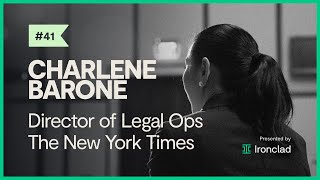
Charlene Barone moved from contracts manager to Director of Legal Operations at The New York Times. She talks about adopting Ironclad for contract management, using AI to consolidate membership templates, and building cross-functional partnerships with IT to digitize agreements.
Chapters
This is Mario Carroll and welcome to Pearls on Gloves Off. Today I'm speaking with my friend and legal ops leader, Charlene Barone. Charlene began her career in the legal field as a contracts manager where she spent eight years laying a strong foundation for her professional journey. Working initially with startups, she played a key role in setting up and expanding legal departments from the ground up. Her career, she took her into the franchise legal world with Orange Theory Fitness where she spent five years immersed in the day to day operations of the legal department. Charlene refined her skills in managing all areas of legal operations, focusing on improving efficiencies and supporting the strategic goal of the legal team. Eventually and recently, she transitioned to the New York Times as the Director of Legal operations, drawing on her background to streamline processes and enhanced the effectiveness of the legal department. I've known Charlene for a couple of years now and she has always stood out to me as a true strategic thinker and above all else, a real go getter. Now this is the attitude that really sets people apart in our industry. Are you willing to break glass, take initiatives, take risks, and make things happen both in your organization and for yourself? We start off talking about some of her observations and the differences between her experiences and @Orangetheory and now @ the New York Times and how important the role of the general counsel is in your success in setting the right culture for innovation. We also deep dive into some of the strategic initiatives that Charlene led in the past. What problems was she trying to solve and how did she go about making things happen? Finally, we touch on her career path from contracts manager to legal ops director. Now, if you are someone who is trying to move into a senior legal ops role from a legal support role, listen up because there are great lessons to be learned here and Charlene is a great and pretty unique example of how to do it.
Right. Hi.
Charlene. Thanks so much for being on the podcast.
Today. Hi, thank you for having.
Me. Well, the last time we spoke, I know that you are a huge fan of Andrew Huberman and his podcast. Isn't it still like your lifelong goal to see his live.
Show? Yes. Well, now, did you read the latest article about, you know, his maybe more personal life? I. I don't know. Now I'm a little bit on.
The fence now, but I was gonna bring that up with you. This. So that came out last night, what they call like a hit piece where they just try to do terrible things to his character and drag him through the dirt and dig up people from his past. I It's not very nice. I like what he's done for science and for the general public. And so I thought that was really mean. I don't know. Did that upset.
You? Yeah, I mean, I think I had this idea of who he was in my head, and so when I read the article, I was kind of. That. It was like kind of a punch in the gut a little bit. But, I mean, it is what it is. You know, we all have our personal things that we go and, you know, as a public figure, I think it's really easy to portray something and then have something else in the bag. So I guess I wasn't terribly, like, entirely surprised, but, yeah, I was a little bit disappointed to read.
It. Yeah, totally. He never claimed to be perfect. None of us claim to be perfect. You know, it is what it is. But I will do my best to channel my Andrew Huberman as we do this podcast for you so you can be a pseudo guest. Charlene, so great to have you. I know. So your background, you've just started a new job. So you're now the director of Legal Ops at New York Times, which is great.
Congratulations. Thank.
You. And then you spent a long time also as director of Legal Ops, but at Orange Theory, which we're all familiar with. So these are two big names consumer brands that I think everybody knows and loves. Those are really different types of companies. Is the culture different? What was. What are they like going from, you know, Orange Theory to New York.
Times? Yeah, I mean, I think it just, you know, in essence, the companies are different. I mean, one is a public organization, the other one's a private organization, one's much larger than the other. And so there's going to be, you know, differences and little nuances here and there. Both. I mean, I loved working for Orange Theory. The culture there was very embedded in, you know, fitness, and they really stood by what they believed in. It was really. I. I've always say this, that I am the healthiest I have ever been in my life and then ever working at orangetheory. And I. I am so grateful for that experience, just because, you know, they have. They do have a fitness studio in the office, in the corporate office. And so we were able to work out and they always made sure that we had things available for us to be able to work out and work on our wellness. So it was an amazing.
Experience. Okay, so you have to pause. You have to pause and tell everyone, because I was so amazed when you told me what, like, what is it the basement or the ground Floor of the main building of Orange Theory has in it, which sounds so.
Cool. Yeah, they have a. So they have a studio which is just a regular fitness studio with Orange Theory classes, but they also have something called Oasis. And Oasis is a spa setting environment. You walk in and you just feel immediately at peace. The ambiance is very calm. But they have a space for massages, they have a space for meditation, they have a cold plunge, they have an infrared sauna, another font. So they have all these wellness amenities available for employees to use them. The number one question that I always used to get was, do you really use them though? And the answer is yes, we really use them. People really do use them. So you go online, you book your session, you go downstairs and you enjoy it. And yeah, it was really, really an incredible perk to.
Have. That's amazing. It's like a playground for me. I think I would love that. We had a lot of perks at the campus of Google, but for some reason that really appeals to me. Okay. And so when you say one company was bigger than the other, I don't even know which which is the bigger one. New York Times.
Or. Yeah, the New York Times. So the New York Times has about, I believe it's thousand nine hundred employees where Orange Theory was about three hundred. So significantly larger than one, the other. And then even the legal teams, the New York Times has a much large, larger legal team, closer to 30 people, as opposed to orange theory, which is about.
1012. Wow. So both huge brands that you would, I mean, I would think Orange Theory was a much bigger company, but just has a big brand and a big name but a much smaller headcount and legal team. And even the New York Times, like that's, that's a pretty small legal team for what I would think the New York Times would need. So you guys must be doing something right in terms of legal ops and.
Efficiency. Yeah, yeah, no, it's a great team at Small but Mighty is, you know, the, the term that's used frequently. And so. But yeah, they, I mean they get it done. And as you said, they must be doing something right because they've been so successful for so long. So I think one of the misconceptions though with orangetheory is that they have a much larger team, but we have to remember that they're a franchise business and so the majority of the network is independently owned and operated and so those re entries have their own council. So it's not to say that we don't get involved once in a While. But they do retain their own, their own counsel and some groups even have within their teams. You know, some owners have multiple studios and so they might have their own small little legal team that they have separate to the corporate legal team. And so that was an interesting dynamic and I was able to learn a lot about even just as an individual, as an independent owner about like how that works and the legalese behind hides it. So it was a really good.
Experience. Got it. Okay. So very different companies. What about the scope of your role? I mean, you have the same title in two very different companies and different sizes. Have you found the scope different or what you're asked to.
Do? Yeah, I think a little bit different, which is so interesting because one of the things that get, we get asked a lot is what exactly is legal locks and what does legal locks do and how does legal ops do contribute to the organization and to the legal. And yeah, it's been a little bit different. When I was at orangetheory, I did a lot more administrative work, honestly. And just because I think it was a smaller team, we didn't have a lot of the resources available to kind of expand the legal operations function as much as I would have loved to. And so within that team, I was just asked to do a lot, a lot more of the administrative work and things that I would like to have focused more on strategy. Although that was a focus of mine. I think that with the New York Times at least. And again, I've only been there for a small amount of time, but in my short tenure here, I been able to focus a lot more, I feel, on strategy and prioritizing those things, which is really what I love to do. It's been a little bit different, but a little bit of the same. So you have kind of the same buckets where you have your budget and you have outside council spend in all of those areas. But I think it's the amount of time that you spend focusing on each area is a little bit.
Different. Got it. And you were a party of one in terms of legal ops@Orangetheory, obviously. And so it makes, you know, makes sense that you have to do what I used to call, you know, everything above and below your pay grade when you're a party of one. Are you also a party of one at the New York Times or is there a team.
There? No, we have a team. So we have a team of three. And yeah, I have more resources available to be able again to focus on the more strategic work. I have an incredible team. They, they know They've been with the organization for a while, and so I've been really leaning on them the last few weeks to kind of teach me the ropes and show me the things. But yeah, having a team makes a world of a difference in order to, like, accomplish objectives and.
Initiatives. Yeah. And I know you're new, but in terms of cultural differences, Orange Theory being a much younger company, New York Times obviously been around for many, maybe even 200 years or something. Ridiculous. Yeah. So culturally, in terms of, you know, coming in as a change agent, do you feel like there's differences in reception, in openness to change and.
Technology? No. I mean, I will say I was quite surprised. So I came into this going, okay, we have an older organization. Change is probably going to be a challenge. You know, implementing new things is going to be a challenge. So I already came into this with a focus of, okay, there's going to be some work that needs to be done. I was so pleasantly surprised that RGC is. She's incredible and she is so open to ideas and, you know, she allows us to, or at least in my 20th has allowed us to just give ideas and kind of brainstorm through things, which has been so wonderful because that wasn't what I was expecting. And, and also, you know, with we. Orange theory, 12 years old and at the time, you know, if you want to implement change, it's. It should be relatively easy. Right. Because you have a younger organization where the New York Times is much older, so implementing change. But. But everyone is so open to it and everyone's just so eager to make things better. It was a really pleasant.
Surprise. Yeah. How important do you think the role of the GC is in getting involved and setting that.
Culture? So important. I mean, incredibly important, having even their support. Because you have to think of it as, you know, everyone in the department is essentially looking at them for leadership. Right. And so a lot of the times the team kind of goes to the direction where your GC is going. And so if the GC is getting involved and they're. And they're expressing their interest in enhancing technologies, in being more efficient in doing those things, and you get more buy in from the overall organization and those who report directly to them. And so having that support, I think is critical. Now, I understand that not all organizations have that, and so that can be definitely a challenge. And I don't want to say that if you don't have that, that's it, you're not going to be able to accomplish anything. For sure you can. But I think that you have a much easier chance of being successful when you do have that type of.
Support. Yeah, I totally agree with you. I think it's. It can be done. It just is that much harder. And so when we think about the GCs, and let's just take a moment to give them a little advice, you know, what does it look like to actually show up? Because many of them will be like, I hired you, I hired Charlene. You know, obviously, I'm supportive. I got the headcount. I hired the right person. I scoped the role correctly. You know, I recently wrote a blog about this. Just, they kind of had this. My part is done. I've done everything that I can. Now it's your job to make change happen. But what is. What does it look like to actually have the GC be engaged? What do they need to be.
Doing? I mean, just having the conversations, the necessary conversations. And also, I think a part of. A big part of it is strategy. And I know that term is maybe a little bit overused nowadays, but having a clear picture of what you want your legal team to look like, I think is critical, because then the legal ops team can help you get there. So one of the things that I like to work on with a lot of the legal teams in the past has been strategy of tell me where you're. What you're trying to accomplish, Tell me where you're trying to get to, and so that the legal operations team and that function can help you get there. So we're a resource, and we're able to drive that. So having the GC involved in those stages of setting the stage for strategy and priorities, like, what is your ideal legal team look like? What are the buckets? Let's dig into that. Having them involved in that, I think is critical, because then you can help drive the bus essentially in the right direction, because if the GC has, you know, an idea of, you know, what their ideal legal team looks, but they're not communicating that, then you're kind of just blindly throwing things and hoping that something sticks.
Right? So things like, hey, you know, it feels like international is heating up. We might want to put some headcount there rather than using just outside counsel or our outside counsel spend is really high in the US and we think that we can do better by specializing and bringing some people in house or even, you know, in house is great, but they're not getting the professional development because they're stuck doing the same routine work. So is there something we can outsource to an alternative provider? A flexible talent or even technology. Right. And so thinking about those types of. Right. Sourcing buckets, is that the kind of conversation you want to have with your.
Gc? Yeah. What are your problems? What keeps you up at night? And then let us brainstorm and come with ideas. So if someone's saying, you know, there's outside counsel spend is too high, then the legal ops team can come and do a little bit of an analysis of, okay, why is outside counsel? Do we need more resources internally? But you need to identify what the problem is or what the issue is before you can get with the solution. So, again, just having your communicating with the GC and understanding what their picture is of their ideal legal team will help.
Significantly. Yeah, that's right. That's right. Charlene, from my time that I've spent with you, I know that you're a person who likes to get stuff done. You have a very high sense of urgency. You don't like to wait around and, like, help people come to their senses. And that's one of my favorite approaches to getting things done is like, just go do it. Your Orange Fitness or Orange Theory Fitness story of what you did there and how you were an early adopter. Will you share kind of what you were faced with as an organization, kind of that strategy, you know, that you're talking about, like, where did you need to go and then what did you do to get you guys there in a way that I think was innovative and in a lot of ways.
Brave? Yeah. There were various initiatives going on at the same time, and they honestly just all kind of fell at the right time. But one of the things that we were looking at is, number one, a CLM system that will help with the contract management process. We identified that was a bit inefficient. And so we wanted to improve on those practices. Another thing was we were launching what we call online joins, which were being able to sign up online digitally through the website. And then also we were trying to revise our membership agreements across all 50 states. And so we had over a thousand membership agreements. Remember that each studio is independently owned and operated. And so within each. Within each region, we have studios that maybe membership agreements that are. Have specific local laws and regulations that have to be referenced in the membership agreement. And so we were trying to solve these three problems at the same time, or not really problems, but there were three opportunities that were growing at the same time. When we started looking into a CLM platform, we interviewed Ironclad as an option. And so they had the CLM Component. One of the biggest things was the, the click to Accept, which I still to this day believe it's an underrated service because it's such an easy thing to implement and such an easy win. But what the click to accept is essentially allows people to just, you know, click on a button and accept the terms that are being discussed, displayed to them in a way that is legally binding, which is really critical. And then so they had these two, these two components. So we were trying to be creative in like, how can we leverage a CLM platform or the services of a CLM provider to, to help with the three things. So the clm, obviously we had that, that's pretty standard with the Ironclad. Then we had the click to accept. So what we were able to do is leverage that technology in order to get our members to sign membership approval agreements online. So if you go online and you look up a join online, you can see a copy of the membership agreement. And so the member can, doesn't have to inconveniently go into the studio to sign an agreement to sign up and all that. They'd be able to just do it online. And then the last thing was the most challenging one, which is these templates of a thousand membership agreements that we were trying to consolidate. What we were able to do is very cleverly use the, the CLM platform and also the AI assist feature within Ironclad to review essentially a thousand templates of membership agreements and help consolidate them to about 250 templates. And it was a process. It took a little bit of time, but the first thing that I heard when I said, okay, we want to consolidate a thousand membership agreements was you can't do that. There's no, how are you going to consolidate a thousand? And I've heard every excuse under the sun. Here's where we say it's so important to have your GC support because I presented the idea to my GC and saying, hey, you know, I have an idea. I know it's a little bit unconventional, but I think we can use a CLM platform to solve it. His response was essentially, if you think we can do it, then go ahead. You know, like, just go ahead and do it. He I had his support and having his support made all the difference because it allowed me to go ahead and take a few and take the steps I needed. So I really didn't disclose with anyone else. I kind of just went ahead and they said, okay. We said I can do it, so I'm going to go do it. And I went and did it, and I started with a small sample of agreement. I went back to our GC and said, hey, this is actually working and working a lot better than we anticipated. And he was very happy about that. And so we went on and we. We finished the initiative, and we were able to significantly reduce the amount of time that we anticipated. And then everyone was happy about it. And I had that moment of, ha, we did it. You know, a lot of people thought we couldn't, but we were able to do it successfully and in half the.
Time. Yeah. So many threads I want to pull on there. Because you used AI to do some of this or a lot of.
It. Yeah. So the AI feature essentially helped because, remember, we have a thousand membership agreements, so reading through all of that was tiresome, for lack of a better term. And so the AI feature helped essentially read for us. You know, it read the document, and then it was able to highlight the areas where we needed to. Where we needed to.
Address. And I say that was brave, and it was a great initiative, but I say brave because that was early in this AI journey that we're all talking about even now. And, you know, it's been, I don't know, a couple years that people have been talking about this really in a real way. But even now, when you ask people, are you actually using it for legal work? You get a lot of, no, I'm having it, you know, write meeting notes or draft emails, and you push them of, are you using it for substantive legal work? There's still trepidation. There's still, you know, difficulty in getting adoption. Now, you did this, what, like, a year and a half ago, what. What made you confident enough to go to your GC and say, this is working, and I feel about it, and I'm gonna go with.
It. Yeah. So, number one, I felt confident because I had a good working relationship with my dc, So I felt like I could openly go to him and say, hey, I had this idea. But the other thing was, like, I wasn't entirely confident, to be honest with you. It was one of those things where I had an idea. I. Inside, I felt, yeah, I think this will really work. And so that also was a relationship with my gc. You know, I kind of just went for it and it worked. And, you know, it was a good experience. But I know I've said this a few times already, but going back to just having that good relationship with your GC is so critical because it opens the door and allows you to feel more comfortable, even to take Chances like.
That? Yeah, no, absolutely. Like setting that culture of innovation and psychological safety. You know, we talk about that all the time, and it. I think people underestimate how important it is. You know, people say, how do you get people to change? And all it is having that culture of people knowing that they can take a chance, and if it goes wrong, it's okay. It's not the end of the world. You're going to pivot, you're going to change, you're going to go back to the old way, right? So having that safety net around you of knowing, you know, that we're going to try something different, it's an experiment, and if it goes well, it'll save the day. And if not, it's. We've got other options. So, really, kudos to you and kudos to your GC for setting that up. So a lot of bravery I see on the AI side. And then in terms of you just kind of just going with it, you know, saying to your gc, I've got an idea. I'm going to roll with it. And you specifically said you didn't go and ask anybody else. And I'm sure there's a lot of lawyers, a lot of franchise owners, there's a lot of people that might have wanted to give you their opinion about how this should be done or whether or not the generation of the 250 templates at the end was the right language or, like, how it should be done. I mean, that's a hard project if you do try to get everyone's buy in. So, again, like, what was your thought process? And, you know, how did. Was it also the culture that just allowed you to kind of go, yeah, so I.
Did. I had. I did consult with a few people internally at the time. So I had my. I'm forgetting the. His. His title. But I think it was like the VP of Technology Operations. And he was a good sounding board also, where I said, hey, I have this idea, I'm going to go with it. And he liked to challenge me a lot on my ideas. But that was a good thing, right, because I had my perspective, so I needed someone to poke holes in it, basically. And coming from backgrounds, he was able to do that. So I did consult with him a little bit. But, yeah, again, I think it goes back to the culture of being innovative and allowing that. And that's why I'm like, so happy with the New York Times that I'm also getting that similar support. Support of, you know, be innovative and think of things creatively. Because that just fits my personality. I mean, that's how I am. I like to try to think outside the box a bit and having that support, it really is going to make me more successful in the things that I want to do moving.
Forward. Yeah. The other piece that I love about your story is the fact that you basically digitized the membership contracts as well. And that's going to help scale the business, remove friction when it comes to actually signing up as a member. You know, creates more channels which I think is going to affect revenue and membership growth and ease of signing up. That got you internally a lot of attention, positive attention. I think, you know, I'm going to put you on the spot. You got some kudos internally. Was it even like the CEO or someone who came and congratulated your, thanked you for the work that you.
Did? Yeah, so I had like the, it was the, the president and then also a couple of VPs had congratulated me on the work and then the, the CTO as well, you know, had given kudos. And so it was really nice to see that people acknowledged the work that went behind it and, and just like the, just the amount of work for the consolidation because it's really not quite what they call like that sexy work or you know, it's just kind of the being back, heads down, getting things done. And so yeah, I appreciated getting the recognition that I did. And my DC always made sure also to know, hey, by the way, you know, she's doing this or Legal's doing this and stuff. And so he was a really good advocate for us as well. I did not do this on my own. There was definitely a team behind this. There was, you know, a group of us that got together and worked on this, including. It was a fairly collaborative effort, included the operations team, the legal team, the tech team. And so with those three teams collaborating to really make this a successful endeavor. So I most certainly did would not do this on my own and could not have done it on my.
Own. Absolutely. And I want to come back to your relationship with it. But before that, the point I wanted to make though is when folks come to us and say, I'm new in legal ops, where should I start? And I always tell that's one of the reasons I came to ironclad of the reasons I believe so much in clm is because if you're able to do what you did, which is affect the revenue side of the business, especially if it's a consumer facing business, and you're able to change the customer's experience. What an impact that has to the company. And just the fact that all these, you know, senior executives, you know, showered love on you and appreciation. You know, I always say if you saved some money by consolidating your outside counsel, that's great. You might get a pat on the back from the cfo, but you're not like moving the dial on the strategic efforts of the business. The story that you just told, that's accelerating revenue, that's changing, you know, removing friction from the membership signup experience. That's like making it easier to become a member and stay a member and accept the right terms and everything@orangetheory. And that's gonna get you noticed, that's gonna get you promoted. Like those are the things you really want to work on and be thoughtful.
About. Yeah. Sometimes the challenge, it's not always that clear. Sometimes it takes, you know, taking a step back and trying to find again. We were using a CLM system for something that was very unique to us. And so we had to get a little bit creative and say, hey, ironclad, does it, you know, would it work if we did this or that? And the answer we typically got was it's not a conventional way, but we don't see why not. You can't do that. And so sometimes, yeah, it's not always very clear on how to get there, but if you take a step back and just try to think of creatively, then yeah, I mean it is possible.
For. Yeah. And that's why, you know me, I love the community and sharing your stories because it's. Exactly. That's where all the creativity comes from. And you know, there's some parts of what you did that were unconventional, but some parts, like you said, with the click to accept and the online member sign up, that is something that I don't think enough companies take advantage of. Why is there paper? Why is there an onerous way to go back and forth if it's not negotiable? It's a membership signup and you want it legally binding and it's got to be state by state and it's complicated. Like it's very easy to.
Digitize. Yeah, I think that's probably a really great starting point for somebody who's trying to. Our legal ops person who's trying to think of ways to make an impact is maybe look at those areas where there is a piece of paper and if you know a contract that requires piece of paper that is non negotiable. So those are your kind of criteria. Right. It's a piece of paper, it's non negotiable, It's a.
Contract.
Yeah. And then there's your opportunity. Right. So then take a look at it and say, okay, can we digitize this and can we make it a click to accept again? That's for me, a really easy win and a really easy way to make a significant impact because you can eliminate the redundancies and then also the paper. Somebody's going to have to scan it somewhere or put it somewhere or store it somewhere. Right. And so eliminating those can be a really easy.
Win. Yeah. And then managing the terms like you have all these states and countries and it changes and how do you know who signed which version? Digitize it, make it easy. All on the back.
End. Yeah. Having the digital trio is also like the. Such an improvement to the current process or what was the current.
Process? Yeah. Okay. And then I wanted to go back. You said it was a gray cross functional project, which it always is. But I think you in particular, and you and I actually haven't talked about this, worked really closely with it and it played a really big part in owning some of the systems and tools versus legal owning it, which I don't think we see a ton of, but we probably are going to start seeing more of as CLM becomes, let's say more popular as an enterprise solution because it really is cross functional. So how did they get involved and how did you work with them in a way that's not. That was a good partnership versus a lot of us. You know, it gets involved and we're like, oh God, it is involved. It's not going to go my way anymore. Yeah. How did that go for.
You? No, so I had the really or had been a really good partnership with the IT team. It's one of those things where honestly it was benefiting the both of us. Us. So it's like, why would you not get involved? Why wouldn't you like, you know, try to help this, get this off the ground? I. The first thing I did was make sure that the right people were involved from the very beginning. So getting their feedback and making sure that they were part of the decision. I don't know if you're aware of this. We went through various iterations of reviewing Ironclad and we had various, I think six or seven people from IT alone at one time evaluating iacloud and making sure, you know, that it fit our needs. And so having them involved and having them being part of the decision to move forward, like really helped also get their Buy in. Once we evaluated the various platforms and we decided to go with Ironclad, when they started to use the platform, they really saw it more as an enterprise tool. So they were like, wait a minute, we can leverage this across other areas of the business. And at that point is where really the decision was made to transition it over more to the tech team, with still obviously legal supporting a lot of the functions. For example, the CLM part of it was really still managed a lot by the legal team, or it still is being managed by the legal team, but in large part the support is through the tech team. And so any new initiatives that would come through, through for IR clat, really, I mean, the first point of reference, I would say, please go speak with Nick. Like, he's the person who basically is in it, who manages the platform and is the one who can. Who can lead it. But again, because it became just really an enterprise tool and not just a legal tool, that's when it really stepped in and it just made more.
Sense. Okay, so now if there is a new workflow that needs to be built or changes to an existing workflow, so build and maintain, is that is being done by IT and not someone on the legal apps.
Team? Yeah, yeah. So we will get involved in the logistics. So does it make sense to create a new workflow for an NDA or a service agreement or et cetera? But outside of that, to actually build the workflow and implement those changes is handled by the tech.
Team. Interesting. It's so interesting. There's so many different models and options now for who will administer and build and maintain your system for a clm. Just because you can outsource it, you can insource it, you can do it in legal, you can do it in it, you can do it in sales ops. Like, it's fascinating. Fascinating to me and that I.
Think other opportunities for creating workflows for internal uses. There are contracts that are constantly signed with employees also, so that there's like another opportunity. So I know that's an avenue, at least while I was there, that they were. That they were exploring. So that was another reason of why it would just make more sense for the tech team to own.
That. Yeah, that makes sense. Okay. And then I want to just switch gears and rewind a little bit on onto the topic of your background. So you actually, like, how did you get into this? You started as a contracts manager.
Right? Yeah, so I had a really interesting experience. I get this question a lot from a lot of the. The more junior legal ops teams like, how did you even fall into this, it being such a new field, newer field and all? So I started as a contracts manager. I was working for the startup company, I will say, when I went as a contracts manager, when I applied for the role, I had no experience in contract management. I had no experience in legal, I was working in finance. It was really just like kind of going in blindly. I. When I got the role, the organization was relatively small. There were I think only 1660 employees at the time in total. And we were the. The role for the contracts manager was really, it's a SaaS company who sold a lot of their technology to the universities, colleges, and then also some government agencies. So the contract managers intended to negotiate these contracts between the organization and these other entities. The interesting part is that again, I am not an attorney, I'm not a lawyer, and I had some experience in reading contracts, but definitely not in negotiating it. But it's like how I do everything else. I kind of just gave it my all and went with it and it worked out. It was a really great experience. I will say one of the most challenging experiences because you're going into this really not knowing. You're talking to these attorneys who come from these very large organizations. So we're not talking about small, we're talking about some Fortune 500 companies. I worked with outside counsel to kind of liaise between. Between the organization and their clients. But essentially I needed to know what I was talking about because I'm going into these calls and yes, outside counsel gave me all these red lines, but I need to be able to speak to it. So I will never forget. And I tell the story all the time of me going online and Googling for the first time what is indemnification and why is it important? And. And Google or it was not what it is now at the time, so we didn't have tattooed. So that was trying to get background on that. But in any case, I learned a lot about dealing with different personalities. You know, negotiating with different personalities. I learned how read a contract very thoroughly. I still probably can't do as well as some veteran attorneys, but I can, you know, hold my own in a contract.
Negotiation. I bet. I.
Bet. Yeah, we did that. And then I started again just to focus on contracts, but then my role ended up growing a little bit of expanding outside of the out of contract management, but also, you know, outside counsel management and then a little tiny bit of budgeting and just other areas that today would be seen more as legal ops. But at this time, and I'm not going to tell you how long ago because I'm not going to age myself, but a while ago it wasn't a thing. Legal Ops wasn't a.
Thing. Charlie looks a lot younger than she.
Actually. Yes, I already told you my age. And you were like.
What? What? No way. You have a child? How is this.
Possible? Yes, yeah, no, yes, I do, I do look quite young. But so at that time there wasn't really a legal on spide of what you would call today illegal operations. And I worked for the organization for about five, almost six years and they ended up growing exponentially and then they sold as some, a lot of startups do. And then I moved to another similar scenario, really a smaller and again contract manager, which that role evolved also was their first for a few years, same scenario where I was negotiating contracts on behalf with the help of outside counsel through that department. But those two, I would say experiences were probably some that laid the foundation most. So when people say like with Legal Ops, what should I get into? I always say if you can get into contract management, I mean that is like an amazing first step because again, it shows you so many skills that are so valuable in legal operations. I feel a large part of legal operations is also negotiating constantly about, you know, what technology should be implementing and persuasion and all of that and change management, which is a large thing that you learn in contract management. And when you've been doing that.
Role, I think one of the biggest challenges in terms of getting to be that strategic Legal Ops leader that I, you know, that we're pushing everyone in our field to become. And you've done that with true success and you know, highlighting kind of some of the work that you've done at Orange Theory, the projects that you work on, the initiative that you took, the vision that you had for what was possible, even if it wasn't, you know, best practice that everyone else was doing, that creativity. And that's really hard for a lot of folks to start in legal as a paralegal, as a contracts manager, because those are more supportive type roles, just by definition, they're more reactive. And when someone just says, hey, now you're going to change your scope and be a Legal Ops person, it's often very hard for them to shift their perception, how others perceive them, how they operate in a function, because they're going to be seen as a support role. I think you're mindset, your attitude, your skill set, your ability to constantly see beyond what's given to you. I mean, even just hearing you Talk about being a contracts manager, you're like, But I wanted to learn this and I wanted to find out about that, and I wanted to fix this other problem. It's having that ability to see beyond the scope of your role and to grab it and have the initiative to take it. And I think we can all learn a lot from you because it's a difficult shift to become a director or to become strategic or to be seen as, like, bringing you into the leadership table if you're always viewed as, you know, reactive and supportive. So was that something you were conscious of? And I think it's even harder on a smaller team, like you did at Orange Theory, where people see you in a certain way. But I also think that even when you showed up as a contracts manager or whatever the role is because you're Charlene, you're going to show up bigger than. Than that role is. And. And that's a good thing. And that's exactly what I think others need to learn from. So, again, going back, is it. Was it conscious? Were there things that you were thinking about, or is that just who you.
Are? No, I think. I mean, I would love to have some sort of formula that. That helps the people accomplish, but, no, I think that's just the way that I am. I see opportunities everywhere. There's always an opportunity, which sometimes is a fallback, because sometimes I like to bite off more than I can chew, and I've done that more than I'd like to admit in my career. I always, you know, you take a step back when you do that, and then you reevaluate and then, you know, you pivot and then you just keep on moving. But even for, I would say, for like a paralegal or contracts manager, it's just finding those little bits of opportunity, right? There's always a way to make things better. It doesn't matter whether you can be in the best organization possible. There's always a way to make things better. And it's just finding that one small thing and starting with that and then just kind of growing off of that one. The little process improvement I made better. Okay, now going to go to the next and take it to stages. I don't think, you know, don't try to boil the ocean. I'm full of, you know, analogies today, but don't try to boil the ocean and try to just identify small little tidbits of areas where you can contribute a little bit and it'll add up. It will. And then people start to trust you more and they'll say, hey, remember, Charlene, when you improve this one process, I have this other problem here. Is this something that you can afford? And then just put yourself out there and say, you know, by the way, this is what I.
Did.
Yep. If you need help with anything in this area or similar to this, I'm happy to help. I think a lot of people also don't like to promote the things that they do. It's like, well, that was part of my job. Or no, it was. And you have to advocate for yourself. I've been very fortunate that I have had some great mentors and some really great people in my life who have advocated for me. But nothing works better than you being able to speak up for yourself, because, number one, it shows leadership and it shows the ability to be able to get things.
Done. That's right. And you have to make it happen for yourself. And you even said at OrangeTheory, a large part of your role was administrative because there's nobody else to give that work to. And so you can't sit there and say, that's the job. And, you know, I wish I could do more things. You're like, okay, I'm going to get that stuff done as fast as possible and as quietly as possible. And then I see all this other stuff and I'm not going to ask permission, and I'm going to take initiative and I'm going to have the confidence and I'm going to be brave and I'm going to go disrupt things. And that's exactly what you need to do to get ahead in these roles. Because we always say, what got you here won't get you there. And, you know, I think that is part of your personality, and that's what's made you successful. I hope others can learn from it. And just knowing you for the short time that I have, like, every time I interact with you, you always have ideas. Like, on random things that we talk about, you're like, I have an idea. We should. Can we talk about this? Can we do that? And yes, that's who you are. Like, you take initiative and you're like, my plate is full, but I get excited about something and I want to do.
It. Yeah, thank you. And I want to say that you did mention that I quietly did those things. I will say that I was very vocal with my GC about, hey, I am doing this, and this is administrative, and I don't really want to be doing this, but I'm going to do it. And he knew, and he was very aware of it and, you know, thankful. And we were finding ways to kind of shift the word a little bit, but I definitely was not quiet about doing.
It. Okay, that's amazing. That's exactly right. Because you have to advocate for.
Yourself. Yeah, yeah. You have to make a little bit of noise and also how you present the work because it sometimes that can come off a little bit like, oh, she doesn't, you know, she complaining about the work or doesn't want to do it. But I think if you find a way, depending on who you're dealing with, if you can find a way to present it in the right way, then just putting it on their radar, I think will. Will make a difference. Because then when new things come up, they might reconsider maybe handing you that more administrative role and finding another place for.
It. That's exactly right. Okay, and so now in your new role, it's new. Are you taking the time to feel things out? Are you already starting to be like, hey, I see something. We've got to break that. We got to fix.
That? Yes. No. So this. So right. So I've taken the first few weeks of just trying to absorb a lot of it. Like I said, it's a much larger organization. There's a lot of moving parts and a lot of things going on behind the scenes and just trying to absorb it. I will say that my predecessor did an incredible job. I mean, she built the department essentially from scratch. Her and the GC did. And so they, you know, she didn't have prior legal operations experience. She kind of stepped into the role and really made it her own and took it on. And so coming into this and seeing, like a well established legal operations function, I'm like, yes, this is awesome. All this stuff is great. So there are, so I want to say, you know, major kudos to her because she did an excellent job in really implementing the right processes and stuff. I would say, like I said before, there's always opportunities. There's always ways to make things a little bit better. So there are areas obviously that I'm identifying even with the budgeting process, which, I mean, on week three, they were like, okay, budget process is coming in for the quarter. And I'm like, oh, my gosh. Okay. This is like, a lot of things going on, but everyone has been great and supportive and amazing. But even with going through that process, it's like, there's always opportunities to make things a little bit better or tweak things here, I don't think. Well, I mean, maybe I will be, but there's definitely. When you're starting with a smaller organization, maybe who doesn't have legal operations or who is maybe has a more immature legal app, there's more opportunities to make a, like, a bigger impact in those organizations. In this one, I don't expect to meet, at least not off the bat right away to make such a huge impact as, like, with Orange Theory, but, yeah, but hopefully, you know, as I ramp up, I see some opportunities and some areas where we can definitely improve it. And mostly, you know, like, processes, efficiencies, things like that that are, you know, pretty standard across the board. I don't think anything very unique to the times, but just in.
General. Yeah. So taking your time, figuring out what the priorities are and going from.
There. Yeah.
Excellent. Charlene, always such a pleasure to speak with you. I've loved watching your career blossom, your journey, and again, I think so much of it, your success is because of who you are and the initiative that you take and your attitudes. Again, hope a lot of folks can learn from you in this.
Conversation. Thank you so much. And I will say you have been a huge help for my career as well. I did. I just see, like, quickly, I remember hearing you before I started legal operations formally and listening to a podcast, and they said, I have to reach out to her. And I did. And I was like, she's not going to. There's no way she's not going to answer me. Like, she's super popular. And then you did, and then you even offered to meet with me. I was, like, so shocked and amazed. So thank you for being a resource for everyone in legalox and just being so open that you've been amazing, more than you know. And so I appreciate.
That. Well, such a pleasure. And now you and I are on a text basis and we can talk about biohacking. We have a passion for biohacking, so if anyone else wants to talk about that with us. Yeah, that's a whole other podcast. All right. Thank you, Charlene. Have a great day. Thanks, everyone, for.
More from Mary








#56 Ending the Billable Hour Chris Grant’s Mission to Transform Legal Services


