#55 Redefining Law Firms Navigating Change with Legal Visionary Reena SenGupta
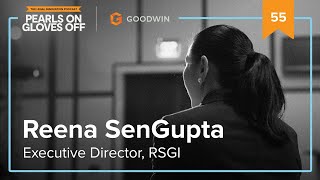
This is a transcript of a YouTube podcast episode (Pearls on Gloves Off) in which host Mary O'Carroll interviews legal-industry analyst and consultant Reena Sengupta about the rapid transformation of the legal profession. Key themes: the explosive adoption of generative AI (Reena notes major change in the last 18 months), varied firm strategies (experimentation, model gardens, proprietary/smaller LLMs), the need for firms to master their own unstructured data, changing client expectations toward predictive and strategic legal advice, shifts in the law firm business model toward subscription-like services, and measurement/rankings debates. The episode also mentions RSG/RSGI's upcoming product Recite and the organisation's broad interviewing/research activities.
Questions this video answers
Over 3,000 long-form interviews a year.
Recite (Legal Intelligence Revisited), launching in the next two to three months (at time of recording).
About 18 months.
Chapters
Hello everyone and welcome to Pearls on Gloves Off. I'm Mary o', Carroll, your host and Chief Operating Officer at Goodwin. Today my guest is the one and only Reena Sangupta. To anyone who has been in legal innovation and leadership, she needs no introduction. Reena is a longtime analyst, writer, consultant and thought leader in the global legal industry. With almost 30 years of experience, her work has shaped how law firms, legal service providers and the big four accounting firms approach strategy, innovation and staying relevant in a fast changing world. Rena's journey is impressive. She is an entrepreneur and journalist who over the years has developed some of the most influential rankings and programs in the legal world. She was instrumental in creating the Chambers and Partners guides back in the mid-90s and the FT Innovative Lawyers program, which is about to celebrate its 20th year anniversary. These initiatives, along with many others, have truly changed the way we think about law and legal innovation. In 2001, Rena founded RSG Consulting, which quickly became a leading brand in our sector. Today she heads up rsgi, a global think tank focused on building a sustainable future for the legal industry. Rena's also a seasoned public speaker and regular contributor to the Financial Times, always bringing fresh forward thinking perspectives to the table. She is a true visionary and someone whose insights have had a long lasting impact across the legal world and I was excited to have her join me today on the podcast. We covered all the changing trends in the legal environment, the profession and technology, as well as the changing mindset that we've seen over the last two decades. We try to define what innovation really means and what we're both seeing from our different perspectives. From our many conversations with firms, tech companies, clients and alternative legal service providers, what is shaping our future? What does the lawyer of tomorrow look like? What's driving client expectations? What kind of pressure is AI bringing to all of this? We barely scratched the surface, so I'm sure I will have to bring Rena back again soon for another conversation, but I'm really excited to dive into sharing today's conversation with you now. All right, well Reena, I am just thrilled. It's always great to see you first of all, but I'm just thrilled to have you on the podcast today because I can think of really no one better in the world when it comes to having a pulse on legal industry trends. And I don't even know how it's taken me so long to get you on the pod, so I'm happy that you're here, but trends, transformation, direction, you're in the thick of it all all the time.
That's right, yes. And for us we have a team of about 12 people talking every single day, six or seven conversations a day. But I would say, Mary, that the last 18 months since the generative AI launch have been extraordinary. I mean, it is difficult for us to keep up with the changes. And I was sitting in Luca in Italy in the summer and I was just looking at my emails and whatnot and I saw that Thompson Reuters had bought this AI company. And I sent a message to my team saying, has anybody heard of this legal AI company? Because I hadn't and none of us had, I mean, you know, kind of big news. And so I think it is quite extraordinary just how fast things are changing, how fast the law firms are moving, the rate of experimentation and deployment. It's. Yeah, it's heady times.
It is, it is an interesting time, I can tell you. My inbox is overflowing every morning when I show up with all these new vendors and new software companies, companies. And it's everything from we do everything in the world to we're really niche and specialized and we do this one thing. I can't keep up. I don't know how anyone is able to. And it's tough to navigate.
It really is, it is. And it's expensive. I was doing a session for a Scottish law firm this morning who were asking me this question around. How do you actually have an investment strategy? How can a slightly smaller firm kind of deploy their lawyers to experiment and play with it? Where do they put their dollars? They go with one provider, do they go with several providers? What is the best route forward? And I think that's the case for many firms, probably many firms that are listening here. I mean, I'd go back to you, you know what we can discuss. What is the best way one provider or many?
I don't know the. At this point, I think we're all in experimentation. So you really have to do more than one provider and see what's out there. An interesting question that I've been toying with is which way are things going to go? Are we going to have either as an in house team or as a firm, a bunch of legal specific, practice specific type AI tools, or are the enterprise AI, general AI applications going to get good enough to work with legal documents and legal language? I don't know. Both sides are innovating so quickly. So yeah, you really have to try to hedge and try it all.
I think what we see the most successful firms doing, and there are a handful that we call them the trailblazers. We call them the tinkers, the tailors and the trailblazers. The tinkers are just like meddling around and not doing very much. The tailors are sort of carefully experimenting. But then you have a group of trailblazing law firms and I would put your own firm, your new firm, into that bucket and we'd say they are trailblazers definitely for hiring you. But I think the trailblazers have experimented with different models. They've tended their model gardens and they're using the models for different types of things and they're creating their own proprietary models actually. And I think that's what's interesting, that idea of the, what we call the slim, the smaller language model that you can link to a third party data set and actually use on your own proprietary data. That is an interesting development.
Absolutely. The training data is what's your proprietary knowledge? Right. That's the knowledge management, the key. And I don't think people want to get that out there and share it.
So it's an extraordinary step forward, I think, for a law firm to actually know what they know. And that is so tantalizingly close. You know, the years I've done roundtables and I. You asked the kind of classic question, if you had a magic wand, what would you change about your firm? And invariably over the last decade, it's always been, oh, I wish we knew what we knew. I wish every partner was really o fame for what every other partner was doing and you knew your experience statements and you had that kind of track record. And now there is that potential that people will, will have that. And that's nothing to do with client facing work. That's just being masters of your own data and intelligence.
Absolutely. It's coming, it's coming. I mean, we're here mid October and I don't think we found the perfect tool to unlock that. But it's just a matter of time. It's not, it's not if, it's when.
Yeah. And what do you think about when? 12 months, 18 months.
I never make predictions, Reena, because nothing good comes of making predictions. I don't know. I have not been able to predict where we are today, you know, very well.
So I think 12 months. I'm going to put myself out there. You'll listeners for 12 months.
12 months to what?
12 months where I think a law firm could reasonably be masters of their own data in a way that's significantly different to where they are now.
Which would mean to me the ability to access and get insights from your unstructured data.
That's right.
Everything is unstructured right now.
Yeah, yeah, yeah.
Okay. That's exciting. Oh, we got a lot of work to do to get ready for that.
I mean, it is extraordinary. Another road to going. Obviously you have the model garden that you tend. And I was saying that a lot of advanced firms are in that bucket. But this week I had an extraordinary call from one of the top five law firms in India who is or has been experimenting with an AI legal AI company in India which was peopled by example, Indian lawyers, young guys in their 20s who'd work for firms like Linklators and Paul Weiss and different very good law firms, and went, no, we don't want to be lawyers. We're going to set up a legal tech AI company. And they've combined all their LLMs and they've been working with this one particular law firm in this very deep way. About 400 lawyers in the law firm have been just experimenting with use cases. And what they're saying is that their product or what they're doing is as good, if not better than what they could do with Harvey because they've tried Harvey and various other products. And it's that way of like harnessing a law firm, almost harnessing their own AI developer and really putting their eggs in that basket and being a kind of transformative client for that AI company. And that's been, I think, an extraordinary development to seeing that sort of happen. And that's often maybe a route for those smaller firms that maybe can't afford to go the Harvey route or can't. Can't afford to do one of the more named brands anyway. 18 months old.
Interesting, interesting. And so let me go back for a second. You mentioned you and your team, you guys are interviewing and you're talking about all the examples all day long. I remember it was something crazy, like hundreds of interviews a year. And, and not just with firms you're interviewing in house teams, you're interviewing tech companies. You're out there on the pulse.
We can conduct over 3,000 interviews a year. And they're long form interviews and they're with law firm partners, business professionals at law firms, managing partners at law firms in house legal teams, Chief Operating Officers, CLOs, CEOs. It's been really interesting this year, talking executive of major corporations about their legal function. And then of course, what we call the third pillar of law, which is the LSPs, illegal tech companies. And we're talking at a founder level. So it's a Huge sway through the market. And of course our lens is innovation. We're always looking for what's new, what's different, what's working. And it's a bit like an MBA approach really. We try and pull these ideas apart and say, but how many users have you really gotten? Is a very rigorous approach. We do that for the fc, we do that for clients as well. Many other clients supposed to be cover about 500 unique law firms a year in depth, over 300 unique in house legal teams. And some of them are the same ones that we see every year. So we're following them on their journeys. Like for example, our winning team in Europe in the ft, winning in house team in Europe in the FT program this year was Unilever. Unilever is a company and an in house team that we've been following for about four or five years and watch them gradually build up and build up their innovation muscle. They got a new general counsel lady called Maria Barcelona about four years ago and she's wrought her transformation and she's getting to the point where, you know, she's becoming a gen AI enabled legal function that is both strategic and enabling to the business. So she's very involved in setting the business strategy, dealing with geopolitical risk. So we look at all of that as well as operations.
How do you all define innovation?
The way we have defined it in the innovative lawyers program is a change that can be replicated but that has created a different order of value. So if it's from a law firm, it's a different order of value for the client. If it's for an in house legal team, it's something that they've done for the company that has created a separate order of value. So we don't just look at technology or process innovation. We look at also what lawyers are doing in the practice of law. So a lot of it is about what are they doing for their clients in their legal work and an innovative litigation strategy, an innovative approach to M and A or antitrust work or tax. You know, it cuts across the board. I think a lot of people think innovation is or they get it mixed up with invention. Not always invention, it's not always creating something from a standing start. It's about changing something. That's right. That makes a real difference. So it's more graspable, I think, than invention, but obviously involves a lot of creativity as well and innovative lawyers. I remember when we started the program, yeah, it's gonna be our 20th anniversary next year. People would always say, oh, classic thing it's an oxymoron. And lawyers can't innovate. And do you want them to innovate anyway? Isn't that a bit scary? But actually, of course they do. They do innovate. And to be relevant, you have to innovate. You know, and law firms, I suppose this moment that we're looking at, we're seeing many more new roles get invented. So there's this new one which is the Chief AI Innovation Officer.
Interesting.
So somebody that's innovating in AI and several firms have appointed those. And the other thing I think that's quite interesting is we had in our categories in the FT reports we had use of generative AI. We've just ditched that. It means nothing anymore because everybody's using it. And that's how fast it was with a category last year. It is no longer a category.
I'll share with you. We had a Chief Innovation Officer role and someone in the role prior to my joining. Unfortunately, she left before I even got here. And so we had this opening. I've actually decided not to rehire in that role. And part of the reason is I've never loved the word innovation because of what you and I just discussed. Nobody knows how to define it. People think it's just AI, people think it's just technology. But to me it's a lot more. And I also think that it's everybody's role and it's a mindset that the whole firm has to have. And so I hate for the idea to be, look, everybody in the firm is doing their day jobs and we have created a small function over here that's going to be innovative and transformative and think about how to do things differently. I want the whole firm to be thinking about every part of your job, whether you're on the operations team or a support function, or you're a practicing lawyer or part of our leadership team. Let's look at what we're doing every single day and are there ways that we can change that to deliver more value to our clients, to ourselves? And that's, I think should be part of the ethos of an organization rather than creating a one person role for that. And so that's the way I'm sort of thinking about it. And you know, it may change, but that's where my head is at the moment.
I would agree. I think the truly innovative firms have democratized it. They've made it part of the DNA and part of everyday thinking of like, how can I do this better? How can I Improve what we're doing. And I think there are some firms over the years have put innovation as a KPI into their scorecard on innovation that creates sort of internal innovation competitions and committees and ideas storming and all those good things. And they work, they do work. They're still simple tools. We don't make them as innovative anymore because so many firms are doing it. But I do remember about 10 years ago looking at quite a few firms mainly who would put innovation as a criteria for success, for excellence. And that's, that's a nice thing to have. I wonder now though whether, and I'd be interested. I know it's early days, you've been in a law firm, maybe you can tell me what your first impressions, this is your first law firm, what your first impressions are of being in a firm vis a vis a legal tech company, vis a vis an in house legal team. How is the innovation muscle different here?
Yeah, and to be clear, it's my second time around in a firm, so I started my career, my legal career at a firm, then I went in house to Google, then I went to a tech. So yeah, I've seen innovation, I've seen transformation, disruption from all corners of the ecosystem. Now I can happily say that the mindset around what needs to happen is completely different than it was when I was at a firm 15, 20 years ago. Which is exciting. I mean, that's probably the main reason that I went back to a firm because I thought, okay, they're finally ready to do what I kind of wanted to do two decades ago. Right, and that you and I have been talking about for decades. I think the conversation is here. People have an appetite for it. The challenges in all parts of the ecosystem that I have worked in are different. And I knew that when I first transitioned from a firm to the in house team, I got to Google and thought, oh my gosh, we don't have any data compared to what the firms had. And that's because the firms have so much information in six minute increments about their productivity and what people are doing. And then in house, you're flying blind. The in house teams over those years got really good at measuring productivity and leveraging technology and getting their processes and efficiency in order. Technology was a big driver of that. So, you know, you know me well. I've kind of always moved my career to where I think the biggest impact can be for disruption in our space, which is then why I went to a tech company. I felt a couple years ago is when tech started being the Real driver of change in conversation and behavioral change. We used to talk about, oh, we've got to change people and their processes and the tech can help. But then a few years ago, tech started being the reason people were changing their processes and their mindset and then coming to the firm. Now there just is. There's existential threats to the future of the way law firms operate. And so there is a lot of conversation about innovation and transformation and the mindset of for let's start doing things differently and thinking about the future and gosh, let's plan for not just the next six months, but the next 10 years. That appetite is here. So that I think this is where I'm really excited to be right now in the industry because there's so much happening and there's the change is finally here. So it all happens together. The whole ecosystem's moving together. I think the firms and the way legal services are delivered. I've been talking about this a lot on past podcast episodes. Is the general counsel and the in house role is changing and they're becoming much more strategic. And so the firms have to be giving advice in a very different, more business like way. So anyway, there's a long answer, but a lot of interesting things changes and I'll throw it back to you. How have you seen all this evolve in the last couple decades that you've been doing all this research?
I think one of the things you said mindset change and that is one of the things I emphasize. And we have seen an extraordinary mindset change in the last 18 months within law firm management. I would say that there has been a strategic hiatus. So most law firm management teams have said we need to rethink again about what we're doing. What is our five year plan? As you say, generative AI is an existential technological threat to the way that law firms do business. And that has been incredibly refreshing and I think the mindset changes. I ran a roundtable last year with managing partners from the top sort of 20 law firms in Europe. And one of the guests was Chance there. Yes. Do you remember? Yes. The future law firm will not be a law firm. And everybody was nodding. Now, 12 years ago, I've been running those roundtables for the last 20 years. And I remember in 2012 we did one and one managing partner said, oh, we might be innovative if we let our CIO out the basement. The CIO is definitely no longer at the basement. It's like at the top table leading this discussion. But the fact that you've got Managing partners that will say that and everybody will agree that would have been anathema even five years ago. And I would say there is a lot of fear in these rooms. There's a lot of fear in law firm management teams about how do they go about it. Back to what we were saying at the beginning, but then there's also a lot of opportunity for the entrepreneurial partner to stand up and be counted. I was talking to a real estate partner the other day who was saying, rena, do you think I should buy the land registry in the uk because my business is going to be all about data. So the service that I'm going to be offering has to be slightly different, has to be slightly expanded. Maybe I need to have a bigger data set so I can actually give an augmented legal service. What does it look like? And back to this idea of this Indian law firm that's owned me this week. And the reason I refer to the Indian law firm is because it's an emerging market, it's a small firm, it's a firm that has just put in a document management system. So when we're talking about leapfrogging, you know, revolving, they are literally generative AI for these smaller firms is going to leapfrog them because they've got nothing to lose. They're saying, how do we become gen AI enabled? And I thought the managing partner phrased it in the way that I think about this technology, which is it's going to allow lawyers to fall back in love with being lawyers. They're going to be doing the work that they should be doing and should have been doing for the last 20 years. And if we think about what's happened to the practice of law, you've got lawyers doing stuff that they shouldn't be doing. Loads and loads of tasks they should be doing. They've been taken over by discovery. And actually there isn't the room for them to exercise their strategic thought, their empathetic thought, their actual big picture thinking, their problem solving, that stuff which they, which, you know, the best lawyers do more of a lot of lawyers don't do. They're just foot soldiers in their firms. Now this is going to allow lawyers to really become proper human lawyers. I call it the human premium that is not going away. And so a lot of the discussions in actually, paradoxically, in these boardrooms of law firms is centering on, yes, let's get this generative AI technology strategy. But how are we going to deal with the human component of the equation? How are we going to train those Lawyers for the future. You know, who are we recruiting? What skill sets are we recruiting? Are we going to become a multidisciplinary partnership, which I think law firms will become?
Yes.
Will a legal function be called a legal function anymore? Will it be called a risk function? Because it's going to have a much more holistic grasp on the risks that face the company and it will maybe do more than just risks with the legal component. You know, you may not have functions in a corporation anymore. This kind of wash of data that runs through that people can share and see. Maybe hr, finance and legal will all be a big risk or business and enable, who knows? You know, I'm just. Yeah, who knows?
This is why it's so exciting right now. I think you're exactly right on the direction that things are going. Someone just asked me the other day, you know, what if one of your kids told you that they wanted to be a lawyer when they grew up? And I honestly think maybe 10 years ago I'd be like, oh, I don't know, it's a really rough lifestyle, it's really hard. But now we are in a phase where Gen AI is great. It's interesting. I actually think that's just one probably the biggest driver of conversation and mindset change right now. But it may not be, let's just say it won't be the only driver of what is taking us to the future of, you know, what the profession looks like. There's like you said, the skill set change the actual role, change what they'll be doing all day. That is exciting. As I think about that, what I want my kid to be a lawyer. Yeah. If you get to be a business advisor and think strategically across an entire organization and not just about legal risk, but all the opportunities, the threats, the competitive positioning of your organization, like that's a really cool role. So I'm excited about. I see this period as just a ton of opportunity for us to get ready and grasp and really define the future of what lawyers do, how law firms operate, how in house teams work. It's really exciting.
I think the law firm business model will inevitably change and people keep asking me what's going to happen to the hourly rate and all of this type of question. And I actually think the way that the law firm business model will change is that they'll become subscription businesses with wrapped around with human lawyers. So it's almost be law as a service. You'll have your subscription engine which will have your legal process technologists, your AI experts, your visual experts, lawyers in there as well. They also have your slim models, you'll have your LLMs, you know, you'll have a lot of data. And I think clients will subscribe to that. They'll subscribe to that for a lot of work, like regulatory work perhaps. You know, we're seeing a lot of regulatory trackers come out where big law firms are saying here we can use AI to look at regulations in 100 jurisdictions and spit out a comparative answer for you in seconds. Those are some of the easy sort of low hanging fruit. But there'll be many more things like that in every single practice area that will become, you know, like FAQs or other types of things that the client will be able to pay for and that will be good for a law firm, like a subscription business. As we know, you've got your product right and you're subscribing to it. You have got a kind of guaranteed income, you've got a repeatable income source. Law firms. It's a nightmare running a law firm because you don't know from year to year what income is going to be coming in, what matters are going to be coming in. It's very uncertain. So there's a lot of stress and tension within. The partners are always having to go out and get new work. It's a very event focused business. You've got a subscription model and you've got surety of income streams coming in. That takes away a lot of the stress and the headache. And then those human lawyers working at that human premium can do that. Strategic work can be what I call like the Don Drapers of law from Mad Men, but they'll have to. Don't know if you ever watch that series but. Oh, it's amazing. You should really show this about. But it's about the advertising executives in Madison in the 50s and 60s. And what's amazing, it's like the onset of advertising. You get this amazingly handsome guy, John Hamm, acting yet. And he's sitting there and he, the client comes to him and says, I want to sell Coca Cola. And he'll say, but what are you really trying to sell? He goes through the thing. Actually what you're really trying to sell is a dream of America. You're not selling a fizzy drink. That's not what it is. And I think the lawyer will have to be the same and they'll have to go into the client and say, what problem are you really trying to solve? And I always remember you said to me, what is the definition of innovation? And when I started the program, I asked that definition. This is back in 2005, lots of partners and lots of law firms. How would you define innovation? And there was a partner at Slaughter and May who said to me, an innovative lawyer is somebody that creates their own instructions. And that's what I think will be that Gen AI enabled lawyer will be. I've got to create my own instructions here because I'm going to really understand the problem that you're facing. I'm going to be able to look at it from every single angle, not just the little narrow legal piece in the middle. And I'm going to be able to suggest a contextualized solution to your problem of all the legal solution, but possibly something else or something else. That's a fascinating way to be. So when it comes back to, would you tell somebody to go into the law and become a human lawyer? If they get to be basically the Don Draper of the legal world, that's great.
Yeah, that's great. It's a great role. So on the client side. So I've been speaking to a lot of clients and just to your point, I echo exactly what you're saying. Every client and in house team I'm talking to right now says we are buried in our day to day work. The world has gotten more complex. There's regulatory changes. The business is asking us for advice. We need to be able to do our jobs better. Hey, law firm, help me be a better business advisor. Help me understand. Tell me what I need to know and tell me what I need to do without me asking. That seems to be the theme that's resonating with almost every in house team that I'm talking to. It's no longer the in house team picking up the phone and asking for like a specific piece of work or an answer to a question. It's you need to understand what I'm dealing with day to day and you tell me what I should be asking, tell me what direction we should be going. Is that. Does that resonate with kind of all the client conversations you've been having?
Very much so, yes. I think one of the things we, if we look at what, what is going to happen to the practice of law at the moment, to a large degree, it's based on precedent and I think where it's going to go, we're going to go from precedence to predictions. The really smart lawyers will be able to go in and say and preempt, you know what will happen. We've already just seen a major law firm actually in our North American research using generative AI to go across all of their client systems, flag up potential compliance breaches so that the client can preempt the problem before it occurs. That is one of the holy grails. It's not exactly Minority Report, but it's, it's getting there. And we've had in house legal teams like AB InBev and DBS bank, even for generative AI, get to that point where they can start predicting compliance breaches. But I think we'll see way, way more of that. And the external law firm is going to have to get into helping the clients do that. And yeah, it's going to be about predicting as well, predicting big picture empathy. And people sort of say, you know, what's everyone going to do with all this extra time? You get the time to do more of that strategic work so the law firm partner will have more time to understand the client's business, which is the stuff that the client wants them to do. So they can be better advisors. But equally, there are so many new legal issues that are being thrown up. If you look at the whole, I'm in publishing, I work with a major media outlet, obviously, and thinking about copyright and who owns what, all of this, there's so many new legal issues, there are so many new legal topics that good lawyers are going to have to be thinking about and strategizing about. I don't think they're going to be short of work. They're just going to be getting rid of the work that they shouldn't be doing.
That's right. If we can get people to understand that, then the threat and the scariness of it all goes away and people be more willing to. But the unknown is always terrifying.
Yeah. And actually, you know, the firms going back to what are the hallmarks of the advanced law firms is that they have let their lawyers play around with it and experiment with it. And I had one CTO use this wonderful sort of metaphor. She said, imagine parched earth, cracked earth, and if you pour water into it, it just races through the cracks in the earth and it sort of wets it and moistens it and brings it back to life again. And it's a little bit like generative AI. You let it out into the organ organization, you let your lawyers use it, experiment with it, obviously with safeguards around. And actually the use cases drift up to the surface. You get more and more use cases in the different practice areas. You also then identify your change ambassadors, you identify your evangelists who go, I really think this is fantastic. Let me use it, let me develop it and it sort of comes up. So it's very much a, a ground up approach. I think that firms and in house legal teams, if they can, should be taking to it.
Yeah, I'm actually thinking about writing a bit of a blog call to action because I think you and I, this whole conversation has been exciting opportunity, things are changing, it's happening. And you and I have been calling for this, you know, for the last couple decades, but we're not there yet. There's still a lot of stuff holding us back and to the point of I'd love to just let loose and let everyone experiment. We as a firm and I, and I saw this on even when I was at Ironclad on the tech side, you get clients sending you these requirements or these policies or questionnaires that on one hand are going to be like, you cannot use AI on any of my stuff, don't touch it. And we're like, even spellcheck is kind of AI, so you need to define that. And then on the other hand they're saying, now you've got AI. How does this change the business model? Do you want me to use it or do you not want me to use it? And there's a lot of things that are still, I think, holding us back from being able to move forward as an ecosystem.
That is true. And we aren't seeing that many law firms use it on live client work yet. They'll do these regulatory trackers and some of these other sort of safe kind of low level things. And obviously M and A, due diligence and discoveries is clearly there in doc review and whatnot. But getting to the point that we're talking about, when I'm saying this is the subscription engine, that's still a ways to come. But yeah, that point you raised, we get that a lot as well. Clients are saying, no, you absolutely cannot use it, but then actually give me a discount and they want you to write, I think that's just a moment in time.
It's like the cloud. Remember the cloud?
Exactly. Siskind always said that when he said that lawyers would all be using email, the Law Society of England and Wales threatened to break him off because it was such a terrible suggestion because email was not considered safe. And we have lessons in history about they'll get there and they'll get there because they'll see the benefits. And the benefits are overwhelming, the productivity gains are immediate. I mean, I've never known and same few, we've never known a legal tech like this has had this kind of adoption, this.
Oh, sure, yeah.
At all levels, within, in house legal.
Teams and law firms generally and in any tech. So what else do you think is kind of holding our industry back then? We're not all racing towards change.
No. And I suppose we have a bit of a regional view and I think it's interesting. The US market, although you are sitting in a forward looking law firm and there are some very advanced US firms, is probably behind say the European firms and then you've got your emerging marketplace. So change is happening at different speeds and I think particularly in the US market, some of the obstacles are it's a bit monopolistic. You've got a generational issue going on which is really quite interesting. I've spoken to a couple of managing partners who frankly have an incredibly short term view and have actually said, well, I'll be gone soon so I don't really have to worry about it. And that's for the next generation to deal with. They shouldn't be in positions at all. A managing partner has a duty to the younger generations and to keep things, you know, to have a time horizon of five to ten years at least. It's this generational thing and this kind of lethargy and the fact that you've got a model at the moment that people are going to desperately try and hold on to because it makes an awful lot of money.
Yeah, the structural model.
Yeah. And that is going to be difficult to shake. But it will shake. It will happen. I would also say that the legal profession is at such a critical moment. You've got geopolitics, you've got generative AI, you've got generational politics as well. Generational divides, what I call the three GS. The gosh, gosh, grow of all of those three GS. And then for the. But that faces every company, but then for the lawyer, they've also got. Competitive landscape is completely changed in Latham pulling away and having a $2 billion margin between them and the smaller firms, it's upended every single pecking order in every single legal market of the world, particularly in London, particularly in New York. And these are big firms with high pep. So what constitutes a successful law firm has completely changed. Scale is really important. Everybody wants to be in the $3 billion club. You're not a player unless you're over $2 billion. The Magic Circle in law firms originating out of the UK are now ranking 2021 in size of revenues. They used to be in the top five globally. So this huge upheaval in the competitive landscape. Plus you've got the new new entrants like the Big four, who are really sort of making ground all over the world, not necessarily in the US market. And you've got massive change at the client. So Michael Porter's five forces. You look at law firms, little old law firm sitting right in the middle of this. Geopolitics, generational politics, generative AI, competitive change, new entrants and massive client change. It's.
It'S bonkers. What could be more fun than being in the thick of it, right? I just, I love it, I love it.
I've never seen a moment like this.
It's great. I'm curious. You touched on it a bit, but you've been involved in sort of the awards, the rankings of firms. I know that you're involved. I think the FT does its own innovative Law firm rankings. AmLaw is obviously a big one. How big is big enough? Is bigger better? Does it create perverse incentives about how to invest and grow your business? What, what does the future hold for these rankings and how can they add value to the industry?
What are your thoughts on that question? I created the Chambers and partners rankings in 1995 and they still use the methodology I invented before law firms had websites, which is interesting. Peer to peer recommendations, obviously we do one that's looking at how innovative lawyers are and how they differentiate themselves through innovation for a user. We're working on a new rating system ourselves, actually, which we call RE site and we're looking at professional advisors in a very different way, but looking at it very much with the buyer's hat on, but actually creating. Well, we're trying to match the changes in the industry. So looking at topic things like who are the top cyber security lawyers, who are good at energy, trade and sanctions? Because what's happening is general counsel, what keeps them up at night. You look at all of the surveys acc, we do loads ourselves. It's things like geopolitics, it's cyber, it's trade tensions, it's data privacy, these emerging business risks which often big law firms don't respond fast enough to. Takes them a while to actually deliver to the client what the client actually wants. So a good rating system I think should look at that nimbleness, that flexibility, that's that speed of response. And we were talking about getting towards predictions actually our filter and what we look at in terms of success needs to change. It's not just like you look at change and all it says is, oh, you're an excellent lawyer, it's meaningless. So the ratings industry has to become one that has meaning for the purchaser, the user that actually says to you, this is why this lawyer is good, or this is why this law firm is good. And what does good even mean?
Actually, yeah, we haven't figured out how to measure that.
So when I started working with the ft, I started writing with the FT when I left Chambers in 2001 and then set up the ranking of on Innovation in 2006. But originally, which some people don't know, is that the FT said to me, why don't we do it on how much lawyers earn? And I said, that's really boring. And also there are lots of rating systems there that are on what lawyers earn. And I said, how interesting do you think that is going to be? CFT reader, the business person, the chief executive, the cfo, coo. They're not interested in how much lawyers earn, they're interested in the value that the lawyers are going to bring their businesses. So that's when I started coming up with the. I said to him, it's gotta be on innovation, because that's a different way of looking at value. And in the early days of innovative lawyers, we couldn't even use the word innovation because nobody knew what it meant. They could define it. So we used to look at it in terms of the value. What was the value add? This is the base value, which is like expertise and service. But then there's another order of value. What is exceptional value? Where have they exceeded your expectations? Because that's when you get into the wow factor. That's when you're getting into the innovation layer, but you still go a bit higher. So we, you know, that's how we started again, defining it and going for it. And I still think that's required. You know, we do it to a degree, but we're running an awards program. We do it via a newspaper. But I think there's more that, you know, more intelligence. Like we're going to get so much smarter with AI. We're going to have something deeper, more nuanced intelligence and data on what constitutes a good lawyer. So I also sit on the Strategic Advisory Board of Pursuit, which is the RFP company. One of the reasons I went on there was because they collect data. They're collecting data on client buying patterns. You know, it's a bit like the TripAdvisor of law. You know, they're actually being able to say, these are the lawyers that are being chosen and why they're being chosen. How well they do.
It does seem to be, from the client side, much more valuable information about.
Yeah.
How to choose a firm or how to choose a lawyer to work with than the earnings power, which from the client side, quite frankly, just pisses them off when that report comes out every year.
Yes, it does. And I think there was something in North360 this week that was talking about. And I've been trying to do that for years, actually, is change the parameters of success that is more meaningful than how much you earn.
Yeah. Thank you for doing that.
Haven't succeeded yet, unfortunately. Very work of progress. Watch this space.
What else is next and what are you thinking about for RSG and the role that you all play in shaping the legal landscape and thought leadership and what's next for you all?
Yeah, a lot of it is around our new product line. It's called Recite. It's like Legal Intelligence Revisited. And we will be launching that in the next two or three months. Launching it first in the Indian market. We've had an Indian market business for about 16 years, which was a rankings report, but we've moved it from rankings to something that's around. Looking at the maturity of different law firms, looking at the service that people actually produce, looking at trying to unpick what a law firm brand actually means. There's a lot of misnomers around what a law firm brand is. We're planning 20 years. We're planning a very big party next year in London, which you'll be invited to, which will celebrate our 20 years of innovation, which will be with the financial ties, which will be a retrospective look. So we're looking to get all of our innovators from around the world together, our standout list. And we'll be doing things like the top 20 legal practitioners, the top 20 sort of market shapers of 20 years. So watch that space. That is. That's gonna be fun. But also with a view to looking at the future, with a view to going, who are the innovators of the future and what do they look like and what skills they need to have? We haven't talked about law schools, but that's another area, another one. What we need to really have more law professors here because the training's got to change, the curriculum has got to change to be fit for purpose, to bring young lawyers out. That fit.
I want to also plug the events, the roundtables, the things that you put on for the community and for us to share and showcase people. I have been to countless events in the legal space over my career. And I have told you many times that yours are always my favorite. I genuinely mean that because you do a really great job of creating sessions and topics that are really relevant, timely. And the people you bring together, both speakers and attendees, are honestly like the who's who, the people who are at the forefront of innovation, truly. And not just the folks that you see on every stage who are talking about what they're doing. It's the people who maybe emerge once a year to share what they're doing. And that's. You've done a really great job there.
Well, thank you, Mary. That's our mantra. It is a ward, but we try and highlight the undiscovered, unsung heroes of legal innovation because actually, the people that really are innovating are often the ones that don't want rewards or recognition because they're doing it, because they're motivated by purpose and a genuine desire to. To change things better anyway. And you are one of my top innovators. Mary, right back at you.
It's been wonderful chatting with you. I actually wish we had another hour because we haven't touched on half the topics that I wanted to get to, but maybe we'll have to have you back in a little bit. But thank you so much for your time and for sharing, as always.
My pleasure. Thank you.
Thanks, everyone, for listening.
More from Mary








#56 Ending the Billable Hour Chris Grant’s Mission to Transform Legal Services


