A Culture of Experimentation with Michele Lau at GoDaddy
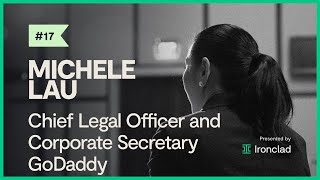
YouTube interview ("Pearls on Gloves Off") between Mary O'Carroll and Michele (Michele) Lau, GoDaddy's Chief Legal Officer. They cover Michele's non-linear career path from law firm M&A and various rotational assignments to in-house roles at McKesson and GoDaddy; how the CLO role has expanded (legal + compliance + internal audit + corporate sustainability/ESG + government & industry affairs); GoDaddy's emphasis on diversity, pay-equity transparency, legal ops, and a culture of experimentation; concrete operational details (GoDaddy legal team ≈90 people globally; legal ops team of three; Michele was ~18 months into the CLO role at time of interview); and sustainability commitments (reduce Scope 1 & 2 emissions by at least 50% by 2025) plus social-impact programs (Empower by GoDaddy and the Made in America docu-series). The conversation closes with career advice encouraging experimentation, portfolio-building, and internal mobility.
Questions this video answers
About 90 people globally.
Three people.
Approximately 18 months.
A commitment to reduce Scope 1 and Scope 2 emissions by at least 50% by 2025.
YouTube (Pearls on Gloves Off episode titled "A Culture of Experimentation with Michele Lau at GoDaddy").
Chapters
Foreign.
Hello everyone and welcome to Pearls on Gloves Off. I'm your host, Mary o' Carroll and with me today is Michelle Lau, Chief legal officer at GoDaddy where she is responsible for the legal compliance and internal audit functions. Prior to joining GoDaddy, Michelle was circumstances senior Vice president, Corporate Secretary and Associate General Counsel at McKesson where she served as an advisor to the McKesson Board of Directors and partnered with senior management on strategic initiatives and corporate transactions. Before that, Michelle was a corporate attorney in the San Francisco, New York and LA offices of Morrison and Forster. On the side, Michelle co chairs the National Asian Pacific Bar association or napabas In House Counsel mentoring program and serves on the Board of Directors of the Asian Pacific Fund. Michelle previously served on the board of directors of Project Open Hand. So much good stuff. Welcome Michelle. It is an honor to have you with us today.
Thank you so much, Mary. I'm so excited to be here to spend some time with you.
Absolutely. Well, let's start with your role at GoDaddy. I know your chief legal officer there. What was kind of your path, you know, your history, your journey to getting to this position? Yeah, it's, you know, a lot of.
Luck certainly involved and just, you know, I think a lot of it, staying flexible and trying new things and then building a kind of portfolio to, to get me to this place. So, you know, as you shared, I started my career at a big law firm. Candidly, didn't really know what I wanted to do, but as a summer associate, sat next to the chair of the business department of the office that I was in and he kind of took me under his wing and he said, why don't you come to me to this, come with me to M and A negotiations.
And I thought, wow, this is really amazing.
And so that's how I started my career really as an M and a lawyer and then, you know, also did some kind of broader corporate transactional work that then led me to my first in house role. I was a dedicated M and A lawyer at a big company in San Francisco and you know, similarly wasn't really thinking about in house. Right. Kind of really loved my law firm, loved my clients. Ended up going in house a little bit on a whim because I thought why not? And then was able to just continue to kind of grow the portfolio there and then eventually be in a position to, to come to this role and, and godaddy has just been, you know, it wasn't that I ever thought in, you know, the beginning of my career, like, oh, someday I want to go work at GoDaddy. But when I got the call about this job and I heard about the mission of GoDaddy, empowering everyday entrepreneurs, it just spoke to me. So personally, I mean, I've. I've worked at big companies.
Yeah.
For most of my career, but that's not my background. It's not my family background, like my, you know, my parents had a small business. My grandparents had a small business. And so to be in a place where we can help small. Small business owners make their dreams come true is really just such a privilege.
That's really interesting. And so prior to GoDaddy, you were at McKesson, which is a healthcare company of Fortune 50. Very different type of industry. What. What are some of the things that you see are different about a huge legal department like a McKesson, that type of company and culture versus a tech company that's focused on entrepreneurs like GoDaddy?
Sure. Yeah. It's a great question. And, you know, and McKesson was also just an incredible place to learn and grow. And, you know, having the opportunity to help advance health outcomes, for health outcomes for all was really quite a privilege as well. But it is different. Right. To your point. And much more, but bigger department, more resources, much older company.
Totally.
There were kind of more processes and policies that were well established. And so coming to godaddy in many ways has been a real opportunity for me to help kind of bring the company along on its journey. I mean, we haven't actually been public that long, and so and we have a smaller team. So it's really kind of forced me to flex and grow in different ways and to have a different view on the way that we develop talent. I'm both there and here. Still very much a believer in if people want to move around a little bit. So that could be in the form of a stretch assignment program. That's something that we had at McKesson, something that we launched here at GoDaddy as well, where we can give people in the department an opportunity to, on discrete projects, try new things, or maybe it's a second to another department. We had one person, an employment lawyer on our team, a stint in our people operations department. Yeah. Which has been really fun. Or in some cases, it's about swapping roles entirely. So I think you can do it right. In any. In any place. Maybe just in a slightly different way. Right. If you have a different structure.
Did you do that when you were previous in your career, whether at a law firm or a McKesson, did you rotate. Did you try out different practice areas or even different parts of the company.
I did. I was really, really lucky. So I graduated from law school at a time where the company. The economy had been really hot and then started to cool. Right. That was the. That was the dot com bubble burst. And so by definition had to be a little bit scrappy. In my first year at Morrison and Forster, you know, I was technically placed into the corporate group, but there wasn't enough work that particular year to keep everybody busy. And I was really lucky. I had a partner ment who I still keep in touch with, who said, you know, this in some ways is a great opportunity for you because you can go and try different things. Right. So I did my first 3 months doing M and A work, but technically I think actually assigned to the financial services department.
Okay. Because they.
They needed help. And then, yeah, it was. It was really. It was really interesting. And then I did about three months of an assignment with the Entertainment Group. So I was in Los Angeles at the time. There were two offices. One was in Century City. The Entertainment Group was based there. And they welcomed. At the time, my firm was representing the Beijing Olympic Committee. So there was a lot of work related to that. And so I came to a couple conclusions through that work. One was that it really interesting global, but I was just not cool enough for Entertainment Law Stop. Then did some time with securities litigation. And then, you know, one day, a kind of new practice, capital markets practice, joined the New York office. And a partner, you know, came into my office and said, they need help. Are you willing to go? And I said, sure. It was. I remember this because it was a Thursday right before. Right before Halloween. And he said, great, can you be there on Monday? And I was like, oh, okay, sure. So flew to New York and did capital markets for about a year. So that was. That was super fun. I'm really grateful for the. None of that was planned, of course, but in retrospect, super grateful for those experiences because it really gave me, you know, a chance to dabble in a lot of different things and kind of figure out what I liked.
Well, that's. That's very true. And so the reason I asked is because so many of the GCs and the CLOs that I've chatted with on this podcast even have told me that they've had similar journeys and that they've done a lot of rotations or tried out different practice areas, and that just makes you very prepared for the role that you're in. Right. You've seen corporate law. You've seen litigation, you've seen all these different, different things that a company and organization can go through. So with that, now you're in the CLO role. It's such a fascinating time, I think, to be a clo, because the role is evolving and we're hearing about a lot of these themes that are the scope of the role, the responsibilities of the CLO are changing. How have you seen or how do you see that role generally in the market kind of evolving right now?
Well, there's certainly nothing constant but change. Right. So I think for many years now the remit of clos has moved, you know, kind of beyond the traditional legal and compliance. I feel very fortunate to have internal audit, corporate sustainability, ESG and government and industry affairs as part of the department. And I think that's not a, you know, the exact mix may be different from place to place, but I think it's not uncommon now for a lot of CLOs to have, have kind of a broad menu. And I think that's a reflection of a couple of things. I think, you know, the common theme for me in all of my departments is that these are kind of enterprise wide seats that are thinking across the company and they're thinking about both internal and external stakeholders. And that might be one of the key drivers in the way the role has evolved in that, you know, we're serving multiple stakeholders and we really need to think about what the expectations are, how we deliver for different stakeholder groups. And then you couple that with a really complex, ever, ever increasingly complex regulatory and political environment and it just kind of makes for this perfect storm of moving kind of into a more dynamic, fast paced role than maybe the CLO role of a decade ago.
Yeah, it's super interesting. And I'll just say when, when I was, when you had just taken the role of GoDaddy, you and I had kind of, sort of reconnected. And when, when, when that happened, just a fun fact, we discovered that we both grew up in San Francisco going to sister schools in the same circles, like around the same time. Right. And I think we're pretty sure that we took SAT classes together at Kaplan.
I think we did. I think we did. I'm sure you, I'm sure you were a much better student than I was.
Oh, I don't know about that. But. So you had just started with GoDaddy and you know, I was learning more about you and your journey and about GoDaddy, frankly, as an organization. And I found there was such an interesting common theme across both, you and your organization, which is this huge focus on doing good and giving back. And I'd love to dive into a little bit of that too, as you've kind of explained, the CLO role evolving into. Have a lot of that responsibility as well. So obviously, you're an Asian American woman. I look up to you. So proud to see representation and you being a clo, and I know that's important to you, too. Of course, you've been really active in the Napaba organization and other organizations, which we talk about. And I'll tell you, because your reaction kind of with that pride when I said that to you, it's funny because I've also gotten to the point where people come up to me and go, oh, it's so meaningful to have, you know, you as a role model, Asian American woman. And I go, I'm your role model.
What are you talking about?
Of course you are. You know, but we look up to all these people and, you know, now you're in that seat, and there's. With that comes a lot of responsibility, too. So just congratulations on that. I think that's. That's really awesome. So looking at your own department now and your organization, how. How do you think about ensuring diversity and the diversity of voices that have a seat at the table when it comes to, you know, your operations and your priorities?
Right, right. I mean, it is so important. And we think about diversity of all types. Right?
Yes.
So, I mean, one of the things actually that I'm most proud of as I think about, you know, the team, is that even if I just think about my directs. Right. So the leadership team for my department, I had this moment where I realized, wow, we all approach problems differently, and part of it is just the lens that we have. Right. So a lawyer will approach it slightly differently than an internal audit person and will approach it differently than someone who leads government and industry affairs or esg. Sure. But I think it's actually more than that. I think it's also the same skill sets that we bring, the different experiences that we bring. And it's really quite amazing to see when it comes together and when we, you know, we. We spend a lot of time together as a leadership team to define our priorities for the year. Right. With the understanding that it's fluid because everything's changing. And so we need. We may need to shift, but that alignment, to me, is so key. And when I see the power of the diversity come together is when we're leveraging those different experiences and expertise to get to a better answer. So that diversity is so important. It is also really important to GoDaddy as a company and has been for many, many years. So we have a. And we believe in transparency too. So we've had a diversity and pay equity report that we have published for I think seven years now, which was, you know, I mean, actually quite early.
Yeah, that's pretty impressive.
Companies. Right. And, you know, very proud to have it, have achieved pay parities along many different, many different dimensions. And so, you know, and want to share those learnings, frankly. So we, you know, into has to start internally. Right. So a lot of work around how do we do everything that we can to try to reduce unconscious bias, whether it's in performance reviews or interviewing and, you know, getting best practices. We worked with Stanford to help us develop and learn from those best practices to build systems that will, you know, the output of which is to have, you know, kind of a really strong, diverse team. So all really core principles and values for us at GoDaddy. And part of what brought me to the company.
Yeah, and I love what you said about. It's also diversity of experience and perspective. And you know, I think that is why folks like you who've experienced different industries and different practice areas, you can, you can come to the table and say, you know, I was in healthcare and this is how they did it or I saw this in entertainment and they approached it a little differently. But I liked this part of it, you know, and you can actually bring a lot more perspective to the table than if you've only done one thing the same way the whole time.
Right? For sure. Yeah, for sure.
And so now that you've got. And how big is the GoDaddy organization? The legal department or broader. Is it, what do you call it? Global affairs or.
Sure, just legal. So, so the. So we call it legal, which it's funny because I have been saying for some time, gosh, we need to come up with a better name because Legal, I think people hear it and they think, you know, just law. Maybe they think compliance doesn't really capture internal audit, sustainability history and government and industry affairs. But we haven't come up with a good acronym or name yet. So. Have any suggestions? We'll take them. But we're a team of about 90 around the globe and the many different time zone differences, of course can make it a challenge sometimes to bring people together. But for sure, one of the core values that I have as a leader is to be as transparent as I can. And part of that is bringing people together as much as possible. So we come together for an all hands every month we'll change the time of day to try to make it a little easier for our colleagues in Asia or in Europe. But it's something that I think has been really valuable for me still being, I'm 18 months in now in this role, still being relatively new, but having forums where we can bring everybody together from different parts of the world, different level, you know, all different levels, all different subject matter, expertise, and be able to engage in dialogue.
Yeah.
And hear, hear what people are doing. Because I think one of the challenges and you get to larger companies, I mean, especially, you know, some of the really, really big companies, it can be easy to become very siloed. Oh yeah. You know, if you're not very intentional about making those connection points. And, and you know, the silo effect is, you know, on the one hand, focus is great. You got to focus and prioritize. There are only so many hours in the day. But it's also, it can be dangerous because it means then if we're not empowering people with a more enterprise view. And that's like one of the biggest responsibilities that I feel like I have as a leader is to help kind of put things into broader context for the team.
And you guys are all over the world, so that, that actually is really hard. I mean, how many countries or continents is your team spread out all over?
You know, great question. I lost count. Maybe nine or ten.
But so everywhere in different time zones. And you're coming together, I assume on video once a month. And who knows, maybe one day you'll all be in person for a summit at some point.
It's a dream. It's a dream. I mean, of course, you know, Covid. Covid kind of threw a wrench into a lot of meetings, but someday I do think that, that that's important. Someday. I do hope we can bring everybody.
Together just out of curiosity, because I know a lot of folks do the planning for these all hands and you know, legal summits that you do once a month. What are some of the. The content of those meetings and how long is it?
Sure. So we do, we do an hour a month. I could not live without our legal ops team. They are like my right and left hand in some cases in all things for the department in terms of, you know, financial, stewardship, budget, all hands communications, roadmap, strategy. I mean, they can, you know, help lead the, the strategy work for our department. So. So for the all Hands, I rely very heavily on our head of legal ops and we we do have kind of a common framework. So we start every meeting with what I call about me, which is an opportunity for, you know, just 10 minutes or so for a team member to talk a little bit about their journey. I went first because, you know, gotta.
Gotta lead by example.
Exactly. Lead by example. So I went first and I talked. I shared some photos of me as a two year old and talked a little bit. You know, we encourage, if people are willing, some embarrassing stories and photos. So that's always been fun and people really deliver. I feel like every month the bar gets higher. I mean, that's actually some of the most fun time that we spend together is about me segments. So we, so we do that and then we will have. So one of our strategic objectives as a department is, you know, providing dynamic advice. In order to do that, you have to really understand different parts of the business. So we have this series called DoubleClick, which is someone from a different part of the company will come in and you know, do a double click on their organization and how it ties into to the company strategies and mission. Or we have fireside chats where someone in the department will serve as, you know, Oprah, Trevor, Noah, you know, fill in, fill in your favorite interviewer and interview one of our leaders. So that's always a component. Then, you know, we always have something that is either kind of report out on strategy or goals some time for, for wins. And then, and then kind of an education series which we call our, we call our explorer series. We'll bring someone either internally or externally to do a deep dive as an education module.
That's great. So, okay, that was super helpful. I learned a lot from, from that and I think we can all kind of model from pieces of that. So as you're kind of thinking about designing your department and how do, how you're showing up as a leader. You've talked about some of the things I know you're very intentional about. What about establishing a culture of innovation? That comes up a lot in people I talk to. Like, how do you create a culture of innovation and how important is it to you? And I kind of already know the answer to, you know, transforming and making sure that your folks are working smarter and not harder in this age of like burnout and remote work and all that.
Right? Yeah, it is something that we talk a lot about. So as a company, experimentation is a key priority for us. I mean, we have a whole program around experimentation to try different things and celebrate. You know, we talk a lot about how an experiment that Quote, unquote, fails. Right. That is a. That pans out to not be a positive.
Yeah.
It's still a positive because we learned from it. So in some ways it's easy because I can kind of piggyback over, you know, on the. The broader company culture around experimentation. But we spend a lot of time talking about how, like, look, what we did in the past is not going to make us successful in the future. The. The company has evolved, expectations around us have evolved, so we have to try new things. And, you know, it can be hard. I think, you know, traditionally, lawyers are not particularly like, you know, charging forward into change. And so, you know, there is a little bit of a. Okay, so let's. We don't have to solve the world's problems overnight. Right. We can try small experiments, see how it goes, see what the output is and, and adjust over time. And that is something that is really, really nice about the culture, is that there is a. There's a willingness. You know, let's just try it, and if it doesn't work, that's okay. Right. We can, we can always adjust. So.
And that's, that's the key, I mean, that's the. Really the key, I think, to the question of how do you establish that culture of innovation. It's the. The leadership is saying it's okay to try things and to fail as long as you learn from them. And, you know, and the encouragement to go out and experiment, I think is really awesome. If you're, if you're pushing that.
Yeah, it's great. It's great. And we do talk about how it's important to have lessons learned, but also learn our lesson. Right. So it's not like sometimes, you know, you're moving so fast you can have lessons learned, but if you don't capture them and think about them and then use them. Right. To be better the next time, you know, then you're not getting the full value of, of having tried it in the first place.
And so that's exactly right.
We're trying to be more intentional as about capturing lessons learned. You know, after. There's always something that you can improve. And so we, you know, try to make sure that we capture those. And that's again, where the Legal Ops team is so critical, right. Is they help us put the infrastructure in place to make sure that we capture those lessons learned and then deploy them.
Yeah. And you also said something really important, which is there's always room for improvement, which I don't think everyone always believes.
Definitely always room.
Such a Good mindset. Okay. And then this is something you and I had talked about on our webinars. But since you brought up the Legal Ops team, you know, we're still in sort of this belt tightening type of economy. You know, we all just kind of went through budget and planning for the, for the new year. How do you think about, you know, how do you manage those resources that you have that are becoming more and more limited? And where is your focus on efficiency and effectiveness?
To me, the work that Legal Ops does is so critical because they can help drive both real dollars and real hours saved in the work that they do. So, and we just talked about this as a leadership team this past week about how it can be hard. For example, you know, you're putting in place a new legal service delivery tool. You have to do a whole bunch of front end work to make sure that it's useful. Right. So that the data inputs are the right data fields that it's easier to use for, for people, etc. But that, and that I think when people are really, really busy. Right. And they're kind of in that firefighter mode, it can be easy to deprioritize, you know, working on the legal service delivery model.
Right.
But, but my plea. Right. To people is please prioritize that because the work that you do on that on the front end is going to pay dividends going forward. It's going to make us more efficient, it's going to give us better data, frankly, to help us identify where there are more opportunities to improve and it will free people up for more strategic work. So, so for me, Legal Ops and that work is still at the very top. I mean, it is one of our strategic priorities as a department for a reason.
Yeah. And that's, that's it. You do need to have someone focus on it. You know, we talk so many times about people who are like, I want to put this function in, maybe I'll have someone dabble in it on the side. But to your point, you always kind of get distracted by the day to day work. And the Legal Ops stuff is an investment. Like you have to put time and energy and focus on it to reap the benefits. And you know, if you're just trudging through your day to day work and trying to get to it on the side, it just doesn't get the attention it needs to.
Yeah, that's absolutely true. And to anyone who's thinking about, gosh, you know, it's a tough economy and so we should cut Legal Ops. My view Is that's. That is not the area to cut it.
Amen. Amen. How big is your legal ops function? Actually, it's a good question.
We have a mighty team of three. Yeah, it was. It was. It was interesting. So when I first arrived, right. I spent my first 90 days, I talked with everyone in the department and, you know, talked with key stakeholders outside the department, and there was no legal ops function at the time. Right. I mean, we're on a journey, Right?
Of course.
And, you know, I'm a big. I mean, as you know. Right. We had just a phenomenal legal Ops team at McKesson. So I got to see, you know, one that was built over my time there. And so I already understood the value of it. And so when I got here, during my kind of meet and greets, I was testing some people out, and I said, hey, are you familiar with the term legal ops? Let me pull up this slide from Clock. Like, here are the 12, you know, here's the wheel. What do you think? And there were a couple of people, the three people who ended up forming the legal ops team, who almost jumped out of their chairs with excitement and with tons of ideas of how we could improve, be more efficient, create some structure for things. And I thought you three. You three are the people.
Oh, that's amazing.
It was amazing.
Yeah. I always love when there's a new leader into an organization who has seen it function well elsewhere because they're already believers in it, and they know how to set it up for success. And it's not to say a new GC or a new CLO who hasn't worked in a department can't do it, but sometimes you have to sort of convince them of, like, why this is important and how to think about it. So you kind of have a leg up already. Okay. And then shifting gears just slightly, I want to talk about the sustainability initiatives that GoDaddy has, because I know that's something you're really passionate about. We kind of touched on it. But tell me about what that the company's focus is for the, you know, for the next year, and. And why that's so important.
Sure, absolutely. I mean, it is built into the DNA of the company, right into our mission and vision about making opportunity more inclusive for all. So it is something that runs really, really deep. And, you know, actually, if I could spend just a minute maybe on some of the definitions, because, you know, as you. As, you know, right. There are so many different. So many different terms out there. There's kind of an Alphabet Soup of acronyms.
Yes.
So, you know, and I'll caveat this by saying this is just kind of like my views, right? I mean, I think if you talk to 10 people, you get 10 different answers about what sustainability means. So, you know, I was extremely fortunate in that when I was a young lawyer and at Morrison and Forrester worked with a client who was in the social responsibility space and still is in the social responsibility space. And you know, that was pretty early, actually. I mean, that probably would have been 2003 or 2004. Oh, yeah, yeah. I mean, you know, there were, when I think about the companies who have been the trailblazers, right? I mean, there were definitely some companies really out at the forefront, like places like Clorox and, and Gap. But it wasn't, you know, it didn't have the energy and the dedication that it has now. And at the time, I think there was a little bit of this sense of, oh, you know, social responsibility is about, you know, business has a responsibility to do good for the world too. And then, you know, and I spent, have spent a fair amount of time in the past five or six years with the investor community. And then of course we have the term esg, environmental, social and governance, which, you know, I think is, is has that investor lens, right? And asks questions of like, what are the standards for a company, a company's operations, that someone, an investor who cares about esg, can then measure the company? You know, what are the. I read one article that described as outside in impacts. So, like, is the company prepared for, what are the risks that they have from the environmental, social and governance space on their business?
Oh, interesting.
It was really interesting. I mean, I wish I could find the article because it had also this graphic and then it described corporate sustainability as the outside in or no, the inside out.
Inside out, yeah. So you're thinking about it from both sides. Okay?
From both sides, Right. And so for me, you know, as I think about those three kind of different terms, all important, I mean, we landed as a department as we say corporate sustainability and esg just for clarity. But for me, all three of those, you know, kind of csr, esg, corporate sustainability, they all incorporate environmental and social effort and impact. They all require sound governance. Right. I mean, that's kind of the foundation. And they're all designed to create kind of positive outcomes, right? They just have a slightly different stakeholder focus, but they all require, you know, kind of integration into operations, a link to long term business strategy and furtherance of our mission and in service of multiple Stakeholders. And so that's why we use the term corporate sustainability in ESG Echo. So.
And I have not heard it described that way, but that was actually really helpful, so thank you.
Well, I mean, you're gonna ask someone next week and they'll say like, oh, no, I totally disagree. This is something else. But, but so that. So that's the way that we think about it. And I spend a little bit of time on definitions because I realized that when we kind of renamed the team, it was, you know, previously corporate social responsibility or GoDaddy for good. When people heard corporate sustainability, they thought just about the E. Right. And so while the environmental piece is important to us, we were really proud last year to announce our commitment to reduce our scopes 1 and 2 emissions by 50 by at least 50% by 2025. And that's kind of a new focus area for us. The work is really more than just the E. Right. It is about the diversity, equity, inclusion and belonging. It's about our social impact program, which is called Empower by godaddy, which I am so proud of. I mean, it is, it is a program where we go and we go into underserved communities to help entre entrepreneurs with tools and insights and guidance to achieve their dreams. And we couldn't do this work without partnership from our incredible on the ground nonprofit partners. And it's really all about giving access to people who otherwise wouldn't have it. So that's like the kind of marquee social impact program that we have at GoDaddy. That is one of many reasons why I'm so proud to be at the company, but not just the work that we do in terms of helping people achieve their dreams, but also it's so closely tied to the mission of the company. And that is really, really special. And that program, because a lot of it is about education, right? It's about, yes, giving people tools, but also giving them insights and, you know, helping them. For example, how do you build a website? Right?
Yeah.
You. What is search engine optimization? Like, we rely on employees to volunteer to help teach the curriculum. And, you know, people are busy, but like, it's just amazing to me how, how many employees will raise their hand and say, yes, I want to go into the community, I want to help diverse entrepreneurs. Sign me up. It's really special.
Well, that's the key because I think these are all really important parts of an organization and focus areas. But what we often see is you have corporate priorities and economic uncertainty and budgets, and I'm sure you have Your objectives and goals and who knows, litigation comes up and you sort of have to shift your focus onto the pressing business needs of the day. But I know from Both you and GoDaddy's focus on this that we really make sure that that's, it's not just lip service. You know, you pay attention to these aspects of the corporate culture and the business. And how do you continue to sort of advocate for sustainability when you have all these competing business interests?
Right, right. I mean, and we're certainly not immune to the larger macroeconomic environment. For sure. I think the fact that these programs tie so closely to our mission as a company is really critical for keeping them top of mind. I think when I think back to, you know, the earlier days of corporate social responsibility where there were some companies that were doing really tremendous work, but either they were kind of check writing, like grant making foundations.
Yes.
Or they were kind of. This sounds more disparaging than I mean to, but, you know, kind of a random collection of good facts. Right. So we volunteer, we recycle, we change our light bulbs to LED light bulbs. It's easy for those things to come the wayside when you're in a tougher economic environment, when you have a lot of different priorities. But when that, you know, kind of good work. Right. Doing good work is intricately linked to your core mission as a company. That's actually think how you, I mean, that's kind of the dream, right? That's, that's how you keep that the, the work top of mind and where you see kind of commitment and energy and passion for it. I mean, the passion that our workforce has for our mission and serving our customers is really incredible.
Well, and I hear it from you, which makes me so happy for you, that you've, you know, you've landed in a place where you actually really feel a tie to the company mission and you believe in, you know, what the company is doing that I, I've been in that situation luckily many times in my career and it makes such a difference to really you, you do your day to day work, but you really care about the bigger purpose of why your organization exists.
Yeah, for sure, for sure. You know, sometimes people ask me question, how do you think about new opportunities? Right. You get the random call from someone. It's, you know, and a lot of times, you know, it's a very fine company. But for both, I think what stood out for me, for both at McKesson and at GoDaddy, is that my first criteria is, is it a mission that makes my Heart sing.
Oh, I love that.
And that will cut out 90% right. Of the opportunities immediately.
Right.
So that, that your point about, like, you know, these are hard jobs. Right. I mean, they can be exhausting. And I know for me, when I'm having a day where I'm just, you know, kind of emotionally, physically drained sometimes, what I'll do is I will go and watch our Made in America docu series. So our Made in America docu series brings to life stories of some of our customers. Many of them are empower, you know, our social impact program graduates. And the. Their journeys of resilience and grit and dedication and passion just leave me awestruck. But also why I'm here. Right. I mean, it is just so deeply humbling and fills me with such pride. So I'm, I'm so glad that we have this, you know, the docu series, not just because we want to bring their stories to life, but also because, like, I mean, it's. It's always. It's a real tangible reminder for me about why I'm here.
Oh, I get it. I mean, I, that's why I love being in this community role, because I hear every day about how people are winning and being successful and doing amazing things with, you know, with our systems and tools, and it is, It's. You feel very rewarded by that. Where, where is this, like, something that people can watch publicly?
It's on YouTube. I will send you the link.
That's very cool. It's called Made in America by Godaddy. And it's about your customers.
Yep. And there are a couple different chapters. So the most recent one focused on Baltimore, and there's a, you know, a series of following different entrepreneurs. It's really, it's incredible. They're just. The stories are just amazing. Right. And I think there's one that is where it's like a whole family affair. Right. It's a husband and wife, and everybody in the family kind of rallies together. It also, I will say, has informed my holiday gift giving. So one of the, One of the entrepreneurs that, you know, we've. We've talked about publicly sells cheesecakes. And so everybody in my family got cheesecakes from furlough cheesecake for. For the holidays. So that's been fun, too. That's kind of like a side personal perk of I like cheesecake.
I'll have to look into that. All right. Well, it's been great chatting with you. I feel like I've been so inspired. Are there, you know, on that note, are There things that you want to impart, you know, lessons learned, advice on so many young professionals that are trying to figure out their careers. And I know, you know, you've gotten to this clo at a big public company role, which is, you know, the dream of a lot of young people out there. What are. It always makes sense looking backwards. Right? But what are some of the things that you've learned that you'd like to impart on them?
I think the most important lesson for me has been to take some chances and try new things. I have this. I cringe every time I hear someone refer to career ladder because it just implies such a linear, predetermined path. I talk a lot with my team about career trees, where you never know when a new branch is going to sprout or which direction it's going to go or may go sideways or up or may fall off.
Love that.
But there's always a new branch, right? And so they fall off.
So true.
You never know. Right? But. But for me, I think, especially if I think about my time at McKesson, where, you know, as I shared, I was the first dedicated M and A lawyer my first year. I mean, I did nothing but M and A. That's why I was there. And after the first year, I started to get. Bored is not the right word, but maybe a little bit stale because I felt like, okay, you know, we have a process in place and you know what? And I mean, there's plenty of work to do, certainly. But I went to my then, you know, manager and. And said, I think that I want to add more. Right. So, you know, I'm willing to put in the hours I'd like to add more. I kind of had gone around the company and picked up the areas where there wasn't currently a legal partner. And I said, you know, can I take those on? And she said, sure. Now, it was. I mean, in retrospect, it was not the most strategic collection. It really was a random collection of, you know, kind of orphans that didn't have legal support. But it really. I mean, I learned a lot, and it really helped me think about problems differently and build relationships across the company. And so that model of, like, being able to build the portfolio, you know, every. I almost feel like every three years or so I had a different job because, you know, while I was still in the same department, I was still in the general counsel organization, like, every three years, I had a pretty meaningful shift in my scope. And that kept things very, very fresh. And so, you know, it's It's. I think some, as a young person, I probably had like, a very set plan where, you know, and probably was, I'm going to work hard, and after X number of years, I'm going to be a law firm partner, and then I'm going to, you know, ascend in the ranks as a law firm partner and eventually, you know, be chair of the firm or something. I mean, I don't. I don't. It's probably something like that. And, you know, who would have known it could have taken this turn? And I think for me, it's a combination of being willing to take those risks. Right. Being willing to raise your hand.
Yes.
And volunteer, but also being in an environment where that is encouraged.
Right, right.
I think I was also really fortunate to have been in environments where that was welcome. Right. The reaction was not, stay in your lane. We need you here. You know, for organizations, sometimes it can be inconvenient. Right. If you have someone who's really great employment lawyer and they want to go try something different. Right. It could be easy for a manager to say, no, but you're a really good employment lawyer.
We need you there 100%.
Yeah. And that's totally the wrong thing. Right. I mean, we like. I'd much rather keep people in the family and help them grow within the company than have them go someplace else. So.
Yeah. And now you're able to foster that culture and that mobility within the organization, which is fantastic.
Yeah. Super fun.
Well, Michelle, it's been such a pleasure. Thank you so much for being here. I've learned a lot from you, and I feel inspired. So appreciate your time.
Oh, thank you so much, Mary. It was great to spend time with you. Thanks for everything you do in the legal community, and these types of events are really tremendous.
Well, thank you. And to everyone out there, thanks so much for listening. We'll see you next time.
More from Mary








#56 Ending the Billable Hour Chris Grant’s Mission to Transform Legal Services


