A Surprising Love for Procurement with Lesley Garafola at Barings
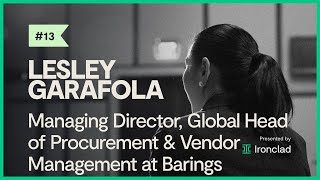
Lesley Garafola, Global Head of Procurement at Barings, talks about moving from legal operations into building a procurement function from scratch. She covers how procurement and legal teams work together on e-billing and vendor selection, why data and workflow tools matter, and what cross-functional experience teaches you about career growth.
Chapters
Foreign.
Hello everyone and welcome to the Pearls on Gloves off podcast. I am your host, Mary o'. Carroll. Well, we all know that the legal landscape is changing and with it, the types of roles that exist are changing and the career paths that people are taking are going in exciting different directions. Today's guest is a great example of that. I'm here with Leslie Garofala, Managing Director and global head of Procurement and Vendor management at Barings, which is a huge international investment management firm. Now in this role, Leslie leads the negotiation and the management of third party service providers and focuses on designing and building and developing a supply chain vision and strategy. Her responsibilities are collaborating with internal and external stakeholders to develop, implement and optimize the vendor management processes, the tools, the policies to achieve performance objectives while sort of mitigating supplier risk and optimizing spend. Now, interestingly, before leading procurement at Barings, Leslie led the legal. Now before leading procurement at Barings, she held the role of Global Director of Legal operations. And we all know that role pretty well here. She saw the day to day operations of the team, managed outside counsel, legal technology, strategic planning on behalf of the legal department. And even before Joining Barings in 2017, she was the head of legal department operations at Duke Energy. Before that she had a 15 year career with Wells Fargo holding a variety of different roles in finance and operations that eventually led to legal operations at Wells Fargo and some interesting facts that I had to trim down about her bio Leslie was also a collegiate athlete in soccer and basketball. She resides in Charlotte with her husband and three children. She's active in the community with volunteering, coaching, serving on boards. She's also a certified yoga and meditation teacher. She's kind of amazing and has done it all. So with all that. Welcome Leslie.
Thank you, Mary. That was a mouthful to say the least. I probably could have summarized that. You know the, the bio that you send out to everybody for when you're speaking that that is it. But, but sorry you had to read all of that.
No, I think, I mean I, I tried to cut it down, but I think so much of it, which is why I'm dying to have you on the podcast. I mean I have, I have so many questions. You started in legal operations at Wells Fargo back in 2005 and I remember meeting Tim Davenport from the Wells Fargo Legal Ops team like a few years later like when I had first started and that was, that was later than that. So you guys already had like a full on team back then?
We did. And you know, I think I want to say, of course, that it was Wachovia First Union. Wachovia. Wells Fargo was my. My trajectory of, like, where I was and where I went. And I. I was always in the legal department. I started my career in a business and then I worked for a lawyer and then moved into the corporate legal department. That was like the first union days. But then once we started, you know, through bank mergers, opportunities just came up and I started working on integration efforts for the legal department, looking at legal expenses. So that sort of morphed into the finance. And then our finance team member was asked to be the head of sort of operations and finance. And that's sort of how things just sort of organically happen. And I think that's really before legal operations was a thing.
Oh, for sure. It was definitely before it was a thing. And of course we know the banks and the financial services really started legal operations. Even though I know the Silicon Valley tech companies often get the credit for it. We were just more, probably more vocal about it.
So I bet, I bet.
And I know, like you just said, you're not a lawyer. You kind of fell into this world by accident too. So what was it like back then, in the early days, before people were talking about it as legal operations, like, what was your company doing? How did it emerge as even a function?
I would probably say when I think back on it, it really had more to do with cost, to be honest. I think everything starts with your corporate legal department, your one big cost center. How can we reduce the legal expenses for the company? And as part of my role, again, I mean, I started as a paralegal, and at one point I'm like, I'm going to go to law school, that's what I'm going to do. And I started in the paralegal field thinking I'm going to go back to school. And what I ended up doing is just like I said, got opportunities to start looking at data. And as we kept growing the operations side of things through an efficiency exercise and through some of the mergers, my team, where I was in legal ops and where I ended up reporting up through Tim was I had the fees management team. And so my team did all the precursor reviews to outside legal expenses. So we had a policy, we implemented E billing. And I think from there it's just when you started looking at corporate legal departments a little differently and how we were going to make them, and I've heard you say this time and time again, but manage them like a business, allow the lawyers to be more efficient. And our team was just really kind of starting off in that. But yeah, I managed, got to oversee the legal fees team, but from there just. That was my first time of, okay, I can be a little bit more strategic. What else can I do?
Yeah. And so you really started with the outside counsel management piece of legal.
Yeah, yeah.
And I know, I mean, we fast forward, you're in procurement now. You head up procurement for bearings. And that is such an interesting transition, which we're definitely going to get into. But even in those early days, how did procurement work with legal? I know it comes up kind of over and over again. Like, should legal use pos, do they need to go through procurement? Like, what is the best practice on that in your eyes?
Yeah, I mean, it's funny being in procurement now, I kind of see where depending on the approach of how you're, how you're working with your stakeholders really does matter. And I think about it, when I was at the bank, it was, it was definitely a very different model for one of these two. Now, not, not in a bad way. In. One of my good mentors actually was in procurement at the bank, and she had really a tough time, a challenging time working with the legal department because, you know, legal department was like, I don't want your help. And it. And I guess it was really more the approach, though, not coming in and saying you guys got to save money, but really thinking more strategically about how do they manage their business and how can we help. And I think that that's really what I instill in my team today. But what I think for what our group is going through and where it morphed and how I worked with procurement in the past, it still was always about legal expense. It was what law firms we were using. And so today I would say since I sort of started the legal operations at Barings and my replacement is phenomenal. She's doing great, great things and she is working through what we already sort of branded. And one thing I would actually say is we aren't setting up POS yet for the law firms because we do see it as a little bit of a nuance. It's not just a quick commodity that you can put a PO around. But I do think we have great relationship. The rate cards are in place, we have preferred vendors. No one's really supposed to go off the list for the law firm, for the legal department, but it is a little bit of a give and take. I think they still have that strategic model of, well, what does the business need and do we have a law firm that can serve what the business actually needs.
Yeah, I mean, I always ended up having a really good relationship with procurement because, sure, they would come in and say, well, what are you guys doing? You can't go rogue. And outside the process. But after we talked to them about all the systems and the data that we were leveraging and how we were making decisions about which law firm we were using and the budget setting and the rates that we were negotiating, they ended up coming back and saying, wow, you guys are actually more structured in your decision making and have more controls about spend management than probably any other function in the company. So go forth and do your thing and we'll just partner on this and watch you from afar, but call us if you need us. And that ended up just being a great relationship because we were sort of a. A model department for them, even though, you know, in some ways we were kind of the rogue team.
Yeah, yeah. I mean, I think back at my career and I think about some of those efficiency exercises the bank went through. Look, we're always trying to cut costs. We're trying to be more efficient. And that really opened my eyes to being more innovative with the lawyers. And I think. I get it. I mean, I. I think naturally, and I, you know, I'm not a lawyer, but lawyers, I think, naturally, are very skeptical unless you can really prove to. And I get that. I. I appreciate that. And, you know, we have to understand what problem we're trying to solve. And I think with what we've done with a lot of the legal stuff is showing them the data like we can. We want to stay out of your way, but if we could just be a little bit better. And that. That was the beauty of E Billing. I mean, E Billing, I mean, I still. We didn't have E Billing when I came into Barings, and I think at one point we were thinking we didn't even need it. And I'm thinking we have so many law firm relationships and so many invoices, and the expense control was not really where we wanted it to be. And I think the easy thing was selling that to the lawyers who were. I still think back on, you're going to make me look at an invoice and approve it. I'm like, no, the system's going to help you, though. But let me show you what it could do for you. I think it's always trying to throw that other side for them again. What is in it for them, then? And that's a little bit of how I've been able to approach it and be. Be hopefully successful.
Yeah, for sure. And how, how many law firms is a company of your size or a firm of your size using these days?
You know, I would say when I started, if they just give you an idea, we were around 400 law firms. And so we are global, you know, we're a global firm and our parent company is, you know, we're owned by Massmutual. And I think the last that, like when I stepped out of that legal ops role into procurement, I think we were around 170 and I would say our top. Were probably top 25. You know, that's where most of our spend and work was with.
Absolutely.
Danielle would have more of the updated numbers, but that's kind of where we were when I stepped away.
Yeah, got it. And, and speaking of Danielle, who is the legal ops leader at Barings now your successor, do you guys work together at all? Is there a relationship between legal operations and procurement?
Yeah, she's like the easiest to work with, you know, and especially because she's bringing in new, honestly, she's doing great things, bringing in new technology for our chief legal officer and having. Working through that with her. And so she still has to come to our team for that. And, and she's so easy, very innovative, very strategic thinker. She thinks big picture, which I love when people are not just thinking about their group, they're thinking about the whole firm. And she, she does that very naturally.
Got it. And so, okay, so let's talk about your, your move into the world of procurement because you were, like we said, legal ops at financial institutions from Wells Fargo to, well, and then Duke Energy, which I guess is a little different. And then back to Barings. And how did you move into the procurement world?
So this is an interesting story. I would say I really mean it when I say I had zero desire. I am always open to new opportunities, always. But I would say two things on that is one, I do love to build things. I love to have a clean slate. I love to do organizational management. I love to find the people that I'm going to work with. I had an interesting opportunity again through an expense exercise. I seem to, when I get exposure to other things, I love to jump on them. But this was one of those. I was representing the legal department and what we call Project Agility sat around the table with a lot of different team members around the company. Really started to understand the company better. I understood where some of our maybe pain points were. We were really again Trying to cut cost. And from that, my boss came to me one day and said, you know, there's talk about you doing something. I don't know quite what it is, but just letting you know your name is being tossed around. And I sort of just was like, okay, that sounds great. And then he came by another time. He's like, okay, so. And at the time, we had a CEO, and we had a new CEO coming in. So at first I heard, you know, Tom would like you to take this job. And then I heard Tom and Mike want you to take this job. And I was like, okay, I don't even know what Tom we're talking about. And so finally, when it came to fruition, it was, you know, you need to start stand up a procurement function. And I will be very honest, was like, that's okay. I. I'm. I'm. I'm happy in legal operations. And I really didn't know if I was cut out for it, but I do. I will say I love a challenge, and I love that fear of, oh, can I do it? And so I was definitely intrigued. But I would tell you I was sort of like, no, I'm good. I'm just starting off in legal ops. I'd been here two years, two and a half years maybe, and I really wanted to do more work. And then my boss, great, great guy, and I still report to him, so it's great. I did not have to change management, but he said to me, it's very. It's not very. Get tapped by the CEO to do something. So I'm just gonna. Even though this is gonna be an impact to him because he was gonna have to replace me as his person. Yeah. And so, anyway, I said, okay, let's work through it. And so we did. And at the end of the day, I'm so happy I took it. Because the one thing I would say that's the difference is I have so much more exposure, and I'm learning the business so much better about what everybody's needs are. So it makes me, I think, a little bit more agile across the company. And I love procurement. I don't know that I would have, but I really do love procurement. It's really been great.
That's so cool. And I love your story because so many people who, you know, I try to mentor and coach and even attract into the world of legal ops, they're like, well, where do I go from here? And, you know, the answer is, yes, you can be a vp, svp, you know, at a big company. There are those roles now to be a leader and at the senior levels in a legal ops role. But it is also such a cross functional role that you are touching it and finance and procurement and sales and I mean hr, you name it. You're the one who's liaising with other parts of the organization. And so building those relationships and exposing yourself to other teams does create opportunities to work in, you know, operations is building things and it's problem solving and it's, you know, taking initiative. And if you can do that in the legal department, who's to say you can't do it elsewhere? And that's, that's exactly what happened with you.
Yeah. And I would say you're so innovative, you're the way you think too. Mary. I think that, you know, the data, as we were talking through the data is so important and I, you know, I didn't really know why my name got thrown out there. I thought, well that's great, I'm excited. I mean, somebody said my name and thought maybe I was, I would be good for this. But honestly, I think it had more to do with the fact that they saw the legal expense going down, they saw there was framework, they saw there was spend control, they saw preferred vendors. So I, I think that's why that we were able to do it with one little commodity. What else could we do if we were actually looking at a bigger scale?
Right, okay. And when you took the role, like you mentioned, you're a builder, so there wasn't a function before. And you know, even when I was at Google, for most of the time that I was there, there was no centralized procurement function. So it's not an unusual thing for this to be sort of a later stage development. Is that the norm? You know, was that different? Like, what did you see in that role?
Yeah, so we had, so the two sides of my house are procurement and then vendor management. We had a small legacy vendor management team that sat under our risk function.
Okay.
In my request, that was not the original, like, Leslie, you're going to build procurement. And I went in and said, okay, I'm getting, I can design this. Right. This is my, this is going to be my thing. And I said, then if I'm going to do that, I want vendor management. Because the two work in unison so much that. And now we're not there. Now I'm not saying I'm not going to paint a perfect picture, but where we are going is I have my procurement team members working in tandem with the vendor management side. So when There is actually a vendor issue. Procurement side is actually, the vendor management side is actually picking that up and working alongside that partnership. Sorry, what was your question? You asked me.
It didn't exist. And is that.
Yeah, it didn't, it didn't exist. So I mean, I think you, this is the age old thing, but I'm all about hiring talent. I have learned from my team. I have, I've been very vulnerable with them to say, look, I, I don't have the procurement background. I do know how to stand up a function. I do know how to collaborate and partner with people.
Absolutely.
And I have found some really key talent that have, that has been in the business a long time. And I have a really great team, really great team.
I think that's, that's so right. And I have the same mindset. I mean I, I often say that my new role, running community as a function is also very new and different. It reminds me of the legal ops days. And you know, I, like you said, I know how to stand up a function. I can run operations, I can come up with strategies. But I always want to hire and surround myself from, with people who are smarter than me and have experience and can do things that I can't do. So great, great tactics. Okay. So I would love to learn more about the procurement world and the function and how that world looks. You know, you were just at a conference as we chatted about on email. It's kind of my hypothesis that there's probably a similar wave of transformation and disruption taking place in that industry, in the procurement space. And is that right? Or I guess on the flip side, is it a function that's been so focused on efficiency and cost savings at its core that maybe it's naturally evolved really well over time? How do you look at that industry?
Yeah, I don't know if I have the answer. I would say, listening from that last conference, there's definitely those companies that are all into that direct spend, so that real heavy supply chain. Whereas a corporation, I mean for, I'm sorry for our, for bearings, we're really into that indirect spend where we, I mean we're kind of doing everything. We're doing direct and indirect. And I would say listening at that conference, there's a lot of people at this, at this point and the industry and in the market supply chain, as you know, is a really big issue. There's supply chain, significant supply chain issues, I think where I would say the evolvement of procurement and, and I would say it aligns exactly with what I've seen is our company does a bunch of different purchasing in a multitude of sorry commodities. So we, we're heavy into market data, we're heavy into software, large technology platforms. And I think when we get into that, I would not have thought this really in the beginning, but I work very closely with it and listening to the evolution of just software, we can't keep up. I mean, I mean that, I don't think that's not, that's not unique to Behrings. We can't keep up with the amount of technology that's out there. What I think about procurement though is I absolutely think we are in such a unique position because we're seeing everything. We're working with cyber, we're working with compliance, we're working with finance. I mean all of these teams coming together and I feel like we have an ability to be at the table to say, hey guys, we're doing the exact same thing over here that we're doing over here. How can we bring these two teams together? So my hope is, is I'm going to start with data again because we're finally getting some systems in place. I think I have not yet been able to tell the full story of the spend and the how and the why to get really leadership to go, oh geez, yeah. Our third party vendor list is too long and we spend too much money. And I think it's a just like I would always say with legal, legal, legal expenses. What I find with legal expenses is we have always had the opportunity as in house lawyers, not me, but the in house lawyers to pull that release valve of I'm, I'm strapped. I don't have enough time. My clients have 50 new projects coming in. I can call my outside counsel. I think the same thing would go for what we're, what I'm seeing in the procurement side is we have an opportunity to just keep calling third parties to help us out, but we also have to reduce our operating expenses. And I think that if our CEO is ever looking at, hey, we can cut cost here, we can cut costs here. And it's not always about cutting costs, it's about being strategic. Right, right. We should look at our third party list and say, okay, wait a Second, we've got 10 of the same consulting firms or 500 of the same consulting firms. We should be looking at something different.
Yeah. And so you're, you're helping with that. You have a seat at the table and you're, do you work in conjunction with those stakeholder teams? And I'm thinking also about technology. As you just mentioned, there's so much technology out there, the fintech tech world is just exploding. What seat do you have at the table in terms of making the decisions on either consolidating or replacing tech or you know, leveraging it?
Yeah. I would not say I'm a decision maker and I would say just by guidance from my leader, a lot is we don't want procurement to be the yes and no.
Right.
But we do want procurement to be at the table to help guide the discussion and collaborate and listen to the business. So they're going to know better than I'm going to know what tool they need. But I just want them have open ears about thinking about it again, big picture, what is best for the company. I sit, I would say I talk to technology probably every single day. There's always something and we're doing a lot of process improvement work across just again, not having tools, not having a procurement team, you're seeing it makes my job really easy. And I mean this when I say no one ever looked at this stuff before so it's very easy to save money and avoid cost when nobody ever looked at it. Right. I would say the same, same for technology. If I'm sitting at the table with them saying why are we putting our employees through six different request systems to find, to purchase something, why are we not having them centralized? So again, a lot of process improvement, cost reduction in the soft sort of savings or cost areas. And I would say my, my leader has a seat at the executive table. I don't have a seat at the. I won't be clear. I have a seat at the executive table. My hope is though for 2023 with some of our system implementation, I can really help our executive team with some of that data to make some of those decisions around or just ask the questions, be more probably more in tune with okay, what are these businesses spending their money on and how.
Yeah and I love that topic because that's something we talk about a lot here at Ironclad is the data that's in the contracts and how it's going to help all the functions. Right. Procurement, finance, sales, make decisions about how to run the company. We're actually seeing a lot of interest in contracts management software from the procurement side. What are the tech stacks look like for procurement and is CLM something that procurement is getting involved in, is interested in, is it helping them? Are you seeing that at all?
Yeah, I am and I think that's a great question. So I would tell you so my, my boss is the Chief administrative officer now. Um, and so he's the chief legal officer. Chief administrative officer. So he's kind of. He wears two hats.
Yeah.
When I reported to him in my legal ops role, you'll. You'll get a kick out of this. He, he would fight me all the time about don't bring me new technology requests. And I kept saying, this will make us better. We gotta do. We gotta tell your story better. We gotta tell the CEO why you need another lawyer, another law firm. Like, we need more data. And I would really try hard to get, you know, E billing. I finally. He was good with that. He. That was the first big thing. But I could get CLM or document management. I could. It was. He's like, I'm not paying for it and I'm not. He. I got, I got why he said it. Because they're so expensive. Now what I would say is different. And to answer your question, around where procurement falls into that, I report with risk. We report into our leader. It's risk, Legal compliance audit and risk audit. Am I missing. Somebody's not going to be a properties. Our facilities team. Every single one of those teams needs a contract management system because we're all doing different things with these contracts and different shapes and sizes. And so I love, as I mentioned with Danielle, I love to think about what she might be doing that we can leverage or vice versa.
Yeah, yeah. And what do the tech stacks look like for procurement? Are there older players in the industry that are difficult to use and the new players are coming out that are sort of no code, self service, which of course is what we're seeing in legal and I think a lot of the distinction and in a lot of spaces that's what fintech came out and did too. Is, is that happening in procurement or is it.
It is. It is. Because I would say I won't name the names, but the, the big Cadillac procurement like P2P systems, we can't do it. It doesn't work with our model. It doesn't work. Bearings like every company is changing so quickly, organization changes and all that. And we need something that really is low code, very flexible, that we can move on. And so what I would say our tech stacks are. I have a vendor management tool that, that for the first time, by next probably end of second quarter is what we're thinking. We'll have a full view of our risk assessment for all of our third parties. We've not been able to do that before. We've never been able to say what risk is our. What risk are all of these third parties impeding on bearings? Because we've just never been able to do that. Sure, P2P is probably less for bearings, but I think right now, just given where we are in our evolution, but there are some. Several companies it seems very. What's the word I'm like clunky is what I would say with the systems I've seen. So we haven't been able to really do a lift in that area. We are looking at just intake. We need to know where the work or workflow. So like the intake coming in from our stakeholder has a new request, they have a problem to solve. They got to decide if they're going to build or buy. Once they decide they're going to buy, they're filling out right today for us a PDF form. And it is so painful and we've tried so just to give you an idea, we have tried to solution this with again trying to cut costs and not as a cost center, not try to have too many technology stacks. So I try to leverage two or three different softwares that we already had and all three just can't do what we need. So we're looking at a new one right now that basically is intake and workflow. And it, I will tell you, it literally looks like a Visio document. You know, when you're moving around your, your, your workflow or your work stream, it moves that quickly and it's that flexible. And so if that answers for my team and cyber and it, where things are in the workflow, that's a great technology. That's sort of the, the technology stack we need. And the last thing I would say is we have software asset management and we have market data to providers for both of those systems. So the ex. Our, our team members, when they need a new license for something, those two technology offerings manage licenses for those two commodities. My hope is to consolidate those at some point. But right now I have two separate to manage the licensing pieces.
And is that kind of your biggest challenge for, I don't know, the next year or so that you're focused on or there. What is kind of the biggest, biggest focus area that you've got going on now?
Yeah, I mean I don't really, I would say it's everything that I think the same theme is I really can't continue down this path successfully without data to our stakeholders. And so it's been really challenging. The Workday platform, that's our human capital financial tool, the data in there has Been really hard to work with. I tell the story to when I was interviewing my team for what we had and what we were working through. It's not like somebody gave me data, data clean and to the point, with a tiny, you know, red bow around it and said, here, here's all the data.
You know, that would be great.
It was months and months and months of going through data and seeing some of those pieces not working out really well. But, yeah, that for us for 2023, is really looking at how can my team sit at the table with their stakeholder and outline all the costs, all the forecasting relating to the tools, the renewals, the terminations they might have so that our stakeholders can be more strategic? And, you know, we're not doing this in 2023. We're not doing that till 24 or 25.
Right.
That's really where we think by, you know, the end of second quarter, beginning of third, we should have that. But I'm kind of going to rip the band aid, Mary, in the beginning of the year and just say, it's not going to be perfect, but we got to start with something, because even though it's clunky and I'm going into four different systems, I'm going to try to collect and collate something so that my team, at their monthly leader meetings with their stakeholders, they can have something to refer to. Even if it's not absolutely perfect, it's got to be something. I can't go another year without it.
Absolutely. And you do have to start somewhere. And it does have to start manually. And data seems so obvious, all the things you just rattled off, it's like, of course you should have that at the stakeholder table and do your business decisions and strategy around that. But getting to that point is so much harder than, you know, a lot of people understand. It's like, why can't you just get that and present it in a nice visual way and we'll make decisions, but.
It'S not that easy.
Yeah, you've got no process to collect, no systems to collect it. It's completely unstructured. We have no history, we don't know the current state. And so you've got to really work backwards, right. With the questions you just listed of what are the questions you're trying to ask and go backwards to figure out out what processes do you need to change, what data do you need to collect? How are you going to collect it cleanly and systematically. And then you have to figure out what your current state is. And by the Time you've put all that in place, you're able to measure finally like the current state, which from T0 is really in the future.
Right, right, right.
Working towards measuring a future current state. So it is, it is a lot of work and it takes patience. But if you can scrap together something manually in the meantime, I think that's, that's great.
Yeah, yeah. And I would only probably say the other item for us is looking at a true sourcing strategy. That's, I mean, I hear these other like chief procurement officers that have a sourcing strategy and it makes a lot of sense to me. I don't know in our environment how that works because first of all, I'd have to get really buy in on a sourcing strategy that makes sense. And it could be anything from every leader owns each of those stakeholders, each of those vendors. And you know, we could have sort of one in, one out. We're only going to have X number of consulting firms. I mean, that kind of thing that you're working through. But then in addition to that, I can't have a diverse supplier diversity strategy if I don't even have a sourcing strategy. And we don't have like from our parent company. We're getting some pressure to really put something in place. And while we are asking, we will look at MWBE firms. I don't think it's up to procurement. We can certainly influence. Hey, this is some ideas we could have. But I really need the message to come from the top down of what is it we want to do. So is it aligning all of our leaders and saying, hey, I mean this, I'm making this up. But less than 1% or 1% of your vendor base for the vendors you own, they have to have a MWBE firm or 1% of your vendors need to be MWBE. And so that's something that we're exploring and something that's pretty top of mind for bearings. Very much believe in that ESG view of looking at all of our providers, how we are interacting in the community, what's the return for our investors. And so again, those are probably the two things when I think of 2023 that we really want to bring to fruition.
And as you're someone who's fairly new to this function, is there a community? Are there best practices? Are there people sharing? Do you have a place to go to to say, how are you guys doing this? And does anyone have it figured out?
So, I mean, I'm probably not in the know. I feel like I'm not always in things is what my kids might say too. Like, mom, you're not a cool mom anymore. But. But I would probably say when I went to the conference last week, I definitely networked with people there and staring in an intimate setting like the views of other people. And you're not. You don't have to be at the same type of firm. I mean, one of our competitors was there, and he and I could not have been more polar opposite in what we focus on.
Interesting.
And it was just really interesting because I love where I am. I felt like where he. The work he was doing was like, oh, I don't think I would like doing the procurement that way. I won't get into that. But. But again, to your question, it's just that information sharing with peers that you can talk through. I don't know if there's really a forum. There wasn't. You know, it's not like clock. I'm not. I'm not familiar with. Again, I might just not be in the know, but I'm not familiar with any kind of operation like that. And again, the Concero conference was helpful because it was small enough that you could really make those connections.
Yeah. I always find people who are new, at least to the legal op space, feel very relieved to learn that others are struggling too. Right. That no one's actually got it figured out. And so that's what I was kind of wondering is, you know, does half the world have it totally figured out in the procurement space, or is everyone kind of struggling to modernize and to use data? And I imagine it's. I imagine it's the latter because we're all going through this transformation.
I think so. Oh, I think so. If I think about all those panels, it made me feel so much better last week when I said, okay, everybody isn't. They don't have it all figured out. And then really in my head, I thought, I'm only going through this because I'm new to this space. But it wasn't true. I mean, I thought, well, gosh, Bearings. I mean, I say this respectfully, but Bearings was so far behind not having a procurement team. But then when I really thought about, like, oh, we really aren't that far behind. There's so many other companies that really don't have it figured out now.
Yeah. So. And then going just backwards to your, Your. Just Your. Your history and your role and your success that you've been able to have and, you know, to get tapped by the CEO to create a new function, what Part of your background, do you think, helped make you successful in these operational strategy, transformation type roles? And I think it's very cool that you were, you were a collegiate team athlete, which I always.
Well, I, I honestly was going to say that my, my, my dad would be so proud of all the knee surgeries that I've had and all that. But, but no, I mean, I will say absolutely. Team sports. And I think it's really funny the people that I interact with, when I find out that they were, you know, into athletics and things, they just are used to working with a team. And that sort of was my, my foundation. And my dad is probably my biggest fan. You know, he has always encouraged me and honestly, just from a female perspective, he let me do whatever the boys did. I mean, he coached baseball. I was the only girl on.
Oh my God.
I always felt like I could, I could do anything. I think my dad always pushing forward. I would also say, you know, maybe a bit of a cliche, but having a very vulnerable, open mind. I'm, I'm okay being vulnerable with my team, with other people and saying, I really don't have it figured out. Can you help me? And I think I show that with my team. Help me, help me get there. Let's do this together. This isn't about me. This is about bearings. Let's, let's. How can we get there? So that collaboration. I'm always, always thinking, how can I be collaborative and partner and try to meet everybody's needs? And, and I have this really high expectation of my team, but I really see it and me, they see me rolling out my sleeves and I think that that allows them to, to do the same. And then I think probably the last thing I would say is I have a strong need to fix things and I'm a strategic, I'm like strategically careful, curious. I'm always curious. I'm always asking the questions. And I don't know if that, that has gotten me here, but I think it served me well over the last, you know, 20 plus years of my career.
Yeah, I, I think that's right. And I, I always try to tell people so much of what you do is your mindset versus your skill set right into the collaboration, the teamwork, the openness, the natural curiosity, the building of relationships, you know, taking initiative. That is still stuff that sometimes, sometimes it can be taught, but sometimes people just, you know, they're builders, they're fixers. Is you just know who you are.
Absolutely. Yep. I totally agree with that. And I've seen You, I mean, I've seen you just in your career. I mean, I think of clock when I really knew it in the legal op space and I was like, who is this powerhouse on stage? Oh, she makes me feel so inadequate. And you don't come across that way at all, Mary. It's more of just. You were such a simple presenter on. It wasn't about you. It was about everybody sitting in that room that was trying to learn something. And I think you offered that ability for us to do that. So, you know, you're, you're a change maker for sure.
Oh, that's very kind. No, I'm still trying to figure everything out and making it up as I go, as we all.
Well, you know what? Actually you say that, but the real answer is I think it'll come up. Can you. Is it back? Okay, so fake it till you make it.
Yeah. So we're on a. We're on a zoom. Leslie is showing me a little postcard that says, fake it till you make it.
Yeah, that is my mantra. My mantra. And I tell it to my kids all the time. Like when they're lacking confidence. I'm like, fake it till you make it. Nobody knows. Nobody knows that you don't know so just fake it till you make it.
Well, and what's amazing is you find out that nobody knows. I mean, you think about people who are taking over like C level roles at huge companies and they've never been in that role before, but someone's got to do the role and.
Right.
Interview so many clos now that are like, well, I, you know, I only did one part of this job and now I have to do all of it. Everyone is, is faking it and it's just, you got.
Just don't admit it. Not everybody admits it. Right, right, right. That's great.
Any final words of wisdom? And maybe I'll ask this because there are so many wonderful legal ops people who listen to this and people in legal who are trying to make transitions in their careers. You've done a great job. Job. I know you weren't looking for it specifically and happened to you, but words of wisdom for those who are trying to make kind of bigger pivots in, in their roles to, to jump into some new profession, new industry, new role.
Oh, gosh. I probably would say, I think about that. I mean, I always think of, you know, the, the saying of like paying it forward. Never underestimate the power of connecting with someone, whether you really understand what that's going to do for you. Learn about their personality, Learn how you can connect with them. I'm, I will at least pat myself on the back. I adapt to probably every personality. I'm always. Because I, I know I'm getting something from it. And I think what I would say to people, you, what you give is what you get. And a lot of times, times I think people are like, well, if it's not somebody senior, I'm not going to meet with them. Look across your LinkedIn profile, look across people that are connected and be your av. Your own advocate and saying, gosh, I really want that job. Let me see who's connected. I'm. Oh, And. And for those that are in the space, always feel like when somebody's reaching out, try to be that, that, like, pay for, Try to reach out to those people. I have a lot of young, I would say females and males, but maybe more like 70, 30, 70% of young females that I will get male colleagues that will say, do you mind meeting with this young female that doesn't really know what she wants to do? And I just give, I feel like I give back to that base because I will be honest, starting my career, I had a really, really tough person that I worked for and she made my life awful. And I kept remembering, I'm never going to be that kind of manager. And that's what I say to these young, young women. And again, young men, really try to find those people that will advocate for you and endorse you. Because you hear all the time about, I mean, I'm sure you have a bu. Bunch of people that have been your mentors and your guides along the way. You call them throughout your. All the time. These same people that have. All the time. Right. Like, I have a problem and I, I need to bounce it off to you and I want to talk to you, but stay with them. Stay connected to them, too. Not just when you have a problem. Stay connected and always have their interests in mind, too. Yeah, that was a long winded way. Sorry. That was long winded.
It's so right. And I mean, I, I actually mentor quite a lot of young people as well, and they reach out and I try to say yes whenever I can. And then people always say, oh, thank you so much for your time. But what I try to convey is I actually get as much from those sessions as I'm hoping they get something out of it. But I get a lot out of it too, because I'm learning what the young people are dealing with, what the struggles are in the space, what their needs are and what's working. What's not working.
Yeah, no, I totally agree with you. So those are my parting words. I hope that was helpful.
Well, thank you, Leslie. It is always great to chat with you and to catch up. Loved hearing about your career and the pivots, and best of luck to you and everything that you're doing.
Oh, well, thanks, Mary. It was good connecting, and I hope to talk to you soon.
Sounds good.
Okay, thank you. Take care. Bye.
More from Mary








#56 Ending the Billable Hour Chris Grant’s Mission to Transform Legal Services


