CLO Extraordinaire Niki Armstrong Talks Optimizing, Automating, Innovating, and Scaling Legal Ops
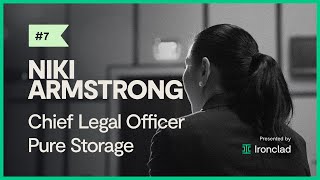
A recorded interview (host Mary O'Carroll with guest Niki Armstrong) exploring Niki Armstrong’s career path to becoming Chief Legal Officer and Corporate Secretary at Pure Storage, her leadership philosophy, and practical work she’s done to modernize legal through legal operations. Key themes: non-traditional legal background (employment/litigation) feeding strengths in agility and problem-solving; four CLO roles (guardian, strategist, change agent, optimizer); establishing a dedicated global legal operations & enablement function ("GLO team") to optimize capacity, automation, technology, and succession; tactics used—"permanent beta" mindset, forward-fill vs backfill, KPI-driven goals (reduce human touch by X%), and ROI-driven tool evaluation; plus personal anecdotes (co-founding nonprofit 'Fresh', appearing on Richard Branson’s reality show) and advice for first-time GCs/CLOs (hire smart, empower team, lean into legal ops).
Questions this video answers
April 27, 2023.
Five years ("In her five years at Pure...").
The "GLO" team (Global Legal Operations and Enablement function).
Chapters
Foreign.
Hello everyone and welcome to another episode of Pearls on Gloves Off. I am your host, Mary o', Carroll, and with me today is a dear friend of mine, Nikki Armstrong, who is the Chief Legal Officer and Corporate Secretary at Pure Storage, the IT pioneer that delivers the world's most advanced data storage technology and services. In her five years at Pure, Nikki has focused on building future focused solutions that are scalable and transformative, including of course, establishing Pure's first legal operations team, which brings efficient and collaborative legal support to stakeholders and partners across the business. Prior to joining Pure, Nikki also had in house experience at ebay, Cypress Semiconductor, FlexTronics, Auction.com and Nutanix. And she also served as a law clerk to the district Judge, District Chief Judge of the U.S. department of labor in New Orleans, and spent a number of years as an employment defense litigator at Gordon and Reese. Welcome, Nikki.
Thank you, Mary. It is so exciting to be here. Thank you for having me.
My pleasure. We have so much to talk about. I don't even know where to start. We're definitely going to talk about your amazing career, but we'll also get into some of the fun personal stuff as well. You are one of the very rare people in this professional world of ours where we actually knew each other and were friends socially before any of this. So I know we both have some great stories to share about each other. But first, you are the CLO at Pure Storage. You come from an employment law background and that when I heard, I was like, that's kind of unusual. Would you be able to talk us kind of quickly through your background and how you got here and kind of any observations on why it is rare to come from an employment background? Maybe how that's helped you, how it's hurt you.
Absolutely, yes. You really are right, Mary. It's incredibly unusual. And if you had told me 10 years ago that I would eventually be the CLO of a Fortune 1000 company, I would have asked if you were feeling okay. I used to think that really only traditional corporate securities trained lawyers could be GCs. But as I progressed in my career, I realized that GCs, quite frankly, come from all walks of practices. And, you know, it didn't hurt having a few of my former bosses who saw potential in me beyond just the employment law expertise. And they really pushed me to take on business roles, stretch assignments and lead project teams that gave me visibility with other execs and other senior leaders. And so when, when the opportunity to succeed my former manager at Pure arose, I initially got super excited and then about five minutes later, I thought, oh my goodness, I don't have the right substantive background or experience. I've not negotiated a limitation of liability clause with a customer. I wouldn't have known a proxy statement if it hit me in the face. Have I ever filed an ipr? No. Right?
Everyone has imposter syndrome, right? Everyone, indeed.
Indeed. But what I did have, and I know it sounds probably cliche, Mary, but you know, it's an eagerness to continue learning new things and really tackling a new challenge, and also a passion for inspiring a group of what I would consider to be some of the smartest people that I know, certainly motivated and energetic as well, and the desire to be part of an exceptional leadership team who truly care deeply about their people. So this was a really exciting opportunity for me. I think, you know, being an employment lawyer, has it helped or hurt me? I'd say it helped me in this role for a variety of reasons. For those out there in the legal world, you know that employment lawyers can tend to be very agile. No day is ever the same. We often say we can't write this stuff. But aside from the variation in sort of the tasks or the clients or the situations that come out, every case that you would deal with brings a unique set of facts and allegations that quite frankly are never, ever, ever boring and often require creative legal analysis and sometimes not even legal analysis, but just good business sense too, right?
Problem solving.
Right. Problem solving, yeah. I used to call myself the chief problem solver because that's really what you're doing every day. And the landscape is constantly changing in employment law. I know it changes in many areas of the law, but, you know, trying to stay on top of constantly changing regulations or laws. And if you're doing this globally, I mean, it just gets even tougher. So I think that has helped me as a GC or a clo, because you need to be able to adjust quickly to business changes. You have to have the ability to look at it from a 30,000 foot view and then zoom in and be able to get in the weeds if you need to. You know, I think that employment lawyers tend to be very uniquely positioned too, because we know how to weigh those risks. I think many of us who have made our way in house come from a litigation background. And so who better to know the possible, well, yucky consequences of a high profile lawsuit than a former employment litigator? And so, you know, even when I was thinking about the employment issues that might stem, like the legal issues that might stem from say, a disgruntled employee threatening to sue the company. I also thought about how would it affect the business, whether it was day to day operations, financial aspects, how much was this going to cost to overall reputational damage?
Absolutely.
So I think, you know, has it hurt me? I mean shifting gears a little bit. I know where my expertise ends and I rely very heavily on my very qualified deputies to educate me. But I also expect them to own their own verticals and they're really good at it and they will tell you I am not afraid to ask questions. So you know, I'm sure there's been a dumb one from time to time but I'm not going to learn any other way.
That's awesome. I love your mentality. I too love to hire people who are smarter than me or have strengths in areas that I know that I don't. But I also wanted to rewind just again the mindset that you've got and you spoke a little bit about having rotations or stretch opportunities or business experiences in your career. That's so important now I feel like to being a leader of an organization and being a general counsel or clo, it's no longer about just being the smartest lawyer in the room, right. The person who knows the fact patterns the best. It's actually the person who can really influence, can strategize, can help the company achieve its goals. You know I see you nodding like thoughts on that.
Yeah, it's interesting. You know, I know we've talked a little bit about in the past, you know, this, what is this CLO role, right. And I think we all recognize how, how invaluable in house legal advisors are to company. Obviously they get the ins and outs of a business. It gives them the ability to better grasp the potential risks and threat that a company might face. And I think you know, the CLO and maybe the G, you know the GC is a well known moniker, obviously a very well respected one. Clearly suggests the top lawyer within an in house department. We have seen more CLO titles and I think that CLO title brings with it sort of a balancing act between what I would consider four roles. Right. One is guardian, another is strategist, another is change agent and another is optimizer. And you know, I think with the evolution of GCC clos, I think oftentimes there's sort of more focus perhaps on providing business solutions to problems. They're usually alongside of their peers with the, you know, perhaps the chief Financial officer or the chief Product officer, maybe the chro, the CIO and I always like to say, you know, folks, we're, we're business folks who just happen to have law degrees. But I think going back to that balancing act, you know, I think a guardian is pretty self explanatory, right? It's really the foundational responsibility of, of the role of a GC or a cielo, right? You are the expert when it comes to guiding the company on, on legal and regulatory matters for the business. You've got to navigate a bunch of complexities while mitigating risk. Where it gets fun, though, is when you become a strategist, right? And this is where you put your business hat on and really leverage your legal training to support whatever the business's goals and objectives are. And I think it's important as a GC or a CLO to really understand what are those business goals, because then you can incorporate those into your own legal team strategy and Maybe even set KPIs or some metrics that will help you reach those. I think you also want to be that trusted business advisor, or if you're a Game of Thrones fan like me, you're really the hand of the king, right? So you can engage your CEOs, your fellow C suite or E staff, peers, and the board, by the way, on strategic issues and, you know, folks are going to look to you for the guidance. You know, I think the third thing I said was being a change agent. And, you know, I think you need to be able to have the trust, the executive team, and together be the shining example of your company's core values. Be the leader in building a strong corporate culture where people treat each other with respect and dignity and act with integrity. I think it's important as a change agent that you communicate purposefully, but not be afraid to respectfully challenge ideas and thoughts that you don't necessarily think, align or, you know, perhaps might not meet the business goals that you agreed upon.
So, you know, I can't imagine you challenging ideas ever.
Nikki?
No, not me, but yeah, sorry, go ahead. I was going to say I love what you said about the strategist part, and I've done a lot of talking about this topic because a lot of folks don't look at legal that way or don't see legal as having that responsibility. I do think that's where legal is going, or at least, you know, the role of the Cielo and that entire suite of departments that sits under him or her. And thinking about the company's goals as your goals, not as how you can support other parts of the company in achieving those goals. Right. And really putting that as your North Star is, is awesome. You've mentioned kind of the rise of the C C L O role. We are seeing that more and more in this space, particularly in large organizations. And I understand, you know, you kind of walk through the differences between what the GC does and the CLO does. Do you think that is a growing trend? Do you think we're going to see more CLO and GCs kind of working in parallel and growing?
I think so. And I, you know, I think that with the CLO also, you know, it may be that those folks have people or functions that are not necessarily just legal under them. I've seen in some cases you have a CLO who also manages HR or a facilities function, or in my case, I actually oversee our social impact and sustainability function, which is also our ESG function and our pure good foundation. So I have more than just legal under me. I have business functions, which is really. Actually, I love it. I absolutely love having more than just the legal. The legal team under me.
That's right. And we're seeing more and More CLOs have ESG as well as some of the corporate responsibility stuff. So that's great.
That's right. Yeah, that's right.
Well, let's shift gears just a little now. We'll come back to the legal stuff in a minute. But you and I go back likely over 20 years, I want to say.
So we met when we were nine. Right.
Exactly right. We're looking so good. We met in San Francisco in our, in our 20s. Okay, so I just dated us. But we both were part of founding a nonprofit organization.
So.
Nikki, you want to talk about what we, what we did there?
We. Yes, that was, that was such a fun time. And yes. So we, you know, didn't. Weren't we going to a bunch of non profit. I feel like we had been attending a bunch of nonprofit events and, you know, we started talking about how we could do it better. Of course we did. Of course. How can we do this better? How can we do it more efficiently? How can we be more fun? And sure enough, we came up with our own. And so was it a group of five or six of us? And gosh, we had a great time and we created Fresh. Yeah, right. We created a nonprofit social event.
Yeah, we created a nonprofit organization, a 501C3. It was called Fresh. And we basically threw a variety of social events to raise money for local charities. So it was for good. And we threw things like fashion shows and Comedy shows and themed galas and such. And so we were kind of building communities, you know, too, back then, but for good.
So. Absolutely.
I can say that working closely with someone like you in that environment, you know, firsthand, that they can hustle and they can get stuff done. So I've seen that firsthand with you.
Well, and, you know, it's. You know, I think back to that. I can't even remember the name of the hotel where we did that fashion show where we had the Runway over the water and just all of the crazy things. I think, if I recall the neck, like, I think that night, Insane Clown Posse was staying at the same hotel, which I think is like a death metal band. I could be wrong.
Yes, this rings a bell.
All I know is there was a very interesting crowd there while we were also there. And I was deathly afraid that somebody was going to fall in the water with the clothes that we had, like, gotten from whoever we, you know, we got the clothes from, and we were going to be in trouble. But we had a great time. Nothing crazy happened. And I think we even had, like, Johnny Mosley come, didn't we?
Oh, yeah. We had all the local celebs would come to our events. That was fun. And you're right, we built the Runway over the swimming pool, so that was amazing. And we had local, like, bachelor and bachelorette contestants who were in the Bay Area walk the fashion show, too. So, yeah, it was fun. You had all these local celebs.
We need to. We need to, like, bring it back. We gotta bring it back to, like, Phoenix Rising of the fresh events.
Well, that was fun. And then, of course, there's no way I cannot mention the reality show here. Right?
So.
So we were hanging out a lot in our 20s, and there was a period where reality shows were just kind of taken off. Like, there was all flavors. I mean, now they're everywhere. But back then, it was kind of new. And Donald Trump even had a show called the Apprentice for those who weren't around and watching reality shows, that was, like, a big hit where people kind of competed on business skills.
Right? And then.
And then Richard Branson, who we all know Sir Richard Branson from the Virgin Media and Virgin Empire, decided to come up with his own show, which, unfortunately, I think, only lasted one season. But it was a very cool concept. So similar to the Apprentice, you had to compete on business challenges, and you're entrepreneurial, sort of savvy, but there was also this element of physical dares and challenges. And so I saw that, and I was like, that sounds fun. And they're doing this live audition in San Francisco, and I've got nothing else to do this weekend, so I'm definitely going to audition for that. So I call up Nikki and I'm like, I'm going to do this thing, but I don't want to go by myself. Do you want to come hang out and wait in line with me all day and do this audition? So Nikki just is down and just decides to come along for fun. And what actually happens, she gets chosen. And so we've got to talk about this for a moment, because you were on TV every week and we had watch parties, but you were competing on Richard Branson's TV show.
Yes. Yes. And wow. I mean, what an experience. We were actually just. I was just talking with one of my former castmates, slash now friends, and we were saying, it's been, gosh, 17, 18 years now since we did that, which is crazy. It's crazy that it's been that long.
And I bet they're all super successful now.
It was so much fun. Well, we did have. Yes, we had some really exciting people on the show, but it was, you know, like you said, it was sort of like the Apprentice meets, you know, the Amazing Race, because we traveled around the world and we got to compete in. You know, of course, if, you know Richard Branson, he's not just all business. He's. Let's have some fun, too. And so it was. It was just an incredible experience to travel around the world, learn from him, and really understand how he. How he led and inspired, you know, and built his empire. And it's. It's. You know, I think about it to this day, and it's just. It's so amazing what he's done. And he just celebrated his 72nd birthday.
And. Are all these on YouTube? Like, can you go back and watch them now?
You might be able to. There's some snippets I found.
And Nikki was portrayed as the villain, right.
Oh, the female. The female lawyer. I'm just gonna call it the female lawyer who was very focused on getting stuff. Yes.
Yes. You are awesome. And the winner wasn't the winner, Sarah Blakely of Spanx fame.
The actual. The winner was Sean Nelson of Lovesac.
Oh, yeah.
So he used to have giant beanbags, but now it's morphed into this fantastic, amazing furniture store. And actually, they just went public last year. Sean's been doing this for, gosh, I think, since he turned 18. So he's been doing this forever. And I am proud to say that I have Lovesacks in the house. We love to support Sean and Lovesac, but he's built a very big empire out of that's amazing bags. And so far.
Yeah, they're in my mall. I've seen them. But Sarah Blakely was also on the show.
She was, yes.
So that was a great cast.
We had a. Oh, it was such a fun time. I mean, we. Yeah, you know, we went, like, all over the place, from, you know, England, obviously, to South Africa, Mozambique, Zimbabwe, Morocco, Hong Kong, Japan.
And what. What physical challenge did you have to participate in? Like, tell us about one of them.
Oh, my goodness. Well, you know, the first morning we woke up, we were woken up at about 3 o' clock in the morning and, you know, trying to hustle 16 of us out, and we're. We're in England somewhere out in the country, and they hustled us all out to a field. And we figured at some point there would be a challenge with a hot air balloon. And sure enough, there's hot air balloons out there. So we're like, yes. This is exciting. If you've ever gone hot air ballooning, you usually go early morning. We get into the hot air balloon, and as we sort of start going up, we realize it's actually attached to another hot air balloon by a beam about 20ft long.
Oh, I remember.
And it's like a balance beam, right? It's probably, like, I don't know, three, four inches across. So we go up, and the challenge is you need to cross between the two hot air balloons at, like, 7,500ft in the sky. And you can't. There's. There's, there's like, cables between the two, and you can't touch the cable. So you literally have to balance on a beam. You have to get out of a balloon.
Yeah, no, no, no, no.
And, and, and, like, as you get out, you know that your weight shifts the balloon, and then the balloon goes up and one goes down, and it. And you're looking over the English countryside and there's sheep down there. That's really, really, really far away. And, you know, you're like, I don't know if I can do this, but we did.
That's amazing. Man is meant to be on land, so that's terrifying.
I don't think I'd step out onto a balance beam in between two hot.
Air, two moving things. That's crazy. So much fun. Okay, so. So time passes. The two of us stay in touch. We got married, we had kids. We built careers. We both lived in the suburbs, going to like Mommy and Me, music together, classes and whatnot. And then kind of came the next stage in our friendship, which turned a bit professional because I know you started working in house at a lot of tech companies, which we talked about, and I was at Google. And so we used to cross paths in those roles from time to time. And then most recently, of course, you became GC of pure. You reached out to me once that happened, which we were really excited about, and you said you wanted to talk about legal operations because it was going to be something that was really important to you and you were going to make that a priority of your department, which of course is music to my ears. And I love clo's like that. So. So you and I grabbed lunch. We sadly went to a place that we discovered did not serve wine, but we ended up chatting anyway.
I know it was a cute place.
But who doesn't have a wine license?
Unfortunately, we're not. Could we bring a bottle? I couldn't.
We just didn't know better.
Yeah. That was a shame, by the way, because that place was really cute.
It was cute. We really wanted to be ladies who were lunching. But anyway, more importantly, we were talking about Legal Ops and would love to hear kind of the situation. I mean, you were already at Pure, you were already on the team for several years. What was the situation that you walked into as general coun and what made you want to make Legal Ops a priority?
That's a great question. Now, my predecessor built a fantastic team and just a phenomenal foundation. So I actually stepped into a very high performing team. I had the benefit of obviously having known a number of them already. I didn't have to onboard in the middle of COVID and try to figure out who was who. But one of the things that I think we suffered from is we've always done things the same way and we didn't really kind of look at it as a way to look at things as a way to improve them because it wasn't really broke. And that saying if it ain't broke, don't fix it. Well, this goes back to one of those four pillars that I was talking about and I actually didn't touch on this one because I knew we'd get into Legal Ops. But. But that fourth balancing act that a CLO or a GC needs to really be is an optimizer. And I think this is something that we don't do enough of in the legal profession. And I think how many times have you GCs out there been told you need to do more with less or nope, you're not getting budget for that headcount and you just got to make it work. And I think this is where we, where I thought, wow, I think we can really make an impact and quite frankly demonstrate the value of our function to pure. And so generally speaking, to be an optimizer, you really need to think about building a strong legal ops function. You need to think about optimizing capabilities and talent and service levels and costs and structure. Is the way you're doing things now the most efficient? Is it the most scalable way of doing things? Or are you just doing it because it's always been done like that and seems to work just fine? So for me, I said, folks, I want you to think of ourselves in permanent beta. Let's think about ways that we can constantly refine scale automate. Of course, that always is met with, well, I don't want to automate myself out of a job. If you automate yourself out of a job, I will give you a new one. Okay, I will give you an absolute new one and a better one and a better one. Right? So, you know, how do we automate to increase our effectiveness without losing that service with a smile methodology or philosophy that we've always been known for. And so that, that was what I really wanted to tackle. And you know, at its core, I think legal ops is really about capacity building, right? It's allowing legal teams to deliver more efficient services to both its internal and external clients. And I didn't want, and I give this advice to people because I think there was a point where as I took over, some of the team was feeling a little overworked. You should never wait until teams are feeling overworked or close to burnout or discover their white gloving everything that hits their desk to start thinking, oh, maybe I should start thinking about how to refine or improve that business process or get more resources. Right? And when I think about resources, the first thing people think about is, well, I need headcount, head count and budget every time, right?
Headcount and budget.
That's right. And I immediately started thinking, well, you know what though? Another person or human, or as we call it, human middleware, it may not always be the answer. And I think an effective legal ops function or team can help determine that. So instead of hiring ahead, is the investment better spent on technology? For instance, that could automate a process which would then allow your team member to focus on higher level, more Strategic.
Exactly.
Maybe it's digging into that external legal spin to determine if you could create a program that would ultimately save money. Maybe that's an alternative fee arrangement, I don't know. But this all falls within that realm of legal ops and many teams. Many legal functions don't have a team, much less a single person dedicated to it. And so when I came into my role, I kind of peeled back the onion for the first four, five months. And then at that point I was like, nope, I need a legal ops function, a dedicated one that's going to focus on these things because I don't want my teams burning out. I want to figure out how we achieve building capacity and effectiveness, how that impacts work, life, harmony. For my team members, it gives them more strategic work, it allows for more career development. And then ultimately, I mean, that's all.
That's right. That's right. Well, I love so many of the things you said. I mean, one of the. I'll just echo. And it sounds like you're talking out of my talking points and playbooks already.
So.
If it ain't broke. We hear that so often from legal leaders saying, you know, we've been doing it this way a long time and we're servicing our clients just fine and they like us and they're happy it ain't broke. But the fact of the matter is that what, what got you here won't get you there. The way it's been working for the last hundred years is not the way it needs to work in the future. And every other part, amen. Every part of your organ is modernizing, right? Finance, hr, sales, name it, they are all modernizing. They're transforming using data, using technology. And if legal just goes around saying we're just going to do things the way we've always done it, that is going to hold up the rest of the company. So that can't be. And you can't. Like you said, you can't wait till it breaks. You can't wait till you get to the point that everyone's complaining.
Right? And you don't know what, you don't want to be the bottleneck. You don't want to be that department of, no, we can't do it because of X, Y or Z. We pride our on trying to be creative and find innovative solutions to helping move the business forward, not stalling it. And so how do we do that? We do it by automating. We do it by creating scalabilities, by creating better processes. And once we do that, it's time to look back and revisit it again, because there are always ways to refine it. And he's been in the news a lot. But Elon Musk, he's great at that. He looks at the process and tears it apart and continues to revisit it. And that's what he did with Tesla. It's what he's done with a number of his other companies. And so I think it's a great philosophy to have used that term permanent beta. And I kind of like that because it just suggests there's always room.
I love the permanent beta thing. I might refer to that in the future. You also mentioned the tendency that so many have to respond to the need to scale or respond to the need to do more by just adding headcount. And I also mentioned adding budget, which refers to outside counsel, is just adding headcount in another way. And we're in the midst of an economic downturn right now. My philosophy has always been now is the time for legal ops to step up and really show our stuff because budgets are held, headcount is frozen often and you still have to keep up with the business and you still have to deliver on delivering legal services. And so how are you going to do that? Where are you going to invest the limited amounts that you have in your resources and what's the force multiplier that you can apply to your department to really get the most out of everyone? And to your point, not burning them out, actually creating opportunities for them to have better professionals satisfaction and work on the right things. And now is the time, I think, where you need to invest in operations, on looking at. Right sourcing on looking at technology and automation and those, you know, now is not the time to sort of like turn your head away from some of those things.
Oh, I absolutely agree. And I think, you know, if I could, you know, really harp on this, it's if you don't have a legal ops team already, I suggest that you get one or at least have somebody dedicated on your team. One of the things that we did was I actually created an opportunity for one of my team members who actually headed up our procurement function and she is now leading our global legal operations and enablement function. We call it the GLO team. So we, we gave that opportunity to somebody within our legal team. And I think that's the beauty of legal ops is it doesn't have to be a lawyer, it doesn't have to be a non lawyer. You have so many different professional expertise that could be brought to the table. Whether you are a lawyer, whether you're a data scientist, whether you're an operations person, there's just so many, many. You could literally bring them all together and they would all have something to contribute in the legal ops.
And I love that you keep saying dedicated because oftentimes we see this as a, well, I'm gonna dabble in it, I think it's important, but I'm just not ready to dedicate a full headcount. So it's going to be a split role. Someone's going to be half time focused on this stuff. But, you know, you never. The client work always comes first.
It's.
You're never going to get the time to invest properly if you're not dedicated.
Well, that's exactly right. And I think, you know, part of my impetus for creating this vertical was, you know, for three or four years we did our annual, I'll call it our legal ops review. And we would get in a room together and we'd talk about all these big rocks and sort of the big hairy, audacious goals, things that we wanted to do. And to your point, Mary, where, you know, legal tends to be a very reactive function. And so you're, you're doing a lot of firefighting and so it's oftentimes you don't get a chance to get ahead on those big, hairy, audacious goals that you really wanted to, but you just don't have time. And so that legal operations function serves as the catalyst to helping keep you on track. Quite frankly, it's not just about trying to figure out resource planning. Right. It's also about helping to set KPIs or metrics to measure what we're doing and using that data to figure out how to better optimize and scale. And then again, where can we optimize technology to give those folks a better, the opportunity to focus on that more strategic work? I also think, think succession planning, this is something that could fall with it. This is something that not everybody has a lot of time to do, but we're all expected to do it. Legal operations can help with succession planning, career development, making sure that people have those opportunities ahead of them and they keep us on track. And that's exactly what my team is doing.
Any special project that, you know, needs to get done, but you as a GC or CLO are going to, I don't have time or the time needed to be able to focus on this properly. So I know, like my team, whenever we had some huge regulation come down from someone in Europe we would say, well, this is important. This is a huge cross functional company top initiative. Who is going to run this? And so the legal ops team would step up and basically work cross functionally leading with legal and policy and comms and product and get everyone aligned to be able to comply and deliver on time. So absolutely, they can be a variety of things.
Absolutely. And in fact, you know, a couple of things that I did, you know, once we established that and our team, the GLOW team focused on, but you know, that I think was very important, a very important initiative and that was identifying skill and subject matter, expertise, gaps, something that we hadn't really done before because again, people get so overloaded with work, they're like, oh, I need a person. But we realized that might not be, let's take our time and let's not just backfill if somebody leaves or just 100%. We really thoughtfully, we created the forward fill. Right. As opposed to a backfill. So the forward fill is, let's not go there right away. Let's see where the gaps are when this person leaves, if there are any gaps. And if there are, let's identify is it a person that needs to fill those gaps or is it a process or a form or a platform that we could use? Maybe it's a knowledge base article that we can help drive people to it so they can self serve. That has really helped shift, you know, sort of help us understand what we need going forward. And that's given the teams also some time to really again focus on some of that higher level work. It's been really, really fantastic. So you know, the concept of a forward fill versus a backfill where we kind of love it.
I'm so inspired. I kind of want to roll my sleeves up and jump in with your team and start doing the gloves again.
Come on over, come on over.
So what are some of the initiatives that you mentioned? Some of them already, but maybe on technology. Then you've mentioned technology. What role do you think tech plays for you?
Yeah, so for us, technology is really important. We do have a number of tools that we use. We're actually in the process of evaluating them. We're literally right now in the process of evaluating which ones we use, how often are we using them, what is the ROI on these? Because if we're not using them, do we really need them and is there a better investment? Or for example, are we using a tool that we're really only 10% of it when we could be actually leveraging 80% and perhaps that could also be used by something else, operations or finance. This is what we're looking at right now. I think this is really crucial. We're also in the process of. The team did a fantastic job. They, in the first half of the year of setting goals and really setting goals that were smart. And when I say I mean smart, I mean like measurable. Yes.
Smart model.
Yes, exactly. There you go. Not just like intelligent. So it's been fantastic because they really have had a mind shift around how to do this and thinking in terms of what metric or what goal will help tell a story as to what they need. So instead of simply saying, oh, our goal is to continue to support the business. Well, that's not really a goal. That's really our job, you know, and seeing something like, well, I've. I reviewed 964ndas this past quarter. Is that, is that. That's a lagging indicator. So give me something that we can think about in terms of a leading indicator and then we can measure that and say, okay, well, how can we get better? So those are some of the things that we're doing. We're now in the process of looking what we did in the first half, and we're going to go into the second half and measure against those that baseline that we've established, which is really exciting because these are things that could simply be as simple as, well, you know, we want to increase, or, I'm sorry, we want to decrease human touch on these deals by 5%. And that doesn't seem like a lot, but, you know, 5%.
Yeah, do the math.
That frees up my transactions team to do even more. Right. So these are the things that we're thinking of. And you know, I think I already mentioned we did do some identification of skill and subject matter, expertise gaps, and then we're looking at just refining our legal ops model to figure out what else we need, because again, we're in our infancy. It's less than a year old, but they've made huge strides in that.
That's fantastic. I mean, so many departments I talk to that are just getting off the ground. You're doing exactly kind of the advice that I give, which is figure out what your current state is, what your department looks like today and how it works, what could be better, what's working well, and then knowing where the company's going, figuring out what the department needs to look like in a year, two years, five years, and your job doing that. But what I like what you said earlier about always being in beta is you don't just do that exercise the first year and then decide that that's the five year plan that you're marching towards. Because that is the only thing we know is that it's going to change. All the initiatives will change, the technology that's available will change, the way the world works and communicates and decisions are made and the data that's available will change. And so you constantly need to iterate on that plan and not keep it in a box. But go back to that sort of almost quarterly or annually saying, now this is what we look like today. Are we, are we getting closer to what we need to look like tomorrow? And has that tomorrow shifted?
It's like when they build freeways. They build freeways and they think about what it's going to be like in maybe like three years, but by the time they finish it in 10 years, it's already out of date. And you're like, I should have thought about this on a 15 year plan. So you need to constantly be thinking about how to change these things and not, don't get stuck in a rut, but don't, don't think just because it works that it's the best way.
There's always room for improvement even when you're doing really well. And that's a good mindset to have. This has been really fun. I just another kind of final question that I definitely wanted to ask you is any advice you have there for those who are kind of first time gcs, first time clos, what skills are kind of more important than you realized or how can they prepare for that kind of this next stage in their careers?
Yeah, I think that's a great question. And you know, I remember having a conversation with my predecessor and I said.
You know, he speaks very highly of you, by the way.
Imposter shout out to Joe Fitzgerald. But you know, he told me this isn't about knowing everything, right? It's not about knowing all that you need to know about the law. It's about inspiring the team and leading them to be their best selves. And so that to me resonated because it actually made me feel a lot better that I, you know, I hadn't ever filed like a proxy and things like that. And so, you know, how do you inspire a team to do their best? You do it by hiring smart, smart, motivated, fun people and empower them to do what you hired them to do. They will bring their best, I promise. And you know, for new GCs or CLOs that have these teams, your job it's their success. Ask them what you can do to help them, because you are often the one who can remove obstacles that might be in their way and ensure you're giving them ample opportunities to develop themselves professionally and personally. Please make sure, you know, obviously, your team has work, life, harmony. And, you know, I think one of the greatest ways to do that is dig in on legal operations. Right? It's the quickest way to build efficiency, scalability, and have happy team members.
Oh, my God. I did not even pay you to say that. That is amazing. Thank you. No, no, thank you for being such an advocate for legal Labs. I know that so many people in this field would love to have a CLO like you at the helm. So for all that you do to inspire this profession, we appreciate it. So thank you, Nikki, for being here. To all the folks out there, thanks so much for listening. As always, please feel free to reach out and suggest people you might want to hear from on future episodes and even raise your own hand to be a part of this podcast. And thanks again, Nikki. We'll see you all next time.
You got it, Mary. Thanks for having me.
More from Mary








#56 Ending the Billable Hour Chris Grant’s Mission to Transform Legal Services


