Reinventing Law Firm Leadership with Scott Westfahl at Harvard Law School
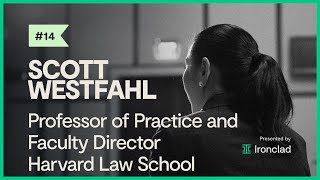
This is a recorded interview (YouTube) of Mary O'Carroll with Scott Westfahl (Director, Harvard Law School Executive Education). Westfahl recounts his career (HLS grad, law firm practice, McKinsey, Goodwin Proctor, then Harvard), contrasts consulting and legal firm cultures—particularly consulting's emphasis on co-equal client-and-people missions, project launches, and robust feedback—with law's weaker feedback, team, and development systems. He describes Harvard Law School Executive Education programs, and explains adaptive leadership (technical vs adaptive challenges, stakeholder analysis, leading without authority, productive disequilibrium) and how those ideas apply to DEI, hybrid work, innovation, and the sustainability of legal practice.
Chapters
Foreign.
Hello everyone, and welcome to Pearls on Gloves Off. I'm your host, Mary o', Carroll, and today you are in for a real treat. My guest today is Scott Westfall, Director of Harvard Law School Executive Education, who also teaches courses on leadership, design, thinking and innovation within the law school's JD curriculum. In his role, he leads the Harvard Law School effort to support and develop lawyers across the arc of their careers, particularly as they advance to new levels of leadership and responsibility. He oversees and teaches global leadership programs for law firm managing partners, emerging law firm leaders, law firm associates, and general counsel. He also collaborates with HLS colleagues and other Harvard faculty to design and teach custom programs for law firms, legal departments, government agencies, and other legal related organizations. Welcome, Scott. It is such a pleasure to have you here today.
Thank you, Mary. It's wonderful to be together with you virtually here and I'm looking forward to this conversation. I always enjoy our exchanges.
Me too. There are so many things to talk about. And perhaps we can start with you kind of going briefly through your journey and your background even before what I explained you do at Harvard, because I think your path and your experience is actually given your really great perspective and skills on how to coach the next generation of leaders. Then after that, we can kind of dive into your role at Harvard and what it means to have an executive program. But tell me about, you know, where you started and your journey to Goodwin and McKinsey.
Yeah. Thank you. It's been an interesting journey. I started out graduating from Harvard Law School a long time ago. In 1988. I moved down to Washington, D.C. because I thought it'd be an interesting place to practice law. There's a little bit of everything in Washington. And I joined a small office of a large firm, practiced there for 10 years doing a wide variety of great things. And during that time I sort of found my passion for trying to look at people's development and help people who were in a system that, you know, the large law firm system that wasn't necessarily good at thinking about intentionally about professional development anyways. And so I was running the summer associate program and I was hiring a attorney for my six a hiring attorney for my office for six years. And I was, you know, an informal mentor to so many associates and a writing coach and softball team manager, United Way campaign leader, all of the things trying to build community in the office and through a connection. All of a sudden I was introduced to McKinsey and they were looking for someone to come into their Washington, D.C. office to lead professional development. They had reached out to an alum who was a friend of mine and she said, I'm not interested in that job, but I know a lawyer who'd be so good at it. And I really didn't know anything about the consultant world at the time. I knew I was frustrated by the big law model and it's inattention to professional development and intentional professional development. I went over as a courtesy, interviewed and all of a sudden it was like looking at the other side of the moon. Everything I'd always wanted a large law firm to be doing in terms of feedback, development, leadership programs, aligning assignments deliberately with someone's development needs and interests, creating team environments and working at budget lean teams. It was all right there and I jumped ship and I took that job at McKinsey. I was there for six years leading professional development for them in D.C. and then moved on when Goodwin Proctor heard about me. And they said, you speak lawyer, you've seen this whole other model for developing talent. Could you come here and try to bring some of those approaches over to the legal profession? And I was very excited to try that. Regina Pisa, the managing partner and chair of the firm at the time, she was the first woman ever to be managing partner and chair of an AMLA 100 firm, is very convincing and you can't really say no to Regina. She said, you're going to come here, you're going to write a book, I'm going to let you build a team and we're going to do all these great things. And it all came true. It took a while to get some momentum going, but I was very proud of the achievements we made. And during that time I was contacted by my favorite professor from my Harvard Law School days, David Wilkins. And he reached out when the school had developed new team based course, mandatory course for first year students during the January term. It was a problem solving workshop. They said, hey, you know, you're a problem solver, you know about teams. Why don't you teach this with me? And so for four years, Goodwin was generous and let me do that every January. And then in April 2013, I got a call from Martha Minow, who was then Harvard Law School dean, offering me the job to come lead our executive education programs. And so since September 2013, I've been a full time faculty member and I have absolutely loved what I do.
So amazing. I want to hear more about that, but let's go back just briefly because I think what is so interesting about your background, having done professional development at McKinsey and as you said, when you got there, having worked in the legal world for a while, your eyes were opened into kind of what was possible. And then going back to a law firm, consultancies and law firms, they're both professional services, but they are run very differently, they have different cultures. What surprised you or what did you observe as different in the way that those firms operate or you know, how lawyers operate versus consultants do?
Yeah, from the high level down at the high level. You know, McKinsey right off the bat was telling me we have a dual mission to serve clients and develop people and those are co equal. And that was a shocking revelation for me because in the law, in law school, we orient students towards clients first, clients first. And in the law firm world, even in the in house world, it's always the client comes first. And I think we do ourselves a disservice. It's noble to put the client first and be humble in service as an agent, not the principal. But we forget to take care of ourselves. And other organizations, the consulting firms, the big four, have figured out that if you put your own people first or you make it co equal in a mission to develop them, you're going to serve your clients more effectively and you're going to create a more sustainable, viable path towards developing leaders. And that's what I was really surprised by. Then it came down to the micro levels and I'm starting to see how they actually work so differently. Every time a project launches in the consulting world, they have an actual project launch meeting where the partner talks about here's the client, here's why the work matters, here's what we're going to do. People share about their backgrounds, their experiences, what they're hoping to learn from the assignment, their MBTI types, their scheduling conflicts. They have a real organizational meeting and, and the research about effective teams, I know now as an academic, team launches are highly predictive of a team's eventual success. In One study was 35%, I think, predictive of success. But in 10 years of practicing law, I never had a team launch meeting. I remember also, we just don't do that as lawyers. We don't work in teams. We work in what experts would call a hierarchical, loose working group where work flows from the top and goes on down to various levels and then trickles back up and is aggregated but in teams. In all other professions, the military, consulting firms, accounting firms, they will launch with a formal kind of launch. Let's get on the same page. What are our goals? Get people excited about the project. They will have Reflection throughout the project about what's going well, what's not, not only with respect to the client service, but how they're working together. And at the end, at the end, they will always do a post project debrief. You know, the military is famous for this, the after action debrief. You know, you go around with Lt. Talks to the platoon, like every soldier saying something that went well, something they should try to look at next time to do better so they're more safe on the battlefield or more effective. And again, in 10 years of practicing law, I never once experienced any of that. My first day at McKinsey too, the feedback culture is so different, you know, because I was now in charge of professional development. My assistant brought in a whole stack of performance reviews. They were post project performance reviews, not annual reviews. You finish a project there, you get a detailed written report. I start reading the first one and I cannot believe the level of thoughtful detail in this feedback report. And I look at the name, who wrote this? I have to meet that person. They're incredible. Then I put it aside, I start reading the next one. The incredible, equally the whole stack. Like in 10 years, again, I'm practicing well, I never once saw a feedback report that was, here's what you could have done better, here's what you're doing well, here's what I recommend and how you apply your strengths going forward were, they were amazing. And you know, the, the idea that, you know, performance can be enhanced by feedback is just lost in the legal profession starting from first year. So this January, I'm teaching a class for first year law students. They just survived first year fall and you know, they got no feedback during first year fall about how well they were doing throughout the course to course correct, to see, you know, where am I? My understanding material, how could I understand this better? How could I apply it better? They take one ex them at the end of the semester, they still haven't gotten their grades yet, so they're all kind of terrified right now. And it's terrible to me, we're a learning organization as a university and as a law school, but we're not giving feedback for development and growth. We give them grades to rate and rank them for the benefit of judges and employers who might want to hire them. And it's causing undue mental health stress, but it's also, it's, it's, it's not helping them learn. And then it's not a surprise to me that we go out in the legal profession and legal organizations are terrible about Giving feedback back either in the moment, during a project, at the end of the project, or the annual review, where you get something that's completely unusable for the most part. What most associates still tell me, it becomes really difficult, I think, going to the consulting world and seeing this deliberate attention to the development and growth of people. They take people offline every year and a half, two years for a major training program to prepare them for the next leadership role they're going to play. And you mentioned in my biography that this focus of Harvard Law School executive education is to help lawyers across the arc of their careers to develop the leadership and professional skills they need to thrive. We just haven't had that as a tradition in our profession at all. And you get leaders of billion dollar revenue law firms who've never once had leadership training and they're smart and they can figure a lot of things out. Obvious the firms are successful, but. But the potential is there for so much more. And to me, that sad. It's sort of a sink or swim philosophy. And when you think about the. This what sink or swim came from the, you know, the classic, you know, I'm going to roll people out in the boat and I'm going to throw them in the lake and some are going to drown and some are going to swim and we'll figure that out. It's Darwinian. You know, the reality is if you do that, you know, some people are going to need to be rescued. Some people are dog paddling. Some people become pretty good swimmers naturally. But no becomes Michael Phelps without coaching. You watch what Michael, Coach Michael Phelps did when he prepared for his, you know, great Olympic runs. You watch tape of him. He got so much coaching and feedback and every time his hand entered the water on his freestyle crawl, it was within a millimeter of where it was the last time. And he was absolutely perfect. All the filming, all the coaching, that's how you produce great leaders. And our in the legal profession is just not invested that way relative to other professions. We completely underinvest.
Yeah, and this is exactly why I love speaking with you, Scott, because I feel like you've seen it from both sides. And I have this saying, just because it's obvious doesn't make it easy. We can look at all these other professions that are adjacent to us or have gone ahead of us in legal, and we look at legal and we can identify all the challenges and all the things that we can do better. And yet it feels like it's still an upward battle. And have you seen law Firms change, law schools change. It's still the same conversations. I think we are getting better. It's more education, there's more of these conversations happening. But why haven't we learned? Why haven't we changed in all this time?
It's painstakingly slow, without a doubt. And in part it's because again, legal education sets us up for this individualistic experience, not a team based experience. And what I know from teaching about lawyer psychology is that we get wrapped up in a task orientation. We tend to move from task to task and keep our heads down. We're the least self reflective of professionals is something I like to say. Other professionals are taking the time to step back and say, where am I in my career? What could I learn to be more, to be more effective in this next role I'm taking on? We don't take that time for reflection because we're always busy in service of the next client, in service of the next project. We move project to project, heads down, and it makes it very difficult. We're also of course, a very tradition bound profession, which makes things trickier. We're more diverse than the average population. So advocating for change within that system is hard. And I'm not one who believes you throw out the baby with the bathwater. There's a lot of things about traditional legal practice and education that are very helpful. Helpful. I mean the legal analytical skills and the powerful analytical tools we develop in people are, and the oral and written advocacy tools we develop as lawyers are fantastic. And the systems to develop those are important to retain. We just need to build on them and flex with them to produce better lawyers and also to produce a more sustainable profession and one that is anchored in meaning and purpose. Those are the things I'm talking about most these days coming out of the pandemic, you know, in two, two lenses. One is that during the pandemic, of course, all the research you're seeing is about people were searching for meaning and purpose in their work. And the great resignation was happening. Large law firms were experiencing 30 or 35% associate attrition. So during that time, so many of my former students, third, fourth, fifth year associates at law firms were calling me, asking me to help, you know, place them somewhere else. And, and the undercurrent of that, a lot of it was just, you know, like do this. But it's, you know, either not challenging or I really don't know what the purpose and meaning of it is. They were looking for something different. We are, we are terrible at four levels on this and this is, you know, it's striking at the profession wide level. The legal profession itself has a, you know, pretty poor reputation across the world in terms of how helpful it is to people. We don't do a good job as a profession. Talking about how lawyers make a difference in the world. I was just told that the new head of the IBA is going to engage a consulting firm to show us with metrics like how important lawyers actually are to the, you know, the rule of law, the functioning of societies. And we don't tell that story well at the organizational level. You know, I did a survey just at the beginning of COVID Only 14 of the AMLO 100 firms even had a mission statement on their website. It's gotten marginally a little better, but most of those mission statements were written by the marketing department. No lawyer knows them. And in organizations as have I, where you just knew what the mission was. At McKinsey, every day I log in the mission and the values of the firm came right up on my computer. We talked about them and lived them all the time. Not perfectly, no organization does, but, but there they were. And it was a really helpful guidepost when there were decisions to be made and actions to be taken. Harvard Business School has their mission statement everywhere around the school. You can find it, they all know it verbatim. Harvard Law School doesn't have a mission statement like as lawyers, we don't, we don't orient our that way. We're in service of others. Again, it's a really strange thing. So at the organizational level, people aren't coming to work knowing that they're making a difference or why they're there. You know, it's sad. Then at the project level, as I mentioned, the team level, you're launching the project, you're assigned to the project, but no one tells you why the work matters, who the client is, what the context is, and you're left out of it. And if you may get a singular conversation, but the team's not gathering and developing team energy around it. The fourth final level is the individual leadership level. The most powerful leaders, when you look at who gets buy in among their people, are able to tell what we call from our Kennedy School of government the story of self. This is from the leadership practice public narrative that was developed by Marshall Ganz at our Kennedy School. And the story of self is, you know, why do I deeply care about something? If I can't articulate that to you, why, why should you care about it? His framework is three stories. The story of Self, you know, why do I care? The story of us, why we should care, and the story of now. What should we do now? It's a bias towards action. It's beautiful. It's a great framework. I'm working with law firm leaders, general counsel and law students even in my class tomorrow on this. Can you tell your story yourself? Why did you come to law school? Why are you a lawyer? And it's. We did a full day workshop in a, in a program we ran for senior law firm leaders. It was a five and a half day program. One of the days was devoted to this public narrative practice. And it was fascinating because we, we had these, you know, law firm leaders, very senior, digging deep into their motivation and being able to craft and tell a narrative. And it only takes a minute or two, but it's incredibly powerful when you suddenly hear from someone why they deeply care. And again, 10 years of practicing law, I never once heard a story that sounded like, you know, here's why I became a lawyer, here's what I really believe in that's so motivating. This is all right in front of us, but I think, as you said, we miss the obvious sometimes. The second framework, meaning and purpose, is one. Oh, maybe one other anecdote that I thought was really funny. So just before the pandemic, one of my former students sends me an email. He had gone to a legal tech startup after law school, then went to McKinsey for four years. And he was just leaving McKinsey and he wrote a blog post about his wonderful experience in consulting. So he sends me the blog post. Professor, you might want to see this. I had a great time at McKinsey and wanted to let you know, read this blog post. So I read the blog post. I call it up and it says in the third paragraph, opening sentence, unlike people from older generations, I and my friends really want to find meaning and purpose in my work. And it just floored me. I'm like, wait a minute. He has the impression that I don't care about meaning. And none of us in older generations do. Why? Because we don't talk about it. And we're, you know, we've never really explained to them, of course we care about it. You cannot be, you know, a successful, you know, legal professional without having some tie to caring about what you do. It's just too hard. And there's so many law firm partners I know who are amazing lawyers and deeply, they love it, but they've never said why. You know, they don't know how to talk about it. That 90 minute conversation can be so motivating for people. The second level that I missed, the things that are so obvious are that like we, we don't live sustainably as a profession and we have, we continue to have, you know, you know, really high levels of mental health issues, you know, suicide, substance abuse, and beyond that, just burnout. And we've created systems and this is both law firms and in house practice, sometimes government practice as well, and public sector lawyers where, you know, we ask so much of the individuals that, you know, it's, it's not work done at a human pace, it's highly individual and not team based. So it's easier to burn out because you don't have community that way you're isolated. And it has deep implications for the profession itself. We're not able to retain some really great lawyers who otherwise should be part of the system. And I, I'm looking at the conversations that corporate leaders are having around esg. You know, when I think about environment, social governance, and I think about stakeholder driven capitalism, it's really interesting concept. I think there's a lot of academic debate about how you might put that in place or whether it can ever have teeth. The regulatory agencies are studying it, but now what's happening is corporate leaders are telling their general counsel, you need to start reporting on ESG related matters. And they're going to start reaching out to their outside counsel and say, look, you have to report up very simple what happened in the diversity, equity, inclusion space where corporate leaders cared about it, they told the general counsel to care about it. The general counsel pressured law firms to become more diverse. And that dialogue and that reporting is quite extensive now. Progress is slow, but the dialogue is extensive. I kind of feel like this could move in that direction where if we're thinking about stakeholders and we're thinking about who are the stakeholders in the legal component of the system, generally counsel legal departments then reaching out to their law firms. What does sustainability mean in that context? And for me, I think in the products world and supply chain, sustainability is, you know, renewable energy, renewable sources of supply. We're a human capital profession. And to me, I really hope that we can start a dialogue around sustainability of human capital and figure out how could we build better models of the practice of law so that, that people can, can, can thrive. And we're looking at a broader set of stakeholders in the system. To me, as one example, stakeholders in the legal system are families of lawyers who be there, you know, the parents and the family, because they're they're working or they're under all that stress all the time, or you go on vacation and you're constantly on the phone or taking calls and you know, why can't we develop, develop some concept of sustainability and a dialogue between general counsel and their outside counsel, between general counsel and their business partners about the sustainable practice of law, understanding that when a crisis happens, a crisis happens. But I look at the, you know, other professions when you know, a doctor's on call or off call and they've worked out systems so that not everybody has to be available. 247 law firm partners will tell me, look, it's just the client environment, the clients demand it. I don't actually think that's true. I don't think there's not even a dialogue there. You were in house and I think you probably saw that.
Right, right, right, right. So so much stuff that you're talking about is so important and such great education. And I'm so glad you have the programs that you have at Harvard because that is how we're going to train the next generation of leaders. I know we already talked kind of all around it, but your current role at the law school and the, and the exec education program, do you want to talk briefly about what that role is and what that program is and how people can kind of get involved and learn more from folks like you?
I'd love to because you know, I'm very proud of, you know, what we're, what we're doing and excited that we've been able to build it. Harvard Law School Education was launched in 2007 with a program called, you know, Leadership in Law Firms for Senior Law Firm Leaders. It originated from research that Harvard Business School had been doing for about a decade before that on professional service firm leadership. Professor David Wilkins at Harvard Law School recruited Professor Ashish Nanda at Harvard Business School to come over, join the law school, work with Professor John Coates as well, and develop Harvard Law School executive education as a model that could start help developing lawyers again, their leadership skills across the arc of their careers. And the original content was highly business school influence. Some of our content still is, but we've now been developing business school style cases, simulations, research and lectures and knowledge specifically translating leadership concepts and frameworks from both our Harvard Business School and our Harvard Kennedy School colleagues, other paradigms as well for the legal profession itself. And so now we have these very intense business school style leadership programs for law firm leaders, younger to mid level partners, law firm associates in house counsel, government lawyers as well, and specific master classes that are focused, you know, targeted on a deep dive into particular topics like adaptive leadership and leading through change or innovation and how to create an innovative culture and transform your client relationships through innovation, innovation, collaboration, and how to make that work, you know, in a challenging environment. We have a fantastic, you know, M. And a related course now too, just to, you know, to leverage some of the strengths of our faculty around that expert, that topic. The program is, you know, we do, we do virtual work and we adapted to do that during the pandemic. But we have a wonderful facility. The law school gave us an entire floor of a building and so we've got the nicest classroom, I believe, at Harvard Law School. All this amazing technology that Brad Smith, the chief legal officer and president of Microsoft, had donated to us, which is fantastic. So it's an environment where people come from all over the world. When we run our leadership and law firms program, we'll have 60, 65 senior law firm partners from 20 different countries and 60 to 70% of our participants are coming from overseas. So it's amazing to me that Harvard then becomes a gathering place for the world's legal profession. And we talk about and, and compare notes, what's happening in the various legal markets. And what participants find astonishing is that the partner in Peru has the same problems as the partner in Germany and the partner in Central America and in Chicago. And the discussions we have are very lively in the executive education teaching style. It's highly interactive, not the aggressive Socratic method we experience as first year law students. And people learn as much from each other as they do from us. We're facilitators of the conversation. We keep building in as the profession is changing around us. We collaborate with Harvard Law School's center on the Legal Profession that Professor Wilkins leads as they're researching all of the different changes that are happening in the legal profession. We're writing new cases and we're teaching content and we're connecting leadership and other frameworks to those challenges in order to help leaders of legal organizations move through them more effectively. And it's just, it's an incredible, very, very fun environment. We run probably 25 programs a year at this point. We do custom programs too, for, you know, a particular law firm might bring a whole group of partners to us or in house legal departments come, you know, from around the world and gather together too. And it's highly energizing and I love it.
It's great. I will put a plug in because I, I've had the privilege of being part of several of the programs before. And I will say you do bring together amazing people from diverse backgrounds all over the world. After whatever it is, a few days together, you really feel like you know each other and you've connected, you know, on a personal and a professional level. You walk away having learned so much, but also, you know, and talking to people who've been through the program. You feel truly transformed and energized afterwards and kind of ready to take on, on the next big thing and the next adventure with all the new tools and skills that you've developed and all the learnings and the people that you've met. So it is a really phenomenal program. The next sort of direction I wanted to take our conversation. You mentioned one of the courses or one of the skills you talk about a lot in your leadership training is adaptive leadership. And you and I have chatted about this before. I have always said that I think it is one of the most critical skills to have in a legal leadership or a legal ops role. So would you mind just giving us your description of what, how would you describe what adaptive leadership is?
It's, you know, it's a wonderful framework, and it fits the legal profession in so many ways that I've been really excited to work with our Kennedy School of Government colleagues to, to translate it, in particular for the roles that lawyers play within organizations and to transform legal organizations themselves. So the fundamentals of the fundamental principles are, first, leadership is an activity. It's not a role. And so you can lead from any level. How do you. How do you. Creating change means you can start from anywhere, wherever you are in the system. So taking stock of that, you start to analyze what's my formal authority? What's my title? Do I have a formal role? What, along with that, that and what's my informal authority? Informal authority being my. My network, my relationships, my goodwill, my reputation, my sense of humor, all of those things that, that allow me to have influence whether or not I have a title or not. And I can then step back and see, here's where I am in the system. How can I increase my informal authority? How can I start partnering with people? Informal authority roles who might be helpful and are gatekeepers, you know, it might be potential allies or champions of the change I want to create. It's a very system systematic look at, you know, who are the players in the system first, you know, and what's the power structure? And then as I start to think about what the challenge is, I look at the difference between what's a technical challenge and what's an adaptive challenge? And there's two very different problem solving modes for those. A technical challenge is where, look, we've got a problem, but there's expertise out there. We've seen this before, other people have seen this before. We know how to fix it. To fix it, I just have to get time, money, resources, people, a project plan. We're going to crank it out, we're going to fix this because it's been done before when, when Covid hit and we all had to get on Zoom platforms to serve clients and do our work. That was a technical challenge because the knowledge was out there, the software was out there. At Harvard, they taught us about teaching online because there was knowledge existing about that. It was a lot more technical than adaptive. And we solved that problem. An adaptive challenge is when, look, things are changing and there's no playbook for this. This is new stuff. And when you're in that world where there's new stuff, where there's difficult things, there's a problem that we've been trying to fix for a very long time and all the technical fixes we tried aren't working. It's a signal that it's a different kind of problem. And just trying to apply a technical fix isn't going to work. Solving an adaptive challenge is first doing a really broad, empathy driven, stakeholder analysis. Who are all the people in this system? What are they holding on to? Why are they afraid of change? What are they afraid of losing? And you're going out and it's a lot more listening than talking. You're trying to figure out. Tell me about like what you're afraid of. Tell me about how this works. Tell me about your deeply held values, ways of working, beliefs. How is it that I can move you forward through change without acknowledging that and helping you feel heard and understood as we're asking you to move through change and to give up some things that you're afraid of giving up. It's a much slower process, it's much more deliberate. It's a lot easier to issue a memo from the top and try to demand that change is going to happen and things don't happen. Two of the areas where I'm consulting a lot with law firms, I do a lot of private consulting and keynote speaking. And things like that is one are in diversity, equity, inclusion issues and another on the new world of work. And what do you do post pandemic in terms of how people work in the office, home, those types of things. So with DEI issues. It's very clear they're very clearly adaptive. We have been trying technical fixes. Oh, we put in a mentoring program for junior associates and that's going to fix everything. But it didn't fix everything. And the reason is it didn't change any of the behaviors about how work assignments come. You didn't interrupt bias, you didn't get universal commitment among, you know, the, the people with work and, and the power players in the firm that this actually does matter. You're not aligning and understanding what those barriers are and what people are afraid of and, and how it plays every day. So you've got to do that analysis and that work. I work very closely with the Leadership Council on Legal Diversity. And there we ran a two day leadership summit at Harvard Law School with 50 managing partners and general counsel back in June on this. And we had them using an adaptive leadership framework and tools. Sticky diversity, equity, inclusion problems that their organizations had been working on and pledges that these leaders had made and they're now trying to fulfill as a condition of LCLD membership. So it's a deep dive with the new world of work. We're actually going to hold a new adaptive leadership masterclass on applying adaptive principles to the new world of work. And you can see very quickly, you know, the organizations that issued that everybody's got to come into the office three days a week now. It didn't happen. Why? Because you didn't address the adaptive, you didn't win the hearts and minds, you didn't bring people along. You were trying to put a technical fix on and you didn't listen to people in the system about what they wanted. Needed that. In some practice areas, you know, there's more of a need for people to gather and be together. Others, it's different. People have different home situations. There's a lot of complexities you did not take into account. And it's not a surprise that all of the policies that have been issued. I haven't met one firm that says people are complying with our new work from home or hybrid or whatever policy they're calling it because they can't, they didn't do the broader work of adaptive change. What I also love about adaptive leadership is it's not, it's a model of continuous learning and questioning. So you pilot a new approach to hybrid work and you announce, this is how we're going to try this. It's a pilot. We hear what everybody's concerned about. We're going to pilot this, we're going to get More feedback and we're going to continue to improve it. That idea of continuous growth, improve, renewal is hard for us as lawyers because we want to be perfect the first time. We're never going to be. We want to be. And we're not used to this iteration of feedback and gathering data. It's still astonishing to me. I know you have a background in and law firm marketing long before you became the master guru of legal operations. I so admire you for that. But in marketing, how many firms are resistant to even gathering client data? I know you remember what a push that was when all of a sudden you were gonna start going to partners clients and asking them for data about how well the clients had been served and terrified of that feedback. And again, we haven't built in that tradition of feedback for our own development and growth, but also in our client service service. We're not, we're not doing that reflection very well either. And it's just a very different mindset. And the adaptive model is we're continuing to grow and learn. We're continuing to ask questions. The last part of the model that I think is super important is we're having, you know, in adaptive leadership there's, there's a concept of productive disequilibrium. So there's a sticky issue issue, an elephant in the room that no one wants to talk about. And it's really hard. And so how do you, wherever you are in the system, start to raise the heat in the system? You're turning up the temperature on the water in the stove so it starts to move around. Can we have these conversations without turning it so high that it all boils out of the pot and explodes. But a good organization becomes a learning organization that can tolerate more and more. It's got a strong holding environment for these difficult conversations to happen about trade offs and what people are afraid of losing losing and how you're going to make it through this change and how you're going to work together, how you serve clients. There's, there's precious little capacity of that in a lot of legal organizations. And the lawyers get really defensive really quickly. They blow up or they most often the response is just passive aggressive. We're going to let those elephants walk around for a very long time. Everybody knows that, you know, there ought to be more than, you know, 20, 20, 21 equity partners who are women in large law firms. But there's this big elephant walking around. They're not actually really addressing it or talking about it very well. And it's been, I think, it took 10 or 15 years to move from 15 to 16% to 20 to 21%. And the rate of change is now slowing down even. It's something that. How do you, in an adaptive situation, start to turn the heat up, have conversations that need to be had, challenge some of the assumptions, figure out who the stakeholders are, what are they really afraid of giving up? Why are these barriers there? Those are conversations we need to have as a profession to be more sustainable, as I mentioned before, and to, you know, solve some of these issues that are just, just out there but no one really seems to want to fix.
Yeah, I hope there's a lot of people listening because that 10 minutes was just a master class in transformation and how to make things happen. And a couple things that I love that you, you highlighted that I. Very true. Is, you know, one of it is figuring out, figuring out how to lead without authority. You may not have the decision maker hat on. You may not be the person who is at the top being able to tell everyone what to do. But how do you figure out how to change the climate, figure out what the issues are? Who needs to be involved to make change happen? And then second, you know, the culture of innovation or that culture of being able to be open and have the mindset of, you know, could things be better? Can we have these conversations? What are the real elephants that are walking around? That's a question that I think I get most often from law firms, like, how do we establish a culture of innovation? And what do you think are some of the. Are you seeing some of that change in schools and departments and law firms, or what are kind of the big barriers or drivers of that?
There's several, and I think it's not easy for us because again, legal training and the traditions of the legal profession mitigate against this in so many different ways. What we know from innovative organizations like ideos that have a great framework on creative difference factors, like what is it that creates. How do you measure an organization's readiness for innovation and change, ability to do that? And when you look at those drivers, the legal environment, both legal departments and law firms are typically way behind. You know, the first most important one is meaning and purpose. Do people come to work understanding that they're there for an important purpose before, like, oops, we strike out totally, you know, experimentation? Do we have an experimentation mentality that we're able to quickly try something, prototype it. It doesn't work. And, and unfortunately we have a mindset that we have to be, be very. We have to Be first time. And we have to scale it across the entire organization the first time we try it.
Yes, yes.
There was a law firm that famously worked with IDEO to redesign their associate feedback systems and for feedback in the moment. And I remember the conversations because I was sort of in the middle of that. Those having kind of brokered the introduction between IDEO and this law firm. And the law firm, of course, wants to roll out the. The complete solution to every end to end time. And the design thinking approach is, no, we're going to pilot this with a small group. We're going to observe, listen, learn. We're going to react. We're going to either go back to we got the problem wrong, we're going to try that again, or we're going to do some brainstorming, a new prototype. And that's how the process works. And it took a while and they were able finally to get there. But that rate of experimentation is really hard. Another is empowerment. So a driver is, you know, do I come to work feeling like I. My voice can be heard and I can. I'm able to create change from any level. I'm valued that way. And again, we're terrible at that. You know, we. We kind of think in the legal profession, unless until you become a substantive legal expert in a particular area, we really don't want to hear from you. And to me, that's awful because it's often the people in the more gentle junior roles who see all the inefficiencies and can report. I'm sure in legal ops, you know this to be very true. It's like you talk to people who are on the ground, in, in the trenches, and they will tell you where the problems are. But. But the firms don't want to hear from them. And, you know, unlike the best organizations that are always using pulse surveys and talking to employees about what could be better, how could they work better, you know, how can we serve the clients better? There. There's an astonishing lack of, of data gathering that. So people don't feel empowered. It's also true when you work in a hierarchical, loose working group that the ability of somebody to raise an issue when you're a junior is really hard. I go up through all these channels. I have to talk to the person, you know, one level above me, not three levels above me, and hope that they talk to the next level up and, and then it trickles back down and there's nothing a. There's not an efficient process for it. The research on teams about psychological safety is Also, you know, very clear that the more psychologically safe people feel within a team, the better the team is going to do. Can I speak up? Am I valued? Is my voice heard? And again, we were way behind other professions that way. And I. And we miss a lot of opportunities. I hate it. And I coach law firm partners. If I hear them say, talk about their association associates as kids or something like that in a pejorative way. And like, no, they're actually really highly paid professionals that you spend recruiting and like, they have a lot of knowledge about things you don't understand. You're just not leveraging. That's, that's increasingly true, by the way. And this is something I'm stressing with employers right now, law firms in particular, but also in house departments, is that we've changed. And I think other major law schools have probably done the same thing. Most of my students, 80% of my students had at least one gap year between college and law school. 65 to 70% have two or more years of experience and they're working at Goldman and Google and NASA or commanding a Navy ship or all of these experiences are really rich experiences before they come to law school. And when they go into legal organizations, right away they're treated as if they know nothing. No one ask any questions about their background and they don't leverage their skills. I had, you know, I had a wonderful student who's going to graduate this year tell me that, you know, in her summer associate experience last year, you know, she, she has a cpa. She worked for a big four for four or five years before law school. She had a, you know, a second year associate at this big law firm lecturing her on finance and accounting and, you know, you know, without any clue that this person knew as much as she knew new and systematically. We're not accounting for that knowledge. We're not trying to incorporate into what we're doing. And I think there's a. Again, people don't feel empowered. Collaboration is another driver. And again, we don't work in teams very well. We haven't learned a lot about how to collaborate effectively and to break down the trust barriers that inhibit collaboration. Heidi Gardner on our faculty has done a lot of work around that and is probably the leading scholar of that in professional firms in the world now. It just came out with a second book, trying to make a difference on that one. Another driver that I think is important is the idea of flexible approaches and refinement of ideas. You're trying to figure out, how do we gather more Data. How do we come up with solutions that we pilot, learn from, refine, move forward? Building that in to the mindset of a legal organization is very, very hard. One of the things I teach a lot about for my law students and for practicing lawyers when we do design thinking work and other innovation related work is the idea of how do you brainstorm? And of course, traditional legal pedagogy. You come into law school and you're taught that it's your moral duty when someone throws up an idea to gun it it down brutally from every possible angle. And you know that's not an effective way to generate new ideas. And what design thinkers will tell you is to get a good idea, you need a lot of ideas. And so you need to brainstorm broadly. And then it is important then our legal knowledge, our skills or analytical reasoning to critically narrow the options and bring them together on a fixed solution works really well.
Absolutely.
But man, it's really tough. And with an unstructured process and you just throw a group of lawyers and say, okay, brainstorm ideas about this. It will not go well. That's going to be dominated by one personality. Typically they're going to be, or they're going to fixate on one idea for an hour. They've got, you know, if they have an hour and a half, they'll fix it on one idea for an hour, 25 minutes. Take the last five minutes to consider the second idea, maybe. But they don't, they don't generate a lot and then converge. So I'm very passionate about trying to help lawyers figure out how to do that more effectively. What I do know is once, once I set up the process correctly, they come up with amazingly like creative ideas. And it's super inspiring. The design thinking workshops I run for different organizations and for my law students, it works. I know it does.
It does. I am so grateful for everything that you do because there's so much education that needs to take place in our field. And I often say that the biggest challenge that we, we have in transforming the industry is education and just opening people's eyes to what's possible and new ways of being able to do things. So all the work that you are doing and the whole team over at Harvard is amazing. So thank you. It is hard. We have a long road ahead of us, but that's what makes it fun, right, Scott?
It's a world of opportunity, which I think is exciting. And I think again, I'm one who, I take a long view of how change can happen. I look at Harvard Law school now versus when I was there. It's a much, much better place and you know, it's more humane. We have, our student body is unbelievably diverse and interesting from all over the world in ways that it just never was when I was a student. We have 30 clinics. There's a lot more experiential education going on. You know, and I've seen, I've seen us get better at certain things in the law firm world and in house departments. For sure we're having discussions now that we never used to have. The fact that legal operations exists, you.
Know, for sure it is much better.
Than you as a pioneer and your early innovator, adoptive adopter clients and colleagues. I mean, in legal ops, it's super impressive. And the good news is like I get to work with our law students in the classes I teach for law students students and they are awesome and they're coming. So they are a lot more fearless, they're a lot more, less set in their ways than earlier generations. If legal organizations are able to create environments where they can leverage the diversity of their knowledge, their thinking processes, it's going to be fantastic. We just have to, we've got to set up the stage for them to thrive more effectively through adaptive leadership, through creating more innovative and cultures and the systems that support that. And once we do, we're going to be in a really good place.
Well, that's great. And we will get there. I'm confident of it. So, Scott, thank you so much for being here today. I always learn a ton from you and so look forward to chatting with you again.
Wonderful, Mary, thank you so much and best of luck with this awesome project. It's really exciting.
Thank you.
More from Mary








#56 Ending the Billable Hour Chris Grant’s Mission to Transform Legal Services


