Transitioning From Pharma to Technology with Terrene Collins at Panasonic
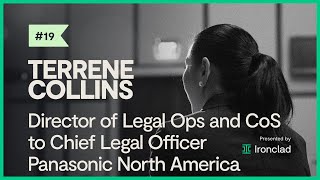
Terrene Collins moved from law firm billing to in-house legal operations at UBS, JP Morgan, Bristol-Myers Squibb, and now Panasonic. She pushes back on outside counsel rate increases above 10% through benchmarking, built e-billing systems, and scaled legal ops from tactical work to strategic planning across decentralized units.
Questions this video answers
July 28, 2023.
Chief of Staff to the General Counsel and Head of Legal Operations, Panasonic North America.
Latham & Watkins; UBS; JP Morgan; Bristol-Myers Squibb; Organon.
About 40 people for Panasonic North America; about 86 overall in the Law Department.
Two ops specialists (one reported to her) and two executive legal admins (described as a "small and mighty" team).
Chapters
Foreign.
Hello everybody and welcome to Pearls on Gloves Off. I'm your host, Mary o'. Carroll. Today I'm joined by Terrine Collins, who is the Chief of Staff to the General Counsel and the head of Legal operations for Panasonic North America where she's responsible for legal operations strategy and leading the legal Ops center of Excellence for Panasonic. Prior to this, her experience includes managing and leading legal operations in various pharma companies. Most recently, she was the chief of Staff to the General Counsel at Organon, a women's health company and spin off of Merck. Before that, she had legal ops experiences at Bristol Myers Squibb, JP Morgan, ubs. Her experiences have involved creating processes and practices to improve day to day efficiency and effectiveness of the legal team, facilitating change and controlling costs, as well as formulating strategic and operational plans for the organization in compliance with regulatory policies and procedures. There's so much to talk about today. I'm excited to have you. Welcome, Terrine.
Thank you, Mary. Thank you for having me. I'm excited to speak with the guru of legal operations today.
Not at all. In fact, I'm looking forward to hearing from from you because you have so many experiences at a bunch of actually different positions in legal ops, including leadership roles, but across different companies and industries. So if we go all the way back, I think like many of us, you're not a lawyer.
No.
And you fell into this world like we all did.
Yes.
And you know, I see you have an mba, you followed more of a business path, but the whole way through it actually looks like it was within legal departments. So is that right?
Yes, that's correct. I mean, like all people, like, so I would say so I graduated when we had the crash. Right. So I'm scrambling, thinking, okay, Terry, what are you going to do? Because ideally the goal was law school, but I kept seeing all of these people, you know, like friends of mine, like, you know, they have their law degree but they're not even getting attorney related jobs. So I'm like, well, I don't want to be one of those people. So I did the different route. Like, you know, I was, you know, at my first law firm, Latham and Watkins, I was, you know, pulled by the account manager and she was like, well, do you want to learn billing? And I'm like, of course I'm open to it. But at the same time I was thinking about, well, should I, you know, what should I do? Should I do law school or should I do business? And so the idea was straightforward because again, I'm thinking Because you have all these jobs and no attorney roles are filling them. But because of the crash, like, just have everybody just in shambles really. You're not knowing what they wanted to do. Like, I'll say even some of my friends, they just recently got like attorney roles, like real in house attorney roles. And I didn't want that to be me. So I pivoted and I was like, well, what else can I do? And again, once, you know, that account manager account, she was actually the CPA for Latham and Watkins was. Once she brought me in, I kind of was like, well, hey, I like this billing stuff. So it's kind of started there and it went on and, you know, went from, you know, being in billing and in law firms. And then my first in house role was at ubs, kind of help standing up because they were just figuring out this legal ops landscape and it started with the implementation of a new E billing system. So they brought me in to kind of help with that, kind of, you know, get the processes in order, help with implementation and all that fun stuff. Yeah.
I want to give a shout out to Marika Daggett, who is on my team at Google, because she is an incredible ops leader today, now. But she also began her journey as a billing coordinator and then like, you, like, quickly moved her way up. So I think that gives, you know, a lot of hope and inspiration to those that are starting out in their journeys because there is absolutely a path to be a leader at a big company. And so you started as a billing coordinator, you went to ubs, you were doing E billing and outside counsel management. So that's kind of where you cut your teeth in legal ops, right? With outside counsel stuff?
Yeah, it was really that outside counsel stuff. And then it started to evolve into like just, you know, creating SOPs, how people manage, you know, the different areas within the law department was also part of that role. And just really involving, like that's where I really start. Started to see the, you know, how everything evolved and it was great. Yeah.
So you, I have to ask because right now in this time, and we're recording this in kind of February, we're seeing all these crazy rate increases from the law firms. I'm sure you're still dealing with that in your role. Just curious, like, are you feeling like the conversations are finally changing or is this more of the same? And my thought is, you know, every year we see this and there's a big jump this year. And you know, every department, as we've seen the tech layoffs, right There every department is struggling with our own budgets and kind of feels like the law firms are passing those costs down to the legal departments. Are the conversations changing? Are departments pushing back more? Are we still just kind of taking what is happening?
I mean, I would say for you know, being, you know, in pharma and being in my current role now, we have been pushing back. I mean, honestly, I know with COVID some firms did kind of like, you know, give kind of that, you know, freeze on rates. But now I have seen them come back. So I mean, my philosophy, you know, in a lot of my roles has always been, you know, let's see these rates compared to last year's or compared to the year before. And if there is an increase over, say 10%, we're going back like, hey, wait a minute. Now we also have to, you know, tend to our budgets as well. So I've been having a conversation. I know it's not always easy to have the conversation, especially with those items that are kind of like, you know, bet the litigation, bet the company litigation. Right. But for those where they're like routine work. Yes, in all counts, like, I think you should push back and really have that conversation with the firm because these rates are really increasing. I mean, the first years are. Their salaries are insane. So it's just like, you have to have that conversation. But I'll say the firms will try it. And they have been like, if they have been upwards to like 20 to 25% increases, I'm just, oh, my God, how do you jump from like, you know, to that, that increase? So, yeah, you just have to like, really, when they, you know, submit the rates, really take the time to really analyze, you know, exactly what they're giving you.
Right. And when you said 10%, I thought that was a lot. So that's, that's crazy to hear. And what about the other options? I mean, flexible talent. There's a lot of companies that are, are offering that now and managed services and alternative, you know, legal provider. That becoming more something that you're seeing either your own company or others turn to, to use more.
Oh, yeah, definitely. I would say, even for the Roman now. So we take advantage of, I don't know if you're aware of it, advanced law. So it's a mentor tech product where, you know, the first thing, like if it's one of those, again, high stakes kind of matters, we go with our panel. But if it's one of those routine, kind of just needs somebody in there to kind of really work fast. We always Reach out to advanced law first and they're, you know, they're the mid sized firm that have, you know, the more competitive and less expensive rates. Yeah, that's always, I've been our go to, but we do kind of, you know, when matters come in, we do try to do RFPs just even with our panel firm just to figure out, you know, how can we get the most cost effective rates and, and also the best in quality, you know, quality team. So we have been kind of trying those things. We're not just accepting anything. We're kind of really trying to partner with our firms to understand how can we get the quality team but also the best rates as well. And arrangements.
Yeah, I am seeing though and hearing a ton of companies that are even thinking about non law firms as a way to divert some of the resources. So like I said, flexible talent. So bringing in lawyers to be part of the in house team without being a full time employee, but also managed services. So pushing some of the work out to a non law firm to kind of handle some of that.
Yeah, definitely seen that. Especially with the subsidiary work. I've seen us kind of switch from managing at my own company, having it being managed by say a law firm to more like Pricewater or Deloitte.
Interesting. Okay, so you started in outside counsel management. Then how did you continue to kind of move up and expand your scope?
Well, you know, I started to see, you know, like I joined Clock. Like soon as I heard about Clock, I joined CLOCK right away. And I just started to see again how the role evolved. Right. Of course, it was sort of like that outside counsel management. Then it went into, well, the strategy. How do you manage a strategy within the law department? You know, how do you, you know, take some of the processing and streamline them so it's more than just, you know, managing that E billing system, but in the, you know, the firm's invoices. But it evolved to like strategy, you know, planning, you know, all those other things that we really don't think about and kind of switch the minds. Right. You know, it's almost like legal is moving from that cost center mentality to actually like a business. Right. So true. So you know, when I started to see that and you know, that evolution, I was like, okay, this is how I want to, you know, move through. And you know, it was great at bms I had a great mentor and she's like, she was like above, you know, even before I even knew what legal office was, she was already running through it, you know, and it Was great to be under her leadership and kind of learn about, you know, all the things, you know, involving legal ops that I didn't think, you know, really was part of legal ops, but it actually was. Yeah.
And so did it happen organically, where you already had a leader who had a broader scope, and then you just kind of moved into other responsibilities and got exposed to other parts, or did you kind of take the initiative to say, I want to try working on technology. I want to try something new?
Yes. So for me in my career, it's always be like, raise your hand. Because I feel like you don't raise your hand. How does somebody know your abilities or what you can do or contribute? So I was always raising my hand. She'll be like, so to me, we have this new initiative. It'll be like, we're rolling out this pro bono program. Do you want to help support it? And I'm like, yes. She'll be like, you know, we're rolling out this new technology. Can you lead it? Yes. So I always raised my hand even for, like, small little projects like putting together town hall materials or even, you know, putting together a small group to talk about career development. So anything that was like, you know, something like that, I always raise my hand for. So. So that's kind of how I kind of like, started to just get, you know, more skills, more capabilities under my belt.
And then was it after that that you moved into your next role where you were sort of leading a function? Is that right?
Yes, correct. So, you know, getting all of that skills and knowledge, you get more hungry and more hungry for kind of like that next role because you feel like, you know, you're equipped. Right. To do the job. And so, you know, that's when I was like, okay, it's time for a leadership role. And, you know, that's how I got the role at Organon. But, yeah, it was great. Kind of learning, kind of building my brand, so to speak, and building up my capabilities to kind of led me to that leadership role that I was very fortunate to have.
And, of course, now you're at Panasonic North America. So we've seen. We all know that this role and function is defined differently everywhere you go. Right. I spend my days talking to countless people either in the role of legal operations or. Or like a general counsel, hiring for the role and trying to scope it. So I know how different the cultures are, how different the roles can be. But personally, if I've really only done the role in one organization, so I actually think I'M super interested to hear your perspective on what you've seen and experienced from that firsthand in your different roles within companies, within different industries. How, how does it look different?
Yeah, so it is definitely different, I would say, you know, especially coming from pharma to technology, it has been vastly different just in the terms of how the organization is, you know, how the whole, the organization as a whole is organized. Right. It's so decentralized. So coming from a centralized, you know, environment where, you know, legal is kind of standalone and we support like R and D commercial, to then coming to a business that it's more like, okay, this is a business function in a unit by itself and then you have to support them and then it's business and function by itself. So it's just, you know, trying to understand that dynamic really kind of took me by surprise when I first learned because I'm just thinking like, you know, why do we have to like prove our value? Legal is legal, but then in technology, you know, and it kind of shared service kind of legal with a technology department that has many businesses and functions, kind of operate their own. That's what you kind of have to do. Whereas, you know, coming from a more matrix and centralized organization, it's more like legal is legal. This is what legal does. So that was, you know, the, the first kind of shock. And then, you know, other organizations are a little bit more mature in their journey with legal ops, as we all know. So coming from a more mature kind of organization to one that is mature, but still trying to, you know, really get to that next level is kind of was a shock too. So.
Yeah, yeah, and we hear, we hear that a lot or I see that a lot too, right? Where there's companies that have had legal ops function for a long time and they are well oiled machine and they're ready to go to the next phase. And then there are huge companies that have been around for a long time that maybe had a function, maybe it wasn't that well defined or had had it like decentralized like you said, but there's still so much work to do. It is almost like starting from scratch. And it's, it's, it's shocking in a lot of ways. But you know, so many conversations that I have, people say it's so refreshing to hear they're not alone. So, you know, I think that's like something I want to impart on everyone. You know, you've been to a bunch of different companies, nobody has it all figured out, right?
No, yeah.
And then within Panasonic North America, you and I had talked about, the structure is really unique. And you said, you know, decentralized. There's different businesses, but as I understand it, there are literally like different companies within Panasonic, like, yes. Focus on, I don't know, different product lines or there's an automotive, like, there's an aviation. Right. There's different. And then each of them has their own legal department.
Yes. Yes, they do. So imagine that. Right. Kind of, you know, all trying to work with that. Although our chief. The chief legal officer of Panasonic North America is kind of like an oversee of all that. So it's like, it's easier to kind of like work with and collaborate them. If there was no, like, you know, I guess, responsibility there, it'll be a little bit harder, too. But it has its opportunities. Right. I think it's all about just collaborating and knowing that we're all one team here and we're just trying to figure this out together.
Absolutely. I experienced that a little bit when Google transitioned to become Alphabet. And then within Alphabet, there were, you know, there was Waymo and X and all these other sort of other companies that also had a GC and also had a legal department and then also had a legal ops team. And, you know, you and I also talked about it's a balance where they have the freedom to operate the way they would like to. Right. And they can buy the technology they want and have the processes they want. But then they also have the advantage of kind of checking in with the parent company and are there best practices and resources that they can leverage and yet kind of go on their own? Where they want to go on their own is. You're nodding that that's kind of the same model you guys have.
Yeah, definitely. That is exactly the same model we have, Mary. But what we, you know, and that's why I was been tasked to kind of build out this coe. Just to figure out, like, okay, we. We have all these systems now. You know, how can we all just kind of get on to one system or figure out a process or understand your process, so we, you know, if our system works for yours, let's all get on one together. So it's really like just figuring out where there are common, you know, common, common places where we could kind of meet in the middle. Right, right, right. Yeah.
And I did see that in your. In your bio, the center of excellence. And there's a lot of companies talking about centers of excellence and shared services, primarily for multinationals and stuff. How? What? Like, tell us, what does that mean for you all to have a center of excellence, and what does that entail?
Yeah, so for us, especially with the Legal Ops, it means you kind of like all the business. Because we have all these different business units. Everybody's kind of, you know, doing their own thing. It's coming together and sharing best practices and kind of figuring out how we can all move together instead of apart. Right, right. You know, and that includes with technology. You know, we shouldn't be having too many different technology systems. Especially, like, for. If I just put a dimp out, like an E billing, we should all be able to get on one E billing system because essentially it should be doing the same thing for all of us. Right. Different processes like onboarding, any programs going on, we should all be able to, you know, come together, really, you know, provide value in some type of way, or at least say, hey, I've done this before. I can show you how to do it. So it's really just to collaborate and really bring best practices and also kind of, again, come together as one, as opposed to having so many different processes, so many different systems, but just sharing best practices and tips on how to just collaborate together.
Yeah, there's so much room for efficiency and to not recreate the wheel 10 times. Right. And there's good reason for one of your smaller offshoots to go off and do their own processes or own technology. But you kind of want to understand why that makes sense for them. And exceptions are always okay. But there are reasons why it makes sense to try to get a line. And tell me about your team now in. In your new organization. What's the size? What's the makeup? And, you know, what are you guys focused on?
Sure, sir. My team is a small and mighty team. I have two ops special, one ops specialist reporting to me, and then two executive legal admins. And we're just a team. Just. We do it all like, we're doing strategic planning, financial management, technology management. We're doing it all like, you know, the best thing. I kind of want my team just all be kind of versed in everything. I'm always thinking about what is my lease. Right. So all of them are being trained in everything, Legal ops, so that we can always have support in case somebody leaves or something happens. Go ahead.
How big is the department that your small, nimble team is surfacing?
The department. So the way it's set up. So our department, it's about, I would say 40 people for the Panasonic North America. But then Overall, the Law Department is about 86.
Okay, great. And just again, going back to the differences you've seen in the cultures and the structures across the different companies you've been at here to comment that you've been in financial services, you've been in pharma and now in the tech orgs. Are they structured different? Are they run differently? Is it generally the same?
So there are common, common themes that I've seen. You know, there's always, you know, that common thing where everybody is relying on Legal Ops to really come in and do everything, take care of everything that involves operations from their belts. But then you have some that are, you know, really focused on Legal ops, where, you know, I think, especially with pharma, I've noticed that there's a strong focus on Legal Ops and Legal Ops really being ingrained in, you know, everything about the law department. Like, if everybody knows about Legal Ops, everybody knows the value. I've definitely seen that both in the role I'm in now and in pharma and financial services because it's so huge and that, you know, again, that those companies are definitely more matrix and decentralized. There's a value there, but I think it could be more exposure for legal ops and financial services.
Interesting that that does sort of dive with my experience as well. Any, I don't know, guesses or thoughts on why that might be? Is it culture? Is it like a GC thing? Is it how long they've had Legal Ops?
Yeah, I think. And from my experience, it was how long Legal Ops was there? Right. It was just starting. And I think it was just really trying to get its feet on, out the door and really, like, make a place for itself. So that's why there probably wasn't more emphasis on it. But then in a more mature. I think it's just, again, the value. Like, I feel like if you have a CLO that is truly, you know, looking at Legal Ops as this prime thing that we need and, you know, really knows the value and really looks to them to really shape up, in my opinion, the law department, then you could go far. Like, I think it's all about how the CLO feels about Legal Ops as a whole and how. And then initially that can determine what. How far the value and everything to Legal Ops.
And so that's so key. I couldn't agree more. What about the structure then? Did the Legal Ops functions report into the GC in all of your experiences?
Well, only that. So, yes, yes, in all my experience they did. I would say definitely except for one. So at ubs. No, I don't. I believe we reported to like the CEO or something from my experience, I mean from my recollection. But in all of my instances there have been or my experiences, we have always support reported into the gc.
Okay, that's great. And I think that the mindset, the interest, the way that the legal ops team is positioned, like you said, really communicates the value and the impact and what they should or should not be working on. Do you have from your experience advice or thoughts to share with GCs and CLOs and how they can do a better job? Because I think if you ask anyone, any of them, they're going to say, of course I love my legal ops team. I couldn't live without them. But there are subtleties, right? There are ways in which you position the team that I agree with you completely makes a very subtle difference on how they're viewed by the rest of, let's say the legal team.
Yeah. I think it first starts with the partnership. Are you understanding, you know, what it is that your DC wants, right? Understanding their day to day, understanding how, you know, you can help them drive value to the business, right? So once you understand that, once you and the GC are like on the same page and you guys build that partnership, I think then you can start to show your value. But you must understand the issues and pain points that your GC or CLO is experiencing, right? And also by you kind of knowing the business too. So then you could spot, oh, I know my DC would definitely, you know, benefit from this information. Right? So also being on the lookout for things in the business that they might not, you know, have, you know, visibility into as well. So this is definitely that partnership. Then understanding their issues, you know, what is their, what are their pain points? And then you can start to bring your value, right. You can say, well, you know, I heard so the ce, the COO or the CFO is saying we have to save. So you bring to your gc. Oh, I know three ways we could save. We could save through AFA from our law firms. We could save in the system, you know, through billing rules. Like you just have to show how you can make. It's usually in my thing is always how do you make your GC or CLO look good? Right?
Absolutely. So yeah, that's, that's such great advice. And I guess flipping that like, what is the hardest, what is the hardest part of the job? And you've done it in multiple organizations. Is there a theme?
Yeah, I would Say the hardest part of the job is probably just deciphering what, you know, what is priority, right? Because essentially you want to do every single thing. And I tell you right now, you can't. You can't. So you have to pick your battle. You have to know what would really drive value and kind of hit it home for you and your legal ops to team, kind of just take the step back and understand again. But then if you understand those issues from UGC and a really high priority ones, you focus there, right? So it's always just kind of find that balance of what's very, very important. And, you know, where to prioritize has been like, you know, some of the things I'm like, oh, my God, I want to do everything, you know, you come into department, like, I want to fix this, I want to fix that. You can't do that. You kind of got to step back. They gotta look at the landscape and really understand the issues and, you know, ones that you can really, like, get in there really quickly fix or, you know, and just start to prioritize. Right. And really show, you know, how you could bring value.
I think that's exactly right. And that's the same thing that I often say is the hardest part of the job is everywhere you look, there's like a thousand things that you could fix.
A thousand, right.
And they're not bad ideas. They're all things that if you had a magic wand, you would fix all of them. Like, they're all good ideas, all good ideas, but you can't get to them all. And I actually think the role is harder now than when, when you and I started, like you said.
Yes.
We were just outside counsel because that's what legal ops was. And, you know, and then over the next decade, the scope of the role and the definition of the role, of course, expanded exponentially. So now when someone comes into the role, the expectations that you're going to fix everything at the same time. Right. Is overwhelming. So how do you have principles for how you prioritize? And, you know, I have some thoughts on this, but I'd love to hear how if you get a thousand ideas, you know, this week, how do you decide where your small but nimble team is going to focus?
I know it's so hard, Mary, I'll tell you. And it's still a work in progress for me, but it's almost those. I always try to look for quick and easy, what you call quick wins. So, I mean, if I'm able to identify a quick win, I'm going to make that, like, team, let's get on it. Let's see if we can, you know, hit this out the park in this one week. But then, you know, also I, you know, it's a balance between, okay, we got the quick wins, but then we also got this one thing that could really show our value and really, you know, hit it home for us. So I try to balance those two. Like, you know, maybe take one or two quick wins that I know we could get done in a week or less and then come back to those kind of like bigger things and even kind of work on the bigger things slowly. Like, we're not just leaving it, you know, and not doing anything with it, but like slowly kind of sitting in milestones essentially to figure out some of those. Those big things.
Yeah, that's exactly right. I mean, you do have to set aside, I would say, what, 10, 15, 20% of your time from some quick wins because you got to keep people happy, right. So that you're delivering over and over. But then the bulk of your time really should be focused on that giant project that's going to take. That's not a quick win that takes, you know, possibly a full year, maybe even longer sometimes to set the stage. And you're right. Like you have to set milestones. How are you inching towards success and moving, moving the ball forward. And that's when it can be distracting. When you have that big thing, it takes a long time and then you have all this noise, all these thousands of other ideas that can distract you. So really have to focus and learn to say no sometimes. And that's really hard, right?
Yes. Oh my God. That is the hardest. But I have trained my team. Like, we have to say no because we are going to be burned out if we don't. Like we have to say no or kind of just do a gentle pushback or. You know what I've also been kind of telling my team too is like, let's if there's a self service, like, you know, where our team might not have to really get heavily involved, let's think of ways to where it could be self service for the team as well so we can equip them to also do stuff.
Love that. Self service is my favorite thing. Help you help yourself.
I know, right? So that we can focus on other things. Yes.
And what are the big priorities for you and your team this year? What are your big focus areas?
Oh, my God. It's really to kind of understand our outside counsel, you know, how we can really Drive, you know, savings there. Definitely. I'm sure that's on everybody's agenda. And really, like, again, evolve this levop coe and kind of get that one team mentality within the coe and then really just, you know, figure out, you know, what can we do to add value. Like whether, again, if it's, you know, with processes, you know, with different programs, you know, there's opportunities for a lot of programs to come into our department. So how we kind of stand those up as well is kind of like top priority for us.
Awesome. The other thing I forgot to ask you that I meant to, because I know we talked about this offline as well, is you stepped into a tech company and you kind of expected there to be a huge appetite for technology and tech platforms everywhere. Tell me what that experience was like and what you actually found.
Yes. So I was thinking like, yes, I come in, all I got to really do is just figure out strategy. Then I come and it's like, oh, well, this system is just not the best. I don't even know where the system came from. It's not the best of the best evil. Like, it's just all these things that are going on. They have one system that's in implementation, but it hasn't gone live yet. So it was just this, like, kind of little chaos. I'm like, wait, I thought everything would be live and now I just have to come in and really stand things up. But, you know, it's an opportunity. But I was expecting, being that it was a technology company, that everything would be like, high efficiency, like the best of the best everything. Like, there would be really no new systems I would have to implement. But sadly enough, I gave it and there was a couple, which is such.
A good lesson for all of us because we look at everybody else and go, oh, my industry is really slow moving and we're in manufacturing. And then you look under the hood and they're. They have everything, you know, figured out. And I can relate to going into a tech company and just assuming that they had like, dashboards and reporting and automated everything. And you're like, what do you mean? You have no data?
Right, Right. Yeah. How are you capturing data? Right. So it's, I mean, it's an opportunity again for me to show value. Right. Because I know, I know what that looks like.
Absolutely, absolutely. But it's a message to everyone. The grass is not always greener like the cobblers. What is it? The cobbler's son has no shoes is what we said is. The tech companies are spending Their tech resources. Doing the tech, you know.
Exactly. Yeah. So, I mean, essentially they are doing this is not like across all kind of functions, so.
Yeah. So is like tech stack and tech roadmap something you're also focused on?
Oh, yeah, definitely. Tech stack, Stack, stack and tech roadmap is top priority as well. And it's also part of our coe. So, you know, in the coe, we are looking at what all the different technologies are around, you know, the globe. And again, understanding the processes that, you know, these technologies were built for and figuring out, again, how we could collaborate and make it more efficient and streamlined.
Well, I know you said that you're. You've prioritized, but it does sound like you're trying to fix everything. So that's.
Yeah, I know there's one year. Right. And the thing about it happened to be in a row only for four months, but.
Yeah, that's a lot. Is there any other advice you would give to someone? I just love the idea that you've learned it all from the ground up. You know what it's like to be a billing coordinator. You know what it's like to manage a segment like outside counsel, and now to oversee all of it. What are your thoughts for those that are starting in their journey as well as those who are maybe in a role that are sort of struggling with prioritization or how to get stuff done? How can people do better in their roles?
So for anybody kind of starting off, I would say don't really say no to anything. I know I just said you have to say no. But it's kind of starting off, I think if there's opportunities and you have the bandwidth, I would say say yes, definitely, because that's what I did throughout my career. And then for people that are in the role, I'm just trying to figure out priority, again, know value. Right. And really see how you can bring value or drive value. And again, have that conversation with you, D.C. because then they can help you, kind of guide you on, you know, what is high priority and what they really feel, you know, can really drive value for you and your team.
How much do you sort of rely on your GC or the leadership to tell you the direction of what needs to get done versus you sort of taking the initiative to propose what you're seeing. What is the balance there?
So I would say it's about a 50. 50, because, you know, I'll bring some ideas to get their, you know, kind of their reaction.
Yeah.
And then they'll say, you know, that's great. Maybe not now, maybe in the future, or no, we can't do that. So it's almost like a 50, 50, 50 balance. But I'll be interested to know, like, how others do it. I know that's how I do. It's almost like I'll bring ideas and, you know, sort of, you know, different initiatives and allow their reaction on a lot of it.
Well, and that's why I brought it up, because I think that is the right model. And I want folks to know that you shouldn't just sit around and wait for direction because that's part of your mandate. The reason that you're there is you're looking across an apartment. And yeah, not everything is going to get a thumbs up. Not everything's going to be the right timing, but you have to keep looking across and bringing up ideas. You have to take the initiative to suggest what needs to get done.
Oh, definitely. And that's why I think things like this, Mary, that you're doing that I think found this is so great. You hear other people's perspective from podcasts, joining, things like Clock, any different organizations acc all of that, I think you can start to understand, you know, hey, other legal departments are doing this. Let me bring this idea to my GC or chief Legal Officer. So just kind of being out there and networking has also been a great thing for me as well, because then I get some ideas and then I'm like, okay, let me take it to my DC and figure out some things.
Yeah, also such great advice because, you know, I was talking to a GC yesterday who said, you know, I've got this team and they want to go to Clock and they want to go to, to visit all these, you know, conferences, and is that a good use of their time? And I said, oh, absolutely. Right.
Yes, that definitely is. Yeah.
It's so much more than a lot of other more established industries and professions. You know, you may not be learning that much when you go to an industry event or a conference, but the space is still being defined and there are no playbooks for us yet. And so the best way to not recreate the wheel is to get out there and hear what worked, what didn't work for everybody else. Right. And to get those ideas.
Yeah, no, and then it's a network. Right. Understand, like you mentioned before earlier, Mary, you're not alone, like, guarantee somebody is going through it or has already gone through it. Right.
Well, Terrine, it's been such a pleasure. Thank you so much for being a part of the community and for sharing I think your background, having moved your way all the way up and tried all the roles and tried it in different companies, is so unique and so valuable. So thank you just so much for your time today.
Oh, thank you so much, Mary. And, you know, just, I really appreciate the time with you today. It was really, you know, a good, you know, good, good time, good energy. Right. Sometimes you need to have that energy with all the things we have going on. So thank you so much.
I always get inspired. Absolutely. I get inspired and energized talking to you every time. So appreciate your time. And I'm sure we all learned a lot from you.
Okay. Thank you.
More from Mary








#56 Ending the Billable Hour Chris Grant’s Mission to Transform Legal Services


