Ask me anything about having a successful online business!
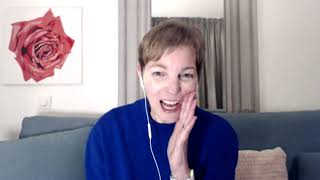
Mary Schiller, an online results coach, shares how she built her business from zero following using email and authentic connection instead of paid ads. She emphasizes value-based pricing over hourly rates, a "help-instead-hustle" philosophy, and outsourcing admin work to focus on coaching.
Chapters
Hi there, it's Mary Shiller, author and coach of MaryShiller.com. I want to welcome you to this little Q&A party, and I'm really happy to have you here. Let me just check one thing on my computer before we jump into this. Okay, everything looks fine. Hi, Mia. Hi, Nicola. Thank you for joining. If you are here live, please feel feel free to give me a little note in the chat box so that I know you're here and that you can see and hear me okay. I have my tea, which is really interesting. It's— and a little bit of vanilla. Hi there, Robin. It's from M&S. They do have M&S stores in here for all of you folks in the UK. There are several M&S shops here in Paris. So I do like to get tea from there. Hi, Becky. Nice to see you. Hi, Jolene. Hi, T. Hi, Lou. Nice to see everybody here. If you're joining me on the replay, of course, I appreciate your presence as well. Hi, Terry. Nice to see you. Just a really quick little housekeeping thing. If you have a question for me, please feel free to type it where it says ask a question. That way I'm sure to see it. I will look there first. But I will also keep my eye over on the chat box during this entire hour that we're together. So again, welcome to this Ask Me Anything Q&A session. If you are new to me or relatively new to me, I want to just take a minute or so to introduce myself to you. So I started this particular business. Um, hi Verena. Hi Clifford. I started this particular business back in 2016. And I started as a life coach. I had my whole career. I had been in communications. I was— hi, Mitsui. I was a writer. I was a copywriter, ghostwriter. I did marketing. I made commercials. And then I was a university writing teacher and I developed online classes and did all kinds of things like that. But in 2016, 2019, I decided that I wanted to become a coach. I wanted to completely change my career path. So I started as a life coach. And just to give you some idea where I was starting from, I had no following really at all. I had an email list of about maybe 100, 150 at the most from a blog that I had been doing for a few months. But I had never said that I was a Coach. I had not even really considered that as an option until the thought just came to me that that is what I wanted to do. So, I was really kind of starting from almost zero. I didn't have anything backing me up financially. In fact, at the time, my finances were kind of not in good shape, and on paper, it looked like the completely wrong move. To start my own business as a coach. But I just decided, you know what, this is what I want to do and I want to do it online. I want this business to be solely online. And I had tried many times over a few years prior to that to start something online and nothing worked. I mean, everything just kind of tanked. I was working tons of hours at my day job and then I would come home and try to do this thing on the side and I was just burned out. And it just so happened that, uh, in 2016 I lost my job and thought, okay, I guess this is time for me to really do my own thing and just focus on it and see what can happen. Hi Terry, thanks for being here. So, uh, after I started my life coaching business, I found it actually pretty easy to get clients. Like I never really had any trouble with that. I never really had any trouble making an income. It was a lot easier than I expected that it would be. And after a while, people started asking me how I was doing that. So kind of gradually over now 3 years as I'm talking to you, and people kept asking me more and more questions about having a successful business and especially an online business and particularly a coaching business, although my clients aren't all coaches. Now I have switched entirely from life coaching into business coaching. So that is what I am doing all the time now and I really, really love it. I call myself a results coach because helping people get really great results is of paramount importance to me. Hi, Joy. Nice to see you. Hi, Ingrid. So that is a little bit about me and kind of my journey in this business, online business realm. I do absolutely everything online because I live in Paris and I, under the rules that I have, I can't have any local anything going on. I'm only allowed to do things online. So that's the only option available to me. So, you know, that, that was also a big reason why I wanted to have my own business is because I didn't want to be tied down to any particular location. It was really important to me that I be able to travel when I want to, you know, go spend time someplace for an extended period of time and still be able to have a business. I wanted to be able to spend more time with my daughter who lives in England. And so there are a lot of factors driving me towards having a business online that I could do from anywhere. And I'm happy to say that that has happened without a whole lot of effort. And that's the main thing that I try to do for my clients as well is show how you can do this with focus and with simplicity and without tons of fancy stuff. So with that said, I'm so happy to see everybody here. Let me take a sip of my M&S tea here. And let me know in the chat, did you bring your special drink or snack to this little Q&A party? If so, I'd love to know what it is. And I think I will go ahead and start answering some of the questions that people have posted. And again, if you have a comment, please feel free to type it into the chat anytime. I'll keep one eye over there as I am going through the questions. So thanks so much for joining me. Let's see here. All right, here is a question. This question came in via email. "Can you talk about putting oneself out in public? That is a stumbling block." So this is something that a lot of people ask me about. So if you're wondering, you know, what is it like to become more visible? Oh, Caroline says you have a nice grapefruit gin and tonic here in Scotland. Awesome, Caroline. So just for a quick second in the chat, can you let me know if that question about like being visible and putting yourself out there in public Does that bring up any kind of fearful thinking for you? Does it seem like that's something scary to do? Can you relate to this person's question who sent me this via email? Because it is something that I hear a lot. Uh, Liz says, definitely makes me anxious, imposter syndrome. So I don't know exactly what imposter syndrome is, but I'm guessing that means that you feel like you're putting across something that maybe you can't deliver on, that You know, people are going to find out somehow that you're not what you think you— what you say you are, something like that. And it's really been interesting. Not good enough. Yes, Lou says. Okay. It's really been interesting for me because, and I'm being really truthful here, maybe it's because of my age or something, but this has never crossed my mind really. I've never worried about putting myself out there in public. I don't have a huge following. I'm not like some Instagram star or YouTube star or something. I've never really worried about that. What I have thought of instead is, is there something that I can create that would be helpful to people? And if part of delivering that means that I have to do a video or I have to make an audio or I have to do a live thing like this, then that's what I do. And I say have to But really, I have found it to be so enjoyable that any fears that I've had at all about becoming visible or, or putting myself out there, none of that has been in my consciousness at all, in my awareness. I, I've really found that especially during live events like this, I feel such a connection to you. I feel such a a true, almost like a friendship and relationship that develops with the people who come to my live talks and then the people that I talk with one-to-one and on Zoom and everything, that all of that, any fear around that just gets dissolved when you see what gets created through putting oneself out there and being available to people. Let me see what people said. What if I sound dumb? I don't think you will. I really don't think that that's possible. Nicholas says, especially on video. And again, you know, I don't think people really care that much. You know, they are. And this isn't about you guys because you guys are special. But I know when I'm watching something, I'm like, what's in it for me? You know, what can I learn from this person? I'm not sitting there picking apart what the person looks like or, or thinking, oh, they should have their hair a different color. I'm not doing that. I'm listening to them. I'm trying to hear what they have to say and absorb what they have to say. And I think we have all this thinking around judgments about how we come across and how we look. And most of the time when my clients have sent me videos of themselves, they look and sound fantastic. So, you know, I would try to kind of not let all of that kind of thinking crowd out your willingness to put yourself forth as someone to be helpful to people. Let me go to a couple of comments here. Caroline, it used to a lot more. I think I used exhibitions to make art as a way of being seen without being seen. I don't feel that way now. Mainly I want to show up and see what happens, but I still have the idea that I'm a bit of an introvert. I consider myself an introvert too in some senses. I mean, I'm I don't really like parties. I don't really like big events. I'm not a conference-goer. I just don't really do that sort of thing. I spent most of my career, as I said, as a writer, which is a very kind of solitary profession. You go out and meet people, like when I was a journalist and things, but then it's just you and the blank screen or the blank page. And yet I've really found it to not be a problem at all to put myself out there and be visible. Hi, Mitsui. Scary to make a stand. Nothing is a conviction or strong passion in my mind, not enough to fight for anyway. Oh, interesting. I think I've kind of turned it around where it's more like it's not about me and what I stand for. It's more about what are other people looking for and how can I fill a gap for them? And if filling a gap means that I have to be public, then that's what I'll do. It's, it's absolutely fine. Uh, let me look at another question here. This is from Jenny. Hi Mary, thanks for the opportunity. I'm a lifestyle mentor in the process of changing direction and niches. I'm tweaking to image consultant for badass women changemakers, and I'd like to know what single strategy you would suggest to get started. Fun and simplicity are my keywords now, and I have to be excited about the how to my why. P.S. I'm also in France but serve an Anglophone market, so mostly online networking needed. I love doing lives. Okay, get started. What single strategy? Uh, to me it's all about helping. It's about helping. It's really turning one's attention from hustling to helping. So stop being a hustler and start being a helper. That's kind of the distinction for me. I think when I was trying to get a business going before, I was super focused on the hustling part because I just, I didn't see any other way to do things. With this business, I think the biggest difference was I really came 100% from the point of view of how can I help people? What do I know that maybe they don't know that could, that I could help them with? So for instance, now that I'm helping people with business development and particularly online business development, I have tons of experience related to that through all my communications work, all of my work as an online educator, all of my marketing experience over the years and so, and even sales experience. So I feel like I have a lot of skills that are now coming together for that. And so I'm just always asking the question, what can I do today that could help somebody? What email could I write? What Facebook Live could I do? What audio could I create? What program could I develop? I'm, that's where I'm coming from. So that is the easiest first step I can suggest. Is to fill, fill some kind of gap that you see and ask yourself that question every day. What can I do to help? So I hope that is a good answer for you, Jenny. Oh, thanks, Mitsui. Yeah, the hustler versus helper thing. I don't know that I invented that. I feel like I heard it somewhere. I can't remember where, but it always stuck with me because I feel like we, we can spend a lot of time developing our own businesses and kind of doing that hustle, hustle, hustle thing. And forget that what we're actually doing is trying to help people. All right, here's a question from Lou. I'm in the UK and want to start as an online coach. I am completely new, so tips on how to get paid. Do you ask for money up front? Uh, anyone else from the UK, is it easy to do your own finances, etc.? These things are stopping me, and I know it's just fear and overthinking. Lou, let me see how I can answer that. How to get paid? Do you ask for money upfront? You know, it really very much depends on how you want to run your business and what you want to be doing for people. Because those, those parts of running a business are actually quite simple. The getting paid piece, you know, there's tons of things out there that can help us to get paid as simple as a PayPal account. Can be quite helpful when you're just getting started. That's what I did in the beginning. I didn't have any fancy payment anything. I just gave people my PayPal address or I gave them a PayPal.me address where they could pay me. And yes, I personally get paid upfront. Sometimes I will offer payments over time depending on what the setup is. Um, but generally speaking, um, you know, I, especially for like a group program, I'll usually get paid the whole thing up front. Uh, in terms of the finances part, I can't really answer that. Uh, my default is I always hire a professional to help me with things. I just hired somebody recently to help me with a corporate setup, uh, because I'm changing the way that I'm operating things. And so that's my default there is to always ask a professional. So thanks for the question, Lou. Hi, Nicola, poor internet connection. Oh, okay, no problem. And you can always type into the chat if you're watching the recording. All right, let's see another question here. This is from Lisa. Hi, Lisa. Hi, Mary, I work in IT and feel completely uninspired at work. I'm interested in health and wellbeing, including nutrition, exercise, and mental health, and I'm retraining in a few things in my personal time, but with no particular end goal in mind. How do you feel untrapped when it comes to escaping one career and being employed. I rely on my current income for my mortgage, etc., but feel like I will have to work there for years even if I do other things related to health and well-being. Oh, thank you, Lisa. And what I'm hearing in your question is along the lines of— and if you're watching live, let me know if you can relate to this— what I'm hearing is along the lines of, I'm in a job I don't like. Do I really have permission to go do something that I do want? Can I make a living from that thing that I really do want to do? And my answer is absolutely yes, you can. You know, one of the things that I have taught people over the last couple of years is that money doesn't come from a job. It doesn't come from out there, that the source of money is actually here. It's, it's us. It's you, Lisa, and it's everybody who is watching this. You're the common denominator. You are the creative force behind everything in life. And that includes money, because money is part of this wonderful experience that we're all having. And that wonderful experience comes through us all the time. And so that was a major breakthrough for me a few years ago. I think it was in— yeah, it was 2016. Hi, Jespal, nice to see you. I had a really big breakthrough around money shortly before I lost my job and started this coaching business where I realized that when I looked back on my life, the common denominator in every situation involving money was me. So it proved to me that money wasn't coming from out there someplace, that it was actually coming through me, that I was the source of it. And that naturally led me to realize, well, if I'm the source of money, if it's coming through me, just like every other experience I'm having, then I can do whatever I want to do. To earn that money, that I'm not limited to this job. I'm not limited to anything, that I can simply create something else and, and use that as a way to earn money because I am the source of it. So when I say unequivocally that you can earn money doing something you enjoy and have more than enough to pay for everything that you need to pay for, I mean, I mean that wholeheartedly, that that is absolutely possible. And I didn't really understand the truth of that until I just took the leap and jumped into it myself. As I mentioned, you know, I had lost my job and at that time I had no other source of income. It was just me. I didn't, meaning I didn't have, you know, any other money coming in. And as I said, my finances were kind of in disarray at that time. And I just thought, you know, I'm going to just dive into this and see what I can create. And it was so much easier than I ever thought it could be. And I think it was because I was having fun. I felt inspired all the time in what I'm doing. And I still do. I wake up every day just raring to go. I jump out of bed for, you know, excited to see what I can create for people. And I'm excited for the interactions that I get to have with people. And that in and of itself is infectious. Uh-oh. There I am. I think I'm back now. You know, that was infectious. It is infectious. I think people are drawn to that. So, you know, don't discount your ability to create an income in any way that you want to because it's possible. Let me go over here. Robin, if you had lost your job, would you have stayed in it for much longer? I almost wish I could lose mine to take the horrible decision I had. No, in fact, Robin, it was a mutual firing. I mean, they did officially fire me, but I was going to quit anyway because even if I didn't have anything else lined up, I was going to leave because it was just an untenable situation. The hours were insane and I was in vehement disagreement with some of the things that the company was doing. And so, you know, it just wasn't a workable thing. So it probably, I probably would have left shortly after that in any case and, and made the same decision to go do something new for a living. So thanks for asking me, Robin. All right, here are a couple of questions that came in via email. Do we really have to follow the online formula like an automated email sequence? Sometimes those can seem irritating. What are the absolute must-dos? And number 2, Marketing and sometimes technology seems to interrupt the flow of business and creating. When we see someone doing something similar to us who seems to look more professional, it's easy to get discouraged. How do we stay in the flow? I love both of those questions. So do we really have to follow the online formula? The answer is no, we don't. To me, the, the essential thing, if you're going to have a business online, the essential thing is having some way of capturing people's information. The easiest way to do that is by having them sign up to join your email list. That to me is the only given. And even that is kind of shifting. But at least with an email list, that is something that is yours. You know, it's not going to disappear if Facebook or Instagram or Pinterest go away. You're, you're always going to have that information. So to me, that seems like the only given. You know, there's, there are certain formulas. Yes. You know, I, I happen to like a follow-up sequence when someone joins my email list. I get a lot of interaction with people through that follow-up series because I'll ask them questions and then they'll write back and answer and then I respond to them. So for me, it's an opportunity to start a dialogue. And so I guess if I were going to say, you know, in addition to an email list, there has to be some something that helps you develop a relationship with people. One of the quickest ways to do that is to get them on the phone, frankly. You know, if you can get somebody on the phone, then you don't have to do all of that email nurturing necessarily, because that nurturing process takes place on a phone call with someone. So that's what I would say about the online formula, so to speak, because it's really, really changing and quickly. But some things don't change. And to me, the things that don't change are the fact that business is about building relationships. Yes, business is also about selling, because if there's no selling, there's no business. But it's about creating relationships with people. So however you want to do that is up to you. And in terms of things interrupting that flow or being concerned about what other people are doing, You know, I don't even see competition as real. It doesn't look that way to me anymore. There's room for everybody, and we are free to pursue our business the way that we want to. We can design it the way that we want to. It doesn't have to look like anybody's. And that was a lesson that I learned early on as well. I thought at first that a coaching business had to look a certain way, and when I realized that it didn't, it felt like the whole world had opened up to me. So I hope that those were good answers. So what do you guys think? Those of you who are on here live, do you often feel like there's some sort of formula that you need to follow or that you should follow in order to have a successful business? And are you kind of feeling hemmed in by that, like you don't want to go there because you don't want to sound you know, like a salesperson, or you don't want to sound, you know, scammy or any of those things, because that's sort of how I feel like a lot of people come across these days is they're, you know, really kind of over the top. And so I'm always looking for people who seem very genuine and who seem just real and who aren't into all that hype but are actually the real deal. You know, that's who I— those are the people that I look for in the online business space. All right. How's everybody doing? I'm going to get another sip of my tea here. Hold on one second. All right. Let me answer another question here. This was another one that came in by email. I'd like to talk to you a bit about the very first steps. This is kind of what I was saying. I know what I wanna do but have no customer list to process. Do you wanna share some good advice for building the first list of contacts, contacts in the relevant target group? Yeah, absolutely. I can answer this one. It goes back to what I was saying a few minutes ago about helping versus hustling. So when I first started, I had a daily blog that I had been doing for a few months and I had been doing this daily blog. It was an audio blog just for myself and anybody who was interested in listening. And so I really just started from that place of how could I be helpful? Is there something that I could share that would be useful to people? And really, that's all I've continued to do over these past now 3 years is I've continued to just try to be a helpful force, if you will, somebody who kind of clears away the smoke. Clifford says there's a lot of snake oil sellers out there. Yeah. And I kind of try to cut through all of that stuff. I try to make things really simple. And I feel like people really appreciate that. They appreciate clarity. They appreciate simplicity. They appreciate directness. They appreciate realness, authenticity. And so if I had to share some advice, I'm not really good at giving advice advice, but on building that first group of people, it's really about that. It's about being yourself and about doing something that's inspiring to you without having a lot on it and just knowing that that you can find those people, that they will find you. Hi, Caroline. Let me see what she's saying. I guess when you're visible and share yourself, then people can see who you really are rather than a business front. Exactly. That's exactly what I'm trying to say here is that, you know, I know that in this, in this day and age, you know, there's a lot of discussion about branding and and, you know, personas and these things. And I'm not saying that those aren't important. Obviously they can be. However, I think just authenticity trumps all of that. I mean, I don't have fancy photos of myself all over the place. I don't have, you know, that's just not who I'm about. If that's something that you enjoy, then that's a whole different thing. Then go for it. I just know that, that more and more of the time people are looking for a personal connection. And I think one reason why that audio blog ended up being helpful to me when I started actually launching a business and I said I was a coach was because people who had signed up to hear that felt like they were listening to me in their ears every single day and they felt like they knew me. And, you know, in some ways they did because I was being very honest in those audios. I was sharing a lot of insights I was having and all kinds of things that I thought might be helpful. And so I feel like any opportunity you have to create personal connection is a great first step. Let's see. So I hope that was helpful. Hi, Jeanette. Thank you for being here. Let's see. Hi, Lee has a question. Is it possible to get clients without paying for advertising? Yes, because I have never paid for an ad yet in 3 years almost of being in business and, you know, earning over $100,000 easily the, the second and third years. No, I have never paid for an ad. It's something that I'm looking into now because I would like to expand my client base a little bit and my community. And I think I'm at a point now where I can afford to buy advertising with the revenue that I earn. And I feel like I'm a little bit— not a little bit, I'm a lot clearer about the direction that I'm going in. But I see people spending money on advertising when— oh, good, Mia— when they don't really have what it what's necessary to follow up from the ad. They don't have any kind of logical follow-up after the advertisement. So they'll spend money on the ad, they get people on their list, and then they may not contact people on their list regularly, or they don't have that automated email sequence. And so I didn't feel like I was ready for that until I knew exactly what I wanted people to experience once they responded to an ad. And I don't see myself totally having that in place for at least another couple of months. I'm just not quite there yet. And I haven't needed it. I just haven't needed it. I've managed to use things like this, like Crowdcast and other webinar platforms that I've used as a way to raise my profile. I've used social media and I am in contact with my email list every week. At least twice a week and I generate dialogue that way. So there are plenty of ways to generate client, client interactions and client signups and income without paying for advertising. Thanks for that question, Lee. Uh, hi Caroline. Thank you for that. Uh, let's see, Terry's got a question. Hi Mary, would you recommend to go first with one-on-one coaching clients before going one-to-many with online product Absolutely. Because if you want to— well, let me preface this answer by saying that I have a program coming up in probably by the end of the month, it'll be out there about generating money quickly for your business. And one of the reasons I came up with this program that I wanted to offer was because I saw a lot of people and have seen a lot of people really struggle to get money in the door. Of their business, especially when they're new. Um, and the longer that time goes by that you don't see income coming in, I've noticed people get really down and they start to lose their confidence and they think maybe that what they're offering isn't good when in fact there are just a couple of pieces missing in that equation that if they had those pieces, they would see that they can actually generate income even if they have no email list. And one of the ways to do that, in my opinion, is to work one-on-one with people because frankly, you can charge a lot more for one-to-one client work than you can usually when you're teaching an online class. It's really hard to create and sell an online class, a solely like do-it-yourself online class with almost no following. It's much easier to get one-to-one clients with a small following or even no following if you start, you know, just by telling people what you do and asking for referrals. So for me, it was just simple to get one-to-one clients. I simply said, hey, I now have a package of X number of sessions, and this is the kind of support I'm offering, and here's what it costs. And that got money in the door, and it wasn't difficult. Later on, when I had a larger community, and I still at this moment have a very, very, very small email list. I'm not going to reveal the number at the moment, but it's small. And yet when you reach a certain threshold, then it's much easier to get people into group programs or to create an online course that you might be able to sell as a standalone. So I hope that was a helpful answer there, Terry. If not, let me know. Highly, very impressed and inspired about what you were so sick. Yeah, no, I have not done any ads. Uh, I think that I'm probably one of the few people who I know who hasn't. Um, and, um, yeah, I'm interested in them. I find them kind of fascinating. And actually, I've been pretty impressed with a lot of the ads I've seen, like on Facebook I think some of them are incredibly well done. And, you know, I would really like, if I do go that route, to be one of those people who stands out in that way. So I'm not really willing to just try something to try it. You know, I feel like my reputation is important to me, so I want to make sure that it's right. Caroline has a question here. Do you think not having experience should be a barrier to doing something you want to do? Interesting question, Caroline. Not necessarily. I mean, when I started coaching people professionally, I had been what I call having conversations with people for about 2 years, but I didn't really consider myself a coach. Most of those were one-off conversations. They were with people who were kind of in my sphere of influence, so to speak. And I said, I've got this really cool thing I'd like to share with you if you're interested. It really changed my life. You know, if you want to chat, let's get on the Zoom or the phone. And that's what I did for 2 years, but I didn't charge anything. And so I guess you could say that was my experience, was those 2 years of literally just talking to people. But I don't necessarily think that that has to stop you, uh, and you may have experience that you're not counting. You know, somebody once said you only have to be like 2 steps ahead of someone in order to make a business out of something. So if you feel like your experience is at a level where you're a couple of steps ahead of somebody, then that's all you really need to be. So I hope that's helpful. Thanks, Caroline. All right. Oh, you're welcome, Terry. Good. Thank you. Yeah, let me know in the chat, you guys, if this is helpful to you, and feel free to add some more questions. Let's see. Lucy has a question. Please, could you talk about the very first paid service you offered? How did you price it and plan it? I'm having trouble taking that first step. Uh, oh good. Thanks, Caroline. Lucy, my first paid service as a coach was trying to think of how many sessions it was. I think it was 4 sessions during a month for— and email support. I said unlimited email support. And I think it was around $600 that I put on that, or $650, something like that. And I think I said it was a 2-month minimum, something like that, because I wasn't sure that a month was long enough. So I might have said it was a 2-month minimum. I kind of can't remember. But you could pay it in monthly installments. And one lesson that I learned that might be very valuable to you was I had kind of 3 versions of that same package just based on length. And when I got on a kind of a consult call with someone, I made the assumption that she wanted the cheapest version. And she said, oh no, no, I want the most expensive one that you've got. I want the one that's you know, like 4 months and, and all this stuff that was, you know, I think I was charging something like $2,800 or $3,000 or something for that. And that was the one she wanted. And I was like, oh, okay. So that taught me something really valuable, which was, A, don't always assume people want the cheapest thing. Some people want only the most expensive thing. Secondly, don't second-guess anybody's desires. Don't think you know which one they're going to choose because you don't know. And also it showed me that people were willing to pay for something if they really felt like it was valuable to them. You know, because at the time that was my first offer and I thought, gosh, who's going to pay me? I had no reputation. I didn't have, you know, I know this is sacrilege, but I had no coach training. I still have not had any coach training. And I thought, who am I to charge, you know, X amount for several weeks of coaching? But I did it anyway and people paid and no one has come back and said, you know, that was a waste of my money. So, so let me know if that was helpful. I think that the bottom line there is just put a price up. You know, it can be anything. Just pick a number, you know, that kind of seems right and just go for it. You can always raise it. I never advocate lowering your prices. Don't ever lower your prices, only raise them. So start somewhere and just say, this is what I charge and this is what you get for that. and then, you know, just let it go and see what happens. Awesome. Okay, I'm gonna take another sip of my tea. I've got a nice little kitty sitting next to me here. I hope the weather is nice wherever you are in the world. By the way, it's been kind of sunny, windy, rainy, windy, rainy here in Paris. So not the greatest for walking around outside. And I wanted to shoot a video outside today, uh, and it was just way too windy, so it was kind of nutty. Uh, hi, Jeanette has a question. Can you speak to how you organize your product and documents for processes, or the processes itself? I feel chaotic there finding my way each time again. Okay, Jeanette, I let somebody else do that, meaning, uh, I have a couple of I have an accountant and I'm getting things reorganized. So it's even going to be simpler and more streamlined for me. And the accountant is helping with that. And also I've used incredible online tools that I pay for, like Kartra. K-A-R-T-R-A is what I use now. It's very easy to keep track of things in there and see, you know, how much everybody is paid and when the next payment is due and all that those kinds of things. Before I was using Kartra, I had Teachable, which was where I used to host my programs on Teachable. And again, it's a very nice system and very easy to keep track of who's bought what and when and all those kinds of things. It's all online. I also use Stripe and PayPal as payment processors, although I'm moving more exclusively to Stripe now because I prefer the way that the reports look in Stripe. That's a credit card processor. So for me, the bottom line is I don't manage that myself in that way. I'm not, you know, I'm not having to keep track of everything. It's all— I pay people to do that because that is not a good use of my time. So that's one thing that I've learned too, is that I'm starting to see where my time is most appreciated and most valuable to people and keeping track of things like that is not a good use of my time. So that's why I'm really moving towards streamlining things in the way my business is set up. And I now have Kartra, which is sort of an all-in-one service. So all my email communication is in there, all my courses are in there, all my transactions are in there, so I can see everything in one place. So I hope that's helpful. Ah, cool. All right. Looks like we have come to the end of the questions that people have posted. Oh wait, Jeanette has another one. Let's see. Do you keep track of communications with your coaches? You mean my clients? If that's what you mean, Jeanette, well, so that's a little bit of a, of a longer answer, but I'm happy to do that. Yes, I do, in that sometimes I use Evernote as a way to keep track of people and what they're doing and what our conversations have been. However, the way that I am now doing one-to-one coaching people is we have lots and lots and lots of communication with one another. So I pretty much always know what people are up to because I'm checking in with them regularly. I'm sending them emails. They're emailing me back, and so I don't necessarily have to keep detailed notes all the time like that because I'm not working with that many people and I know where everybody's at because I'm in constant communication with them. But when I had a different setup and I wasn't in constant contact with people, then I did keep notes on Evernote. I found that a pretty easy system to use. So I think that's what you mean, Jeanette. Let me know if that wasn't what you were asking for. Uh, let's see. Terry says, are packages still charging by the hour? Uh, good question. Uh, to me they're not, um, because— so for instance, if I'm charging X amount and I say that includes up to this number of calls plus email support, plus if you have a question about technology, I will do some research on that for you. If you need an extra call where I walk you through technology, then then I will do that. There's no way I could divide that up by the hour. It just doesn't work like that for me. I don't think in those terms. I think more about what is the total value that I'm providing to somebody by offering them this support to get to the outcome that they want. And so I'm really looking at that total figure, if you will, and saying, what am I giving for that amount of money? What kind of value am I providing? So I don't really think about it in terms of hourly anymore. It's more like, like for example, if I were going to host a, like a VIP day for somebody, you know, you could say, well, if you're charging, you know, $1,000 for that or something, that breaks it down per hour. But what that doesn't really include is all of the things that go into that. Like for instance, I might give somebody access to an online program as part of that VIP day. I might ask them to do some work ahead of time and we check in by email before that. I might offer email follow-up after that, or we might have another call to check in and see where they are. And so I, I no longer look at hours in the same way. Uh, it's more about the total value that I'm providing and how much I feel I want to charge for that. Um, so let me know if that helps at all, Terry. I think that when I was doing freelance writing, I was very much thinking in terms of an hourly rate and how much copywriters could earn by the hour. There's all those things through all these writing groups of how much you can charge per hour. Well, coaching, for instance, isn't like that. There's no standard fee for any of it. It can be whatever you want because it's essentially a luxury item. So, you know, the hourly rate can be anything, but to me it's more about the value that people are receiving. And that's how I try to price things now, along with, I should say, how much I want to earn. That used to be probably, you know, way down the line in terms of where I was in terms of income and making money. And now that's more in the front. It's more like, how much money do I want to earn this year? I want to earn X amount. All right, let's see how I might be able to do that. And so that, that question is coming more front and center for me, and it's a very creative and fun question to try to answer. All right. Uh, oh, you're welcome, Terry. Let me know if that was helpful to you. Uh, what other questions do you guys have? We got about 15 minutes, 13 minutes left. In our hour together. And if you have questions about anything else, um, you know, that you want to ask me, please feel free. You know, some of the things that— hi Mia, thank you— uh, some of the things that I hear from people frequently are, you know, really questions about technology and all of that. And that's one area that I'm so grateful for all of the incredible developers out there who have made things so much easier for us. You know, when I first got started as an online teacher, I was sitting there writing HTML code to try to make my classroom look like something. And, you know, technology is just so much simpler now. And again, that's something that I pay someone else to deal with because I don't want to have to do all of that myself. And, you know, fortunately, I love making my own website and things, but it's so much simpler now than it was that that shouldn't be a holdup for anyone either. Uh, let's see. Just Paul has a question. Why do you think, Mary, people don't quit their jobs and do what they want, i.e., start a business? You talk about we're always secure, abundant, etc. It's innate, but I don't think people actually really believe this, me included. When you've got bills to pay, need to get a temp job, and have credit card debt, then looking at what you want seems difficult. This is kind of what other people say when I discuss with them. That's a really good question, uh, just Paul, and It kind of refers to what I was talking about a little earlier in this chat, in that what people don't seem to see is that the, the more they go towards the things that they want, the easier it becomes to have them. You know, there's nothing we have to wait for to start living the way that we want to live. We can simply start living that way. Right now. It can look like there are barriers around us or in front of us, but they actually aren't there. They are— I know this sounds a little strange, but they're really illusions. And I have seen that so clearly that it's not about even believing in yourself or believing that it's possible. It isn't about that. It's It's more like this is what is on offer to us as human beings. We were born into this ability to go towards what's inspiring to us, and the rest of what we need will appear. I bet you everybody listening to this conversation can think of at least one time when you needed something to happen. You needed an answer, or you needed money, or you needed something. And you needed it quickly and it showed up for you. I can guarantee you that that has happened to everyone listening to me right now. And a business is no different. It's no different. It's simply a part of life. And we can go do this business thing if we want to go do this business thing. There's nothing so dramatic at stake. You know, it often looks that way. But the best example I have is my own experience where I, when I started this business, like I said, I was, you know, I had a lot of debt, tens of thousands of dollars of credit card debt. I had no other source of income and my savings was about 2 to 3 months worth of my expenses. That's what I had available. And I just said, I don't care. I'll handle it. It'll get handled. I'll figure it out. I'll figure out what to do because that's how we're designed. We're designed as human beings to have answers to our questions appear to us. And so I just went for it. I said, you know what? I know somehow, because this is how it works, an answer will come to me. The next move will make itself apparent to me. And I think people get scared because they assume that if they don't have X amount of money in the bank that they don't have security. Well, money doesn't equal security. Security is innate. Whether we believe it or see it or not doesn't matter. It doesn't change the truth. So I'm a big advocate of people listening to what is inspiring to them and simply going towards that instead of kind of buying into this story that society has created that says we need this, this, and this to be secure before we can do the thing that we want to do. I say, chuck all of that. That's not what I really say, but I'm using a nice word and say, go live the life you want. Go live the life you want because this is it. This is all we have right here. So what are we waiting for? Life is happening right now. Let's, let's live it. There's nothing standing in our way. So let me know if that was helpful. This fall, or anybody. You know, sometimes when I think back on my own experiences, you know, a lot of you who may— if you're watching this and you don't know much about me, you know, I came from a background of a tremendous amount of post-traumatic stress disorder that I dealt with for my entire adult life. My first marriage was incredibly abusive, and I ended up having a really challenging existence. It didn't really feel like life for a long time. And when I woke up to what I was just saying in answer to Giselle's question, that, you know, actually I was okay. I had all the security I could ever want because it's innate. I had all the freedom I could ever want because I was born like that. We're all born with that. You know, life just opened up for me and it can for everybody else because that's how we're designed. Life is made for us. Us. It's not made against us. It's made for us. Oh, good. Thanks, Justball. I'm glad that that was helpful to you. Yeah, because, you know, even though I have turned my focus towards business coaching and really helping people to create a business that they really enjoy and that is of service, is impactful, and earns them a wonderful income, running underneath that, of course, is everything that I just said, which is also helping people to tap into that incredible infinite creative source within themselves to do all of this with ease and with simplicity. That's another thing is we're designed for simplicity. If things look complicated, I just stop. Frankly, I'm not into things looking hard and being hard. If things look too weird or complicated, I just stop and go, okay, wait, I'm going to just wait for something simpler to occur to me to do, and then I'm going to do that. So if you're finding yourself in sort of a fog and you don't know what to do, when that clearer answer kind of rings through, go towards that. If you're unsure of what to do, go towards that thing that seems to ring true for you. In business, you know, we have to also consider that we are in service to an audience of people. So we need, as I was saying before, to engage in a relationship with them. We need to talk to them. We need to listen to them. That's a big part in my mind of a business that is succeeding, is creating opportunities for back and forth dialogue. So that is a big part of it as well. Uh, Terry has a question. Uh, what about niche? If I don't have one, how to approach prospective clients without knowing specifically their needs, wants, struggles, desires? Well, that's a great question because that's another thing. Thank you for asking that. That's another thing that seems to stop people is they're like, I don't have a niche. Well, I didn't have a niche. I didn't have a niche until about 6 weeks ago or so, or maybe a month ago when I decided to really focus my attention on helping people get their businesses going. You know, I didn't have a niche. I was like, bring me a problem and I'll help you with it. That was my niche. You know, I've got something that can help you if you have a problem. So come talk to me. And it didn't seem to stop my business from developing or growing. Could it be easier if you have one? Maybe. I can't really speak to that because that isn't what my experience was. I just know that if you, if you take the time to have conversations with people in some way, whether it's one-to-one or it's things like this, I hosted tons of free Zoom calls for groups during the first couple of years of my business just so I could interact with people and hear what they were talking about. That is really helpful. I think a lot of us want to try to hide maybe behind our computer screens or something, or like we talked about before, we're afraid to become visible. But I don't really know how you can have a business without really talking with people and then listening to them and having this kind of interaction. I just don't see how it's possible. There has to be some forum for that. So even if you don't have a specific niche that you're working in or that you want to work in, you can still start. Just start talking to people, essentially. That's my simplest answer I can come up with, Terry. Thank you. Okay, wow, this has been really fun. I have so enjoyed this. Have you guys had a good time? I hope you had a nice, uh, drink or a snack as you were on here. Um, any last minute questions? Oh, you're so welcome. You're so welcome, you guys. Thank you. Any last-minute questions before we call it an evening here in Paris, or call it a day if you are on the other side of the pond? Oh, thanks, Terry. Appreciate it. The easy way to see the replay, Jeanette, is it will appear on this page right after this is done. It takes a few minutes to process, and then it'll be right here. So the cool thing is that But if you want to jump to the answers to some of the specific questions on the replay, you can do that as well. So it's kind of cool. That's why I love this platform of Crowdcast. I think it's a really great platform. I'm giving them a big plug right now because if you want to start hosting live events, it's very, very simple. It's not— it doesn't have as many bells and whistles as some of the other platforms do, like WebinarJam, which I also like and use. But it's really an easy platform from the user standpoint and from yours as the presenter. Hi, Lou. When am I on again? I don't have another one scheduled, but I'm going to put one on the schedule as soon as I know what's up for me. And next week I have a little bit of stuff happening, but I'm hoping I'll do at least one more this month. I've been trying to do one a week for the last several weeks. So, you know, I just appreciate all of your support and your presence, whether you join me live and can be that— be there with me as I'm talking. To everybody, or if you're watching on the replay, I so appreciate that as well. If you have questions that you didn't feel comfortable— let me type this in here— sharing, you can always send it to me personally. There's my email, mary@maryschiller.com. You can always write to me, and I respond to every email that I receive personally. That is one thing I do for myself other than the accounting. I do do that part myself because that means It means a lot to me to hear from people. So don't hesitate to reach out. And really quick, if you are interested in this program that I mentioned that I'm going to be releasing very, very soon, probably before the end of March, that's all about how to generate cash quickly in your business so you can kind of get over that hump and get on the road towards earning money in a very simple and fun way, click that green button and you will be able to join a VIP list and anyone on the VIP list is going to get something extra special from me when I open that program. Thank you so much, you guys, for being here. Have a wonderful day, evening. Have a good week, and I hope to hear from you soon. Feel free to get in touch anytime. Thank you so, so much. Bye, Verena. Bye, everybody. I'll talk to you again soon. Thanks so much.










