Envision your life by drawing it -- Mary Schiller & special guest Ingrid Lill
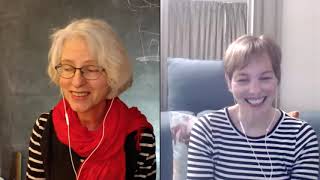
Mary Schiller and visual artist Ingrid Lill discuss using drawing as a tool for personal visioning. Ingrid's "Dream Draw Do" framework maps goals and gifts on hand-drawn mind maps, while Mary shares how a future-self paragraph she wrote in 2012 later manifested. Both emphasize moving your hands and small daily commitments over perfect planning.
Chapters
Hi there, it's Mary Schiller, author and results coach, my new title, of MarySchiller.com, where business is fun. I am so happy to welcome you to this Crowdcast call. Hi there, Clifford, Mary, Terry, Lou, uh, let's see who else is here. Nina, Ruth, Marianne, thanks so much for joining. If you can hear and see me okay, just give me a high sign in the chat and let me know. Happy to welcome our guest this evening here in Paris, Ingrid Lil, who is a very, very talented and transformative artist and illustrator. So we will chat with her in just a second. Awesome, thank you. Hi, Jeanette, thanks for letting me know that you can see and hear us okay. You know, you never can be sure with technology, so I appreciate that very much. Um, excuse me. So before we jump into our topic for the evening, which is all about envisioning your life in a very new and fun way, I just want to let you know that I will keep an eye on the chat during our talk, and if you have a specific question you'd like us to answer, please put it in the ask a question area. Because then it's a little bit easier for us to see it. And also on the replay here on Crowdcast, if you want to jump right to the answer, you can. Who else? Hi, Bronwyn, Erna, Michaela. Michaela, I hope I'm saying that right. Claire, so nice to see everybody. Some familiar names and faces on there. It's lovely.
Yeah, some of my friends are here.
Yeah, she can't hear anything. Try refreshing the page, Marianne. Sometimes that happens. Um, so hi, Graham, nice to see you here as well. So let me take a moment to introduce Ingrid to you. Um, Ingrid and I have known each other for quite a while now. I'm not even sure how long it's been. Maybe Ingrid has a better idea. Hi, Doug.
Um, 3, 4 years.
It's been a while. Yeah. And, um, And she has been a client of mine on and off and has been a client recently in my Bold One-to-One Coaching Program. So it's been just a joy for me to interact with Ingrid on a regular basis. And Ingrid is an extraordinarily talented artist of both a fine art as well as someone who draws brilliant cartoons and just joyful pictures. If you follow her on her Facebook page, you will no doubt see them. I'll let her tell you where you can find her online. So you can look her up because really her drawings are so delightful and so is she. Thank you. Hi Barbara, thanks for joining. So we decided to have a chat together because recently I realized that something kind of amazing had happened, which was I had run across something that I had written about myself I think it was back in 2012. And in 2012, I was coming toward the end of a very intensive therapeutic process where I had been dealing with post-traumatic stress disorder for many, many, many years. And I had been working with this therapist, and she asked me to write a paragraph about what future Mary would be like in 5 years' time. And just to kind of paraphrase it, it wasn't very long. I said something along the lines of, you know, I will be spending my time being creative and being in service of other people. I will wake up every day doing what I want to be doing. And most importantly, I will feel free. And when I look at myself in the mirror, I will see who I really am. Not some made-up version of myself, but I'll see the truth. And when I ran across this recently, I was like, wow, that is really something. Because you have to remember, at that time, that is not how my life looked to me at all. I mean, that paragraph was like the dream, dream, dream 10 times out for what I thought my life could be. And I didn't even really have any belief that that could happen. And so when I saw that recently, I was like, oh my gosh, that is so incredible. I honestly couldn't believe it because all of that has happened and it happened even faster than I thought possible. And then it was interesting because I hadn't mentioned that to anybody. That was just for me. I kept that to myself. And then recently I was talking with my daughter who's all grown up and she lives in England and she was saying, hey, Mom, you know what's really funny is I ran across something I wrote quite a long time ago about how I wanted my life to be, and everything has happened. I said, well, guess what? I told her about my experience, and I was like, that is so amazing that we both have had this similar experience. So when I was in Oxford last week for a quick visit with her, we decided to do the same thing. And so we sat down in this cute little coffee shop called Gail's, and we wrote out where we'd like to be in 5 years' time, except And then afterwards we changed to 3 years because we thought, why wait 5? Let's make it 3 because let's just speed this up. We just thought, let's really let our minds go and see what happens. And so I knew that Ingrid had been doing something really fun with visioning. And so the timing of all this just worked out perfectly because you'll see that she has a very unique way of creating these kinds of visions. You know, I'm kind of in the writing down the list mode, and Ingrid does something quite different. So Ingrid, why don't you start by telling us a little bit about yourself and how you kind of came into this visioning process?
Yeah, how far back should I go?
As far back as you want. Last week, or, you know, last, you know, 100 years.
A little bit about me. I'm a visual artist and I'm an illustrator, but I haven't always been an illustrator. I've been a graphic designer and did anonymous stuff to make money. And I did art on the side, which was the real me.
I think a lot of us can relate to that. Like the real me is sort of living off to the side. Right.
And The other stuff made money, but it didn't, it was anonymous. So I did websites and stuff that could have, commercial stuff that could have been done by anybody. And I did also the art that was secret and it was incredibly difficult to talk about it. And this went on for decades, forever, until one day I And even when I started to work for myself and here I have a little drawing that I did back then, just like you were talking about, that was, when was that? 5, 6 years ago. And I didn't have a business plan, so I drew a business plan. Can you see that?
Yeah. Put it in a little bit closer. Okay.
So I drew this business plan. So I made money with all this here. Which were commercial stuff and templates. And I wanted to make money with this and this and this. Now, what is that again? With illustration, original, inspiring, and graphic facilitation, and something about goals. And I didn't have any idea how to do that, and I didn't pursue any plan. And put it away. It was because I was in some kind of business class for startups. I did that. And what, and now I found it again because I was looking through my notes if I have something and I found that and it's happening. It's, that's, that's what I'm doing now. All the other stuff, the normal websites is not— I'm not doing that anymore. Yeah, I'm only doing websites when there's illustration on it.
Isn't that amazing though? I mean, I think, I think we should pause there for a second because, um, it, it tells me something about the way that human beings operate, that somehow behind the scenes there's some kind of engine that's running, right? And that is kind of helping us towards our desires. So let me ask anybody on the call, can anybody relate to that? Have you ever written some ideas down of things you'd really like to have happen and then maybe you've forgotten all about them like we did, and then you've run across them again and thought, oh my gosh, this stuff has actually happened. I agree. Hurrah. Ingrid, for that. I mean, it's really interesting that, you know, I know we're not the only people that that's happened to, um, where, I mean, just like you, I had no, uh, plan. Elena says yes. I had no plan for how any of those things were going to occur. And probably like you, I didn't really know what any of it would actually look like in the end. I just had sort of a vague idea of how I wanted my life to kind of look. So let me see. Jeanette says, yes, I drew myself on stage and find myself in a cabaret course now. Oh, fun. Claire, no, but I've been inspired to do so since your Facebook post, so that's what I'm gonna do. Great, Claire. Hi, Kevin. No, but I'm aware of the power of physically sketching out your future. Bob Proctor gets his audience to do this. Interesting.
Who's Bob Proctor?
I don't know who Bob Proctor is, but I'm gonna look him up. So thanks for that.
I will too.
So Ingrid, when you did that original design that you showed us, were you pretty clear on the things that you wanted to do? Because it sounds like you were a little more definite than me.
Well, they asked me to. Oh, okay. In this startup course.
So you were being prompted to get specific.
Right. And that's what I also think. And since then, I haven't done that. I have read about that it's a good thing to do. Gave a, made a visioning workshop here in my studio where I came up with this process and I did that with a few women here. I just didn't do my own. And this is something that I'm now in the process of doing and I'm going to show you.
Okay.
Because it deserves to get a little more deliberate Yeah, what's it called? Push a little more.
Pushing. Yeah. So Ernest says, I notice when I speak it out loud, they come to be in a wonderful way. I think that's true too. Like, I think that this can just be almost like a— what I want to say— a recognition of what our desires and our dreams are. A long time ago, I did this audio series called Permission to Dream. And in the series Permission to Dream, I talked about the fact that so many of us have a lot of thinking that tells us we're not allowed to kind of even picture what we would like to be different in our daily experiences. And I think either talking or drawing or writing or some way of bringing those things into form seems to ignite something. In us. It seems to ignite some kind of spark that then helps to propel us very naturally in that direction. Oh, Bob Proctor speaks on the law of attraction. Yeah. I don't know anything about the law of attraction, so I'm kind of out of that conversation.
I have also a few thoughts about that. Okay.
So you said you have taught this kind of drawing, visioning drawing to people in your studio. And how did you do that? What kinds of things did you ask them?
Well, first I have a few things that I want to show.
Okay.
Awesome. Because this is law of attraction thing that I'm kind of, uh, it's, it's interesting and I don't know much about it, but somehow it sounds wrong. And I think I also know why.
Okay.
Why I don't like it so much. So now I have here the Can you see that? The situation how I've, uh, that I found myself in before. That was me here. That was insecure and hiding. And, and, um, especially when it was about art and the prize here. And I thought when I have the prize, when I'm famous, rich, and beautiful, then I'm going to be happy.
So you thought you were, you pictured yourself kind of back here hanging out, not really doing much.
Yes. And I saw myself as flawed because I was lacking this. And that's why I have these black spots here. So I thought I have to hide because that's kind of embarrassing that I'm so incomplete. Then there was all these people here I'm comparing myself to. And the law of attraction, as I understand it, but I don't know much about it, is like I have to attract this thing to me. Mm-hmm.
Mm-hmm.
And kind of, yeah. And there are obstacles here that I have to, to get over. And this is just a very— and yes, here are my talents. And my talents don't get used.
So you're just kind of hanging on to them, but not really opening them up.
Yes. And that's what happened until I decided to get help and get out of this hole and get a little more visible and connect with the world. And this is the new model that I found that my vision class also is based on. Part of that I did that is drawing. I'm teaching drawing classes, but I also want to use, it's like drawing as a tool. And I want to use it for something interesting and useful and transformative because that's also my interest. So I came up with this here. This is the— can you see that? I just drew it, so it's not, not very elaborate. So this is me seen from myself.
So this is like looking down on you with your hands in front of you, right?
Yeah, right. These are my hands, and this is, this is here, this is the formless, this is the I don't know if it speaks to anybody, but that's how I see it.
It's the you that is not contained within your person, but is the essence of who you are.
Awareness, yes. And in order to interact with the world, I can give things out, make things with my hand. And physically move. And that's something that didn't happen here because I was hiding and I thought so much about what does everybody think about me. And here I just move and this here is actually only a thought. The whole thing is a thought. So this is This is this here.
Yeah.
If I take all this here, there.
Yeah.
And if I, if I keep staring on this, then of course I have problems. But all this is in movement and it stays in movement by moving my hands.
And so what are those drawings of in the circles?
These are the things that I can give into the world. These are like classes and art and, and I don't remember what this is. This was illustrations. And, and if I see it as a gift to the world, then there's nothing. And of course not everybody wants it, But some people do want it. And I see it as a, I'm giving my talents to the world instead of keeping them in my suitcase, like here. And the price, no, no, no, no, it's kind of gone. The price that was in the background is here now. So this happiness this is coming out, this is the awareness that's always here. And it's only if I stare on these problems that I don't see them. All these thoughts are kind of shit in the way of seeing the happiness. And if I just allow it to move by moving my hands, then it flows.
That's beautiful.
And that's what, uh, what happened to me when I started drawing and sharing my drawings, not keeping them for myself.
And Elena wants to know how that shift happened for you, if you can say.
This shift? Well, I've known this theoretically. For a long time because I was interested in awareness and spiritual things. What I didn't know is that I just have to move my head and act and do something. And then everything else takes care of itself. And not be scared of the what people think of me, but see it as I'm doing, giving them something. And how did that happen? That was a decision.
One quick thing. I think your microphone is hitting your scarf and causing a little distortion. So just FYI. But I think that what you said in answer to Elena's question is really simple, but it's really, really, really, really powerful in that you heard a new idea in your mind that was a different decision that just said, I'm going to just move. I'm going to just act. I'm going to just do something. And I think that you may have had that thought before and didn't respond to it, and then suddenly it seemed like just the obvious thing to do. Is that kind of—
Yes. And it was also that I thought I'm— what's the word— shy, introvert, that I just don't like showing men and I don't like selling, which is another word for I, it's just not true. I didn't know that. It was a definition that I believed in that was wrong. I just had to learn it, of course. Well, yeah, I still have to. It's not that I can all this stuff, but, but I would never have dared to make videos and be live and draw live like I do now on Tuesdays with my with your drawing club.
Yeah, we'll tell people about the drawing club too. Lou says, act and the magic happens and realizing there's nothing riding on it. See, that's another point. Thank you, Lou, because that was woven into what you were saying too, was in the previous drawing with all of the hurdles in front of you, you thought you had to jump through all these things in order to maybe get to happiness or some kind of end goal. And what you saw instead was that that was already present within you and it could come from you instead of having to run towards it and not finding it or something that was already there.
And also the solution is not in here because it doesn't come out of the system. The solution comes always from a new place. Like I can't fix it here.
Right, right. So, you know, if you— I guess if I take that kind of one more step, there's, there's nothing that we need to fix, essentially, that— like, when I, when I imagine you and me and everybody in that formlessness with our hands open, like we are giving, there is nothing that we need to change about that. There's nothing that needs to be made better. In other words, that whatever we have is what we have, and it's plenty. There isn't anything we have to go get before we start, right?
And, and I'm not going to be happy when I have reached this or when I have attracted this. The happiness is now or never.
Yeah, it's already here. It's already here. We can experience it right now, no matter how it looks to us. No matter what those thoughts are saying, we can still have that and express that. Barbara says, fascinating, stimulating. A bright light has just come on for me. I love when that happens. Cool. Cool. Yeah. I mean, how many of us are imagining that there's something out there that we have to work towards. I think when I originally made that little paragraph about myself several years ago, that's what I was— how I was seeing things was that somehow I was going to have to completely transform in some way I couldn't even imagine, and then suddenly happiness was going to be there, and, and I was, you know, all of that was going to happen. And what I saw instead was that I already had all of that within me, just like in your drawing. I already had all of that. That was the shift to go to Elena's question a little bit. You know, that was the only shift that had to happen, was that I realized it's not out there somewhere, all that happiness. It's actually already here. Uh, Jeanette, do I hear you say the solution, a good form, always is born anew in the present? Uh, if I'm understanding your question, Jeanette, I would say that the only thing that ever exists is the present, and that in every present moment that we're experiencing this thing called life, we already have all of the answers, we already have all of the solutions, we already have everything. That's one thing I love about being human, is that We don't have to work very hard, you know, we just have to sit and wait for a new idea to occur to us. We don't have to, you know, effort to get that new idea. It will just appear, just like it does, Ingrid, when you're thinking of something to draw. At a certain point, an idea comes to your mind and you draw something.
Yeah, it just doesn't happen that way when I'm doing other stuff like taxes.
Yeah, it's tax season. Is everyone having fun with their taxes?
Yeah, not yet. Tomorrow.
Yeah, I mean, there are certain things— well, you know what's interesting about that too? Um, oh, hi, Shireen! Thanks for joining. I, I was thinking about stuff like taxes recently, and, and I realized that, um, that even some of those things have shifted for me, uh, whereas I used to have a lot more kind of yucky thinking around that. Now that isn't so prevalent. And I think it's just come, like you said earlier, just from actually doing the thing and realizing, oh, okay, I know what I need to do. It's not rocket science. I can figure this out. Again, if you have a specific question, feel free to type it where it says ask a question. There was a question there about the replays of all of these, and they are all available right here where you watch the live broadcast, which is very convenient. So feel free to put a question where it says ask a question or type something into the chat area. Oopsie, I clicked the wrong button. So Ingrid, what can you tell us about this whole process that you have called Dream Draw Do? What is that about?
Yeah, that's a new class that is not finished yet. I'm still in the process of inventing and I I just finished the sketch just before we came on the call here, and it should have been further along, but I'm also working on another class that's connected to this, Easy Illustration, and that's why I'm not that far, but I can show what I have.
Yes, please. I'd love to see. Lou says she loves the title. I think it's awesome.
Yeah, it came by itself.
You see, doesn't take a lot of effort. Things just occur to us.
Yes. Illustration Made Easy, right?
Yeah.
And I bought the domain. Good. And DreamDraw too. Yeah. So here's the first, one of the first sketches that That's very light. So from this fountain model here that I call fountain model, that's where you're at the fountain. Yes, but maybe I can call it also firework model because, or tree of life, because I also, also like it could also look like a tree here. Um, so we have this model to, to work on. And then we make all the things that, um, that we want to give to the world. So what I first did is I made a bucket list, a really traditional bucket list, the things that I want to do in my lifetime, in 5 years, in 3 years, or what, 5 years, 1 year. But I didn't, it wasn't very inspiring in a way. I didn't, traveling and what else came there and art making. These are the two things. I didn't have much more to do. And then I started drawing the things in this here. That was Yesterday, yesterday in the evening I did that. So it's not very beautiful yet, but what you can see is this here, the formless, my hands are in the middle now. And I find if I write it, so this is kind of a mind map. I'm willing to be. And then I write around this words and it's going to be more beautiful at some point. How I want to feel energized and generous and confident and shining. And then somehow one thing emerged from the other. So these are all the worlds, the gifts that I want to create. I had some kind of system, but somehow I got, it got into the way. At first I wanted to do something like things I want to give to the world, things I want to give to myself and things I want to change and stop. But then one thing came from the other, then I thought, well, no, let's just do it without system.
Yeah. And better to just let things flow as they flow. Right.
Yeah, that's, that's what they wanted. So these are different things that I want to do. Illustration Made Easy is one, and also the amount of Danish crowns that I want to make with it. I don't know if that's going to happen. The Dream Draw 2 class should— has to be— wants to be developed. But then there's also all the other things that I want to do, so it's actually a little too much, but I have my whole life. I also want to exercise more. And one thing that happened when I started doing the illustration and I started giving classes, which I've never done before, was that a community emerged from this, which is really nice. So this is also the community aspect I want to have more and maybe transform the house here, which is in the middle of beautiful nature to some kind of retreat, but I don't know yet. Well, and now I wrote it here. So this is the dream map, and now you have to see now. And then we fold it in this way, and here it becomes a book. Yes. And it's a 3-month planner. And here on the, on the COVID is a sun because I chose that as a symbol how I want to feel. Like, uh, it's very different than I felt before, hiding and, and, uh, like, like, like this. So now I want to feel sun-like. So this is the COVID And then I have a spread for, uh, March. And here I write some steps that I can take in order to reach some of the things that are inside here. And here is space to write if I've done that. So this is the March spread, and here is the April spread, and here's May. And then I cut out, because it was looking so boring, I cut out some piece of map. I know, that was so funny.
We talked about that right before we jumped on, that she, she clipped out a random piece of a map, totally random, and it was Paris. And I said, well, I don't think that was random then. I think that means she's gonna come here and see me. Oh, we're getting some lovely comments. Barbara says it looks like passport stamps, but just kind of cool. It's like, right? It's like traveling through life. That's cool. Looks exciting. Jeanette, very attractive. Lou, the format's genius, fun, expansive, also practical. Looks fun. Shereen says, yeah, I totally agree. You know, I love what Ingrid does because it's so far outside of what my kind of normal is, and I love being exposed to a new way of of looking at things and a new way of envisioning what I might want for myself. So it sounds like some other people on this call are having the same response, which is really cool. Helen says she likes this idea a lot. I know, me too. Me too. So you said you did a workshop at your studio there for some people.
Yes, but yes, it was one very, uh, one, one day we met here and we painted this Tree of Life. It was not enough time. So it, this has to be a process, uh, because, um, just gathering the, the, the list, the bucket list, and, and the goals and the dreams, uh, takes a day.
I know, right?
Or maybe it doesn't take a day, but some, some more time if you're painting and brainstorming. And it was, it was—
yeah, but yeah, same point. Like I was saying before, um, I think so many of us, when we hear something within ourselves that we really want to do, like, the next thought after it is invariably, oh, but I couldn't do that, you know, that, that's that's not really practical or that's not possible. And what I love to do, if you guys are game who are on the call, is if you would like to type something into the chat that is something that you would really love to do or something, I don't know, just some kind of dream that seems maybe outrageous, but something that you would really love to do. I'd love for you to put it in the chat because that means that you're writing it down. And you're putting it out there and you're sharing it. And like I said before, there is something like Lou said, kind of magical that happens when we say something and then we can follow it up with just a small step. It doesn't have to be— one of my pet peeves is this whole idea that we have to take massive action. You guys know that phrase? I mean, I just hate that. You don't need to do that. It's more like letting those ideas out there, you know, letting them come out of you in some way, and then just seeing what you can do on, like, in your planner, one little thing at a time, just one thing at a time. Uh, Kevin, do the Walk of St. James in full one summer. Oh, the Way of St. James, sorry. Thanks, Kevin. Um, I don't know what, what that includes. It sounds like it might be massive if it's over a full summer. Uh, Jerry, hi there. Use my voice. Cool. Jeanette, a booklet and cards with poetry. Oh, pretty. Lou, I'd love to live and work in Paris for part of the year. I'm not stalking me. You can stalk me, it's okay, Lou. Uh, Elena, dance, write, connect. Uh, Nina, I'd like to find a beach house. Kevin, walking from France to the west coast of North Spain. Oh, a spiritual journey. Wow, those are amazing. I can picture all of those on Ingrid's map there. Claire, build my own house, not personally. Hey, why not, Claire? You could learn something, right? That'd be fun to put the nails in yourself. My dad built a house for us, if you can believe that, when I was teeny weeny. Gosh, these are beautiful. Absolutely beautiful. And like I was saying, we can put these things out there and then suddenly it's like the lights go on and we start to see ways that these things might actually happen. Barbara, communicate in some way about my long emotional journey. Shereen, work out of home a few days a week. Excellent. I love all of these ideas. Have you found that to be true, Ingrid, that when you kind of came out from behind your, your closed-off space, that suddenly it seemed like there were opportunities out there already for you, just kind of waiting, that you didn't have to put all this effort forth to kind of make things happen?
Yes, it, yes, it is like I, I, um, what's the word, uh, blame it on the drone. What I did is I started sharing personal stories, like be open up and share my stories and doing exactly what I was always scared of doing because I haven't always drawn these kind of cartoons from imagination. I could also only draw stuff that I saw before me. And then it's weird, when I started doing something that was kind of out of the ordinary and sharing and, uh, and then moving out of my— of this comfort zone that I had, then, then the drawing showed me the way. Then the opportunities happened and I started giving the drawing classes, and then of course I had to be more visible and which is, yeah, out of character for me, but not anymore.
I love what you said, that you, you then saw that you could step outside that comfort zone that you had for yourself. And once you did that, you started to get comfortable in there, you know, right? You were shown the way. The drawing showed you the way. And I know that that's been true for me as well, that whenever I have just allowed myself to go past where I thought I might succeed or, you know, what felt sort of normal to me, on the other side of that was something really exciting and inspiring and fun, like even more, like it just, you know, multiplied that. Wow, we got some more comments. See, Terry wants to be on a call with me. That's cool. Thanks, Terry. Judy, I want to run a health and well-being workshop. Michaela, get my program Time to Fly up. Absolutely. Claire, I'm going to write my list and one will be to do a webinar with Mary. Thank you guys. Clifford is making— he's making fun of Terry, I think, in a winky wink sort of way. Let's see. You guys are awesome. Um, so gosh, there's so much I can say about this. I wish we had like a whole other hour. Um, and my mind is just going a mile a minute, but you know, I think the, the main point that, that I am hearing from you and that I'm hearing from people in the chat and that I know for myself is that we are actually free to do these things. You know, we somehow have this idea that we are actually in some sort of a box, you know, that think outside the box kind of thing, but there actually is no box. And it sounds like you discovered that for yourself.
There's also one, one thing that I haven't mentioned before, but it's maybe important. And that is when I was sitting in this bubble here and trying to make art, and art was, was the, the one outlet that I had, but it didn't really get out. So there was all too much pressure on it. And I drank wine to get into the mood. And, uh, and I stopped doing— and I always thought I wasn't an alcoholic, like, real full-blown, but I did, uh, drink too much, I think, because it looked like you needed that in some way to— yes, in, in order to, um, dare to, uh, to move or to get into the flow. And it felt, yeah. And at the same time as I decided, it was about the same time, decided that I don't do that anymore. Like, then I don't know what came first, that I stopped with the wine or there's probably no causal connection, but it's also So what I wanted to say is that that was also just a thought that I needed that. I didn't need it. I don't need it. I don't drink anymore. An occasional glass of wine, but not for getting into flow.
Because you're already in it. I think you discovered.
I am in flow.
You're in it and it's of you and it's, yeah. Wow, thank you for sharing that. Um, Claire is thanking you as well. Alcohol can sometimes make you feel like you lose your inhibitions, but it's just you underneath, right? Not the alcohol.
And, and it actually reinforces the, the, this imagined cage because I, I think I need it in order to get out of it, but, but it makes it kind of more real than it is.
And I really appreciate you sharing that, and I think that even if it's not alcohol, it might something else for some other people. Like, it might be, well, it might be a thought of, well, you know, when I get my finances in order, then I can do this thing that I really want to do. You know, it might be something more like that. Or it might be, you know, when I have the right relationship, then I'll feel like I can be myself. Or, you know, it could be anything like that. And I think what pointing to here is that none of that is real. That's imaginary. And that in fact, there is nothing stopping us ever from, from, you know, being that fountain or that firework or that tree that is, you know, spreading that beautiful creative energy.
But what you have to do is move your hands physically and And push the button, the send button, and write the email and move the pencil.
Right. I love the way you describe that. Yeah. Because you can— I mean, if I look back at what happened, for instance, in between the time I wrote that note to myself about how I wanted to be in 5 years' time and what happened, that was part of it, definitely was. Not only did I realize that, like you did, that I didn't have to search somewhere out there for happiness and all of that, but that I had all of the tools I needed to actually do things, that I didn't have to wait for anybody to tell me it was okay, that I could simply start. And a lot of people— this is a question that I have for you, Ingrid— a lot of people ask me, well, how do I start? Like I seem inert, like how can I actually start? Lou, Theodore and I talked about that a little bit last week, but you know, what do you say to that? Move your hands. Simple, right? Yeah. Just move.
Start drawing. My solution is start drawing.
Start drawing.
It's maybe not for everybody, but yeah, do something.
I, I think the physical thing is actually really cool because even though I consider myself a writer, I'm not an artist like that, that it is doing something. It's moving my hands and like you said, hitting the send button. You know, this—
I have to say something about that. You're not an artist. Drawing doesn't, doesn't need to be art. Drawing is a tool. Writing is not art as a That's— if people say, I can't draw, I'm not an artist, it's like, I can't write, I'm not an artist. You don't have to be an artist in order to write. You just have to learn it. You have to know how to do it, and then you just do it.
Good point. Good point. Uh, Lou, that's interesting. I stopped drinking too and have never been more free and creative. Interesting. Shereen, for me, I think only when my son starts going to nursery I'll be able to work out of my home. Yeah, I think that a lot of people have those same kinds of thoughts. And what I would say, and I think Ingrid would agree, is that if you can simply start, then the solutions to those kinds of issues will become obvious. It's like they, they don't like magically disappear, but new ideas come to us, it seems, more easily and more frequently as we are doing. What do you think, Ingrid?
I, I, I have a solution. I, when I had small children, after my second son was born, I didn't get into the art making habit, and I designed a little course for myself that was 15 minutes a day, and I called it that daily action. And it was like a week, and I had to, uh, I gave myself two lists of words that I had to combine and then do something about them. And, but only 15 minutes a day because I didn't have more time. And at the end of the week, something should be finished.
I love it. That's what I was kind of saying earlier about we can take what seem like small steps and small actions. That's how I got my memoir written, was I just committed. I said, I'm going to write 250 words a day every day and put it out on a blog. It didn't have my real name on it at that time. So that if somebody finds it, great, they can read it. And I'm just going to do that until this book is done. And I didn't know how long that was going to take, but I just said I'm just going to commit. And that's what I did. And it's amazing how just a small commitment like that can just really start to turn things around. Terry likes your move your hands comment. Claire, conditions are just roadblocks we put up for ourselves. Yeah. And what's cool, Claire, is that Since they are thought, they actually don't have any substance to them. They can look real, but in the end, they're just made up, which is cool. Terry, you can't take more than one step at a time. Yeah, it'd be interesting to try to do otherwise. That would look really strange, wouldn't it?
But of course, you can't do everything just by deciding it. There are some things that that you have to learn. That's true. Like, for example, I'm speaking on video. It's not something I'm good at, but I'm sure I can learn it and be better, learn to be better on it, in it, or other stuff, business.
Terry says we learn to walk. Absolutely. I think if there's something that we really feel strongly that we want to try to do, then we will simply learn it. There's no— what I've noticed, and I don't know if you agree with me, Ingrid, but what I've noticed is that whenever I have needed to learn something new, like, for instance, to grow this business, I've simply learned it. You know, I've realized, oh, okay, there's a gap in my understanding of how to do something. So I'm going to figure out how to do it. Either I'll learn on my own, I'll hire somebody to teach me. I'll take a class. I'll just— I just do it. It's not like this horribly big decision anymore. It's like, oh, I need to understand this, so I'm just going to do it. Is that kind of how things have happened for you?
That's how I ended up here with you.
Lucky us, right, you guys? What other questions or comments do you guys have? I have been so inspired by this conversation. It's, it's interesting too, because today I was just doing a new kind of fun plan for March since March is just around the corner already. And, you know, making some notes about what projects I want to finish by when. And, and I think in the past, I would have had a lot of kind of tension around that. And this time, it was just so like light and easy and free. And other people might look at my list and go, wow, that's, you know, you're attempting kind of a lot. But it doesn't really feel like that anymore. You know, it feels just so, so much easier for things to get done because I don't have a lot. Like somebody said a moment ago, I'm sorry, who said this? You know, there's nothing at stake here. It's something that I want to do and it's something you know, that I want to try to bring to people that I think might be helpful to them. And so all of that just kind of happens without me exerting tons and tons of effort. I'm moving my hands, but I don't feel like I'm sweating bullets over it, you know. Does, does that kind of resonate with you at all?
Yeah, I sometimes—
it's okay, you're allowed. Uh, let's see. Tension happens, but I don't care as much. That's what Terry— well, I think that's true too. Maybe that's what's going on, Ingrid, too, is that you may have some of that, but it's not really a concern. It's not like—
I, I have learned that it doesn't kill me.
Exactly. And it doesn't— it's not telling you something like, oh, this is a bad project or something. It's just kind of like, oh, you know, that, that happens sometimes, right?
Right. Yes.
Jeanette says, you say decide and do. I think your decision follows an impulse. Is that right?
Yes.
Yeah.
Yes, of course.
Yeah. That impulse to create something, that impulse to share something. And what's so fun to me about all of that is that's simply how we are as human beings. We don't have to conjure that up, that whole idea of that creative impulse and then wanting to share that with people. That's simply how we're wired, I think, as human beings. I think it takes more effort to try to tamp that down, in effect, than it does to simply let it out there and be free with it.
But sometimes it does feel like effort to, to do basic— basically, mostly the business-related stuff. Doesn't come as easily to me, I think, as creating. Like this, this here is fun and easy, and, uh, but now I have to make us as an information page around it and, and all kinds of an email list and all this is— I'm not so familiar with that.
Well, sorry, my cat's hitting my computer. Um, so she can't hear me either, so I can't tell her to stop. So I would say something that my— one of my coaches told me, uh, which is that that creativity and that ease that you feel with drawing and creating like that is available to you everywhere. It's not segmented into certain things.
Yes, I'm, I'm learning.
Exactly. And so you can start to have that same experience with everything, um, once you kind of see that a little bit more. Terry wants you to say more if you can about how you experience the impulse.
Sometimes it comes in, often it comes in form of a deadline.
Yeah, I set my own deadlines. Yeah, I do the same.
Because I have so many ideas and just to finish this because I wanted to show it and I just finished it. Yeah, yeah, yeah.
And it's not even finished really, but yeah, but it could have been great though, because like I had, I set a call for next week, another Crowdcast call on a different topic. I've got a deadline now. People are signing up for it. So I'm going to be ready. So it helps to put the deadline out there.
Yes. Or I always had problems with the, with my newsletter, just to send newsletters out every week. And it's, it became much easier since I have my Tuesday's drawing club. And now I have to send out an information email that, uh, we are going to draw about this and this and this, and people are waiting for it, some people. And so I do my newsletters every Sunday.
So we have one last question. Uh, Elena, uh, oh, a couple things. Elena, I often feel overwhelmed by my expect— my own expectations. Can you say something about this?
Deadline. Just, and show it, make a deadline and commit to show it. And then that's why a class or something like that is good because then somebody says, well, now, now come on, show, show me what you, what you have done. And then you have to show no matter, you don't have to, but no matter if it's finished or not, because all the time I did that, I thought, well, that's, that's ugly. This is ugly. I can't show that. Well, the accepting the imperfection is part of it, right?
So Marianne, Ingrid, maybe you can make a video about making the book. So do you want to talk about what's coming up for you on Thursday?
I wanted to put it off, but now, now some people signed up for it, so we're going to do a preliminary, preliminary experimental webinar about this here on Thursday, 8 o'clock Danish time.
And how do people know about that? Where can they?
There's a sign up on my webpage, which is ingridlill.com or Lill Universe that both lead to the same page. Yes, and there's a little, uh, box there. I put it also there just, just before.
There we go. I put an actual link there, and it's also at— I'll just put your other one here.
Well, this is enough.
So that will take place this Thursday at 8 PM Central European Time. Yes, that'll be fun. And it's free.
It's free. And, uh, but I would like to get some feedback, and, and I hope that the participants will co-create with me because I want to, to offer this as a process somehow, but I'm not sure how long it takes. It's in English. It's, it's, it's in, in bad English.
No, your English is great.
It's great.
And if If people want to email you just to get in touch with you, what's your email address?
Uh, should I write it?
Yeah, you type in there.
The, uh, which one do I take?
Your business email, just in case they want to reach out to you personally. Awesome. Okay, ingrid@fraulil.dk. Excellent.
Um, which is my Danish business website.
Well, this has been really, really fun, Ingrid. I've thoroughly enjoyed the conversation. I hope, uh, you did.
So I did.
Thank you so much for being here, and thank you all. Thank you for joining live if you were able to join live. If you are watching the replay. I so, so appreciate that as well. Thank you so much. If there was a question that you didn't want to post publicly for me or for Ingrid, you can email me at mary@maryschiller.com and Ingrid at the address that is in the chat there. I also want to mention that I am accepting new clients for my one-to-one coaching right now. If you'd like to have a chat with me about that, I would love to talk to you. So feel free to click the green button where it says take a step forward today, get on a call with me, and let's make your vision a reality. And we will chat on Zoom and see if I can do something to help you turn your dreams into your real life, which is what we've been talking about this whole hour. So, Ingrid, is there anything else you want to mention? Yes, that's my cat, my elderly, almost 19-year-old deaf cat. She likes to try to get my attention by tugging on my clothes these days. Is there anything else you'd like to say, uh, Ingrid? What about your Tuesday drawing class? How do people find out?
Yes, everybody's also— is also invited, and you are. Okay, the Tuesday drawing class, uh, this is usually on Tuesdays. You have to sign up on my email list to get the, the links, or the, the— because it's not every Tuesday, but for example, today it's not.
And they go to that same website to, um, okay.
Yes, okay. And there's also a little mini drawing class on, uh, when you sign up.
I'm just putting that in.
And these, um, drawing classes are like, uh, like, like this here, only then I switch and to the camera, and then you can see me draw, and you can show me your drawings like, like this. And then I make a screenshot, and then I can tell you, uh, well, the feed should turn down.
Cool. Something like that. Awesome. Well, thank you so much, Ingrid. It was just a blast talking to you. You're one of my favorite people. I'm so glad we know each other. And thanks again, everybody, for being here. And, um, again, I will be here next week with a brand new topic. I'll be sending that out by email as well. So thanks, everybody. Bye for now. Thanks, Ingrid.
Bye.










