Feeling stuck? Watch this video!
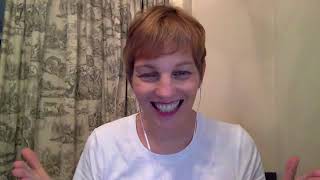
Mary Schiller argues that feeling stuck comes from thought patterns that convince you that you lack creativity, not from any actual deficit. Creativity isn't a special talent but a continuous state in everything you do, from deciding what to eat to solving problems. Her book offers a 14-day practice to help you create something tangible every day.
Chapters
Hello, hello. This is Mary Schiller, author and Chief Permission Granter at MarySchiller.com. I always laugh at myself because of that title I've bestowed upon myself. I am really happy to be talking with you right now about creativity to celebrate the recent release of my new book, which I will hold up on my Kindle, called 14 Creations, Wake Up Your Creativity and Your Life in 14 Fun-Filled Days. And I do read lots of books on my phone. So I don't know if you do, but I don't often use my Kindle anymore. I usually read Kindle books either on my phone or straight on my Mac laptop using the cloud reader for Kindle. I find that a really easy way to read books too. Although I do also have a Kindle app on my computer, which I use occasionally as well. So I'm really happy to welcome you to this conversation. If you're joining live, give me a thumbs up or type a comment in the comment box so I know you're there. And if you're watching this on the recording, thank you so much for watching. So the topic of my conversation with you today is basically that we have a very narrow view of what creativity actually is. I don't know about you, but when I used to think about creativity, it looked like something that either certain people have and certain people don't have, or it looked like it was confined to certain aspects of life. For example, people who did things in the arts are creative, or people who invent things are creative, or people who design things are creative. Those seemed in the past to me, basically up until about 2 years ago, to be kind of the main areas where people were creative. I might have also included something like science, like scientific discovery for a little while. Hey, Laura. Hey, Justine. I used to work at a medical school and I used to sometimes see those people, both the faculty and the students, as creative in a different way because sometimes people do count medicine among the arts because there is an art to medicine as well. But it didn't really seem to go much beyond that. And that seems to be kind of the message that most of us get as we're growing up is that creativity is confined to these certain areas of life and, you know, maybe you might have some abilities in one of those areas or a couple of those areas and that makes you creative. Hi, Kathy. Hi, Anna Greta. Nice to see you both here. So that was pretty much how creativity looked to me. So if you're watching this right now, let me know if that rings true for you that creativity, even I'm thinking back to elementary school, things were sort of separated out. There was time for drawing, that seemed like the creative time, and then there was time for math, which didn't seem very creative to me. Hi there, hi Anna Greta. And there were just, things were sort of divided up, like history certainly couldn't be considered a creative, part of the, the school day, and certainly not recess or lunch or any of those things. So I think from a very early age, we see creativity kind of segregated into certain areas of life and kind of kept out of other areas of life. Well, what I have come to see over the last couple of years is that basically That's not true. Yeah, Kathy, thanks for saying that because really that's how we're kind of taught to see creativity, I think. That, you know, if you're not good with, you know, pen and paper in terms of writing or drawing, or you don't know how to paint, or you don't know how to play music or write music— more like write music, not even just playing music because I played music and that didn't even seem all that creative under the under that umbrella. Like if you didn't do any of those things, then you weren't considered creative. Hi, Margaret, good to see you. Even, I have to say, you know, I was always a pretty good writer in school, but I never saw that as creative because I didn't write fiction. I was good at writing essays and I was good at writing all kinds of other things, but I wasn't a fiction writer. So that isn't considered creative writing if it's not fiction. So that's kind of an interesting thing that just occurred to me. Another kind of pigeonholing of creativity in these various areas, which I find really interesting now because it seems very foreign to me, this way of seeing things. Hi Kim, nice to see you. Thanks for being here. So, The way that creativity looks to me now is quite different, and it's one of the reasons why I wrote this book, because I really wanted people to see that creativity is so much broader than the way we've been seeing it, that in essence, we are simply, hi Therese, it's so nice to see you. We are simply creative beings by nature. That we have innate creativity that is at work all the time. So for example, just now I was out for a fairly long walk. I think I was out for a couple hours or so here in Paris where I live, and it felt like I was creating the experience of this walk depending on which way I turned and You know, I ventured down a couple of new streets, which were quite interesting in many ways. And I looked in some new shops, and I did go back to one of my favorite bakeries for a beignet. But anyway, just 'cause I like them so much. But I really had the experience. Oh, you're in Rome, Therese, how nice. Oh, Kim, yeah, we'll get to being stuck. I'll get to that in a second. So while I was out on this walk, I was definitely having it, having an experience that this walk was being created through me, that I was creating this experience of this walk that I was on, depending on what I decided to do, depending on what thoughts came to mind as I was walking, depending on what decisions I made. You know, I made a decision to go into a yarn shop and I just thoroughly enjoyed being in this yarn shop and decided at the last minute I was going to leave. I was like, no, I really want to buy this yarn. So I bought some yarn, and I felt very much like I believe human beings are naturally, that we have this innate state that we can tap into at any time that is light, that is airy, that has that beautiful sort of creative vibe to it, for lack of a better word. And that when we talk about being in the flow of life or in the flow of a project or whatever it might be, that's what we're really talking about. We're talking about something that doesn't have to be sought. We don't have to go looking for it. Because it's already here. We couldn't escape the flow if we tried because it's simply where we are all the time. It just doesn't look that way all the time. Hey Vivian, nice to see you. So let me address Kim's point. And Kim, if you are still here and you want to elaborate on what you mean by you're stuck, that's great. I can certainly relate to the feeling of being stuck, and I think pretty much everybody watching this watching this video can relate to the feeling of being stuck. In fact, I was having that sensation myself a few days ago, and it just sort of passed now, in fact, just this morning. And the reason why we have this sensation of being stuck is really, really simple. And it's so simple that I don't know why I didn't see it before, And I don't know why most people haven't seen it before, but I'm gonna share it with you. The only reason it ever feels to us like we're stuck is because we have some kind of thinking going on, we may not even be aware of it consciously, that is telling us that we're stuck. And for some reason, that thinking looks really, really compelling. So much so that we are focused on it, We're listening to it and we're kind of buying into it. And the truth is that that kind of thinking just cannot possibly be true. It just can't be true because we are so much bigger than those thoughts. We are way, way, way past the margins. You know, thinking about coloring outside the lines, we're way outside the lines of wherever those thoughts are telling us we are. Oh, Kim says, um, you put everything else ahead of doing something creative. And Justine says, stuck for me is usually me overthinking stuff around what I want to create. Okay, so thank you for, for saying that, because the point that I'm making is that there's no separation between things that are creative and things that aren't creative. So in the book and in a lot of the coaching and programs that I do, What I share with people is that creativity is happening 24/7. You are creating an experience by whatever thinking you happen to be listening to. If you're not really listening to a bunch of thoughts and you're listening to inspiration, kind of like I was today on my walk and I was feeling sort of light and fun, you know, that's an experience. You are constantly in a state of transformation. Your cells are turning over. Your thoughts are changing. You know, you're— so it's not just your physical self, but your metaphysical self is constantly in a state of change and creative transformation. So there's really no way to separate ourselves from a creative act or creativity. Those things are simply built into our DNA as human beings. Oh, hi, Mimi. And so if we continue to sort of look at things as being creative or not creative, that isn't all that helpful. Instead, what I'm trying to put across in the book and a little bit in this talk anyway is that human beings are creating all the time, and we don't need to see ourselves as doing something creative or doing something that's not creative. When I was eating my delicious beignet on the way home, I was creating the experience of eating a delicious beignet. When I was walking around and through one of the streets here that I happened upon and saw a few peep show entryways, that was another experience that I was creating because I had lots of thinking going on about that. And so if we can start to see that, you know, solving a simple problem is a creative act, or solving a complicated problem is a creative act, figuring out what to make for dinner is a creative act, that basically every breath we take is a creative act, then the whole notion of creativity starts to take on a very, very different hue. Let me check. Justine, oh, no worries, Mimi, you're on time all the time. Creating solutions or creating problems, either way we're still creating. Yeah, exactly. So it's kinda like when you're, when you start to understand a little bit more about this, when you start to even just glimpse this truth about yourself, it starts to feel a lot less pressurized when you want to actually make a thing. So that's one of the reasons why I framed the book the way that I did, where I have you make something from start to finish every day for 14 days in a row, because I want to illustrate how actually easy it is for us to create something, a tangible thing, from nothing. So in the start of the day, that thing that at the end of the day doesn't exist and then it does. I mean, to me, that's sort of miraculous, you know, that there could be something that in this moment right now in my life doesn't exist, but in a couple hours after I create something, it will exist. So after this call, if I sit down and write something, I'm working on some fiction right now myself, I will bring something into form that didn't exist. I mean, think about how amazing that is, really. So I think I'll just pause here for a second and see how this is landing for you. Are you starting to at least get a little hint of the way that human beings are designed, that our creative force is at work all the time? That it isn't something we have to conjure up, that we have to, you know, call upon or anything like that, that it's always available to us. And if it looks like it's not there, it's simply because we're paying attention to a little bit of weird thinking right then that tells us it's not. So give me a thumbs up if that's kind of making sense, or write a comment. I'd really love to hear. 'Cause when I first sort of started to see this for myself, I didn't quite get it. I was like, wait, what do you mean? I'm creative all the time. And I'll give you a concrete example. Oh, thank you. I'll give you a concrete example. So I never used to think that I was creative when it came to business. Hey, Mimi. Yeah, absolutely, you can create anything you want. Hi, Tiara. Oh yeah, I love Rupert Spira too. Justine, I'm seeing that getting stuck is a barrier that we create. Yeah, exactly. So that's kind of coming through a thought, right, Justine, that we're listening to. And we're like, oh, I'm stuck right now. And we've created that sensation for ourselves. And that is ironic, isn't it? But it's kind of freeing to see that, I think. Because then it's like, oh, I'm creating all the time, so that means I can kind of create whatever I want. So getting to my example, I had never thought I was any good at business, really. I had worked for myself, ironically, for many years and had done fairly well, but it just never seemed like it was something I was very good at or very creative in. And then about a year and a half ago, when I started to see creativity in this new way, It was like, oh, wait a second. So all of my skills that I have, like in writing, all that creative ability, that's available to me in anything that I want to do. So that means it's available to me if I want to create a business. So let's try doing that. So I started to just kind of explore my creative self related to business and making money and creating a whole new career for myself, and guess what happened? It actually worked. It actually worked, and it worked a lot faster than I thought it could. Hey Arthur, good to see you. Uh, it's fine, everything is creation, it's just to act. Yeah, it's just acting on a thought, that's it. Hi Kathy, I started to see creativity all the time, I've been together. Yes, children, so great. You know, kids are just, uh, they are just amazing to, to learn from. In this regard because they're not afraid to try anything. They seem to, because they haven't sort of been conditioned thought-wise out of it, they see themselves as creative across the board, right? You don't see a child afraid to draw a picture because they're not creative in that area. You know, if you plop some clay in front of them, they're going to just dive right in and start doing stuff with it. And so I love that example of kids because they are showing us, I think, brilliantly in a beautiful, beautiful way what we all still have. You know, we're no different now than we were when we were children. It's just that we've forgotten that this creativity spans all areas. So if there is an area of your life where you don't feel quote unquote creative, but it's an area that you would like to be creative in, that's all you need to go create stuff in that area of life. Hey Terry, so nice to see you. Hey Scott, long time no see, pal. And so, so I kind of look at creativity this way, that if you are inspired in a new area of your life where you haven't seen yourself as creative, That inspirational spark is all that's needed to show you that, yeah, I actually do have some skills and talents and abilities in that area, even if I have never tried it before. You know, it's really exciting too, I think, to try new things as you go through life. You know, because as I was saying earlier, we're constantly transforming. You know, biologically, we're constantly transforming. I certainly don't look like I did 10 years ago. So, you know, we can see it. It visually that we're always transforming and changing and creating a new version of ourselves, right? But it's really fun to, as you go through life, realize that, as I like to say, you have permission to try new things. You have permission to explore, as one of my dear Coach friends says, your hidden talents that you may not even know that you have. Hi, Brian, nice to see you. Yeah, Scott, you're right, people fear their own chutzpah. That's a nice way of putting it. We sort of get told by lots of messages, you know, both inside our own heads and in other people's, from other people, that, oh, you know, well, Mary, you're too old, you know, to start writing fiction. I mean, you know, I think I wrote about this in the book, you know, if you were going to be a fiction writer, you would have done it by now, you know. And I used to listen to that kind of thinking until I didn't. And when I realized that that was telling me something that just wasn't true, I was able to write a novel. And that's something that I only did, you know, what was it, maybe 2 or 3 years ago. So I was in my 50s when I wrote my first novel, and I'm still exploring fiction, which is something that I've never done before. But, you know, you never know until you allow yourself to follow that chutzpah, as my dear friend Scott said. If you allow yourself to follow that creative impulse instead of stopping yourself, you'll be surprised at how this innate creativity just rises to the surface to help you. Arthur asks children, "Who is an artist here?" Everyone raises their hands. Ask adults the same and they look around the room to see hands, right? Nothing. I know, and you know, if you really want to look at this in a beautiful way based on what Arthur was saying, you know, we are the artist of life, of our own lives and as I say in the book, that life is creating us as well. You know, that there is sort of this beautiful reciprocation going on between life and us and us and life. And it's a co-creation, co-creating type of experience that we're having. It's not happening in a vacuum. You know, we are in this amazing space that is filled with potential and possibility. And creativity, and it's literally coursing through us all the time. It's what we're living and breathing and, and sensing and experiencing all the time. And once we start to kind of just pay attention to that even a little bit, we start to have much more of a sense of freedom to do the things that we want to do, to try something new, I still have a dream that I'm going to learn how to sail one day. And it's really interesting because over the last couple of years, a lot of things that I have dreamed about happening have happened. A lot of things I've dreamed of doing, I've been able to do. And so now that dream of learning how to sail someday doesn't seem all that unreasonable to me anymore. It used to seem like a far-off fantasy, but You know, now I always had a dream of really having a beautiful career where I worked for myself, one where I could live anywhere in the world that I wanted to, preferably in my, one of my favorite places on the planet in Paris, living near my daughter. And all of those things have happened faster than I ever thought that they could. And so now when I look towards other things that inspire me, it's like, well, that doesn't seem so hard to create now. You know, you can look at that in any area of life. I'm also looking at it in terms of money and goals that I would like to hit in that regard don't seem so difficult anymore either because this creativity we have is not only innate, but it's infinite. There's no cap on it. Like I was saying earlier, you know, it's not confined to only specific areas and specific people. It is what we are made of and what we have available to us across the board. So I'd love to ask you, is there something, some area of your life that you would love to explore or some new thing that you would just love to try but you haven't because the thought has occurred to you, well, I'm just probably not very good at that. Hey, Scott, I fear people are waiting for the perfect time to do something. You realize there is no perfect time. There is just time and it's finite. Well, exactly. I mean, let's face it, we're not going to be here forever. And so I think this is one of the reasons why I'm so passionate about this area of creativity and what's available to us, because we have this idea that we have to wait for certain things to line up, or we have to wait for a certain feeling to come through, you know, some kind of sign or something that it's time for us to do something. Well, I can tell you from firsthand experience that that doesn't happen, and you guys probably already know that for yourselves. And so it's quite freeing to realize that we don't have to wait for anything because the creative force that we need to help us is already here and waiting for us. So let's see, anybody have an area that they would like to create some change in? In your life, but you feel like, you know, maybe it's something that you felt stuck in for a while, like nothing is moving. I definitely used to feel that way in several areas. Like I mentioned, business was one, money was another one. My relationship with my husband was another one that used to feel very stagnant, and now that feels very free and much more creative and interesting. You'd love to get better at relationships too, Mimi. You know, that is something that is so, oh, what's, I don't even have a word for it. So crucial, I guess, in our lives as human beings is connecting with other people and having great relationships. And I have really started to see that this creativity that is available to us can definitely help us there if we just allow it to. You know, if we have thoughts that say, oh, I don't know how to fix this situation, we can just let those float on by and not even give them the time of day because they don't know what they're talking about. You've got every creative resource you would ever need at your disposal at all times. Hi, Terry. What about not having a specific sense of that something that you want to move forward to? Well, I'm glad you asked that because that's kind of what I was sensing over the last few days in particular, maybe the last week or even longer, kind of like, I don't know exactly where I'm going right now, I don't really know what I'm doing. And I think what happens then is you're, for me, it kind of is almost like, I don't know, I don't have a good analogy for it, but if you imagine you're in the ocean, you know, and you're in a wave, it's almost like you're at the end of the wave and you're about to land somewhere. So I now take those times where I feel a little bit lost and confused, almost like I'm inside that wave and it's going to eventually come out on the other side and I will see where I need to be. And I also consider that sort of unknown space really exciting now where it used to terrify me. Now the unknown, which is kind of what you're describing, seems like, whoa, I'm really in the midst of this amazingly spacious, creative place right now. And it's kind of like I have everything available to me and it's just a matter of what do I want to choose? And what do I want to spend some time focusing on right now? So it doesn't seem quite so scary. It seems a little more of an exciting experience instead of like, oh my gosh, I don't know what to do with my life kind of thing. Yeah, exactly, Terry. It's just knowing, it's even more than trust, it's simply knowing that you are always in this space of creativity and flow, even when it doesn't look that way to you. That's one of my favorite things about this whole conversation is that whatever I am feeling from moment to moment has no bearing on the truth, thank God, because It's very comforting to me to know that when I am having a rough time, it doesn't change the fact of where I actually am and what I actually have on offer to me as a human being. It just looks a little bit cloudy right then, but that doesn't mean that anything has actually gone wrong, if you know what I mean. That creativity is still there and still waiting for me to use and is still happening even if I'm not aware of it. Hi, Kathy. I'm beginning to embrace the unknown, realizing it's okay not to know. Absolutely, absolutely. Mimi, what about getting too many ideas and not knowing what to do first? Pick one. I know that seems like such a pat answer, but that's always helped me because I'm the kind of person, I have a lot of ideas, and if I just listen to the ideas and, you you know, didn't do anything with them, then nothing would happen. But you gotta follow some kind of impulse and just see what happens. I think a lot of times, sort of like Scott was referring to earlier, I think we're, we're trying to predict the future. You know, we're afraid to take a step because we don't know where it's gonna lead. Well, what if it doesn't matter where it leads? What if it just doesn't matter? Because any direction you go in is a creative direction because that's who you are. And so just take a step and see where it goes and see where the next one goes, because that's all we ever have. We only have the step that we can see right in front of us. We can't even see 2 steps ahead. And so once that kind of gets clear, it's like, okay, well, I'll just do something and see what happens. There's no risk involved anymore. I hope that was helpful. Scott, do you think one of the issues is that people base their dreams based on other people's expectations instead of listening to your own voice? Voice. Absolutely, absolutely. I mean, I have done that, you know, hundreds and hundreds of times, and I'm sure a lot of people watching this have done that where they thought that society had a certain expectation, or your parents, or your spouse, or whoever it is, important people in your life have certain expectations of you. You know, to this day, a lot of people in my family still have no clue what it is that I do for a living. I would probably be prefer that I did something that was a little more concrete that they could tell people about, but they don't. And for a while, that really bothered me, that they didn't really get what I was doing. And then all of a sudden, I was like, well, this is my thing. This is my endeavor right now, and I can't really worry about how I come across. You know, as long as I'm treating people with kindness and love, that's all that really matters. So thanks for pointing that out. "I think there's a lot of freedom in that space." Yes, absolutely, Margaret. "I find that when I lighten up and be more playful, creativity expression which direction finds me more easily." Yeah, you know, I think, I'm so glad you said that because if I could wear a t-shirt like every day without being really obnoxious, it would say "lighten up" because we are so hard on ourselves. So, so hard on ourselves. We listen to all kinds of thinking that tells us we're not creative, we're not good enough, we're not this, we're not that, you know, or we are this horrible thing or we are that horrible thing. And I'm speaking from personal experience, so, you know, I really understand this. And what helped me so much, probably more than anything, was realizing that any thought like that that comes across as unhelpful or demeaning about myself or about anyone else I am free to completely ignore it and look kind of around it or past it or through it towards what we really are, which is this creative force that is truly unstoppable. It's truly unstoppable. Oh good, I'm glad that makes sense. You know, somebody was asking me in a group that I have how I have so much energy for all of these creative, creative creative things that I do. And I said, you know, this is, this energy and this creative force is infinite. There is no end to how much energy you can have for this. And whenever I start to feel like that's not true, I look to someone like Stephen Hawking and I think, look, you know, just look at his life and what he has been able to create with his life. From a situation that looks completely dire. You know, that is enough proof for me on the outside in another person to know that I am capable of everything as well. Judgment of yourself and others stifles our creativity and mental health. Yeah, it really is interesting. There's a book— shoot, I just blanked on the name. It's yellow. Anyway, I'll share the link afterwards. Anyway, the two authors, it's a husband and wife, they're both musicians, he's a conductor. Zander is the name, Benjamin Zander, and Rosamond is the wife. I think it might be called The Art of Possibility, I'm sort of blanking on the name right now. They talk a lot about the fact that any thought we have about measurement, we're safely, we can, we can safely ignore it because human beings can't possibly be measured. You know, the only measurement I think we can ever do is shoe size, since I just bought a pair of shoes. Shoe size, height, things like that can be measured. But human beings and the qualities that we have and our creative impulses and our creative output, none of that can be measured. And so any attempt that we have to do that, we can just safely ignore it because it's Absolutely meaningless. Yeah, is that what it's called, Laura? Thank you, 'cause I totally blanked all of a sudden. Yeah, it sounds like truth to me too, Vivian. It's like, you know, if we look at just creativity, you know, just, I don't mean just, but if we look at that topic that we're talking about, is there any way you could measure that? You know, if we go back to what we were talking about a moment ago about children, Can you measure a child's creative impulses and imagination? There's no way you can do that. Can you measure a child's talents? You know, they don't have to— they don't have to prove anything to us. You know, there's no— there's just no way to quantify those things. And the same is true for us. As adults, you know, as I like to say, I'm the same person I was then as I am now. The only difference is that I'm a little bit taller. I have a little less hair and a few more wrinkles. You know, the outer form has changed, but the inner has not changed at all. We are that same beautifully perfect, creative, in-the-flow being now as we were then. And, you know, for me, that's an incredible thing to realize. So yeah, we can't be measured in any way, you know, despite what society would like us to think. It's all fake. There's no measurement possible on anything or anyone, and certainly not on your creativity. It's, it's not compartmentalized. It's not confined in any way because any notion of confinement or limitation is not real. It's some kind of random thought that we occasionally listen to that says we can't or we shouldn't or it's not possible, and it's just not true because there couldn't be any limit on you. It's just not possible. So I think I will wrap this up there. This has been so much fun. I'm so glad you all were here and If you're watching the recording, please feel free to post comments. And if you haven't had a chance to read the book, I would love for you to give it a look-see. And if you like it, please feel free to post a review because that helps people to find it. It's called 14 Creations: Wake Up Your Creativity and Your Life in 14 Fun-Filled Days. Thanks, Scott. I miss you terribly. I miss our champagne meetings at Henry's. Maybe someday I'll get to New York or you'll come over here. So thanks everybody, and feel free to post more comments. I love you all, and go create something. Okay, I'll talk to you again soon. Bye.










