Feelings are not problems
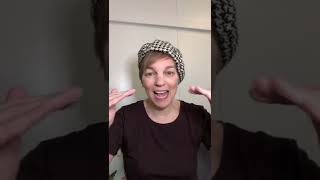
Mary Schiller spent 30 years in PTSD treatment before discovering the 3 Principles through Michael Neill's book, which taught her that feelings are neutral experiences, not problems to fix. She argues the DSM's inclusion of prolonged grief exemplifies how psychology medicalizes normal emotions, and that sitting with feelings without labeling them gave her back her life.
Chapters
I am going live on every channel available to me today because of something I read this morning about the American Psychiatric Association deciding that grief longer than 12 months is now considered quote-unquote prolonged grief and is now listed in the DSM. And That decision really blew my mind, but not necessarily surprising because the APA has pretty much decided that all human feelings are problems, and they are not. I'm going to keep this as brief as possible because I really want to get this message out there that I spent 30 years of my life not living the way that I could have, not living the way that I should have, because I was given a diagnosis of post-traumatic stress disorder. And during all of that time, I literally saw more than two dozen professionals. I lost count at 25 when I was thinking back on it, so there were more. All that time, every single one of those people looked at me and said that there was something wrong with me that needed to be solved. But unfortunately, there was no solution. Their solution was that I had to live with these symptoms and I had to live with this illness because unless I could turn back the clock and eliminate the traumatic violent events that led up to that, well, I was basically out of luck. In 2014, I came across something that completely changed my entire view of myself. It was called the 3 principles. I read a book called The Inside Out Revolution by Michael Neill, and what I took from what I read in that book was that actually there was nothing wrong with me at all, that I had been experiencing normal human feelings, and I no longer had to look at those feelings as problems. That they would simply come through me as human emotions do. Thoughts and feelings were like two sides of the same coin, that they were coming through me and from me. There was nothing out there that was causing them. It was all coming from me, and therefore I had the ability to not look at them as problems anymore. I could simply have the feeling, whatever it was, I could sit with it, I could be with it, and it was okay. Excuse me, I got a frog in my throat today, probably because I've been talking so much about this. I could simply be with the feeling. I didn't have to worry about it anymore. It would do whatever it was going to do, and then it would move along just like feelings do. But all of those years that I'd been seeing all of those professionals, what had happened instead was I had pounced on every single feeling that they had labeled as a symptom of PTSD. So anytime I had any sensation like that or any thought like that, any feeling at all, I was like, oh my gosh, there it is again. See, they were right. They were absolutely right. I'm sick. There's never going to be getting over this. Somewhere in the back of my mind, I knew that there had to be an answer. I just had no idea what it was. I tried all kinds of alternative things. All of that. It was not until I came across Michael's book that I saw myself differently. I saw myself as I see you, which is a normal person with normal feelings. They're all okay. They are neutral. Recently, I've been talking with people a lot about the fact that we don't even have to put the label of the name of the feeling onto it anymore. If you have seen yourself as someone with a lot of anxiety, what would happen if you stopped labeling that sensation you have as anxiety and you simply felt it as a physical/emotional experience and you saw it more neutrally? What can happen, I can tell you from personal experience, is that you start to recognize how powerful you are. You start to recognize that that feeling is a representation, is an expression of the power that you possess, that you are made of as a human being, because all of that feeling is coming from you. It's coming from you. That was life-changing to me. Literally, within a very short time of coming across this truth about human beings and about myself, I began to make major changes in my life, in large part because I wasn't worried about my feelings anymore. I wasn't trying to manage them anymore. I didn't care what they were. So I had like a lot of free time to do what I wanted to do. I suddenly had a lot of time available to me where I wasn't consumed with worrying about every single feeling that went through me. I was somebody who was told over and over again that I was one of the worst cases they had ever seen in terms of the violence perpetrated on me, in terms of the PTSD symptoms. That was reinforced by professional after professional after professional to the point where the last person I saw literally said to me, I have no idea how you've been able to create anything in your life. I don't know how you've been able to get remarried, how you've been able to raise your daughter successfully. How you've been able to get two advanced degrees, how you've been able to have the career that you've had. She looked at me like I was some sort of anomaly. Well, I wasn't. I wasn't an anomaly, and neither is anyone else. I was having normal human feelings, and somehow, even under all of the oppressiveness, the oppression of this psychological conversation that all of these feelings I was having was bad, The power of being human was still there and still working, and I was able somehow to access that to do what I needed to do. When all of those labels were removed, when I took them off, when I realized they were a stupid narrative that made no sense at all, guess what? I was able to create change really rapidly because I was now consciously aware of the power that I was made of. I can't stress to you enough what a game changer this is, and not just a game changer like it can change your life, it can change everything. Because this conversation that we have been in for all these decades around psychology and mental illness, it is so— I don't even have a word strong enough to say how wrong it is. It is just absolutely wrong. Every single thing that you and I were ever taught about human emotion has been wrong. It doesn't, first of all, come from anything out there. It comes from us. And I recognized this truth in sort of a funny way one day when I was standing on a subway platform in New York City where I was living at the time, and I was having like what I would have called, you know, a PTSD sort of episode. And I realized I hadn't seen my ex-husband in, I don't even know how long, 15, 20 years by that point. And I was having that. I was like, well, that can't be coming from him. It's got to be coming from me. It's got to be coming from me. That was a revelation right there in and of itself. We have to start recognizing and living by the truth, which is that every thought and feeling we have comes through us. We do not have control over these things. Nor do we need to. We don't have to worry about the feelings we have because those labels that we've been living with have been placed on those feelings by professionals who somehow want to make it seem like these are all abnormal things that we're dealing with that need to be treated. I know that people in the psychological field want to help people. But at this point in history, don't we have to look at this and ask ourselves, has it been working? Has any of that actually been working? Because the answer is a clear no. So why don't we start stepping back from that conversation and looking at the facts? The facts are human feelings are normal. They are not problems. A person Let's use grief for an example. I'm sure you felt that. I certainly have. A person who is really intensely grieving even longer than a year, they're not in that state constantly. They have times when they laugh and smile and all of that, and then they have other moments when they're feeling grief. Why do we have to continue to label human emotion as problematic or something that we need to be concerned and worried about. Because what actually makes it a quote-unquote problem is the label of a problem, the label that says I have to worry about this. That is what starts to cause problems with people. If you have a set of feelings that have been labeled problematic You know what you can do? You can do exactly what I did. When they come through you, you can sit with them, you can just be with them and not worry about having them anymore. I can't even begin to express what a life-changing experience that was for me. It literally changed everything for me when I realized I could just be with any feeling. I didn't have to label it anymore, I didn't have to worry about it. It was just there, and that was that. And over time, I have learned even more how to appreciate the power of human emotion, and I've started to remove the label of the name off of it. Where one of my clients said, it's like your prince, Mary. The, the feeling formerly known as fear just came through me. The feeling formerly known as doubt just came through me. We don't have to do this crazy labeling anymore and, you know, and say to someone, well, you've been feeling this feeling for quote unquote too long, so now it means you're a problem. It's a problem for you and we have to do something about it. That conversation needs to stop. We have to stop. I know that in recent years in particular, there's been a lot of emphasis placed on people coming forward with quote-unquote mental health issues. I don't even know how to say this, but I don't like any of that. I just don't, because it legitimizes something that to me is so illegitimate. It literally took 30 years of my life away from me. Those years that I spent listening to all of these professionals telling me that I was sick, that I had an insoluble mental illness, that nothing was ever going to make it go away, that I had to learn to live with it and manage it. And somewhere, some deep place inside myself said, no, that can't be right. And when I came across that book, The Inside Out Revolution, in 2014, I was like, oh my gosh, This is what I have been feeling inside myself, which is that nothing is wrong with you and I. Nothing is wrong with our feelings. They don't matter. I've been saying this for years. You can look on this YouTube channel and see my videos. Our feelings don't matter in the way that we have been told that they do. They matter in that they are an expression of the power we are made of to create. Because every emotion, every thought is a creation that is coming through us, from us. And we can learn to appreciate the power of a human emotion instead of layering this story, this narrative on top of it that is saying to us that there is something wrong with it. I know that I will continue to share this message as long as I am able to. Because I am so tired of this entire thing that we have gotten stuck on in this world that says feelings are problems. Feelings are not problems. I've used this analogy before where we don't look at the rainbow and pick out one or two of them as problems. We see them as the whole spectrum of colors. Emotions are no different. They are all neutral. We have just decided as a culture that certain ones are problematic in certain amounts. And that is— talk about crazy— that's where crazy is to me. That makes no sense at all. What would happen today if when you had a powerful feeling come through you, you just were with it and you appreciated that power, and instead of putting the label on it of that it was something bad, or even anxiety or depression or whatever the label is that you put on it, just be neutral. It takes practice to do this because we've been in this conversation for so long. I totally get it. We can undo this. And it doesn't have to take long. For me, it literally took a matter of about 6 weeks of practicing this, of just being with the feelings and not labeling them and feeling the power of them and going, whoa, that's really something. And then starting to appreciate that that was me, that power was me. And after that, it was like I was off to the races. I started making major life changes really quickly. And more importantly, I took my time back. I wasn't spending my whole day trying to manage my feelings anymore and worrying about this or that or the other thing, you know, coming through me. I didn't have to do that anymore. It was like, wow, where did all this time come from? This is so important. And I know that a lot of other people are trying to get this message out there too. And I'm really hoping that this latest decision by the APA will open our eyes and ears to something else because this has to change. It just has to change. It's ruining people's lives. It's taking people's lives from them and it doesn't need to be this way. I'll leave you with one quick story, which was in 2016, I decided to become a coach sharing this with people. And one of the first people I talked to was a psychiatrist who had known about all of this but wasn't able to bring it into their practice. And I said, well, the way to do that is to sit across from each person you see and see them as they really are, which is someone who's totally fine. They're having normal human feelings, and they don't need to be put into this pathology anymore. They're having normal human feelings. I didn't know what would happen. I talked to the psychiatrist a week later, and I said, how did it go with the people you saw? He was like, it was brilliant. I had the best sessions. Several people, we decided they didn't need to come back, even though they'd been coming for years. Because that is the truth. That is the truth. People can learn to see themselves differently. They can learn to see themselves with the lens of truth instead of through this lens that says that everything that we feel is a problem and bad and needs to be done. We need to do something about it. It's not true. If you don't believe me, that's okay. Try it for yourself and see what can happen. Watch this video a few times, read my books that are on Amazon. I've written about this a lot, and let me know in the comments what you think. This won't be the last time you'll hear me because I can't let this go. It's too important. I hope you're having an amazing day. Thank you so much for listening. I really appreciate it. Bye for now.










