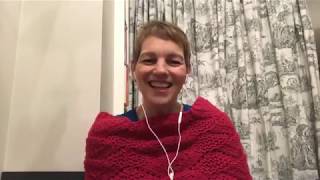
In this personal‑development monologue recorded in rainy Paris, Mary Schiller shares her transformative journey from chronic post‑traumatic stress disorder (PTSD) to a liberating mindset that feelings arise from thoughts. After reading Michael Neill’s The Inside Out Revolution in 2014, she realized that her emotional distress was generated internally, not by past events, which removed the fear associated with uncomfortable feelings. She explains how giving herself permission to sit with discomfort—rather than trying to push it away—allows the feeling to pass naturally, revealing a deeper, innate joy. Schiller extends this insight to common anxieties faced by entrepreneurs and anyone seeking public visibility, arguing that accepting uncomfortable thinking makes the perceived “mountain” of fear disappear. She concludes with an invitation for viewers to comment on their own discomfort, encouraging them to grant themselves permission to feel uneasy while pursuing their purpose, and provides contact information for further engagement.
Chapters
Hello, hello! It's Mary Schiller, author and coach of MarySchiller.com, coming to you today from rainy Paris, France. I am tucked away in my apartment trying to stay dry, although I do have to get out today because we are leaving on vacation on Wednesday, in 2 days, and I have a few errands that I have to run before then. Buying cat food and things like that to make sure everything's good before we leave. In this video today, I want to talk to you about something that has been completely transformative for me in every way imaginable, and that is the idea that sometimes we have to just be uncomfortable. And that we have to give ourselves permission to be uncomfortable. Let me kind of go back a few years and explain that in some context. So, uh, back in 2013, I was feeling pretty darn miserable. I felt like my life was really off track. And I just was frustrated and feeling very confused about what to do to make my life better. As many of you know, I had dealt with post-traumatic stress disorder for 25, 30 years by that point, and I felt like I had done everything I could do to change my mental health, to improve it. I felt like I had gone through therapy. I had tried all sorts of alternative treatments and nothing helped me. Nothing helped me to get rid of the stress and anxiety that I was feeling, and I always felt like I was on edge, and it just was a horrible way to experience life. It just wasn't any fun at all. And at the time, I really felt like those feelings were coming from the experiences that I had had as a young person in a domestic violence situation. And then in 2014, when I was able to get a copy of Michael Neill's book, The Inside Out Revolution, I started to see something very different, which was, which was that in actual fact, my— hi, Ingrid— my feelings were not coming from my past experiences. They weren't coming from anything around me. They were coming from thoughts I was having. And that may seem like a very basic thing, but I didn't know that. I did not know that 100% of what I was feeling and experiencing was coming from within me. And when I saw that, to say that a light bulb went on would be the understatement of the century. It was more like the sun came on in my head, and I was like, oh my gosh, so that means that every single thing I experience, every moment of distress, every moment of, you know, happiness, everything is coming from within me. And what that did was it took, uh, all of the fear factor away because I thought, well, shoot, if it's all coming from within me, what's to be scared of there? It's, it's my own thinking. I don't need to be afraid of that or worried about that. And so I realized that there was no fear in being uncomfortable because it just meant that I was having some uncomfortable thinking right then. Didn't necessarily mean anything about the quality of my life or the quality of the decisions I was making or anything like that. And the biggest test for me of this discomfort factor was when I would just let myself just be uncomfortable without trying to change it or manage it or, you know, make it better or anything. I noticed something really interesting, which was that if I just kind of left it alone, it would go away. That feeling of discomfort would just pass on through and I would come out the other side feeling great. So this is a big lesson that I've learned, which is that it seems to me that the degree to which we've given ourselves permission to be uncomfortable equals the degree to which we can actually experience the innate joy and happiness that we're made of. So I'll say that another way. If you are willing to just let yourself be uncomfortable, What's on the other side of that is so amazing and beautiful and indescribable that any moments of discomfort just become— what do I want to say— insignificant? Beyond insignificant. Whatever's smaller than insignificant, that's what happens. I see this phenomenon, if you will, happen a lot in people who are perhaps trying to get a business started. So they have some discomfort around being public or being visible in what they want to do, what they want to share with people. They have a lot of fearful thinking about what others will think of them, or they have a lot of fearful thinking related to, you know, how will they come across? Will they sound intelligent? Will they sound like they know what they're talking about? Will they make fools of themselves? And all kinds of things like that. And really, the key is not to sort of push through. That is not what I'm talking about because when I realized this for myself, it was just the opposite of pushing through. It was more like, "All right, so I'm going to have some discomfort because I got some uncomfortable thinking. That's fine." And that's really the extent of the kind of emotional upheaval around it. There was just none at all. And so if you're finding yourself in a position where you're feeling like, you know, I am scared to put myself out there, I'm not sure how I'm going to come across, you know, how can I have more confidence? All of that discomfort is totally fine. It's totally normal. There is nothing wrong with having those kinds of feelings. It's more about can you just give yourself permission to have those feelings? And not worry about it. Once you kind of reach that point of just being like, discomfort isn't going to kill me, it's not going to do anything to me, it's not harmful, then it seems easier, uh, to do the thing that you want to do. It doesn't seem like this big mountain you have to climb over anymore. It doesn't seem like something you have to push through. So I think I will just end this, I'm going to continue this conversation because I feel really strongly about this, that there are so many of you out there. If you're listening to this, I'd love to hear in the comments if this sounds like you, where you have something that you'd like to say in this world, you'd like to make your mark in this world, but you have a lot of fearful thinking about how to do that, about how to be visible, how to be public, how to help people. And I just want to encourage you to give yourself permission to feel that discomfort and just see what happens if you let it be there and don't worry about having it. See what happens when you sit with it and continue on, uh, even though you have it. So rewinding really quick to my story earlier about having post-traumatic stress disorder and how this all played out, it was really the life-changing moment that I had been looking for was realizing that A, I didn't have to worry about my feelings of stress. They were okay to have. And B, that they weren't stopping me from doing anything, that I could do anything I wanted to do despite feeling incredibly uncomfortable. And 3, that discomfort would eventually pass because that's the way this human being system appears to be designed, that if we just kind of relax into whatever the feeling is and go about our daily life and go do the things that we want to do, it'll pass. It'll come back and then it will go away again. It's kind of like this ebb and flow, just like the tides. So I'd love to hear your comments on this about, can you give yourself permission to be uncomfortable? That's kind of my goal, if you will, for this year is how uncomfortable can I be? How much permission can I grant myself to be uncomfortable and keep doing things and keep expanding my own reach and my own positive impact. So I'd love to hear your comments. Please feel free to post them wherever you're watching this video. If you find me online at maryschiller.com, you can send me a note there, or you can email me directly at mary@maryschiller.com. Thanks so much for watching. Oh, thanks for being here, Simone. I'll talk to you again soon. Bye.