Tidy Up Your Business -- inspired by Marie Kondo
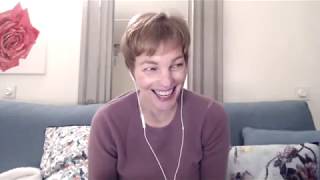
In this live Crowdcast session, Mary Schiller draws inspiration from Marie Kondo’s tidying philosophy to help entrepreneurs declutter their businesses and create sustainable income. She begins by sharing personal background, including a recent trip to Japan that highlighted the value of precision, purpose, and joy. Mary then outlines six "business clutter" categories that drain time and energy: (1) excessive consumption of information versus creation, (2) comparison thinking, (3) endless tech tinkering, (4) waiting for the perfect moment, (5) over‑planning/analysis paralysis, and (6) self‑doubt about pricing and offering paid services. For each, she invites participants to assess how much time they spend and to consciously reduce it. After the decluttering audit, she presents three concrete actions: (a) create more than you consume, (b) abandon perfection – "done is better than perfect," and (c) launch paid offers, even if imperfect, to start the feedback loop. Throughout, she emphasizes that joy, authenticity, and consistent showing up are more valuable than flawless presentation. The latter part of the talk is a Q&A where Mary answers audience questions about finding ideal clients, building an audience, getting tech help, and determining appropriate planning levels. She closes by offering a free 30‑minute Bold Business Blueprint session, promoting upcoming “Follow the Fun” talks, and providing contact details for further support.
Chapters
Hello there, it's Mary Schiller, author and coach of MarySchiller.com. I'm happy to— sorry, I've got something in my teeth here. That was funny. Great way to get things started. I was just a little bit taken aback before this began because it now says on the screen It gives you a countdown and it says, take a deep breath. I'm like, oh, it just kind of startled me. How is everybody? I hope you're doing well. If you can see and hear me okay, please say some version of yes in the chat. Hi, Erna. Hi, Jeanette. Hi, Lou, Robin. Hi, everybody. I'm so happy to have you here. Hi, Susan. Great. Thanks, Lou. I appreciate it. I do love Crowdcast. Hi, Nima. Hi, Jeanette. Good to see you. Thank you. Crowdcast is a great platform. It was just funny. It was like, oh gosh, am I supposed to be nervous? It's telling me to take a deep breath before I go live. It just struck me as really funny. So I'm really happy to welcome you to this talk. I was inspired to put this together from the program on Netflix. Have any of you seen the show on Netflix with Marie Kondo called Tidying Up, or have you read her books or anything to do with her? She was pretty inspirational to me, I have to say. And it was interesting because— oh yeah, cool, Robin. Because, you know, some of you may know I was in Japan at the beginning of the year. I was there from January 1st through the 10th, I think it was. And I had been to Japan once before, but it was a really long time ago. And I just loved a certain— hi Shannon— certain things about the culture that had to do with precision and appreciation and kind of a really deliberate focus on certain things. Hi Doug. Yeah, you know, it's really interesting. It's ostensibly, you know, about straightening your house and, you know, getting rid of belongings that you don't need anymore. But it's really about a lot more than that. I think it's, it's, it's really about experiencing the joy that is within each of us and maybe kind of finding ways to bring that about more in our daily life. And so I really found during my trip to Japan, especially that And there's a real focus on aesthetics, but not for aesthetics' sake, that everything has a meaning behind it, a purpose to it. And so I was inspired to give this talk today, which I've called Tidy Up Your Business: Take the Busyness Out of Business and Start Making Money, Honey. So Before I get into that, I want to just let you know a couple of housekeeping things here. At any time you can type into the chat. I'll keep an eye over there during the next hour. If you have a specific question— oh, hi Barbara, you can't see me. Uh-oh, can other people see me? I hope so. Maybe try refreshing, Barbara, your screen. If you have a question, you can always put it where it says ask a question. You can type it in there and then I'll for sure and see that you've asked a question 'cause sometimes things go past me in the chat. Hi, Judy. Hi, Manju. Thanks for being here. So is everyone else okay? You can all see me and hear me? I'm just hoping that something didn't go wrong here. So I'm just gonna wait. You can't see me. Uh-oh. That's interesting. Maybe, oh, here it is. Okay. Let me try refreshing. The page. Uh, interesting. Don't know how to explain that. Okay, thanks, you guys. So, um, I do have a presentation. Oh, great, thanks, Barbara. Cool. I do have a PowerPoint that goes with this, but I'm going to just use it for my notes while I'm talking. So I'll glance over there and use it as my outline for this talk, and then at the end I'm going to email you guys a link so that you can have a downloadable version of this talk, both the audio and the video, and I will give you the presentation in a PDF. And I have some really kind of fun action-oriented questions in there for you. So stay tuned for an email from me after this talk today, as soon as the recording is done, and I'll make sure you get all of that afterwards if that's helpful to you. All right, so how many of you have felt like if you are trying to start a business of your own or you've been, you know, working in it for a while, how many people on here, if you're on here live, uh, have felt like you're sometimes spinning your wheels, uh, that you're kind of putting in a lot of time and effort and you're not really seeing much movement happening. It all feels a little bit confused. Because that is certainly how I used to feel in this whole business conversation. So let me know if that rings any bells for you. Like, there's so many different places for you to look that you're not sure where to look. And there's so many different things you can do. You're not sure what to do. Does that sound familiar to you? And if you're watching on the replay, you can also type something in the chat if you're watching it here on Crowdcast. Oh, I hear some yeses in the chat. I can so, so relate to that because I mean, I have hesitated to throw my hat into the ring. Oh good, Jeanette says a little bit calmer lately. I've hesitated to throw my hat into the ring as a quote-unquote business coach or business consultant or anything anything like that because I find that whole space to be sort of noisy, if you know what I mean. Now, I'm not trying to show disrespect for the other people in that space, but my goodness, there are strategies from here to eternity basically that everyone is telling you you should do, you could do, you must do. You know, if you're going to achieve X, then you must do Why, you know, all these different things. And I can so relate to that feeling of just not knowing what to do and the way that it played out to me before. I'm the after picture now. Oh, hi Annie, thanks for joining. The before picture of me was someone who was constantly looking out there for, you know, the answer to everything. I felt like I didn't really know anything, so I kept looking to all these experts to tell me what to do and in what order to do things. If I didn't do things in the right order, I didn't do it exactly the way they said, and I didn't see any results, I was, you know, convinced that it was me and that I was, you know, just stupid or something, or incapable of this whole quote-unquote business thing, I was really, really confused. And thankfully, I can say with some relief and also I hope some encouragement to you that that all changed about 3 years ago. And a lot of what changed is what I'm going to focus on as we're chatting today. So If you are feeling like you're, you know, kind of lost in this sea a bit and you're wondering, you know, what am I supposed to be doing now? Am I doing the right thing? Am I, you know, do I need to buy this program or do I, you know, I'm gonna help declutter all of it. We're gonna declutter your business or even if you don't have a business yet, we're going to hopefully kind of clear a path through all of that noise. So let me know if that sounds good, because I know if somebody had told me that a few years ago, I would have been super excited. So let me get a sip of water. I'm going to my notes here. So I want to assure you something else, which is that I have a really— oh good, I'm glad that sounds good to you guys. I am really passionate and committed to a, a mission of mine, which is that, you know, I really want you to enjoy what you do every day. I want you to wake up every morning excited about life. And if part of that excitement for you is working for yourself and is, you know, earning a good living and doing all of the things that you enjoy every day, then that is— I mean, I am so committed to that, it's not even funny. I don't even have a strong enough word. Commitment doesn't even come close. And I'll tell you a little bit about why I am so devoted to helping you in that way just before we get into the decluttering bit. You know, if you have been around me for a while, you may know a little bit about me, so I won't, you know, spend a ton of time on this, just a minute or 90 seconds. But, you know, I didn't used to see life like that. I used to think that my life was sort of immovable. It looked a certain way to me. It looked very challenging. It looked very difficult. When I tried to start a business for myself, gosh, it's been— oh, I guess it's about 7 years ago or maybe longer, 8 years ago, something like that. I just couldn't get anything off the ground and I just, you know, I didn't have any idea that it was truly possible for me to wake up every day and do what I wanted to do and also make an income from that. That seemed like an absolute pipe dream. And as I mentioned earlier, I got so confused about where to look and what to do that I had pretty much written that off. I had really written that off. I thought, well, I guess that just isn't in the cards for me. And then if you were on my email list, you might have seen a note that I sent a couple of days ago where I was celebrating the 3rd anniversary of getting fired because that was a huge moment for me. It took me a little while to see the forest for the trees after that, but it was so freeing because I suddenly realized, you know what, I'm just going to what I want to do, and somehow I'll figure out the income thing. And if I don't, well, I know people who have a sofa I can go sleep on. It's all fine, you know. And, uh, and ever since then, I have been so surprised at how actually easy it has been to do this. And a lot of it comes from just really understanding a little bit more about what we have within us as human beings, and that we actually are free to go in the direction we want to go in, even if it's not anything else that someone's telling us about doing, you know, none of those strategies. We can simply go in the direction that looks fun and interesting. So with that said, let's jump into some decluttering, shall we? So in this part of the talk, I'm going to discuss with you what I think is probably taking up a lot of your valuable time and not really giving you the time and space to do what you want to do and to serve people in the way that you want to serve them. After we go through that decluttering process, I will tell you 3 simple things that you can focus your attention on. And even if you focused on just one of them, things would start to change for you. So let's start with this decluttering. First thing is, this is a biggie. This is why I put it as the first thing about decluttering. How much time are you spending consuming? How much time are you spending consuming and not creating? Consuming versus creating. When I stopped to look at myself in the early days before I kind of saw the light here, I realized I spent almost all my time consuming information. I was, you know, reading this business book and buying that business program and watching that video. And I just was trying to take in all this information, consume, consume, consume, consume. And I wasn't actually creating anything, like consciously creating anything. You know, yes, as a human, we're all creative beings and things are always being created, but on a conscious level, nothing was like really occurring. So can anybody relate to that? If so, let me know in the chat, and I really appreciate that because I think if, if you really stop to look at— oh, I see a few yeses over there. Yeah, Anya, Mary, Robin. I mean, I was pretty shocked when I stopped to look at this for myself, and I was like, oh my gosh, I need to just chill, research. Monju calls it research. You can call it anything you want, but, you know, it's kind of spending our time taking in and taking in and taking in, and it's kind of like a, a huge inhale. You know, at some point we have to exhale. We can't keep inhaling, or, you know, that doesn't work. So that is the first thing I'd like you to look at in terms of decluttering. Karina says, yes, indeed. Annie too. You know, look at how much time you're spending consuming and see if you can just kind of stop some of that for a while, at least for a while. You know, if you want to set some kind of time period for, you know, this week I'm going to create instead of consume, or for today I'm going to create instead of consume. Hi, everybody. Totally Consumed. That's it. Been creating more since former— oh, that's nice, Jeanette. Thank you. And hey, Sus. Oh yeah. I mean, really, it's, it's kind of inevitable maybe in this culture that we're in that's so filled with information everywhere. You know, it's sort of natural to be a consumer. And this was a big turning point for me, honestly, when I realized how much of that I was doing versus sort of consciously creating things. Uh, Lou, not to mention training, another consumption mode that seems justifiable. Exactly, man. I spent literally tens of thousands of dollars on trainings. Uh, eventually I have used many of them, but certainly not all of them. And I didn't need all of those things if I had I think if I had been consciously creating more than consuming, and this is kind of where I'm at now, so maybe this will be helpful to you. Now, if I come up to a point where I'm like, I actually have a knowledge gap, like I can see, oh, I like to be here and I'm here and there's a gap here that I'm not seeing, then I can strategically keyword, consume something. I can go find someone to help me with this specific thing instead of kind of looking at this huge landscape and thinking I have to take it all in. Do you know what I mean? That's where I was before. Like, I thought, oh my gosh, I don't know anything about business, so I better learn, take this course and this course and this course and figure everything out. Now it's much more strategic. I'm creating. I kind of get to a place where I need a bridge and then I go find the bridge. So that's point number 1. How much time do you spend consuming? Point number 2, whoo, this is another one. So brace yourself. How much time do you spend comparing yourself to other people? People who maybe look like they have what you want, or they look like they're quote unquote further ahead. Robin says a lot. I used to listen to so much thinking in my head about this, it was kind of nutty. I can laugh about it now. And you know, sometimes those thoughts still come up. They do. I admit it. Not ashamed to say that. I can't control what thoughts come into my mind. It's just that now I don't listen to them because I've realized that any kind of comparison that I'm listening to related to anything really. In this conversation, we're talking about business, but, you know, it means that I'm trying to measure something that's not really measurable. You know, even if we look at something like income and we say, wow, that's a number that's measurable, is it really though? I mean, how much difference does that really make? You know, if you start to look at business from the perspective of how you want to be spending your time you know, what you want to be doing with your time, then those kinds of comparisons and measurements start to look really strange and really weird. Because if you're simply living from inspiration, creating from inspiration on a daily basis, then what does it matter what anyone else is doing? You're living from this beautifully creative space that you're made from. And that's all we're designed to do anyway. So what do you guys think of that? I mean, what would it mean to you if you could kind of be free to ignore that comparison type thinking? Verena says, I'm consuming your lovely webinar right now. That's funny. Yeah, that's fine. We're having a conversation. That's interesting. I don't know if I— I don't really see this as consumption. It seems more like we're creating a conversation here, all of us together. So I see this as a co-creation with me. But honestly, if you can kind of let those comparison thoughts go on by without giving them much attention and simply focus on living the way you want to and doing what you want to, oh, so much time and space gets freed up there. Hi Barbara, I get these thoughts, but somewhere along the way I began using them to push my work. I paint and has helped my work to improve greatly. Oh, interesting. You know, that could be— I can see what you mean by that. That's a little bit different from what I'm talking about, I think, where, you know, it sounds to me like you're, um, you're looking at that as a way to, um, to— what do I want to say? To more fully access what's within you rather than trying to do what someone else is doing, if that makes sense. Uh, Manju, Judy and I are doing this so much less often after Take the Leap. Oh, I'm so glad that that program was helpful to you with that. Yeah, it's, uh, it's been a big thing for me to kind of just stop really paying attention to those comparison type thoughts. So that was point number 2. How much time are you listening spending listening to comparison type thinking. Point 3 for decluttering, how much time do you spend, drum roll please, oh good Lou, how much time do you spend playing around with your website and other tech stuff? How much time do you spend playing around with your website trying to get it looking right, all the text stuff. You're trying to sort it out. Blue says months. Excuse me. Mind you, I'm giving myself so much more permission to do the things I want to do. Bravo. Robin, this is my life, the tech stuff. Guilty. Jeanette says, yeah. I mean, you know, I think it's just one of those areas where— and I'm going to get to this in a second— where we we can just fall down these rabbit holes, you know. We— I remember doing this myself, and I'm pretty tech savvy because I have a master's degree in online education, so I really got thrown into the deep end with the technology in that program. And that was quite a long time ago now, that was around 2000, 2001, when technology was not nearly as simple relatively as it is now. And you know, you can fall down these rabbit holes. I have made a rule, just a side note here, I've made a rule that I don't do anything technical after 6 PM. I don't touch my website after 6 PM. I know I'm online at 7 PM, but anything like with my website or anything like super techie, I don't do it after 6 PM because I seem to lose my ability to concentrate on the finer points. And I would find myself sometimes, Maybe you guys can relate, either if you're here live or watching this on the replay, where it's suddenly 11:00 PM, 12:00 midnight, and you're sitting there going, why isn't this working? Why can't I get my website right? Why can't I this? Oh my gosh, now my website is gone or whatever. Something happens. So, you know, this is another area that just eats up time. Tara is laughing. Right? Time and eats up time and eats up time. And it's something that you can set off to the side. I'm going to explain why in a minute, but it doesn't need to be this all, another consuming piece in this whole business puzzle. So that's another point of decluttering. Let's look at the next one. How much time do you spend, drum roll, waiting until the right moment to fill in the blank, to start blogging, to go on a Facebook Live, to start a Facebook group, to set up some calls with people who might be interested in working with you. So are you waiting and waiting and waiting and waiting for the quote unquote right moment to do these things. Robin says, yes, you're waiting. And what is it that we're all waiting for? I mean, I can relate to this too because, you know, I informally could wait for God. Oh, Mary says, yeah, exactly. I waited for 2 years essentially. I coached people for free for 2 years before I started charging anything. I'm not sure what I was waiting for except for looking back on it, I think I was waiting for someone to tell me that it was okay to start charging. I'm on to waiting until I feel a certain way. Yeah, like I was waiting to feel more confident or something, or like I said, I was waiting for someone's blessing, like, now it's okay for you to charge, you have crossed the threshold and now it's fine. I don't know what I was waiting for. I think I was waiting for some event or some feeling or something. And you know what? We're going to wait until, as they say, until the cows come home for the right feeling to come along, because we don't have control over that stuff. We don't know when we're going to feel a certain way. We don't need anyone's permission to do something like that. We can give ourselves permission, or you can listen to me because I'm the permission granter. I give you permission to do the thing that you're waiting to do, whatever that is. Waiting for inspiration, Monchi says. And so I've seen time and time again now in the last 3 years in particular that there's nothing to wait for. There's nothing to wait for. You know, another, uh, gosh, this just occurred to me. I didn't intend to bring this up, but since it just occurred to me, I'll mention it. I've been having some chats with people recently where we've been saying, you know, it used to seem like you had to wait for all your ducks to be lined up in a row before you could start living the life you want to live. Oh, well, I have to wait until all my debt is paid off. I have to wait until I have X amount of money in the bank. I have to wait until my kids graduate from college, or I have to wait until, you know, I have a better job. I have to wait until my business has gotten off the ground. You know, there's a million things we can fill that in with. And the truth is you have to wait for nothing. You don't have to wait for anything. You can start right now, even if it looks like you can't. I am living proof of this. I started my own business when I was tens and tens of thousands of dollars in debt. And had about 3 months of money in the bank and no other source of income. And I didn't know how to get started. I had no, no following to speak of. I had a few people who liked a blog I had been doing, but I wouldn't say I had like a mass following. That was about 100 people or 150 maybe. I had no reputation. I had nothing. And yet I was like, you know what, I want to do this. I'm simply going to do what I want to do, and whatever happens is whatever happens. I have no control over that. So if it, if it seems like you have to wait for something, I am giving you permission to not wait anymore. Okay, so let me know in the chat if that, you know, fits with something that you've been looking at for yourself, that it looks like you have to wait for something, the right moment, the right feeling, the right situation, the right circumstance, in order to move something forward that you really want to move forward, because that was huge for me. Absolutely huge. Another decluttering area, and this kind of relates— um, oh, hi Robin, you didn't definitely feel like that. Okay, so I'm going to tell you right now, you have permission to not wait anymore. You don't have to wait for the right feeling or the right anything. You can simply start, because once you start, once you take one tiny step in a direction that looks interesting to you It's like you're propelled many miles down the road because that's simply how we're designed. We're designed for ease. We're not designed for struggle. We're designed for ease. And that ease comes to the fore much more quickly when we simply make a move, even if it's a small move. Annie says, that's been huge for me. Huge for me too, Annie. I mean, like, I, I have no words to explain how much I have learned simply by taking a step in a direction and just seeing what occurs. And you can then sort of get huge for me too, Lou says. You can then start to see, okay, this is something I like, or no, you know, actually this is something I really like, so, you know, I'll give it a little time and see how it plays out. And then, you know, you make the next choice and the next choice and the next choice. But if you sit around and wait and just listen to a lot of thoughts rolling through your head about what's gonna happen, you just, you can't know until you do something. Hi Doug, The Entrepreneur's Way, ready, fire, aim, just do something. Yeah, that's pretty much it. And I say, I'm gonna mention this later, don't even wait until you're ready, just go. Because the ready thing is never gonna happen. It's just never gonna happen. So I'll talk about that in a minute. All right, another thing to declutter. How much time do you spend planning and strategizing and/or strategizing, planning and/or strategizing? You know, you think about, oh, you know, or you might write out a big plan. Mary and Robin, like your comment there, Doug, that's cool. And just do it. You know, this kind of is the, the, um, the thing that a lot of people say is, you know, you have to have a plan for your year, especially with business. It's all about planning, uh, and all of that. And I'm not saying that some of that can't be valuable. It can. However, I also— I'm going to use a phrase that you guys have all heard— it also can provoke this analysis paralysis thing, right, where you're you're planning and you're strategizing and you're mapping things out and to the point where nothing actually occurs, that that becomes what you're doing is just simply planning and strategizing, but there's nothing to plan and strategize because nothing's really coming into form yet. So does that ring any bells with people? I'm gonna get just a sip of water here. Mary says, oh yes. Now I want to be clear. Doug says absolutely. I want to be clear again, some of that can be helpful and some of it is necessary. I think it's a whole lot less necessary than people seem to say it is because let me see a show of hands here in the chat. How many of you have ever successfully planned out your entire year and everything went just the way you said it would. Has that ever happened for anyone? Because for me, it's a big fat never. Exactly, Lou, Monju, never. It never happens. So I always think to myself, well, how in the world could I possibly— lots of nevers popping up— how in the world could I possibly plan out my business for the next year, I don't, I don't see how it's possible. For me, when I'm thinking of planning, I'll tell you how this looks for me. This is just me. This may not be you. I kind of have an idea of what I might like to create, sort of an overall idea, but it's very general. It doesn't have a lot of hard edges to it. And then I'm kind of looking at, all right, what can I create today, this week, this month, maybe over the next 4 to 6 weeks that might be really fun for people, might be really helpful to them, that might be part of this bigger picture. That's about as far as I go in terms of planning. And oftentimes even with that, I'll be hit with an idea and all that goes out the window. And then I'm just like, all right, I'm going with this new idea. And that's that. And I have no guilt around that whatsoever. Hi Anya, I'm realizing what I've been waiting for is certainty. Will I really enjoy that? Will people hire me? Am I using the right strategy, et cetera? Which is just never gonna happen. No wonder I've been so stuck. Anya, I'm so glad that you saw that because you can't know until you start to do these things. You just can't know. I mean, I'll be really candid with you guys that when people started asking me how I had created my coaching business so quickly, because I was doing only kind of transformational life coaching when I first started, I wasn't sure that I was going to like talking to people about business and talking to people about money and things like that. I didn't know. And I thought, well, I'm gonna just try and see if I do. And over the last year and a half that I've been doing that, I found that I really like it. Like, it's gotten even more fun the deeper that I've gone into it. And that is not something that I could have planned, certainly. It's not something I would have known unless I had tried it. And, you know, I could have decided it wasn't something I wanted to do. But again, that would, couldn't have come from planning or strategizing. It was simply from listening to questions that people kept having and then deciding, you know, maybe I could start answering these somehow. Maybe I could put something together that would answer these and kind of show people what has been helpful to me. So, you know, planning is great in small doses, but, you know, that isn't really how we're designed, in my opinion. We're designed to have beautiful moments of inspiration and we're free to act on them. All right. Last bit of decluttering here. And this relates to what Anya was just asking. So that was a good segue. How much time do you spend questioning your abilities, questioning your abilities, and not creating and sharing something for which people could pay you? A paid offer. Now, I told you a little, a bit ago that I spent 2 years coaching people for free. The whole time I was listening to all this thinking about, you know, do I really have the ability to do this? The question, Susan, was how much time do you spend questioning your own abilities and not creating paid offers, things that people could pay you for. Because for me, the two things go hand in hand. I see this every single day with people that they have these beautiful abilities. They have been helping people in myriad ways, and yet they don't seem to connect the two dots here that you can help people and use your beautiful abilities and you can get paid for that. So, okay, good, Susan, thanks. So you can, you can do both. They don't have to be separate. For some reason, I didn't put two and two together to realize that, you know, I could have started charging people a lot sooner than I did, and that would have been perfectly acceptable. Barbara says, seems I can't even go there. And Lou says, "Oh, that's me." Because for some reason, it's very difficult, and I talk about this a bit in my book, How to Price Like a Girl, it's very difficult for us to see ourselves from the outside because we're not outside ourselves. You know, we're not looking at us from someone else's perspective. Mary says, I realize I have some thinking that goes, I can't earn money from doing something I love doing. I totally get that, Mary. I totally get it. Because for some reason, it seems like, I don't know, like those two things can't coexist. That we can have a certain set of abilities and we can enjoy certain things and we would, we do them for free anyway. We would do them for free anyway. So then it seems logical, then why should I put a price on it? Well, what I like to try to get across is that there is no connection between those two ideas. It's all made up. We can enjoy what we do and we can get paid. And there are, you know, a million examples of this. I'll give you just one that popped into my head. You know, there are people who are actors and they, uh, they act because they love the theater or they love being in films or whatever it is they do. Some of those actors don't get paid very much, so they have other jobs that they do, like all the millions of them in New York City who are waiters. And then there are others who get paid a lot for it. But there's nothing saying that just because you like to do something doesn't mean you shouldn't get paid for it. Those two ideas are completely separate. So I would love it if you walk away with one thing from this presentation, to realize that you can do what you enjoy and get paid at the same time for it, that those two things can be right together. And in a way, it's much easier, I have found, to make an income doing what you enjoy because people are drawn to that. They're inspired by seeing someone live from that place and spend their time doing what they love doing. Jeanette, I only sell packages, haven't seen small possibilities to try out supporting people with. So Jeanette, if you want to be a little bit more specific in your question, I can maybe answer that. I would say just off the top of my head that, you know, there are just so many different ways that our talents and skills skills and the things that we enjoy can be of service, and we're so creative in that way that if we simply take an inventory almost of what we could do for people, the list can go on and on and on. It's just incredible how much we have to offer just by being human. I don't know. I can get kind of choked up when I think about that. And we can also earn money. Those things can be connected if we want them to. So, um, so I will, you know, leave you with that thought. I'm going to take a quick water break. I'm going to go into the 3 things you can start doing, and I will answer the questions there. Hold on one second. Oh, let's see. I put an MP3 on Payhip, have been hesitating to offer that kind of small things. Oh yeah, you know, let's So let's look at that because what we see as a small thing may not look small to someone else. If you write a book and put it on Amazon or if you just sell it on your own website or on a site like Payhip or Gumroad, these very nice sites that are like that, that could change someone's life. A book changed my life. Michael Neill's book, The Inside Out Revolution, changed my life, changed the course of everything that I do. From, you know, a $10 book. So what is small to us can be big to someone else, and never ever ever forget that what comes naturally to you doesn't come naturally to someone else. And you can help someone simply by using your natural talents and gifts. And don't forget to put a price on these things because it's okay to get paid. All right, so So let's go to 3 simple things that you can start doing to take all of this clutter and busyness out of business. And I bet you can guess what the first one is. The first one is start creating more than you consume. Start consciously creating more than you consume. Oh, Shannon, what a fantastic reminder. Oh, you're welcome. Start creating more than you consume. This has been probably the reason I said this is the first thing is because this has probably been the biggest piece of why I think I've been able to create an impactful and profitable business because I totally switched it around where I now create way more than I consume. When I consume something, I'm very conscious about what it is. Like I said, it's not just some random thing that I'm hoping will fill in some random gap. It's like, oh, uh, I want to, um, I'm trying to think of a recent example. Um, okay, so recently I was looking at setting up, uh, possibly a very specific type of group program, something that I have never done before. and I really didn't understand how to do it. I just didn't understand how to do it. So I went and looked for some information about this specific type of group program to see what was involved in it, to see if it was something I might want to try. That was because I came up against a knowledge gap. I was like, oh, shoot, I don't have any understanding of how this works, and I'd like to know how it works. So let's go see what other people have to say about it, and let's see if it's something I might want to do. Mary, that makes so much more sense. Oh yeah, it does to me too. It's like you don't need to go consume something until you get to a point where you're like, yeah, I really don't understand how to do that. Like, you know, I switched almost everything in my business onto a new platform called Kartra, and, you know, at a certain point I got stuck in my knowledge. There was a gap there, so I reached out to the Kartra people. I'm like, I don't really understand how to do XYZ. And they gave me all of this beautiful training to look at, and then I knew what to do. So, you know, you don't need to go directly to consume. Start creating, creating, and don't forget to share it. That's a biggie. It's fun to create things, but if you are trying to get a business going, it helps a whole lot if you start to share what you create, because then people start to see you and start to get helped by you and start to be inspired by you. So put what you're creating out there in some form. So create more than you consume. Second thing is, and I know some of you are going to relate to this, give up on the idea of perfection. Okay, just give it up because you're never going to reach perfection with your website or with what you're offering or with your videos or with your blog posts or with your Facebook Lives, perfection does not exist. So, you know, somebody said this, I don't know who it was, so I have adopted it. Done is better than perfect. Done is better than perfect. So just like we were saying earlier, you know, do it before you're ready. Start before you're ready. Start putting things out there. Please, please, please give up on the idea that anyone cares how you look, They don't. They really don't. They wanna connect with you and that's all there is. Hi, Lou. I think what you've said about creating within a short defined deadline is useful too. Saves endless editing and redesigning. Create and share and yes, forget perfection. Exactly, just get out there. Hi, Terry. Creating a program right now. First time I have the title and some bullet points, so don't look for a format now. Yeah, like that could be a time, Terry, where it's good to, sort of look around and see what you've enjoyed, what kinds of formats you've enjoyed, and see how you might, you know, adapt one or use one or borrow the structure from someone else. That's exactly what I'm talking about. It's like you get to a certain point and then you're like, wait, I don't really know what to do. Nothing's really coming to me. I feel like there's a gap. That's a good time to go consume something small, something that is really targeted instead of, you know, just throwing the net out there and and getting everything. So thanks for that. And thank you, Lou, for that too. Just forget the whole perfection thing and just start. Start creating and sharing something. And the third last piece before I get into the Q&A here is to, and I'm not trying to harp on the money piece, but if we are talking about, oh, you're welcome, Terry. If we are talking about business, businesses make money. So third thing to do. First thing was start creating more than you consume. The second thing was forget about perfection. The third thing is to start putting some paid offers out there. Just start. You know, it's, it's the money piece is not that complicated. It's simply coming up with some kind of offer and putting it in front of people. That's all it is. There's an offer and there's people. There's an offer and there's people. And the more you start to experiment with that and see what kinds of offers people want, and, you know, and you start to connect with them and you start listening to them because now you're creating, you're sharing, you're getting a conversation going, it gets much easier to see what people are really looking for and what kind of paid offer you could provide to them. If I had it to do over, of course, hindsight's always 20/20. I definitely, definitely would have started to put a price on things way before I did because, you know, I even had people— this is embarrassing now to say this, kind of— I had people asking me, what took you so long to start charging? And what I learned from that was that people want to thank you via payment. You know, it may surprise you to realize that there are people right now waiting for something from you that they could pay you for. And the only way to know what that is is to start getting into conversation with them, start seeing what they want, and start seeing what you're inspired to create to answer that. So, you know, to really kind of cut down on all that clutter and everything, just start listening and start creating some offers. Now, how does that sound to you? Does that sound frightening to put something out there with a price tag on it? Because if it does, that's okay, but that doesn't mean you shouldn't do it. Just because you have some fearful thinking about putting a price tag on something doesn't mean you shouldn't do it, because this is the way business is. This is our shorthand way of thanking people, which is by paying them. And it's perfectly okay to earn money. So I'd love to hear your comments about that in the chat, about putting some paid offers out there. We've got a few questions I'm gonna answer as well. Mary says, other people are doing it all the time. They sure are, including me. I'm putting paid offers out there all the time. Sometimes people buy, sometimes they don't. Each time it's just learning something Or maybe the timing wasn't right, or the way I phrased it wasn't right, or whatever. I don't take it personally at all. Hi, Barbara, wouldn't even know where to begin. Mary says trial and error. Barbara, the way to begin is to simply begin, because again, we're never going to know until we actually put something out there for people to respond to. If people, and Mary, you're right, it is a lot of trial and error. There is more to it that I've learned, especially over the last year or so, so that I've made it less of a trial and error thing. And then I've seen more how I can shape things so that, you know, that they are what people are looking for. But in the beginning, for sure, it is a lot of just trying things and seeing what gets a response. Susan says, my excuse, I have a very small mailing list, offered stuff and not many signed up. Well, that's part of it is that if you don't have a big audience, you need to think about how to craft an offer that will appeal to the people in that audience based on your relationship with them. I'm gonna, I'm actually putting together a new program all about that, about creating the right offer for the right people at the right price. So look for that to come. All right, let me get to these questions here. Oh, this was from someone who couldn't attend live. How do I find potential clients, especially if I'm not sure who my ideal client is at this point? If you have heard me talk before in these chats, you'll know that that whole idea of the ideal client, I think you can just throw it out the window, honestly, unless you are really pulled towards working with a certain group of people. Again, you're not gonna know until you just start talking to people, until you start interacting with people, people. The first almost 2 years I was in business, I didn't have any niche at all, and I barely have one now. I would say I barely have one. I'm just now kind of making my niche people who are just getting started in their own business and how to sort of get things off the ground, or if they have started something but it's not really going very well, how to kind of give it a jump start, some liftoff there, if you will. But that's just been really recent, and I'm almost coming up to the end of my third year in business. So if that whole thing about the ideal customer or your niche is, is holding you up, just set it off to the side and it will make itself apparent at some point as you create, as you share, as you start putting offers out there, as you start talking to people. It'll start to become clearer to you. So I hope that was a good answer to that question. And in the chat, let me know if that rings true for you as well. Susan has a question. I'm curious how to build my audience, where to get tech help, how to charge more and find people who will pay it. That's a packed question, Susan. I love it. How to build your audience. There's a million ways to build your audience, but it mostly starts from something we've been talking about during this whole chat, which is We have to start creating and putting ourselves out there in front of people in some way, whatever way you're comfortable with. You know, it kind of depends on what type of business you want to run. You know, what if you want to get connected with people in your local community, that's one way. If you're doing it online, that's another way. But really, the way to build an audience is to simply start. I'm— there's somebody that in the online entrepreneur space, and I can't think of his name right now. Shoot, I can't think of it. I have a name, but it's the wrong one. Anyway, I heard him say one time that he spent the first 2 years in business just building an audience. He didn't even offer anything because he wasn't sure exactly what to offer. And he just decided— I don't think he planned on 2 years, but he just decided, you know, I'm just going to start creating things and see what I enjoy talking about. And then see what comes of that. You know, so I wouldn't necessarily suggest you wait that long, but it really does start from this place of consciously creating and just sharing and, and making yourself visible in some way with, with, you know, people, like I said, either locally or online or however you want to do it. Where to get tech help? Lots of people do that for a living. If you're not a techie person I still recommend though that most people have some technical knowledge, especially if you have your own website. It's so important to me that people know how to update that themselves. And in terms of charging and finding people who will pay for it, that just happens naturally. It really does. Once you start to, you know, develop your audience, the payment part sort of comes naturally. It just it doesn't even seem like a big deal anymore to put a price on something. And that just comes with time and, and being out there and just trying things. So let me know if that was helpful, Susan. Shannon says, how do you know how much planning is appropriate and how much is overkill? That's an interesting question. I guess I would say if, if it feels like nothing's really happening, then you're probably overplanning. You know, if you feel like, um, like your, your planning is overtaking your creating, uh, and sharing, then that's probably, you know, an indication. I also think that if, um, if you're not starting to see some kind of income, that's probably a result of too much planning and strategizing and not enough trying, not enough of putting paid offers out there and seeing what happens. And so, yeah, I'm just not big on the huge planning thing. It just doesn't seem all that useful to me. As we talked about a few minutes ago, things never go according to plan, like ever. And so I'm much more on the spontaneous side of things and seeing what occurs to me to do and seeing what excites me to do next and to try next, and then giving it some time to pan out or not, you know, seeing what occurs. But yeah, I would say, you know, that you're over-planning if you're not seeing much movement happening. You might want to aim for more spontaneity then. So I don't know if that was useful. Shannon, let me know. Thanks for those questions, everybody. We have about 4 minutes left. So let me just do a little bit of a recap here really quick. So we— oops, where did my page go? We talked about decluttering with these 6 things, looking at how much— oh, great, Shannon. We wanted to look at how much time we're spending consuming versus creating, how much time we're spending listening to all this comparison type thinking. We can kind of set that off to the side or let it fade into the background because comparison is really useless in terms of human beings. How much time do we spend playing around with technology ad nauseam, you know, fixing, playing, you name it, you can call it whatever you like, it's time that could be used doing something else. How much time do we spend waiting for the right moment that never seems to show up to do what it is that we want to do? How much time do we spend planning and strategizing And how much time do we spend listening to thoughts that tell us that our abilities aren't worth something and we can't get paid? Those are all things that we can kind of tidy up and sweep up and kind of set off to the side. And instead, we can focus on things like creating and sharing what we create, create and share, create and share, repeat, repeat, repeat. Do it consistently. Be the person who is showing up consistently. I cannot stress enough how important that is because I'm going to repeat this. I know I have said this before, but most people do not have other people in their life who consistently show up for them. You can be that person. And even as we were saying, if it feels like a small thing, like a little video, or you make an audio, or you write a little ebook and share, that can be a big thing to somebody who doesn't really get much in the way of consistency in their life, who doesn't have people showing up. So be that person. Forget about being perfect, nobody cares. Nobody cares. You know, you and I are not on the COVID of Vogue magazine, okay? So nobody cares. Forget about how you look, forget about being perfect, it doesn't exist anyway. It's all about being real. It's just being who you are and expressing that. And then also remember that the whole money piece is actually pretty simple. It's, it's all about simply creating something that's got a price tag on it and putting it in front of people. And I assure you, I can guarantee you this because I've seen it over and over again, that there are people out there right now who would love to pay you for something. But you haven't offered it to them yet. So that brings us to the top of the hour. My gosh, this went by so quickly. Just before we close, any last thoughts, comments? There is a green button here if you want to sign up for a 30-minute personalized Bold Business Blueprint session with me. It's free. I would love to chat with you about your business and see if it might work for us to spend time one-to-one together over a few months. There are people on this call who have taken me up on that, and it's been such a joyful experience to do that. Mary, it takes just as much energy to consume as it does to create. Exactly. Oh, you're welcome, Susan. Thank you. So I would love to chat with you on one of those calls. If you would like to do that, please click the green button and select a day and time, and we'll I'll talk to you about that soon. And again, I'm going to send out an email to you whether you've watched this live or on the replay for a way to get a downloadable version of this video and also just the audio as well as the PDF of the presentation I've been using for my notes that includes some pretty thought-provoking questions that I think might be useful to you. Oh, thanks everybody. Oh, thank you so much. I have another series of talks coming up in February that you can sign up for on Crowdcast called Follow the Fun. I have 4 talks lined up, one per week during February, uh, so look for those and sign up for those. If you follow me on Crowdcast, you'll probably be notified of them. Thank you everybody so much for being here. Oh, you're all so kind. I really appreciate that so very much. So thank you. And if you have any questions you want to ask me that you didn't feel comfortable posting here, just send me a note mary@maryschiller.com. And I love you all so much. Thank you so much for your time. And hi, Adriana. Hi, Rich. I didn't see you there. So thank you and have a wonderful day or evening wherever you are in the world. I'll talk to you again soon. Bye.










