What does it mean to behave BOLDLY? (talk 2 of 3)
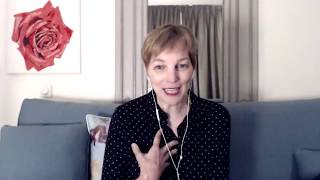
Mary Schiller explores boldness as a natural human default, not a fear-driven risk. She uses examples like Lady Gaga's career shift and a liver donor's act to show how trusting your inner voice leads to impossible outcomes. Ignore the "but" that follows a bold idea, she says, and resources appear automatically.
Chapters
Hello, bonjour, bonsoir. Happy to have you here. I am Mary Schiller, author and coach of MarySchiller.com, welcoming you to the second session all about being bold. So I am really thrilled to have you with me, whether you are joining me live or you are watching on the replay. I'm very, very appreciative. I'm going to get a sip of water really quick. And this flu came back a little bit today, so please pardon my slightly nasally voice. Not much I can do about that, but I'm sure you can bear with me. Hi, Karina, nice to see you. Thanks for joining. And yeah, just let me know in the chat if you can hear and see me okay. I'm hoping that you can, and I'll give people another few seconds to join before I jump into the conversation. Hi, Doug. Thanks very much. Yeah, let us know where you are calling in from, dialing in from. That's always fun. If you've been to any of these conversations with me in the past, you know how much fun it— Hi, Mitsui. I know where you are. You know how much fun it is for me to see where people are dialing in from because I just think it's amazing that we can connect online in this way. Let's see, we have— I know where Doug is and I know where Verena is. Feels like all my friends are here. So thank you. Let me check. I think I've got some lipstick on my teeth as par for the course. Maybe that's part of my bold statement. So let me start with just a quick introduction of myself in case you're not totally familiar with who I am. Hi there, Karina. Hi, Terry. Thanks for joining. Yes, from Oxfordshire, one of my favorite places, Karina. Um, so I am an author of several books. They are all on Amazon, including titles such as The Joy Formula and Mind Yoga. Those are my two most popular titles. And I'm also a coach who helps people to live happier, less stressful lives. And in the last year or so, I have put most of my focus on helping people who want to develop their own business and have fun earning a living doing what they enjoy. And that's part of what I'm going to talk about on this call is what I felt was a pretty bold move for me. So I'd like to start by doing a little bit of a recap of what we were all talking about in session 1, which I really thought was an amazing conversation. So thank you all for your comments and By the way, if you watch the replay, you can still add comments on there as you like. So, you know, feel free to do that. And also, don't forget, during this conversation, if you have a question for me, you can put it where it says ask a question, and I will be sure to see it there. So we started session 1 in a really fun way, which was we all shared some experiences that we had had in our life of a time where we felt we made a bold move, something that seemed really out of the ordinary for us or might have struck people as strange. Like, why would she do that? Or why would he make that choice? And some of them were really pretty major, like moving to a different country, or in my case, making a decision to go to UCLA and study music when everybody was telling me I should have been pursuing different, a different course of study and kind of going against the grain there. And we had people who went and did, you know, different kinds of jobs all over the place and people who traveled without a plan. And so it was quite a wide variety of responses. And, you know, I guess I would love to start this conversation also with a reference to the first one. Which was even from that simple example of people sharing these times in their life where they felt they were doing something pretty bold, are you starting to see that maybe what we have labeled as bold is actually an expression of what we really are, of who we really are? That in fact, if we look like we were talking about in session 1, if we look at what we might call the natural world, although we're certainly part of the natural world. That was a big feature of what we talked about, that there's nothing timid about nature. There's nothing that says bold like a tsunami or something. Excuse me, my cats are having a little tiff here. I think they need some food. So hang on one second. Hey, Jeff, could you get them, please? Jeff? All right. My husband's going to come rescue them. Dinner time for the kitties. There's nothing timid about nature. It does what it does, and it doesn't hold anything back. And it's quite powerful and strong. And there's really nothing about it that we would say is less than bold. Unfortunately, my home state of California experienced yet again some amazingly fierce fires, and I have been in fires there myself. And whenever something like that has happened, I've thought, wow, nature really just takes over. It just does what it does. It's in charge. I am not the one in charge. Ali says, yes, totally seeing that because often what seems bold to others actually feels natural to me and vice versa. Exactly. And I'm so glad you said that because that is kind of what I'm gonna be pointing to in this session, which is that we are kind of placing a judgment on boldness. You know, that came out in some of the discussion in session 1 was, you know, isn't there a risk in being bold? You know, isn't there something at stake if we act on these impulses that we have? And so in this talk today, I want to kind of draw a distinction between acting impulsively and acting boldly, behaving boldly. Because I see those as very, very different things. And so, you know, what I came away with from session 1, and I'm glad Ali is seeing some of this, maybe other people can chime in too, is that really when we are, you know, listening to something that is speaking to us from within, however you want to call that, and we are then acting on it, That is really how we're designed to operate as human beings. There's nothing strange about that. There's nothing outside the box about that. That's simply how we're made to function, it seems to me. And so, you know, I for one have stopped kind of judging myself in that way because it doesn't seem helpful. It seems more helpful to me to see myself as simply a part of this incredibly, um, rich tapestry of life that has this way of being. And, you know, we can label that as bold and decisive and all those things and also see ourselves in there. Um, let me check out this question that Mitsui posted. Um, hi Mitsui, how would you encourage someone to be more bold Do people need to be told to be more bold? Specifically thinking about my kids, or do they already know that this energy resides within? Wow, what a great question. Um, I'd love to hear some other people's responses to that. How would you encourage someone to be more bold? Do people need to be told to be more bold? Um, I think— and, and this is just my take, Mitsui, and everybody, but It seems to me that this is a natural part of being human and that over time, like we talked about a little bit yesterday, some of the cultural conversation tries to tell us that it's not. It tries to say that it's not safe to be that. It's not safe to act in a way that seems bold or brave, or however you want to put that, or it doesn't seem safe to take, quote unquote, a risk. Again, I'll talk about this in a little bit. And so, um, I think from where I'm sitting now and the way things look to me now, uh, this seems to be the way that we are made. I mean, this just came to me, and this may be a really bad analogy. But, you know, babies are bold. What do they do when they don't like something? You know, they can't speak. They cry really loudly until somebody does something that makes them feel better. You know, and so let me look at the comments and see. Terry says, stop paying attention to the but thought after a creative spark or idea. I think that that's a really nice way of encouraging someone to be bold. Answering Mitsui's question. So if somebody feels like they've kind of been reined in in some way, I do think it's very helpful to help them connect to that part of themselves that has all these amazing ideas, like Terry said. And then if they get to the, oh, but I couldn't do that, just ignore the but and everything that comes after it, because you're allowed to follow that idea. Do people need to be told to be more bold? Yeah, I think it's more of an encouragement, like you indicated there, Mitsui. Like, you know, not immediately shutting down somebody's idea and saying, oh, that's not possible, you know, and making it look like there's a limitation around someone when there simply isn't any, even when it looks like there is. Even— I mean, really, this has become so clear to me. Even when it really, really looks like there is a limitation, there cannot be any, because human beings are not just this form that we're in. I mean, we are just these incredibly, uh, amazing beings that have all these capabilities that we're not even aware of. And so I think that people— and to finish answering your question for now, so I think people are definitely aware of this energy within themselves. I think it takes a tremendous amount of energy to kind of try to push this down, and it would be nice if people would actually take this bold energy and do something with it. So thanks, that was a really rich question, Mitsui. Let me go to a couple of comments here. Verena, I find it very attractive when someone's acting in a bold way, so it's very inspiring to me, and I might act more boldly myself. Yeah, that's an interesting one too, Verena. I mean You know, we could probably make a nice list of like famous people who are bold, who are inspiring to us for sure. And I think it does inspire us because we feel that within ourselves. Ali says, I guess I'd point them towards their true nature rather than specifically encourage them to be bold. Accepting them as they are is a great starting point, not seeing them as needing to be bolder, but they are boldness. That's a really nice way of putting it, Ali. Yeah. Recognizing that this is simply how they are naturally and that they are free to express that in a way that in any way that they would like to. Yeah. Thanks for that, Ali. That was nice. Terry, bold has nothing to do with fear. Yeah. That's an interesting point, isn't it? Because the traditional conversation that's being had in the world and in self-help and all that is that you somehow have to overcome fear in order to do something, right? I mean, raise your hand metaphorically here and/or in the chat if that sounds familiar, that, you know, bold people have overcome fear in order to go do something, right? That seems to be the equation that we're seeing. And what I think that we started to unearth yesterday was that actually that isn't true. Because if this is our true nature, you know, if bold is actually how we're designed, we're designed to act from inspiration and from new ideas and all these things. And we're, we're essentially naturally fearless. I mean, I wouldn't call— I wouldn't say that, you know, the, the earth somehow has to overcome fear in order to create an earthquake. That's about as much sense as it makes to me to say that somebody has to become fearless in order to act boldly. No, that's simply how we're designed. So that's a good one for, for me to remember, Terry. Thank you. Annette, hi there. When our distorted thinking quiets down, we have more clarity and are naturally more bold. I think that there is something to that, and that although I might say it a little bit differently, I might say that we simply are bold. It just doesn't look that way to us sometimes. That sometimes the thoughts we have indicate, like I was saying a moment ago, that there's some kind of limitation on us. And that can't be true. That simply can't be true. So, you know, as I was saying yesterday too, the thoughts are not the power in this equation. We are. We are the boldness. We are the power in this equation. And so that's never going anywhere. That doesn't, you know, move or change at all. That is perfectly steady. What changes is our kind of perception of it. So thanks for that. Hi Doug, it seems that it must be authentic and not forced. Yeah, I feel like this is a kind of natural force within us that whether we're conscious of it or not, whether we're aware of it or not, is acting all the time. It's always there doing something. It's simply how we're designed. So that, um, so that, so if we think about some of the examples that you all gave in the first session, um, and I should have asked this then, if I didn't, um, I should have, you know, for me, I can say that the decision that I made to pursue a certain line of study at UCLA was not forced. It simply was what I was going to do. That was it. There was no question about it. That was simply what, what I was going to do. And I think if we all look back at decisions that we made that maybe other people said were kind of out there or brave or whatever, didn't feel like that to us, did it? It simply felt like the thing that we were going to do. And, um, so yeah, it feels anything but forced. It's like the complete opposite of forced. Uh, so thanks, Doug. Uh, hi, Mary. I'm sure I'm aware of it, all that energy, but it has been reined into the point of a straitjacket. Oh, be a great thing to break out. So That's— thanks for that, Mary. So I think that what might be helpful to you is to realize that, um, that even if it looks like it has been reined in, it's still there and doing its thing. You know, our true self doesn't go anywhere, and it's always functioning in this way. It's always, um, creating through us. It's always, um It's always just doing its thing, just like our heart is beating. You know, we don't have to think about it. We don't have to think about this either. What's fun though is when we do kind of become aware of the fact that, wow, I've been listening to a lot of funny thinking about, you know, my decisions and things that I do. And, and once we kind of become even slightly aware of that, then it does feel like we've been broken out of prison in a way, even though we were never in one to start with. So let me know if that was helpful, Mary. Farina has a question. When you say there are no limits for us, how about a 90-year-old lady wanting to be a world-class ballerina? An extreme example. Still a bit of a mind-boggler for me. Well, maybe in the physical sense, there are certain limitations. But then again, if we have a desire for something, something will be created. It simply will. So if there's a 90-year-old woman who has a dream of dancing on stage, let's say, somehow that could occur. That could definitely occur for her. I don't know what it would look like, but, you know, there's no reason why that couldn't happen. And there are so many examples, so many inspiring examples of people who have made incredibly bold decisions that look bold to me, but to them simply seemed like the next thing to do. You know, like somebody— I always go back to Stephen Hawking, you know, somebody like that. He made a decision that seemed just like the most natural thing ever to live in the state that he was in so that he could continue pursuing what he wanted to pursue. And to me, from the outside, that looked like an incredibly brave and bold decision to make. But from the inside, it probably just seemed like, well, of course this is what I'm going to do. I wouldn't do anything differently. So, you know, I look at somebody like him and there's, you know, lots and lots of other examples of people who have proven to me over and over again that there are no limits on human beings. There can't be because there's no limits to this this life that we're in. You know, there, there's no limit on that. The only limitation is that this form will die eventually, but even then, I don't know what comes after that. I guess we'll find out. So thanks, Serena. Uh, let me go over here back to Mitsui for a second. Um, so bold would be an equivalent of life, therefore you're not being bold enough, or be bold would be strange. Yeah, exactly. So it seems more like encouraging someone, if you want to, to express themselves more and to, you know, have this sense of, you know, I'm free to do what I'd like to do. I'm free to listen to an idea that comes to me and try to execute on it. You know, one thing I want to point out, and this goes to this theme of, you know, behaving boldly, And some of you mentioned this on the first call. It's not about behaving recklessly, or it's not about, you know, like bulldozing over someone, or, you know, being so assertive that you're not listening to anybody. That is not what we're talking about here at all. We're talking about really listening to something that— and I don't really have a good word for this. I need to come up— maybe I just need to make one up. But it's listening to something that is different. And I think you'll understand what I'm saying, different from the kind of buzzy thinking that we have all day long. There's something else that we can listen to and respond to. And when you gave those examples in the previous call, of things that you had done and choices that you had made, and that seems like listening to something other than the buzzy thinking. And so I always try to keep pointing people back there. Am I making sense by saying there's something else to listen to? Is that, um, is that kind of meshing with your own experience? Like when you think back on something that you did that, you know, just seemed like the obvious next step to do that may have now, you know, looked like a bold move that you made? You know, just did it seem like you were listening to something that was beyond this kind of normal everyday thought that goes through our minds? Because I can definitely say from my own perspective that that's how it's been for me. So, hi, Adriana. I've seen deeper inspirations in my life that seem beyond the thought machine. Yeah, it's kind of beyond the thought machine. That's a good way of putting it. It's not just this kind of churning out of thinking that creates this experience we're having, but else going on that's at a different place. And I have a different physical sense of it as well. Hi, Terry. Inspiration. Boldness is not trying to fix something. It's creating something new. Yeah, that's a really nice way of putting it as well. It's because if you, if you look back on our examples that we all gave, those were all things that were fresh and new— moving to a new country, getting into a new relationship, going to college, you know. The example that I was going to bring up on this call, which I'll do right now because it kind of relates to what Terry just asked about, and then I'll get to Elizabeth's question. Is that, um, you know, when I made the decision, uh, to start working for myself after I lost my job, um, that was viewed by a lot of people as a really bold move because I was going into a career where I had no training. I had no, you know, as a coach, I had no, um I didn't have any real experience. I didn't really understand the profession itself. I didn't have much exposure to it. I, you know, it looked risky in a way because I didn't have a big fat bank account to fall back on. I didn't really have any, anything at that time to fall back on if, you know, things didn't happen, you know, financially. And there were all these things, but I didn't see it that way. To me, it was like Terry just mentioned. It was, it was something new wanted to be created through me. Something new wanted to be created through me. And the, the voice or whatever you want to call it that said, hey, Mary, you know, you have permission to do what you want to do, and this is what you want to do, so go do that. That was very, a very different kind of experience from the kind of, like I said, the kind of, or Adriana said, the thought machine that just kind of is going all the time. There was something new in there that wanted to be created. And so, so kind of going back again to Mitsui's question about encouraging someone, to me it seems to have a lot to do with encouraging one another to not dismiss those things. Because they might look, you know, impossible, or they might look like some kind of fantasy. You know, we, we, we absolutely have the capability to do anything like that that is calling to us. Anything. Um, I mean, like I said, there's so many examples that are just living proof of that. Um, and I'm sure you can think of some. In fact, maybe let's take a pause here. I'll get a sip of water and Is there somebody that you can think of, like a famous person or somebody that you know personally, who really looks like they have done the impossible simply by listening to what is inspiring to them and then acting on that? We might see them as a bold individual, as a brave individual, somebody who, you know, quote unquote, risked everything in order to try and, you know, be the person that they really felt they were. You know, can you give me some examples of that? I'd love to, to hear some people that you, you can imagine doing that. I mean, one person who immediately comes to mind is Lady Gaga. You know, if you think about where she started, I don't know if you know this, but, you know, she wanted to be an actress. She really wanted to be an actor. She didn't really want to be a singer. The beginning. That was not on her radar. And, uh, she did not succeed at all as an actress, um, in the beginning. And, um, you know, so she said, well, I guess I'll just, you know, keep singing because people seem to like that. And so she kind of just said, I'm gonna just give that all, everything I've got then, you know. I'm gonna— I'm just gonna go for it. Well, the rest, as they say, is history, uh, with that. You know, but there's so many examples of that, so feel free to type some into the chat. Let's see, Terry, boldness has nothing riding on it. Can you talk about this? If something doesn't work, something new will come to try. Yeah, I think we also— this is another thing I wanted to point out today, is that we have so many ideas of what risk means, you know, and failure, and we have all these words associated with you know, being our bold self or whatever. And I don't know, you know, people don't seem to understand what I mean when I say this, but I'm going to just say it again anyway, is there's never anything at risk. There's never anything to risk. There's never anything at stake because we as human beings already have everything. We've been given everything. There's so little for us to actually even do. Like I was— I think I was saying yesterday, you know, we're idea machines. They come to us nonstop. We don't have to even work hard for that. And, and if it looks, for example, like, oh, we might lose some money or whatever, we will figure out what to do. We simply will. You know, there isn't a human being alive who doesn't have the resources that they need when they need them. And so I think the whole idea of risk and failure and all of that can also be really set off to the side because there's never really anything at stake there. So Ali says you thought of Gaga too, having seen the story. Yeah, I haven't seen the movie yet, but I know for her that was obviously a dream come true because she finally got to be an actress. But, you know, she's somebody who clearly is not— has no, um, uh, no problem with expressing whatever is coming to her in the moment. And has— it seems like she's always been that way, and, uh, born this way, as she says. So, you know, there are so many people like that, and we are like that too. She's no different from us. We all have that same innate bold quality, that same, uh, desire to create something and bring it into the world. Um, so yeah, um, let's see. Adriana, my friends Alessandra and Aubrey, who in their taking care of their daughter at the brink of death for a couple of years for kidney failure, installed a hospital in their small home, gave her dialysis every night, and went through the valley of death with her. Now she has had a successful kidney transplant and her life is good. Wow, that's amazing. That's totally amazing. Now, that is an example just from your story of somebody who clearly it looked like the odds were against them, that this was not possible. All of those things that had to happen in order for her to have a life now. I mean, those are the kinds of examples that just give me chills because there's no real explanation for that. There are things that are happening that we can't see. That are aiding this journey of ours and are, you know, helping us along. I'll give you a story right now because you just reminded me of it, Adriana, and then I'll answer Elizabeth's question. So this was an interesting, bold move that somebody made. So a friend of my daughter's from college has a very serious disease, a liver disease, and she was diagnosed with it when she was around 9 or 10. And they told her that eventually she was going to need a liver transplant or she wasn't going to make it. And so, long story short, she had had several periods where she— her health was really down, and they started to investigate a liver transplant, and they couldn't find a match. Nobody matched her. There were some really specific things about which I won't go into either, but there were some very specific things about the liver in her case that needed to match, and they just didn't. None of her family, none of her friends, you know, she went out into, you know, the one of those services that checks for matches. They couldn't find anybody. And then at one point she was on the list, you know, if somebody passed away and they had said they were going to donate, she got on that list, but nothing was happening. And at a certain point, she started to date this gentleman, and they hadn't been going out for very long. I want to say it was like a month or something, and he decided to make a bold move, and he said, you know, should I get tested? Maybe I should just get tested to see if I'm a match. You know, I would be happy to do that. And like I said, this relationship was very new. And she was like, oh, I'm sure that— thank you. But we've checked all these people and there's no match for me. And I just don't see that. And it's a lot to go through and everything. He's like, no, I'm going to do it. So he went ahead and got checked. And can you guess what happened? I bet you can. It was a match. It was a match. So he gave her half of his liver. And then on the 1-year anniversary of that operation, they got married. And to me, that was such a beautiful example of somebody hearing an idea and saying, you know, I'm just gonna go and do this and just see. Let's just see what happens. And look at what happened as a result of that. I just thought it was a beautiful, beautiful example. So I thought I would share that with you. Um, yeah, isn't that amazing, Kathy? I mean, talk about, um, You know, they should make that into a movie or something. It's just really amazing. And I know, chills, right, Ali? Because you see, this is the other thing, is that we humans are so funny. You know, I don't know how to explain this. This is totally beyond my understanding, but I just know because we all have a million examples from life that prove that this is so, that there are other— there's something are other things coming together to assist. There are other people that show up when we need them, and there are resources that become obvious to us that may have always been in front of us, but we couldn't see them until we needed them. That's what I was saying, was we always have everything we need. We always have everything we need. Isn't that an amazing story, Bronwyn? Thanks for being here. It's nice to see you. We always have what we need. And, and so if we're feeling like, oh, I can't make this bold move because it's too risky, and you know, what if this and what if that, more often than not, the move is already being made. Like, it's already being made. The engine's already going in that direction. The forces are already at work, you know. So there's— that's what I'm saying. There's a lot less at stake stake and at risk than we imagine that there is. And I don't know, I just find that to be a really exciting— oops— a really exciting part of being human and, and just recognizing that it isn't all on me, that this is simply how we're made. Yeah, thank you, Bronwyn. I'm so glad you're here. All right, let me go back to Elizabeth's question. Would you speak more about how you see it takes a lot of energy to keep our bold life force energy down, how you've seen this in yourself and others? Oh, what a great question, Elizabeth. You know, I think what it is is that, like I was saying, this life force, like I was alluding to on the first call when I was talking about giving birth to my daughter, you know, this life force is simply going. To make itself known. It's simply going to appear. Things are going to happen. Things are going to come into form. And even if we're not consciously aware of it, it's still happening. What's fun is when we do become a little more aware of what exactly is going on here within us and within this whole life that we're in. And then, you know, we can really kind of— this is going to sound funny— but take advantage of that. We can sort of tap into it in a more conscious way. And so it does seem to me to take a tremendous amount of effort to— and causes, you know, unfortunately, a lot of suffering to, you know, keep saying keep listening to a lot of thoughts in our head that indicate that there's something wrong with us. You know, if I look at my own self and my own experience, you know, I spent so many years listening to all of this thinking in my head around, you know, Mary's not okay, Mary's got post-traumatic stress disorder, Mary's got a mental illness, you know, she can't trust herself. But I can also look back at all those years and see this boldness of life that was appearing and was being lived through me despite the story I was listening to, despite the, the little Mary movie I was watching. You know, a lot of things came into form that I wasn't really consciously doing. And when I became aware of what was going on, when I realized that I had been watching this movie that was really not true, that was again indicating that there was something wrong with me and that I was limited in some ways and, you know, all these different things. When I became aware of that, it was like the faucet of boldness got turned on. I was like, okay, now I get what's going on here. I had a mistaken idea of what I really was. Now I've got a much greater sense of what this power is that is living through me. So let's go have some fun with that. Let's see what can be created through that. And again, like I was saying to Mary a moment ago, that feels like the prison doors have been opened even though they were never closed to begin with. So let me know if that was helpful. Thanks for the question. So I wanted to— oh, hi, Judy. I can also see how I've lived boldly in many ways. Yeah. If we really stopped to take more time and looked back at the span of our lives, we would see very clearly how this has expressed itself in many, many, many, many ways. You know, as I was saying before, my decision to start my own business in this new career that I had no experience in simply didn't seem like something I shouldn't do. It simply seemed like the next thing to do, even though a lot of people looked at me like I was cuckoo. What are you doing? You know, most natural thing ever. Same with moving here to France. That seemed just like an absolutely logical next step. That did seem kind of bold in a way. I was like, yeah, we're going to make this move to a foreign country. And it certainly looked that way from the outside. But at the same time, It also simply seemed like the logical thing to do, seemed like the logical thing to do. So, yeah, so does anybody else want to share anything in the chat about another, you know, something you can see in your own life experience that maybe you're perceiving now in a very different way, that, that it now looks more like your natural way of being your natural way of behaving rather than something that's exceptional. And again, I do want to draw a distinction between some of the— excuse me— some of the definitions we came up with yesterday of bold, meaning sort of brash and in-your-face and bulldozing people. That isn't what we're talking about. We're talking much more about, you know, living from and acting from an inspired place, an inspired state. Elizabeth, I love that. I actually had a similar experience during the birth of my son. Really, I clearly experienced how my resistance to life birth was what was causing the experience of suffering. That's a really good example, Elizabeth. I think I did the same thing unwittingly. And it was sort of interesting because in that moment where I saw that, when I saw, oh my gosh, this life just wants to come out. And be, and that's just it. There's nothing I can do about it. I remember having a sense right then of kind of relaxing in a weird way, even though it was, you know, I was still kind of tense everywhere. You know, I had an internal sense of relaxing and just being like, wow, and almost like I was watching the whole thing from the outside. And I think that's a fun experiment to do with ourselves, which is kind of what I'm asking you to do now is kind of take a step outside yourself and look at how you've been behaving your whole life and seeing it in a different way. Um, hi Judy, um, all the moves that I've made in my life, especially going into the Peace Corps to Africa in my 20s. Wow, that must have been an amazing experience, Judy. I've never been to, um, Africa, someplace I still want to get to before I leave this earth. Yeah, so you know, you can, you can see that you came up with those decisions and you know, like I said, to other people, maybe they looked a little out there. They looked like, you know, bold steps or whatever, but they simply were what you were going to do. They were the next thing. Um, hi Barbara, thanks for being here. Uh, let's see, let me go back up here to Mary. Yes, I do see the power of creativity has been working, but a lot has been held back because of thinking about how other people— oh, thinking about other people and how the moves might affect them. That's a good question too, Mary. I kind of am reading between the lines there. I think that we again have this tendency to, to see other people as a lot more fragile than they are because everybody has access to the same resources we have and everybody has an ability to adapt and change and and do all kinds of things. And to me, that comment reflects something really common, which is this what-if kind of thinking. Well, what if I do that and then this happens? Or what if I do that and they don't like it? Well, none of that is real. It's all made up. We can't predict the future. That's not something humans can do. And so these days, I'm much more on the side of I'm going to do what feels like the next thing. And people in my life will just deal with it or they won't. You know, I can't do anything about that. And it's not like I'm going out to intentionally hurt someone or anything, but this is simply how I'm living. And I have to tell you that I haven't seen that happen yet. There hasn't been anybody who has, you know, rejected me or anything. And even if they had, well, that's okay. Maybe they'll come back around. But I do think we spend a lot of energy in that place and we just don't need to. Adriana, I love that you mentioned the simultaneously of simultaneity of physical stress and the underlying sense of peace. Yeah, that's exactly what I was trying to say. You said that very well. So we can have even sometimes when we are making a quote unquote bold move, right, we can have a feeling of kind of stress going on, and yet at the same time we also have the sense of, yeah, this is what I'm, I'm supposed to be doing right now, and whatever occurs is whatever occurs, and, and that's just it. I will deal with what comes next when it happens. And, um, yeah, so there can be this kind of dual experience going on. And hi Kathy, uh, in 2001 I was diagnosed with a brain tumor. Oh, I was told I needed to have surgery, but I knew That power in me was leading me away from surgery. Doctor said I would go blind and be sickly. 7 years later, I'm healthy and still have sight. Wow, isn't that amazing, Kathy? You know, so often we dismiss this, uh, I don't know what you want to call it, this knowing or something. Uh, we second-guess it, we think, oh, that can't be right, and we try to go sort of back into the logical and And I'm not saying that there isn't a place for logic and, and, you know, that kind of thing. Obviously there is. I also feel like as I have acted more from— I don't know if you want to call it intuition or whatever you want to call it— it seems like life has gotten a lot easier and a lot less complicated. And, and amazing things have occurred. I don't know. I can't put it all on my actions. Again, it's a confluence of people and things happening around me, you know, but it's been a really amazing time exploring this and experimenting, living more in this kind of quote unquote bold way. Yeah, I'm glad you're here too, Kathy. That goes without saying, I hope. Thank you for that. That was beautiful. Elizabeth, a follow-up question. How do you see the difference between acting from wants, needs, desires, a little me like the one in our heads versus true inspiration? You know, when I think back to a lot of the examples that we heard in the first session, those really seem like, like kind of referencing what Terry said a couple of times in this call too, that, that there is something that wants to be created through us, you know, and that is sort of a constant feature, it seems to me, of being human. That there is always something new that, that is sort of waiting to be brought into form through us. And so, um, yeah, so I feel like even when it really looks like maybe we're kind of overly concerned with something in our little lives, and then I still feel like there is something else always going underneath that. And so I don't really I guess what I'm trying to say is I don't really try to measure that kind of thing anymore. I can't really discern all of that all the time and so I just kind of go with it. I go with what looks interesting to me in the moment. I'm less and less often thinking about a potential consequence or outcome for something because I've just seen so many times now that it's never what I think it's going to be. And so to me, there's, like I said, there is a deeper desire, a deeper voice, a deeper knowing, a deeper calling, a deeper, you know, whatever word you want to use. I don't want to use the word purpose because I don't really like that one in this context, but there are things that are being brought forth through us constantly, whether we're even aware of it or not. Whether we're even aware of it or not. So thank you for that question, that was really nice. I think that's another part of this that I find so moving, really, is that, you know, like I was saying a moment ago, I can look back on my life and despite how I was seeing things despite the, the really intense suffering that I was enduring for decades of my life. I can still see that this innate boldness, for lack of a better phrase, was acting. It was doing its thing. It was bringing some beautiful things into this world, you know, including relationships that I was able to develop over those years. You know, professionally, some things that came into being that were quite lovely, and, and all kinds of things happened. And, and so I guess, you know, I don't really want to I don't want to make it sound like we have to sort of always be consciously acting and behaving boldly. It's not about that. It's about seeing that that's simply how we're made, that that is, again, if we look at the natural quote-unquote world, you know, that's how that operates. And we are no different. We are not separate from that. That's how we're always operating. That's how we're always functioning. I think where, where some of those judgments come in around, you know, oh, people being very kind of brash and, you know, stomping all over people and that sort of level of boldness, I think that happens because, kind of referring to Elizabeth's question, that, that they're, they're looking at a version of themselves that looks less than. It looks like they have limitations. It looks like they need to get something from someone else instead of recognizing that they have all of the resources they could ever want within them already, and they will always have that. So I think that's an interesting distinction that I want to be sure to make. Um, hi Adriana, following what's interesting simplifies it all. Well, that is definitely true. That's definitely true. I'm not saying that You know, sometimes planning can't be helpful, but I've found that it's much more interesting to live this way. Hi, Ellie. I'm thinking about a time when my bold move freaked other people out because of their thoughts about it. Like 6 months after I was attacked in my house years ago, I knew I wanted to move back in. Nobody supported me moving back in. The perpetrator might come back, etc. But I remember knowing back then that they were projecting their fears of not being able to survive onto me. So I moved back in. It was great. People thought I was brave or foolhardy, but it simply felt obvious to me. Wow, that's a great example. I'm sorry that happened, but I really appreciate the example because again, there was something within you that knew that that was absolutely fine. It simply was what you wanted to do and you did it. If you had wanted to go live somewhere else, you simply would have done that. You simply would have done that. But that was the decision that came to you that seemed very natural and not forced. And so that was simply what you did. Um, so yeah, that's a really good example of how, again, other people can see this from, you know, the story that they might be listening to, and it might look very strange to them, but for us it seems quite obvious and natural. Um, Let's see. Hi, Bronwyn, you have a question. Do you ever start something that inspired you and then find it takes too long to get out, so move on to the next thing, like a book, for example? I've noticed that I routinely start building a bridge, so to speak, but rarely get it finished. I guess what I'm asking is how to stay on track when inspiration is constantly showing up with new ideas. Oh, interesting. So I think, I don't know, I'm going to answer this in sort of a weird way, um, and then I'll get a little more specific. But what I would say, the weird way, the weird answer is that, um, is that things are always being created constantly. We are simply creation machines. And so, um, so whether we are quote unquote feeling inspired to do something or not doesn't mean that things aren't happening because life is always this force that's going forward and it's going on and is moving and changing and transforming. And so, so that's one, the kind of the odd answer to your question. And the more specific answer is that, yeah, there, I think this happens to everybody where we have an idea for something, we might start doing something on it, and then we think, you know, maybe the timing isn't quite right for this. And then we go on to something else. I don't— I would be surprised if, if you actually rarely get it finished. I bet if you really looked, you would see that you finish more than you think you do, and that a lot of things have been created through you that are completely in form. But, you know, I think we can stop kind of judging ourselves in that way. And because that doesn't really seem very useful either. And, and yeah, and just kind of start looking at ourselves more and more from this vantage point of, of this endless creative output that is happening, whether we're aware of it or not. And this, this inherent boldness that is there also that is bringing things, you know, together and is, um, is, I don't know, just such a beautiful part of being human. So, you know, try not to listen to too much judgmental thinking. I guess that's what I'm trying to say. Thank you for that. Um, let me jump over to Kathy. Let me know if that wasn't helpful. Bronwyn, um, I love these conversations. Kathy said it would be nice One day after a live retreat, we can sip on some hot or cold beverage in Paris. Well, who knows, maybe that will be a bold move I'll make this year. Maybe I'll decide to have an event here in Paris. You know, it could be fun. We could have our bold event. That would be fun. Oh, that reminds me. And before I forget, hang on one second. I need to get this open. Okay, let me go back over here. Doug, this is sounding like seeing the innate boldness of who we are, opening to our true self. Yeah, Doug, exactly. Exactly. And kind of embracing instead of seeing being bold as something unusual or something to be kind of nervous about or listening to a lot of fears about. Seeing it as more like, oh, this is just how we function. This is how we are. This is who we are and what we are. So let's embrace that and kind of enjoy this sensation that comes from taking a step that maybe to someone else might look bold, but to us seems perfectly okay. And then also You know, like Terry mentioned earlier, not listening to the but and what comes after it, only listening to the first part. Like you say, oh, if I said, oh, you know, I'd really like to offer an event in Paris, but I have no idea how that would happen. I don't know where I would host it. I don't need to listen to that part. I can just go with, I'd really love to have an event here in Paris somehow, you know. And if I kind of stick with that, you know, that this, this energy that we all are, this creative, you know, endless creativity will come and help me. It simply will. And so the thing that looked bold will simply look like, oh, that's just the next thing that I want to do. That's all. Yeah, exactly. Hi Mary, I love this conversation because it reminds me of something true about myself. It's really enjoyable. Oh, thank you so much. I wanted to be sure and give you this link This is just for the ladies, guys, sorry about that. If you didn't happen to, I wrote up this little sort of Women Behaving Boldly manifesto. You can download it at that link if you'd like to be a little inspired after these calls. And if I can just mention really quickly before we close out this hour, I have some people who've already applied for the one-to-one Bold Coaching, but I'm still accepting applications. And I would love to hear from you if you are wanting to really move forward in a business of your own in 2019. I would love to support you in doing that in a really fun and exciting way through this one-to-one coaching opportunity. So if you would like to learn more about that and apply, you can click the green button here on the screen. If it's still lit up, that means that I've still got some openings, which I do. So I would love to hear from you there. Oh, Terry says, see me in Paris someday. I hope so. I hope so. Does anybody else have any final thoughts before, before we wind up this hour? It's been an absolute joy for me to have you all here. And again, if you're watching the replay, I totally appreciate it. I should also mention, if you had a question that came to you that you didn't feel like asking publicly, because sometimes that happens, you can email me. Mary@marieschiller.com, and I will respond promptly when I see your note. So never hesitate to reach out to me. And that just goes in general, you know, I'm here for you. I'm totally devoted to helping you live a happier and less stressful life that's filled with excitement and inspiration and boldness and all of that. So never hesitate to reach out to me. And I'm going to be putting out some more resources for you in the coming months, which I'm really excited about. So, you know, look for more from me. And we have one more of these calls which takes place tomorrow at the same time, 5 PM Paris time. And we're going to— I'll do a little recap of what we talked about so far. And then we're going to have a lot of fun, I hope, looking at what we might want to do in the next year. Like, what bold, fun moves could we make in 2019? You know, since there's no limitations on us, the sky's the limit. You know, what could we do? So I am really excited about that call, which will happen tomorrow. Kathy, thanks so much, Mary. Have a great day. Oh, thank you so much, Kathy. I really appreciate that. So if that is it for today, I guess I will say au revoir. Or a bientôt, as they say here. I'll see you soon. And thank you so much for all of the wonderful questions and comments and energy. It's been an absolute joy. So thanks, Ali. Thanks, Terri. Thank you, everybody, for being here. Hopefully tomorrow all of this congestion will be gone. I'll sound a little more like myself. I have to admit, a little frustration has set in that this has not gone away totally yet, but I'm trying to be patient. It's a little bit tough. Oh, thanks, Karina. I appreciate that. Thank you, Jan, for being here. Thanks, Annette. Appreciated all of your comments too, everybody. You know, that's what really fuels these conversations is the back and forth, and so I really value every question, every comment, just the whole package. Thank you, Verena. And I guess that's it. I'll see you guys tomorrow. All right, à bientôt, and have a wonderful day or evening wherever you are in the world. Lots of love to you, and I'll talk to you soon. Bye.










