You're never a victim of circumstances (even if it looks that way)
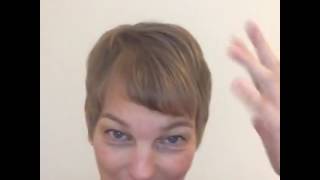
In this live‑streamed personal‑development session, Mary Schiller reflects on the past twelve months of her life, during which she and her husband faced a cascade of setbacks: a delayed job start for her husband, the collapse of a promising startup where she worked, massive unexpected repair bills, and dwindling savings. Rather than seeing themselves as victims of these circumstances, Mary describes how applying the Three Principles – Mind, Thought, and Consciousness – allowed them to shift their perception, recognize stressful thinking as temporary, and access a deeper sense of clarity and creativity. She recounts concrete actions they took (severance, tax refund, launching a coaching business, moving apartments) that emerged from this clearer state. Throughout the talk she emphasizes that circumstances are irrelevant to one’s inner state; the only thing that truly matters is the quality of one’s thinking at any moment. Mary answers audience questions, notably explaining why she advises listening less to the chattering mind and more to intuitive insight, and how emotions can be viewed as gentle warning signals rather than threats. She concludes with a message of hope, stating that understanding the principles brings peace, freedom from trauma, and the belief that anything is possible.
Questions this video answers
Yes. Mary explains that the less she listens to the chattering voice in her head, the more decisions feel like the next natural step rather than a forced choice, leading to less angst and more flow.
Chapters
Hello there, everybody in the Mind Yoga Spa. This is Mary Shiller, and I am broadcasting this live, uh, in the group on Thursday, October 27th. If you happen to be on Facebook, let me know by giving me the hi sign, hitting an emoticon, or saying hi in the comments. And if you're watching the recording, thank you so much for doing that as well. I wanted to post a video in here, a Facebook live stream, because something has really been on my mind a lot lately, and that is the idea that we are never the victim of circumstances. And the reason why I think this has been on my mind so much lately excuse me, is because I've been thinking back over the last 12 months and really, uh, remarking to myself how different this past 12 months has been from what I thought it would look like. So I thought it might be interesting to share a little bit about that with you and also take any questions that you have. Hi Shirley, thanks for joining, I appreciate that. So if you have questions, please feel free to interrupt me and post them in the comments, and I will answer them as best I can. So just to give you a quick rundown— um, hi Shirley, thanks for posting. Um, so a year ago, uh, things in my life looked pretty different in terms of circumstances than how they look right now. I had been in a new job for a couple of months. Hi, Therese, nice to see you. I had been in a new job for a couple of months by that point, and it was working for what looked like a very promising startup. The company was doing pretty well, and I was seen as a very valuable member of the team, and things seemed to be looking pretty good in that department. Hi, Mona, thanks for joining. My husband had recently left his job and he had gone back to California for a little bit to be with his father who was ailing at the time, and he was also waiting to hear about a new job. And because of our work situations, my husband was supposed to start working in this new gig a year ago November, and it was going to be a pretty cool one. We had made a lot of decisions based on those work situations. Hi, Tris. And so, you know, we had paid off some debt and we had taken care of a few things and we put some money in our savings account. And, you know, things had, had kind of looked pretty stable in terms of our finances and such. And so, you know, we were kind of just going along and, you know, things seemed okay. And then the first little snag that happened in our plans was, uh, that my husband's job didn't start when he thought it might. And so we were like, well, that's okay, you know, we still have money in our savings, it's fine, we can live on what I was getting paid, and we had some money to take care of us, that was all right. Uh, and then the next thing that happened was the job at the startup started to look unstable. Uh, there were some things happening in the company that started to get me concerned. And, um, hi Judy! And things started looking— hi Sarah! Things started looking a little bit shaky to me there. And so by the end of 2015, by Christmas time, things were looking quite different than they had just a couple months earlier. My husband's new job still hadn't started, and we suddenly didn't know when that was going to happen. My job at the startup was looking extraordinarily shaky, mostly because I saw something going on in the company that I didn't like, and I wasn't sure that I could continue working there. And then to top things off, we had some— when I say gigantic, I mean gigantic— unexpected repair bills that came in that pretty much decimated our savings account. So when we started 2016, we were really looking at each other like, what is happening here? Like, all the things that we thought would happen were not happening. And sort of the kicker was that at the end of January, I had a conversation with the CEO of the startup, and it was just obvious that I couldn't continue working there. Hi Stephen, nice to see you. And so at the end of January, my husband was not working. He was still back in California helping to care for his father who was ill. I had lost my job, and we were still dealing with bills and more bills that we had not expected, and our savings account was down to about this much. So we were kind of looking at each other like, wow, you know, it's really interesting how things really didn't go the way we thought they would. And we were kind of in a state of shock, to be honest. You know, the work things that we had sort of been counting on did not materialize. We had all of these other things that did materialize that we weren't prepared for financially, and things just were looking a little bit fuzzy to us. And it was really fascinating because we had a moment, I think it was in February or so, where another financial thing occurred, and my husband and I looked at each other and kind of freaked out. We had a few minutes— hi, Shailene, nice to see you— we had a few minutes of really like major panic where we were like, oh my God, you know, what are we gonna do now? It was one of those kinds of things. And fortunately, both of us have an understanding of these principles. Hi, Candy, it's nice to see you. And we had— we, we kind of just took a minute, took a timeout from all of the stressed-out thinking we were having and didn't talk for a little while. And when we both spoke up again, we very quickly came to a decision about something that we could do that would help to alleviate a lot of the financial stuff that we were looking at. And it wasn't going to be a short-term fix, it was going to be a long-term fix. But we were like, okay, if we can sort of figure out some way to get money coming in the door in the short term, we'll be okay. So what was really interesting was shortly after that, um, I got, I got a month's severance from the startup I met with them again in a month and they gave me a second month of severance, so that was nice. That took care of things. The next month we got a very large tax refund, so that took care of about a month and a half, 2 months. And then at that point I had made the decision to really focus on building this coaching business, so I started earning money doing that. And at the time my husband was still very much involved with his father's health and really wasn't able to work too much. But it was— hi, Shailene— it was amazing how from a place of clarity we were able to see our way through something that a few minutes earlier had really looked pretty massive and kind of catastrophic, to be honest. And what this really has been illustrative of for me as this 2016 has progressed is that things can look a certain way. They really can. They really can look like a catastrophe. They can look like, you know, some kind of earth-shattering disaster, but that doesn't mean that that's what's actually happening, that we are never actually a victim of circumstances. That the only thing we're ever really looking at is the way we happen to be thinking at any given moment. And the more we can see that, the more we can see that this feeling of catastrophe is coming from momentary catastrophic thinking, the quicker we can access this clarity that we all have to help us make good decisions about what steps to to take next. So that is kind of how this year has unfolded. There have been a lot of really unexpected things that have happened, which, if we really are honest, I mean, isn't most of life filled with unexpected events? And it's interesting to me to think that, you know, in the past I used to see myself very much as a victim of my circumstances. I thought that unless I could undo things that had happened to me in the past, that I was always going to be dealing with the repercussions of them. Or unless I could set up certain circumstances around me, if it was, you know, a better job or more money or whatever, a different place to live, unless I could have all these things sort of all lined up nice and neatly, that I really couldn't feel safe. Safe and secure. And for me, the most amazing part of this understanding of these principles is realizing that no one is ever a victim of their circumstances. That in fact, our circumstances are irrelevant to what state we are in. So I would love for you, if this is kind of hitting you somewhere, you know, give me a thumbs up or something so I know, because This has really been a big breakthrough for me personally, you know, realizing that anything can occur in life as it will, and the only thing— thank you— the only thing that I'm ever really dealing with is whatever my state of mind happens to be at the time, and that even when it looks like I don't have any resources available to me, I have infinite resources available to me just by being in this human form that I'm in and having access to the creativity that is part of being a human being. And, you know, I have talked about this before, but I think it, it bears repeating that, you know, for so long I was really convinced that unless I could turn back the clock and undo things that had occurred in my life, that I would never really know what it meant to be happy. I would never really understand what it meant to have peace inside myself. And with this understanding of the principles, it was so obvious to me that I had believed something that just wasn't true. And that nothing that had occurred in my life had really done anything to me, to the person who is, you know, living within this body but isn't this form on the outside. And that was so incredibly liberating and freeing to me. It absolutely changed the way that I live. It's allowed me to enjoy the peace and happiness that's our birthright. It's allowed me in the past 12 months to accept whatever is coming my way and not really have much stress. I, I really can't emphasize enough how different that is from how I was living my life before, when pretty much everything looked like stress to me. So, you know, I'm, I'm so grateful to have come across this understanding of the principles, and it's why I'm doing what I'm doing. So I would love to answer any questions that anybody has. That's part of the reason why I'm online today, is to see if I can be of support to you. I'm happy to answer anything, so please feel free to type something into the chat box and I will do my best to answer it. The other thing that was on my mind today is that— excuse me— is that when we are able to see this for ourselves, when we're able to see that we can have, like, really stressed-out thinking and really anxious thinking, but that doesn't have to dictate how we respond to something. That is an incredibly powerful realization. You know, in the past, when I had a lot of stressful, anxious thinking going on all the time, I really thought that it was telling me something important. I thought I had to listen to it. I thought that I had to obey what it was saying. I thought it was telling me, you know, Mary, your life is a stressed-out mess right now, and you know, you really need to get your act together. I was listening to all of that. I was believing it was true, and that was all that I saw a lot of the time. And what has happened since getting an understanding of the principles and since seeing for myself that there is something else that I can listen to. When I have thinking like that, it doesn't seem so compelling anymore. You know, I can look at it, I can feel whatever it's bringing with it, but it isn't the thing that is dictating what I do anymore. Now, that's not to say at times that I don't kind of fall into it, because I do. I'm human, and you You know, it happens. We're all convinced by the illusion from time to time. But more often than not, if I feel myself kind of getting wound up, I'm much more likely to kind of put the brakes on and go, "Oh, wait. I think I'm listening to something that might actually not be true. And if it's not true, I wonder what might be true instead." You know, what else can I be listening to other than this stressed-out thinking? So to give you a concrete example of that, when we were kind of hit with these different financial, uh, things earlier this year, you know, at first I did have some thinking like, oh my gosh, what are we gonna do? How are we gonna cover our mortgage? You know, we've only got X amount in our savings and we don't have hardly any money coming in the door, what are we going to do? And I kind of saw that thinking going on, and instead of, you know, kind of jumping on the bandwagon of that sort of thought process— what I— hi Susan, thank you for joining— what I did instead was I kind of saw it for what it was. It was momentary thought, and as soon as I saw it for what it was, that it wasn't necessarily telling me the truth I felt myself kind of drop back down into that feeling of spaciousness, that feeling of possibility, that feeling of, okay, I've got what I need at my disposal, so what can I do? And when I was listening from there, things came to me to do. You know, I wrote these books that I've put out this year. I started offering some one-to-one coaching. I started to become involved in other projects and working with other coaches on programs and things. And it was almost like the more I saw that I didn't have to listen to whatever my thoughts were telling me the more I could listen to what I was hearing from a different source. From, you know, as my friend Sarah and I have been calling it recently, from my innate creativity. What could I create from there instead of from this noisy, stressful thinking that was going on? So it can be so tempting to listen and believe this sort of urgency that comes through sometimes in our personal thinking. And believe me, I used to cling very, very tightly to it. It was almost like I thought if I let go of that or if I looked in a different direction that I was somehow going to crumble into a million pieces. And what I've started to see more and more is just the opposite is true. True, that the more I kind of just don't pay attention to that sort of thinking, the more I feel and experience the wholeness that is innate, not just in me, but in you too. So I see we have a few people on here. I'm so happy to have you. And if you are game, I would love to answer any questions or just comment on something that is on your mind today. If there's something that you feel like asking me, please feel free to type a question in the chat box. I'll be on here for at least another 10 or 15 minutes, as long as my internet connection cooperates and my phone keeps working. So I will just keep talking and sharing what I've seen to see if it's helpful to you in terms of, you know, not really seeing circumstances as these things that we have to fight against and do something about. That's not to say that— thank you— that's not to say that there aren't times when we feel the need to change our circumstances. So for a personal example, one of the things that came to my husband and myself when we were looking at our finances and everything else is we decided that it might be time to move from where we've been living in New York for, um, gosh, almost 10 years now. And that decision came to us in this space of clarity where it just started to look more obvious that it was time to move on, and we may be able to have, you know, a different experience in our lives and as a couple if we tried to move to a different place. And it has taken us a while. We've— looks like we've sold this apartment that we're currently living in. I won't know until I actually see the money in the bank, but it looks that way. But even now, you know, he and I have both really seen that having expectations of, you know, certain things happening at a certain time or certain people doing certain things is kind of not very helpful. What seems more helpful to us now is, you know, taking steps towards changing things that maybe we'd like to be different, but not putting so much emphasis anymore on the outcome being how we think it should look. And to be honest, it's become very clear to me that the way I think things should look is really pretty irrelevant, and most of the time I have no clue how things should look or how things are supposed to be or how things could be to make the best situation for myself. All of that seems to have kind of gone out the window, you know. I've seen more and more that the best thing I can do personally is to continue to look in the direction that these principles are pointing in. Most specifically for me, it's about, in Three Principles Speak, looking toward the principle of mind, seeing what is available to me there, you know, looking toward what looks like my true self and not the self that's being created by personal thinking all the time. Time. You know, if I'm going to take, um, steps in my life to improve it, that seems like the top priority for me now. You know, a few months ago, or maybe it was more like a year ago, it could be even longer than that, I realized that for me the only priority that really mattered was simply that— was looking toward mind, was trying to live more often from that space inside, from that clarity, from that wisdom that is within each one of us. And the way that I personally have been doing that is recognizing my own personal thinking more of the time and kind of being clued into that. Stephen says, it still seems that thinking is telling us about what is going on in our lives. Of course there might be distortion, but there could also be— oops, let's see. I think you meant biased reporting. Are you suggesting that we stop listening to thought and wait for intuition before we act? That's a great question, Stephen. Thank you so much for asking that. And I think my answer would be yes, that what I have personally experienced in the last 2.5 years since I started looking at the 3 principles and deepening my understanding, is that the less I listen to the kind of chattering voice in my head that said the same things over and over and over again, the less I pay attention to that, the more my decisions seem less like decisions and simply the next step to take. And there isn't so much angst involved in, um, in doing things. It's more like coming from a place of wanting to do something instead of feeling like, oh my God, I have to do this. You know, there's just a very marked, marked difference in the quality of my life since I stopped paying so much attention to that chatter in my brain all the time. Let me look back at your question. So one of the things I saw too was that most of the time my personal thinking was telling me something that just wasn't so. Like, you know, when I— when we had these financial things happen, I had a lot of personal thinking telling me, like I was saying a minute ago, you know, this is a catastrophe, this is a disaster, what are you going to do? Like, you are really in trouble, you really got to take care of this or else, you know, that was the kind of thinking that was going through my head. But I could see very clearly at that moment, you know, after I kind of got over the shock of things, that that just wasn't true, that I had as many resources available to me me as I needed. They may not have been obvious to me right then, but they soon became obvious to me. So, you know, there was no way that I was going to be able to make changes and take proper steps by looking in that personal thinking kind of urgent stuff for answers. That was not where the answers were going to be for me. In the past, that's what I would have done. I would have listened to all of that urgency. I would have thought it was telling me something that I really had to pay attention to right then, and I would have gotten myself very worked up. I probably would have been stressed out for the last 12 months. And instead, what has happened is that I have felt very little stress. I've had little bits of sort of acute stress because I'm human and I occasionally have thinking like that. But the overall experience of the past 12 months, despite the change in circumstances, has actually been absolutely amazing. I have been afforded some tremendous opportunities to meet some incredible people, to work with amazing people, to write these books and just do things that I never in a million years would have expected to happen. You know, everything from meeting Michael Neill, who I basically credit with changing my life because his book The Inside Out Revolution was the first book I read about the principles. I got to thank him in person, which was incredible, to working alongside other people in the principles community that I've admired for the last 2 and a half years and working on things like One Solution and, and, you know, teaming up with other amazing coaches. And like, I could never have predicted these things. And I think if I had been really focused on listening to all of that old thinking that was telling me my life was a disaster, I might have missed all that. I might have thought, I can't go to Oslo, Norway for this conference. I don't have the money for that. I've got to figure out what to do. I've got to focus bringing some cash in the door. And instead what happened was, wow, you know, I'd really like to go to Oslo, Norway for this conference for One Solution. How could we do that? You know, could we use a credit card and, and try to pay it off over time? Could we do that? Yeah, we could do that. We could make an exception and, and use credit when we need it, you know. And what's come from that has just been an incredible thing too. So, you know, it can really look like personal thought is telling us stuff that's important and true. But the more I have looked at it, the less accurate it actually seems to me. Sometimes I will say that, you know, about 99% of the chatter in my head seems like it's not really telling me anything useful, and that actually is starting to look more and more correct. That there is something else I can be listening to and you can be listening to, and that isn't in that noise. And the way to sort of quiet the noise down is just to see that it's there. And once we kind of get the idea that, wow, you know, there is something else to listen to, you know, that, that kind of starts to fade into the background of our experience. And this other source of tremendous possibility and endless creativity and endless resources that starts to kind of bubble up to the surface more often and has a lot more available to us than our personal thinking does. So I don't know if that answered your question, Stephen. If not, please feel free to, to type in something else and I'm open to other questions. Let's see. Yeah, I'll stay on for a few more minutes because another thing just came to mind that I thought might be useful to you, which is that I think when I sense myself getting into any kind of worked-up state of mind, that is just like this big flashing red light telling me I don't need to go there. Great, Stephen, thank you. You know, when I start to feel any hint of stress, then it seems like I am looking in the wrong direction. It's kind of like an automatic warning system that it seems like we have been gifted with, if you will. I don't see emotions like anxiety or stress in the same way. They used to seem very scary to me. They used to seem like they were indicating that something was wrong with me, or certainly something was wrong with my life. And now they look more like gentle warnings that I'm looking towards my personal thinking and I'm getting tricked into believing some sort of illusion that I'm looking at right then. And buying into that, I've now seen, is optional. I don't need to go there. And so I really welcome every emotion that I have. Nothing is off limits in my life anymore. I kind of feel like with this understanding, we have been given an additional gift in that we can have this full range of feelings, everything from absolute euphoria and joy to fear, and realize that all of it is part of being human and it doesn't have to be frightening. You know, we can have this incredible— these incredible waves of ups and downs, and we can still remember that we are within this incredibly rich ocean you know, that's filled with beautiful life. You know, I really have that sensation a lot of the time that I'm living this life from mind as well as this human life, and the combination of the two has really just changed my entire life experience. And sometimes I have to literally pinch to change myself, to remember that this is what life is. You know, it doesn't have to be filled with suffering like it was for me before. It doesn't have to be filled with stress. It doesn't have to be filled with frustration and struggle and strain. That's not how we are designed to live. And we are certainly never the victim of anything. And I do mean anything that happens in our life. You know, I'm somebody who experienced severe domestic violence, rape, other things that I won't go into earlier in my life. And all of that looks very, very different to me I don't see it in the same way at all. And I always say that if an understanding of these principles can bring me to this place, this place of real peace, then I know this understanding can help anyone, including you, wherever you might be. So I will stay online for a couple more minutes if anybody has another question that you'd like to ask. I'm happy to to answer. And, you know, I think one of the other things that I've realized lately is you can't discount how much hope this understanding brings to our lives. You know, that was something that was always present in me, even when I really thought at times like I couldn't be any happier than I was. I still somewhere held out hope, and I really believe that that hope was coming from mind. I'm not sure how to explain it, but it seemed like it was kind of trying to push its way to the surface. So if you're here and you're part of this discussion, even when— even if things look bleak to you, I want you to, you know, realize that there's a reason why you're you're here and that hope is an absolutely real thing. And that for me at least, and for many, many other people, the understanding of how we are actually operating as human beings explained so beautifully and simply by these three principles is the reason for hope. You know, that nothing is really impossible no matter what circumstance you may find yourself in. Anything and everything is possible for you. So I think I will go ahead and sign off. I really, really appreciate you all being here and listening. And if any questions come up later on, or if you're watching this on the recording and you have some thoughts you'd like to share, please feel free to leave a comment. I love you all so much, and I hope you're having a beautiful day. Wherever you may be in the world. Thank you, Shailene, and I will talk to you again very, very soon. Okay, thanks so much for being here. Bye now.










