Crazy Property Stories, Personal Branding & Lambos - Tyler Newman | Midnight Podcast Episode 4
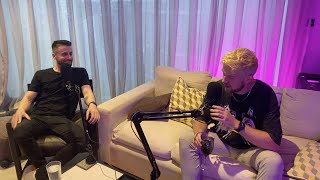
A recorded interview (Oct 3, 2021) where Matthew Kelly interviews Tyler Newman about Tyler’s entrepreneurial path from early e‑commerce and small hustles to estate agency work, property flipping, and scaling into land and housing developments. Tyler describes two parallel businesses: a physical property development company (now focused on land-led residential schemes including a recent 17‑house project) and an education/coaching arm that leverages social media to build audience and raise investor capital. He explains financing approaches (mortgages, bridging finance, private investors, joint ventures), gives a concrete example of his first flip (buy at £80,000 with 10% deposit, ~£20k refurbishment, ~£26,000 profit over ~6 months), and discusses topics around commission models in UK estate agency, raising capital, and personal branding. The conversation includes anecdotal material (cars, travel, nightlife) that illustrates lifestyle and network effects.
Questions this video answers
October 3, 2021.
£80,000.
10% deposit — £8,000.
Around £20,000 of refurbishment work.
Approximately £26,000 profit over about six months.
Chapters
Right, we're back with, I think, episode four. You probably hear me drinking red wine, which has come back to the pod. And we're here with Tyler Newman, who will let. I'll let him introduce himself properly in a second. But this is an interesting one because different to the last episode with Adam, which I've now decided is episode three. And I said I didn't really know him. I do know Tyler quite well, but I feel like I don't know what he does that well because unlike previous episodes last year, whatever. It's not Ecom. Well, it kind of is E Comm. In a way, but it's not like physical products. E Comm. It's not a market agency. It's not in. Well, it is info products, but it's different to, like, Billy. And I feel like property in general is just a space that I don't really know really that much about. And certainly. I don't know, maybe I'm wrong, but I feel like people that might listen to this for. Because they're interested in econ, whatever, might think property is what all people do.
Mm.
And you need fucking £3 billion to start or whatever. So my point is, yeah, I think it's super interesting space. What you're doing is interesting. I know a little bit. But, like, with the last episode, to be fair, I'm hopefully gonna learn a lot and then we can just get a bit weird with it and delve into a few different things and go from there. But, yeah, I guess that's my little intro to start with. Just. Yeah, I guess tell us who you are, but then maybe just give us a rundown from how you, you know, the past few years, how you've got to where you are now with a fucking Lamborghini with the roof that comes off.
The roof that comes off.
Yeah.
Yeah. Well, I'm sure we'll dive into what I'm doing right now, maybe in a bit more detail, but my name is Tyler Newman. I'm essentially the property guy, the real estate guy, whatever umbrella you want to put me under, but also, I guess, a few things within property space, but also just business in general. So currently, I've got, essentially, there's two sides to what I do. There's my actual physical property business, where we're doing actual property developments, bigger land developments is our primary focus right now, amongst other things. And then we have an education side to our business, which you could also call our coaching business Info products. Kind of dirty word. Yeah. Yeah. I just try and I try and stay away from that sort of terminology because again, it puts you under probably the wrong umbrella. And we are, our intent is to turn it into a proper education business. It's not as simple as just selling courses online. It's. We want to build a proper education company. Well, that's what we're doing. That's what we've done with. And that, you know, interpret that as you will. So that's essentially what we do right now. Hence why we do a lot on social media. That really fuels the education side and then that education side, maybe I'll dive into that in a bit then fuels our actual property side. And so there's all part of this one big cycle. But my entrepreneurship journey sort of started way, way young. I can't even remember when I'm. I'm very fortunate that I grew up in the Midlands place called Rugby and had an amazing, amazing family life. One of the things I'm most grateful for because as we all know, we are shaped by our childhood probably far more than we're consciously aware of it in many different ways. So had an amazing childhood. Dad is a businessman, entrepreneur, has an estate agency business which I've really seen just grow as well over the years. More so in the last, in the last three, five years. It's really beginning to taken off and matterport now we're actually. I can also provide a lot of value to his business and implement some of this, some of the strategies in our education side into his especially on this whole customer acquisition side, which is really exciting. But yeah, always but sort of grew up in that environment. Amazing family life, went on, you know, amazing holidays, was never spoiled. I always sort of the way to describe this, I was on that perfect sort of knife's edge or balance of not given too much, not spoiled, where I was kind of stripped away of the opportunity to make something myself, pursue something myself. But then also I never really went without. So extremely fortunate in that sense. And that's also one of the main drivers for the education side of things. You know, I'm very, very conscious as a lot of people out there that haven't had the fortune of, of good role models in their life growing up. Maybe good family, haven't had someone believe in them. And so if I can help people in that sense, then I almost feel like a little bit like that's my duty to, to pass that on. But yeah, I been from an early age was interested in self development. I was always After School on YouTube watching Tony Robbins videos. I'd be searching motivational videos, grant Cardone, surely and just watching. Yeah, well Grant's obviously came a little bit later but you'd watch these old whole montages get you super pumped up.
And yeah, boxing film montage, that's it.
Or like gladiator music, the Rocky Balboa clip of David Goggins. That was it, David Goggins. But even then this, this was before all those. This would have been, you know, when I was like 12, 13, primarily Tony Robbins. He was a big shaper in for me and done a lot of Tony's events. I think he's heavily from an early age put me on the right path of sort of self development. Started a couple of businesses while I was young. Actually you probably don't know this first one was dropshipping.
I didn't know that.
I didn't even know it was drop shipping. I didn't know what drop ship the word drop shipping or E comm even was. I just found out about Alibaba because yeah, like any young kid that wanted to make money, I've gone on YouTube and I'd search how, how to make money online and they talk about Alibaba and I found some replica, maybe Rolex watches that I just replicate but they weren't branded Rolex, they just similar sort of designs imported some of them tried to sell them in school playground. Turns out they weren't the ideal market for it.
So that's not drop shipping. Cause you're buying stock, that's the proper way.
Well yeah, if you're holding the stock. Not drop shipping, just E com that never really took off and we're talking such small numbers maybe like buying 100 quid's worth of stock. In fact I even think I requested like a. Some free samples or a sample pack like 100 pounds. I thought I'd flip for 3, 400 quid and I was going to be the biggest baller in the playground. Got started somewhere and then I could, you know, I'd really have to think to reel them off. But started had had two econ brands while at school, both in the clothing space.
I didn't know that. The fuck.
Yeah, so. So the first one sort of started when I was around maybe 15, maybe 16 years old and it's sort of a streetwear brand. It was just some designs that my artist friend designed on Adobe Illustrator. We sent it to some print on demand, not print on demand, screen printing company. They printed it off again, sell them in school, little Facebook page. Didn't know what paid traffic was, didn't know what Facebook ads Were. And I kicked myself for it because I hadn't known what Shopify was. Coulda, woulda, shoulda, wasn't even Shopify. This was big cartel.
Yeah, big cartel.
This was big cartel.
It's what, like bands used to sell merch on.
Exactly. Had I known about Shopify Rads back then, maybe would have a different story then wanted to move into more like custom clothing, so actually started getting some like custom bamboo clothing made in China. All I did was go to urban Outfitters, find some shapes I liked, sent them off to the factory in China, said, can you replicate these in bamboo material again? So like 17 ordered a shit ton of stock, sold like none of it because didn't understand advertising, didn't sound marketing. Then started an events business where we bought some cheap 12 foot. Not 12 foot, maybe 24 foot by however long marquee on ebay. Put it on Gumtree. That will drive to you. Set up a marquee for the night, did about three events and then on the third event it essentially blew over in the wind in the middle of the night while there was a. Well, while someone was having a 40th. Mum was having a 40th birthday party.
Did she?
Yeah. So lots of different things. There's probably six or seven others. And tried affiliate marketing. I tried loads of things but then as I was leaving school, final year of sick form, felt like we were being funneled by all of us, all of my teachers to go to university and I was very fortunate.
It's funneled. Yeah, it's a good use of the word.
Yeah, absolutely. I'm back to. Again, referring back to my parents and family. I was never. There was never any pressure from them to come to university. No one in my family, still to this day, no one in my family's ever been to university, not even my sister. And funny you. Yeah. Decided create a couple brands, really had the itch for business, really want to do something and sort of just never made sense to me. That's like, right, I want to be an entrepreneur. I'm not definitely do something on my own. It just doesn't make sense to me to spend the next three, four years at university if I'm going to do something that's going to be entrepreneurship related, business related. A couple of my best friends went to do an entrepreneurship degree, which just the irony me, never made sense. And so came across, saw on Facebook one day a Facebook ad for a free event to learn about property at. What was the. I want to forget the name of it, but the Cumberland Hotel In London now the Hard Rock Hotel in the conference. Not conference room, the sort of event space at the bottom of the hotel where I guess I came across. I met the first guy that taught me property who's now got a couple bankruptcy cases and owes a lot of investors money. So I'm not going to mention his name.
I think I know who it is.
Maybe yeah it's not probably the only one I've heard of but there's a few but yeah went on that went to the free event then ended up getting sold into the. The three day event actually did that a few times and I knew nothing about property and this is a big misconception people have is that grown up in a family of estate agents. My dad's got an estate agency business like I mentioned which is related to property. I still knew nothing about property. Didn't know what a mortgage was or didn't we know how it worked. Didn't understand really anything and so it was just so overwhelming for me. Started working as an estate agent but. But where I did it differently was I worked as a completely commission only self employed agent so I only got paid commission from houses I sold.
Was that on your dad's company or no?
Yeah, that was at first under his brand and then moved away sort of as soon as I could from that actually didn't make much money doing that to be honest but made enough to scrape a small pot of cash together and yeah did my first property deal which was literally buying a two bedroom terraced house in Coventry with a tiny deposit and like borrowing money, saving up money, a couple credit cards, loans from whoever I could do the refurb and then sell it for a profit all responsibly. I wasn't taking money out that I. I knew the deal was strong enough that this money I was borrowing I could pay back but did that, did another one, did another one, did another one and begin to stack up quite a significant cash pot doing that and carried on doing that, moved down to London to work in north London as an again self employed commissioner liaison thinking much more expensive house prices. Where I was operating in the Midlands the average house price I was sort of working on was 5,600,000 pounds then moved to London two two and a half million pounds. So higher commissions, higher fees, therefore higher commissions for me. Did it the exact. The complete wrong time. Couldn't have picked the worst time. The market was on his ass, nothing was selling. I'd taken an apartment in London that was pretty expensive rent which I was splitting. My girlfriend at the time we then broke up, so then took over paying all of the rent, wasn't making any money. And then that cash pot was.
When was this, this before I met you? This would have been near about then.
No, this would have been before I first met you.
So that was like April, May 2019.
Yeah, this was, this was sort of, yeah, end of 2018 actually. And yeah, it was a bit of difficult one for me because decided to step out of that industry altogether. Went from, you know, living in London, cool job, but just had to face the fact, wasn't really working. Moved back home with my parents and not so much starting from scratch, but it's like, okay, well I've got to make myself, I've got to come back and do something here and just really try to look at the whole picture. Like where do I want to go look, definitely property. Want to build a big property company. What does that look like? And then boiled things down to sort of maybe first principles is the right way to say it, but. Well, I need sort of a cash flow business because I need cash flow and then I need that sort of wealth building vehicle which me was property. And, and at the time I documented a lot of what I was doing on social media, all the property deals on Instagram, every day updates. And I was just getting flooded with messages from people, people my age or 18, 19, 20 years old at the time saying, love what you're doing. Can you please just tell me what you're doing and tell me what you know? And for the first probably 612 months, but we're 12 months. I'd just tell people this is who I learned from. Go speak to them, they'll teach you everything. And I kept getting pushback from that because the problem back then and it is changing. All the educators in the property space were 50 years old, overweight, lost all their hair, not. And really just not that inspiring for a young 19, 20 year old kid. Just because. Just not relatable. And they'd always say to me, yeah, but Tyler, I want to, I want to learn from you, I want to just, I just want to spend two, three hours with you. I want to work for you for free, I want to shadow you, I just want to spend a day with you, all these things. And I thought, okay, there's obviously a demand here, I'll be the first one. I didn't know everything back then, still do not know everything back now. And it's almost like the more you learn, the more realize you, the more you learn, the more you Realize you don't actually know. So I booked this, this office space in Birmingham. I think there was 10 seats maybe. Yeah, 10 seats. And I said, look, if you just 100 pound a seat, just come along and I'll just spend a day with you just talking through the deals. I'm working on what I know the basics of property. And just on Instagram I had like probably a thousand followers and sold out and did that. I thought, okay, that's a good proof of concept. And by this point I'd actually reinvested a lot of my money back into education. I go to these property courses, I then flip a house, make some cash and think, right, I want to continue to further my knowledge. And to some people, I think to actually 99% of people, they just, they probably don't understand this, but to us it's probably common sense. But if I want to learn a skill or get better at a skill, all I want to do is find someone that's doing it and just pay that pay to learn from them. Yeah, a lot of the time. And that's one thing I still do massively now. So I was essentially just had spent thousands and thousands on my own education, implemented it, learned from it, made mistakes, also learned from, and then was just sharing a little bit of what I knew wasn't charging much for it. And then, yeah, sort of formalized a bit of an education company. As my knowledge grew, as my property business grew, began to teach more and more and more. And then it's become sort of a really good cash flow vehicle. But the main driver behind it as well is it allows me to build an audience. Because when you can spend money on Facebook ads, YouTube ads, Instagram ads, creating content, and that's profitable because on the back end you're then offering people the option to, to further their training and buy buy training from you. But that audience you then built, you can also raise money from and use that investment to sort of further fund property deals. Which one thing I teach in the property space, it's one of like the core principles, is that you can only get so far using your own cash. Yeah. If you want to scale your property business, if you want to go further, you need to be raising money. And social media is the number one way to do that. You've only got to look at what Grant Cardone is doing in the US. He's raised at 600 million from Instagram, Facebook at this point, purely from just accredited investors. And yeah, we sort of follow that model now where we're always Seeking investment for future property projects. And that's essentially my business in a nutshell.
Yeah, well, to be fair, firstly, that's the best answer to what do you do?
Okay.
In. Well, out of the three episodes of film prior to this. But yeah, fuck, yeah, that's quite interesting. I didn't know a lot of that actually. There was loads of way I was trying to cut in at loads of points. But there's so many questions off the back of that one point I was gonna pick up on. And I'm probably similar, to be fair. It's like when you said at the start you came from like what I would just call a middle class background. So, you know, your parents weren't fucking multimillionaires or whatever. Obviously in your case it was improper. I mean, but obviously I don't think you're going to school in helicopters or whatever. But obviously you didn't come from a council that. It's kind of similar with me, I would say I came from a middle class background. Mum was a nurse, dad is an architect or whatever, someone like that. But in my case it wasn't entrepreneurial. But anyway, the point is, I've read about this a bit, to be fair. It's like people say sometimes if you come from like a comfortable, you know, it's not that shit. Like you haven't really got a sob story, like everyone's got their own issues, whatever, but like you had fucking food on the table, etc. People said that is potentially like the hardest place to come from because it's like maybe experience it with friends or whatever. Like there's no real motivation other than like intrinsic inside you. Like you don't need to go and start a business and you know, risk all this money and time, etc. Because you could just get a fucking job and do coke every weekend like all the other blokes that are in their early 20s and go get a 9 to 5. Not everyone, but some people.
It's a good point. It's something I, I think a lot about and it's very easy to discredit someone based on their upbringing if they've sort of had a good upbringing. And yeah, I've, I've had comments made at me in the past and. Oh yeah, well, you've only been able to do that because your parents are in property and whatever and obviously they've not seen all the work that's gone in behind the scenes. And it's sort of not necessarily true. But you know, I'll be the first to Admit that there's no way I'd be where I am right now without the help and support and the belief my parents have had in me and always been there to offer me guidance. But you know, I never want to discredit all the work that I've put in over the years and the risks I've taken because I could have very easily taken a much more comfortable route. And it's a good point you mentioned actually. And I've talked about this amongst other friends within our, within our friendship circle because there's a couple others that have come from a place where maybe their childhood didn't have as much and entrepreneurship was that escape from that. It was that ability to sort of get out of that scarcity that they grew up in. But I always try and figure out and assess and it's an ongoing process. I have my own mind of why I'm wired this way. And it could either be maybe a genetic thing in a sense, I'm just wired in this way that maybe whether it's ego, whatever, that made me this hyper competitive individual that constantly wants more and wants to grow rather than just settle. But I don't know. But you know, at the same time another, the other side of the argument is I've got friends that, and I've had this conversation with them that I went to school with and we have had the exact same upbringing is in their family do the exact same thing, same sort of level of wealth or whatever, same education, same access to the same resources and same age group in the same place, same friendship circle. And they're same age as me right now and don't really have much going on in their life, unemployed, in and out of jobs, whatever, whatever. And that's not to discredit them. It's obviously they've had the exact same, essentially there's no excuse. And it's like, well, why's one ended up down that path? Why have I gone down this path? And so ultimately it comes down to just you can have the best upbringing, the worst upbringing. I think there has to be that something else. Yeah, but another thing, and not to get too deep straight away, is that although anyone that sort of maybe listening to this, that knows, knows my family, my dad no doubt will probably share this on his Facebook because he shares everything.
More views from Father Neiman.
Thanks very much. And you'll be listening to this like he listens for every piece of content that ever goes out about me. He's almost like my PR manager that has to listen to everything but yeah, he's. He's quite well known within. Within the town that I grew up in, because he's been an estate agent there for 34, 30, or 40 years. 30 years. I'm not gonna age him that much.
It's not 70 years.
90 years old for 30 years. And when you're an estates agent, where you're literally out every day meeting people, a lot of people know who you are. And he's been very aggressive with his advertising in that town. And he is. And he tells me the mistake he made is become a bit of a big fish in a small pond.
Yeah.
And even just the other day, I didn't tell him this, but I got into. I got the train up on Monday, I think it was, or no, Tuesday to Rugby and got a train station. Got in the taxi outside rugby station, get in the taxi. And the taxi driver's. I recognize you from somewhere. I was like, I don't know you, mate. Honestly, he said, no, no, no, no. I know your dad, Sean. And I was like, okay. And it was actually always very often the case that growing up, a lot of people just knew me as, I know your dad. Know your dad. I know your dad. And I think that was. There was this fire inside of me that actually is like, well, actually, I kind of want to. And this is a competitive side of me, make a name for myself and go beyond that and not just be known as, oh, Sean's son. Yeah. So that's. That's not a main driver. That's just a little side note. Yeah.
Yeah. That's interesting. To be fair, I generally think that people that pursue entrepreneurship properly and aren't just doing it for a fucking six months because it's cool. Basically ill to some extent, like a mental health condition. Like, I mean, I probably spoke about previous. Well, pretty. Not that much, but. Yeah, well, everyone's different. But I think I've always thought that I was fucking mentally ill in many ways. But, like, entrepreneurship is probably either the cause or the root of it, and probably both.
Like, well, we speak about diminishing returns, right?
Yeah.
As in there's a level of income, there's a level of wealth where beyond that, there's diminishing returns. And we're probably way past that point. And it's like, why do we.
Maybe not me in the past year, but I've definitely experienced. Yeah. The level of that. And then. Yeah, I know what you're saying.
So. But going back to your story, and if people haven't want to find out, one, you were @ a point last year where you were bringing in seven figures a month revenue. And there is the argument to say that, why, why do you. Why do you even need to keep growing past that point? Why do you need to keep going once it. Once you're at 100 grand a month? Because after that, it's more complexity, there's more stress, bigger payroll, bigger risks, and you've got to be a little bit ill.
Yeah. To be fair. Fuck. Like, that is like a chilling point because I had a conversation with a friend of mine who is, like, going a bit of a tangent, but I won't say his name. I want to get him on the podcast, but I don't know if he wants to be public. And he is, like, maybe two years older than me, like, a year older than me. We used to have an office together for, like, six months and he's basically about to sell his business for millions of pounds. And he's like, young and you'll never have to work again. And I had a conversation with him, probably wasn't a conversation, it was a fucking dm back and forth, ironically. But. And I was saying, what I think to be true about myself is that even if I had 100 million quid, I'd start the next business because it's not about the money. And he was saying, nah, for me, it's just I want to make, I don't know, fucking, you know, 5, 10 million so I never have to work again. And then I'm just gonna do what the fuck I want. Like, I think you mentioned, like, go surfing or whatever, but. And maybe because I'm not in the same position as him with that exit pending or because it's different people, but I just said to him, now, I genuinely think even if I had, if I exited for 100 million quid now, which I'm not doing, but I'd like to do in the next, like, five years. I think I'd still get up within, like, the next month and start the next thing because, yeah, I actually, I think, of course I want to make loads of money. I want to have nice cars and shit. And I've experienced that and I've lost it to an extent. Just probably quite unique for my age. But then it's also made me think the blessing of that was like, ah, fuck. I actually just like the game. Yeah, Like, I actually.
Do. It is just the love of the.
Game. And the game means, like, it's the process of trying. It's toxic. The game of entrepreneurship, not the game of playing Girls on Instagram, which I've been out of for the past year. They are similar, I suppose in.
Ways, but since they're also.
Toxic. Yeah, the game just like creating stuff. Whether it's a fucking podcast, which is probably partly why I started this or. Or a brand like I'm working on a new brand right now, which mentioned in the past episode. But yeah, just the game knowing that it's going to be wild ups and downs and you know, if you can't. I guess most people because they're wired differently or in many ways I wish I was wired like that. I just happy doing something more simple or whatever. And it's not better or worse, but it's just different. And if you can't. Yeah, I suppose if you can't handle the heat of entrepreneurship, which in my mind is just the wild ups and downs. Like I feel like it's made me bipolar to be honest. To the pursuit of.
Entrepreneurship. It definitely affects your personality and.
The like genuine pursuit of it. Not the I'm going to pretend I'm interested in E commerce and do it for six months. Like do you just. I can't do anything else. I would rather throw myself off a cliff than have a 9 to 5 relentless pursuit. And that's how I actually feel. I would actually rather be homeless than have a 9 to 5. And as long as I was in a position to pursue what I wanted to.
Make. And that's an interesting point because all entrepreneurs as slightly differently. There are. There are some that literally just want a lifestyle business. You go to Bali, there's people there that have E comm dropshipping businesses that happy making touching six figures a year but they've got no team. They can probably put in two hours of work a day max and live an amazing lifestyle on the beach in Bali. Then there's those that want to get that exit, make a sum of cash and then they're done. Then there's just the. The savage mentally ill people like ourselves.
That. Yeah, I think having thought about it. Yeah, yeah. I mean I haven't had that big exit to decide yet, but I.
Don'T know, like, I think you'd know.
At this point the barley like making, you know, 100, 200 grand on a laptop. And there's definitely a lot to be said for that by the way. I think that's fucking great from like, I think that's so attainable for 99% of people if they just realize. And it's probably the healthiest without him in the last episode. Yeah, I just feel like, I don't know, I mean, maybe if someone gave me 50 million quid, I'd never start another business again. But like, what would I do hypothetically? I don't know. And it's quite an interesting conversation to have with yourself. Like if, you know, if I got unlimited money tomorrow, so to speak, you know, whatever. 10 million plus is probably effectively that in many ways or more. But like, yeah, if I never have to think about money again, what would I do? And then like, the reality is I probably start another ecom brand or a fucking podcast and probably actually do what I'm doing now. Probably just have a Cullinan and a fucking SVJ roaster downstairs, which I don't.
Currently. And a six studio for the.
Podcast. Yeah, and a six studio and.
Well, this is a six.
Studio. Three girls bringing me drinks while we record. And 17 Richard Mills with a custom.
Dial. But you're gonna clip this in five years time when you've got, when you've got.
That. Yeah, Fuck. Tangent. That's a pretty deep subject. But yeah, I think I'd probably be doing something similar. I just. Yeah, probably. I don't know. I definitely have more cars and.
Watches. It's a constant pursuit and nothing will ever be enough. And you just constantly want to get to the next level. It's same with every new goal we've ever had. You want to get to, you want to get your business to 10 grand a month anyway. 25 into 50, then 100, then 200, then 550. It's. You're never not happy, you just never satisfied and you constantly want more. And I think that's just why. I think that's just us as humans with an ego and not the negative connotation of the word, but just hype. Hyper competitiveness that never wants to stop. And it's no different to you look at some of the top athletes in the world and playing at the highest level and within their, within their sport, they are just pushing and pushing and pushing and pushing to the point that's not even healthy. But it's just the way some humans are wired. You look at people like Elon or his billionaires that just put themselves through like the more money they get, like Elon especially the more obviously the wealth he's got. But he's still putting himself through probably ridiculous amounts of.
Stress. Yeah, I definitely don't think I'm on his psychological level of damage and ability. I wish I was, but yeah, fuck, like he's a real iron man and yeah, there's some fun. This is. I don't know where the fuck I'm going with this. I'll try and bring it back to the topic in a minute, but I remember something Gary Vee said. It was quite funny. Like, what was it like? Everyone talks about. And I'll come on to the reason I'm saying this in a minute. Everyone talks about wanting to be like the next Elon Musk until there's a fucking. Until they want to go skiing for a week. It was something like that, Gary Vee said, and it was so true. And because I acknowledge, to be fair, I don't think I'm on that, like, psycho billionaire level where I fucking, like, we'll do deals at 4am in the morning. And I don't know, you read about people like Philip Green or, you know, Topshop Don, Controversial character, and who's the Mike Ashley and so on you read about. And, like, you read about guys like that, whether it's trivial or not. And, you know, they're up at 4am doing these deals and they're fucking billionaires. I don't think I'm necessarily on that level. Well, I mean, I'm certainly not on that level financially, but I don't know if I'm on that level of.
Chaos.
Mm. But I definitely know that I'm not on the level where if I sold a business in the next few years, like in my 20s still, I just want to go and chill and write books. I think I definitely want to try and go bigger. Like, I was listening to Steve Bartlett's podcast the other day with the founder of Klarna, and that got me fucking gas. And I was thinking, jesus Christ. I've always thought.
Like. Because what's that? What's said? It's like 36 billion or.
Something. 45. So he's like, on paper, net worth was like 4 billion or whatever. But what I found quite interesting about that was, I say he only started the business. I think he was like, I don't want to get my facts wrong. I think he was like, 30 when he started the business. Which I get so young. But I guess, like, I'm thinking, fuck, I'm done at 25. But, like, no, he hadn't started the business until five years older than I am. And I'm thinking, yeah, maybe if I get this exit on ecom stuff, then, I don't know, hypothetically, maybe when I'm in my 30s or whatever, I want to try and go for, like, the fucking Silicon Valley, like that Drake and future song like go, go to Silicon, try and get our billions on or something. Whatever it is. Okay, there's, there's some lyric, it's in that 2015 album. I think it's Diamonds Dancing or whatever. It's the song. Yeah. And I just thought maybe. Yeah, I guess first it made me think, fuck, there's a long road ahead. But secondly, made me think, yeah, it'd be sick to try and do something like that. And then thirdly, I thought, oh shit, like if I'd sold, you know, sold out by them, which I hope I'd have done in an E comm respect, maybe I'd try and go make some mad fintech thing or like make the next Shopify and fucking become a billionaire. Just not because you need the money, just because it'd be fucking.
Cool. I think the best way to look at it is to us, entrepreneurship, business is a game. It's not actually about the money in terms of what the money allows us to do. Because there is a certain level of wealth and income and cash where you've got all of your personal financial needs covered. Once you get a nice car, you get a nice apartment, that's it. You don't really need much more. Anything else is just shiny objects. But the money, the financials are just one of the. Is probably the main metric of measuring your success in the game. Not that money is a measure of success, but in the game of business and entrepreneurship, you get an exit for 50 million. It's like, okay, cool, that was hard. But let's see if I can go for 250 a billion with what I do in real estate. You know, you do, you do a deal. There was only so many houses I could do which were putting a new kitchen, a new bathroom in, making 25, 30, 40,000 pound a pop. Before you just get sick of that and think, well actually I want to, okay, what's, what's the next step I can get up to now? And we're a point now where we're building multimillion pound projects and we've actually just completed on one this week to build 17 houses. And that's like a, it's just over 6 million pound project. And then we've got stuff in the pipeline that's 10 to 15 million and then stuff further away that we're taking through planning that's going to be building in the tens of millions and it's just, it's just that constant pursuit and can you do bigger, can you do more and just pushing and testing yourself and it is just a.
Game. Yeah, fuck. Let me ask a question and to bring it back to, I guess relevant to the general property topic and we'll go on another tangent soon, I'm sure. So. And then I'm gonna go get more wine because I didn't fucking bring it over here, but I'll do that while you're speaking. You mentioned like, and this is a part I literally know nothing about, so excuse my. So you said you made a little money, like a bit of money, whatever, in working a job on.
Commission.
Yeah. In real estate, etc, etc. I guess two part question. Firstly, like is, is, is commission standard for everyone, like in working in, you know, like real estate, estate agencies? Because I thought maybe if, you know, you're in the younger side or whatever, you just go on, I don't know, 25 grand salary and that's it. So firstly like on the commission side and then secondly, how, how much money did you need to do the first deal and like how much of it was your own etc. And how did that work? So I'm going to jump off camera for a.
Second. So without boring the viewers to death discussing the estate agency industry in too much detail, the estate agency space in the UK is embarrassingly far behind the rest of the world. So if you look at the US and Australia and even countries like South Africa for example, but specifically US and Australia, if everyone's ever watched Million Dollar Listing, they agents are, they earn a lot more money, they get paid higher commissions and it's just more of a respected job in the uk. And it's changing. The industry is going through a huge shift, a huge transition. But in the past, and still to this day, estate agents are looked upon as if they're, they're liars, they're thieves, they can't be trusted. It's just not a respected job to work. And they're like car salesmen, in fact, probably worse than car.
Salesman. That is.
True. And that's because again, without going to too much detail, they're not paid that much money. And so there's no barriers to entry. And so what that does, that attracts the wrong people to the industry. And there is a shift going on in the UK right now with plenty of companies and I think it is one of the best opportunities actually for young people to make a good income right now is more and more of these companies are offering agents the option to go essentially self employed, probably the wrong word, but partner with them and they're essentially commission only. So how it works Typically let's say you work for one of the main estate insure companies under the Countrywide umbrella. So like a Connells for example, you'd get on a 15 grand a year basic and you'd be paid 7% of the fee income. And that fee income could be 1 to 2%, maybe more. Well, probably not.
More. That's 7% of the fee income you bring in directly or the whole company, because that sounds a.
Lot. No. So let's say you sell a house for.
£300,000.
Yeah. And the, the commission the company has charged to broker that deal is 1%. So that business brings in three grand, 1% of 300. Then of that three grand you get like 7%. So it's like a few less than a few hundred quid. And so really, you know, they're not working away with that much money unless they work their way up over the years where they become a branch manager and they can make maybe 50 grand a year. But now it's commission only. So how it works is, and it's completely changed since even I was doing it. When I was a self employed agent, I was only making 40% of the fee income. So let's say I sold a house, £500,000 or £250,000, fee was two and a half grand, I'd get 40%, I'd get grand. And you quickly do the maths and you think, oh, you do 1, 2, 3, 4 of those a month. Obviously that's harder said than done. Easier said than.
Done.
Yeah. And now you can get up to 70% of the fee income. And especially if you're targeting the higher end properties, there's, you know, you sell a 500,000 pound house, you charge 2%, 10 grand, you get 70% of that, you can get seven grand for selling one house. Obviously you've got to do it right. But there are agents now I'm aware of that are making 20, 50, I even heard of and I actually know him personally, took home £100,000 in commissions in one.
Month. I think.
I. Selling houses. Speaking of, you weren't.
Actually. Okay, maybe not. You know who I think I'm, I think you're thinking of and I'd like to on the podcast because I know nothing about.
Property. Yeah. And so that's, that's the massive transition that the estate agency industry is going through right now. It's getting more and more typical and a lot of agents are making that jump into going commission only and they're making a lot more money, which is good for everyone. It's good for the agents to make more money. It's also better for buyers and sellers of properties because it's. They're working with higher quality salespeople that have got their best interests at heart, that can actually afford to dedicate the time and effort to providing a good service. Rather than an agent at Connell's who's got 40 houses on the books, he's got to try and service 40 different clients to actually make a decent income. Whereas now they can. An agent can just represent 2, 3, 4 clients a month, give them world class service and make more money doing that. So it's a win win for.
Everyone. So yes, sorry, can I ask a two part question? I want to cancel the second part of the question because this is interesting because I didn't know any of this shit and. Yeah, sorry to cut you off, but I just had a thought. So on Instagram, I don't know if you follow this guy, his username is Super Prime. Sorry, I think it's a bloke called Trevor, Trevor Kearney. I'm probably not saying it correctly, but I don't know. He's the only property guy other than you and he's certainly the only estate agent, so to speak, that I follow on Instagram and I don't know why, I mean, well, he's Super Prime. Sorry, you know, do the fucking maths. He sells property over 5 million, which I think is the term super prime, over 5 million quid. And I just find it fascinating because, well, firstly, he just, he clearly knows what the fuck he's talking about. But secondly, shows so much which most people I feel like, particularly in that part of the market would never show. And it got me really interested. I started to think, geez, if I wasn't an entrepreneur, I reckon working in Super Prime Property, selling these off houses would be amazing because two things. First you get to go in all of them, do the viewings and it's sick. Like you basically get to live in a 15,000 square foot house apart from sleep there every day showing people them. But secondly, the network you would get dealing with those ultra high net worth individuals who like, not in every case, but generally speaking they've probably got quite an interesting story and you know, if they're self made, whatever. But yeah, what was the point I was trying to make? I suppose like, how would you even like, if you pursue the state agency like selling houses, how would you like, is there a path to going into like Super Prime? Because obviously like so like. And, and secondly, like how much commission that are they making? Because this guy's driving like a supercars on his Instagram and stuff so.
He must be doing well. I don't know Trevor personally. I know of him and he works under Savills, I believe, and Savills the Knight Frank. Those old boys that have, you know, those companies are hundreds of years old. They are still the traditional method. So Trevor, maybe he's a partner now of Savill's in that particular brand, so he's taking him a little bit more. But if he was commission only he would probably quadruple his income overnight. But it's. He probably doesn't want to leave Savills. Savills are very traditional, stuck in their ways. I'm sure at some point they'll realize they need to transition their business model. And to answer your question, how to go down that route. So that's the route I followed when I was working as an agent. I just wanted to follow the money and I was constantly thinking, well, how can I make more money? Well, if I'm selling, started off selling, the first thing I ever sold was like a, I think it was 65 or 70,000 pound one bedroom apartment in Rugby, which was just run down. I think I made a few hundred pounds commission off that and I was like, how can I make more money? Well, one option is I try and sell more houses. That means, you know, working longer hours, working harder, working more and probably not the best route. Or I could sell more expensive houses and. Or I could increase the fee that I charge the seller obviously to increase my prices, increase my fee, I feel obviously increase the value that I'm providing as well. And I chose to go, you know, do both. And so I start focusing on the upper quarter of the market which was at the start sort of £500,000.
Plus.
Yeah. In the Coventry area. And I increased my fees to like 2%, 2 and a half percent plus VAT. So 3%. Which when my competitors were charging 1%, half a percent. Purple Bricks is online agents were charging a few hundred pounds. But I knew that the value I was providing justified that. And when you think you're competing against an agent that's charging half the price, a quarter of the price. Well, actually if.
I. Sorry, are you setting that price as a freelancer.
Effectively? Essentially as a freelancer. So. So under the, under the company I was working for, I could then I literally was had access to all the marketing materials and the ability to then because ultimately what an agent, what a vendor, a seller of a property is Paying for when they instruct. Saying this in the present tense, when they would instruct me is one. I understood property marketing like nobody else. And I knew how to get as many eyeballs on the property as possible. I knew how to price the pricing strategies and the best pricing strategies. I knew essentially that in order to get the best price, because that was the ultimate outcome. A property, yes, is any worth what someone's willing to pay for it, but it's worth different amounts to different people. And essentially you want to find that one person that's willing to pay more money than anyone else for that particular house and squeeze every last penny out of them. That's my service to the seller. If someone's instruct was instructing me to sell the house, that would, that's what I would do. And I knew that in order to do that, you had to create what I'd call a competitive environment, which means essentially we need people competing over this house. We need to have the upper hand in the negotiation. I want two, three, four, five people, sometimes even more, making offers, competing on the offers. And we're going to work the office up and find the person that's willing to pay more money for this house than anybody else. If anyone think that's unethical, well, you don't have. You can find someone that's going to sell your house for a lower price. But yeah, and so that's how I justify the higher fees. And I had the case studies to back it up and I could. I sold a lot of properties other agents failed to sell, and I knew how to do that with the correct pricing strategies, by staging properties properly, by presenting them properly with proper photography, floor plans, brochures, getting them out there on all the different places you could think of. And once you built up a bit of a track record, it was easy to charge those fees. And so that's basically what I did. So to answer your question, in a nutshell, how would someone as an estate agent look to get into the super prime world? It's one understand property marketing, understand the proper pricing strategies, understand how to create a competitive environment and negotiate effectively to essentially extract the best offers out of a client and then how to progress that agreed sale through to exchange of contracts and completion. Because if anyone's bought or sold a house, getting it sold or getting a sale agreed is one part actually, then getting that legal transaction through with the solicitors is like an uphill battle. That's 70% of the work. And so if you find an agent that has most of the Legal work prepared at the point of agreeing the sale. The rest is a breeze and it's just a much, much, much more happier process for all parties involved. But that's a whole two hour conversation about.
Now. This is interesting. I genuinely did not fucking know any of this shit. Which is part of. I wanted to start the podcast so I could force intelligent people to sit down and basically teach me their shit on camera and then I can eventually monetize the fuck out of this podcast. And I'm joking, maybe pending. But yeah, like, super. I actually, I've said this before, like I don't know who to, but if I wasn't doing what I'm doing and I wouldn't do it, but like, if I feel like if it wasn't entrepreneur, I'd either want to sell really expensive houses or really expensive cars. Like see the super prime property or supercars. I always found there's a guy called Dean who sold me my R8. One of the nicest guys ever. He's probably not watching this. Called Dean Bartle. I used to work at Redline.
Supercars. You know, he's dmv, isn't.
He? Yeah, DMV collection. Yeah. He's genuinely one of the nicest guys ever. I'm not just saying that I don't know him that well, but like he's the sort of guy where I'm just giving him a bit of a plug here. If I text him now, a year and a half after buying a car of him, he'd know who I was and call me for like 10.
Minutes at 20 to.
8. Yeah, no, genuinely, probably even now. And he's a northern northerner. But anyway, the point was I was always fascinated by. Fascinating. Yeah, probably was. Like when I was like buying cars back in the day because I went through a bunch of them, like being at the garages. I used to want to spend so long there because I just like the environment. I'm not remotely. I haven't viewed fucking super prime properties, but. Because I think you probably have to, I don't know, show proof of funds or something to do that. But I was actually saying this, this is just a slight tangent again, but I was saying, I was saying to Fred, like, I don't know, sometime in the past, could we just arrange viewing on a 15 million pound house in Wentworth Estate? Because like, surely they'd want proof of funds or something like different. Do you have any experience with that? How does that.
Work? Yeah, different agents will have different processes and at that sort of level. Yes, they're going to be asking for proof of.
Funds. The boys rock up in a fucking Citron.
Picasso. But then that's at the agent's discretion to decide whether they want to allocate the time or not. Me, I'd always qualify, depending on the price point, qualify the buyers and the amount of times. For example, one of the marketing strategies I use to sell a house is like an open house, which is basically, we open the house up on a Saturday, 11 o' clock to 1pm, and we have 15, 20 parties booked into the house and they all can just view it within that time frame, which means I don't have to go drive to the house, get the house ready, turn all the lights on, open all the curtains 20 different times on different days. And on an open house, when there's 20 people there, if you're interested, there's only one person interested in buying that house. But they see, fuck, there's 19 other people here viewing this house when they come to make me an offer and I say, look, you saw how many other people are interested, you need to increase your offer. They're going to, believe me, they're going to increase it. But also, doing the open house means I wouldn't waste my time. Driving 30 minutes across town to show around a house to someone that's actually got no money's a waste of my time. And I experienced, and I experienced both sides, experienced people that look like they had cash and then absolutely didn't have a penny to the name and were just wasting my time. I also had people that, that in the nicest possible way you'd look at them and think, why on earth did I agree to show this tramp around this house? One way to put it, no teeth left. It's turned up in, in tracksuits and a T shirt that's got rips in it and shoes that are falling apart and generally looks like they've just come off the street. Mmm. But then they tell me and I find out that they've just sold their company for an eight figure sum and they're looking for a house for them and their 12 different kids. So, yeah, so yeah, there's a lesson there. And you learn very quickly not to judge people, but at that sort of level, yes, you. 15 million, probably even 10 million, 5 million plus, they're going to be qualifying their buyers and asking for proof of funds. But that's also a simple Photoshop job as well, which is obviously fraud. But even then.
I've. It's funny because I just do this Because I just find it funny. I always go and write me like auto trader and right move. Like I probably spent too much time on that, probably less in the past few months because I was just like looking at cars that I'm not going to buy for at least next year. But I was on rightmove like a month ago. Probably shouldn't even say this but it was like a house called Gross Grovesna. Grossfin. A house Grosvenor. I don't know the fuck you said. It was actually a house that I saw from this super prime guy and it was on the market for 15 million quid thereabouts. Like 15,000 square feet, brand new build, fucking bougie shit you've ever seen like St. George's Hill.
Whatever. Oh.
Yeah. And I just got on the live chat and I just started saying can I arrange a viewing on this? And I think it was an actual person, not a bot because like obviously having a person on them, if someone potentially buys something like the ROI on that person at ten pounds an hour, whatever, it's probably worth it rather than a bot. And I was like back and forth in like 15 minutes. Then like I was like can I arrange a viewing? Blah blah blah they said. And I was using really blunt language like trying to pretend I was like old and didn't know how to type. I don't know, it's just funny because yeah, then, then they're like can you send proof of funds to this email address, blah blah blah. And then I was like, okay, fine, I'm not actually going to rock up, but it would be fine, hilarious to do so just get all the boys rock up to a 15 million pound house. Like that would be a. I don't know why no youtuber with the ridiculous shit a lot of youtubers have the balls to do have done that yet like arranging. In fact that's a video to anyone that's watching that is a YouTuber. Probably not yet make a video going to the most expensive houses in the country and just see if you can wing a viewing and just rock up in like, I don't know, a fucking pedal or something like a golf.
Cart. Arranging the view would not be that difficult. It'd be if they ask for proof of funds. You could just even then ask.
Him, just go on Google images like there'll be a bank statement.
Somewhere. Yeah, of course. Or just go on your own bank statement and screenshot it and then move some.
Numbers. It's probably quite easy to.
Do. Of course it's easy to do. And Obviously it's not the right thing to do and you don't be.
Wasting people's time or just say that you've got a really rich dad and sound like a cunt and you probably fit that.
Stereotype. Proof of funds is always very difficult because sometimes people say, well, actually my. My sale of my business is going through. So actually liquid cash is pending or it's proceeds from the sale of their previous property or the current property they're living in. And so it's not always cash in the bank. Proof of funds, personal.
Reasons. I don't want to share.
My. Yeah, sometimes it's. They'll have to get a letter from the accountant or their solicitor or whatever. But you can, you can bury. You've got an obligation to the seller that you're representing to make sure you're not bringing the wrong people around.
But I actually want to try that now. Get all the boys and we like rent. What? Not even rent. We'll just use like some shitty car that one of us has got. I think Fred's got. Fred could have a Rolls Royce, but I think drives and like 2005 polo. Just rock up in that to like some 15 million pound house and just see what happens. It'd be fucking.
Hilarious. And then cop it as well. Actually buy the house.
Yeah. Just split it between the boys or just wait until someone gets a massive exit and pay for it cash. That would be interesting actually. Like be in a position to actually buy that but then intentionally rocking up to a viewing or like a first viewing, second viewing, whatever. Just like looking as opposite as they might expect as.
Possible. I've experienced it. I've had people buy houses off me where I'm first impression, I thought there's no chance. And. And yeah, you have to catch yourself. You can't judge people for it. But. But then I've also had people that have actual, actual scam artists and come looking like a tramp. Convince me they've got money. Convinced also the seller they've got money and then turns out they are actually a convicted fraudster. Ex convicted.
Fraudster. With money or without.
Money? Without.
Money. But then I guess you can't buy the house. You can't. Do you know.
You. No, but they get. So they actually get. They instruct the solicitors, they do all the legal work and then it gets to the point and they just disappear. In fact I had.
One. Was that just like some.
Weird. This is an interesting.
Story.
Fetish. Yeah. It's maybe a kind of delusion. I'm not Too sure. But there was. That wasn't a house I was representing, but it was within, within the network and people I worked with. There was this, this developer near me, this builder that we knew and I actually ended up selling one of the houses he built. But he had this gorgeous house in Northamptonshire and we were going to put his house on the market and sell it for him because the previous agent had failed to sell it. But then just before we took the hat, we're about to take the house on. He's like, no, I found a buyer for. For it. I've agreed a price, really good price. It's all going through. A couple months go by and, and he calls us or calls the offices and says, I've says the buyer that's meant to be buying my house has completely disappeared and fallen off the radar. Can you just run his name through your system and see if you know anything about him, if he's viewed anything with you guys, whatever. He put his name into the system and yeah, this guy's also buying a house, one of the, one of the houses we're representing in not Northampton, Warwickshire, somewhere. Similar price. And they're meant to exchange contracts today. The sellers have packed up the entire house. They've got a lorry waiting outside because they're moving to Ireland and they're meant to exchange and complete today. But the buyer, the same guy, has disappeared. Turns out the guy was. I can't remember the word for it. It's gonna come back to me. It's. Barry has multiple. Multiple wives. A bigamist, a bigger mist, a bigger.
Miss. I'm pretty sure it's learn something new every.
Day. I'll Google it. But. And basically, catch me if you.
Can.
Spec. Catch me if you can identify Frank Abagnale.
Spec. Yeah.
Yeah. But we, we then punched his real name into Google. We managed to find his real name and found out he's a bigamist. Turns out there's a story of where he had multiple girlfriends or wives.
Whatever, but they didn't know about each.
Other. They didn't know about each other. And he ended up in hospital once because he got in some accident. And then all of the wise, I think actually two of the wives turned up to hospital to look after him at the same time. And both are like, who the fuck are.
You? In many ways, he's very talented. In other words, he's a.
Cunt. Yeah. So he's obviously living a catch me if you can style life. But it caught him in the end. There's loads of Stories like that. We had one guy rock up to this. We were trying to sell this house for £3 million. We just had an open house this weekend, had 30, 40 people view it, it was a talk of the town. And then the next day we're doing a couple other one off viewings as well for people that couldn't make the open house the day before. And as again, this wasn't me representing, it was wasn't me there this time. I actually almost same house happened twice. I actually almost sold it to the second scam artist had tried to buy it that turned out to be a fraudster. But the first guy, he was driving past on the Sunday, saw the for sale sign outside, hadn't seen it advertised anywhere else even they'd been on the front page of the Sunday Times or whatever. Called the officer, oh, can I just like pop in and like view this house? And we're like, well actually someone's there right now, go and have a look. This guy rocks up, blacks out, S class. He must be in his mid-50s. There's this young blonde lady with him and, and does this whistle stop tour with this 12,000 square foot house and at the end he says, yeah, I'll take it. What price we save 3 million. He says, yep.
Done. 12,000 square foot for 3 million. Where's. This is the.
Midlands. This is, this is the Midlands. Isn't worse here with 80 acres as well and gets it through the solicitors actually legally exchanges contracts on 10%. I want to say it was 500 grand actually, but I think I'm pretty sure it's 10%. So 300 grand, is that non refundable? That's non refundable, that's. That's your deposit once you exchange contracts to commit to completion, which is then that's when the legal transfer happens in. The rest of the money's exchanged and then disappears. Loss of 300. So the seller kept a.
300. Never.
Applied. Never.
Applied. And it was a thrill for.
Him. Well actually the police ended up calling the office like probably 12, six or 12 months later investigating him. I think there was a. Yeah, I mean money laundering case. And then I actually agree to sell to another buyer which ended up being another scam artist that was living in this make believe world. They had all this money and.
Delusion. If you think of the full scammers, they'd go like 15 million. St. George's Hill South. You wouldn't go.
Midlands.
Yeah. Unless they've got a specific niche for the.
Midlands. Well, their kids go, maybe they're.
From the south and they want to try something.
Different. Well their kids go to school near there and they're from area and fantasy. I would love to call him out right now but I won't because I actually sold his house for him and then he never paid the.
Fee. Yeah, he probably shouldn't. I'd be dodgy. Dodgy.
Character. Yeah. But that's all behind me. I don't hold any. There's a lot of interesting stories working as an estate.
Agent. Jesus.
Christ. Lots of fuck.
Ups. Interesting space. Like I watched that selling Sunset which is probably like, I mean they seem to be all making millions and I'll go on to another topic in a minute potentially. But is that completely just Americanized television or is that just what it's actually like in prime real estate in.
La? It's a bit of both. That's Americanized television. That's also in LA where they operate under that self employed model where they do make big commissions, they are making, making cash. But you've got to remember also that is the top 1% of earners in that space. There's also 99% of brokers that are doing like one or two deals a year that are just making like the bare minimum. So as with, as with any industry, to be honest, it's the top 1% that always going to be exponentially making more.
But. And the ones you hear about.
And the ones you hear about and the ones you compare yourself.
To. Yeah, true, true. Alright, cool. Fucking hell. That was a tangent but I could go on about that for probably like five episodes. But what was my original other question I suppose was the how much money you need to actually do a deal? So and like how much can you give an actual example of a deal you.
Do? Yeah, for sure, like I'm happy to be completely transparent but when it comes to actual property there are many different ways to get started and it is the most common question how much money do I need? People either ask as a question, they ask how much money do I need or how can I do it with the resource I have. And then there's a people that flat say I don't have enough money. And before they've even asked the question they've just come up with the excuse and, and blocked out any possibility of them doing anything before they've even tried. So the first property deal, the first property I ever bought was a two bed terrace house. The price I agreed to buy it for was £80,000. It was a motivated seller so we wanted sort of someone that was in my position that didn't have a chain. I wasn't depending on selling another property. I was just ready to go. I had the finance lined up and it was completely run down. It was almost like he was a bit of a hoarder and it just was not in a good state. This was the opportunity to add.
Values. Holding Alibaba.
Stock. Yeah, I, I bought that with a 10% deposit and which is £8,000. I then it required just under. I want to make sure I get the numbers right. Just under £20,000 of work. Ish was around 20,000. Obviously I didn't have all of that £20,000. It was for the six, six months I was refurbishing it. I literally had zero money in my account at all times. Every penny that came in would go straight back out. Paying the electrician, paying for the kitchen, but just using investors funds, so. Or leveraging debt. So had a credit card maxed out. And I want to reiterate, I said this earlier, this was all like using it responsibly. I knew that there was enough profit in this deal, I knew I was going to sell it, that I could pay off these credit cards. I wasn't using credit cards on a speculative investment, borrowing money from family and friends on sort of like a loan agreement style. So look, I need to borrow X amount for this amount of time. I'll pay you back this amount of interest and things like that. So just being resourceful and one of the most important skills, I guess in business, but I think more so in property is just learning how to be resourceful and just learning how to pull on resources to make things happen because, you know, you never have enough resources to do the deals you want to do. And you need to learn how to raise finance. Like I said earlier, all the big property players, they raise money. I was using investment. If you're just going to rely on using your own cash to grow and scale a property business, it's going to take you so much longer. And so, yeah, choosing investors. And then from that there was £26,000 profit in that deal, which as a.
Result. What time period? How.
Long? Over six months in and out from getting in the deal to get out the deal which was. Which for me was like that's the most money I'd ever seen in my bank account at one time. And then as return on cash. It was a great return on cash and then got into another.
One. But were you getting. She said obviously 10 deposit, 80 grand put 8 grand down. Was that on a mortgage basis or.
What. So this is where I have.
I guess a lot of people would probably instinctively say how did you get a mortgage so young? Or whatever. That's probably why I would think if it was a.
Mortgage. Yeah. So there are many different ways to finance a property that was with a residential mortgage. And there's caveats to this because to use a mortgage for essentially flipping a property where you buy it, do it up, get out is not the right thing to do. It's actually against the terms of a mortgage. Mortgage is, mortgage is long term lending. Banks want you to use that product for the longer term and they're not suited to that sort of thing. The best thing is either using bridging finance, which isn't as scary as what most people make it out to be. Plus also just using private investment. So for example a house I'm buying right now in Luton, I'm buying that with essentially a private mortgage from an.
Investor.
Yeah. So they're giving me 90%, well just under 90% of the purchase price. Essentially they're acting as a mortgage lender but it's just a private investor. So residential mortgage, you can do it if it's your intention, sort of stay there, live in the property. That was I guess kind of my intention to stay there, live.
There. But technically on the.
Record. On the record, but yeah, so, but that was again that was something I had to learn along the way and I want to make sure whatever I'm saying, I'm being responsible about what I'm not saying 100%, that's the right thing to do. But that was also an example of me being resourceful, making mistakes. But yeah, worked in my favor. And to get a mortgage like that anyway, you just need three months pay.
Slips. Yeah, true. Unless there's any grand in.
It. Yeah, unless you're self employed it's a little bit, a little bit more difficult. But there are solutions there. And anyway it should be either looking to work with an investor or bridging finance or a joint venture with somebody. So. But in terms of, and I know there's going to people commenting saying well how do you find a house for 80 grand? Well look up north. But also, yeah, one of the key skills of being a property, a good property investor is learning how to find those good deals. That house when I bought it was probably worth 100. I managed to agree for 80 because I presented my offer correctly. I. And what you don't see is for the 12 months before that, the amount of failures that I Had tried to buy properties, made offers, all fell through. It was like that was not the first viewing I went on, the first offer I made. That was the first deal. There was over 12 months of like, just failures and not giving up before that, like literally not getting anywhere. And then all it takes is that first deal. First one's always the hardest, but always when you learn the most from. But there's many different ways to do a property deal. So you can do it with none. No money. No. There always needs to be a lot of time money involved, but you can just use other people's money. So joint ventures, partnering people find someone that has got money but maybe doesn't want to dedicate the time, energy, effort. Whereas you're happy to go out, find the deal, structure the deal, manage the project, manage the exit the sale and you split the profits 50. 50. They arrange a finance, you do all the work. It's fair exchange, it's a joint venture. So there's many different ways to structure a.
Deal.
Yeah. Just because I know whatever I say, I know what all the excuses and. And complaints and questions people can have on top of it. I'd rather just try and cover all.
Bases. Yeah. So in your. To build on that, let's. In your Instagram buy, I think it says 55 million GDV, which I'm assuming is gross. Gross domestic value, is that.
Right? Development.
Value. Gross development value. What does that mean and how did you get there and what's going on with that? Because I don't know what the fuck that.
Means. When I actually took that on my screen bias, I didn't know how sort of relate. You know, it gets to the point you can. There are vanity metrics in property, I'll be the first to admit. And same with any business, to be honest. You know, you can throw revenue numbers around. So our main focus now is. Is land developments. It has been for the last 18 months. And so what that means is acquiring land. We're primarily focusing on residential housing. So. And schemes where they're sort of detached, nice houses, the sort of stuff we want to build. We have got our fingers in other pies for like apartment buildings and that sort of private rented sector and student accommodation, but that's like further away. But right now, our sort of pipeline, what we're buying, what we're building, we're buying two sites in Cambridgeshire for one, for 17 houses. Once build 16 houses. And essentially that gross development value, that means the total value of all the properties once they're.
Built.
Yeah. So one we actually completed on this week. I was actually signing all the completion docs on Monday or Tuesday to get that through. That's to build the 17 houses which they're only three and four bedroom kind of. We call them dormer houses. They're not quite dormer bungalows, a little bit bigger, but they've just got sort of that, that pitched roof and they're not full two story houses. So they're like 400 grand a house. Six or so million quids worth of houses there. Those are the ones. But that 55 million, that's primarily made up of the stuff as well. So we've got some bigger sites. There's five sites we're taking through planning, which means it hasn't got planning permission yet. We've secured on a purchase contract. We're taking it through planning. That's to build. Well, it's impossible to know the exact number because one, you don't know exactly what you get going to get planning for. You might get knocked back. You might apply it for 50 units, you might only get 45, you might apply for 70, we don't know. But essentially, yeah, there's pipeline around 50 million quids worth of property that we'll be delivering over the next few.
Years. Yeah, like you say, 50 million quids worth of potential property. But the question people have and I have then, so that's a bunch of developments that you said we are working on. So first your two questions, who is.
We?
Okay. And then secondly, I probably shouldn't ask two part questions because the first part takes fucking 20 minutes. We go on a tangent. But the second part is, so then how are you financing those? And like just in layman's terms, you know, how do you go from I want to do a fucking deal, like hypothetically, you've got all the knowledge but don't have the cash. How do you get there? So who is we? And then how do you get the.
Cash? So we is myself and my business partner Rosie, known Rosie since school days. Been together for. Known each other for 10 years. We're not together. Everyone always asks, are we dating? Are we together? We're not. I do refer to us sometimes as a work wife, but jeez, that's controversial. Yeah, it's controversial, but to the wrong.
Crowd. Karen's commenting. I know, sexist.
Podcast. So. So yeah, that's. Rose has got an amazing background, I won't dive too much into that, but couldn't ask for a better business partner and a more knowledgeable business partner in that sense. And she's sort of the, the face and head coach of our education sides on the property development side because she's got the credibility. She's been there, she's done that.
She'S. You're just some kind of a.
Lambo. Yeah, I'm just. Yeah. But yeah, I've, I've, I've sort of learned from her over the last however many years and we've done. She stepped away from her family business. We're doing these deals together and in terms of how we finance it. So let's use the example of the 17 houses we're building, the total costs on that site, including. So total cost includes the price of paying for the land, the build costs, all the professional fees. So what you're paying the architects, the employees, agents, project managers or the finance costs, because there's a cost of borrowing money, etcetera is about 5 million quid. A big portion of that is bank financing. So we have development finance. So the banks are happy to look at. Okay, total cost of this will give you X amount. So kind of like a mortgage but on a bigger scale. They give you a portion of money towards the purchase of the land and then they'll give you. In this instance, they're giving us 100% of the build cost. So we're buying the land for 900 grand. They're giving us a few hundred grand towards that want to purchase the land. We then we literally say, right, to get to this stage of the build, we need to draw down 500 grand. We draw down the 500 grand. Once we've drawn that down, the banks are happy. We then draw down the next sum, the next sum. Because they don't obviously want to be overexposed at any point where they've drawn down so much money. We've only done so much on the build, so then there's sort of that remaining input that's required. The banks need to see some essential skin and essentially some skin in the game that's made up of a bit of our cash plus some investors. So on that project we've got 1, 2, 3, 4 investors that have put cash in as well as us. And they are not silent partners, but they are, they're not involved in the day to day management or decision making. They are essentially just putting their money in. And then at the end of the project, at the end of the scheme, once we've built them, sold them, the money's coming back into the business. We pay off the banks first and then that remaining profit, there's a profit Share where we allocated a portion of that profit to the investors that put the money in now and they get a nice return on their money. So again it's its investors.
Interest. Right. So hypothetically if I know how to do this, let's just assume that as the first thing because I guess learning from you, whatever Internet people could learn that the next question is. So assuming I have. Well firstly let's assume I've got, I don't know, half a million quid in which Most people don't, 99% people don't. Can I then just go to a bank and borrow a few million quid for a project or is there other criteria and credibility that they need as well? And that's assuming you've got the cash to start.
With. Yes, assuming you've got the cash to start with. So the banks, bank, banks will always, I say always the lending market changes. Sometimes it gets a little bit tighter and they want to be a bit stricter on, on the criteria. But let's say you go into project where you need to borrow 2 million quid from the bank, you've got your half million quid or whatever. The banks will make decisions based on a few different factors. One, how much profit is in the deal? If it's like there's a stupid profit margin where there's 30% profit margin, they're going to be like okay, cool, we're happy to offer you like a higher so loan to value or loan to cost.
Essentially. How do you prove that in the first.
Place? So you show them, you show them a financial appraisal, a full financial appraisal. Obviously evidence to support all of the costs you've put in that appraisal. Typically you need to be showing over 20, just over 20, like 22% or 20 to 22% to actually get any lending at all. So if there's a high profit margin, another big thing is your experience as a.
Developer.
Yeah. So if you've got absolutely no experience that loan to cost, the percentage of the total cost you need they're going to lend you is going to be.
Lower.
Yeah. And also if you're going to use a, what's called a mains contractor versus using a subcontracting group basically are you just going to get pay one company to manage the entire build? They take on the risk, they manage everything, they project, manage anything. Obviously you pay a bit more for that but they know how to do it, they've done a million times. Or are you as a first time developer going to try and Project manage it yourself where you don't really know what you're doing. There's probably going to be delays, you're probably going to make mistakes. So their preference is obviously use a respectable and reputable mains contractor. So there's a few different factors like that. But if you've got an amazing track record, an experienced developer, yes, they're going to be much more comfortable lending you money. It was not easy for us to raise finance from the banks. Like 70% of the banks we spoke to, just probably more than that rejected us straight away just because of our age. And then sometimes our experience wasn't that strong enough. But then once they actually had a chat with us, understood actually, okay, these guys know their. And they thought this through. They're not just willy nilly asking for money. They, they were then more open to discussions. So it's not, I don't want to sit here and say anyone can do it, go to a bank, they'll give you the money. But again, you got to be resourceful, you've got to find ways to make it happen. Whether it's. And if the banks offer you lower money then means you just find more investors to put more equity in the deal. So there's things like.
That. And then that was assuming if you had money. So if you know what you're doing and you haven't got money and you've never done it before, hypothetically. So you know, most people listening to this, if they're willing to hustle and learn, whatever, do you think it's possible to go and then raise? Okay, granted you're going to start with a smaller scale, but do you think like raising money off investors is actually realistic? If you have learned stuff and you come across as credible, whatever, even if it's your first time and then like secondly, who are those investors? Are they literally like individuals? Are they private.
Funds? Honestly could be anyone, Individuals mostly at this level, at this scale, at a smaller scale they're going to be individuals. But there is absolutely not a shortage of cash there. In fact I generally right now more people, most people have got more money than I've ever had before post Covid just because of how much money has been pumped into circulation. There's a lot of people sitting on a lot of cash and it could honestly be anyone. I've, I said this on a podcast the other day. It was, I've spoken to people I've met in a sauna randomly that said, oh, I've got a couple hundred.
Grand. Was it a sauna? In central London, below your beautiful riverside.
Apartment. This was actually back in. In the Midlands, but actually at. Funnily enough, in my apartment, I put. There is a neighbor that I've met that ended up. He's a private lender to property.
Entrepreneurs. Yeah, that's the benefit of being.
There. And we're looking to work together. It could be like Taxi Driver. I've had it before, where we get chatting. He's like, oh, I've got loads of money lying around. Is there anything we can do together on.
It? 100 million lying around. He's a taxi driver.
For. It could be. It could be 10 grand, it could be 50 grand, it could be 500 grand. The way to raise. The best ways to raise a finance one is you need to know your shit. You need to be educated because people have actually got money sitting around. The reason they've got money sitting around is because they're smart and they know how to make money. And so, yeah, they're going to be able to ask the pressing questions that will allow them to determine whether you're just chatting shit or not. Mm. So get educated, know your shit and know your numbers. Watch Dragons Den, look at how many pitches crumble because the entrepreneurs have got a good business, but they just don't know their numbers. Actually. Find a good deal. If you've got a shit deal, you can be the best person in the world and the most charming person in the world, but you're gonna struggle to raise finance for it. If you've actually gone out, find a good deal where the numbers stack and even if shit hits a fan a little bit, you're still gonna be able to exit and get your money back. Helps massively. The know like and trust factor. If you've shown up on social media every day, you've built a relationship with people, they feel like they know, like and trust you. You've demonstrated that before. That's good. People or people throw money, they won't throw money at you. That's the wrong way to say it, but they'll be more open to investing in you. Can anyone do it? If you've literally just watched a few YouTube videos on how to become a property investor and you want to go ask, start trying to raise 50 grand, 100 grand, you're gonna struggle. You've gotta get in the trenches, study the game, find good deals, get educated and earn your stripes. Yeah, and stripes. Shop on social media, but it hundred percent is possible. Like, I've. I've done it and I've seen people I'VE seen so many people do it and people that raise money and have now consistently raised money will tell you it actually becomes like, it's just a skill that you have to learn. And once you get momentum, but just start with raising five grand and you just have to. Once you've done it once, it's sort of like that proof of concept in your head that, well, if I've done it once, I could probably do it again. I could do it for more.
Money.
Yeah. I've raised seven figures at this point and it's almost just like, like just second nature for me. I can have the conversation. I know what to say, I know what numbers to present, I know what questions to ask. And I'm fortunately at a point now where I can pick and choose who I decide to work.
With.
Yeah. But if anyone wants to invest in any of our projects, just reach out to.
Me. Yeah, True to fail. The whole raising money thing, I've been a bit more exposed to that in an E commerce sense. Very different to property in the past year because of what happened. Blah, blah, blah. I was speaking to a mate the other night and it's just like. Yeah, the point is there's so much money in the market and obviously, yeah, different property, econ, whatever. But like, if, you know, if you've got a track record of. You've clearly got proof of concept, you know what you're doing. Like, obviously you would struggle to raise money for an econ brand if you've never done anything before and you're 18, which is why get in the trenches, you drop shipping, whatever, start a bedroom brand. But like now, if I needed to raise money for the next E comm brand, or I wanted to, for whatever reason, I'm 99.9% confident I could do that. I know which funds to speak.
To and that's both raising debt and venture capital.
Banks. Yeah.
Both.
Really?
Yeah. Banks will be more open to lending to you. VCs will be more open to working with you. And that is the exact same in profit. You had same principles. The same principles. If you've actually got a good brand, good product and you've got credibility. Case studies, you're educated, know your shit. It's going to be 10 times easier if you're just starting out. Like I said, you've got to earn your trench on your stripes. Get in the.
Trenches. Get in the trenches.
Yeah.
Fuck. Spent too long in the trenches the past year. Yeah. So where are you going with this education thing? What's the vision for.
That? So the vision for it is one the, the education space in the property industry is a bit of a wild west. There's been a lot of bad press, a lot of people operating in ways I disagree with and I genuinely believe there's an opportunity here to sort of raise the standards in, in property education, something I'm really passionate about doing. And it is Property is something nine out of 10 people want to learn about. I go downstairs to the street now and I find 10 random people and say, would you at any point in your life be interested in learning how to invest in property? Whether it's a full time thing, whether it's a passion of passive investment, 9 out of 10 people say yes, but it's just a shame that it's become so cloak and dagger. So I do generally want to build the best property education that exists and once I've done that, or as I begin to do that, really scale that up and use it as a tool to essentially buy an audience and help people make more educated decisions as whether they want to invest in any of our projects or not. And so our main focus, and I always believe the number one way for me to grow our education company is not by spending more on marketing, it's not by building better sales funnels, building better teams. There is that probably the number one way to actually sell that is to actually grow and build the best property business we can and actually do our own deals and do better deals. And as we do that I believe people begin to see what we're capable of and, and want to learn from us. And yes, I still want to build the best teams and, and have the best coaches and the best training possible which, which is a process and it's not perfect right now but we've had got amazing case studies, genuinely believe in what we sell. So the main vision is to build essentially we want the real estate side of things, want to move into acquiring and building more institutional level assets. So the big apartment schemes, you see that a lot of the big asset managers, the private equity funds, they buy and hold, we want to build them and hold them ourselves and we want to do that crowdfunding through social media. So the only way to do that is really dominate social media. The easiest way for us to do that is to essentially buy that audience by offering training and establish ourselves as an authority in that.
Space. Yes, there's definitely a bigger picture.
It'S smart and I think there's lessons there for anyone that wants to get into property as well, like build a social media.
Profile. Yeah, so true. Like, like you were saying, obviously if your property thing, like the bread and butter is actually doing stuff, then obviously your people will take your education seriously, your social media seriously. And it's not just smoke and mirrors, like fucking 99% of people selling something on social.
Media. Well, the best way to sell an E comm course would be to build a sick ecom.
Brand. Exactly. Yeah, exactly. Just in general, like, I guess similar with this pod, with this podcast. I started the first episode with like a fucking big old deep story about loads of shit. But instantly it's like credibility, authenticity. It's not just some 17 year old in a room who's never done anything, talking about a load of shit. Which is fine anyway if you want to make a podcast, but it might not resonate with as many.
People. Yeah. So we can have a whole other conversation about the core space and the coaching space. I think. Yeah, there are. As long as you're, you're never going to be the smartest in the room, but as long as there's people that maybe below you and I mean that in a sense that below you in terms of their knowledge level, experience, teach them. But yeah, just try not to teach everything the things you haven't done.
Yet. So yeah, I think I read some as well as like, I think it was on Twitter actually, which I started using those recently. Someone said like, there's no people have, there's no point having a mentor. Like people go on about having a mentor that's like 90 years old, but the best mentor is like, I think it was like three to five years ahead of you in your industry because. And granted there'll be things that someone that's 70 years old and has been in the industry for ages can teach you, but it's gonna be more general and less specific because the industry in any case, in any industry has changed so much. And I was like, fuck, that's so true. If I spoke to some econ person that was 90, Econ didn't exist for a start. Like the people I want to be learning from a, you know, I don't know, Lewis Morgan or whatever, like Ben Francis at Gymshark for example, like sort of five years ahead of me.
Hypothetically. Well, I could go spend 40 grand for an hour with Grant Cardone mentorship right now, but just he's just kind of that too far ahead that I don't think his advice would be too. Well, it'd be good, but I probably won't be getting as much bang for the buck. Whereas I'd rather 10x a lot, wouldn't he? Yeah, it's just 10x.
Everything. Yeah. I went to two of his conferences. The second one in Miami ended up just being a sales the biggest sender. Well, we barely even rocked up to the thing. It was in Miami Stadium or whatever. I think he went too big with the stadium, the one in Las Vegas. And an arena was full previously this was like an empty stadium, but it just ended up being like a.
Send. Give us some crooked stories then before we wrap.
Up. Fucking hell. Well, just on this trip, to be fair, this was a good trip. So this was like. It was me and a bunch of like E Com boys or whatever. This was like March 2019. Probably the most like high risk send of all time. And it's probably part. Some parts of the stories I shouldn't say on here, but where did we start? We started in, I think we went la, across to Miami, back to Arizona, then Vegas, then back to la. That's what it was. And it was like two weeks and like the main excuse for being there was this 10x thing which was in the middle of the trip. But anyway, in Miami we're there for like five days. Got this fuck off big like Airbnb mansion thing. Anyway, so we rent like a Lamborghini Urus, a Rolls Royce dawn and a Ferrari 488 Spider, which by the way, you can finance these cars per month for.
Less. How much were.
Those? Three pounds? They were like two and a half grand a.
Day. And how many days do you.
Have them for like a week between like. It was a lot of money. There was like eight of us there, to be.
Fair. How much can you spend on these cars? What like 10.
Bags? More probably. Yeah, it was a lot. It was a fucking scam. But there's a video on my old YouTube channel actually in the Rolls Royce and it was fucking just. Yeah, I'm pretty sure the guy that owned the rental shop, well, I know for a fact, like he was probably just like a drug dealer as well. And he was like drunk. He ended up coming out partying with us. Anyway, long story short, we had all these cars. You can imagine what it was. We're out like every night, but one night in particular. This is like a fucked up story, but it's absolutely true. He was like, he picked us up in, I think another Urus. It was like absolutely paralytic. So he's drunk, driving us around, whatever. We end up going to live Miami, which is like. Yeah, I don't know. I think Dave Grupman owns it. That.
Like.
Yeah. Mogul in the nightclub space. Like the Club of Miami, I think. I'm not an expert in that space, but it was fucking big club. We rock up. We've all probably had, hypothetically, maybe one or two drinks. Shouldn't have. We're driving. We rock up in the 488 and the fucking Dawn. So it's just like ball of shit. And everyone starts shouting like, it's a rental. I was like, of course it's a fucking rental. You can't. We're not from. From America and we're here on a part. We're here on a holiday, like, getting lit. You can't. So obviously it's a.
Rental. It even is a fucking rental. Still spending 10 grand for the.
Week on this or whatever it was. And we ended up going to this club anyway, meet these bunch of, like. I'm not even exaggerating here, like, 25 fucking Venezuelan people, like, girls and guys. And obviously, like, Miami has a lot of, like, South Americans in it. I've never actually been to South America, so whatever. But if you Google Venezuela, it's probably not the lowest crime of a country and culture, shall we say. I mean, don't offend anyone, but I doubt we get many viewers there. Anyway, end up, everyone comes back to our Airbnb, which is like this massive. Wasn't, like the most baller villa ever, to be fair, but it was like this big off villa, blah, blah, blah. They all come back, we invite and we think this. Oh, like, sick. We're inviting about. This is nice. Like, good things to do, whatever, like French, making friends. Anyway, long story short, no one gets any of the girls that we're trying to get. No one. And, like, two hours into, like, the after party, we realized that, like, three laptops have been stolen and all the Bella Zweilians have fucked off. And then next morning, no one fucking chugged. No one got any girls, which is what we.
Wanted. And you lost three laptops, and.
Three of us lost our laptops. And then one of them, it was me and a guy called Eddie that had invited them back, technically. So, like, Tim, if he's watching this, got his laptop nicked, and I ended up having to pay for his laptop because he was like, I wasn't gonna invite them back. And there was a bit of a fallout the next day, but there we go. And that was one story from that trip. But then we ended up going to Arizona. And Josh Illustixi. Is that you say his name? The Brand snow teeth, whining. You've probably seen.
It. I don't.
Know. He's like this guy though. Anyway, yeah, he's like this major e comm guy. Went to like some E com conferences. They always turn into descends these things. It's fucking hilarious. I've got a story about the Philippines. Would that be for another episode? Which you've probably heard in the group chat that's too dodgy for a microphone. But yeah, it was fucking high risk in like Arizona. We end up staying like this 15,000 square foot pad which you can probably buy there for like $2 million because the land's so cheap. And it was just a big send anyway, like you can probably imagine what happened, but ended up waking up at like 8am in some strip club and it was not a.
Nice. Well, I say waking up, you.
Woke up just like sobering up. It's probably a better.
Term.
Okay. And yeah, I'll let you let your imagination do the rest. But it was a good trip. And yeah, how the fuck did I get onto that 10x.
Conference? I don't.
Know. We should do an episode where it's just like stories of the send from the past few years because there's been a lot to be fair. Like Covid slowed them down obviously because no one could go anywhere but like there's some fucking crooked stories from like Bali, particularly the.
Philippines. We'll save them for a special.
Episode. Yeah, that'll be fucking high risk. But I'll try and wrap it up shortly. Obviously you've had two Lambos. I met you when I had the green R8 and I don't think you. You hadn't had any sick cars then, obviously. I currently don't have a sick car and I'll fucking have one again. But I'm jealous of you every day. Well, I'm not, but like I love cars. Whatever. Which one got you more girls? Was it the coupe or the. Or the.
Spider? Well, they're kind of the boat. So for context for those. They were literally both the same car. The Huracan Performente. What the first one was a bright blue, like kind of Miami blue. Baby blues, better blue. CFUS is the official Lamborghini color name. And that when it was cleaned in the summer it just turned heads because you could just not miss it. And then what I've got now is like a satin black kind of Batmobile spec and it's a convertible. So it's got like the felt roof. Which one got me most girls? To be honest, I never really Rinsed it to get.
Females. Hard to attribute the cars involvement in this.
Process. IOS 14 attribution issue there. Which one got more attention? The blue one definitely got more attention for sure because just the color popped. But once you've done the cars, you re. You know, you for years and years and years dream about getting your dream car. You get them and then you.
Realize actually it's an overpriced, depreciating piece.
Of metal which say that, well, actually the first one I sold for break even and then this one, I will be able to sell it for profit. So, okay.
True. Okay, maybe I'm just not smart enough.
But. Yeah, but either way, when I bought the cars, my intention was to make money on them. Was like, you know, if I'm gonna lose money on them, I'm gonna lose money on them. I'm just gonna enjoy it in the process. And yeah, but you always want more. You could always think of more cars that I'd want. But you've got to catch yourself not falling for the whole shiny object syndrome. And at the end of day, it's the love of the game. That's what I want to keep doing. It's not about cars, lifestyle, whatever.
It's. It's only a little bit about.
Cars. It's a little bit of cars. It's, it's. Those are the trophies. Those are the things that you have a stressful day at the office, you jump in the car, you have fun, reminds you that it's all worth it. And at the end of the day, you've got.
A. Just an.
Experience. You've got to reward yourself. I think, I do think it's important to reward yourself and have those things to sort of work for trophies. And for me especially, like the car was one thing. I just really, really was a big goal of mine. And then ticking off was proof that, you know what? I set myself a goal, I achieved it. And it reinforces the fact that you think big, you work hard towards a certain goal, and they come. So there's 101 ways I could justify buying it. There's also 101 ways I could probably reasons for not buying.
One. I completely think a supercar, if you're making money is net beneficial. Of course, like mindset, the network surprisingly that it opens doors to potentially. Which is why I'm pissed that I have a sick car right now. But I had nine cars in three years, which is ludicrous. They weren't all sick. But yeah, it's like, yeah, I definitely missed that rush of Just hooning around London late at night. But we'll be back there.
Soon. Yeah, for sure. Summer.
2022. Oh, for sure. I hope so. Fucking hell. But, yeah, you're right. You realize that it's not what you thought it was, but it's still sick in other ways. And, yeah, I never want to be one of those virgins. That's like. Gary Vee used to preach it a lot. He's probably changed a little bit. But, like, you know, don't spend money on anything but your business until you're 67 years old. It's like, well, who wants to be 67 and have a Lambo? Yeah, you want to be in your 20s and have a.
Lambo. Of.
Course. 20s, 30s.
Whatever. Well, that's when you can enjoy it the most. You get the most literally bang for your buck from it. The biggest return on.
It.
Exactly. Yeah. Let's wrap it up there, I.
Guess. Sick. Well, yeah, it could have got a lot more crooked than that. We'll save that for another episode because there's a lot of fucking stories I personally have, and I'm sure you do, and a lot of other people that can.
Come. Let's do a part two of.
Part two, three, four, five of, like, weird shit. But, yeah, I learned a lot in that, to be fair. Try not to let these drag on too much. But I'm excited to see where you take it because, yeah, I suppose that's the benefit of having friends that are doing shit. It makes me think, like, even just listening there makes me think, Christ, I should probably think bigger in certain respects and apply it to my own thing. And I guess that's the intention with the podcast, really, just to keep it real.
And. Well, let's do a part two. There's a load of conversations we can have around there, around network, and there's. There's some stories that explain that I'm sure I could share about how.
I have our story alone. Could be a fucking podcast.
Episode. Yeah, so. So let's. Let's do a part two and give the viewers a reason to.
Subscribe. Yeah, definitely. On that note, like, comment, subscribe. And as I said in the last episode, listen to this podcast wherever the fuck you Please, whether that's YouTube, Spotify, Apple, or some weird other app. And cheers for listening. I'll see you in the next one. And peace.









