Matthew Kelly answers questions on founding, scaling, and e-commerce. He covers unit economics, when to hire, retail vs D2C margins, and why performance marketing alone won't build a brand. Candid takes on work-life balance and remote teams.
Chapters
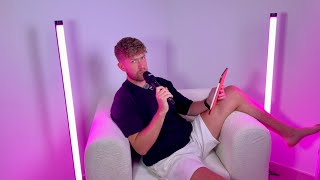
Yo. So back with episode, I think 106 of the pod. Apologies. I have got sinusitis but I've not filmed a video in a while. So basically I sound a bit blocked up. I'm on a shitload of antibiotics, felt terrible all week. I also just ate about 900 calories worth of crisps, which you didn't need to know, but feel a bit fucking full and puffy. And this is the new setup in my new gaff. It's basically the ultimate office slash podcast studio, slash like mail den of any sort really. But I'm gonna get straight into it. Doing a Q and A. I haven't done a Q A in a while. Don't I give. These questions are. But I got asked them on Instagram and Twitter. These are some of them I screenshotted and remembered to save at the time because obviously it only stays there for like 24 hours. So yeah, we'll go through these. I really should have picked the best ones, but fuck it. Let me just go through some quick. If you had a six pound product and could only sell it online, how would you do it profitably? The short answer is I probably wouldn't, to be honest. Or I'd do it. TikTok shop or Amazon. Next question. If you'd be on ground zero and scale again, how would you do that? Basically, if you went back to the start, how would you scale? Someone asked me this yesterday, like some Shopify event. Probably broadly, I'd go all in on founder content on TikTok Twitter, probably less so YouTube. But certainly TikTok Twitter probably reels. I would make sure I'm first order profitable initially through organic and then I would go probably at the same time go aggressively into scaling paid acquisition. Because without that, I think even if you're relying on organic, I don't think it's great. For me, this T shirt makes me look fast. Fuck. So yeah, I do that. BMX revenue versus profitability. A brand's doing 1 million. Brands that are doing 1 million, 10 million to a million 10 1. Our brands that are doing 1 million, 10,000,000 or 20 million. Some of these questions are written like people didn't go to school generating a profit. I guess ultimately most of them probably are, but I think it's probably less than you think in most cases. I think, you know, 10% EBITDA is pretty typical in E commerce and that's actually kind of pretty good at scale. I also think a lot of brands, when they, they think they're making more than they actually are, or at least they say they're making more than actually you factor in, you know, VAT, actual team overheads, etc. Etc. 10 to 15% is very quite typical on the bottom line. EBITDA basis where you currently based and why? Gonna skip that question. Best places to network in Bali and honest opinions on scaling business there. I would say Bali is the single best place to go if you're like just getting started. Because I say it's cheap. It's not as cheap now. It's relatively cheap. It's fucking sick vibes. It's very like opposite of UK or Western world, which I think is good if you want to like break the mold of being in the Matrix and all that shit. And yeah. Best places to network in Bali, I probably just go to Canggu Perona and live around there. Go to like Omni or Wrong gym or something. I think it's a great place to start. I don't think it's the best place to like properly scale long term. Having said that, I do know people that run legit big businesses and make a lot of money that do live there, but most of them tend to either then move to Dubai or back to Europe or America or something. Okay. I think my view on Bali broadly is it's the best place to go when you're just getting started. And that doesn't necessarily mean your age, although typically it's probably early to mid-20s or in your 20s in general. There's obviously exceptions, but I mean, just getting started, first time being a founder in E Comm and you don't have a great network, I think it's good for that. Should you prioritize growing profitably or quickly if you want to have a big exit? I mean, I've not had a big exit. I know a lot of people that have and I have advisors and investors that definitely have. It's an interesting question. I think I will say to get a big exit. And again, I caveat all this stuff with. I'm synthesizing information from people much smarter and more successful than me. So don't just think, oh, this guy knows nothing. I'm just, you know, I'm basically relaying the advice they've given me. Yeah. So we need to stop caveating that. But that is, you know, that is where I get my opinions from on a lot of things. Obviously read about it as well and speak to people like investment bankers and stuff. Should you prioritize growing profitably or quickly? I think the outcome you need is you need to be Big and profitable and having grown quick and be a fast growing brand to get a big exit. Obviously the different versions of that. But I think you can be unprofitable if you're very big and growing quick. But you can't be not growing quick and be big and unprofitable, if that makes sense. So you need at least two of them at all times. So profitable, growing very big, you need at least two. Ideally three is where you get the big exit from. I'm paraphrasing, but I want to go through these quite quick. How to be content with where you are on the journey, not comparing yourself to others. You're asking the wrong person, because I'm probably not that content. I have a massive tendency to grass as greener, et cetera. I'm trying to get there because I've learned myself. I know myself more now, but comparing myself to others, Fuck, I'm so bad at this. And maybe there's a whole podcast on this with the people I compare myself to. I've literally got a mate in mind that I'm seeing later that I compare myself a lot too, because his numbers are better than mine and he's doing very well. Did you pay yourself? But I think it's kind of inevitable. Did you pay yourself during the early stages of the brand or did you keep everything in the biz? I literally. This is not an exaggeration, but I'll caveat in a second with some nuance. I didn't take a penny out of space because for the first 18 months, maybe two years, probably should have done, because it's like not a fair P and L if you don't pay stuff at all. But the reality is, yeah, I had, you know, some liquidity and I had income from like the podcast. It wasn't like massive, so I wasn't making that much money for like the first 18 months. But I did have savings and some income elsewhere. I think the reality is though, one, you shouldn't take money out the business personally unless it's well funded or profitable enough to cover that comfortably without affecting growth, at least in the first few few years. And secondly, if you can't afford to do that, you should get to the point where you can afford to do it because you've either got a job and you're doing the business on the side or you've got enough savings and liquidity, which is probably like at least a year's worth of costs, ideally more. I'd say that enables you to not have to pay yourself. Right? That's just the harsh reality. And if you don't come for money, and I definitely don't and most people don't, but a lot of founders do. Not a lot, but you know what I mean, Then it's harder for you, right, how much, when and how much you want to exit space goods for? I mean, how long is a piece of string? It's funny because people ask me this, but when? Probably next three to four years. Broadly from now, I'd say how much? I mean my investors want us to exit for like 250 million plus. Sounds like a ridiculous number when you say that, but I see a path to that. It's definitely not easy, but that is the number we have in mind broadly, internally, ideally even more. Right. I mean, but yeah, what do I know? Not done it yet. Assuming an exit, do you see your future self starting another brand or investing type role? Yeah, I reckon I would start another brand. I would just probably do it with a lot more learnings. Right. Like I've learned a fuckload in the first three and a bit years of this. Like a fuckload. You don't really realize until you look back. Like I wrote an Apple notes the other week or like what have I learned mainly and what would I do differently as a result of those learnings? And it's a long thing and I feel like I'm in this weird position where I give, I feel like I can give great advice and I do give advice to people that I meet or do a call with or whatever. Even just like my mates that, you know, we exchange notes on certain things. And I feel like my advice giving skills are better than, are more developed than how they reflect my own business, if that makes sense. So feel like I'm almost not that good at taking my own advice sometimes. But also there's the whole thing around like people give better advice than the things they do themselves. But yeah, definitely start another brand. I'll just do it differently. And yeah, we can get into that another time. If you have a dropshipping brand, at what stage would you get inventory? I think when you know that it's like steady and you're going to be on that for a few years. I think other than that there's probably no point. And even then I think that's debatable. Again, I'm going through all these questions pretty quick. Going all in versus work life balance. That's a silly question. I genuinely do not think you can have work life balance when you're starting anything. If you want to do it properly I think that's genuinely a luxury that comes later and people that you know, reference oh Steve, I don't know. Jeff Bezos has work life balance, he only works seven hours a day. Stuff like that comes out and yes maybe when they got to the billion dollar stage or the big stage whatever that is relative to you but definitely not the start. And if you don't want to compare your early days to someone's late established post success days. Yeah I think that you still need like some not balance but like some time away from the screen. I think it's net negative not to but it's not a balance. I think it's impossible to have balance in any area of life if you want to exceed like like in the 0.1% which by the way anyone that's building like a multi million pound brand is in the 0.1% economically in terms of the amount of businesses that started generally. Obviously we don't want to compare ourselves to the average Joe blogs right. But just objectively that is true. So yeah it comes with the territory. Do you ever get shiny object syndrome and want to start a different business model? Yeah, all the time. It's probably because I'm ADHD as fuck and I'm a founder and that's the reality but shiny object syndrome very rarely is very rarely something to act on. I think it's a natural human tendencies to compare yourself to others highlight real and oh they've got a better model or you know I wish I was an info because there's no product costs or if I ran an agency like you know, XYZ or if I did this different category in a different country like my cat could be lower the but the only way to get good at anything and compound is to focus and honestly I've probably not even focused enough in my own business in many ways but yeah, definitely focus. Don't get shy on your object syndrome. Take references from other people. Of course I'm not saying like everything's but yeah, what good events you recommend? Honestly probably not many. I think meet people on Twitter and go to Bali. How do you travel with that studio display? I don't know. Don't know where this has come from. I have two studio displays, one in the office, one at home. I've never traveled with a studio display ever. Or you buy a new one every place you travel to? No, I don't buy a new one. I just have one in the office and I have one at home. So I have two of them. When it came to selecting your supplier. That's a shit question. When's the space goods clean? Clean girl merch drop? I don't know what that means. How to innovate in niche functional drinks. It's an interesting question. I don't want to give too much away. I think basically everything is crowded and being crowded doesn't mean it's crowded. You can create newness in many, many ways. That's all I'll say on that. How do you make retail margins work when they take a big cut and charge big promo fees? Well, how do you make any margins work? You do the math, right? I think it helps to have. I think the potential success in any consumer business starts with the gross margin. Like what is. Well, you know, GP1, GP2 kind of different things, right? GP1 being your product margin in isolation. GPT or you know, CM1, CM2, same thing. People call it different in the piano, but like basically your product margin in isolation and. Or your product margin including shipping. Right. Like your gross margin. That's where it all starts. Without those numbers being high and ideally like CM1 being, I would say 80% plus, CM2 net of shipping, final mile transaction being ideally 60% plus, you can get away with 50, but ideally 60% plus, then it's probably going to be hard. Retailers will squeeze you. But I think being a D2C first business helps that because you generally have margins built for D2C that actually can work quite well in retail. When you remove the cac, that's a whole other thing. I've learned a lot about retail, but yeah, it starts with your product margin and if your product margin is not great, it's going to be hard. What are your thoughts about Paraguay? I've never been. No idea. What amount of capital would you recommend to start a brand in 2025? Quite a good question. I think irrespective if it's drop shipping or holding stock or something in between, I think you can start a brand for like a few grand. But I think if you want to be comfortable and like have enough buffer to at least make some mistakes and not fucking go bankrupt, probably like 30k. I think it's like a good starting point. I don't think you can get that far on a lot of brands with just that. But it's enough to get started. If you're good with AI and Shopify and ChatGPT, do you focus on chasing? I don't know what that says. I use AI lows but he didn't finish the question. Next one. Are you Taking Adderall lvans. I noticed on one of your vlogs when you had a phone call, this guy DM'd me this as well. I don't take Adderall. I don't know what lbans is. I have taken medication for ADHD in the past. Yeah, that's all I say on that. Does Adderall make you more locked in? Adderall lvans? I'm assuming that's the brand name. I've genuinely never taken Adderall in my life. I probably sound like I need it based on this video, but yeah, nothing much but I have in the past. Has your passion for space goods faded over time? Do you now just see it as an exit opportunity? No, I don't just see it as an exit opportunity at all. But I think I'd be lying if I said like the honeymoon period is starting. Any new thing doesn't phase so it doesn't fade over time. I think that's natural for anything, whether it's a relationship or starting a business. Right. It definitely feels less romantic and more like commercial and clinical these days, but that's how it should be. And there is definitely pressure to not just go for an exit, but to win the category and build a great, great business and brand and products, which I want to do. And that's the most important thing first because then any future outcome financially will be as a result of that. If bootstrapping. Is there a certain cash in bank goal before hiring one full time employee? I don't know, like you're asking me like I'm an expert. I think pretty less cash in bank, more just again, like to the previous point around paying yourself, can you pay them comfortably without any detriment to the business's ability to buy stock and grow? Right. I think like realistically, fte talking employee, I probably wouldn't be hiring an employee until you're doing at least 100 grand a month efficiently, at least as in like revenue. So I mean, I'm just paraphrasing, that's not a black and white rule. But I think employees come with costs and ultimately like risks and legal stuff that freelancers and agencies don't. I think you can get more out of them potentially if they're the right ones. But yeah, something to bear in mind. How do you run your team? What order did you hire in culture? I've done videos on this before, so I'm going to skip that. How did you build a circle of econ mates? This question from the same guy so early On I've made so many videos on this. Fuck me. I do have a great circle, honestly. Just going to Bali and meeting people and then meeting more people and then not being a horrible cunt. And then I met most people I know before I was ever on like Twitter or YouTube and then the Twitter and YouTube I guess. But again, being authentic and also having a story and having some proof of like some skill set and a story more importantly then like help that be a bit of a thing. Obviously I'm not that a big audience or anything, but it's quite high quality, like passionate niche audience and quite deep audience. So yeah, I'd say physically meet people, build something that becomes relatively impressive to like, I guess meet people at the next level and network and so on. And also just be authentic, be a decent person and put yourself out there on channels. If you don't put yourself out there, people don't know who you are. What do you think about low al the consumer brands like Purdy and Fig? Well, I think Purdy and Figs are fucking amazing business. I was on a Wayflyer podcast in a London pub last week with Jack Rubin, the founder who I've known for a few years. He came on the pod, on my pod when they were doing like 3 million. They're now doing. Don't know if it's public. So like multi, multi eight figures. So it's done very well. Skill set versus mindset. I'm not going to do all these because I have to go out relatively soon and people get bored of these videos. Skill set versus mindset. When hiring, what balance you look for and what questions to ask. I mean, I've learned a shitload of hiring. I've made many mistakes, made some good decisions and learned a lot and everything in between. I think the skill set has to be given, but the mindset and cultural fit is the harder thing to vet for in a hiring process. But also without that, the skill set in itself will never work long term. So yeah, I think that's probably like the best way of describing it. I think you have to be honest about what culture you're wanting to set and how you operate as a founder and where I've got hires wrong or, or have experienced friction, maybe even now is on reflection when I wasn't honest enough about that and I didn't put enough pressure on that. Obviously not saying everyone has to be the same, but you do have to stress test like, is this person gonna operate in a way that, you know, net aligns with my way of Doing things and how the business does things. And also like our expectations around subjective things such as like, are they going to work outside typical hours? Are they willing to, you know, be online on a weekend if needed? I'm not saying all the time because can't expect that from everyone. But yeah, I think that stuff's important. The state of Ecom for newbies, especially those with no budget. I always thought like a bit of a lie that it was like getting way harder and it's impossible to start now. But I still hear of people starting with like no money and it's still able to drop ship and make money and be successful. So I think like most things in life, it's probably a skill issue. I guess the issue with ecom, like most things, but particularly Ecom, where there is risk and like cash on ads and stock at the start more than ever as well and more risk at the start is you do need to kind of pay to play and you build that those skills from being in the game. And if you can't get in the game, you can't learn from the game. So I think it's hard. I think that's why a lot of people turn to running agencies. There's like 10 agencies to every like legit brand founder, if not more because it is objectively easier. And I might offend people saying that, but it's a fucking fact. How to bring in support as an early stage founder without heaps of cash to pay a day. Right? Yeah, don't pay day rate. Day rates are scams. I think it's the most expensive way to hire and work with anyone. I say a scam, it's a scam for an early stage business. I think the best thing you can do is find hustlers on Twitter, something like that, honestly. That's the whole thing though, honestly the reality prior to that is probably just do it yourself. If you can't do it yourself, you might not be skilled enough to start that business. To be quite honest, and that sounds brutal, but it's true. Or find a co founder that is. And ultimately you're paying with equity at that point. But that is probably better if you don't have the skills. From 0 to 1 million direct response versus branding, 100 million percent direct response. I think you need to have a decent positioning and like brand identity, which isn't branding, but it is like the first chapter of branding, if you will. Spoke about this last night with someone. I think far too many brands get obsessed with like organic content and looking all cool I think that has a place, but without performance marketing and building a repeatable acquisition machine, I think that stuff will be short lived, vulnerable to algorithm changes and honestly just probably cap out at about a million per year. Obviously there's, it's not a hard and fast rule, but that's been my experience. And that's not just me, that's a lot of other people I spoke to. So yeah, I think you need to have a decent product and positioning and stuff. But at the end of the day, a brand that looks bad and scales efficiently through performance marketing is better than one that looks great and can't scale. And then I think you can go deeper on branding later on, which we're only really starting to do now, which some people might not agree with. But like, I mean like really invest in brand marketing. Top three things needed to succeed in E Comm in 2025. First thing is being in the right category. I'm not going to go into how you identify that, but category is more important than execution, at least as a foundational thing. Assuming you're getting the basic hygiene factors right, which a lot of people don't, but assuming you are. Secondly unit economics and you know, that's everything like your gross margin, your aov, how much CAC can you afford to pay for a customer, your ltv, all this stuff. Having those things checked in and having the ability to basically spend more on a customer is definitely helpful. And then third, I think. Either being a very competent founder at a lot of things or bringing in the right people, especially on the boring stuff like operations and finance that no one wants to talk about to her. Do you think it's possible to date while being in the trenches as an econ founder? Yes. If you have no game you will get no girls. But like you should like yeah, of course. I mean I was always in the trenches and. But I was always meeting nice girls at the same time. Like all the time when I was scaling. Not all, you know, not every week. I mean there were periods but. And this is like years ago, you know, paraphrasing a bit, but I used to be a bit of a. I used to go on dates, put it that way. So I think if you can't do that, then what the fuck are you doing with your life? I also think like basic social skills and like skills with women and stuff, especially when you're younger, like hustling is fucking important and a lot of that like carries over into business. And I think if you are staring at your screen all day but you can never meet a girl in real life even if you're busy then that's not going to end very well. So yeah, you definitely can just prioritize your time and you know, make sacrifices I guess. Have to find a brand idea. I mean, come on. I'm not going to answer that. Is space goods made in the UK or is it better to be made in eu? Spacegoods is made in the UK currently. That's all I'll say on that. When launching a subscription brand, how soon did you put someone in charge of attention? That's quite a good question. Not soon enough is the honest answer. It was about two and a bit years in until we hired someone specifically for retention. A retention manager in fact. Yeah, like two and a half years in. Crazy. Any wreck for media buying and create production. DM me on that. Anything on maintaining good output and culture from team while being hybrid or remote? Yeah, that, that's a good question. I think like again, how long's piece of string? I think you could. I think it comes down to hiring the right people, being clear on expectations and knowing what to track and what not to track. Yeah, I think. And it also has to come from the founder initially. Whether you like it or not, you will set the tone. And I think if you're fully remote it's very important to have or even just hybrid. But like if you're remote at all, right it's important to have obviously clear KPIs for everyone in the team, clear expectations around like communication day to day, whether that's slack calls, whatever. I think at the bare minimum have a weekly all hands meeting where almost everyone has to speak or present something. So there's accountability that you know, I guess this question comes from like there's probably a concern that if you're remote like could people just not work and yeah they could technically but you should be managing them properly. Right. And I think it should be pretty obvious if you've got that issue in your team. So yeah, set the tone track stuff, it should be all good. But again like the whole office versus remote versus hybrid. That is a infamous debate and one that I've had the piss taken out of me in my group chats for like just bringing up far too often. I personally think hybrid is the is the best option but hybrid is basically in office because if you're hybrid and you're expecting people to be in an office then you basically lose all the benefits. All the biggest benefits of being fully remote which is the ability to hire a team globally and not have to commute anywhere. So, like, if you're Hybrid, you're basically just hiring in the same circumference that you might source people to be in an office job and if anything, maybe expect them to commute a bit further because they're only doing it, say, twice a week, which might be net negative overall, anyway. So, yeah, hybrid's an interesting one, but ultimately Hybrid is basically in office with lax expectations around, like, efficiency in the office. So, yeah, that's a whole debate, but that's for another time. And anyway, I don't want to go on too long. There are a few questions. There's probably loads more interesting ones that I, you know, some of the best ones I feel like I skipped. I just don't want to speak about them publicly or give too much away because I do have other shareholders and I'm quite conscious of that these days and also quite a big team now that I'm also conscious some of them watch this. Not there's anything bad in there, but I have to be careful how much detail I go into right these days. So, yeah, hope that was remotely useful. Apologies, I was blocked up on this episode. I don't know how bad it sounds, but as always, subscribe to the pod. More coming still in. Talks about potentially bringing back the actual pod with guests and potentially also like multi guests. I think it's quite an interesting format in that, which I've played around with a bit I haven't released. And yeah, subscribe to the pod and I'll catch you in a bit. Cheers for watching. Peace.









