He Built the UK's Fastest-Growing Jewellery Brand. This Is What He Got Wrong | Jack Zambakides
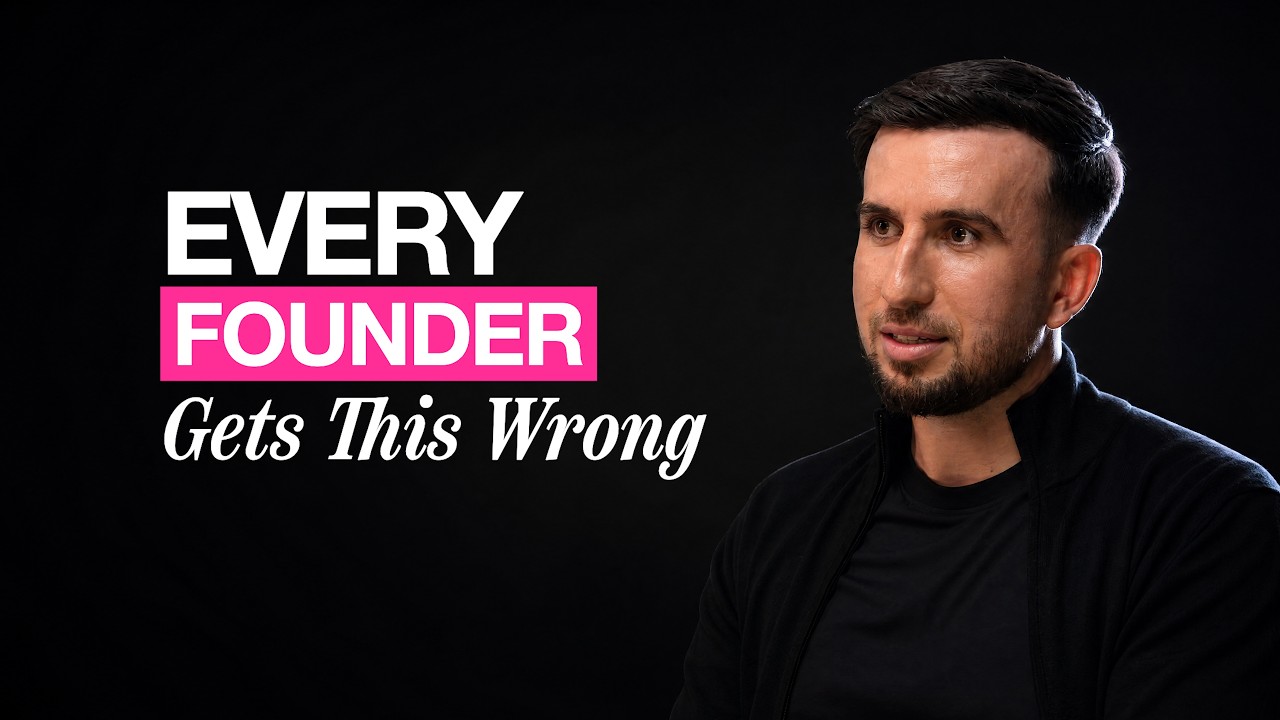
Jack Zambakides built the UK's fastest-growing jewellery e-commerce brand and learned founders should pay themselves more, not less. He rejects the hustle culture that keeps UK founder salaries low, now prioritizing dividends and personal liquidity over chasing a big exit.
Chapters
Biggest single lesson from scaling the brand?
I think it's pay more. Just pay yourself more as a founder. I think you— I've definitely built the business with the mindset of the business is more important than myself, in the sense of, you know, this like mindset of yes, you might need at the beginning, but oh, I'm not the highest paid employee in this business, or yeah, I only pay myself 50 grand a year because anything more than that, I lose half. Like, I think that is a bit of a false fallacy which is pushed too hard into founders. Like, I probably at the age of like 27, 28 could have had like full financial security just through distributions, and I didn't. And I probably think that's naive. I think that's— I, I, if I was going to give advice—
It comes from a UK mindset.
100%.
I think that's scarcity mindset, kind of tall poppy syndrome.
I think that's exactly what it is. I think that like when I speak to investors, they— or like people Investors who've built, you know, they're not using their own capital or they haven't raised, they haven't made that money themselves, they're of that like, yeah, that's the great, we want a founder who's hustling and do stuff like that. But when I speak to entrepreneurs who've made their own money and then invest into founders, they all like say, I don't have a problem with the founder paying themselves a huge salary or taking off secondary or securing themselves financially. And I think if you can secure yourself financially, my lifestyle won't change. Well, it hasn't changed, but I can just— you can afford to roll the dice more. If you keep all of your equity or all of your— if you look at your personal balance sheet and your company balance sheet, my personal balance sheet was like, okay, my company balance sheet was healthy. It's sort of like, well, for what?
What shape of business do you want to build?
You go through different stages of your journey where it's probably like— I ran the maths, and I'm sure if you did this, it would make you feel even worse. Because it's like, how much money have I turned over? You know, you get to like your late 20s, you're like, how much money have I actually turned over in e-com? And you do all the maths and you're like, like tens of millions of pounds. Then you, then you look at your own, like, how much financial security have I given myself in this period? And you're probably like, I think about this a lot, probably not enough. Um, so I, I like, and I think you only start having those realizations— obviously you develop so many skills, like you build thick skin, which is what like which can— you can have for the rest of your life, all of those things. But I definitely hadn't prioritized my own, like, financial liquidity as much, and it wasn't a priority. Like, you know, once you've got enough money to do what you want and live what you want and drive a car or whatever, you're fine. But I'm definitely in a period now where I think, like, secure myself because, you know, I just got married. You start thinking about kids, like, make sure, okay, let's not, like, just absolutely try go for the moon. Probably secure myself a bit more. and then go for the moon. Um, it's probably, probably my current approach.
But how does that look for you then? Just make more profit, pull out more money? Or is it like try and get an investor in, sell a bit of the business?
Yeah, for us at the minute, it is a dividend-first approach is how we're— what we're currently doing. So now it is just, yeah, probably having more of a profit-first and a dividend-first approach. Whether that'll be forever, probably not, but it just means that we don't have to go have a take on investors and have a liquidity event yet. Give us control.
Do you see yourself running it for like 10 years?
Yeah.
It's like a lifestyle. You do?
Yeah. I don't know if I— I don't think I'm probably the same journey from you. I can learn a lot from, but I don't think I'm the best CEO for the business. I think if we got another 10 people, I'm necessarily— it's not what I enjoy so much. Like, I enjoy being the founder and driving growth. And I'd like— I still would love to be able to make the decisions, but I don't think being the one who's like, you know, out there leading the team and having like one-to-ones on my— I don't like one-to-ones. I don't really have one-to-ones.
Yeah.
Like, just text me or call me, or like, if I've got a problem, I'll call you, I'll huddle you, or what, call your phone. But I'm not the type of person to have like a real structured management framework, and these are my— that just isn't me as a founder. So then you sometimes think, okay, well, maybe I can plug someone in there. I know that's not that simple. I think the best approach for me would be to build out a strong sort of like leadership team and then probably promote one of them into that position. Um, probably feels like the right move, but we'll see.
Do you think you are motivated by money to the same level as before?
Uh, no, I think I'm definitely motivated by progress. I find it very difficult— I would find it very difficult if the business didn't grow or didn't go in a direction where it felt like we're moving, even just progress. Because I think if you're working so hard at something and committing to it, if you weren't seeing growth— like, fortunately, you know, our top and bottom line have grown every single year. So if you sort of model that out over a long enough time horizon, you think, okay, we'll be in a good position. I think I would find it very hard if the— I'm not the sort of person to like, oh yeah, let's just keep it as it is, I like it how it is. Like, let's just— You know, some founders are like, I just like the business this size. If we grow, we grow. If not, I'm happy here. That's not sort of me as a person. Um, I'd always want to put my foot on the gas.
You said in 2022— I've got a good quote from you.
I hope it is.
I get more pleasure from the coffee shop near my flat knowing my name. That beats going to Nobu with a bunch of pricks.
Still true.
Did you actually say that? I don't recall.
I don't remember saying that. I don't even think that sounds like me, but that's still true. Like, I don't know about you, but You know, I brought my laptop. My laptop comes with me everywhere.
Yeah.
And like, I don't mind, like tomorrow, a Saturday or Sunday, I'll just sit, I'll enjoy having a coffee shop, working on building— I'm building something with AI at the minute that is like, doesn't require, uh, like, you know, the lifestyle you want to— I want to live doesn't require, you know, bundles. And, you know, I don't need a £50 million exit. Um, so it's sort of like once you have that enough personal liquidity Then what?
Like, are you shooting for an exit at all?
No.
Would you rather just keep running it for fun and just make enough money?
Yeah. I think building an environment of, you know, what we were talking about earlier, if you can find a people of like a team who you actually enjoy working with, you know, whether you're working on this business or, or another business, you're in this, you're gonna have the same problems. I think there is definitely a case of some founders are massively passionate about the product and the category. I haven't found myself that passionate about another category or another product. So I think I'd probably just fall into the exact same position I'm in now. And then I think naturally over time you learn that the best businesses do just take like a decade or 2 to get to a good level. There are obviously exceptions and there probably will continue to be exceptions. But, you know, typically, like I'm sure, you know, being in the e-com space, we know— I know people who've gone from like 0 to 8 figures back to next to nothing pretty quick. Um, like, what goes up—
I did that.
Yeah, what goes up must come down. Like, the rate you go up can also mean the rate you come down.
Thanks so much for watching. If you get any value from this, please click somewhere on this video to subscribe, and please do drop a like and comment below. It helps more than you could know. I'm finally seriously trying to grow the pod for the first time in about 5 years. Any feedback on anything that you like, don't like, any suggestions or thoughts going forward, please do also drop a comment. Massively helps too. And share this with a friend. Really appreciate you guys watching and engaging. We'll see you next week.









