Imposter Syndrome, Networking, Best Advice, Financial Goals, Am I Happy? Q&A - Doc the Journey Ep 58
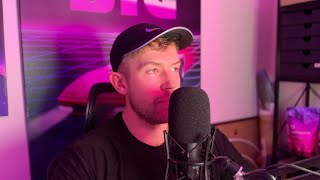
A 31-minute Q&A episode (Doc the Journey Ep 58) where Matthew Kelly answers over 100 audience questions about entrepreneurship, personal branding, building Space Goods (a DTC supplement brand), scaling challenges, mental health, networking, and product/marketing strategies. He shares candid lessons on imposter syndrome, retail strategy, hiring priorities, supply-chain issues, goals for growth (including aiming for a £100M brand), and personal reflections on happiness and past failures.
Questions this video answers
Episode 58.
About 31 minutes.
Over 100 questions.
Seven full-time employees (plus agencies).
Approximately 4.2 out of 5.
Chapters
Back with episode 58 of Doc the Journey. And I'm gonna do the Q and A that I meant to do, like a week and a half ago. I got well over 100 questions, which may not sound like a lot, but it's quite a lot when I'm some niche guy talking about building a brand on the Internet in 2024. Dog is making way too much noise. So I'm just gonna read them off and churn through the best ones. Hopefully I don't get bored of doing them. And, yeah, first question. How do you cope with imposter syndrome? For me, that's always there. Probably even more. I think the best way to deal with it is just fucking get better at what you're doing. That's my view. And then you'll gradually realize that the people you looked up to are probably no smart or even better than you, and you actually might even chase them and end up being on their level or actually beyond them. And that's a nice position to be in. It gives you confidence and so on and so on. But I think ultimately for a lot of entrepreneurs and people that want to achieve big things, it's always going to be there, but know that it's not. But built on reality, it's built kind of just in your head and your perceptions. So, yeah, I would say that I'm gonna try and keep these questions quite, quite choppy as well, so I don't dwell on the ideas too much. What is your Instagram strategy? Boring question. Would you mind checking your DMs? Boring question. How did you get so many people to share selfies with their reviews? Honestly, no. Strategy. People just do it. Although I guess the only strategy I thought I had one in front of me is we have an insert in the packaging which says share a selfie. So that helps. When you're sending out like 500 of those every day, you get a decent amount sharing. To be honest, we should probably get in way more. So maybe the strategy isn't working, but that's how we've done it. And I think it's quite a shareable product aesthetically. So, yeah, that. How is retail going? Tips for young players in that area. Well, we're only in Holland about right now. They came to me organically. I think ultimately you build awareness with retailers by running ads and being a DTC brand first, which we are. Obviously. We're going into a lot of other retailers this year. It's not the priority. It's not. It's not even that high on the list. In terms of things, I want to grow this year, but it is growing. I think it's smart to be somewhat multi channel, omnichannel, whatever you want to call it. Tips for young players in the area. I don't know, I think have a good product, one that stands out, one that has margin enough for retail because they will squeeze you. And yeah, I'm not an expert on retail at all. In fact, I really don't know what the fuck I'm talking about retail. But it seems to be going quite well. What have you learned you want to pass on to others? Oh, geez. I mean a lot of things. I think maybe one that has come to mind recently is a general rule of thumb. If someone on the Internet is talking or flexing about how rich they are and how successful they are, then they're not successful. That's just kind of black and white how it goes. People that are truly successful have built legitimate businesses, legitimate careers are respected for doing legitimate things almost without fail. Don't go around telling people how great they are. There's a lot of that in money. Twitter. I think you need to realize that literally 99% of that is complete bollocks and made up. And yeah, I think you learn as you're in the industry or just in the world a bit longer that that is without fail true. And I think that's a very, very powerful bit of advice that I would give to younger people wanting to start brands and comparing themselves to others and so on and so on. And is that almost everything is bullshit. And if people are talking about being successful and rich all the time, then they're probably not. So there you go. What are my aspirations and plans? It's 2024, I think watch the previous video, episode 57 spoke specifically about that. So yeah, that covers that. Please talk about ways which you've networked and found others to work with when you were starting again. I've spoke about this. Probably the most common question I've ever had off the back of the pod. And I think the answer is go and watch all the other pods. But I'll give you something more than that. If you haven't gone got time to watch those, you can't be asked right now. Go to Bali. Go where lots of digital nomads and kind of up and coming early entrepreneurs are. And I think just start meeting people. I didn't know any founders at all when I was like 21. When I first started being a founder. I literally went to got a one way economy ticket to Singapore Went to some E Commerce event and that kind of basically changed the course of my life without sounding too dramatic. And it makes me feel very, very old that that was nearly seven years ago, which is absolutely wild. But yeah, I'd recommend doing that because you need to get out of your hometown and get away from people that you're kind of just friends through circumstance with if you're struggling to network people. So I say that. Where do you see space goods at the end of the year versus start of this year? I mean, again, go watch the previous video. I don't want to speak too much about myself in this episode. Where do you want to be by the end of the same fucking question? At what age did business things start to make sense? I think that's a pretty good question. I got into entrepreneurship when I was like 19. I became a full time entrepreneur when I was 21. So I guess to some extent when I was about 21, 22 was when I started making enough money to not have to have a job and left uni and so on. But I still feel like a beginner and I think I always will and I'm always learning and I think that's the right mindset. But it's genuinely how I feel as well. I'm in the process of scaling a new DTC supplement brand. Where's the question? I cut it off. Oh yeah, I'm in the process of getting a new DC supplement brand. Where can I find a mentor? I think it's really fucking hard. I think putting content out and putting something out about yourself on the Internet helps with that. Because people don't know who you are and what you're doing or where you are, etc. Then how could they possibly have any context on you and maybe be interested in speaking to you? And yeah, I guess I've kind of been good at maybe attracting mentors to some extent, but it's always come from a place of just being genuine, sharing my background, my struggles, probably more relevantly, and then just having a fucking drink with them and being a good bloke. Because yeah, I think no one's gonna want to mentor you or help you with shit if you're just really. I don't know if you're in this mindset of networking, being like this tool. I think just be yourself and speak to people and meet people and get out and about and yeah, has to happen organically. It's kind of like good dating. If it's too forced or clinical, then just doesn't work. It doesn't feel good. So that's probably pretty fluffy advice. But yeah, there you go. What's the figure you're gonna exit spacegoods for? No idea. That's the honest answer. But I definitely think I'm in the mindset building to sell it one day. That's why I will say I know a lot of founders say they don't want to do that, but that is the approach I'm taking with this business. It's the reason I've done certain things in the past month or so which I'll speak about in more detail very soon, which I think is a very interesting topic and debate, by the way. So I'll go into that in more detail. How did you start to build a personal brand first? I never intended to build a personal brand. I still don't believe I have a brand. I think most personal brands, to be completely honest, particularly on LinkedIn, are absolutely virtue signaling bullshit from people that probably cry themselves to sleep but spend all day on LinkedIn writing posts about how amazing their business is when actually that's just not reality for 99.9% of people, including the successful ones. So I guess ironically I started to build a personal brand by my first ever bit of content, proper bit of content on the Internet. My first ever podcast episode, which you can go back and watch if you haven't seen it, which was me talking about how much a failure I was basically in my previous business going tits up. I think people really appreciate and respected that authenticity and then they've seen me build back up, I guess again with this brand. So yeah, I think it's still quite unusual to be honest on the Internet, particularly around your failures and entrepreneurship. And I think it's probably actually good to have more of it because it's the only thing that leads to success long term in my view. And all the Twitter guys will have you believe that they've never fucked up anything and they're absolutely flawless when they again probably cried themselves to sleep. So I think I built a personal brand to some extent by just being myself and being authentic, I think. Which is hard to do cause it's tempting to try and gloss over everything, but I just don't think that's the way to go this day and age. Best first for three time Highest recon brand I think the first one objectively has to be customer service operations. I think that person could be the same person to start with that was the same person for me, Flo, who's still in the business. Florian, if you're watching Best hire because he was the first one in. So, yeah, I would say customer service operations. Next one I would say. I mean, you said full time, but I would say media buying of some sort. And then the next one I would say a content manager slash curator. And by that I mean someone that is responsible for either generating or working with or sourcing UGC performance, content, etc. Because I think it's the most important thing in media buying these days. This is assuming that you as the founder have built a great product and website and so on, because you can't polish a turd and none of those things will work without that. But once you have that customer service ops, media buying of some sort and content for sure. Best way to win in everything. Well, I haven't done that, so I won't answer that. How has AI impacted how you operate? Not at all, to be honest. Maybe I'm really behind on all that. I've been on ChatGPT almost precisely one time. Maybe I'm really ignorant. I just don't think it's that relevant to what I'm working on right now. Arguably I could automate some stuff with it and maybe I need to sit down and read a big resource to start following a YouTuber that's an expert on that. But I just. That is how that hasn't been the case for me recently. So, yeah, I'm not doing much with it. If you were starting from scratch in 2024, would you still be building in the same space? Good, very good. Um, it's easy to say I would, but I think factors that have changed since I had the first idea like two years ago, right at the start of 2022, end of 21, start 22, which is flown by. There's way more competition now. There's probably other areas slash trends that I would jump on. In fact, if I had to name like five trends, I think in general in the supplement space or kind of wellness space, I would say things that I'm observing are mushrooms, greens, powders of some sort. Creatine is an interesting one. Hydration stuff and gut stuff. I think those kind of five areas. So probably one of them. I think mushrooms, functional beverages are more close to me because I use them religiously myself. But yeah, I'd like to think I do similar. I think it'd be way harder, arguably, because it's definitely more competitive. Does space goods make you more creative, as in the product? Yes, of course. Running the business, arguably not. Because the irony is you start a brand and you kind of do all the creative shit like making a 1980s movie based on Stranger Things with the beautiful girl and have your products and write a fucking voiceover and shit. And then two years in you spent 80% of your time looking at documents and spreadsheets and financial stuff. But that's the reality and it's the price you pay if you want to be a founder is that it's way more fun probably to be a designer working for someone some other founder. But I could never do that. So yeah, that was two parts to that question. Fuck. A lot of questions to get through here. I'm just doing most the ones that look relatively decent. When were you happiest, most fulfilled in business life, honestly? And maybe it's rose tinted glasses and it probably is because almost everything is in hindsight I would say like 2018 living in Bali when I guess just naturally at age 22 at the time everything feels, I don't know, fuck, almost get emotional thinking about it. Everything by default feels less heavy and you have less responsibilities. Mean arguably I've got no more now but I guess you're thinking about the long term. Bit less. I was kind of just winging it and enjoying living that kind of nomadic free lifestyle for the first time and realizing that I didn't have to get a proper job, I guess. And the excitement of that was still so high because I hadn't done it for that long yet. And you can never get that early excitement of something working for the first time back. And it's such like a beautiful sadness. There's like this phrase called mono nowhere. I think it's a Japanese phrase. One of those things I always think about getting a tattoo of but still haven't pulled the trigger. And it's like the beautiful sadness of the passing of time and the. I don't know the exact definition, but it's kind of beautiful. The beautiful sadness of the passing of time and like the painful awareness that everything is temporary and nothing is permanent. Even the most great and beautiful things in life like. Like the first time having that freedom and yeah, fuck, I feel that a lot. I feel. I really connect with that sort of vibe and makes that and pink lights and like romantic synth music is just a feeling. So yeah, I probably say then to be honest, if you were to start a new brand, what product niche would you pick? One of the ones I just mentioned. I think hydration is interesting. I think all the brands in the space are very boring. Guts been overdone. There's too much money with brands like Zoe that I think would be very hard to compete with. I mean ultimately I think anything can be improved. I don't believe in crowded markets personally because that's always an angle if you can execute better or do something different or apply a new angle to it. But yeah, I would do something I suppose I'm thinking about just supplements but I would do something in the supplement consumable space for sure or something in beauty but it's less near to me because I wouldn't use it. How do you choose your fulfillment center? Good question. I'm having issues in mind right now so I think ultimately comes down to price and service. I think they'll always, always over promise and under deliver. It's almost unavoidable with 3pls and if you're watching this and you're a 3pl basically I think my 3pl is fucking me up the ass right now on price and service and if you're watching, I'm sorry but it's true. And if you're another 3 PL and you can reduce my costs by at least 20% without reducing service then please email me matt spacegoods.com Best strategies to build Social Proof as a new brand Good Trust Palette reviews Encouraging trust pilot reviews Mine are not Perfect. Something like 4.2 out of 5 which is good but it's not great. Yeah Trustpilot definitely UGC encouraging customers to tag you etc etc just building up that like Instagram story highlights with reviews and so on. I would say how do you personally manage risk psychologically? I've always said I'm very risk risk I'm so word I'm not risk averse as in like I've always gone head into risk head on to risk. Probably too much in the past. Bit more wise and mature now from my many failures over the years and very painful ones I think it comes down to. It's so cringe but I think if you're really about it and you just cannot do anything else but be a founder, then the biggest risk is taking none because you end up being 40 or 50 or 60 or on your fucking deathbed and thinking oh fuck, I could have done that. Like yeah, technically the chances of success being a founder, whatever you define that as but you know, generally are pretty small but there's zero if you don't try and it's so such a platitude or whatever but it's just absolutely accurate. So I think that's what it comes down to. Ultimately what was the biggest obstacle when scaling the brand? I mean you Talk about it like I'm not scaling it anymore, like I've made it or some shit. There's very much many obstacles right now. So the biggest one overall like on a blended basis since I launched is probably supply chain broadly and what I mean by that is getting enough stock on time because growing very quick and it's a nice problem but especially when you haven't raised much cash like I hadn't previously hint and you're a subscription brand, you're not profitable first purchase etc. Then having enough stock, especially with a 3 month lead time when you, when you want to rapidly scale is challenging. I think the other thing is just managing how to grow a team. When you're a blend of this very small team, like seven people now, plus agencies, we've got like almost, there's almost more agencies than people so that's hard. And knowing when to bring people in house and full time and when to increase your overheads versus not etc. So yeah, basically it's all fucking hard. Where do you envision envisage yourself not just the brand in one, three and five years? I mean I'd like to think in five years I've built the brand to a point where I've been able to exit to some level. Three years, like to think we could have got to 30 to 50 million in revenue in one. I know you said not just the company, I'm talking about the company. That kind of says a lot, doesn't it? As a founder, you basically your entire life is the company. At least it feels like it is. One year I would love to have hit my 20, 24 goals to be honest and outside that, stay healthy. Oh, he's getting quite deep. Next question. After what happened Neon beach, how did you mentally bounce back? The honest answer is that as I don't think, I don't think I have fully bounced back from that at all. And I have therapy every week and I have done for the past six months and I probably took two years for me to realize that I hadn't fully got over it and I still haven't. I guess the immediate aftermath of that was excruciatingly painful. And I gained about 3 stone, broke up my ex girlfriend, lost a fuckload of money and other stuff which I've never spoken about publicly, which I probably never will. And it left me with a massive resent, massive kind of self hatred and resentment and maybe I'll make a video about that because no one talks about that shit. I still, I'm not even just saying this. I still to this day deal with very negative thoughts surrounding why and how that business failed and what I coulda, shoulda woulda done if I could go back. And yeah, still a large amount of regret. But you could argue that that was a great thing to happen because it put me onto this path. But I guess until this path has kind of got where I want to then I'll always kind of feel like resentment and pain for that situation. And I've probably never gone into that much detail on the even the original POD about that. Maybe I will but yeah, I'm working on it but haven't fully bounced back to be honest. That's the brutally honest truth. Most impactful book you've ever read and why? Honestly don't know. In fact now I do know. To be fair, I don't read much but it was Can't Hurt Me by David Goggins. I read that was when I was trying to bounce back from early 2022 just for a side running. Anyone that follows me knows I was wasn't fat but looking back I was very chubby. I was about 15 kilos heavier than I am now, not 15, maybe 12, but I was about 102 kg. 100 kg and I lost about 12 kg. Got in dirty shape to be fair, then ran that sub 3 marathon. It was all kind of off the back of reading that book so I would recommend that what happened to the last episode? I republished it. Do you have a walk away number for selling space goods? I think it's a silly question at this point. Right now I'm really focused on just building the brand. How would you start an E comm if you were beginning today? It's good question. I think fundamentally I would drop ship something because it's black and white. You don't have a choice with that when you're starting out. Assuming you're starting out with no money like 99% of people unlike I did and I'd probably go figure out some sort of organic marketing but I also think you should start running paid ads ASAP because ultimately I actually don't believe in organic marketing that much for a new business because it's not necessarily. It's not sustainable. You need to find something that's scalable, consistent and repeatable and also build a skill set in basic shit like media buying, offer offer creation, creative etc etc. So I would drop ship and I would probably go hard into self educating on TikTok ads. Google Ads less so but TikTok ads, Facebook ads and maybe Google Ads as well. How much you willing to spend before you stop the ads? That's a very kind of drop shippy question. I'm not gonna answer it because I'm running a brand where have one product so you kind of have to make it work. How do you validate your idea? That's a better question from the same guy. It's funny because with, with space goods and rainbow dust and so on, I spent five months and fair amount of money like developing it and getting it ready and I hadn't before I sold it and it could have flopped but I had so much conviction, I guess experience, kind of natural instinct to what was good and what wasn't about the products, about the margins, etc. That I think I came from a place of knowing naturally having a good inkling of what would work, which I probably kind of underestimate how valuable that was because if I didn't then I could have got it very wrong and done something that maybe would have just flopped. So I think ultimately the answer to that is experience. And before you have experience to validate anything, I think you need to start very small. Which is why again going back to the previous question, dropshipping is probably the best way to start or pre selling or doing a crowdfund campaign or something like that. Next questions. I'm flying through these because there's absolutely loads of them and I'm skipping like I'm choosing like 1 in 5 here, but I've got a lot on the screen. What would you have done differently with spacecraft compared to. I've spoken about this before. Recommend to start a brand in small country or directly international for scale purpose. Yeah, my view on this has changed over time. I think objectively, especially if you're starting small, you should focus on one country and I'd recommend your own country unless it's really small and niche. So yeah, that's my view. I think it's very easy to get to have this romantic idea that you can scale into loads of countries really quickly because the CACs low or whatever. But it's sometimes is. But it brings a lot of headaches like shipping mainly customer service issues because of slower shipping typically unless you've got multiple fulfillment centers, which I doubt you do at the start. So yeah, I would avoid scaling into multiple countries at all probably for at least the first few million in revenue. I made that mistake. Even just being able to buy worldwide from the start, you think it's great, but actually you're opening yourself up to way more issues than just Focusing one place. So that's my view. How many full time team members you have. Space Goods. Right now it's seven plus agencies but I think in the next few months probably more like 10 full time hiring for three right now. And then I'll probably bring some of the agencies in house again over time. Deep question, are you happy at the moment? I'm happier than I've been. I think I'm anyone that knows me or watches my shit. I'm very prone to being, to having an unsettled mind, shall we say, I guess biologically to some extent and just based on kind of past life experiences and current stresses and so on. I wouldn't say I'm particularly unhappy right now. I think I'm relatively content but I'm also. I put a lot of pressure on myself. I compare myself a lot to all my peers who fortunately and I guess unfortunately in some ways incredibly successful, 0.001% people, including some of my best and dearest friends that probably don't watch this. But yeah, I think I'm working on being happy. I think it's probably one of the more challenging areas of my life. I don't know what the solution to that is overnight to be completely honest. And maybe that's a topic for a different video. Do you still think Space Goods will be a nine figure brand or is your goal change now you're a year in? This is a good question because I think so many particularly like honestly just naive young people on the Internet, including myself in the past and probably even now to an extent will say I'm going to build 100 million pound brand. It's just kind of this headline thing. It's 100, it's never 50 million or 200 million. It's 100 million because it just sounds good, right? Billion sounds too much. 10 million sounds too small. Hundred sounds like 100 million really rich. Whatever. I'm gonna make this 100 million pound brand. What does that even mean for a start? Do you mean 100 million pound exit? Do you mean 100 million pound revenue? Do you mean 100 million pound profit? I guess for most people when they say that kind of loosely, they mean 100 million pound value that they could sell for 100 million probably. And yeah, I probably kind of said that at the start. I actually think there's two sides to it. Firstly, you realize how fucking hard building a consumer brand is when you start. I mean I've done zero to kind of this level like three times before. Well, not three times before, twice before, less sustainably with one of them, of course, went very, very wrong. And the jewelry brand Midnight City, I think I got in early into that market alongside crafted and so on. They've obviously gone on. Danny and Alex have gone on to do way, way, way bigger things than I ever did with that brand. And I admire that a lot. But I think I got in pretty early, which helped me and in a time where it was a lot easier to grow. So now definitely harder to grow. And I can say that because I've done it before when it was. When it was easier. I'm objectively a better founder with a better business, better product, more experience, more cash behind me. And it's been harder to grow than it was with those two previous brands for sure. But I probably have, I definitely have more belief and reason to believe that I can build this to being a 100 million pound brand, which genuinely is the aim, because there's certain proof points there. It's been done in similar markets before, particularly in America, less so UK and Europe, which is my focus. Other investors that I've spoken to or otherwise think it can be. There's been some developments there and they've done that before with similar businesses. So it's not a pipe dream. I think I'm on the right path to, over the next, call it five years, do that if I get it right. But that very much is the goal. And I'm also not naive to the fact that's incredibly rare and difficult and will be very, very painful and a long process along the way to even get close to that. But I think I do genuinely back myself and think if anyone can do it in this space, then I can do it. And I don't say that arrogantly at all. I say it from a place of humility and the, the fact that I've. I think I've got the. I've got the dog in me to do it. I think especially because I've been burnt so badly in the past, I've got a massive chip on my shoulder, so. But that I'm also aware that goal may and probably will change to some extent and how I view that at least. And I also recognize that I need to grow a fucking lot as a person and a founder and an operator to even get close to that. And a big part of that is getting way better at hiring the right people and bringing them in. So that's a bit of a long answer. Probably ramble on that forever, but I'll move on. Fuck me, a lot more questions what learnings from a trading perspective will you take into 2024 as part of your strategy? I think a big one to give you something to chew on. That has become very poignant in the past month without sharing too much is everyone focuses on kind of CAC roas marketing metrics a lot, at least in terms of what's discussed online because it's romantic and kind of more exciting and gets more clicks or whatever. But myself, I mean I think everyone and myself included, you're at risk of taking your eye off the ball on other stuff like gross margin, supply chain, scaling your customer service operations alongside revenue, et cetera. So I think I would say scaling the back end and financial side of the business scaling and I guess aligning that with marketing alongside just increasing ad spend and trying to sell more. So that's kind of the headline of what I'm saying. When's the coffee flavor coming? Maybe never, maybe soon. Undecided, what does your work life balance look like? Not very good, I think in a typical week when I'm in London, I guess getting after it, I tend to work Monday to Saturday. Sunday I have off with my girlfriend. There is a lady in my life, if anyone's noticed that this is probably the first mention she's had. She will stay off this poll and she will never be tagged on my Instagram or Twitter in any form. And then I guess that's kind of like on a micro basis. On a macro basis, I tend to go away every few months when I'm still sort of working, but that's more of a break. Like I was in Dubai for eight days pre Christmas. That was a very nice trip. I'll be going away in March. That'd be a nice trip. I'll go away a few times in summer. That'd be a nice trip. So I can't really complain to be honest, but I tend to be in the mindset that when I'm in London, you know, weekdays, I just work and go to a work train and go to bed basically. Like try and get some relaxation time in. But as any founder knows, it's never going to be a 9 to 5. It's a wake up, go to sleep day. Your hours basically. So yeah, what your goals? The new year again. Watch episode 57. Love your content. Thank you. Jeez, this is a long video. Sorry, this would be a short one. How many more questions? A few more and then I'll wrap it up because it's been half an hour. How does the brand go from nothing to something? It's a good question. I mean, how does anything go from nothing to something? It's always funny looking back when you started to build something, when it was literally nothing. But you have to recognize that everything ever, literally everything ever that was created by a man or woman or the human species started at nothing before it was something, including the behemoths like Apple, Tesla, Google. And if you don't start, you'll never create anything. And one day of something is more than zero days of something, if that makes sense. So I guess it goes from nothing to something through a process of making a list of what you need to do to move the needle and moving the needle every day. That's my view. That's kind of my mantra is like, win the day. And you're never gonna win it perfectly and almost without fail. I don't execute everything I wanted to do in the day, probably because I overreach. But as long as you're moving then moving the needle and progressing and learning and churning through all the shit every day, then you went to start to build something. And over sort of two years, like I've been working on this brand, including before I launched, we started to build something. It still feels tiny and like nothing. And it very much is tiny and nothing, but it's something and it's more than it was when it was nothing at the start. So, yeah, I think on that note, there's a lot more questions, but we've been going for 31 minutes and I'm not going to edit this really. And pretty quick fire. Hope that was remotely insightful. I'm very deep in the trenches. I mean, I say that tongue in cheek. I know some people are literally in Gaza in trenches. I'm not comparing my life to that, but very deep in the entrepreneurial figurative trenches right now. There's a lot going on, but pressure is a privilege. And yeah, it's the life. I signed up for being a founder, which isn't fucking easy at all. And I'm feeling the pressure and the stress like a lot of people. I'm sure it's not been an easy past 12 months. I personally think the next 12 months gonna be going to be better, at least from my business and me. And yeah, I'm just here to document it because in 10 years it's good content and hopefully there's a great story to tell over the next few years. So, yeah, appreciate you watching the pod. Hopefully it's valuable or insightful in some way or therapeutic for other founders to listen to, subscribe to the pod. Catch you in the next episode. Cheers for watching. Peace.









