Rowing the Atlantic, Marine Mindset & Extreme Endurance -Bruce & Nutty | Midnight Podcast Episode 13
Episode 13 of the Midnight Podcast (host Matthew Kelly) interviews Bruce and Nutty — Royal Marines who recount military backgrounds and intensive training (Royal Marines recruit course, specializations, deployments) and describe their transition into extreme endurance sports. They detail multi-day ultra-paddling events (Devices to Westminster 125-mile race, Yukon 444-mile race) and the fundraising, logistics and practical preparations that led to an independent Atlantic row from Gran Canaria to Barbados (~2,900–3,000+ nautical miles; crewed four-person rotation). The transcript focuses on the human, technical and medical realities of long-distance ocean rowing: schedules (2-on/2-off then 3-on/3-off, 3-hour sleep shifts), equipment (ocean rowing boat dimensions, parachute anchor, AIS, Garmin), severe weather and near-storm incidents, bodily injuries and care (chafing/pressure-sore treatment), wildlife encounters (whale, sharks, bioluminescence), arrival and reintegration (hero’s welcome, quarantine logistics). They close by describing follow-on projects (Mission_Atlantic community, Antarctic survey attachments).
Chapters
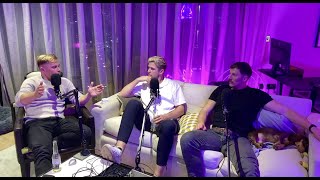
Right, then back with episode 13 now of the Midnight pod. And you'll notice it's the first episode ever with two guests. Probably not the last episode ever with two guests, but it means my neck gets less strained fucking recording these things. We're back with three angles as well. And again, like, I guess this isn't the first, like non purely entrepreneurial one at this point, by the time this comes out. But it's probably like one. One of the more interesting ones, I guess. How do I introduce you guys? I suppose we've got Brucie and Nutty, both Royal Marines, and both was it last year, rode the fucking Atlantic, which is like shit that people, I feel like talk about doing. They never actually do. But you've actually done it, which is mad. And myself and Bruce go back, what, like 10 years more than actually back to rowing days?
Back with 2009, I think.
YCRC. Yeah. Fuck, what's that, like 12 years ago now? Jeez, time flies. And yeah, just fucking keen to get you on. Cause every time we catch up, it's a good chat and there's always some crooked stories about interesting shit you're up to. And it makes my life feel very boring in comparison. But I guess first question as usual and just to both of you, really, you can kind of cut in on each other, play it how you want, but like, well, I suppose how did you guys. Well, you got different stories, obviously, but I guess firstly, like, how did you get into the Marines? What was the story there? I guess like a bit of background from both of you and then maybe a bit of background about. About the Atlantic Rogue. So I want to dive into that a lot. And really, how the fuck did that come about, basically?
Okay, so we'll start kind of like.
Three questions in one.
We'll start with. The first one is how did I know about the Marines? So my. My dad was a Marine, so that's how I knew about the Marines. And then I used to be a builder beforehand before I joined the Marines. I did that for five years. I did an apprenticeship and then I thought, you know, now's the time, I think. Yeah, now's the time to join the Marines. So I joined it at 20 years old.
Yeah.
And yeah, I haven't. Haven't really looked back since. It's been great.
Yeah.
Yeah.
How about yourself?
So, Bruce, I knew that school wasn't for me when I was about fucking 15 years old and I was just looking for ways out of fucking Yorkshire, mate.
Yeah.
Find a new and exciting thing to do. And the Marine team, like, what I found out about the right place and the right time, and I thought, fuck, yeah, that's what I want to do.
Yeah. Different path for sure. And like, how long ago was that then for you? For both of you? I suppose so.
I. I joined Marines and started training in 2013. And finished training in 2013.
Yeah. Lit. How about yourself?
It started in 2013 and finished in 2014.
Did you start together? Is that how you met?
No, no, we didn't start together. He's. I think you're a couple of troops ahead of me. Probably about three or four troops ahead of me, I think maybe.
Yeah. I mean, Nutty never crossed paths until our heavy weapons course in 2015.
Yeah. Yeah. That was the first time we sort of got to know each other quite well, which is great course as well. A really, really good course and two tanks. So, yeah, it's pretty cool.
This is literally a world I know absolutely nothing about. Well, very little about compared to, like, obviously, like E. Comm. Digital marketing shit. So I feel like my question is gonna be so fucking ignorant, but getting into that, because, like, I have a mate that we just mentioned off. Off camera previously. I won't say his name, but he trialed or tried to get into the, I think, SAS reserves, I think was what it was, and then ultimately failed, even though, you know, super, super fit and shit. Like, in terms of, like, army, I mean, I'm gonna sound so stupid, but, like, where does the Marines, like, slot in. In terms of, I guess, the bigger picture of, like, you know, that whole world, like, Army, Marines, sas.
So in the.
In the.
Is there, like, different levels and shit?
Yeah, I was. I'd say so.
In the.
In the British military, the army basic training is quite short, and a lot of them go to specialize and do other things after they finish their training. And the ones that continue to do a lot longer infantry training, they're the better ones. And the Royal Marines Basic training is 32 weeks long, and it's not easy.
Yeah, it's physically demanding, I'd say. And yeah, mental robustness as well. Helps.
Yeah.
Yeah.
I'd say the Marines are one of the better outfits within the British military.
I'd say so, yeah.
How long did it take you to, like, get in? Is it a case of, like, say, I wanted to join the Marines tomorrow. What's the process, basically? And how likely am I to gain, like, statistically? And. And if so, like, what do I need to be good at?
So the. You can first join the Navy, which the Marines is part of the Navy. You can verse on the Navy when you're 15 years old and nine months. And when I was, when I was that age, I went into Leeds, the Armed Forces Careers Office, like a Tuesday after, when it first opened up again after the weekend, I went in there and said, I want to join the Marines. And then. So you first have a lot of tests. You have to do, like little bits of bullshit. Like a physical test at a gym.
Yeah.
Like certain gym. Sign up to the Armed Forces Recruitment scheme and you go and do a 2.4k run on a treadmill and some other weird tests. Go and get a medical. And if you, if you, if you were lucky and you're trying to push the process, you could do that within a couple of weeks. Then you, you do a, something called a prmc, which is a potential Royal Marines.
Course.
Of course. Yeah. And then you go and do that. And that's just. To this day, that's one of the hardest things I've ever done in my entire life. Once you've, once you've passed that, then you get a date where you start training.
Yeah.
And you say it's one of the hardest things you've ever done. Like, obviously we met through rowing. I know you mentioned earlier, that was rowing training was hard. Like, how does it, how does that training compare to rowing and like, what does it actually entail?
So we did with the prmc, it's your first exposure to, I don't know, like military style stuff. So we, when we was writing, it was always in the gym and yeah, we'd start a training session and finish a few hours later. And you absolutely thrashed for about three days in the prmc.
Yeah.
And it's just, it's mentally harder, you know, because you, you never done anything like that before.
Was that when you were 15 months? Sorry, 15 months. 15 years and nine months.
No, I was 16 at that point.
Oh, you're 16 at that time? Yeah, yeah. And in terms of like, people actually get in then, like, what's the stats on that? And is this just fitness stuff at this point rather than like weaponry stuff or whatever?
Yes, predominantly fitness to begin with. And then you move on to learning about how to use weapons and things like that and getting attacked by.
I'm getting licked to death by miniature sausage. Okay, Tokyo's back on the pod.
Yeah.
He's either sleepy or crazy. And today he's chosen to be. He's chosen to be bad. Yeah. So do you remember you said there's over 32 weeks? Or is that a separate. Is that a separate stage or something?
No, 32 weeks is once you pass the. Yeah, like the aptitude. Like the prmc.
Yeah, yeah.
Marines course. And then once you pass that, you start training and it's 32 weeks long.
And that's to be like, effectively fully qualified, I suppose.
So once you finish those first two weeks, you get given your green beret.
Yeah, yeah.
And then depending on where you go after training, you do different stuff, I guess.
Yeah. And then where are you based at that point?
So me personally, I passed out at the end of 13, and then like a few weeks before Christmas, went on Christmas leave. And then at the start of January, I went straight out to Norway.
Yeah.
Which for me just felt like a continuation of training. That was still flapping, you know, at 32,000ft. For me, that was just a continuation of training. You know, he's getting beasted by the. Yeah, by the lads that you joined the company with and by the people running the Norway package.
Yeah. And then like day to day. And we're probably gonna chop and change between a few things before we go on to, like, the. Probably the main thing I want to talk about, which is the fucking Atlantic Row and stuff around that. So, like, you're in The Marines, you're 16, probably coming on 17 at this point. Obviously most people, myself included, I had actually just quit rowing and was fucking. I remember speaking to you about this, I think, years ago, and I was just like, literally in. In fucking sixth form doing like very standard boring shit. What does like. I suppose. What is it? What is this, like a standard Monday to Friday look like in that situation? But then also like over a year. What does like a year of being in the Marines at that point look like in terms of, like, training? Actually, that's a really good question. Being out of, like, base.
I was. My first year in the Marines. I was really lucky, you know, I got to go away a lot and do a lot of stuff. So I went to Norway. I did mountain and Arctic warfare training package in Norway, then came back for about a month and then we went out to the Middle east and. Well, between then I did a mountain training package in the Macedonian Alps, in Albania, then we fucked around a lot in the Middle east and East Africa and then we came back. But when you ask about day to day life in the Royal Marines, depending on how busy, depending on how busy the unit is or the troop or whatever, you'll. It can go from doing absolutely fuck all. Just watching Jeremy Kyle and drinking cups of tea, maybe do the odd range package, go and blast some rounds down range on a Wednesday or something. I don't know, it's so varied. But if, when, when there's nothing on, they don't really. You really get left alone, you know, because lads need to do their own stuff.
It can be 100 miles per hour sometimes. Ye feet don't know how to touch the ground. So it is. It can be a lot of sitting around.
Yeah.
But then make sure we do P.T. all the time. Lots of fizz.
Yeah.
So yeah, keep yourself fit and the onus is on you to keep yourself fit.
Oh really?
After you pass out training. Yeah.
And then are you living, I guess, well, excuse my ignorance, in like barracks or something? Like are you all living together like full time in like a specific place?
This is within base. Lads can live off base and commute if they want to.
Yeah.
No matter where they live it, as long as they can turn up at 8 o' clock in the morning. That's sound. But I never saw a point. So I always lived on base. And you have flats. There's like blocks of flats on base. You have six dudes in each flat. Yeah, it's. It gets pretty wild if you live. Some weird stuff happens.
High testosterone environment.
Yeah.
And is that like. Do you get to choose who you live with? Is it literally a case of like. Is it like similar to like fucking school or sixth form uni? Whatever you get put into like flats just with people.
When you first pass out of training, you may not know anyone or just the people you're in training with. You now you pretty much get put where you want to go. But if you know someone and there's a free space in that flat, you can. Yeah, there's nothing stopping you jumping in there.
It's pretty good in that sense.
Yeah. So I guess probably well more intense than Brian. Just keep coming back to that. But like do you get to the point where you either really good friends with people or you just want to fucking kill them? I would imagine living with people all the time. I guess it's like boarding school or something, which I never went to.
Yeah. There's a certain type of person passes out of Royal Marines training. Right.
So.
It'S completely diverse but there's a certain aspect of them that's the same. So it's a really interesting place to live. In my time in the Marines I've known Michelin star chefs, people that have done fucking serious stints inside prison. Yeah, people have all crazy kinds of.
Weird fucking degrees and is it, is it genuinely people? Obviously you were like 17 when you started. Is it generally younger lads or can people join? Well I guess two part question, is it generally younger lads when they start or can people join? Any point. And then secondly. Yo fellas, quick one. First bit of promo for the pod. You may or may not have heard I released a fucking ecom course a few months ago. Basically spent like six months making it because I was in between businesses as you probably know. If you follow my shit, I must say, 12 hours long. It's fucking quality content, especially for the price it's at now. I was gonna drop it at like 1500 quid with some bullshit guru y webinar and all that rubbish. But as you know, it's not my main thing. I'm working on a new brand right now, very very fucking much in the trenches. Which is why I think it's actually a better course than everything else out there. Cause it's built on real experience of my brands in the past and my current one. So ye short, I've dropped it to 299 quid which is fucking criminal to be honest, because it should be way more expensive than that. I think it's super, super valuable. If you're interested in E Comm, you're already in E Comm and you wanted to get into e comm 0 to 1 starting a brand from scratch then definitely worth investing in. Link is in the bio of this video or podcast, Spotify, Apple Music, wherever the you're listening or watching and enjoy the rest of the pod. Is there like certain ranks within the Marines? Of course there probably is. But like how does that look as you get older and progress and so on.
So yeah, see back when we were started training I think you could be the oldest you could be to join recruit training was 32 or 31 or something like that. And then like the youngest was 15 years and 9 months. You can apply, that's the application. So when, when you're 16 you can start training. But yeah, I mean as you rise through the ranks you normally, your corporals are normally in their sort of like late 20s to early 30s. And then you get your sergeants that are in there late 30s to going on to 40. So yeah, it takes a while to promote sometimes in specific branches within the Royal Marines. But yeah, yeah, got a full spectrum of age.
Interesting.
So you can have some really experienced, experienced people. I remember there was one lad in training, he was training with me, he was 31 and he had a high flying job in London Working, working. I don't know what if something to do like banking or something like that. He decided to just pack that all in and then join the Royal Marines and go through training.
Yeah, it's complete lifestyle change.
Yeah, complete lifestyle change, yeah. I think that's what people are looking for sometimes.
Yeah. Geez. It does make my day to day sound fucking boring to fail a lot of time and then so like again, excuse my ignorance because I'm asking questions because I just literally don't know like. So in like a standard year obviously you've been in like eight years now. Bit longer. Nine years.
Eight years mate.
Yeah, eight years.
Eight and a bit something years.
How much time are you? I guess just in one place keeping yourself fit as you said, compared to I guess out on. I don't know what the right term is. Deployment, a fucking job. What would it be called when you're out doing something specific And I guess secondly like what are those, what are those things?
So you can, what sort of thing? Different, different level you can get, you can be deployed and you can also go away for training exercises. For example, you can go to America or something like that. And you trained in the Mohave Desert, was it?
Yeah, we did a couple of months out there.
Yeah. So you can, you can just, you go out there and do a high level of training out there. Yeah, but then you can also get deployed on a ship and that the ship will go somewhere. So.
Yeah, yeah folks, doesn't sound like a boring day at the office.
You can get into a good routine on ships especially if they're sort of like going. When we joined the aircraft carrier, brand new aircraft carrier, HMS Queen Elizabeth, went all the way over to Halifax in Canada. So the journey over took a bit of time and then sort of like you're allowed to go ashore then we.
Pretty much drove down the entire. We stopped at a load of places on the way down. We drove all the way down to Florida pretty much about 30 lads in five different. They call them soccer mom cars in the States we had these things called Dodge Caravans mate and they were fast as we just road trip down the eastern seaboard. But every so often this wasn't just a holiday, right. We'd stop at various different merch outfits. These are already pre planned and we do a bit of training with some various different people over in the States and then finish up in Florida.
Yeah, and then so like time split wise between being in the UK and being abroad then how does that look?
I've spent almost exactly A third of my days in the Marines outside of the UK doing various different stuff. And that's, that's not including boat stuff that I've done.
Yeah.
Which is. I just call boat stuff. All the time I spent paddling and rowing, which. Which probably makes up at least another third of the time that I've spent in the Marines.
And do you get like much choice in terms of the sort of things you're doing it? Like, is there like certain people that will specialize in certain disciplines? Like.
Yeah, you can't. You can choose your specializations. There's quite a vast array of like special specializations within the Royal Marines and that's how we first met on the anti tanks course. So anti tank gunner is, is one of, I think 15 different trades you can do within the Royal Marines.
Yeah.
So.
And what would. What were some of the other 15b.
You can have mortarmen, you can have Clarks, Signalers, vehicle mechanics.
Mountain leaders.
Mountain leaders.
That's a really. Marines. It's called a ramp, which, which means a rear S1 motherfucker. Right. Say someone joined the Marines and then became a vehicle mechanic or something. They spend all the time fixing the wagons and they're not really doing much.
Yeah, just putting, putting the snuff back in the pack. Yeah. Yeah. Okay. And then in terms of like, I guess probably what I was trying to partly ask as well, like training compared to being out on. I don't know, is a mission the right term? Like doing specific jobs is. I don't know how to put it.
Really trying to think how would you put that?
So you call it, you call it a deployment.
Deployment.
Like you have the winter deployment. So you're going to mount an Arctic warfare training in Norway or something. That's a deployment. Everything I think anytime you spent out of the UK is called a deployment. But I'd say a tour, a tour of a tour duty would be something like being in Afghanistan for. Yeah, for eight months or so.
Yeah. Yeah.
They call that at all.
And how much of that have you done in. In different places?
I've never, I've never done a tour of duty with any action.
Yeah. Yeah. Cool. And then coming on to the, the rowing, then elements of the rowing. So obviously one thing I wanted to get onto was row in the Atlantic. Obviously we go back from rowing as juniors, which you said was one of the hardest trainings we've ever done, but geez, I don't know how that compares now. But how did that come about then? Was that initially through like stuff you Were training on or just like personal interests outside of day to day or.
So I always, well I finished rowing at York City and joined the marines and I started doing sprinter marathon. Kayaking.
Yeah.
Ultra distance marathon was my, was what I did. So I started paddling these ultras all every few years and then that's, that's how I met Nutty again after the anti tanks course actually. So he was always asking me to fucking. There's a race called the Devices to Westminster which starts in devices in Wiltshire and it finishes at Westminster bridge which is 125 miles. Paddled in one hit in a kayak. In a kayak, yeah.
Two man kayak.
Okay, two or something.
Two men in the kayak and I I think was it, what year did we paddle?
Nutty 20. 19.
We paddled, yeah, I think it was 17 or 18 where I, I, I was paddled, I was chasing the clock and I spanked in at Windsor at 85 miles in like I spanked in hard. There's no way I was gonna like I had to. I pulled out at Windsor.
Yeah.
Without making any excuses and there was no in my mind there was no way I was ever, ever going to paddle that race again. You know it's hard like too, too hard. Then I went, went back joined Lima company from I was previously based in Taunton and I was like fuck. But he kept asking me he wants to paddle the divisor like Bruce, you want to next paddling devices. And I'm never doing that ever again. He kept asking me and kept asking me and one night I think we were in a place called Little Creek in America.
Yeah, here it was. Yeah.
Was that Florida or Virginia or somewhere? Yeah, we're somewhere in America. And then we just got back absolutely blind drunk and that's like Bruce, you're paddling devices. And I was like yeah, yeah, yeah, yeah, no dramas. I'll paddle the devices with you then that was like a sweet. I woke up in the morning and I was just thinking what have I just said? Yes. But anyway if I said I was going to do it, I'm going to do it.
Did you do it together the first time?
19, right?
Yeah.
So I mean that you piled in 19 and like people train all their lives for this mate to get a good time in this race and then night had never even seen one of these sprinter marathon kayaks which is, it's not, it's not a kayak like but most people are thinking of a kayak. It looks like a rowing boat. It's like a Long, like streamlined kayak.
Right.
And they're pretty hard to sit in. So Nutty went from with no paddling experience. So I'm coming top 10 in international competition on the devices to Westminster. So, yeah, it worked out really nicely. I got my first back once me and Nutty got back in the boat. I got my first back from these kinds of things and that was really good, actually. Turned out learned really quick and we pulled an absolute blinder there.
Yeah, it's good, wasn't it?
So that's 125 miles in a kayak. How long does that take? Like a good time?
The time me and Nutty did was 20 hours and two minutes, which absolutely devastated me because all I wanted to do was pull a sub 20F. It sounds like it's an excuse, doesn't it? The conditions vary, especially on the Thames and this was a notoriously slow year. So if someone came ninth on another year, that'd be like an 1830 time. But yeah, we came ninth and it was 20 hours, two minutes.
Yeah.
So we unfinished.
As we were climbing up the steps, Bruce, he looked around to me and I looked up and he was like, who can we do it again next year? And I was like, ah, yes, I'll mate. Yeah. 100.
That was 2019. You did the 22? Yeah, 2002. Did you do it in 2020 then?
No, mate, we started training for it. So we. I don't really do full time training throughout the year. I just do a few paddles a week and just keep in the, keep myself in the loop. But we started full time training again in the in 20 but then covert happened, so it got called off.
Yeah. And then. So doing that sort of thing, is that like supported by being in the Marines? Do they just like. I guess. Do they let you just go off and train for that? And. And how long do you go off and train?
Yeah, totally. So paddling never used to be where it did used to be. Then the core got pretty busy with Iraq and Afghanistan and they never, they never, they didn't have the time to support that. But when you're in the car, if you, if you're, I don't know, like box, if you're good at boxing or good at rugby, rugby, you get pretty much unlimited time to train off as long as you compete with the, I don't know, like the Royal Marines badge on your kit. Yeah. And then paddling started to get a bit like that now, which is nice for me because I love it, but I think it's Got more to go. It's got the sport still redeveloping itself within the car.
Yeah. And did you ever look at rowing again? Or was it always.
I'm too small to row, you know.
Yeah, true.
I'm not as big as Matty, like height wise.
Yeah, true. Just going back to Ryan for context. What's he barking at?
I don't know.
Me and Bruce rode the double score as juniors and, yeah, national scores, 2012 gold. A British record, I think, which still stands. Good conditions, I might add, but nine years later. So, yeah, I think I mentioned that like two episodes ago. Two episodes ago with the Olympic row. Asanax to me, which is probably rather embarrassing, but, yeah, that's where it all started, I suppose. So training full time for that, then. Like, what does that look like? Because this is a pretty fucking varied episode already. We've gone from being the Marines to fucking training full time in a kayak for 125 mile race. Is that like eight hours a day.
You do sort of varying. Varying lengths of paddles. Brucie has done two. No, this is your fourth device to Westminster you've done. Now.
I've started five and finished four, which is slightly embarrassing.
Yeah, started five, finished four. So, yeah, the training camp's been different every year, hasn't it? But I've only done it. I've only done the training. Oh, no, I've done the training camp twice, actually.
So typically we'll do, I say a strength session in the morning, we'll do a sprint session in the morning, we'll wrap a few bungees and like resistance training in the morning. Wrap something around the bottom of the boat to cause a bit of drag. Yeah, Do a few intervals, do an interval training session, like some sprints. Then in the afternoon we maybe paddle between 20 and 30 miles down the river.
And where are you training and where you based out from doing this?
And it varies all over the Upper Thames. So a lot of the time we're based out of RAF Benson, near Oxford, sometimes around Windsor.
Yeah.
And we move. We move. So say we start the training camp at Benson. So it's all. Some of the guys on the training campus is their first time they've seen the course, you know.
Mmm.
And when it's pitch black at night and you've been paddling for 10 hours.
Right. Just have to pause quickly there because this naughty little dog started barking at his own reflection. Made us all think there was a fucking ghost in here again, which he seems to think every day. But.
Yeah.
So fuck Rowing? Well, kayaking, just on, like. So it takes you roughly 20 hours. Obviously just below 20 is what you're aiming for. Are you. You sleeping in that period or. No, you're literally doing that.
No, you're just paddling. Paddling non stop. And, and when you, when you, when you. So everything, everything counts towards the time. So there's 77 portages on the course, which is mainly on the canal where you grab the boat and run around a lock gate.
77. Yeah.
The longest of which is a mile long.
Else you're running for a mile with.
A boat, you got the boat on your shoulders, sprinting a mile, hanging around.
Like really going for it.
It's 20 hours flat out moving, mate.
Yeah.
As our. As our coach always used to remind us when we were hanging around. Westminster's that way, chaps. Cheers, bro. But he's not wrong. He's not wrong.
Old Rob King.
I'll say. How do you think that compares to doing a 2k row back in the day, which takes 6 or 7 minutes as a junior? 20 hours seems quite a bit more. Obviously the intensity might be different, but is it way, way, way, way, way harder? Obviously maybe for different reasons.
It's just. You just can't compare the 2. That 2k roll test when we were rowing as juniors was disgustingly hard. And also you remember it as hard as. So it's a cumulative effect. What's happened before you do this is how you'll find the next thing. Right. So you've done all this other stuff and it's all been pretty hard. So the next thing is just one more thing.
Yeah.
But when we used to roll, I'd never experienced anything really that difficult at all. And machine at York City Run Club was one of the worst things I've ever done in my life, man.
Yeah. Geez. 5K test of the genie is pretty. But yeah, I want to come on to what. What sounds like even harder is, I guess in a nutshell, you rode the Atlantic Ocean recently. Was it four of you? So you two and two other guys.
Yeah.
So we had, we had a. We're both. Well, we're both good friends with a guy called Junior McElhinney who's where he got blown up in Afghanistan and he started his process of recovery afterwards, inside and outside of the call, and we bumped into him by chance and someone's birthday party, which we crashed actually, to try and get. Who'd also rode an ocean. To get some ocean rowing advice. And one of the original four we'd had just Dropped out. So that we met Junior there and. Yeah, and he was, he was really keen to roll the ocean with her.
So how does, how's that conversation even starts? Did you just. Did it come about by speaking to this guy or were you just thinking previously, fancy rowing the fucking Atlantic Ocean? Which obviously to 99.999% of society just sounds ludicrous.
It's like where do you start with something like that, isn't it?
Yeah.
Yeah. We asked Junior and he was more than up for it because he'd heard his friend whose birthday it was had spoken about it a lot and he liked it. And then he's always so he's been, he's heard about ocean rowing.
Yeah.
And he likes the sound of it. So it was, it was kind of easy just, just to be like do you want to do it? Do you want to do it?
So to go, to go, to go back a bit. This was just after me and Nutty had finished. There's a, there's a guy called Mick Dawson who's a world famous ocean rower and he's done a lot harder ocean rowings in the mid Atlantic like crossings and what me and Nutty had done. And then so he runs, he runs a foundation called the Cockleshell Endeavour which supports veterans wounded physically or otherwise to do something life changing, you know, to turn the, turn their lives around. And he'd already planned and paid for these two guys but one of them was suffering from strokes at the time and his muscle, his Mrs. Rung Mick and said there's no way I can, I can let this guy row down the Yukon or paddle down the Yukon. And so everything had already been done so he started, he approached the Bootneck, the raw marine sorry marathon paddling network and says is there anyone that wants to paddle down the Yukon? And my mate Joe Maynard recommended me for it. It's like Bruce, you want to do it? And I was like yeah.
Sound down the Yukon.
So the Yukon River. So in the Canadian Yukon Territory just, just east of Alaska. So the rate the race itself is 444 miles long. Starts in Whitehorse in the Yukon Territory and finishes in Dawson City right next to the the Canadian Alaskan border.
So this is a kayak race similar to the one we spoke about recently.
It's an overall too distance kayak race which is 444 miles, 715 kilometers long which we, we did in 67 hours. And that taught me a lot about humility and fuck, I could talk about the dude I was paddling with was called Neil Marshall. And I could, I could fucking. I don't know where to start with that shit. But there's a lot, there's a lot of lessons that I learned along the way.
So we were just speaking about 125 miles. So this one was 400 plus miles.
Yeah, that's right.
How long do you train for that prior to doing that? Was that 67 hours without sleep or what?
We stopped for six hours. 185 miles in which everyone has to do like compulsory stop for six hours in almost three days. We stopped for six hours.
Yeah. Fuck me.
But there's so much other. I could tell you about that if you don't mind me just going off for a second.
Yeah, definitely.
So you, you paddled. The first checkpoint is 54 miles in, right. There's a plane sailing down the river to I think it's called Policeman's Point just before somewhere called Lake Labarge if that means anything to anyone that's listening. And then you've. Once you get 54 miles in you're faced with a lake that's 36 miles long. And typically it's like a nice fucking calm lake and it's quite a big lake, you know like Loch Ness or something. Think about. And we had a. We had a pretty strong headwind with like two foot waves smashing over as faces in the kayak. And I was just thinking, all I thought was let's just get to the other end of this. 36 miles and it would play insanely again. So I just put my head down and paddled mate. And then night. Night started falling. It doesn't get dark there because it's that far north. Where do Yukon is? We did it in the middle of summer. We still get pretty cold and so what did it take us to do 36 miles? I don't know like five hours or something. By the time we got to the end of that I'd just been non stop paddling like forgetting about my drills. You know. Every hour I used to stop and grab a handful of sweets or something and just eat something mate. Anyway we got to the other end of that and it was the middle of the night to the second checkpoint and I was starting to go down with. I never suffered hypothermia before but I consider this pretty serious hypothermia with nothing to compare it to. Anyway I was almost fucking comatose by. As soon as I stopped paddling I started going down. Neil dragged me out to the check. Every checkpoint has like an old Drum fire and some race officials on it. Yeah, and yeah me. This was what, 80, 80, 90 miles into a 185 mile leg and Neil dragged me out the boat and sat me down by this fire and gave me some warm to drink like. He saved the race mate. Without him I would have been. And he was the one I was meant to be looking. I was pretty much the guarantee to get him to the other end of that course. But yeah.
What sort of stuff you wearing in this? If you got. You're getting that cold, was that like. Was it wet or was it just the way.
I don't know man, I got. I wasn't. We didn't carry a dry suit mate which would have probably fucking saved us. But no one does. You can take any Gore Tex, any, any paddling kit you want in the world when, when the waves are washing over the boat and smashing into you. There's no spray deck and there's no kit that'll keep you dry in there. It gets pretty wet and cold out there.
Okay. And then do you find like it's obviously 67 hour race, six hour break effectively. Do you just go into like a state of hypnosis? Like how hard does it actually feel or is it more.
When you're doing something of that length? I wouldn't even say it's an emotional roller coaster. How the would you describe that? It's for sure it's a roller coaster. You go through the fatigue stage about 50 miles in. Then it all becomes mental. You know, your body's already given all it can do before you think it's time to stop. So after I got back in the boat after that, after that second checkpoint, I actually felt really good. I felt strong, like, like fully good to go again for another time. Then you start going through the, then the fatigue, mental fatigue stage. Then you get through that, then you're hallucinating, then you get, you just kind of go up and down between weird bursts of mental energy and mental fatigue. There's no real ways to describe it to someone that hasn't actually been in that. Been in that whole mate and seen what it's like or felt what it's like.
Fuck. I might have to get myself to the Yukon. And how long were you training for this and like devoting to this event specifically?
So I didn't because it was an expedition on a place and last minute everything was already paid for. Yeah, everyone was good to go. So I just finished the devices to Westminster and went out there to the Yukon three weeks later and I usually only try and do one, one event like this a year and yeah I really my rotator cuffs from my shoulder for about two years afterwards.
Fuck it.
You couldn't exactly turn the Yukon down. No you can't no matter where you are in life, can you?
Yeah.
I was like I'm going three different.
Races as well isn't there? So you got the four, four, four. You got the thousand.
Yeah.
And then you got the 2000.
Yeah. So the 2000s only just opened up.
2000 what 2000?
Yeah.
These races varied the intensity every. No, I haven't done, I haven't done longer than the River Quest but anyone that's done the thousand you have to stop for six hours every 24 hours. Like the tracker has to stop. So you're sleeping at least six hours in every 24 hour period. So it's less intense but it's much longer. Well it's over double the length.
Yeah. I remember you coming back and saying to me there's such, you know such wilderness out there is. It was so remote where you were going down. It was quite incredible. I thought I saw the back. He showed me the pictures and things like that and I was like you know what it's a bit of me.
That yeah made a promise to Nasty. That's what I got back from that. The me and him are going to go and paddle the thousand together.
Yeah.
@ some point in.
Life. Hell yeah. We'll get there and like how much harder than the Westminster race obviously being like more than three times the length. Roughly three times the length or is it more just it's. It's mental.
Challenge. It's a really hard one to answer because they're both radically different events. So the, the device, the DW as it's known devices for Westminster is. Most of that's at night because it's done at Easter weekend and it's just miserable paddling on the canal for 54 miles. Then you get to Reading, then you paddle down the Thames. At night it's just cold and miserable. But in the, in the, in the Yukon Territory fuckers it's just beautiful all the time. It never gets dark. It's just a different beast man. It's longer but you can't really compare the two. Yeah, I always relate everything back to the devices because we weren't paddling the Yukon for time either but we did come first but that was a happy accident and we got beaten to the line for second place. 100 meters from the fucking finish line which broke my.
Heart. Fuck.
Sake. But on the devices I always, I always take that really seriously. And, and you get, you're trained hard and I try to save seconds. It's a long race but seconds matter, you know, if you can save fucking seconds at every fucking opportunity, it all adds up. At the end you have a.
Support team that follows you all the way down as well. So at certain points they'll replenish your water, put electrolytes in your water and things like that. They'll also feed you as well. Like they give you food. Like they give it to you like.
That. What sort of.
Food? Just anything high like flapjack for example or something like that. Yeah, yeah just. Just get as. As much as you can down you and carry on.
Going. Yeah. And then I guess that, that brings me nicely back to. You've gone from this 150, whatever the Westminster was 150 miles. Right. To a longer one in the Yukon and then you ride the Atlantic which is what, four and a half thousand.
Miles.
Yeah. So obviously not in the.
Car. I came back from the, from Canada. The guy called Mick Dawson right on about earlier, he's running the cocasan endeavor and it worked really well for, for me and Neil because Neil, Neil's in his 50s and he's. He's been through a lot of in his time which is another story in itself. And so yeah, just worked really nicely for both me and him to have one serving member of the military and one former member of the military in the boat together. So then the idea of the caucus land ever changed. Instead of just doing something for the veterans, it was now something where the people are still serving can do something like this with some of the members of the military that have let whatever's happened to them. Yeah. So anyway it works nicely for both of us. And then anyway, yeah, something else. We were on the piss from it. Well I was. I used to start drinking McDawson down in Brighton every so often and one night we're on the piston because he's well established ocean rider. He's done a lot longer, harder crossings than what we did. He was like Bruce, how do you feel about riding the the Atlantic? I was like yeah, yeah, yeah, sounds, sounds, yeah. Why wouldn't I want to do.
That? Why.
Not? So after that I got home about three days later, got a voicemail from McDawson. I missed the phone call and he was like yeah Bruce, you still want to row the Atlantic? And I, I naively thought that it'd be the same as the, the Yukon, you know like, everything to be sorted, to be an expedition on the plate again, like a dream come true. But it wasn't because he's a busy guy and then we didn't really. So he said he supported us a little bit, gave us some contacts and whatnot. But, yeah, it was mainly down to me and Nutty. So me and Nutty were just two. So the first person I approached was Nutty. I'm like, nutty, how did you feel like rowing an.
Ocean? I was like, yeah, yeah, 100, no doubt. I mean, yeah.
Yeah. And then from there, we were.
Just two guys living in the flats at work with an idea, mate. So we, we cut corners everywhere we could and we did it as cheaply as we possibly could because the average, the average price of someone that rose the Ocean runs into 100k plus, really. And we just didn't have that money to spare, mate, in the end.
Like, boat costs or what? Like, where would 100k.
Plus?
Yeah. So everyone enters you. I don't know if. You know, I was probably trying to explain this bit for the pod. There's something called the Talisker Whiskey Atlantic Challenge, right. Which runs from La Gomera to Antigua. The entry, the entry fee to that race alone, which comes with nothing, is £24,000. And that's just. That's just your ticket to enter the event. And then if you want to be competitive, you buy a boat which costs about 40,000 pounds, which you can sell again afterwards. And then, yeah, the prices soon.
Start adding up because you got your food on top of that. You get all your kit that you're wearing. The shipping, for example. Yeah, there's a lot of moving parts in it to get the boat to the start.
Line. Yeah. I wonder even think about it, to be fair. And then. So I guess how. Well, two questions again. How did you fund that? Firstly, and then what was the process from figuring out it was going to cost a load to do it, to actually get into the starting line? I suppose two Right. Kind of different questions, but what was the general process from like, fuck, we're doing this to actually.
Leaving? The first thing we approached, once we had the. The crew nailed down, which wasn't actually the crew that we rode with, so we was helping out two, two Royal Marines veterans to row the ocean. We first approached the Royal Marines charity who gave us £10,000, which was. Which was amazing. We're just two ideas. We were just two dudes sitting in the grot with an idea and they gave us 10k. Fortunately, we gave him 20k back at the end, which was nice. I. I genuinely didn't think that was going to happen. So when we got to the start line, yeah, we'd only just covered the expedition costs, but we made. So then we were two dudes sitting in the grot with an idea and 10k, and we're like, what can we do? What can we do right now? So the rations we used Arctic rations, which are dehydrated rations, which, for whoever was listening, these are essentially pot noodles in a bag. So you just add water to them and then you have like a spag bowl or a curry or whatever. Mashed potato, like smashed or.
Something. Yeah, noodles and black bean.
Sauce. That's a nightmare. Yeah. So we. We up there, but we didn't. It was an accident. So we went. So first we did. Went down to stores. I mean, how long do you reckon this event's going to take? And I was like, I don't fucking know. Let's get 90 days per.
Month. It turned up and it was a. It was a. I think it was two pallets worth of. Of rations in boxes stacked about. Probably about six and a half feet high. And we were like, the. The color sergeant was just like, you know, you've got a load of rations here, what you want to do with them? We're like, all right, cool, squirrel them away.
Somewhere. Jeez. And then, yeah, I should get.
Gone. So, yeah, we did what we could do immediately, which was everything we can get for free from work, which included RYA courses up to the level of Ocean Master, which was a grizz, because I don't know about Marines, they're not that intellectually minded. So, yeah, we're doing our Ocean Masters and then, yes, go back to the fundraising. We. We had about nine months to raise another 20k and it was fucking heartbreaking, mate. We spent about three months of those nine months. We were always doing a lot, but the first three months we were doing a lot and not producing anything, mate. Like, we were doing the wrong stuff. But we started to learn some lessons after that and it started to come in little and often. Like, a lot of this would just meet someone in the pub and they're like, yeah, I've got a mate that can help you.
Out.
Yeah. Then we go to some dude's business, potentially getting like 5k off him or something like that. So I can't do anything, but I've got someone else that can help you out. And after about a month for that, you. You're chasing down, I don't know Loads of different leads. All of them you have to pursue with 100 enthusiasm because you don't know if they're going to be the.
One.
Yeah. And yeah, it's a.
Heartbreaking. It's a good process, though. It's a great process to go through. But you. I learned a lot, like going through that and even the way he's talk, you know, talk to people, how you approach people and asking them for. For something. But you've got to, you know, the whole process behind it is really interesting the way you got to do it. But.
Yeah, like we was getting invited, so we. Drummer Salk and.
Brewery. Yes, I.
Do. We got invited there and it was like a full on. This was like probably the most actual professionally appearing meeting we attended. It was like some boardroom or something. If you imagine the Apprentice, it was like a long old table and me and Nutty were sitting on one side trying to present our pitch to the guy on the other side, which we did actually prepare a little bit for that one. And there was some little. Just in the corner like, oh, do you want a drink? And I was like, yeah, yeah, yeah. Can I take a pint of the Salkhem Gold? This is one of the.
Aliens. This is really.
Nice. And then the guy at the table's like, what the fuck? He's one of our.
Water. He.
Can'T. Did you get that? Did you get the.
Phone? Yeah, we did, yeah. And then it turned out the guy across the table used to be in the military. So we spent loads of time just chewing the fat with him, mate. It wasn't quite the formal fucking.
Presentation. It's not what he was expecting, I don't think. But as soon as we sort of like that goes down. How to sort of like break the ice with someone, I guess, isn't it? Soon as you could level with him, he was just like, you know what you actually. This is actually quite interesting. And he actually sent us a few emails to help us along with how we present get presentation together and how we would come across if we were to do something like that again. But it went quite far. You know, it went to the top with this guy, the owner of the. Because this bloke owns multiple businesses and it went to the top, the CEO and he just couldn't do it this time. But it went that.
Far. He did help us out with a lot of other contacts in.
That.
Yeah. Which did lead on to other.
Things. Yeah. But I think what. What really, really started to help or the first sort of like real thing that Happened was when we did a. An event at the local pub to where the barracks is. So that's, that's what. That was the turning point for raising like quite a bit of money. Yeah. So, yeah, we did a great event at Whitethorn in Shore Prior. The bloke who owns it is a guy called Mike from Mad Dog McRae. So he's a local. He's quite an international known singer actually. He does Irish folk music. He's absolutely brilliant. And yeah, he was mega on side with us and he just, he was like, yeah, do you know what? You know, you can use the whole of the outside area for your event. And it was, it was nice to have someone so on side. Yeah. And then Bruce, he went and got three kegs from Dartmoor Brewery for free at JL Ale. And yeah, we sold all of them. Well to. They went down pretty.
Fast.
Yeah. But yeah, this is what, this is really funny actually. This is when we're still cuffing it. So we had this event and one of our mates is. He hunts deer, Right. So there's mates with a lot of farmers around.
Dartmoor. And.
Then. And we, we had. Back on camp, there's freezes worth of venison. If you go to the outliers, the showers for the people that live off camp, there's like three deer carcasses hung up in there.
Mate. So we're selling the local.
Sodex. How much do you reckon these cost? I don't know, £5 each. We're selling venison.
Steaks. That's one way to do.
It. Down to bookers as well, didn't we? And got a load of, load of like deluxe burgers and things like that. And then there was a barbecue outside and we, we got a couple of lads from 4:2. A lot of lads were away at the time, but there was a few sort of like hanging around in the accommodation. We didn't know them, we didn't know them from Adam, but we was like, you know, come up and if you can cook for us all evening, you can, you can have as many pints as you want. Yeah, so, yeah, that worked out really well. They were really handy actually, just for cooking all.
Evening.
Yeah. And just selling, selling the burgers and. And all that. And then we did a good raffle as well. We had some, some good, good raffle prizes. Yeah, that was a really, really good event. And it.
Was. By that point, we're on about 15k and we. I reckon. What did you make? About 2,800 quid. That.
Night. Yeah, it was.
Yeah. But it wasn't. It wasn't that. That was the time. At that moment, I learned the lesson that publicity is just as important as. As fundraising. Right. Because it leads to more fundraising. So I don't know, after that, it was. It was a real, real turning point for our. Our.
Campaign.
Yeah. And then. So when was this relative to when you actually set off then, just to give.
Context?
September. We set off in December of 2019.
Right. We set off in 2020 and finished in.
21.
Yeah. Oh, was it. Yeah, last year. All right. Yeah. Geez.
Yeah. Yeah. I left on the 5th of.
December. So was it. It was 9 months total fundraising then or.
Different? No, so we got. We got around a lot. So we was originally going to row across the Pacific. Well, halfway across the Pacific from San Fran to. To Hawaii, because we know. We know one of the guys that ran the event, and we're going to get free entry into the Great Pacific Race, which is similar to the twac, but a lot smaller scale. And then we couldn't get to America because of COVID So we spent.
About a.
Month, I don't know, like, consoling ourselves, thinking, oh, this is what we're gonna do.
Now. Deflating, wasn't.
It? And I was like, we'll just rode the Atlantic. And it was. Oh, yeah, it costs 24k to enter that restaurant that. So we just turned off in Grand Canary and then rode to Barbados, like, independently, if you know. Which leads on to another thing now. We start an event this year called Mission.
Atlantic.
Mm. Wait, so come back to the row then. So you didn't end up actually paying the 24k to do this event.
That you didn't originally cost about 32k in.
Total. And it was completely, like, made up effectively. It wasn't. It was your own row rather than entering an event that you plan to enter.
Previously. So we did. We did a lot. We had the good help of it. Well, we found out a good dude called Chris Martin, a lot of ocean rowers, they love helping ocean rows. Right. Because it's quite a small group of.
People. Yeah, I can.
Imagine. So we had a lot of advice from a lot of really interesting people, which then led on to. We ended up. We hired a boat from Chris.
Martin and he owns a company called New Ocean Wave. And that's basically. He just facilitates people's.
Rows. Yeah, he's an ocean rowing consultant, which is an extremely niche. Well, he has a day job as.
Well.
Right.
Yeah. Well, okay. Right. So people listening are now, yeah. Are going to want to hear about the actual Royal End itself because leading up to it sounds like a journey in itself. But see, you got, you got the boat, you know what you're doing, you've trained, etc. Etc. You've had this ocean marine consultant. Hope you get to that point where. So you started in Gran.
Canaria? Yes.
Mate. Like, how does it, how does that even. You literally get in, literally get in the boat and start rowing to Barbados. Right. Which is what is about four and a half thousand miles, is that.
Right? Yeah, no, that's absolutely what we did the day before. We're driving around a bit and went to a place called Mass Palomas, which is. It's like some weird gay holiday spot in Gran Canaria. No, it actually is for gay people. Yeah, it's like a gay resort there. So we went to the place, it's the nearest biggest town to where we set off.
From.
Yeah. So we went, we went there, we went to the police station and we're like, we're queuing up for about an hour thinking we want to sign our passports out, you know, because the, the dock we were in, they didn't. So if we went up to Las Palmas, the capital, if we left on there, then you can stamp your passport. And we went there and got absolutely mugged. Off to the High Port and we're like, we have. So we just. Yeah, we did, we actually did just get in our pot and start. Right. We never officially left the eu, mate. We did it, didn't.
We? Wasn't too much of an issue the other side. But we had a. We had to fly out to Gran Canaria in November because we went into another lockdown then and we were, we were with the Conservative MP for. Where was.
It? Hedge End and Easterly.
Mate. Yeah, Eastleigh. So he came to, he came to see us actually because we've got really good friends with Janet who owns a pub in Hamble, which is where we kept the boat, near Southampton. And she's quite a well connected woman and we did another event there. It was a high ticket event, you know, sit down meal, shirt and tie, that sort of thing. And that went really well. A good raffle at the end, but she's got a lot of fingers and little pies and she knows the MP for the area and she said, you know, come, come, come down and speak to these guys because we're all there, all four of us. Myself, Brucie, Will, who's the other rower and junior, the two veterans, Will and Junior. And yeah, he came down and spoke to us and you know, like really got on well with us and then he did a shout out in Parliament for.
Us. Oh yeah, yeah, that's pretty.
Lit. To, to. And. And yeah, I don't know where I was going with it, to be quite honest with.
You. So we were actually, we were back in the Conservative Club in Hedge Ends. This is days before the impending lockdown in November, the second lockdown. And he was like. So we were on the fucking loudspeaker phone with Matt Hancock at the time. She was the Secretary of Health or some shit. Yeah, I don't remember exactly what that came about because we were chatting with Paul about how like what's going to happen? Is it going to impact our role? We were just on the piss. It was no serious conversation, right. And it was like, hold on a second, just let me.
Check. So we.
Got. He's just like, yep. And then Matt Angle was like, guys, what the fuck, you need to get out of here pronto. So we flew out the next day with like 12 hours notice and lockdown did come in to enforce like 48 hours later. So we all flew out to Gran Canaria and one of our mates towed the boat up to Freight International in Newark and sent it to Gran Canaria. So we had two or three weeks in Gran Canary with no boat. Just on the piss until the boat was like, there's nothing we could do to.
Prepare. So you just on the.
Piss. So we prepared the space in the Marine, like we booked the space in the marina and that's literally all we could do before the boat came off the shipping container.
Mate. Jesus Christ. That is mad. So how big are these boats then? They're watching 7 meters and so 21ft long. How.
Wide? Probably 1.2.
Meters. 6 foot, maybe 6 foot wide. That is widest.
Part. So kind of like.
Maybe. No, not even, mate, because you, you'd lie on the boat and I'd say about the size, remember the technical.
Side? About the size like a people carrier car. Maybe a bit bigger, like roughly, Roughly. And there's four of you and in terms of like sleeping slash sitting, like describe the.
Space. It's tight, mate. Really, really.
Tight. So is it like two a cabin either end or like. Yeah, what's it.
Like? Yeah, there's a cabin at the front and there's a cabin at the rear. The cabin at the front follows the line of the boat like that. And it's extremely sort of like you're sort of like sat in there like that and it's extremely tight. Your shoulders are sort of rolled.
Up. So for people that are listening and not watching. Not his demonstration. It's like there's a little tube that goes underneath it goes through the hull of the boat and the people that are rowing the sliders go on top. So you're sleeping down the bottom of the boat. So it's like a little coffin in the bow cabin. The stern cabin is a lot more spacious. And we used to move house every five days on the road with swap.
Ends. Yeah.
That'S. So you're in like pairs swapping ends or so.
Yeah. We rode three hours on, three hours off. Two people rowing and two people resting. So we were rowing 12 hours of the.
Day. And is this two hours each? So like, like sculling or is this like rowing? Is it like one.
Each? Yeah, one in each hand mate.
Yeah. And in terms of your ass you're sat. Right. So is it obviously. Yeah, obviously you start facing the same way. But it's not like rowing. When we used to do with slide. Does that have sliders? It does have.
Sliders. It's just the same as.
Sculling. But.
You. You're lucky to reach full slide because the boat's like. The boat's waving around all over the.
Place. You're not doing a half slide fucking routine. Get your catches in on time and shit. Yeah. And then how long did it take in total before we.
Formed? 9 days and 19 hours and 45 minutes or.
Something.
Yeah. Not that anyone's counting. Jeez. And do you.
Think. Yeah.
Right. Was that harder than the Yukon.
Race? No, no, no. The Yukon was way. The Yukon's different because it only. It took less than three days and it was. It was intense. You know it was non stop paddling. The road's different. It's mentally challenging because you're just stuck in that boat for seven weeks just rowing across the Atlantic.
Ocean.
Yeah. And the conditions are a lot worse on the Atlantic and you don't know if you don't know what's going to happen the next few days. The Yukon's just challenging. It's just down to you if you want to paddle or stop. You know. Is it. That's the hard thing about in the ocean row. You never think about stopping because you're still in the middle of the.
Ocean. Yeah. It doesn't. It doesn't really come across your mind something like that. You got to keep going. There's no. Yeah. You've just got to keep.
Going.
Yeah. It's a bit Like Groundhog Day. Sort of like get up, row, do a bit of cooking just before you go to sleep, hand out everyone's food, then go to sleep and then get up and do the same.
Again. Do you sleep? Do you sleep well? You actually manage to.
Sleep. Some strange dreams on that boat. Like very, very strange, very lucid.
Dreams. Three hour slots as well. And how long did you spend in that boat as a crew together prior to actually setting off? For 49.
Days in total as a crew, about five hours maximum. So me and Nutty and Will, we would. We were lucky enough to all have the time off, so mine and Nutty's summer leave and we was free as well. We delivered someone's rowing boat to them in Copenhagen. So we rode across the North Sea to. And then through the Eider Canal and through the Baltic Sea to Copenhagen, which is just like a summer holiday. But me and Will and not. You've been in the boat together. All the training we'd done with Junior, who turned out to run the strongest rowers on the boat, we did all that. We did a few couple of hours training on flat water within the breakwater of Plymouth Harbour and that was.
It. Hell. So, I mean, there's so many things I'm sure people would love to know and I'm gonna ask, like we used. Were you scared setting off like, how do you. Was it nerve wracking or is it literally like, fuck it, we're gonna ride the.
Atlantic? And when the moment we set.
Off, how did it.
Feel? Me and Nutty were just laughing hysterically at each other like we couldn't.
Believe that we're just like, we're here. We've done, you know, we're actually setting up. All these times we spent in the accommodation block, tapping away on the computer, all those sleepless nights thinking, is it gonna happen? We were there and it was just such a euphoric feeling. And yeah, so, yeah, sorry to interject, but yeah, it was a great, great.
Feeling. It was short lived. One of the biggest storms we hit on the whole row was still within sight of the Canary Islands.
Man. Tell them about the fishermen.
Mate. We was leaving. We had. So we were talking with many experienced ocean rowers, two world renowned weather routers, one of which was doing us a favor, weather routing for us for the whole crossing. And everyone's like, yep, you've got like a 36 hour window. I mean like, shit, yeah, we'll set up at 8 o' clock tomorrow. And we grew. Everyone else was not just. It's only because Me and everyone was like, yeah, we'll set off at 8 o' clock tomorrow. And then I was walking down the jetty to do some final checks on the boat before we actually set off and there was a fisherman walking down the. Like some fucking 70 year old fisherman coming off his boat and he was like, so when are you setting off? And I was like, yeah, tomorrow. I wouldn't do that. What the, what the. Do you.
Know? You.
Can. And then, yeah, he was.
Right into a.
Storm. Right into a.
Storm. All the projections were looking at everything. It was perfect. Time to sit off. Vanad. I don't know how the. He knew that it.
Wasn'T. Mate, wait, he just.
Knew. He just knew. So yeah, we almost got washed up onto the coast of El Hiro, which is one of the Canary Islands. Like we were rowing hard to get past it and waves smashing over.
The boat and the wind was insane, wasn't.
It? At that point? At that point we're doing two on, two off. So we're rowing two hours, sleeping two hours. We were messing around so long on the changeovers at that point we all made the decision to change to three on, three off just because the changeovers were taking too long and all the water was coming into the cabins and everything all going to. I'm like, yeah, this is a disaster. So let's cut down on the.
Change. Yeah. Jesus. So how, how big, like how big were the waves in a storm like that? I mean we'll probably be come on to some other storms, but they weren't that.
Big. They were, they were big, but they were, they weren't that big, but they were rough. So when you're out in the middle of the ocean you have like big lines of swell and it gets pretty big, but if it's not too windy, it's pretty sound, you know, the boat just goes up and down over them. But when the, when the waves were coming around the island, the frequency of the waves and the, and the like the toppiness of the waves really.
Increases.
Yeah. So it was really choppy, horrible, horrible water to row in. And in fact it sounds horrible. It was at the time, but it was a blessing because in those first few days the boat proved itself to us and we proved ourselves to each other and it gave us a real sense of comfort that we knew when we were land, you know, land was thousands of miles away on either side, we could deal with it because we dealt with it when land was still in.
Sight. Yeah, fuck, that must be a weird feeling. I think I Think you mentioned me before. You were like, I don't know if it was a few hours, a few days in that you thought, like, I think you could still see land. When were you telling me this? And you were like, fuck, should we just row back? When was.
That? Oh, yeah. Nah. Everyone, everyone, everyone fought him. And it's only. It's only when we got out, like, a few days into the ocean, everything calmed down a bit that we started telling each other. So we set up on Grand Canary, right? And there's several other islands a bit further west, the way we were heading. And we were that close to them, like, you could see cars driving around the mountains. And I was thinking all the time, everyone was thinking it, it's like, shit, we could just pull in here, reset for a few days. We're still running from the Canaries to the Caribbean, right? Don't matter if we pull in.
Here.
And. Yeah, no, no one, no one said it because, you know, I don't know. We're all proud men. Yeah. This is nothing. We're gonna roll the ocean.
Right? Yeah.
Yeah. We got a few days out. When I was on shift with nothing, I was like, nazi. It might sound a bit funny, but I would have pulled in those. And I was like.
Yeah. I said to him, I can see all those, like, twinkling lights in the distance. I was like, I bet it's. But it's nice in there. I bet there's a bottle of wine in there. I could sink right.
Now. Like.
Crazy. Yeah.
Funny. Yeah, Geez. So, like, did you, obviously, on that kind of general topic, how hard, like, when was the hardest point? Like, mentally, obviously, I imagine. Well, I.
Suppose.
How. How hard was it physically, but I imagine it was a lot harder mentally. Is that.
Right? Physically it was. It was challenging. Just because the body starts to break down after a while. There's no way between four of us we could have packed enough food on the boat to maintain a. What would you call it, a calorific equilibrium. Like, we were in a huge calorific deficit, like, by the. To the tune of thousands per day. So say, like, I don't know, 10 days in before the road. We got pretty fucking fat on purpose. It's like, fat fit, right? Like, robust. Like, 10 days in, I had, like, some weird fucking pregnancy belly. Like, oh, my skin was really floppy and I had.
No. It was.
Golfing. It was fucking disgusting. I was thinking, so I better get rid of this all the time. By the time I get to Barbados, I'm never going to be Able to trap when I get over.
There. Number one.
Priority.
Yeah. So did. Did you lose weight? Really, like.
Notice? No, it's not just any, any, any, any. I don't know what you call it. Wounds. Wounds. Anything. Anything bad that happens to you just doesn't heal up, mate. Like.
Will.
Will. Will had a really. So when you. So when you. The ass is the biggest problem on the row and every time you come off shift, you have to wipe down every. Everything that has friction on it with a baby wipe, right. To get all the salt out. Because when it gets wet with salt water, waves are smashing over the boat sometimes. Then when you get in the cabin and you start to dry out a bit, you have to wipe all the salt off, otherwise it crystallizes. And then when you go back out and it has friction again, it just tears the skin apart. And whether it started off with bad drills or whether it's started off just because he's. He was disposed that way, like Will's ass. It was, mate, it looked like he just sat on a.
Landmine. Like you could fit an earbud into these craters that he had on his. On his backside, on his cheeks. And they were raw, like red.
Jesus. I was like, mate, they weren't red, white. It was like a fucking open wound to the whole of his ass, mate. Yeah, it was like bleeding, like disgustingly raw.
Mate. Yeah, Junior, bless him, he's putting iodine in each one, like just to try and stop any infection or anything like that. And then patching it up.
Yeah. What sort of stuff are you wearing then? Like day today or are you not wearing stuff you like.
Naked? Yeah, most of the.
Time.
Yeah. And did you have like bad weather suits or.
What? We had Fowley's foul weather kit, mate. Which heat's the big problem on the mid.
Atlantic? Like it's hot or not.
Hot? No, like too, too, too hot. Disgustingly.
Hot. Yeah. That's surprising at that time of.
Year. Especially when you get close to the.
Caribbean.
Yeah. Yeah. So how did he keep running if his ass was like tearing.
Open? Just.
Food. Grizz for the last few weeks. Like he'd get on the horse. The first few minutes he was just screaming in agony, mate. Because I used to. Me and Will used to live in the same cabin and I swapped with Will and fuck. It was hard to listen to, mate. Like, it was really, really hard to listen.
To. Jesus. Did you get anything like that or was it just.
Him? I. The general state of my house was never that bad, but at one point I was Rowing. And I don't know, it felt like I was rowing on a P. Right? Like, you know, the princess in the pit. I can feel pee underneath my ass. And I know. I think this was like midnight. We had the nav light on. I was like, no, have a look at my ass. And he was like, yeah, yeah, sound. And he was like, no, it looks sound. It looks fine. But over the course of 36 hours, it grew to the size and shape and color of a plum growing in my ass. And then you had to do some weird surgery on it. So on our off period. No, it was in the rear cabin at the time. So I came into the rear cabin and I was lying like some weird missionary position with my legs on the ceiling. And. God, the sea was pretty calm at the.
Time.
Yeah. And then he got his. He was actually quite professional, like sanitize his hands with alcohol. Got some gloves on and got a scalpel on. And he had to cut this thing out. But it wasn't easy to cut out. I don't know. It was like probably a cyst, man.
When. So we want to put the first transcision into this just to go with cyst or whatever it was. There's just sort of brown Uzi pussy thing come out immediately and that. It was quite a. It was released, wasn't it? Like, it was like, for that. But then the most painful part for him was actually trying to squeeze the rest of the gunk out because.
Most. Most of the gunk inside it was. It was of a like a plasticine consistency. Like it didn't just squeeze out, you know, so we really had to squeeze the company. Yeah, this is really.
Painful. I was just doing it very like 10, tentatively, like a bit of cut at a time because you don't want to go too deep, too deeply. Because I'm not. I'm not a surgeon by any means. So, you know, you've got to be careful because you don't want to go in too.
Far. And then I think, trying to sound too dramatic, I was just screaming at nutty. I was like, nutty. You can't just cut it. Just get it out there. And that is squeeze it. And I'm like screaming in pain, mate. While this plasticine squeezed through a tiny little.
Hole. Me and Jesus. Yeah, most people start watching.
This. I got a photo of it, actually, if you want to see the lump after the.
Podcast. Yeah, yeah, I do actually, to.
Be fair, it's quite something to.
Behold. And so, like, obviously, would you say there was a period where it just you kind of. Well, just. Just got used to it and it just became like the new normal. Or did that never.
Happen? No, it happened, mate, for sure. So the first week and the last week, time slowed down. The first week you're getting used to it, the routine, and you're getting used to the. How it was living on those tight confines on the boat. And the last week, you knew you were almost there and time slowed down again. And it was about the last four days, I think we got caught in some weird fucking back.
Eddie.
Yeah. So the ocean's got big currents in it, right? And sometimes the currents, say the prevailing currents going one way for some weird reason, there's like an eddy off the side of it. I mean, not even doing 10 miles in three hours to doing three miles in three.
Hours. Oh.
Mate. Like between the three hours when the other two were running and me, it was honking, mate. Like, I was calling. I actually ran Chris on the sat phone. We never used that. We never called anyone on the sat phone. We just text him off it because texts were free. And we had, like, 90 minutes on there, just in case of emergencies. We could call someone. And I was like, chris, what the fuck's going on? I was like, no, everything's sound. There's no SO on his weather projections. There was no reason that we should have been slowing down. And it was. I don't know, maybe you guys are getting fatigued. I don't know what's happening. And I was like, nah, mate, I don't feel that different three hours later than I felt before. I'm not going from 10. I'm not. I'm not going down fucking to a third of my original performance over three hours. And it was heartbreaking, mate. They felt like we were running through fucking.
Toffee.
Yeah. Jesus. And did you have, like. What sort of, like, technology did you have on board? So we had trackers and.
Shit. So the Garmin, so you could chart a tiny little screen. I remember sort of like maybe about a quarter way of the cross. And so I was like, press the Zoom out button. And I pressed it again. I pressed it again and I pressed it. I was like, fucking hell, I've got a long way to go. Like, until I could see Barbados. And we were just like. Just over there, like. Yeah. But we had the speaker system on board as well. That was good. But the problem with that is I didn't realize that Spotify signs you out after two weeks if you're not connected to the Internet. So we had all these podcasts and all this music and then. Yeah, and then after two weeks there was no music. But that was alright because you still chatted. Yeah, great. Great. Actually it.
Worked. It's really interesting thing, actually, which you. I almost wouldn't have dared to have rode for 12 hours a day without listening to.
Anything.
Right. Yeah, you'd always turn something on before you rose. But then when we were on in silence, I actually realized the way your mind thinks, say, listen to a podcast or a song. You know how fast someone talks or you know how fast a song, how long a.
Song.
Yeah. So three hours felt like three hours. But sometimes when we're running in silence, three hours felt like 30 minutes, mate. Yeah, the perception of time and space and everything just got really. Mate when you're just in the middle of the ocean for.
Days. Yeah, that.
Was. I probably always recommend anyone to row in silence from here on for.
Just some funny conversations as well.
But. So everything after two weeks was in silence other than.
Speaking? No, apart from will. Will add one book.
Actually. Oh.
Yeah. I can't remember what the was that. It was like the Art of.
Seduction.
Yeah, yeah, it was like some weird. Do you remember the Game by Neil Strauss? Yeah, yeah, something like that, mate. We were just listening to that once, right in the middle of the.
Ocean. In fact, here's quite an interesting one. So we were listening to a podcast and it was about, you know, space and we were rowing during the night and then all of a sudden we had a meteor shower and it was. It was incredible. Like, I've never seen anything like that before. And one meteor came down quite, you know, quite, quite, quite close, I'd say. And it lit up like a couple of grid squares of. Of the water and it was that. It was like a bright greenish color, wasn't it? It was. That was incredible.
That. Right, that.
Was. That was one of the most famous Joe Rogan podcasts, mate. Yeah, I can't remember what the. Oh, he was.
Called. He used to be Alien.
Blur. He prophesied the end of the.
World. Oh, is he. What's he.
Called? There's lots of TV.
Shows. Yeah, he looks a bit like pedophile. Is it him? Brian.
Cox. Brian Cox? Yeah, that's.
It. The Brian Cox one, mate. It was some dude that prophesied. So he believed there were civilizations.
Before. Oh, I know his name. What's he called? He's got a really like, soothing voice. What's he called? I don't know what he's called. I know, I know the blow. He's got Glasses. Is it him? Is it the one that talks about like ancient.
Civilizations? Yes.
Yeah, he's on about. He had his mate on the podcast as well. There's like huge glacier flows coming down from Alaska or something and he's like, there's a huge end of civilization prophecy or.
Something. What's he called? Yeah, I know, I know you.
Mean. Yeah, it, it's like he's gonna make such listening. Everyone's gonna be like, what.
The. Yeah, no, I know exactly. You mean fossil, right? Yeah. So we found the name of the. The podcast Don. It's Graham Hancock. Fucking very soothing voice. Don. Talks about the mad, like ancient civilizations and.
Shit. He loves hallucinogenics and pre civilization.
Theories. Elaborate. Yeah, fucking as an interesting.
Don. So yeah, he was already talking about this before we paused, but he was listening to this podcast anyway and then, yeah, it was a really clear night and of some weird meteor shower started happening and I started getting creeped the fuck out and I was, we're listening to this shit. I was like, nutty, can we, can we. Do you mind if we turn this off, like. And I was like, yeah, thank God. I didn't want to say it. So, yeah, we turned that off because you feel a bit isolated out there, you.
Know? Yeah.
Fuck. So you're so open to the elements and so close to the water that you, you see all sorts of things in the water, you know. There was one time we were getting closer to Barbados and still not sure what it is, but there were just like lights coming up from the water. I don't know how deep they were, but they were like electric blue lights. And they go off, go on and then they go off again and then it'll be over there and then there'd be a few more over there and a few more over there and they're all around.
Us. So let's give it a context this. We'd already rode through like some pretty serious patches of bioluminescence, which was amazing. And then at this point, some of them were like me, hundreds of me. I don't know, I can't obviously tell how deep they were. It was like someone flicked on a really bright blue light, like just on and off straight away, like flicked it on and off. And we're just rowing through this weird stuff. And I think that his missus kind of explained it to us, but I've forgotten it.
Now. Yeah, it was a specific fish. I think it is. I'd have to write it's blue sapphire, maybe Blue sapphire fish, quite rare. If it, if it is even that. I described it to her and that was the best answer she could give.
Me. Also fish that like produce some.
Some electric light but as in a flash, like putting on a torch and then. Yeah, switching it.
Off. Some of them were at surface level and some of them were like really far down, like illuminated a whole load of sea for a brief matter of.
Time.
Yeah, hell, so you mentioned to me before something to do with, I think you said you saw there was a blue. Was it a blue whale that was following the.
Boat? No, mate, it wasn't. It wasn't a.
Blue. It.
Was. It was. We only saw two sharks in the whole crossing. Yeah, which was hours after leaving Gran Canary. We had two sharks circling the boat, which.
Is. That was it.
Yeah. Then the storm hit. So yeah, it was ominous thing before the storm, but we had an adolescent male fin whale following us for three.
Days. How big are.
They? About twice the length of the boat. So like 14 meters, I.
Guess. Yeah, you can literally see it beside the boat or.
What? No, no, no, not like when our rolls were going in. The side of the well was surfacing because it never surfaced, flung it just surface blow and then sink again. But they were like inches away from where it was really. The whale was really fucking aware of its own size and shape and where it was coming up. But I didn't like the whale either, but everyone else.
Did. I thought it was.
Amazing. He was scared of.
The. Well, you could hear it. He only came close at night. And then we were right, we were. We were on the shift, weren't we, when he first turned up and in the distance we just heard the noise of the.
Whale. No, what did the whale sound.
Like? And he's come up like that. And then he just got closer and closer and closer until we could smell his.
Breath. So we all said to each other, we all said to each other when we were right, if there's anything worth seeing, just don't matter how tired I am, I want to see it. So we kept hearing this whale coming up and then. And then by this time we're pretty sure as well because it was pretty next to us and there was a bit of a splash and I was like, bang, bang, Junior, come up, there's a whale. And he's like off. And then when it happened, the whale was pretty much next to us by that point. Yeah, that's definitely a whale. And then by when it was like twilight in the morning and was it twilight in the evening and sunrise in the morning, the whale would still be near us. Then in the day, we'd spot it like hundreds of meters away from the boat. But every night it would come neck it just swim next to us all the time for about three days.
Mate. It was really calm that time as well. Like, the. The water. There was no storms or anything like that. It's just incredibly, incredibly calm. Very, very strange.
Sensation. It's like running for a mill pond. That's another thing that creeps me.
Out. That was strange.
That. Because when it. When it's rough, all you're caring about is just rowing and getting wet. And this is. You're just in the moment. But when it's calm like that and you're just rowing for three hours through a mill.
Pond. A mill pond? What's that.
Like? Like this is calm as a mill.
Pond. Oh.
Okay. Yeah, like, it's like flat, flat calm, mate. Yeah, it's weird. Like, really, really. That's when you. Your mind just runs away with you. Like you actually realize you're in the middle.
Of. You are.
Thousands. Yeah. Did it become like a meditative experience, especially after the Spotify account stopped.
Working? Yeah, it was. It was a good time for introspective thoughts and just. Just chewing the fat as well. Like it was. It was great for.
That. I would have loved to have actually recorded.
Our. A podcast for 49.
Days. Not. Not even a podcast, but I'd have loved someone to record some of our weirdest conversations. Like, we were talking some shits, mate. Do you know what I mean? Conversation with runs out after a week and you got six more weeks. We're just talking. Absolutely. Like, didn't even make sense, mate. Yeah, no, it's a learning story. When that wave washed over us when we. And you were.
On. Oh, what the. The big.
One. The rough. When we're in a rough.
Patch. Yeah, Yeah, I was gonna go on to.
That. Yeah, yeah, it was. It was fairly. It was like there was a bit of waves, but there weren't that many. But we were rowing along and this monstrous one come over and I just saw like, the white. And I was like, Bruce, he hell. And just went like that. And it was as if. As if the boat had actually gone underneath the water. It was just the wave come over the top of.
Us. I'd say we were fully submerged, like, obviously after something at the time. I'd say we were underwater for like 30 seconds. That's. We were probably underwater for like five to 10 seconds. I'd say, like, actually swimming, you know, like actually completely submerged. Then. Then Our heads started to come out with a white froth at the top. Those boats are extremely robust and extremely seaworthy. And we were surfing sideways down this weird wave for another good amount of.
Time. Are you like, tired? Tired.
Yeah. Clipped in. There's the. What called jack stay. There's a piece of wire that's bolted into one part of the boat and the wire runs all the way the length of the boat where the rowers are. And you've got your life jacket that you wear and you just clip on and you clip onto your life jacket and.
You. You only have that when it's rough or like all the.
Time. Yeah, yeah. To be fair, mate, you get. When it's you, you know, when you need it and when you don't need it.
Like. Yeah. When it was like really cold.
When we started out, we were all. Were always wearing life jackets at night and then the day we had a climbing harness that would just cut the leg loops off. We had like a waist strap. So we were always like strapped onto the boat, you know. But when it gets calm and we're like, out, lads were swimming 100 meters away from the.
Boat.
Yeah, yeah, yeah. Because every. Every so often you have to. So you have to swim underneath. You know, like when you're de icing your.
Car.
Yeah. With the scraping tool. We had one of those on board. So every so often you have to swim underneath and there's something called gooseneck barnacles which like to grow on the bottom of ships. And so you have to go, you have to swim underneath and you put a snorkel on and the goggles and just scrape these cunts off.
Mate. Really hydrodynamic way of the boat. If there's too many barnacles on it and too many. Too much sea snacks growing underneath.
It. Yeah, yeah. To be fair, like, I get pretty scared. I get scared going in the sea if it's like, I can't see the.
Bottom. Yeah, so do I. But I don't know. I didn't for some reason. When you're swimming underneath the boat and you look down, this is like blue going to dark blue to black. It's like, it should be terrifying thing, but it wasn't, mate. It's just like, oh, I'm just cleaning the sea snacks off the bottom of the.
Hull. It's just like, it's incredibly.
Deep. Did you ever did the Garmin or whatever it was, tell you how deep it.
Was? No, no, the charts did.
Though. Like what, like tens of thousands of.
Feet? I don't Even know you have to. Well I guess anyone that cares about it that's listening can Google it themselves. How deep is the middle of the.
Atlantic? 3 miles I think at one.
Point. At least a. At least one mile.
Mate. Yeah, yeah, I think it's deepest is three miles.
Deep at one point in the. So we saw, we saw three boats on our crossing to them. All three of them by chance obviously two of them were sailing boats and one of them was an oil tanker. But our horizon, when you're on the rowing boat because you're not close to the water, the horizon is only about four miles away. But we saw one French racing yacht. I only telling this story because we. Because the crossings meant to be unsupported. Right. But we didn't do it in a record breaking time. So I don't give a fuck about telling this story. So he was. Because this does count as support even though it's not really support. So we were riding across and it was, it was quite rough seas. Well it's quite high seas. It wasn't like chopping he sees. And the French sailing boat, they sued like a carrier bag full of beers around his head and released it. And then Will, I don't know how the he did it. He sort of defied.
Gravity. Just go go Gadget arms like.
It was like someone out of a professional baseball game, mate. This dude just lent over and caught this. And so yeah we heard a couple of beers in the middle of the Atlantic completely by chance of boat caught up. The other one was like a commercial sailing vessel where you know like your cruise people pay to do a certain leg of the journey. And it was full of fucking really fit.
Americans. Couldn't believe it. Just scantily clad women just fucking going past us on this massive.
Yacht. We were like, ah, in the middle of the.
Ocean. Was that the best tasting beer beer you've ever.
Had? No, it wasn't actually warm San Miguel. I hate San Miguel at the best of.
Times. It wasn't very nice, was.
It? I'm still drunking.
Know. So did you end up fighting with each other then? Like 49 days. There must have been tension or was there.
Not? Yeah, there was like points that we were just like angry with each other. But it never lasted more than the shift. You get up for the next shift and you'd be.
Sound. Yeah, I, I think, I think a lot of that got even though we didn't know Will that well until the row. Really good guy, you know, but kind of expect that because he used to be in the Marines, all the lads at the Marines are used to working in close confines with each other and doing weird stuff. And this is. This. This was more like a bit of a jolly than it was real hard work, if, you know, I mean, everyone was working for each other. No one really complained that.
Much. Yeah. And sleeping three hours, was that like. Do you find you actually get enough sleep? Obviously, three hours on, three hours off. It's a bit of a weird.
Routine. I think you get used to it quite quickly. Like, what, four or five days, I think, is how long it normally takes someone to get used to a new. A totally new routine like that. That's. That sort of like that broken sleep that you get. And when you do sleep, you sleep like. Except during the midday sun, because it gets. It gets hot in that.
Cabin. Yeah. If we do that again when it was calm in the midday heat, I'd definitely break that down to like one hour on, one hour off. But that's just hindsight. Looking back, if I was to ever do it again at night, I definitely. I probably put it up to four hours.
Mate.
Yeah. Let's get a nice bit of head down, you.
Know?
Yeah. Jeez. And coming in the last week, then, because I know one thing you mentioned before was that when you finally finished, you didn't want to get off, you didn't want to get out of the boat, like, did it, like. Why? How was that? Obviously, most people would think you'd be so fucking desperate to.
Finish. Yeah. So I wasn't really sure how to answer that question when we talked about it earlier. But a lot of it, actually, when we're on the boat, like, trying to remember it objectively, I actually didn't want it to finish because you're just used to that routine, living with the hombres. It's just like four of you guys against the world, you know, and it's amazing. Amazing feeling. I can't really describe that unless someone else knows what I'm talking.
About.
Right. But then actually thinking about it through hindsight, we had what I could only really describe as a hero's welcome into Barbados. So everyone was looking after us. We had a pretty luxurious welcome into Barbados from people that we didn't know who found out about what we were doing. And I didn't feel like I deserved that. So I went from running, like a semi arduous routine across the Atlantic into an extremely luxurious life in Barbados. It was a really, really difficult transition between the two. The only thing. The only thing that the four of us are Certain about. We talked about this a lot when we're on Barbados. All we wanted to do was finish Yoshim rowing boat and then not talk to any of our friends and family that came out to meet us. All four of us wanted to go to the most disgusting, dirtiest rum bar full of the most disgusting black strippers that we could find, black prostitutes, and just do some weird stuff and just actually decompress a little bit and then. But yeah, so the first few. I said, the first two weeks we got into Barbados, we were getting invited to all these fancy dinner parties. We were like the guests. Like someone could have us at their do. I don't know, it's like a bit of a status thing for them and for us, you know, like, look, we've got marines that just rode the ocean in our house. And I was like, I just wasn't ready for.
That. As long as you planned to stay in Barbados then, initially? I've been there once, yeah. Very overpriced, I would say. Overpriced but.
Nice. We didn't pay for a single thing for the first few weeks we were there.
Mate. Yeah, geez, I can imagine. But like how long did you. How did you planned a certain time? Or is it literally like we didn't get there and just see what.
Happens? So. So we planned, we'd done all this fucking stuff getting the boat to the start. We got on the boat, mate, and we just. All we did was think we're gonna get to Barbados because once we're there, you know, we've done it, we can plan about that afterwards. I had no time for any more headache before we started the romance we just had. Luckily we're, you know, being in the marines, it's a nice thing. A lot of people, there's a big romance, family, you.
Know.
Yeah. And some of the people found out what we were doing and they have friends in Barbados who seriously, seriously looked after us, which. I'm insane. I'm insanely, I'm insanely grateful for that. Insanely grateful for that. But I just wasn't ready to be hit in the face by a. By that as soon as I got out of the boat. You know, if we just had two days with the ombre, mate, and two days with the lads, just decompressing a little bit and actually talking about what we've done and being honest with each other. Yeah, it would have been a lot.
Nicer. And how long did you spend in Barbados in total.
Then? Five.
Weeks. Five weeks. Was that a five week.
Bender? It was a five week bender, mate.
Yeah, fuck it.
Out. Yeah, that's all it was, a five week bender, mate. I say there's so many funny stories I have about that.
Which. Can you share any of them.
You know, with me and Nutty still serving in the Royal Marines and. Yeah, no, I don't think I can really share. Needless to say. Some weird, weird stuff happened out.
There.
Great.
Yeah. Yeah, that. That's probably like. That must be the biggest and weirdest contrast to go from like almost like a stoics, like solitude in the ocean. It's just fucking sending it in.
Barbados.
Yeah. But the life we had in Barbados, I've never lived like that ever in my life. So I went from experiencing something I'd never experienced before, you know, like seven weeks alone in a rowing boat with the hombres, to living like the life of a fucking emperor in.
Barbados. We were living in, what was it, like a villa with its own pool.
Amazing. So there's a state. There's a dude that used to be in the army commandos called Tony Trulin. He's a awesome.
Guy. Yeah. Rose through the.
Ranks. Who wrote he's got a business out in Barbados now looking after houses. And we ended up living in. What's the Belgian manager's name? It's like Roberto Fernandez or some.
Shit.
Roberta used to be a manager. Was it Roberto Martinez? Anyway, anyone that's listening is going to know who I'm talking.
About. I think I have an imagery guy.
Man. So we're living in his. We're living in his pad for a bit and then some various other people from around the UK who aren't famous but they're pretty well to do. And then, yeah, like weird shit was happening. I didn't know what to do with myself. So when we arrived in Barbados, so we got arrested by the Coast Guard at gunpoint. So. And I didn't think no Dakota.
When the boat came.
In. So we rode around the northern tip of Barbados, which are pretty treacherous waters, so you have to keep. You have to keep about a mile between because you've got the full force, the Atlantic flooding onto the east coast of Barbados, right. And so we had to keep about a mile between us and the northern point of Barbados and go all the way around. And I was looking for a specific buoy in the sea, which wasn't the light on, it wasn't working because we came in at night and all four of us were awake on ship looking out, like listening out for the breaking waves and trying to keep it as close to the tip, so we didn't add any extra mileage on and do it safely. And we. We did that pretty well. So I was off shift there. Me and Nutty started to get our heads back down. And then, I don't know, some minutes later, I heard the guy like, bang, bang, bang. Brucie, Brucie, wake up, wake up. So I smashed the door open. We were all naked on the boat and there was a, like, speedboat full of. Which turned out to be a Beijing Coast Guard. Like the Barbados Coast.
Guard. Massive.
Spotlight. And I didn't, I didn't. But at the time we were blinded by a spotlight. And these guys don't look like a coast guard, mate. They're like wearing half a. Like military style, like camouflage trousers and like their own T shirts pointing.
Like weird G36s, I think they were, or something like that. Or MP5s, I think.
Yeah. Like some weird assault rifles in our face. And I was like. The last thing I thought were, they were the coast guard, mate, but, you know, you're pretty fatigued at the time. It turned out they were, but. And then one of them remembered me and I was like, what the. Because I was working out in Barbados a few years ago and anyway, I didn't even remember who this comp was and it was. I know you. I know you like shouting at me, still thinking we were some weird crew. No, you don't. You can't. You don't know me. I was getting angry at him as well. And it was like, yes, I do. And then named this name of this camp and this weird stuff that was going on. And I was like, yeah, I was.
There. Yeah. You do know we were doing the disaster relief for the Caribbean islands, wasn't.
It? Yeah, yeah.
Yeah. So did they think you're like pirates initially or.
What? No. So the whole thing was because. Because we just rode around the northern tip of. You always have. What's it fucking called.
Nate? There's dangerous shoals around there. Is that what you're talking.
About? What's the radar thing we have.
Col? The.
AIs? Yeah, the AIs. It's like Automatic Information System or something. So anyone. Anyone that appears on your radar, you can just click on it and it'll tell you, like, ocean rowing boat, endurance or cargo ship.
Whatever.
And. Cause the sea's a bit choppy. They couldn't get, like, we weren't appearing on their radar. Right. Because it's a really small boat and they're just watching our navigation, like, come around the northern Tip of Barbados really slowly. I might ask. It's not like we're actual drug smugglers. And then they, and then we turned the. I, I didn't. Will and Junior turned the navigation light off so they could see the shoreline because, you know, it's a big white light it your night vision, right. So they were just trying to look at the shoreline to see where we were on the chart. Because I'm not. He put his heel through the actual GPS repeater on, on the deck. It's another funny story. So the second half of the road we didn't have a GPS repeater on the upper deck. But yeah, they just turned off the light to see the cedar shoreline. And then because, because they'd just seen a light go out, they thought it was like some weird drug smuggling mission going on. They were going to drop some drugs off onto our back because I didn't actually realize we have to be in there for a bit. It turns out it's a huge drug smuggling route out of like French Guyana. Like you know, from going up to America through the Caribbean. And then yeah, they pulled us over and then there are four of us naked and they wouldn't let us go because we, our intention was to go to Barbados and we've just been at sea for seven weeks and they didn't believe us. They didn't really care about believing, comprehend it. And they're like, nope, you're gonna have to go to Barbados and do the COVID test and go into like two weeks isolation or whatever. It was at the height of the coverage thing in Barbados because they didn't have any covered cases on the island so they didn't want to bring any on. So there was no lockdown on the island. There's a semi lockdown on the island. And then so we were like a mile away from where we're going to land anyway and they towed us in and then we got off the rowing boat for the first time and like Will jumped off and like spider monkeyed across the fucking hard and almost fell in the water at the other side of the Jesse. And I was like, fucking hell, what the fuck's up with him? So I jumped off and started on my hands and knees trying to crawl up the Jesse. I couldn't stand up, mate. And then Nutty did the same. A genie was just laughing on the boat. It's still in pretty calm waters, you know that flat. I was like, how the. And he was like, hell, you guys are trying to take the piss out from your site. Like it's not that bad. And then he jumped off. I just rolled around on the jetty mate. And then we. Then there was a hose pipe on the Jesse and we're like. We hadn't had a proper wash in seven weeks.
Mate. Yeah, fresh.
Water. So we were all hosing each other down using a bit of shower gel that we had on the boat. Trying to hose each other down like still completely naked. And the disease. Fucking four black guys from the Coast Guard like what the do we do with these.
Cunts? They went and got us some Nature Valley Oak bars and gave us them and some. And some juice as well. It's.
Got. They were really nice to us in the end but they just didn't know what to do with us cuz we couldn't stand up mate when we got off the.
Boat. What time of day was this when you.
Arrived? About three in the.
Morning.
Yeah. So there wasn't wasn't like people waiting for you or.
What? No, there was, there was loads of our friends and family had flown out to Barbados but they were under quarantined so. Not quarantine, lockdown. Sorry. So like seven in the morning, the curfew is.
Where.
Yeah. So they could go out within seven in the morning at nine night or something. So then anyway we just around for a few hours like had a wash and some Nature Valley Oat bars and chewed the fat with a coast guard and then rode back out a mile and then rode in for the sake of the friends and.
Family. Oh, so did people come after you'd got there and you wanted to do the procession on.
Rowan? No, they'd been there for a few days waiting for us to come.
In.
Yeah. So why did you go out a mile and come back.
Then? Because the people on Barbados could only start doing their usual daily business at 7am in the.
Morning. So you were too early.
Previously?
Yeah. Otherwise we were saying to each other we'll just bob around in the like the westward. The west of the Isle of Barbados is pretty calm water, you know, because the Atlantic's coming from the. The east. So we thought we'll just bob around here and just mess around until they come in. But yeah, we've got.
Nicks. That's mad. So could you literally not stand when you got.
Off? No.
Couldn'T. How do you stood on the.
Boat? Yes, you stand on the boat because it's swaying all the time. You're so used to that motion you got. You get your sea legs.
Basically.
Yeah. And you're so used to that motion and then when you step on dry land, it's as if you need to learn how to walk again. It's. It's very strange sensation. It's like.
Yeah. When we were crawling around the boat, we had like someone lashes up a huge nice spread of Pier 1 for Port St Charles in Barbados, mate. Like, lovely, nice breakfast, everything that full English breakfast. And everyone kept saying to me, out, you drunk already? And I was like, no, not.
Yet. It's got nothing to do with the rum punch I've just been.
Given.
Yeah. Like bouncing into pillows and stuff like that. Because your legs, like, don't know. I mean, you use a lot of mass in your legs because you're just not used to. You're not walking around like you would.
Usually. Yeah, true. Did eating feel good? I'm drinking. No.
Alcohol.
No. Obviously you've already been.
Eating. It was nice to have a. I think. I think I had two fin. English breakfast. I think you did as well. And probably about four pints of tea and then. And then carried. And then started.
Drinking. Well, I didn't have any tea. But then you started straight on the rum.
Punch. Started the five week bed. Jesus.
Christ.
Yeah. She spent seven weeks drying and then five weeks.
Drinking.
Yeah. The.
Contrast. Yes. Mate, to be honest with you, that's exactly what.
Happened. That's mad. Jesus. What would you say was the single hardest moment of the.
Row? Getting the boat to the start line. Like fundraising. All those, all that. All that time beforehand to get the boat to the start line? I think, I think that was.
The hardest thing a lot of the time. You have to remember, we had no experience. We were just fucking soldiers, mate. We had no experience in the world of business and fundraising or anything. And then now, obviously after the row, we've got a lot more opportunities and I'm dealing with them a lot better and more intelligently. But we learned a lot of lessons. Well, like everyone does, you know, you have to start from somewhere, brother. You have to start from.
Somewhere. Yeah. What about actually on in the row itself? Was it like a this moment? I mean, I'm sure there's quite.
A few, but you can't, you can't afford to have a. This.
Moment. Yeah.
You. The boat just has to keep moving. The. The greatest frustrations. What's the hard. That's a. I'm still. Sorry, I'm just talking. What's that? How do you answer that.
Question? Maybe it was when the. The boat speed dropped and there was a day where the wind was against us, the current was against us, and we weren't going anywhere. We were going backwards. That, that was, that was difficult. I don't know about you, Bruce, but I thought that was.
Quite. I remember if you were talking what I think you're talking about, we'd started. So you have a parachute anchor. It's like a parachute you just chuck in the water. So we have to wins against you. You stick a parachute in the water so you don't lose as much ground and then you just have to wait out because you're just wasting energy trying to row into it. Yeah, that wasn't that bad for me, mate. I wasn't, I wasn't happy to not be rowing. Not, not really struggle with that one. And he kept. So we, we kept doing the same shift routine. So we'd have space in the cabins, you know, so I'd just be on deck, not running. Then the same with Nutty for three hours. And I was like, should we just rock? Should we just roll? And I'm like, nah mate, we're not gonna wasting our energy. But that wasn't the hardest point for.
Me. Yeah.
Mad. But yeah, that really me I, I, I hell, it was the hardest point for me. I definitely had ups and downs, man. I definitely, definitely had ups and downs. Recounting it now it all blurs into one weird. This is like one ocean, right? Yeah, done that. It took seven weeks. Like how do you remember.
To. Yeah, true. Long time, I guess got all quite similar. Anyway, do you think you'll ever do it.
Again? Yeah, I intend to do it.
Again.
Yeah. When I was going to do it this year, but then we started messing around with the Antarctic survey and weird fucking arts of exploration. So we start with ships. We talk about the Mission Atlantic for a.
Second. Yeah, I was gonna mention that. I forgot what it's called. Yeah. So what is.
That? So, yeah, it was born of a. In a weird way. So me and, me and Chris Martin, who helped us out loads. It was his boat, right, that we rode in and we, me and him were driving up to Newark to Freight International to meet a guy called Moz who's also an ocean Roy. Oh, he's rode an ocean. Anyway, and on the drive down me and Chris were really chatting like because he's got a couple of ocean rowing boats and he used to run and own the Great Pacific Race. And he started speaking to me about the idea of having an ocean kayak race which people have kayaks across the ocean in like some weird boats. They have a little tube that you sleep in on the end of the kayak anyway, if you're interested, Google it and have a look at it. But. And he was saying to me, we should start a souls off of the ocean kayaks. I was like now, because everyone that wants to kayak across an ocean, they don't care about an event. There's no, there's no market for having an ocean kayak race. Right. Everyone does it by themselves. You're not going to be able to get a lot of fucking entrance into that. But. But being in the core, everyone that me and that you've spoken to, like, yeah, I'd love to roll an ocean. I'd love to have road notion. Which it turns out a lot of people, they talk a big. A lot of people talk a good ocean rope, but they don't actually deliver on.
It. Can.
Imagine. But yeah. So I says to Chris, it'd be a lot easier if we start marketing the boats. You already have. I have a military themed. So we get a lot of people from the military into these boats. And he was like, yes, sure. So we had a. This year we meant to have five boats and two of them dropped out for. We had a.2 parabola, which obviously they went to do the recall from Afghanistan so they had to pull out. Then we got three Marines boats in this year and another boat which dropped out for other reasons, but next year we got four boats. So then it came to the point where like we're going to have to just give this event a formal name now. It's called Mission Atlantic. So it's back to backtrack a little bit. I was getting swamped down with loads of people talking the good ocean row and trying to find out to create a bit of competition, you know, between the Marines and the Paris. Like an ancient rivalry to get this event off the ground and to have something to make a good fucking story, you know, that could, that could last years, you know, if you had a standing team between the Marines and the Paris. And then, yeah, we got messed around so much we had to start charging a deposit for every boat. So it's a seven and a half thousand pound deposit for each boat that enters. Just there's a little bit of skin on the table. So then they're committed to actually. But it broke my heart when we, when we made a decision to start charging deposit. I wasn't about that, man. But then it showed me a different side of the guys, you know, not all of them have where. Not all of their hearts where their mouths are, you.
Know. Yeah, true. Probably like a lot of things in Life, to be fair. Yeah. Well, I think I said to you a few months ago, I'd ride the Atlantic, but it's one thing saying it, no fucking thing doing it. So I reckon. Well, I say, I reckon I'll do it. I reckon I could do it, but it would take a lot for sure.
Mate. One day, man, I'll do it with you, brother, if you want to do.
It. I reckon. I reckon I do want to do it. Yeah. To be fair, I just. Yeah, it'd just be fucking. Sounds like a bloody adventure, to be fair. Probably it's easy to say that. Sat here on a fucking sofa having had two beers and a red wine, but, geez, I reckon I'd be more like to do that than fucking run a marathon, which I used to speak about doing. So I feel like it's rowing. It's like water. I don't know, I feel like there's some. There's something there with it, but might have to get it.
Arranged. It's not an accident. So we're sitting there in the living room looking at the Thames as we speak, is it? There's something that calls you about from the water, isn't.
It?
Yeah. What the. There's a quote I forgot to. Who's read it? Who said it? So it's from that book that we just read, Reading the Water. Reading the Water by someone fucking goony. I'll just remember the last name because it was weird. But, yeah, there's a really good book that me and Nutty have just read anyway, and it says if there's a magic in the world, it's in the water. If magic exists in the world, it comes from the.
Water. Yeah.
Jeez. Something about the elements, isn't there? Fire and water and wind is sort of like you're very. You're at one with nature. Sounds quite. Chad, really, but it's. I think it's quite.
Leveling. Yeah, it's very true. Like, you always feel. Well, I don't know, I always feel my peaceful if you go like, listen to the sea or.
Something. Yeah, yeah, that's.
True. Because, like, the whole world's become. Yeah, like. I guess this experience sounds like. It's like. It's like the fucking opposite of what most people spend their days doing now, which is just. Yeah. Essentially glued to a screen, living these fake lives through social media and.
Shit. Yeah. I think people just need to connect with nature.
Again. But you just take it back to basics and do like fucking. Four blokes in a boat rowing over like you can't fake that.
Shit. Being the Royal Marines. Feels like I'm living in a fake.
Life. Really? How.
So? I don't know, man. A lot of people leave school and go to university not for the sake of getting a degree, but just for the sake of putting real life off for a few more years. And I think I've done very well at doing that in the Royal Marines. I'm just putting real life off. I'm just delaying real life by doing this kind of stuff.
Mate. But what is real.
Life? Good.
Question. Because, I mean, yeah, I would say what you've done is a lot more substantial than what 99% of society do, which is just go and follow a path that they're not actually probably interested in. So putting real life off, what is that real life that you're putting off, do you.
Think? Yeah, it's a good point, man. Really good point. How long can you make it.
Last? As in being. Being in the Marines doing. Doing this.
Shit? Yeah, it don't last forever.
Brother. Well, I guess on that, one of the last questions then you mentioned. Yeah, like, it's not this lifestyle in forever. Etc. What do you both see yourself doing next? Like, obviously there's potential ocean row on the.
Books. Arctic exploration as well. Yeah, yeah, we're going on the Arctic survey ship. HMS Protector, Antarctic Survey. Oh.
Antarctica. As someone pointed out to me the other day, one's got polar bears and the other one's got.
Penguins. Antarctic Antarctica survey ship and going all the way down there. So that'll be a great experience. And we'll be attached to the Royal Marines Mountain leader Troop.
And. Yeah, go around in the nether regions for a few.
Years. Yeah. So, you know, that'd be great.
Experience. Yeah.
Definitely. You know, it's just like another feather to your cap, isn't.
It? Yeah, I definitely think, yeah, it sounds like a much more colorful, A much more. A life of many more experiences than most people have, you know, sat in the typical office or I guess now home office, fucking job, staring at a screen all day. So definitely not boring by the sounds of.
It. Yeah, it's interesting. Yeah, it's a spice of life, isn't.
It? Yeah. Do you mind if I plug our socials on there, dude, for Mission.
Atlantic? Go for.
It. I don't know if any of you care about this shit, but there's a page on Instagram called Mission Underscore Atlantic, which is probably worth checking out.
Anyway. Yeah, sick. Anything else to.
Fly? Well, he's got pages on Facebook and that, but I'm not running those so I can't remember. It's missing. Missing Atlantic. Anyway, yeah, check it out. If you genuinely. To anyone that's talking about anyone that's listening to this, if you find. If you actually do feel like you want to row an ocean, go on mission, underscore Atlantic on Instagram and drop us a dm. We'll talk from there. Can answer you any.
Questions. Sick farewell. Yeah. Jesus Christ. It's a pretty sick story. Yeah. This will be the second time I've said that I'm definitely interested in potentially doing something crazy like that. But guess like you said before, a lot of people can talk, less people can actually do it. So we'll see. We'll see if I follow through. But yeah, I think with that said, that's like a two hour pod. Pretty.
Much. Yeah. Thanks for having.
Us. I think it felt like 10.
Minutes. Just like the row. Yeah, I think we'll wrap it up there. Yeah. Jesus Christ. Yeah. Fucking a different pod to usual. An interesting story. Two guests, mad.
Massive. Thanks. I genuinely appreciate the invite. Brother is.
Nice. Thank you very.
Much. Good to have you on. Good to have you.
On. Great to catch up with you as well, man. It's been a.
While. As always. As always, yeah. If you liked it, drop us a subscribe Apple Music, Apple podcasts, Spotify and YouTube, which is where most people watch this, share it around, new shit coming every week. I guess this started as like an entrepreneurial podcast. I mean, well, I say started like it was two years ago, like five weeks ago. But yeah, the whole premise of this has always just been to get interesting people on and just sit down and talk shit and be honest and roar about shit for like 90 minutes, two hours. So I think this was one of those good episodes where we did that. So hope you enjoyed and yeah, share it with a friend if you think they're interested and we'll see you in the next one. Cheers for watching. Peace.









