Matt McIlwain Fireside Chat - Miami Venture Day 2025
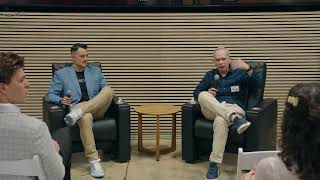
In this fireside chat recorded at Miami Venture Day 2025, Matt McIlwain, Managing Director of Madrona Venture Capital, discusses the firm’s 30‑year history, the launch of its $770 million, 10th fund, and the investment philosophy that has guided early bets on Amazon, AWS, Smartsheet, Rover, Statsig, and Read AI. He introduces a three‑point “triangle” framework (Why the problem exists, Why now, and Why this team) with founder‑market‑fit at its core, and illustrates it with Uber’s early product mis‑step. McIlwain shares gritty post‑mortems from Smartsheet’s front‑end rebuild and Rover’s pandemic‑driven revenue collapse, emphasizing resilience, capital recycling, and hands‑on support. He then shifts to AI, arguing that value lies not in the models themselves but in horizontal and vertical layers of the stack, describing consumption‑based pricing (base fee + usage) and questioning pay‑per‑result models. He outlines the thesis behind Read AI’s cross‑platform knowledge‑worker tooling and highlights Statsig’s monitoring‑as‑a‑service for large language model products. The conversation moves to macro‑level views on the AI boom versus bubbles, the importance of multimodal data, and the need for thoughtful regulation. Finally, McIlwain offers founder advice: cultivate genuine curiosity, synthesize conflicting data, make decisions quickly, and iterate, framing this as a curiosity‑synthesis‑act loop. Audience questions touch on AI evaluation rubrics and existential AI risk, to which McIlwain responds with pragmatic, regulation‑aware perspectives.
Chapters
So we'll get started with our first panel. We have the amazing Matt McIlwain, Managing Director of Madrona, based out of Seattle, about $4 billion plus AUM. Come on out here, Matt. And then moderated by— there it is— Pablo Castellanos, co-founder, managing partner of 161 Ventures. Thanks, buddy. Appreciate it.
Awesome. Thank you so much, everybody, for coming out. We got a great audience here, a lot of great founders, great investors, and I'm super excited to kick off this conversation. As Justice mentioned, Matt had a short flight from Seattle to get here, and he's a managing director at Madrona, which is currently celebrating their 30th anniversary. Matt has been with them for 24 of those 30 years, and they actually just announced their 10th fund. $770 million. So super excited to get into the conversation. Let's give Matt a warm welcome to Miami.
Thanks, Pablo. You know, and I think we should give it up for these guys too. I mean, unbelievable what 161 has been doing.
Thank you. Thank you. So before we talk about this big fund that you guys just raised, I would love to hear— so Matt actually grew up here in Miami. He went to high school at Killian. And anybody went to Killian? Raise your hand.
Any Killian Go Cougars?
All right.
Okay, well, sorry about that.
Yeah. So how does it feel to be back?
Oh my God. You know, well, first of all, thanks. Thanks everybody for coming out. Yeah, you know, I'm just a public high school kid from Miami. Went to Killian, went to Arvida Junior High, if you know that area of town, and absolutely loved it. It was great growing up here. My senior year we won the state championship in soccer, which was I think the first time our team had ever done that, which was pretty darn cool. And then went off to different places. But there's something about the innovation spirit in Miami that I've always loved. And I was hanging out with some of my old high school buddies last night, catching up and talking about that. And I'm excited to talk about not only what you all got going on here, but what we're seeing out on the West Coast as well.
Amazing. Sounds like you're very competitive, taking that state champ in the soccer team. But yeah, so you got this new fund, $770 million. It's the largest fund ever raised in the history of the Pacific Northwest, by the way. So what is the strategy for you guys to deploy this?
Well, I'll talk about our strategy on the new fund, but I think what's really interesting is to go back to our first fund, 'cause it wasn't all that different from your first fund. There were 4 guys, they'd all been successful, in different areas of business. This was 1995, so 30 years ago, and they decided to get together and invest their own capital. And they, you know, eventually invested about $10 million. So these guys had done well, and they had the capital to do that. Happily for them, one of the first guys— there was this thing called the internet, and it was sort of becoming a thing back then. I was actually living in Atlanta at the time, And one of the first guys that walked in the door had this crazy idea to sell books online. And most people were telling him it was never going to work. And he actually kept sending emails to my partner Tom saying, hey, we just sold our first book in Wyoming. We just sold our first book in Michigan. We just sold our first book in London. And a couple of months later, it wasn't right away, Tom and the team at Madrona became the first investors in Amazon. And That relationship, Tom was on the board for over 20 years. We held an event in a place that was a lot like this in 2007, 18 years ago. I got up, made a bunch of jokes about venture capitalists, a lot of material there, a lot of stuff to work with. And this guy named Andy got up and he goes, we've got this new thing at Amazon. It's called EC2, Elastic Compute Cloud. And you startups in the room, You might want to give it a try, because you don't really want to have to take racks, you know, put different servers in them, configure the stuff, and actually use that to build your software that you're trying to build. And we've got this other thing, it's called S3, which is Simple Storage Solution, or Simple Storage Service, and together we're calling it Amazon Web Services. Does anybody in the room know how much revenue Amazon Web Services generates today? Any guesses? $120 billion. It started in that room that was a lot like this room 18 years ago. And so, you know, for me, to answer your direct question, it's about betting on small teams that are passionate about solving a problem better than it's ever been solved before and having our team come alongside them to build lasting and enduring companies.
That's incredible. And you've been on the Forbes Midas List 3 times, which for those who are unfamiliar, it's very, very difficult to get on this list. And you have to invest in a company at the very early stages that goes on to become very, very successful, like typically billion-dollar-plus. And, you know, you back companies like Isilon Systems, over a $2 billion exit, Smartsheet, which was acquired last year for over $8 billion. I think a lot of venture capitalists say it's all about pattern recognition, and it seems like you've kind of figured out, you know, certain patterns. Could you talk a little bit about what are those things that you look for when you're meeting with a founder?
Um, sure. So, uh, I'll paint a little picture. Think of, think of this as a triangle, and then there's something in the middle of the triangle. So at the top of the triangle is the first question of why, like, why does this problem exist? And when founders come in to meet with us, I want to hear all about why you're passionate about that problem. I don't particularly want you to tell me about AI or tell me about cloud computing or something like that. We'll get to that. But the why of this problem and why you are obsessed to solve that problem better than it could ever be solved before. Down here is why now. Why now is like, okay, the technologies are changing, society's changing, expectations are changing, business models are changing. And we want to have some sense of, you know, you get that and you understand that and you understand how you're going to be able to solve that problem better than it's ever been solved before. But that's the why now point. And then there's why this over here. What's the thing you're actually going to be building? And the interesting thing about most founders we meet is that they're directionally correct and specifically wrong about this thing. Let me illustrate by using Uber as an example. Hitchhiking had been around for a long time, getting from point A to point B. That was a problem that existed. The why now was mobile phones and cloud and societal expectations about it's safe enough to travel with somebody else. Does anybody remember what Uber's first product was?
Black car service.
Black car service. It was a black car— it was a town car service. It wasn't you and I driving other people around, which became the killer business. They were directionally correct and specifically wrong on this point of the triangle. Now, the thing that's the most important thing is in any one of those points in the triangle, it's the middle. It's founder market fit. And in the middle is the founders. And the question there is, why us? Why are we the people that care more than anybody else about that problem? Get why now and have an attitude that's not like we're right, but an attitude of a continuous learning loop that we're going to figure out what's right to solve that problem and build a business. So that's my mental model. I love that.
In preparation for this conversation, I actually got the chance to speak with your partner, Jerry Greenstein, who used to be the CEO of Delta Airlines. And he told me when you first joined the team back in 2000, he was a little skeptical because he's from a consulting background. And he said very quickly he realized that you were going to be the person to lead the firm. And part of the reason is that he said, one, you're incredibly great at adapting and catching these different waves with cloud, AI, and then two, you were able to communicate that vision better than anybody else at the firm who had started Madrona. So as we all know, it's rarely a straight line to build a startup. And so as you guys adapt as a firm, the startups that you're backing are also adapting quite often. Could you share some of the stories or unexpected challenges or learnings that came out of some of these great successes that on the surface it looks like it was all smooth sailing and multi-billion-dollar exit, but it doesn't always go that way?
Well, first of all, it's very— Jerry was one of those four founders I mentioned before, and he had built a company called Western Airlines and sold it to Delta, was on the board of Delta. Several years later, he was the person that basically saved Delta. He stepped in as the CEO of Delta Airlines in 2003. If it wasn't for Jerry Greenstein, there probably would not be a Delta Airlines around today. So he's an amazing guy. He's 93 years old.
And he's still taking meetings with people like you.
And I love nothing more than just plopping myself down in Jerry's office and just BSing and learning from him because he's got so much to still offer. You know, so many people in the room are either investors or entrepreneurs, so you know this. Better than I do, because you've lived it firsthand in your own different ways. It's a freaking roller coaster. It's a hard roller coaster, and there's days when you're just about ready to throw in the towel. So you mentioned Smartsheet. Very kind of you. Smartsheet's a company that we did the first venture round back in 2007. In fact, Smartsheet spoke at that AWS event. They were one of the very first customers of AWS.
How many employees did they have at the time?
Maybe, maybe 6. Maybe 6. And here's what Smartsheet did. They realized the cloud was going to create an opportunity for you and I to collaborate and get projects done better and faster. That was their whole idea. The problem is about 6 months after we invested, we realized they built the front end kind of pre-mobile. And it just kind of was old already. They were only like a year and a half into the company and it was an old front end. And so all their customers that were trying it were churning out because it was just too hard and not modern enough. And so they stepped back, they rebuilt the product, and then, oh, we had this great financial crisis thing. That kind of sucked from a timing perspective. And so they were out of money, you know, in like December of 2008, and we decided to put another million dollars in to keep them alive. You know, now we were very impressed with this team. They had a lot of grit. They were resourceful. We took that bet that they could do it. And then, as you say, they're now like a $1.3 billion in revenue company that Blackstone and Vista bought for $8.5 billion. The deal closed in January. So there were a lot of other near-death moments in that company too. That was the most profound one, but every company I've ever been a part of has had those near-death moments, and I expect every one of your companies will too. And the hard thing is sometimes the right answer is, yeah, we tried it. We got something enough wrong. We missed the opportunity. It's time to live to fight for another day and try something new. And sometimes it's time to triple down and find a freaking way to make it happen.
So we were talking a couple of months ago and you mentioned that last year Madrona actually returned more capital to LPs than what they called from LPs. And I thought that was pretty remarkable because currently there's not a lot of liquidity in the private markets. LPs and VCs are, you know, both all figuring out how they can get some liquidity within their portfolios. And so what I'm curious about, I know that Smartsheet is an example. Rover's another one, was acquired for $2.3 billion last year that Madrona backed very early on, and several others like Z Data. How did you guys position yourselves or set you guys up, set Madrona up for success to be able to consistently return capital even in a time where there's not a lot of liquidity?
Well, first of all, you know, actually Smartsheet not counted at all last year because that's a company that went public in 2018, and by 2022 we had distributed all our shares. So our investors already had, you know, all the shares and the capital back from Smartsheet, and so hopefully they were happy with that. Rover was a company that got sold last year, and I mean, this is a funny story too. So So this was a company— has anybody heard of or familiar with startup weekends? They were kind of a thing. They're maybe not as cool and popular right now, but they were kind of these weekends where people would get together and they'd have different ideas and you'd kind of, you know, kind of build a first-generation product and kind of pitch it on the Sunday, you know. Okay. Rover was created at a startup weekend, and one of my partners was actually on the team I was one of the judges. I had to recuse myself as a judge, going like, that's the freaking coolest thing, and we should go incubate it. And so we did. And so we're incubating this company, which is peer-to-peer dog sitting and dog walking, in Seattle, in our offices. And this guy that he was part of a big company called Aquana that we'd also backed that Microsoft bought, he was hanging out with us. He was an entrepreneur in residence. And his name's Aaron Easterling. And he goes to us, he goes, you know, the only thing I love more than data and data science is my pet dog, Caramel. And I want to go hang out with those guys over there that are working on this dog-sitting thing. And sure enough, he became the CEO, still the CEO. I think he's actually now leaving after they got acquired, you know, last year. But that's another story. And that had its ups and downs. They had some— Rover was a public company. Well, they weren't quite yet. And COVID happened. Now, think about what business could be worse off than the company who sits your dog when you go on vacation and walks your dog when you go into the office. That was the business. They were— they did negative revenue in March of 2020 because people were canceling their contracts. And then 18 months later, they were a public company and now they get bought for a couple, you know, $2.5 billion. So I think that gets to your question. We have a phrase at Madrona: we're there from day one for the long run. So that doesn't just mean with capital, that means with, you know, rolling up our sleeves and coming along the journey with these amazing founders. Sometimes it's like hard conversations, you know, you know, are you scaling in the role that you want to be in? Is that the best thing for your company? Sometimes it's, you know, okay, like jumping up and down. I was with a founder on Monday who— his startup, which is a really cool AI startup, we can talk about it if folks want— and they had just gotten back from Adobe's big summit, and they were walking out of there with 600 qualified leads. They had spent 2.5 hours with 25 people from T-Mobile, and it looks like they're going to get a massive deal from T-Mobile. And the Adobe people are sitting there, can't believe it. I mean, Adobe's a $20 billion company, and here are these guys with couple million in revenue, you know, about 28-year-olds that used to work at SpaceX, and the T-Mobile people are fawning all over them. Well, that's a high, and you better celebrate the highs because there's going to be the lows. But I think the goal for, you know, people that are company builders that come alongside you, what we call venture capitalists sometimes, uh, is that you got to be steady in the ups and the downs and hopefully give some decent, you know, perspective and advice and maybe open a door. This company today, I was spending the morning talking with some folks from Amazon because I'm like, guys, you're just not helping these little companies like Gradial, this company. How do we get that dialed in better? You've gotten so big, you've lost your way a little bit on this stuff. How can we work together to make this happen? So, you know, that's the kind of stuff that we can, you know, open an extra door or two on.
I love it. We're going to have time for a little bit of audience Q&A in a little bit here. So if you have questions, you know, Um, you know, keep them in the back of your head. Um, I'm gonna shift gears here a little bit. So, um, obviously AI, the AI boom has, you know, surprised everybody how quickly things are accelerating and how much is happening. And about a year ago, you published a blog on LinkedIn titled that the most important AI model is the business model. And so what I would love to know from you is, uh, what are the comp— what are the AI companies that are benefiting the most in terms of like what types of business models and, and what are the companies that are generating the most amount of revenue right now? And what has changed since you published that article?
Yeah, a lot's changed. So, uh, how many venture capitalists have you met that said they were early in AI? Probably all of them, right? You know, so I'm going to tell you the same thing. We were early in AI. Um, I backed a company 20 years ago with a guy named Oren Etzioni. He ran the Artificial Intelligence Institute in Seattle, and it was called Farecast. It was basically a competitor to Kayak. That you're probably familiar with, except we predicted whether or not the airfares were going up or down in the future. So it was metasearch plus predictive. Kayak now has that capability too, by the way. Fast forward another decade and you're like 2012 and you've got Carlos Guestrin, the Amazon Professor of Machine Learning at the University of Washington. And we built his company and that company got bought by a little company called Apple. Back then in 2016, there were 5 machine learning models in this device. Today there is over 1,000, over 1,000 AI and ML models. Now, you and I might both agree some of them kind of suck. Like, I don't know about Apple intelligence, to be honest. I think it's got a lot of work to do. So, I mean, you know, this is, you know, a real challenge for them. I think Apple and Google are the most challenged of the big tech companies right now. So what is happening in AI? Well, our belief was, you know, 5 years ago that the models were not going to be all you need, that foundation models, frontier models are commodities— not quite the right word, but sufficiently undifferentiated. And so that was not where the value was going to be captured, that the value is going to be captured up the stack in 2 different ways. Certain horizontal slices. We've got a company called Statsig. Basically what Statsig does is they help you pre-launch your, your app and then post-launch your app and monitor it and see what works and what doesn't. Now, all of you that have built software know that's really hard when it's just software. It's a hell of a lot harder when it's an intelligent application. Statsig's doing many tens of millions. It's less than 4 years old as a company. This is going to get to your business model question. Many tens of millions in revenue. Their largest customer is ChatGPT because, you know, ChatGPT is always tuning and twisting the models. And if it's a different version of GPT-4.0, what's it going to do in terms of your engagement? What's it going to do in terms of your ability to and desire to monetize and to retain paying $20 or $200 a month? That's what Statsig helps them. So that's a horizontal layer. But then there's a lot of these vertical layers as well that are, you know, whether it's legal tech or insurer tech, etc. So in the case of a statsig, what we're seeing a lot of is a, what I'll call a modified consumption model, where you try to get your customer— and in many use cases, especially these horizontal ones, they'll be willing to pay some amount of a kind of a retainer, a subscription, an annual service kind of level fee. You can think of that as like a SaaS ARR, but for kind of a bigger slice. And then there's got to be some kind of governor on it. And the governor is, you know, like how many customers in that case are they sort of checking to see what they're doing with chat? I mean, we're talking, you know, 400 million, you know, monthly annual, you know, monthly, you know, users. So it's a lot of money with ChatGPT. But there's a governor on how many basic, you know, kind of increments of usage You know, Databricks, you know, calls them DBUs, Databricks Units. Snowflake has a mechanism for this too. And so it's like, okay, base fee plus usage. And then if you use more, we want you to use more, so we'll let you keep using more. We'll get you addicted to using more. And then at the end of the year, we'll settle up. That's a pretty clever model. It's not necessarily an original model, but we think that's becoming a more in vogue model. Now, the big question on the agentic application layer, which I think is unproven— I'm kind of a skeptic, but, you know, when Marc Benioff's out there running around talking a big game about this, maybe he's right— which is kind of this, like, what kind of a result do you deliver? Pay-per-result. And the result could be a customer service call. The result could be a lead that you generate for me. There's, you know, the results could be a settled claim on, like, an insurance claim. And there's kind of this notion of paying for the result. I'm not as convinced that that model is going to hold, but there's some experiments being run. And, you know, that's the thing, and, you know, the market right now, I think even though it's had a crappy first quarter, I think it's going to be more resilient throughout the rest of the year. And I think it's going to allow for people to do more experimentation.
Absolutely. And, you know, you mentioned the agentic solutions that are coming out, and I was just curious because I know you guys backed Read AI super early on, and that company has just gone crazy and been growing so fast. Could you talk a little bit about, you know, what was the, the thesis there behind investing in them and, um, and then how that all came about?
Well, um, Reed is a company that basically helps you be more productive, um, in your kind of— as a kind of a knowledge worker, if you want to use that term. And this is actually the fourth time we've worked with the founder. He was like, uh, right out of University of Washington employee at one of our early companies. He was then a mid-level guy at that company, Farecast, and then he started a company called Placed. It eventually, in a long story, got bought by Snap, spun back out, became Foursquare. He was the CEO of Foursquare, if you remember Foursquare. Some of you might. So Reed was started with this notion that a lot of people had moved 4 years ago into Zoom meetings, Teams meetings. Google Meet meetings, and wouldn't you like to know how you're doing during the meeting? Like, the problem was, am I being effective? Am I communicating? Am I telling my story? It turned out that was directionally correct and specifically wrong. People actually didn't want to know how they were doing in the meetings. They didn't like the idea that the other people on the other side of the Zoom meeting kind of thought I was sort of being a jerk, or I wasn't using the right language, or I was kind of boring, or all these sorts of things. Things, but they quickly realized that the more simpler solution of just giving me an AI-generated transcript of the meeting was super helpful. And then they further realized that, you know, it's not just Zoom, it's not just Teams, it's not— you know, but you know, sometimes I have these long threads in Slack. I'd actually like an AI-generated, you know, summary of that too. And I kind of like an AI-generated summary of all these freaking emails I have to go through every day. And the point is not that they could do it for anyone, because every one of the companies that exists out there does that for their own thing. They don't do it across all of them. So in effect, now Read has become kind of a bottoms-up version of a company, a hot company out on the West Coast called Glean. Glean's kind of an enterprise version. Read's kind of a bottoms-up, um, you know, personal user version of a tool that allows me to kind of search over all my content whether it's structured or unstructured, make my life easier.
Awesome, thank you.
And yeah, and they've got 60,000 paying customers, tens of millions in revenue, growing, you know, triple digits.
Last valuation was like above $400 million or something like that, I think.
$450.
Yeah, incredible.
And incubated in our offices, you know, 4 years ago.
You guys are getting all the best founders to incubate in your office. We need the cheat code.
I think you guys are dialing it in. I'm impressed.
Thank you. Thank you.
All right.
I'm going to ask two more questions and then we're going to open up to audience Q&A. So you started your career at the peak of the dot-com boom, and now we— it seems like we're somewhat of an AI boom.
Yeah.
Is this a bubble or is this truly like a once-in-a-generation technological shift?
I'm on the bull case of this, so I'm happy to debate the bear case. But having seen a bunch of bubbles, And having been wrong on a few of them, maybe most importantly, VR/AR. I'm not throwing VR/AR totally out. I mean, I think there's a lot of interesting things that have happened we just take for granted now in terms of kind of multimodal augmented capabilities that we enjoy with all these different devices we have on us, right? But we were wrong on that. Absolutely wrong. Just way too early, way too complex. We're not wrong on AI. We're collectively not wrong on AI. The, the, the, the value of taking— the magic here is about not just about the algorithms, it's about unlocking the value of unstructured data and semi-structured data and combining that with structured data, and then unlocking the value of unstructured processes and workflows with structured processes and workflows to solve problems in materially better ways. And we're just getting started with the algorithms, too. I mean, the stuff that we've seen with Transformers is super cool, but what about formal methods? And what about— I mean, there's a whole bunch of other things in the research community that are rapidly coming down the pike that are going to make this all better, and they're going to make it all better in a multimodal way. So I mean, when I use Perplexity, 9 times out of 10, I use voice, and I get voice back. And so that's a different multimodal dynamic. I wrote some stuff up on a plane a couple days ago. I took it into the office and my assistant just took a picture of it and put it up into, um, Vercel v0 and made an app out of it. It's going to be transformative. And so yes, are there going to be bubble prices? Yes, are there going to be celebrated sad stories of companies that are mismanaged and go to zero and run out of cash? They're always going to be that. That's venture capital. Venture capital is by definition a daring and risky journey. Actually, if you look it up in the dictionary, venture is a daring and risky journey.
And for the people in the back, if you guys could please keep it down, we just got one more question, like a little bit of audience Q&A. I promise we're going to have time for networking in a little bit. Um, so yeah, very bullish on AI, as you heard. So everybody, this is the time. Don't miss out on your opportunity. This is the wave. Um, last question. We have got a lot of great founders here in the audience. A lot of them are fundraising, some of them first-time founders, second-time founders, and I would love to get your thoughts. You've incubated and helped some of the most revolutionary companies in the world get started. What piece of advice would you give them as they, you know, start their startups and begin fundraising? Um, guys, please keep it down.
So, so yeah, so we, we have backed a lot of founders, and many of our most successful companies, the founders have been there the whole journey, end to end. And so we really look for folks that, even though they may play a different role at different points in time in the company, that they really have that capability. So what is that? And I think that would be— and if you're asking for kind of advice, I've noticed a pattern of founders that are successful. The first thing is that they're curious. And when you say, well, what does that mean? What I mean by real curiosity is that you're committing an act of humility. Because if you think you know everything, you're not curious. You are not in your core willing to listen to somebody else's point of view and learn something new today. So genuine curiosity. Now here's the problem with genuine curiosity. You get conflicting data. So the next thing you have to be good at is synthesizing or triangulating the data that you get, because the genuinely curious person could get confused. And once you kind of ultimately have to make a stand and say, I'm going to put my weight down on something, that's the synthesis part and making a decision, then you got to act on it. You know, my friends that have served in the military say that the worst thing you can do is not make a decision. It's better to make the wrong decision. And same, you know, my alma mater, they somehow got Roger Federer to come and give the commencement address last year. Roger Federer won 80% of his matches. What percent of his points do you think he won? 54%. 54%. He was wrong 46% of the time. Now, his other point was, well, I won the points that mattered. True. Very valid. But you've got to be willing to decide and act and be wrong And then you're coming back around the circle to curiosity. Because if you're getting new data when you act, and sometimes you're right and sometimes you're wrong, and you got to incorporate that into your theory of how you're building the company. So the curiosity, synthesis, act circle, I think is a really good set of attributes for founders.
So be curious. We're going to take one or two audience questions and then we're going to keep the program moving. Andreas, can you give me a hand maybe passing this here? So raise your hand if you have a question. We have one right here.
Hey, Matt. Thank you so much for chatting with us. I really appreciate it.
Sure.
So my question is essentially this. Obviously, at the dawn of any new technology like AI, there's a ton of startups and a ton of different concepts and a way to implement it. And a lot of them have been done already, and there's going to be plenty more to do as the years roll on. As an investor and someone that kind of works in that space, when someone is going to eventually come along and propose a different or novel approach of how we could implement AI for whatever use case it may be, what would be the questions or like the rubric you would kind of give yourself for evaluating how they're going to implement that approach? Obviously, numbers talk at the end of the day, but if we had to like just remove that and just say, this is how I would approach this problem using AI, what would you ask yourself to validate whether or not what they're saying outside of the numbers?
Yeah, so the question is, is like, how would you be thinking about, um, you know, sort of validating why AI is going to solve some problem? Back to my triangle, right? Why is this A, this why now? AI's gotten better. By the way, AI's gotten better a lot because there's a lot more data and there's a lot more digitized data and there's a lot more diversity of data types that allow the algorithms to actually be more useful. So there's a whole bunch of things beyond just better algorithms. What I'm really listening for and looking for is your depth of understanding of the problem and why you think that AI can solve that problem better than something else. And so, for instance, a lot of people came to us pitching us blockchain companies, and there's been some cool blockchain stuff. I'm not dissing blockchain, but over and over again, the question was, well, can a database do this? And maybe even a database that's centralized would be better for this thing versus a decentralized trust-only network database architecture. And if they didn't have a good thoughtful answer around that, then I was like, hmm, okay, so why, why are we doing— now, you know, there were some interesting examples and some of those things haven't, I think, fully matured yet. Um, I think you're also looking for, back to this question about business models, um, I don't believe the world's going to be sell-side as much in an AI world, so I'm looking for novel thoughts. What do I mean by that? I mean, my, my seller's agents today are called Google, Meta, and Amazon. I don't want a seller's agent. I want a buyer's agent. In a world of AI, I will have a buyer's agent. It will know what Matt wants. It will have all my friends' advice implicitly through what we call artificial societies, swarm networks. And it will then recommend to me the perfect flat panel TV for Matt. That's a buy-side dynamic that's got to change the business model. And so I'm listening for people that have strong convictions loosely held about where they think the world's going.
Thank you.
One more right over here.
Hello.
Thank you for impressive presentation. My name is Will, and we are building an ecosystem that can help to save humanity from extinction.
And the question to you is, as an expert in AI and a wise man, What do you think should we do in terms of singularity, how to restrict AI from actually destroying humanity? Thank you.
So this is a really good question, this question of what are the risks, what are the downsides of AI, artificial general intelligence, singularity, if you buy into that thesis. This may be a provocative point of view, and I think it's an important set of considerations. Sam Bankman-Fried was arrested with the existing laws. We didn't need new laws for crypto when somebody acted badly. And I think the same is generally going to apply in AI. That, you know, now, if you take the leap that tomorrow we're going to have singularity and it's going to, you know, we're going to have not only singularity, but, you know, we're going to have, you know, situations where, you know, the bots are controlling us. Okay, you've got to take that leap. I think that's a big leap of faith for a long time to come. But I think the main AI for a long time to come is going to need to play by the rules, just like everything else has played by the rules. And we need to have some of the disruption happen first. This is the provocative thing before we're going to fully know how the regulations and the policies need to be updated and modified. I have plenty of friends that take a different side of that view, and so I'm not saying it's right. It's just been my perspective from having seen a lot of these cycles in societies that have been overregulated. Have tended to be under-innovated.
Great. Thank you so much, Matt. Give it up for Matt.
More from Matt
Rising tide is lifting all hyperscaler boats right now, says Madrona's Matt McIlwain
Launchable: Foundation Models - Matt McIlwain on "The Intelligent & Generative Apps Phenomena"
The Mix -- Venture Capitalist Matt McIlwain Interviewed by Mixpo CEO Jeff Lanctot