The Mix -- Venture Capitalist Matt McIlwain Interviewed by Mixpo CEO Jeff Lanctot
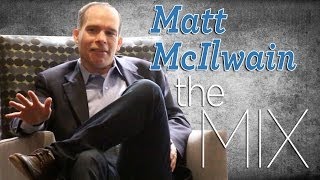
Matt McIlwain, managing director at Madrona Venture Group, explains how Mixpo pivoted from consumer video to advertising platform by staying customer-focused and disciplined about scope. He highlights winning traits: solving a clear problem, riding secular trends like cloud and big data, and founders with curiosity backed by data. Seattle's lower costs and emerging cloud ecosystem rival Silicon Valley's scale.
Chapters
Okay, thank you everybody for taking, taking time out of your day to join us for the latest edition of The Mix. It's a real treat today. We've got Matt McIlwain joining us. Matt is one of the most prominent investors and business leaders in the country. He's a managing director at Madrona, the lead investor for Mixpo. He's invested in and is a director of companies that include Icelan, Aptio, Faircast, Payscale, and of course Mixpo. He teaches a course on venture capital for the University of Washington's MBA program. He is on the board of the Fred Hutchinson Cancer Research Center, fresh off a successful fundraiser Sunday evening, among many other activities in the community. In recent years, Matt has also become a very influential voice on public policy, both in the state and in the nation. Matt, while you and I meet frequently, the rest of the company isn't so fortunate. So on behalf of the company, I want to thank you for joining us today.
Thanks, Jeff. Is that a setup?
So Matt, you and Madrona have been involved with Mixpo really since the beginning. And so I think a good place to start might be for you to talk to us a little bit about What initially excited you about Mixpo? What's kept you interested and why you're bullish on our prospects moving forward?
Well, if you go way, way back, there was a bit of a different vision initially, as some of you might have heard or remember, and it was more consumer-focused in its intent. But this was, you It was— there was a commitment to video, and there was a commitment to video in an era when this thing called YouTube really didn't exist yet. But YouTube had been created and, in fact, came on quickly. And I think, in retrospect, wisely, the company chose to not go try to compete with that. They had a different— somewhat of a different model in the very, very early days, but said, you know, video is going to be big, and we have a great nucleus of a technology team and we believe we can find our way into a compelling market. And that, I guess, early pivot was, I think, a very smart early pivot. And over time, the company's focus on the video market and how it has developed over the last 6, 7 years, and now it's early, but leadership in video advertising, I think, has been validated by where the market is today. The other piece, and we, you know, collectively had to do, you know, some team building, and all of you here, you know, weren't all there through some of that early team building, but the company's always had a steadfast focus on understanding the customer and trying to meet and delight the customer's expectations, exceed the customer's expectations, and delight the customer. And I think that's a a cultural DNA that does not exist in many companies. You might think, oh, that's not that hard to do, that's, you know, isn't that obvious? But in my experience, that's a really hard cultural area of focus, and it's absolutely essential, we believe, to long-term success. And so the company's done a really good job of that. The last thing I'll add on that in terms of You know, what I've been impressed with over time is, you know, in the advertising ecosystem, the ad tech space, it is easy to fall into the trap of generating revenue that looks attractive but is hard to differentiate and hard to actually have the value captured within it. And, you know, the economics of this business would, would show you that while, you know, we've We've not been able to grow as quickly in some respects as we'd like. Happy to chat about that. But we've been able to grow steadily. We've certainly grown in a way that delivers substantial value to our customers, and we've been able to capture that value. Everybody— well, most everybody in the room probably remembers Cosmo.com. Now, local delivery services are coming back into vogue, but Cosmo had a really interesting business model. Their business model was, you order anything you want from us. This is 2000. We'll deliver it to you anywhere in Seattle. You order a box of Junior Mints, and that's just fine. We'll deliver it to you. It was one of those business models where they were creating a ton of value for the consumer, and they were not capturing value. In fact, they were destroying value. For their corporate entity. You all have done that very differently. Video is a great secular market trend. The customer focus, the commitment to the customer experience and delighting the customer, and being able to capture value in what you deliver are the 3 keys for me.
Great. You touched a little bit on how Mixpo is differentiated in terms of that focus on the customer. When you look at your current portfolio, successful companies that have had nice exits with, with Madrona in the past, what are the traits of those companies that have made them successful? If you can look across different company sizes, different industries, are there things that stand out that you see time and again in your portfolio?
Yeah. So a couple things. One is this customer centricity point. Again, seems obvious, but having a clear understanding of a customer-defined problem and helping them solve that problem better than anybody else in the world is essential. I'll give you a couple of examples. So this company Isilon that you referenced, Isilon was a storage company, and they, they understood some secular trends, which is also important. They understood that most of the storage that had been built was what we would call scale-up storage. It tended to be for transactional databases that scaled up as you had more information in your database. But they were noticing a trend as young, you know, very talented technologists at RealNetworks that when they would deploy the real network servers, the content, which at that point was typically music behind it, even just a music file, was a bigger file, and it was being read a lot more than it was being written. Obviously, you write it once, and then you just read it over and over again as people listen to the music file. And that that was not working well with the historical types of storage that were transactionally oriented and scale up. And happily, Sujal and Paul and their early team said, you know, we can go and build a better system. That's something we'll eventually come to call 5 years later. They didn't call it initially that. Scale-out storage. And not only that, but we'll do it with commodity hardware. So the other secular trend was this commoditization of hardware, particularly storage hardware, so that they could use the same kind of disk drive that you were using in your PC, and you could use those with the distributed file system. System that they were smart enough to be able to build and revolutionize the storage industry. That company today, which was bought by EMC for a couple billion dollars a few years ago, does over a billion and a half of revenue for EMC and generated $400 million of profit to the bottom line from two 26-year-old engineers at RealNetworks. So the focus was, and I'll make that point with another example, the focus was on a certain type of customer who had a very clear problem that wasn't being solved by the incumbent solutions. In fact, one of the interesting things about Isilon was, I still remember, we did the Series A financing in 2001. All of the customer ecosystem out there generally had this capability set that they wanted from their storage vendors called snapshotting. Some of you guys more on the technical side understand what that is. And Isilon said, yeah, no, we need to build that. Someday. We all thought we'd have to build it by the first generation of the product, and then we thought we'd have to build it by the second generation of the product. We got to almost $100 million in revenue and launched that feature in 2007 because the customers that we had and we were focused on delivering the scale-out storage actually didn't need it as much as they needed the solution we had to their problem. And so that feature could sit on the sideline for 6 years. And that's what I mean by customer centricity, because the other piece of it that's a challenge in these examples is you have to make trade-offs. You can't do everything for everybody. And I actually think that's a challenge that we're still working through at Mixpo of what's going to be the inbounds of the things that we're going to be best in the world at and that we're going to delight our customers at, and sometimes have to say no, which is painful, super painful. I think we're getting better at that, but I think that's going to be a really important attribute of the months and quarters and years ahead for Mixpo because counterintuitively, if we say no to some things, you know, my conviction is that as long as we're customer-focused and we know what we're saying yes to as well as saying no to, we'll actually accelerate our growth even faster.
Before you give your second example, I think there's an important point on Iceland that I'd like you to share. You mentioned the Series A in 2001. You mentioned the exit at $2.4 billion to EMC. It was not a clear path.
It's never a clear path.
So I think the patience that Madrona showed and the commitment you showed, you know, I think is helpful as we are in our, you know, our 7th year working with you.
Yeah. So, yeah, as Jeff painfully points out to me, journey. I didn't say it was horrible, I just said it wasn't smooth. It was an up and down journey. It was an up journey for a long time, and the company grew from zero to eventually, you know, close to $60 million in revenue, went public in late 2006, but actually was kind of growing at almost any cost and was not paying enough attention to really delighting those customers. They lost their way a bit on that. Long story. And then that all kind of came out unfortunately in the first couple of quarters after the company was public. And so a stock that at one point was at $25 a share went down to $5 a share by the end of 2007. But it got worse. We probably made some mistakes on financial accounting. We did make some mistakes on financial accounting, our CFO did, and didn't really disclose disclosed those to others, so he got fired. CEO probably should have caught that, and he got let go. And then the founder, Sujal Patel, came back in as the CEO. He'd never left the company. He was the CTO for a number of years there. And we had to rebuild the whole momentum of the company and to some extent re-go back to that culture of frugality and customer centricity that was part of the DNA for the first several years. A little bit of a longer story, sorry about this.
No, no.
And then of course the financial crisis hit, so things got even worse before they got better. And eventually we had a stock price of $1.86. Sounds like a quantive.
Yep.
And in fact, in March of 2009, I intentionally sat Sujal, this was when it was trading at about $1.86, next to Brian McAndrews at a Madrona dinner that we were having. Because I wanted them to commiserate a little bit. And Brian was gracious with his perspective of how they made the comeback at Equantiv. And Sujoel was in the middle of that transformation. In fact, in that cycle right there, we actually went in the open market and bought more stock in the company because we believe fundamentally in the company, even though their market value had gone back down to like $100 million from at one point $1.5 billion. And without getting into all the story details, about 20 months later was when the company got bought for $2.4 billion, which is a $34 a share roughly stock price. So these things have their funny ways of going up and down. And sometimes it's better to be lucky than smart. And yet, I think if you have conviction about those core things, customer centricity, macro market trends, and the team's ability to execute against it, you know, which I do have very much so in Mixpo, you stick with things for the long term, even those periods when we're growing fast and then there's some periods where we're not growing as fast as we'd like, and I think we're starting to turn the corner in terms of the pace at which we're seeing growth in the business, and I feel really, really good about that.
So we talked a little bit about the traits of the companies you've invested in. One of the reasons we do this interview series is, well, two reasons. One is for people to kind of step outside the day-to-day and think about broader business issues. And the other is to find new and creative ways to think about career development and how they improve, or the employees can improve day-to-day in their jobs and at Mixpo or beyond in their careers. So as you think about those successful companies, are there traits of employees that have stood out?
That's a really good question. You know, I think that there's a set of traits that I generally ascribe to entrepreneurs that tend to also apply well to individuals, team members within entrepreneurial companies, of which you guys very much are. We talked about customer centricity. Another one that's super important is curiosity. You know, we're in an interesting era of curiosity now. One of the big changes in curiosity today is that you can be quantitatively curious. You can be analytically intuitive. And so, and you can run those experiments fairly quickly and see if your curiosity and your intuition, you know, your intuition was right or wrong. Your curiosity gets proven or disproven, your hypothesis as it were. And so that combination of being curious and letting the data prove or disprove things so that you're more concerned about, you know, getting to the right answer than being right. That's a really important part of the entrepreneurial culture. The other thing is, as you let that data-driven curiosity iterative process unfold, You do have to be determined. I mean, not every day is going to go great. And so you need to be determined to manage through those days that aren't so great. And this is also hard. It's hard for me to be transparent about what did go well and what didn't go well and what I could have done better. And, you know, what was, you know, the things I did, you know, really well at. I mean, don't be boastful, 'Cause I think I'll get to my last attribute in a second. And in that kind of transparency, I mean, the hardest thing in business is to be able to make the best decisions possible. And the biggest limiter to making the best decisions possible is having the most complete and accurate information you can have at any point in time. And so if you're hiding the ball on something you're learning in the market, especially if it's something that you were involved with that kind of got screwed up, there's no way you're going to get better at it. And so having that kind of a personal commitment to transparency and continuous learning and a culture of that is really important. Which leads to the last thing is that there's going to be days when you guys just kick butt and you do great stuff and you're fired up. And there's going to be days that are a little bit harder. Trying to maintain a humility a, you know, personal humility. Yeah, it's super great to be confident and proud of your work and proud of what you've done, but a humility in all cycles I found is a— it's a really important and tangible attribute of ultimately being successful. One of the other entrepreneurs in town I've worked a lot with is Sunny Gupta. Some of you may know Sunny, and, you know, he's a really charismatic guy and an outgoing guy, and he's got a lot of reasons to be confident. He's built, you know, an incredible business in Apptio, But he absolutely commits to being transparent and humble. And I think he, you know, again, he's not perfect at it, which is part of the great thing. But, you know, he's trying to encourage that in his team, and I think that's good for all of you to try to take on board and make it your own. And we all have different personalities.
Good. Thank you. That's very helpful. Let's go even a step out further, outside of Madrona, and talk a little bit about Seattle versus Silicon Valley. There's this sort of off and on debate about, you know, is, you know, Seattle up to the task of competing with Silicon Valley, whether it be venture capitalists or entrepreneurs or building billion-dollar-plus companies. What's your perspective on the differences between the two cultures and the ability for companies to grow and succeed in this area?
It's a good question. Well, you know, when you're playing cards, they always talked about throwing out the losers early. So let's get those out on the table. There is no way we can compete on the scale, in the near to medium term at least, of Silicon Valley. They've been at it longer. There's a lot more capital. There's a lot more companies, there's a lot more people. I don't expect that's gonna change in the next 5 years. So there's a scale advantage down there. There's also a history, right, that generically speaking starts with testing instruments and the like, leads into the semiconductor ecosystem, which leads into the hardware ecosystem, and it leads up into the stack and software and other things. Third, there's a dynamic which is this cultural thing which I really like of, and this is different in a lot of places in the country and the world, there's a cultural thing in Silicon Valley of it's not about whether you succeed or fail as a person in a particular thing. It was like, did that idea succeed or fail? Back to my comment about being curious and iterative. In the Valley, I think they've got this right that it's more like I go and try something and if it doesn't work out, it's not that I'm a failure, it's that that thing didn't I can fail. And the only way I can fail is either if I give up ultimately or if I don't learn from it. And I was talking to a senior exec at Coca-Cola just earlier today and he wants to move to the West Coast basically. He's sort of like, okay, I've been here at Coca-Cola. I used to do things more entrepreneurial. We've done some cool stuff, but I can't take it anymore. And that's nothing wrong. Coca-Cola's a great company. So, I think those are some of the things that Silicon Valley has going for it. Here are some of the differences and similarities vis-à-vis Seattle. I do think that the scale in the Valley creates a hyper-competitive culture. And that hyper-competitive culture leads to everything from paranoia to people switching jobs all the time to, you know, just the kind of drama. I'm not saying that the show Silicon Valley is accurate in in this portrayal of these things. But—
I'm not saying it's not.
I'm not saying it's not. Some of you might remember a television show called Alias. Yes. This is one of my favorite shows back in the day, and I used to think that there should really be a series called Venture Capital Alias for Silicon Valley, given some of the behavior that happens down there. And I guess Startup Alias. At any rate, be that as it may, I think that's an unhealthy We do not have that culture up here, and part of the reason is we don't have the scale, and we also don't have the competitive dynamics in the same respect, but we have people that are committed to trying to be the best in the world. And I think the mistake that sometimes the Silicon Valleyites make is just because we aren't as big as them doesn't mean we can't be as good or better than them in a lot of different areas. And the, the thought experiment on that is to ask, okay, If you looked at the top 5 by market cap technology companies in the world, where are they? 2 of them are here. Amazon and Medtronic— or not Medtronic, Microsoft, sorry. 2 of them are here. 2 of them are in the greater Valley area, Google and Apple. One of them's in Armonk, New York, IBM. So what that does is it's not just about big tech market caps. It is about access to people who understand problems going back to Sujal Patel and understand world, world important problems that they think that they can go after solving with their insights of where the opportunities are and the macro trends are, which they can take advantage of to solve those problems and build companies and build success better than anybody else in the world. And I think pound for pound, and we're not as heavyweights as those guys, but for pound for pound, we can win as long as we have teams that stay focused on where they think they can win, what their passion is, what their focus is, where that problem is they're trying to solve. And I guarantee you, in digital media, you know, we've got a lot of that DNA right here in this town, and we can attract that DNA. The one other thing I'll mention on this, I've been rambling about on this topic is when I first moved here 15 years ago, the number one issue in Seattle was somebody that you were trying to recruit from out of town, and they said, what happens if this job doesn't work out? You know, where am I going to go? And today, that answer is very different, so that question almost never gets asked. You can go to Microsoft, you can go to Amazon. If you don't want to go there, there's a whole bunch of mid-tier size companies. If you don't want to go there, there's a whole bunch of large outposts. And if you don't want to go there, you can go start something because this DNA is strong enough to start something. And so that's a great change in why the flywheel, I think, is dramatically spinning in a positive direction for this geography. I mean, not to mention the whole mobile ecosystem here. It used to be uninteresting from a startup perspective to build mobile companies because it was the network guys, i.e., the carriers, and the equipment companies that sold to them and the handset manufacturers had all the power. That has dramatically changed. And we have a lot of great mobile DNA. At any rate, I could go on.
No, thank you. That's excellent. So we've talked about Mixpo. We've talked about some of your portfolio companies. Let's talk a little bit about Madrona and the business of venture capital. You know, you talked about 15 years ago how different things were and certainly there will be shifts in sectors and there will be investment areas and investment thesis that come and go, but the business of venture capital over the last, let's call it 5 years, how has that changed?
Yeah. A 1-minute context and then I'll look to answer that question specifically. Madrona is an early-stage venture capital firm. We do early-stage venture mostly in the Pacific Northwest. I would call that classical venture capital. If you talk to most early-stage venture capitalists, they will say early-stage venture is a local business because of all the things you need to do. We can't do much, but the things we can do can be helpful to you all in building a successful company. We've happened to do it here. We were started by a group of guys 20 years ago. It was all guys. It's not anymore, but it was then. That had all had success in their careers in different respects. Decided to get together and invest their own capital. Happily, one of the first guys that came in the door was this guy that had this crazy idea to sell books online. My partner Tom took a liking to him and ended up leading that first round. I know Nick thinks he led that round. We can get to that. And Tom's still on the board today of Amazon 20 years later. And so that was one of those kind of hallmark investments and Hallmark companies, of course, they're one of the two top 5 market cap companies. Over time, they raised outside funds. I joined them after the first outside fund was raised in '99, and then for the last, you know, 15 years, we're now on our 5th fund. So we're investing a $300 million fund. How that works is a digression, and we'll talk about how the industry changes, is venture funds typically go out every 3 to 5 years and raise a new fund. Now, that doesn't mean that everybody's got to write checks and put all the money in the bank. They just have to contractually sign commitments to write checks to us when we ask them to. It's called a capital call. And so that $300 million, we maybe invested, I don't know, it's less than 100 of it so far, because we always want to make sure we got lots of capital on hand should you all need more capital for the next phases of the business. And we've got plenty of capital reserved to support Mixpo along its journey well into the, you know, future. And so what we do is after we make a certain number of investments, typically over a 3 to 4 year period, so okay, those are the companies in that fund and we're gonna reserve enough capital to support those companies and grow them until they're, you know, big and successful. And we get paid to do that by our investors. We get this thing called a management fee. So that's how venture capitalists work. Now that's different from the spectrum of investors, to kind of get to your question of how the world has changed some in the last 5 years. I don't think it's actually changed a lot, but there are a few things that have been interesting about its change. The first and most important change is that you can run these experiments with a lot, a lot less capital. You can go out to AWS and spool up some storage and some instances. You can do some pretty lightweight programming, and with, you know, relatively small amounts of money, you can test not just a couple hypotheses, but you can actually test at least a product and maybe some sense of if there's a product-market fit. And that's just great. And on top of that, another innovation that's happened is there's been some successful variations of what we'll call incubators or accelerators. From our perspective, that's just more shots on goal, more people learning about entrepreneurship, more people running experiments. That's all goodness. We've been just delighted. In fact, it's not widely known, but some of you have heard of this thing called Techstars in town. We fund half of Techstars every year because that's just a bunch of great shots on goal happening. Startup Weekend, one of my partners is on the national board, or global board, I was on the global board of Startup Weekend and we helped get that going several years ago when it was launched here. In fact, there's a mini version of Startup Weekend over the course of our class that a few of you might have had some experience with. And so we're looking at lots more shots on goal, lots more ways to do that. We're, you know, 40% of our investments start as seed investments ourselves. So we have quite a bit of experience from that seed stage stage, often right in our own offices, all the way through the lifecycle. Having said that, I think some firms, you know, have lost their way on being able to do seed and really early stage and gone to a different stage in the lifecycle. That's not necessarily bad. It's just, you know, they're not doing early stage anymore. Some firms have said, you know, we're going to be multi-stage, all things to all people, and try to make that work. And I think the other piece that's really interesting is there's been a bit of a redefinition of what's in bounds and what's out of bounds the way that the venture capitalists or investors add value. And so I think for us, that's pushed us to even more systematically add value. We actually have a team of people, some of you had interactions with, that we call our Systematic Value Add Team. It's not a very catchy name.
Branding, not the strong suit of venture capitalists. I know, I know.
They don't. Although that's part of what we've done, actually. We've brought in as director of strategic communication Erica Schaefer. Worked at Rio, worked at Microsoft, was, you know, in a firm for a while. Partly to help us, you know, kind of raise our national profile with some folks, and notably the media, which helps us get our companies better access in different ways to the media. And she also helps with different kinds of events and all. You guys have had some exposure to Erica, but people like that that are dedicated to value-add, and that's a bit of a change in the industry over the last 5 years, the sort of systematization, if that's a word, I don't think it is, you know, of value-add by venture capitalists. And again, that mindset that, you know, we're getting this management fee and we can take this long-term view to to be with you all over the journey, which has its ups and downs and takes a long period of time to ultimately dial in that product market fit, ramp it, and create the maximum value that collectively we think possible for the company.
Yeah. Let's talk a little bit about your areas of interest when it comes to investment. I know that you have been one of the leading proponents when it comes to the cloud, investments in the cloud, of which you and Madrona have made many. What was it that you saw early on about cloud computing that was so interesting? And then part 2 of that is what's next that's getting you excited in terms of a sector investment?
So, you know, I was a political philosophy major, so I'm not trying to pretend that I'm a computer scientist, and I'm not. But one of the most fortunate things that happened to me coming out to join Medrona was that we had a bunch of guys in the computer science department here at the University of Washington that became really good friends and educated me on some stuff I had some ideas about and realized just how much I didn't know. And back then in the early 2000s, there was this really cool technology that was being talked a lot about in the computer science world called virtualization. Virtualization. It's that fundamental idea of separating, you know, the hardware from the operating system and the application, you know, so that you could run multiple operating systems and applications on the same physical piece of hardware. That's where the focus was. Interestingly enough, the original focus was actually on personal computers and not on servers. And once you created that level of abstraction, it created what I believe was sort of the last great on-premise licensed software company, a company called VMware, one of the deals of a lifetime. EMC bought it for $600 million, and its market cap is over $30 billion today. You, from that, had further opportunities of abstraction. And that abstraction ultimately was to say, we're going to be able to turn all the things that we think of as hardware into software, or at least a software-defined or driven service. And happily for us, because of our Amazon relationships, we knew that they had re-architected their internal IT around this concept of a service orientation, had built that out, and were having some success with this kind of in the 2002, '03, '04 kind of timeframe. And then this senior guy at Amazon got asked to go start a little skunkworks. His name was Andy Jassy, and he was asked to start this thing which we now know as Amazon Web Services. So, you know, Andy and myself and his team spent a lot of time on this. In 2007, April 2007, we had a little event, wine and cheese, on Capitol Hill. Andy talked about AWS, talked about this thing called EC2. It's gonna be kind of cool, you know, you have compute on demand, buy it by the hour, and I made fun of venture capitalists. That was easy. And we had 200 people there. In fact, your neighbors one store— floor up from you, Jesse and Raja, the founder, CEO, and president of Extrahop, I met them at that event. And that was the earliest days of what we now think of as cloud, or more specifically what we think of as infrastructure as a service. But it helps to make this point that We have unusual access in Seattle to the emerging trends, and the world takes a lot longer to catch up with those trends. I mean, we are just beginning the enterprise journey to the cloud. In fact, a very, very good reporter, Quentin Hardy, who's been, you know, reporting on tech for years, he's at the New York Times these days, used to be at the Wall Street Journal. Was up here Monday and Tuesday, and he's trying to figure out if he can write this big story on Seattle being the cloud capital of the world. Now, we all know it is for certain reasons. I'm talking about technological reasons. And he was here. I took him to the Tech Alliance lunch that takes place once a year, 1,000 people. They had Geoffrey Moore, Crossing the Chasm— it's actually a pretty good book— We're talking, and he lays out these big technology trends, and then he goes, well now, we're in Seattle. He goes, this is the cloud capital of the world. You got the number one and number two players in Amazon and Microsoft.
Matt the puppet master.
And I'm sitting there going, I look over at Quentin, I'm like, you know, you didn't hear it from me. You heard it from the guy from California who's up here giving a big speech on crossing the chasm. That's where it is. Now, to your other question, there's no doubt in my mind that the other big macro trend, which can be applied in a lot of different ways, is it goes by the euphemism of big data, which I've actually come to kind of hate as an expression. I prefer something called data ware. You know when software as a tool you know when that term got coined? 1958, by a statistician named John Tukey, who had a bunch of computer science professor buddies, and he saw what they were doing, he's like, you guys are really doing interesting stuff on top of that hardware, what do you call that? Uh, I don't know. He's like, oh, I think you should call it software. So what is data ware? Data ware is the idea, the framework, that there is this enabling infrastructure. Some of it's this cloud stuff we've been talking about, some of this is more modern hardware. And you're feeding into that the data that's lived for years in databases and the data that's now living in these other forms. We'll call it big data. And what's important about that big data is not unstructured data. It is differently structured data. And so the differently structured data and the rigidly relational structured data are getting fed into an infrastructure together, and you're trying to work magic with that. Now, what is that working magic? That's the next layer of the stack. That's the math. That's when people start throwing around fancy terms like machine learning and natural language processing and algorithmic models that need ontology, blah, blah, blah, blah, blah. Right? That stuff's really hard, really sexy stuff, and that's the middleware. And all this is generally talking APIs to APIs, and on top of it are data-driven services. And data-driven services can mean a lot of things, but what's important about them is they are not offline. They're generally online. They are not rigid. They are generally agile, and they are increasingly real-time. And those can show up in— Apptio is a data-driven services company in what they do. You guys have elements of what you do increasingly that are data-driven services, whether it's on reporting, whether it's on Fraud, you know, there's— we've got to figure out what to focus on there and really own in that space as it relates to video advertising. But it's a big strategic opportunity for us as a company to be a data-driven services company or have a component of our differentiation around that, and it is absolutely where the future is going to be in the next 10 years at both horizontal layers and in vertical stacks. So data ware.
Great. So we talked a little bit about the the really great environment for startups in Seattle. Let's talk more broadly about economic policy. We had, as you know, we had Nick Hanauer in last month. I think there are very slight differences in the way you view the world. Let's start. How do you assess the current business climate in Seattle and in the state?
Well, we can start generically in a place where Nick and I do agree, which is education. I think fundamentally everybody deserves a quality opportunity at education, and from that, the other opportunities that it provides them. In life. In other words, I think one of the core notions, certainly in this country, is that your outcome should be driven by the opportunities that you have and the abilities and the determination that you apply into those opportunities. And so there's a lot of alignment around that. I think it's hard for people, wherever they happen to fall on the quote political spectrum, to disagree with that. The art form in state policy and politics is that you've gotta create a sense of urgency about something to get actions done in it. And therefore, you can take a lot of information and shape it in the way that you want. So you could see statistics about how Washington State is the 47th worst in educational outcomes. And yet, you might be surprised at the stat, for like 9 straight years now, Washington State has had the best SAT scores in the country. How can those two both be true? So what I think you then try to do is say, well, what can we align around? And what I'm really encouraged about is that there is a lot of agreement, particularly on education policy, around things like Code.org. Are some of you familiar with Code.org? What I love about this— it's a funny thing. So I was talking to Clinton about this. And there was just a cover story in the New York Times on Code.org and Hadi Partovi, who some of you may know. And I'm like, yeah, it's great. In fact, I was telling Clinton, I'm going over to Hadi's house this week to talk about this more with a group of people. He's like, Hadi lives in Seattle? Like, yeah, Hadi lives in Seattle. A lot of these people that are changing the world, maybe not just in the business technology sector, live in Seattle. Hadi's one of them. Because Hadi, a year ago, had this idea for, it really would be great for people, particularly kids, to know that you should try to learn to code. And I'm going to make it fun and easy for you to do that. And he launched this thing in December and actually really just built a video. Got Zuckerberg and Gates and a bunch of other people to have some fun and make this video. And the video was followed, complemented by this hour of code. The Hour of Code idea. 35 million people have done that in the last 5 months. 1 million last week. I mean, it hasn't really slowed down. I mean, there was a little bit of a bump in the first couple weeks, but it's a million a week. And more importantly, there's 20,000+ teachers that are taking the Hour of Code and related curriculum into their classrooms. And even more importantly, states like Washington State at the legislative level are changing their policy policies to say that computer science can count for a math credit. Because guess what? If it doesn't count as a math credit and you've got to take a certain number of math credits to graduate from high school, most kids don't take that as an elective. And most teachers don't want to teach it as an elective. So, there's policy reforms that are needed and that's a lot of the work of what Code.org is doing now at a local, state, and even influencing at a national level to to the extent that education policy has impact there. The other things that are important about Washington State are, you know, and Nick and I don't agree on this, one of our competitive advantages is that we have no state income tax. Mind you, we have the 13th highest tax rates in the country because we have the 3rd highest sales tax, we have middle-of-the-road property taxes, we have this one-of-a-kind business and occupancy. You guys pay tax, ask Eric, on your gross revenues. You pay it to the state. It's the only state in the country that does that. It's basically an income tax on businesses. So we have a bunch of taxes, and there was a debate because we also are one of only 7 states that does not have a state income tax, whether we needed that other tax revenue source for the state legislature. I could talk about this all day, and I'm not going to bore you with it.
You talked about it for an entire campaign.
One of the most entertaining seasons of my life was debating Nick and Bill Gates Sr. around the state on this topic. And I had a terrific partner in former Senator Slade Gordon as my debate partner on that. But the punchline was that our view was that this wasn't income tax. It was ultimately, as every other income tax ever does, going to apply to all people. It was only going to apply to 2% of the people in the state at the time, and it would be permanent. And most importantly, under the rules of our state, the legislature can— and every time in the past that something's been passed like this, will— take that money and do with it what they want. After 2 years, they can go do whatever they want with it. It's just, it's— if it's not a constitutional amendment, they can do whatever they want. So it was a poorly conceived idea, and you might be surprised to learn it lost 65% to 35% in this state. You might be more surprised to learn our tax revenues are up dramatically in the last 4 years, somehow without having that income tax, because we attract capital, we attract talent, we build more businesses, we create secondary jobs from those primary jobs that come with those businesses, and that creates opportunity for everybody. And that kind of opportunity-driven philosophy with bigger pie approach, as it were, is a different philosophy from how do you divide the pie.
So do you believe that if we had a state income tax today, whether on part of the population or all the population, it would stop businesses from starting in Washington?
I think it would. I think it would stop businesses. I think it would discourage people from moving here. And I think it would depress capital investment rates. All three of those things. Okay.
Matt also worked on the Romney campaign. So we talked about one successful campaign.
Yeah, one didn't work out so well.
Yeah, there's another one that didn't. So I won't have you go into national politics because we don't have time, but would love to hear just what you learned from that experience, what really stood out for you, and will you be active in 2016?
Last one, I don't know. I love that experience. It was really, really fun. It was an honor to be a co-chair of what they call the Finance Committee for Romney in the state of Washington. And, you know, I think one of the most interesting things I learned through that process was just how many high-quality people there are that are trying to make a difference across the political spectrum in the public policy realm, in the public sector realm. I think we're finding some interesting things in our world right now that you don't have to be a politician to have impact, reference Hadi Partovi. And there's a bunch more of those kinds of examples that are emerging, which I actually find personally exciting. How do we influence without being politicians public policy? There's a whole thing with the digital media world a year or so ago that was another example of that. I think there's opportunities on immigration reform which I'm a big proponent of. But in that particular case, you learn that there's high-quality, smart, well-intentioned people on, you know, kind of both sides of a campaign. The same was true in this income tax debate and discussion. What the Romney team, which I was a part of, did wrong is they allowed the other side to define the narrative. You know, that this guy was a super wealthy private equity guy who didn't care about a lot of Americans. And I had the opportunity to get to know the guy well before all that narrative was being defined, and knew some of the stories and had some of the experiences when I lived in, when I lived in Boston many years ago. He was driving Bain Capital. And more importantly than that, Bain, the company, got upside down because Bill Bain made some stupid decisions. And they had Mitt come over from Bain Capital to save the business. Story that wasn't reported a lot, but I had a bunch of friends working there. And the way that he did that kind of thing just showed that he had a personal integrity and he tried to put others first. And having seen that in different little snapshots over a 25 5-year period, how he then turned around the Salt Lake City Olympics. And it's like, this person could be a really, really— you just don't know what you're going to face in a leadership position. He could do a really good job for our country in helping make those hard decisions. And I wasn't impressed with the track record of the guy that was in office. However, whether it was defining the narrative, or the last example I give is just kind of in many respects of operationally getting out the vote, leveraging things like big data, running the campaign, the Romney team, we didn't do as good on those things. And so, we lost.
So, we'll open it up to questions.
I will—
I'll end with the same question that I asked Nick, my last question to him. You have a master's in public policy from the Kennedy School of Government. As we've just discussed, you've been very active in campaigns for individuals and for causes. Would you ever consider running?
You know, I think that back to why I so admire whether it's President Obama or Romney or others, the folks that are willing to do that, it is a huge personal and familial sacrifice to be in public service. And so you've always got to have that factor in play. The second thing, which I think is probably, you know, more germane to me, is I absolutely love what we have the privilege of doing, which is working with really talented teams like all of you and in dreaming up with hopefully an understanding of what the customer wants and how you can solve that problem and executing against those dreams and visions world-changing companies. And I think I want to do that for a long, long time to come. So I just, and I think the last thing, which I referenced a little bit, is I think you can have a lot of impact and influence on the public sector without being a politician. I think that's more true today. So I think I'll take a pass on that opportunity in all likelihood.
Great, so why don't we open it up for questions? And if anybody has soccer questions, Matt's a big soccer fan. I'm not, and I always feel like I'm doing mixed do a disservice because I can't talk soccer with him.
Happy to talk soccer. Although Nick's got a little inside track on that too.
Yeah, that's true.
Part of the team. Hi, Matt. Kevin, sales guy. My previous company was a Madrona company that didn't work out so well, Optify. So I guess my question is from just from a VC point of view, how do you know when it's time to cut your losses and how does process work? Yeah, I'm gonna answer the question in two ways. It's actually not the hardest question. I think a far harder question is somebody comes knocking on our door and wants to buy the company for $150 million. Do we sell or not? Because at $150 million or some— you pick your number, I don't know, it's $100, $250, whatever the number is, you know, all likelihood, all of us are gonna have, you know, feel, you know, at least good and hopefully great about that outcome. But could we build it into something that's worth $500 or a billion? And so those are actually harder decisions for boards because I think that to your question of, well, how do you know when? We take a long-term view. As you know from Optify, there were a couple of iterations on what we were going after. I think in retrospect that was one of our bigger mistakes, that we tried to do too many things at first and then pivoted and executed and put some more capital in and then put some more capital in and then really weren't making enough progress and then almost got bought for a nice outcome and then just at the last second when we thought the CEO was going to say yes to the buying company, they said no. We were out of cash. And we'd put the capital in and put the capital in and put the capital in and couldn't get bought, you know, after a rigorous process in what was a great tailwind market where we had a really great team and we had good products, but we just weren't operationally executing against that enough, partly because of that focus point and some of the pivots. And so, it's a hard judgment to make. But I think if you asked most of the people maybe all of the people from Optify that are now productively doing really cool things in other places. If you look back in that now almost a year ago period of time, I think they're probably better off where they are now than us trying to find a way to make an Optify or, you know, another company work. And some of that's just bad luck. You know, I've been blown away sometimes that somebody was willing to buy one of our companies for XYZ price. And I still can't quite believe that this buyer didn't buy Optify, which would have been for— would have been a great outcome, but it would have been a good outcome. And it just kind of fell apart at the end. We didn't have other, you know, partners at the dance table, and we're sort of out of time. So I think you generally know, but I think that you've also got to be committed to the long term when you get into it, because it can take a long time to get to that place. And again, back to one of the things that you guys have done really, really well is been leaning forward in terms of investing into the category, but being disciplined about how you do that and being able to capture a substantial amount of value that shows up in the profitability, the gross margin profitability of the business, and even the bottom line. That gives you a lot more degrees of freedom.
Next question.
You talked both about big data and cloud systems. Stuff. I'm sure you've had lots of opportunities to invest in companies that play in those spaces that you've passed on. Similarly, as we work to grow our agency business, we talk a lot about those things, and a lot of other companies also talk about those things. And a lot of agencies are, you know, it's— people are jaded with those terms. How do you decide as an investor kind of what's real and what to pass on. And I think there— and I ask because I think there could be learnings from that for how we differentiate ourselves from everyone else who's talking about a lot of the same things that we are.
Well, we of course have to do our own diligence on both the vision of the team and the substance of, you know, can they realize that vision? Are they, you know, do they have the skills, which are not just, you know, technological skills, but kind of the skills and some of those softer skills we talked about before in terms of what, you know, makes for successful entrepreneurial people and teams. And, you know, we make an assessment. And just like, you know, the company Mixpo now doesn't feel complete and we've got all our problems solved, None of our companies do. And by the way, none of your competitors do. So you're trying to make this assessment, is there, especially as early as we get involved, is there a kernel of a problem that needs to be solved, a culture in that first set of people, and an ability to go out and build the solution better than anybody else in the world? And then does it fit into some of our broader investment themes? So in the last year, year and a half, I've made 2 new investments, and one of them is a team from Isilon. I know that team really, really well, and we incubated a project starting last summer where they were noticing— and they're pretty stealthy about it, so I can't say too much— but they were noticing certain trends and how big, big, big companies like Facebook and Amazon and Google use storage and data infrastructure that were probably going to be things that other people needed too along the line. Only Google and Facebook and Amazon are going out and going to these things, these manufacturers, and saying, build this for me. And you know what? EMC ain't building that, and IBM is not building that, and HP is not building that, and they ain't, you know what, they ain't gonna build it. And so these guys have some pretty clear-minded ideas of how they can go build a a next-generation, I'll call it data infrastructure solution, because they're being stealthy, to attack that problem. Another company, and so in that sense, it's kind of an infrastructure cloud play. The other one is this company called GraphLab. And so GraphLab was founded by a professor who is the Amazon Professor of Machine Learning at the University of Washington. And he started this open source project 5 years ago. Called GraphLab. And basically, it's about using, you know, like the Facebook is the social graph, right? And it's a set of relationships between nodes and edges. And the edges can be, you know, we're friends on Facebook, or I liked a picture, or you've tagged me in that picture. All these things that a machine can read and understand that have these relationships. And it turns out if you can reason over big sets of that, fast, you can actually develop cool things like predictive systems and recommendation systems. And so they put this out in the open source, and lo and behold, a lot of people were interested in it, including the CIA. What a shocker. And so they've continued this movement, and then when Carlos was recruited out here to take on this new professorship, we got to talking about, is there a business to be built around that? And it wasn't too hard to validate that Carlos could build a team to actually do this better than anybody else in the world, we had to make a bet, you know, was the timing right in this thing that was being called big data and/or data ware that there could be a really interesting business to build. Turns out software programmers would really prefer to use Python to get information out of their data than R, which is a kind of legacy statistical, you know, approach. And so there's some clever things starting with Python and getting more sophisticated down the stack you could do with what GraphLab's doing. And so I guess at some level, you know, it kind of comes back to, to make it practical to your kind of the core of your question, you know, really understanding the problem our customer wants us to solve. There's a famous strategy professor out of Harvard named Clay Christensen. The way he describes this, he's like, he was the innovator's dilemma guy, but I think one of his better insight, even better insights than that, and that was a a good one, is make sure you understand what the customer is hiring you to do. And, you know, he's got some great illustrations of that. Time won't permit, but one of them is what milkshakes are hired to do, which is very different between somebody who's commuting to work in the morning and a parent, usually a father, who's trying to placate their kids when they've got parent duty at night. But they understood more fully what what, you know, the parent was trying to hire the milkshake to do. And that shaped the way that they built the whole value chain around it. So what is your customer trying to do? And I think in addition to this focus point we were talking about in terms of Mixpo's strategic challenges going forward, the second biggest challenge is how do we fit and play into the ecosystem? You know, when we're trying to crack the agencies and the brands, that those agencies, you know, have as their customers. What do we need to do? What do we not need to do? Who do we need to partner with? What levels of partnership do those need to be in software and data and services-driven solutions? And that's an area I think we're making a lot of progress on, but, you know, that's correlated with that focus point because in order to be the best in the world at something at the size we're at, we got to pick our— we got to pick our spots.
I want to be respectful of Matt's time, so why don't we take one more question?
If I answer these long enough, then you only get a few questions.
Hi, Doug, sales guy as well. Just curious, you've been talking about customer focus and delighting the companies and all that, and I know Geoffrey Moore talked about it on Monday as well, like service, delivering the package as a software versus delivering it as a service. Do you have an opinion or a trend on that, as a package, as a service where it's all included versus a software product that you log into?
Yeah. Well, even your last comment about log into, right, is a pretty fundamental change. You know, I mean, we forget that there's a lot of on-premise licensed enterprise software that's still out there, you know, in legacy, you know, companies and legacy systems. So even the notion that we presume it's a SaaS offering, right, which you guys are, is a big, big delta in what the world is like today for most people today. I do think that, you know, a solution, a whole solution, a service-driven or service-wrapped solution, there will be more and more examples of that over time and that that is the prevailing trend. Even Cisco announced in their— they announced their earnings yesterday and they said we're going to make a big emphasis It's only going to be 2% to 3% of our revenues, but we're going to start pricing our routers and our switching gear as an optional— you can buy the software separately on a subscription basis from the hardware. We've been doing this with our infrastructure companies now for several— a handful of years, and it's a transformation that's going on. But interestingly enough, our companies, including— you've got Extrahop, your neighbors— Extrahop also has this thing they call the Atlas service. And what that is, is they take all that data that, that you can get out of a wonderful extra-hot box, and they'll interpret it for you and tell you where you might be going to have problems soon. And here's actually where you're having a problem now, and we think there's these 3 places you should go to look for the solution. And so even a company like that, with a bunch of smart technologists that came out of places like F5 and Isilon, is delivering a service offering that they're— I think they've been surprised at the take rate of how many of their customers want it for an additional X thousand dollars per month. So the services— the trick in that is to not fall victim to being a just a professional services company. You need to have at first a software-driven differentiation, a domain understanding to go focus on actually solving a problem with your software and your services, businesses. And I do believe, getting back to this data point, over time, thinking strategically about how your data becomes an additional differentiator and an additional way for you to capture value as a company as you deliver good solutions into your customer base. So that's kind of my mindset on that question.
So, Matt, yesterday I met with the sales team and was reviewing the board meeting we had last week and just talking about what we discussed and insights. And somebody asked me effectively what my philosophy was on the board meeting, how did I approach it. And I said, you know, I think it's a time to share all the problems we have because I've got this really smart group of people that can help me figure them out. And I think over the last hour you've shown just how true that is. So thank you for your time.
Well, thank you very much, Jeff. Appreciate it.
More from Matt
Rising tide is lifting all hyperscaler boats right now, says Madrona's Matt McIlwain
Launchable: Foundation Models - Matt McIlwain on "The Intelligent & Generative Apps Phenomena"