E1: "Get the (GTM Engineering) Reps" | Jorge Macias
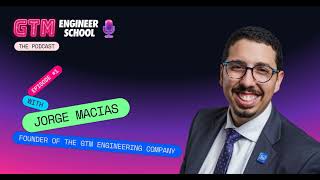
Jorge Macías, an industrial engineer who grew a YC-backed startup to $3M ARR, defines GTM engineering as the convergence of RevOps, data engineering, and growth hacking. He walks through his personal stack (Notion, Clay, Lemlist, Apollo) and explains how to replicate top-seller tactics using technographic data and AI-driven pre-call research.
Chapters
Okay. Hey, what's up, GTM builders? It is Jared and Matteo, and welcome to the Go-To-Market Engineer Pod. We're in just 30 minutes. We're going to interview top GTM engineers to uncover principles, workflows, tools, everything in this emerging discipline. Jorge, Jorge Macías here is an industrial engineer and transitioned to sales and most recently to go-to-market engineering. Let's see, a few years back, tell me if this is correct, Jorge, you grew the first Puerto Rican YC-backed startup from $0 to $3 million in ARR.
Is that right? That is correct. And one of the best professional experiences I've had in like in my whole experience.
Amazing. And now since then, you've operated and advised a number of startups in sales, PLG, go-to-market engineering, and more. I know you're super active on LinkedIn. You share your workflows. So definitely make sure to follow Jorge and most importantly, You just became a dad, right?
That is correct. A month ago. So my new baby just turns 1 month today. It's been an incredible, incredible experience and it ties back a little bit to a few things I'm doing in go-to-market engineering and kind of my anchor on why I've decided to make this transition. So yeah, super excited for The new company, the new work that I'm doing, and my new intern, like I like to call him.
Congrats, Jorge.
Jorge, a warm welcome to the pod and congrats on being a dad. Um, all right, let's get into it. In your own words, uh, how would you define go-to-market engineering?
Oof, that's, that's a good question. I would say like, it is like if RevOps, so think of marketing operations, sales operations, data engineering, and growth hacking had a baby. So it's like a huge mess of the most important technical and non-technical skills from all these areas. And the idea, it I think of it more of as an art than anything. It's just turning messy data, tools that are scattered around, half-baked playbooks and half-baked engines into one automated synchronized work. That's a bit theoretical, but it's definitely an art more than a science in my opinion.
That is one of the best definitions I've ever heard. I like RevOps and growth marketing having a baby. What are the different, the biggest differences you see that you've seen in sales and marketing before and after go-to-market engineering? What's been the biggest changes?
Yeah, so I think the biggest changes before and after go-to-market engineering, it's being able to replicate what your best sellers are doing. In the past, that secret sauce was hidden away like the formula of the Krabby Patty. Uh, it was, it was in your bestseller's mind. And there was always like sales huddles and, and conversations with sales leadership about what makes that person special. But it was hard to replicate or it was hard to automate. I think with go-to-market engineering, you've been, you are now able to scale your best playbooks, the things that are working out the most, and then you're going to instead of having this one awesome seller and then a lot of mediocre salespeople, that balance is going to turn and then you're going to have a lot of average salespeople, which is good for business models because it's going to be more predictable. And then you're going to be able to scale what the best things that work. So. I think that's the biggest difference for now.
Love it. And so you're basically saying that like the data that we can tap into with GTM engineering tools and workflows will help programmatically make, you know, like from, make Salesforce from good to great at scale. Is that right?
I, that is completely correct. I wouldn't even just keep it in sales. I think it goes with marketing too, and eventually it would grow into operations. The reason for this, and it's obviously a lot of hype around this, is AI. With AI, you can create basic, uh, fundamental work that as AI models get better, the fundamental work that you already did improves the experience of your customer, the experience of the seller, the experience of the buyer, the experience of your customers without having to do more work. So as when you build on top of like AI-native work tools, as models get better, everything gets better without you having to go back and where we reworked the whole thing. So that's also like the biggest difference that's gonna scale whatever already works, um, long term.
Love it. All right. Uh, now that we set the, the stage for the fundamentals, let's switch gears and, uh, let's get, uh, into a little icebreaking lightning round. Uh, so I'm gonna ask you some questions. And then as little time as you can, you give me your answer. All right.
Okay. Quickfire.
Quickfire. All right. CRM, HubSpot versus Salesforce or versus Atio.
I am team HubSpot for sure. There's no specific reason. I just used it more through the years. I've been toying around with the idea of playing with Adio. I just haven't closed the customer that's using it. But if I'm going to compromise here, if I'm not used, if I haven't used Adio in the next 3 months, I'll just buy it for myself and I use it for my company.
Awesome. LLMs, Claude versus GPT. What's your favorite?
Ah.
Um, I would say this is a hard one. I would say I use the chat in the browser with ChatGPT more than any other tool, but like when I'm using like API keys and using AI models inside another tool, I mostly go for Anthropic. So I think each of them has their own use case.
Great answer. Top enrichment tool.
Clay, Clay all the way, baby. I am, I'm married.
Say no more. And, uh, if we take a step back, what's your top GTM tool?
Um, I would say like the CRM, the LLMs, and Clay are the primary ones. If I were to choose one that's not in there, I would say Lemlist. I just love, love, love. The tool in general. I just joined their affiliation program because I've been hyping it so much for my friends and people in the community that I was like, I'm going to try it out. So I would say Lemlist.
Awesome. And what's the most underrated GTM tool in your opinion that people should know more about?
I have this super cheap email verifier tool that I use called Rion. They basically give you 100,000 email verifications upfront, plus 500 credits daily for like $80. Super, super, super cheap email verifying tool. I did the math. It was like hundreds of a cent per, per email. So definitely worth checking out. I can send you a link.
Bring it on. Yeah, we'll make sure that all these links get in the show notes when we publish this, of course.
All right.
Thank you so much. That was super fun. All right. Now let's dig a bit deeper into the weeds of GTM engineering. All right. I want for you to share with our listeners and viewers, like the building block of your GTM stack. We all know that we touched upon in the lightning round about some of the core components, but I would love to hear from you how, as a GTM engineer, how do you approach designing or building like a tech stack?
Okay, in all transparency, I'm just opening up my new company. So my advice upfront is look for the tools that are right for the stage that you are in your company and the stage that you are in your go-to-market journey. So as a start, I'm actually using Notion as my CRM and wiki repository for all my information. I do most of my content creation. I post a lot on LinkedIn, like you mentioned, start of the, of the show. Uh, I do most of the writing in Google Docs. And the Google Suite. I do all my data orchestration through Clay. I recently launched a new website and I'm tracking website visitors through RB2B. For scraping, I like using Apify. Apify is my go-to scraper tool just because they have so much actors. It's very adaptable to whatever you're trying to build. I've also played around with Phantom Buster. For sequencers, I've used, uh, my favorite is, uh, Lemlist. Just because I don't do too much volume, I like to experiment a lot, and Lemlist gives me a lot of really good experimentation tools. But I've used Smartlead and Instantly. Um, for data, I've used Apollo, Leadmagic, Prospero, ICPs, depending on the project and the customer. Email verifier, I talked about Rion, but Neverbounce is one that I use a lot, Insightly. And then for AI, I use Gemini, OpenAI, Anthropic, Deepseek, like whatever I can find myself my hands on.
Love it. So basically again, like we have, like if I have to play it back at you, we have a central CRM system, then you have some intent signals that you track from our B2B when it comes to website visitors. You have for more advanced scraping and list building, you use Apify and PhantomBuster, then as well as the usual suspects like Apollo and Prospio. And then you have a lot of like this custom prompt. There's a custom prompt component where you run like, again, like research on these lists. With like Gemini or OpenAI and Anthropic. And then on the other, and then you push basically your outbound messages through your sequencer like Lemlist. And then on the side, you also have for more inbound, your inbound motion, you're using just LinkedIn as organic, basically social to just like get folks to your website.
That is correct. The only thing, by the way, that was an incredible summary. The only thing I would add on top that is after LinkedIn content that I'm putting out, I'm usually using PhantomBuster to, or add people to my network and grow my network in an automated way, or see if there are companies or prospects that are commenting or liking through, through the content.
Awesome.
Jorge, I know you said you use Notion as your CRM. I hear that a lot from go-to-market engineers, and that surprised me when I first started hearing it. Uh, what are, what are the advantages? Why did you choose that method?
Ooh, great question, Jared. Taking a step back, I've been using Notion for almost 8 years. I was really, really a beta tester when they came out in that first company I worked in, in tech. There's familiarity there, which I think kind of tends to that. I also, for learning Clay, it kind of turned into a wiki hub for me, just because like, actually when we worked together on Go-To-Marketing University School, a lot of the content was there. So it was easy to just tie a few of the pages that I was using in the Clay Bootcamp and on La Clay and Clay itself. And some of like all the content around the space is there. So it's easily easy. To kind of bring everything in, into one space. Yeah, I, I think that's it. It's just familiarity and how everyone around the space is already using it, so it's easy to kind of turn into a hub.
Bring it on. And, uh, maybe like a, just like a side, uh, side question. This is like how you would design basically your stack for your own consulting business, right? But, uh, if you, when, like, when you are advising your customers, your clients, uh, you know, like, uh, and which, uh, I believe they're mostly B2B SaaS, uh, You know, and I know like there's going to be a lot of different stages, as you said, in their go-to-market journey or stage. But let's pick, for example, like a Series A, you know, like that has already post product market fit and is doing, is approaching a $1 million ARR, let's say. How would you like redo this stack? Like, uh, for a company like them, or if you were advising them, uh, what was your go-to basically in terms of like the key use cases that we talked about?
So first of all, I don't— this kind of like a qualifier for me. I don't work with companies that don't have a CRM. I've gone into projects and noticed how incredibly difficult is to keep in touch with all the important data points and make— and data architecture inside GTM that for me, without CRM, it's not an even option. I would say most of my customers are in Hotspot. If not, I would kind of guide them towards that because that's what I know. It depends on the strategy. If they sell to like B2B tech companies also, then I would maybe geared towards Slamlist because we can do multi-channel LinkedIn plus email versus if they want to go fully with email, then I would try to tend towards SmartLead or Instantly. If we are doing small batches of scraping, then Apify definitely goes. And I usually like did, like I would bring everything in through Clay. So another qualifier, it's like, if you don't have Clay or are not willing to pay for at least, uh, the, the paid subscription on Clay for me to work on top of it, it's usually a no-go for projects, um, within my consultancy. It's not that I, I wouldn't use other tools. I've used them in the past, but the time I would need to kind of relearn a bunch of the things I already know how to do in Clay. In other tools, it's just not worth it for me.
Yeah, it makes sense. All right, let's switch gears for now and I want to ask you about your favorite go-to-market plays that you've built.
That's, I get, I hate this question and I get this a lot, a lot, a lot. I feel like it's like having 10 kids and having to choose who's your favorite.
Very telling metaphor, especially given your—
I'm just recently a dad, so he's my favorite because he's my only one. But yeah, I would say, um, and because I come with, uh, so I've been 8 years in the sales space, so I've been like an SDR, BDR, AE, mid-market AE, enterprise AE. So I would, I naturally tend to sales-related plays. And one that I like and easily, that you can easily scale is using like Technographic data or data inside job descriptions to push into campaigns. I feel like the combination of those two is really powerful because most jobs have like their tech stack for their go-to-market team, or if it's a go-to-market position, a tech stack for their software team, if they're looking for a software engineer, same for marketing, same for all departments. So I feel like just a goldmine of data inside those job descriptions, which I always love to, to play around with. And then like the other like more sales-related type, uh, plays is like prepping for, uh, doing pre-sales meeting, uh, preparation documents and doing deep research about a company, about a prospect, about their team, about their challenges, about like their pain-related search, which Jordan Crawford talks a lot about. And, and giving that to AEs 5 minutes before a call can be really powerful. Like when I was in AE, I used to spend 30, 45 minutes of my time per meeting doing research to just make sure I was really prepared for a call. So with AI, you can kind of synthesize and automate that. I would say the same goes for cold calling. When I was in SDR, I would always like to kind of skim through my accounts and kind of know a little bit about the industry where I was calling, why things that were going in in the market before calling. With AI, you can have like a prospect, like a cold calling script tailored for that prospect, built, pre-built before the call. And that can make the process just so much easy because the cold calling can get you frozen up and you can start like dabbing like that. So with everything just pre-built, it's just easier.
Now, are you using GPTs for that, or are you using, uh, Clay or AirOps, or how are you putting those, uh, those prep documents together?
So usually it's a combination of, uh, CRM, uh, connecting to the CRM if they're using like the Hotspot, uh, meeting link to kind of organize all, uh, and schedule all their meetings. So CRM, Clay, and GPTs run like prompts running inside Clay for, for some of those. And then I usually just gobble everything together in a Google Doc and attach that back to the meeting link. Or I create another calendar on top of the one that was already scheduled with all that research information. Um, and for a customer a while ago, I did a Slack messaging. So instead of pushing into a Google Doc, I pushed into a Slack automation.
I bet they liked that.
They did.
All right. And, uh, okay.
By the way, they did, but it was also very intrusive because they just had like a bunch of Slack notifications running all the time. So I think that actually I started with the Clay notification, the Slack notifications. And we dialed it back to Google Docs.
Interesting.
Too many leads, probably, or?
Yeah, yeah, a product-market fit company for sure.
Yeah, I mean, like, obviously, you know, like we just ran cohort 1 of GTM Engineer School where you also were one of the, our wonderful teaching assistants helping our students in the breakouts, debugging workflows and all the rest, all the fun stuff. And so like, we're now like with GTM Engineering, we're at the moment, at a pivotal moment in the, in B2B SaaS where there is the need, like new skills are emerging or because new tools and new paradigms are emerging, right? And so obviously, our attempt with GTM Engineering School is to get more people to learn what it takes to become a GTM engineer, to use AI in GTM. But I really want to hear from you about what do you think are these new skills that are emerging with or becoming critical with GTM engineering?
Great question, Matteo. It sounds simple, but I think a skill that's emerging is patience. Like with go-to-market engineering, and once you kind of dialed in the different tools and what you could do with each, every conversation or every workflow that you try to build seems easy in your mind and in conversations, but it almost never is. It always takes hours of work of kind of knitting everything together when you're actually working it. Specifically when you are working on real-life use cases that are going to be out there in the wild. So I think just the patience to be able to test things, to make sure everything's running correctly before you scale it and things like that goes back to the patience. I think another incredibly emerging skill that again, sounds easy, sounds simple, but it never is. Is just having clarity while speaking. And I have a challenge with this a lot because English is not my first language. I'm from Puerto Rico, Spanish is my first language. And I can guess Matteo being from Spain can kind of get that a little bit, but having clarity and being able to explain very techie and complex ideas into very digestible format than average Joe can understand. It's a very important skill as a go-to-market engineer. And I think it's just going to be more and more useful with time because you're going to be doing more complicated things easily with AI. You're going to need to have that clarity and be able to explain things.
Well, we'll just have to do a podcast with you every week, Jorge, and then you'll get better and better at explaining these things.
Yeah, I hope so. I've been doing a lot of, like, a lot of this type of interview recently, so hopefully I'm getting better.
I love, like, how you kept, you know, like, things very first principles as well, you know, like things like patience and clarity is not, oh, you need to learn how to use ChatGPT, right? But it's, you know, like, these are such upstream important skills that really trickle down across, down to everything you do in, when you're more like on a technical level, you know, like whether you're copywriting, prompting LLMs, or as you said, you know, like setting up experiments. So really love your answer. Thank you for sharing.
Yeah, there's also like a few technical things that we could go into, but I'm not, not sure if that would be of a lot of value for, for listeners, to be honest.
Bring it on. You know, we just want the signal, right? Not the noise, but most importantly, you know, like now that you uncovered these few skills, right, that you think are important, how would you actually advise aspiring GTM engineers to acquire them?
I would say like that it is very, very important to expose yourself to real life use cases. It's super easy to get buried in content and scrolling through LinkedIn, watching video after video, taking course after course. No pun intended. No shade to Go-To-Market Engineering School, but the real value in go-to-market engineering comes from practice and from building workflows that are going to be living out there in the wild. The analogy that I always like to use for this is that new skills are like sports. Like you can be entertained from sports, watching it on TV and learning about them, maybe playing fantasy with your friends or whatever, but the real value of sports on a personal level comes from practicing them, comes from going out there, sweating. Getting the reps, making the mental connections that are going to help you thrive, not only mentally, but also physically. So you need to go in, get them reps, and that's going to help you long-term. Awesome.
Can you leave our listeners with one practical tip that they can go implement today?
One practical tip, and it's one of my favorite go-to-market engineering plays. Is just download your own LinkedIn data. Like if you have a network of more than 1,000 connections on LinkedIn, go to your settings, download your data, push that data into Clay, enrich them with as simple of enrichments as you can get, and create an automation to reach out to your top prospects or your top favorite companies. Every 3 to 6 months, you're going to get instant revival of stale leads. It's not going to feel salesy because you're just catching up with people that you've already talked to, and you're going to be kept top of mind a lot of the time. It's a simple, easy play that then you can kind of turn into a lot of other more complicated, cool things.
That's great. So if you're one of my connections on LinkedIn, you're listening to this and you start getting some emails from me out of the blue, You can blame Jorge because I'm, I'm just following this play. Hey, okay. Where can listeners connect with you?
Listeners can connect with me via LinkedIn. That's the social media that I'm mostly active in. And I just launched my new website and my new company that's called gotomarketengineering.io. So you can go to www.gotomarket /Engineering.io, uh, and kind of see a little bit of the work that I'm doing, the, what people that I've worked with had to say about me and working with me. And, and yeah, I'm going to keep a little summary of my biggest learnings in there. So make sure to, to check that out.
Okay. GTM-Engineering.io. Is that right?
That is correct. Yes.
All right, fantastic. All right, folks, well, I think that's a wrap with Jorge Macias, an industrial engineer turned into a GTM wizard, which is amazing, who's basically showing us how to take messy data and turn it into sales and marketing magic. So this has been fantastic. You've been scaling startups, navigating this AI revolution that we're in, and I think proven that go-to-market engineering isn't just a job, Jorge, it's an art form and you're an artist here. You just became a dad. And so if he can do it with a newborn, launch a website, launch a new business, revolutionize go-to-market, then what's your excuse, right? All right. So everybody, I hope you enjoyed this episode. Thank you, Matteo. Thank you, Jorge. And catch you on the next episode of GTM Engineers Podcast.
Thank you so much, Jorge.
Thank you. Thank you both for having me. Take care. Bye.
More from Matteo

Roll Claude out from one laptop to the whole GTM org | Sam Gong & Zach Vidibor









