E3: Infrastructure, copywriting, data, ops: Building GTM systems that actually work | Wesley Hoang
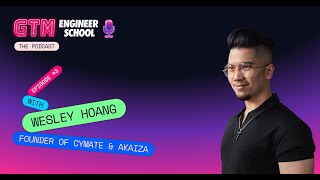
Wesley Huang breaks down GTM engineering into four pillars: infrastructure, copywriting, data, and operations. Start simple with verified data and personalized copy, then layer in intent signals. The field now demands half-technical, half-creative skills to automate outreach without tanking deliverability.
Chapters
Okay. Hello, welcome GTM builders. It's Jared and Matteo and welcome to GTM Engineer School. We're where we interview top GTM engineers to uncover principles, workflows and tools in this emerging space. So today we're super lucky to have Wesley Huang, co founder of Cymate, a B2B lead gen agency who leverages tailor automations and AI to scale pipeline. Of course, Wesley most recently also founded Akiza, an ops hub for go to market teams to streamline the operations of running outbound campaigns from analytics to deliverability. Before building go to market engineering workflows full time, Wesley covered engineering roles at the likes of some companies you might have heard of Twitter, Apple and Experian. So super strong background to say the least. Wesley, welcome to the pod.
Yeah, pleasure. All mine. Thank you so much for having me. I'm super excited to get the conversation going today.
All right, we're going to kick it off with a little bit of dictionary. If you were writing the next version of Webster's dictionary, I don't even know if they still print dictionaries. How would you define go to market engineering?
That is a great question. Yeah, go to market engineering. I think that is definitely like a, like a new term that has been, you know, like popping up these past few years. If I were to redefine that, I would sort of like, I guess like separate that into two sections. So go to market and then engineering. I think everyone is pretty familiar with go to market and all it is is essentially like a fancier word. Marketing, right? A way to promote your product, a way to let people know about like you exist. And then engineering, I think that's self explanatory. I think the past few years things has been constantly changing with like new AI tools, new products and things like that. So I guess the engineering part comes in when there's like a flooded amount of inbox. Like people like sending, sending like spam email, like bad, like cold emailers I should say. There's like AI nowadays that can detect like any like spam messages and you know, just to kind of like avoid like your inbox getting flood in general. So the engineering part comes in where there are like, you know, like marketers and go to markets of like folks they wanted to combat against that. So they build workflows, they build automation around that so that we can send like actually like relevant messages targeting the right people, people and making sure that you know, your email or whatever like marketing channel you use is actually getting reached to like the right person. So that's like the engineering parts coming in. So yeah, thing has been involved the past few years and I think that is like where the definition is kind of like coming into place.
What are the biggest differences you see before versus after the go to market engineering error that we claim we're now in?
Yeah, it did get easier, but it, it also did get harder. Right. So I think before this is not just like cold outreach channel, this is not just like email or cold LinkedIn message. This is also for ads as well. So before you could just probably spin up some kind of campaign. The difficult part is you have to do stuff like manually like writing the copy, writing the message and things like that. But it's very easy to get in front of the decision makers. Right, but we didn't have the ability to like personalize messages, personalize like all that, you know, language to be specific to that person. Now after the gm like gtme sort of like era sort of happened, it got a bit more difficult because what I usually like to tell people is essentially marketing nowadays is not just creative anymore. It's almost like half technical, half creative. So the difficult part is now you have to bring in the technical and, and add on top of the creative layers. But the easy part is with all these AI tools nowadays, it's very simple to build workflow like using clay, using Octave to personalize all your message, make sure it's relevant. So in term, if you spend a little bit more time to learn about it, you're going to get a lot better results when it comes to selling compared to previously where you just send a one email and hope that one or two might stick.
It's easy if you know what you're doing. Right?
Exactly, exactly. I like to think it's easy just because I generally think if you really like put your head to that one, just like spend maybe like two, three months and learn some of these new tools like it's not that complicated. Yeah, love it.
You wanted to add anything, Jared?
No, no, let's hit him with the lightning round.
Yeah.
Right, let's go.
So yeah, what is the lightning round? Give me a bit of an explanation for it.
All right. You might have seen from like the Lenny's podcast, but basically I'm just gonna like ask you like some rapid fire questions and in as possible you're going to give me your answer and a little why to it. Okay?
Okay. Okay. My co founder called me a certified yapper, so I try not to yap so much. All right, let's go for it. Let's do it.
So favorite CRM, HubSpot, Salesforce or Atio.
Oh, Atio. How comes simpler to use is, you know, very straightforward, user friendly. I love it. Beautiful.
Top LLMs, Claude or Chatgpt?
Yeah, Claude. Slightly etching, but I would say the prompting is the most important one. Right. GPT is friendlier for day to day use. Cloud is for more like complex tasks. But if you have to, if you don't get the prom right, nothing matters. Well said.
Top enrichment tool.
Top enrichment tool. Ah, it's Clay cow. Yeah, it counts.
Everything counts.
Okay, if clay counts, then it's definitely clay.
And Top GTM engineering tool.
Top GTM engineering tool. Oh man, does Clay Cow. Claycount and yeah, clay too. I would give a shout out to Octave as well. Those are like my top two tools. Yeah.
Okay, bring it on. And if you go on the other side of the spectrum, not necessarily, but what's the most underrated GTM engineering tool that you think people don't know enough about?
That is going to be octave 100% hands down. Like I made a prediction last year that Octave might be like the next clay. When you start looking to it. And once you just like understand like the capabilities, it's amazing what the product can do. Right. I'm just getting goosebumps talking about I don't get paid for it, by the way, so.
I love it, I love it. I mean, like, to be honest with you, like we've been recording already like few pods and you can't believe how many times this name has popped up. But you know, we'll, we're obviously friends with, with the Octave team, but it's so refreshing to hear it from you guys. All right, that was super fun. Thanks so much for sharing. And so if we switch gears to a little bit more of like the deeper stuff. Right, let's talk about system design or GTM Tech Stack design. You know, like I'm sure you build a lot of those when advising your clients and just like actually like building and executing all those outbound motions. Can you walk me through, like, what are the building block of an efficient and modern GTM tech stack?
GTM Tech Stack. Okay, nice. So if I was to sort of break it down and make it super, super simple, there are going to be four key areas that you need to focus on. The infrastructure, the copywriting, the data and the operations. So infrastructure. Right. I think as mentioned like earlier in the podcast, things has been getting more technical than creative when it comes to like the go to market space. Right. Marketing, whatever it might be. So it's super crucial that you, you know, if you're doing cold email, you make sure that you land an inbox, you run ads, you want to make sure that the right person see it, LinkedIn, whatever it might be, and not getting your account back, right, that is literally one of the most important one. So you need to make sure that you need to get the infrastructure right. In terms of infrastructures, if you're just talking about cold email specifically, you can use tools like ZapMail resellers that can help you automate set up all these inboxes and it's super easy to do. So that's infrastructure. Now when it comes to copywriting, I think this is a very, very underrated part that most people look past it. You've seen products where you know, like, hey, the product is like, it's whatever, you know, it's the best product on earth. But the marketing team is like pulling magic out of the, you know, like the brain. And you know, it just become like a super, super like, you know, like big company. It's all because of marketing, right? The strategy, the offer itself, like that all goes down to copywriting. So you know, like, if you don't know the right strategy, you don't know like the psychology behind like all this kind of stuff, nothing else matter. Like you can send like thousand millions of cold emails, so it still could work, but you say something very generic like, hey, you know, like, hope this finds you well and well, like xyz, are you interested? I still see that in my inbox, right?
It's not crazy that people still do that, right?
Yeah, exactly. Yeah, like, like, like the copy itself is literally just the marketing, right? Like you need to have the right strategy in place. You need to understand the human psychology. You need to know when to sort of like talk a little bit more about the products and you need to know when to sort of like gatekeep some information that leave that to the self team themselves, right? So that is very, very underrated that most people don't look into data. Data is essentially making sure that you are reaching out to the right person, right? Like for example, this is like a very, very extreme example, but I like to tell my team, like, let's say you have a product that can like cure cancer, right? And if you run, if you're doing a cold email campaign or like a marketing campaign just targeting everybody who has cancer with that work, the answer is probably not because let's say your product can only cure like brain cancer and you reach out to Somebody who had like a heart cancer. That is the wrong targeting, right? And you need to be able to really nail down into your icp, like your little like nitty gritty, all these criteria, right? And the hard part of data is there are thousands of data tools out there. So like which one do you choose? Right? There's one for you to target local businesses, there's one to target enterprise, there's one to target agencies and there's enrichment tools. There's just way too many of them. But finding the right one, finding the right targeting is crucial. Last but not least, the fourth pillar is operation. Right? This is where tools like smartly instantly comes in. A Kaiser that we're building out just like every single marketing channel. You can just launch a campaign and then you basically set for the rest of the year, right? You need to be constantly iterating and just finding the right data, finding the right workflow, how you can like send all this data to your sales team, to your product team and things like that so they know these are some of the feedbacks that you get from your product. All right? So those are the four pillars and depending on which one you look into, there's like a set of tools for it.
Love it. So to recap, infrastructure, creative and copywriting, data and signals and last but not least, operations and like distribution basically as.
You, as you put it. Right, exactly.
And if we have to double click on this, what are some of the trade offs that you normally consider when building out or designing these systems?
Trade off. Can you elaborate on like trade off? What do you mean by that?
Like do you think like oh if you know, like for example I am building this for, I don't know, like a B2B SaaS company at Siri say with sales led motion. I might need to consider, you know like some constraints that would lead me to build the stack in a specific direction as opposed to if it was more of a late stage company with PLG and a ton of inbound funnel, for example.
Got it. Do you want a longer sophisticated version or do you want like the short and straightforward version?
We can find a happy menu.
I would love to give you know like values to listeners. So let's go with like a little bit. I'll keep in the middle, slightly lower, longer but you know like sophisticated. So when it comes to market, sophisticate, sophistication like that is the one of the first like psychology thing you need to understand, right? Like how sophisticated is the market? Do they know about does a solution exist or is that like a brand new tools that nobody knows, right? For a market that is a bit more sophisticated. So think like recruitment agency offer, think like it offers is very saturated, right? The trade off here is you need to focus on volumes, right? You need to let as many people know about you exist, right? You need to break down the language online, like how are you different than everyone else? And this is the part when I mentioned earlier where you have to talk about, because there's so many of them out there, you have to talk about what separate you from everyone else, right? Now in the other hand, if your product is new, you just build some super cool AI solution or whatever it might be, then now the trade off is you might not need to rely on volumes, right? You might just really need to delve down on like the targeting, you know, and the messaging and just gatekeeping, like a few information. You don't want to overwhelm people with so many information because this is brand new to them, right? So the trade off there is you might not need to like focus so much more on the infrastructure, but the data itself is now going to become very relevant and important, right? So depending on the market sophistication, like this is where the trade off is going to happen. Love it.
So again, it depends on the maturity of your product in the market and that's how you really fine tune what's more of a priority. Like the targeting and laser targeting and precision versus more volumes basically.
Exactly. Yep. There you go. Right. And this is the four pillar I mentioned earlier. Sometimes you could rely more on data, sometimes you could rely on the infrastructure, but it depends on a lot of different things and market sophistication is one of them. Very cool.
And if you had to keep only three tools in your GTM stack, what would those be?
Three tools. Oh man, that's hard. The first tool I use is sitemain because we just handle everything for you guys. A little platform agents. Yeah, I was just kidding. Can I say four? Can I cheat a little bit?
Go for it.
You just need to tell us why. Okay, I'll name you each two for the one of the pillars that I mentioned earlier. So infrastructure, I'll go with Zapmail. There's a lot of resellers out there, so not to say one is better than the other. Zapmail is particularly something that we've been using for like over a year now and we had like literally like zero deliverability issues. Right now we have like a very small approach when it comes to deliverability and tech and things like that, but ultimately having like a reputable reseller, like a Google partner that can support us when it comes to all this infrastructure is very important. So I would say Zapmail is the first tool copywriting Octave. I think that's kind of obvious. Help us personalize every single message that goes out. Help us the research on the ICP before we, you know, like reach out to them to make sure that the message itself is relevant. Data Clay, right, Clay itself. For those of you listening, Clay is not a data tool. Clay itself is not a database. Okay. Clay is a third party tool that, you know, has the ability to pull in a lot of like different sales API into one single platform. Right? So with Clay you do have access to Apollo, you know, like ZoomInfo, you know, like sales Nav or like whatever, a bunch of databases that you can think of. So Clay does have that ability. So instead of subscribing to different tools, just use Clay. Last but not least, distribution and operation. I would go with instantly or smartly, one or the other. Now there's a whole debate in the community about which one is better. Is it smartly, is it instantly, or is it like email bison with a new guide that's coming out. What is the right answer is it doesn't matter. Just choose one.
And then do you pair that with a heyreach for Omnichannel or you don't get into that much?
Yeah, I do pair that with Heyreach for omnichannels. If you want to tap about LinkedIn, there's also Heyreach and other LinkedIn tools as well.
That was helpful, thank you. Now I'd like to ask you to walk us through one of your favorite go to market plays that you've built or your agency has built. And if you can name, if you could be specific about a project or a company as an example, that would be helpful for the audience to really visualize it.
This might sound boring, but my favorite build when it comes to go to market is the most basic build. When I say basic, I mean it's very simple workflow. You get data from the right source and then you plug that into the automated, you know, like flow, like Clay tools or like, you know, like let's make.com nowadays that people use that too. But yeah, you plug the data into Clay and Clay would process it like it would verify the data, it will research the data, it will enrich the leads and then Octave can help you like personalize the message and then send email goes out that way. Right? It sounds like boring. It sounds straightforward, but it's very important, right? You need to make sure that, you know, you essentially verify the data to make sure that the person you're reaching out to doesn't work at that place anymore, right? You need to find the right data, you need to research on a company to make sure that you're reaching out to the right person. And distribution as well, like personalized message are scaled with octave, right? Sounds basic, sounds fancy, but I believe that should be the first workflow you should build, right? Don't look into anything more complicated. Don't worry about intent data triggers or whatever it might be. That is another layer that you could add on top once you figure out the basic and, you know, what works for you first, right? And all this intent data trigger is just like a cherry on top. All right, so if I was to like, think of like a favorite workflow, I would just say that stick with the basic, right? Get the data, verify the data, research the data, write a copy, then send the email.
And can you give an example? When you bring on a new client, is that the first thing that you just set up basic workflow and then you build on top of that later?
Exactly, right. Because TAM is, you know, one of the most important thing, right? You want to get, you know, like market feedback as much as possible. You could sit here and really think about like what could be a good like data signal for us, right? It's going to take us weeks to really think about it. So just to get like a pipeline, go out, get feedback on the customer as much as possible. Just stick with the basic, you know, so unless they know exactly what they want, right? Unless they've done some kind of marketing and they come in and they're like, hey, you know, like, I want to build this pipeline with this intense figures, then we would build it for them.
Can I ask you when, when people come to scimate and they've already tried to do this on their own, what is it that caused them to say, you know what, we're just going to go with some experts on this, this bit, this part here, we're not good at. It's too complicated, it takes too much expertise, time, et cetera.
I think usually it's one of the three first pillars. So either infrastructure, data or copywriting that they need help with infrastructure because, you know, like a lot of the time they would tell us like, hey, we, we tried this on our own and it was working, you know, very well for like a first, you know, like one or two months or so and then like all of a sudden like, you know, like I stopped getting reply. Right. That is literally like the, the first indication that tells me like your email probably is in a spam folder some. So they need help with somebody who can like manage that for them data like now, like they're just like, not just so many of them out there, right. A lot of folks when they think of data, they default to like Apollo. Right. Apollo is a great data source by the way. Like no matter what they say is billion dollar companies for a reason. Right. But it does not have everything. Right. There's like database for like agency database for local businesses and things like that. So they just need help with like getting more, finding more leads in general. Right. And last but not least is the strategy itself, right? The copywriting, you know, all this like, like buyer psychology, all this, like marketing psychology and things like that. Coming up with a copy, an offer that's relevant and is, you know, like sellable, but it doesn't sound salesy. Right. That is the part that like most of the time we help clients with.
Great, thanks.
All right. And I mean we, we, we talked about it a little bit about the technology and the systems and the. But what are some. If we go back to the people that are orchestrating and building these systems today, there's still people next to the agents. But what are some of the emerging or critical skill set that you see are becoming more and more important in this new paradigm of GTM engineering?
I like that. Yeah. I mean, definitely there is a very bright future for AI sdr. Right. Again, this is not to say any AI SDR product is bad and stuff out there, but I think we're on the right path. But I don't think we're ready just yet. I don't think we're ready to just have one single AI that can do everything for you. So you do need some kind of human approach. Right? So when I say human approach, it's basically somebody who can orchestrate it like literally what you mentioned. So somebody need to understand like all aspects of gtm. Right. So the four pillar that I mentioned just now, infra data, copywriting strategy and also like distribution as well. So those are probably the four most important core skill set that you need to learn. One very underrated skill. Right. That I would say, and this is something I preach in my agency, I preach to my TTME all the time, is communication. All right, look, you're a gtme, like you're not going to understand the product as much as the founder do you're not going to understand the product as much as the engineering or like the CPO is, you know, you've got to work with them, right? Most people expect that. Like hey, I'm just going to build out this crazy workflow and then I'll just, you know, like let you handle the copy and then I just press the launch button and then that's work. Like no, like you've got to work with your like the founder himself. You're going to work with the people in the team, you know, to really understand the product to that so that you can position yourself, position the message, position the copy, right. And build out the right workflow for it. You know, some people are just too obsessed with you know like the playbook, like hiring playbook, like hey somebody like when you see like LinkedIn, like job, just send them like a cold email, right? And it doesn't work and they don't know why, right. So I would say like communication, super narrated. Work with the product team, work with the founder to really understand like why they even built that product in the first place.
Very well said. And how would you then advise aspiring GTM engineers to acquire these new skills of orchestration and or just be plain better communicators or clear communicators.
Maybe do something like attend GTM engineering school. That's the first step. This is why we teach everything. But that's a T. I can vouch for it, you know, it's the first step. But our jokes aside, I mean there's a free way to do it and there's like a pay way to do it, right? Like freeway, you can like just search like I don't want to say YouTube because I don't know if YouTube is like the best, I guess like platform to learn this stuff anymore. I would say LinkedIn is a lot better. You can follow folks around the space and just like, just kind of like, like you know, like send like set up like some notification where one of the time they have a post, you know, you can read it, learn as we go. But obviously the downside is it's very unstructured, right. Like most, I guess like LinkedIn folks, they just post what they got going on in their mind. Like myself, someday talk about copywriting, someday I talk about data. Who knows, just whatever comes up. If you do a bit more of like a structured way to learn about it. Of course there's a lot of like courses and resources out there. Again, GTM material in school is a great one to go about it. I Haven't, like, taken a course for so long, so I don't know one to recommend. But yeah, pick, I guess, like somebody you can trust, see if they have some sort of course, pay for the consultations. Just love.
All right, Wesley, what's one practical tip that listeners can implement today?
Just do it. Just get off.
Just get off your butt and start building workflows.
Just start doing shit. Yeah, exactly. I didn't know how to use make.com, like, four or five years ago. I didn't know play, like three, four years ago. I didn't know Octave last year. Octave didn't exist last year. Right. But I think it's just the, like, a lot of people, they do have passion for gtm, including myself. The one thing that's holding them back is just taking action in general. Right. They might be attending all these courses, they might look up all this tutorial and it might get complicated. And I was like, oh, that's cool, thanks. Bye. But, you know, just do it yourself. Build a workflow, try it out, you know, like, even, like, play around with it. Like, I know clay and Octave, they give you guys, like, free credits. You, like, try out new things. So, yeah, take advantage of that, you know, like on LinkedIn, there's a lot of like. Or is it like clay expert, including myself? Like, sometime, if you want, like a code, you can get maybe like a thousand, two thousand credits to, like, play around with the workflow and give it a shot. I genuine believe. And even if you're a founder as well, and you don't have note and you have notepad, I genuinely believe if you just put your head down and literally just put like three days off your calendar to learn, like, one of the top tools that I mentioned in this call. You know what, you know how it works right away, like, it's not rocket science, I can promise you that.
And just to double click on this, because I think, like, there was so much, you know, pressure when you're on LinkedIn, you know, like, you see these, like, super cool workflows. There's new tools every week. You know, like, you go out of office for a week and then you come back and you'll be like, oh, my God, the world has changed and where have I been? You know, should I go on holidays again?
And.
But then what I'm trying to say is that there is so much, like, the market goes so fast, right? Like, there's new newness every day, every week. How do you overcome this pressure to perform and this cognitive load to say, oh, My God. Like, what I've learned, like a week ago or a month ago is not enough to be competitive to stay up to date. How do you do that? You know, like, and obviously, you know, like, I believe it comes down to building muscle in a way, you know, like, but how do you personally do it?
Yeah, I mean, it's a great question that there's like an overloading amount of like, information on LinkedIn. Like, you. You log off for like few days, you come back and just like 10amazing workflow that all the GTME has been building out for the past three days or so. What I would say to that is really, like, don't get distracted, right? Like, like, I've seen posts on LinkedIn all the time where people build amazing workflow. Like, hey, this person, like, have this thing where, you know, like, if someone just like post something on Twitter, you get like literally like an email in your inbox and then you would, you know, like, know who is, you know, like, interested in your product. That's really awesome, you know, but do you need to do that, you know, for your product? Do you need to do that at all? Like, probably not, right? So again, the most important stuff is really to stick with the basic, right? Really sit down, take a step back and be like, who did I build this product for? Right? What are some of the pain points that I'm solving? What are some of the, you know, solution out there that, you know, that I am on top of everyone else and reverse engineer from there, okay? I'm better than my competitor because of this reason and I'm solving this particular problems, okay? Now who has that problems, right? And when you understand that this is where the data part comes in. So figuring out the right tool, the right data, the right enrichment tool that can help you, all that kind of stuff. So go back to the basic and reverse engineer from there. Don't get distracted from all this crazy workflow. Again, like, all this stuff is really, really awesome and really cool, but it will help as like a cherry on top. And that's not going to make or break you. Go to market Cape.
I'm going to record that, keep it on my phone, and replay it for myself every time I go down a rabbit hole. Because you're right. Every time I open up LinkedIn, it's like, what you could do, huh? Oh, my gosh.
Yeah, exactly.
Cancel my plans. Honey, we can't go out to dinner. I got to go figure this thing out. Wesley, how can listeners find you and follow you? And then also when is a Kaiser.
Going ga. Oh, man. Well, you can find me on LinkedIn if you're in the Sacramento area. I'm also around a lot, so always hit me up if you're in the area. Happy to meet, go out for lunch or whatever it might be. But online wise, LinkedIn is probably the best way to reach me. I think my LinkedIn is Wesley, Wesley Huang. So thank you. Look me up. I should be right there. I think I'm still in the stage where I'm pretty obsessed with the product itself and not really having much focus on distribution. So right now we're still on beta and we would love to. If you want to try out Kaiser, let me know. We have a 14 day trial, but I'm always happy to extend that to you because right now we're trying to gather as much feedback as much as possible. We have a few agencies that we're partnering with that like help us build out that product. So yeah, super excited to just build out, but maybe you know, like in about like two or three months, once we have more integrations, redefine the product a little bit more, I think that's when we'll be ready for like a public launch.
Awesome, Awesome. I got to get myself off the wait list and start using it. That was great. All right, GTM Builders. We have just gotten a masterclass from Wesley Wong from breaking down go to market engineering to his killer four pillar tech stack strategy. I love it. And then we know Clay, Octave, zapmail, Make, these are some of the tools that are changing the game. Remember, it's not just about sending emails anymore. Everybody could do that. As you said, Wesley, it's about smart, targeted technical marketing. And so I learned a lot. Hope everybody else did. And until next time, keep up those, keep those engineering pipelines running. And as Wesley said, just do it, get to it, break stuff, learn stuff and you'll be better tomorrow.
And get off LinkedIn, guys.
Get off LinkedIn.
Yeah, it'll make you crazy.
Thank you for having me, guys. Thanks so much, Wesley.
It was great to have you.
Yep, likewise.
Okay, take care, Wesley. Bye, Mateo. Thanks. Take care.
More from Matteo

Roll Claude out from one laptop to the whole GTM org | Sam Gong & Zach Vidibor









