E5: Message-market fit: How to test campaigns to find asymmetric results | Kellen Casebeer
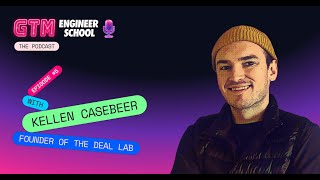
Podcast interview (GTM Engineer School) with Kellen Casebeer (founder, Deal Lab) about Go-To-Market engineering and achieving message–market fit. Kellen defines GTM engineering as engineering predictable, experiment-driven go-to-market outcomes using modern tools (Clay, GPT, automation). He outlines a campaign framework (market → segment → persona → angle), emphasizes rapid qualitative experimentation to find asymmetric results, and shares a high-impact play (RSS/podcast-driven outreach that yielded ~16 meetings from ~300 emails).
Questions this video answers
Kellen Casebeer, founder of the Deal Lab (D Lab).
Market → Segment → Persona → Angle (used to structure and test campaigns).
~300 emails sent that generated 16 meetings (≈5% meeting rate) in a healthcare IT enterprise campaign.
Clay (data/manipulation), ChatGPT (GPT), ScaledMail (inboxes), LeadMagic (email validation/finding), Smartlead (sending).
HubSpot.
Chapters
Foreign.
Hello to all the GTM builders out there. What's good, Jared and Matteo here again with the GTM engineer school pod where we're sitting down today with a topmind, one of the top minds transforming how companies build, optimize and scale their go to market engines. Today we're hanging out with Kellen Caspier, founder of the Deal Lab, a smart lead and Clay certified applied agency who's turning those tools into a repeatable Engine to help B2B companies achieve message market fit. Kellen is a GTM engineer creator through and through. He runs the weekly Clay Cafe open office hours, he drops teardown videos of his wildest automations, and he shares playbooks with a fast growing LinkedIn following. So make sure to give him a follow if you love geeky GTN builds. Before launching the D Lab, Kellen's path ran from wiring ultra luxury home automation systems to crushing quota as an enterprise SDR and finally chief of staffing, a pre product health tech startup. So definitely zero to one chops here. Go to market motion. Rapid experimentation literally is DNA. We're stoked to unpack Kellen's playbook, his principles and his favorite tools. Kellen, welcome to the pod.
Thank you. Man, that's a heck of an intro. Let's go. Thumbs up. All right, let's do it.
All right. Kellen would like to kick this off asking how you define go to market engineering.
Yeah, so I think go to market engineering, to me, like is a concept. First of all, I think clay, like has defined this in a way. You know, they have a good blog article about like what it is to them as the people who coined the term, you know, my lens on, you know, sort of like what it means to us is basically the idea of taking the outcome or the challenge of what you're trying to achieve with your go to market. And I think just engineering what it looks like to build that out, right? And so it's sort of like problem solving and looking at things not as just sort of like random ideas out in the wild, but actually like mapping out plans and contingencies and sort of like if then type statement stuff both on like an acute, you know, maybe inside of a campaign level, but even just on a macro. Like, what is our company doing? You know, what are the markets we serve, what are the channels we want to use to talk to them, what are the feedback loops? You know, and if I think of like the history of like the sales profession or sort of like go to market being like, okay, you know, you would Have a storefront and people would come to you and then you would go walk up to people. You know, you may be like on foot or drive around, you go knock on some doors and then it's like, hey, actually why don't we like call and email people, right? And there's this like advancement of how technology changes how this profession gets done. And there has been some big technological changes in the world in the last, you know, forever but like last half decade, decade that I think has made it so that the way a lot of teams are currently constructed is like incongruent with the some of the best practices today. And so I think GTM engineering is like this emergent way of reorienting how we do go to market based on sort of modern day technologies.
So breaking down some barriers, allowing us to experiment more quickly.
Yeah, if it's, I mean sometimes experimentation, I mean there's a lot of different, you know, like it's kind of like, you know, you can make more money by like higher revenue, right. Less expenditures. And so sometimes it's like experimenting, trying to find like that top end net new ideas that is really valuable. You're doing like R and D towards that. There's other times, I mean companies are like, hey, we have, you know, we have 20 people doing the exact same thing and like we get this yield out of it. And you can do the math on it and be like, well you could have like two people, you could get the exact same outcome, but you'd be cutting out this massive expenditure against that outcome that is also advancing your business.
Do you feel like this has been just a gradual adding on of tools to go faster, reach people with more precision or do you feel like there was sort of a before and after moment and when did that happen?
That's a good question. I don't honestly think that there's exactly a before and after, you know, but if you think of like momentum, I think it's like there's been this like momentum takeoff, right? So it's like you have this sort of like incremental gains and you can hit like exponential. And I think like the exponential momentum is sort of like in its infancy of what we're talking about here. And I think you know, there's like a number of different factors, right. So it's like technology getting better, like outbound is like a. You know who is, I think it's Justin Michael or might have been Patrick William Joyce talks about like, like B2B. SaaS itself as an industry is extremely new. And then like these like growth motions against it are pretty new, right? Like, you know, door to door manufacturing salesmen have been going knocking on businesses for much longer than like the, you know, any of what we do has existed. And so the idea that like what we're participating in is like the mature state of what's to come is ridiculous. And so I think there's you know, innovation always say like, take your right arm, reach all the way out to the side, that's innovation. Take your left arm, reach out all the way to the side. That's where most people are operating from, right? And there's a lot of like alpha in the middle of this where it's like, you know, there's people that buy innovation and are excited to be tip of the spear crazy ideas and they'll throw a bunch of capital at that. There's other people that are like, hey man, I just want to do exactly what I've been doing incrementally better, but they'll throw capital at that and there's you know, everything in the middle. And so I think that once there has been a unification of like this idea set, right? It used to be there was a lot of different tools out there. You know, you'd have Phantom Buster and you know, you know, you'd have different scrapers and automation platforms and all this different stuff. And I do think Clay has put an industry behind this idea, you know what I mean? So you've had these sort of like hacker type go to markety people. You know, I associate more as like an artist and like an ideation creative person. But even for myself, like that didn't really have an avenue. And when Clay went like, hey, we have a tool set that can sort of congeal a bunch of these places in one place. It has a lot of like strategy behind how you use it, but it also has a bunch of technicalities which means companies aren't necessarily going to be able to just off the shelf easily, you know, without support or without some expertise, like yield the best outcomes out of it. And it creates this little triangle where it's like the tool provider, the companies that want the benefit of the tool and, and then tool experts. And when this little pocket got created by Clay, all of a sudden like the whole everything's going faster forward, right? Because the companies are more willing to participate in this. It's less of way out here now. It's a little bit in the middle, right? And then Clay has like these experts that aren't thinking about servers, they're not thinking about code. They're just thinking about like milking value through the tool set, which stress tests it. So they have this like amazing like expert tier sort of feedback loop going on. And then the company's benefits that they actually provide is basically like the financing source of this. Right? Because they're spending money with both of these people to actually get the thing. Without that, this is just like, you know, like an art, a science project, let's say. And so I think that that little trifecta, you know, shout out Bruno at Clay. Like he came in and he explicitly said when he was starting the partner program he's like at webflow we had this goal where webflow designer would be a role companies hire for because we knew if there's like this career of webflow designer that the demand for our tool will be there. And there's this in the companies that need web, you know, designs will buy the tool, they'll hire these people, boom. And we'll be this like elite, you know, web design thing. And he came in, he says he's going to do that with clay. And I've seen that exactly happen, you know. And so to me that you know, gets a lot of credit that I think not necessarily everyone's like cognizantly aware of. Um, but yeah, I love it.
And actually you know like we like there's another guest in the pod that mentioned that, you know, like it's not something that new. If we think about Salesforce and the Salesforce architects or Salesforce admins which are obviously you know like a super established mature now and almost boring, you know, like not very exciting role maybe like to be in. No offense to any Salesforce admin out there, but yeah, there's definitely like a repeatability with the webflow designer path and now the GTM engineer enclay. Right.
Same as like marketing agencies, you know, it's like sales is actually very like self contained in companies like the kind of like sale, you know, which makes sense in a lot of ways. But like marketing, it's always been super normal to work with agencies and have people, you know, outside third party help that comes in and integrates with their team to do stuff, you know. And I think like, you know, and to your point like revops has started to touch on that. I think some of the rev ops stuff though has been driven like out of necessity in a way. And I think what Clay is doing that's really cool to me is it's like I don't try to win deals being like you don't know how to like make your deal stages work if you don't have, you know. And I'm not saying, you know, the best rev Ops agencies I'm sure don't do that either. But being able to kind of come in and be like, hey, this is this canvas and like you want to do some stuff. Like I have some ways I do some stuff. And if you think like together we should collaborate to make this thing happen, I, you know that if it makes sense, it makes sense. It's just like it's a very kind of like feel good environment too in that way. You know, it's like looking at like what could be versus like mitigating for some sort of, you know, like bottom feeding problem. It's not fun to think about.
Absolutely. More, more creative. Right. More high ceiling type of, type of task for sure.
Did, did RevOps agencies miss. Miss the boat on this?
I think a lot of RevOps agencies are in on it. They're co conspirators with me. To me that's kind of like some of. There's some people like Robert Bradley is a Rev Ops guy who's like a clay guy now also and is awesome. He's an awesome operator. I think Jen and Go Nimbley, they just hired someone awesome on their team as a GTM engineer and they've been like a rev Ops agency. And so I think that I'm a big believer in like this above. So you know, there's like tiers of how companies like prioritize what they're doing, you know. And like at the top you have like core values like whoever owns, you know, ownership class gets to kind of like dictate whatever. And then you have like the CEO, like the business leader who's given these targets by like the ownership class. Like this is what the business has to try to accomplish. And under these targets, you disperse them into strategies among departments. Under those strategies you have like operational tactics. And and so basically I just think that like this verticalized way of looking at like influence in an organization. There's rev Ops agencies where they're like, hey man, we need someone to like make the deal stages the stuff we want. Right. And like it's extremely tactical. It's very like transactional. I think the same with Clay. There's people like, oh, we want to like enrich website visitors and send this email. It's like, okay, like you don't need anyone. There's no solving there. This is just doing something in a. It's a foreign, you know, to Translate this into this other language. It's like, okay, cool. That's the thing. And there's businesses that do that. It's like a whole ecosystem, I think above that is this world where it's like, what is the big picture of what we're trying to accomplish here? And I kind of take the belief, like, when I'm working with a client, I assume that the thing that we should be aiming at is something that I couldn't think of on my own because I don't know enough about them in their business. And they couldn't think of on their own because they don't know what I can do. And so if someone is too, like, this is exactly what I want, I'm like, okay, you've figured it out. Like, you must have solved. You know, you have it figured out. You just need someone to execute, and that is a p, you know. So to me, there's like, there's clay agencies that'll be this. There's rev ops agencies that'll be this. There's cold email agencies that'll be this. And I think it's a tough place to be. You're a commodity. It's like, low margin, you know, it's just not the. Some people do amazingly well. There's. There's, you know, I don't know, someone might listen to this and be like, bro, my business is 10 times as big as your. You know, and that's super cool. But to me, it's more fun to be in this world of again. Like, I want to believe that our clients come to us and are like, we think together we can do something better that we could do separately. And I think anyone participating in that, there's probably been rev ops. You know, there's been rev ops people doing that. There's been any sort of marketing flavor. There's sales consultants, like, whatever, you know, and at that higher level, it's kind of like, you know, I don't know. I know a guy who's like an AE VP Sales. He's now the CEO of, like, a very successful, like, Shopify company, you know, and it's. I think it's just the same idea of, like, it all converges at the top of, like, company strategy.
I haven't looked at it that way.
Beautiful.
Love it. Now we're going to switch it up a little bit, and if you're ready, Callan hit you with the lightning round.
Let's do it.
All right. So again, simple questions and simple answers. Maybe give us a little bit of color as to why? Favorite CRM, HubSpot, Salesforce or Atio.
Yeah, HubSpot for me for sure. First one I learned, like, free to sign up. Like, I think they. They just make it really easy.
Top LLM Claude or GPT.
I'm a GPT guy.
All right.
Just. First one I used, I think, like, the. You know, I'm like, it's. I'm like an old head with it.
Stickier ui, right?
Yeah.
Top enrichment tool.
Like, meaning, like, I have Contact Lab. I mean, like, it's like clay for me. Clay for sure. Just, I think clay. Clay solves the most number of situations of any tool I've ever used.
Probably bring it on. And if you go one, let's say, regardless of categories or use cases, what's your top GTM engineering tool?
Oh. Oh, dude. Okay. Mine is Miro. Mine is Miro because it's where I can visualize my ideas and I can share them with clients. And the things that I put in Miro are things that no one else could ever think of. And you can't build in these things. Maybe Jordan Crawford, you know, but, like, basically, I think Miro is where I can show differentiation. So I'm a big Miro fan.
Bring it on. And what's the most underrated GTM tool?
The phone. The phone, for sure.
I love it. All right. And that was the end of the lightning round. Thanks so much. That was fun. Let's talk about a little bit now about system design. Kellen, like, when you obviously, like, start with your clients, you know, you design lots of GTM stacks, Right. Can you walk us through what are the core building blocks of the stack that you. That you use to design these motions and your approach to it?
Yeah, so I think I'm a big fan of, like, there's this. Let's see, who is it? I think it's Epictetus quote that's like, no wind is favorable to a man who knows not which port he sails. Right? So the idea is, like, absent of a goal, you actually can't make progress. And I think that's one of the first things that just, like, a lot of people just absolutely do terribly in our space is like, there's all sorts of cool things that I like to do and stuff, but it really is, like, stems from a goal. And if you have a goal and you. And you kind of, like, observe how much energy is only going into that goal, it ends up looking a lot different because there's a lot of things you just don't do that are, like, awesome things to do. Not right now. We kind of like started our, you know, message market fit is like our thing that we kind of, like, hung. You know, it's. It's a term that I basically came up with, I believe, you know, years ago, talking about the idea of, like, you know, defining a market and communicating to them in a way that they're excited to talk to you.
Right?
Product market fits. Like, what do you sell? What's the price point? Will they buy it if they know what it is? Right? So message market fit was like someone not thinking about anything. What can we say that gets them to come talk to us? And so before Clay existed, I was doing fractional VP of sales, helping people figure out message market fit to build outbound sales teams. Clay came in, and it became this canvas that I could actually do a done for you service to do this work. Right. So for us, I'll speak to people who are coming to us to find message market fit and want to go, like, how do we build an outbound system that works? Right? So what we. We map out the market, you know, so we map the market. We warm up some inboxes we send via cold email. We can maybe get into that later. Why cold email? But the way we look at it is like, market segment, Persona, and angle is basically like the. The way that we'll break down a market to build campaigns. It's not perfect. It's not the most comprehensive. Like, we get more granular over time. We. When it makes sense. But the way what this lets us do is basically go first market level. What are, like, the familiar groupings of companies that we'll say, like, the average SDR would associate as being who we're targeting here, right? So someone might be like, you know, like cold email agencies or series B software companies. Let's say series B software companies, right? Let's say I'm sending for smart lead, so I'm targeting Series B software companies. So that might be one of many markets they can serve. Segment is a way of meaningfully dividing a familiar market that changes how we can communicate to them. There's infinite of that, and it's subjective, right? And so we're not trying to chase this idea of, like, what is the right thing, but it's, again, what is going to march us towards what meaningfully resonates with this person versus the average of messaging, which does not. So if I take series B, let's say I might be like, okay, product led versus sales led versus marketing LED company, right? So now instead of Going like, here's what I can do for you. As smart lead to a series B company, the actual growth model is going to change how I support that, right? Market segment. Then we do Persona. So Persona is like the CEO of the problem inside of this company. So if we think of like cmo, right? CMO of product led versus sales led versus marketing led, completely different, right? Different metrics that they're measured by, different sort of like scale of outcomes. So we'll sort of like break it out like that. And then the last piece is angle, which is our directional argument, right? Different than a pain point. Because I see pain is like this static thing that the prospect owns, where an angle is like our argument. We can make this at this person. And so the idea is we map out what are all the markets, what are all the segments of the markets, what are all the Personas, all the segments, all the markets, what are all the angles that we think might make sense to test, right? And it's very like 80, 20, because you're just going to map out what generally makes sense. And then each month after that, we run campaigns that are built on a specific angle to a Persona in a segment of a market, right? Maybe you run five at a time. So you map everything out just enough to run your first five that make the most sense. As soon as those are running, you're actually going to be kind of informing. Like, you're looking back at your segmentation going, like, what is this telling me? Like, maybe circle some of these. Like, hey, this is really interesting. This is kind of working. Some aren't working or, like, crossing it off. Don't try this again. And the idea is like, that is a perennial feedback loop. You just continue to run that. And when it works well, you keep segmenting and testing new things. When it's kind of working, you keep segmenting, testing new things. And when it doesn't work at all, you keep segmenting and testing new things. And so it's like, break it apart, be in motion. And over time, you'll sort of like, come to, you know, the actualization of your growth motion. Maybe it's asymmetrical enough that you're super happy to fund that. Maybe it's kind of flat and you're like, yeah, I don't know if it's worth it. And sometimes you're like, dude, I just wasted a bunch of money hiring that guy Kellen to tell me that this isn't going to work super well. And like, you know, we try to do that as quickly as we can. To make it hurt as little as possible.
I love that. This started with a Greek philosopher's quote, and, you know, look where we landed, guys. Thanks so much for sharing that.
Let me ask. Let me drill in there. Said you might run five of these experiments. So that's five cells in a month. What kind of sample size are you looking at here to. To separate the signal from the noise?
Yeah, it's a good question. And so, like. And five isn't a magic number. Like, five is just, like, what we did when we started the business. So the audience size you target is, like, kind of the whole. The average agency, like, is like, all right, we're gonna target, like, 10,000 people or something. But if you think about, like, taking 10,000 people and breaking into five categories, those are gonna be these, like, large categories. We are willing to target smaller populations of people generally than the average agency because there's times it's like, hey, there's only a thousand of these people. Average agency goes like, hey, we don't wanna do that. Because, like, that's not big enough to be viable. Right. I might be like, there's a thousand of these, and I'm gonna get 30 of them as customers for my customer. And they're gonna love me for getting them a bunch of revenue. And so I am not. So, you know, there's kind of quantitative and qualitative testing. I am way higher on, like, the qualitative side. Generally, the way that we do it is, like, let's say we'll do 3,000 contacts split between five different campaigns. So you have, like, these populations of 600. We might write three emails to each of them. We will launch this. And you kind of can, like, immediately tell is, you know, like, to me, the brackets are either, like, it works. There's an agreeability. You're, like, setting meetings. It's like you're getting replies whether they're positive or not. But people are kind of, like, engaging with it, where it's like, okay, we're kind of like, in a sphere of something that works, but, like, we gotta maybe iterate. It's like you're getting nothing, which usually just means, like, you're missing the mark or you're getting, like, negative replies, which means, like, you really, really, like, you're. You're egregiously off with things, which we honestly almost never touch. And so it's generally like, we launch something within. You know, it takes, let's say, six days to get through the whole sequence. Within five days, then we will generally know like, are we. Which of these buckets are we in? We meet with our clients usually bi weekly. So it's kind of like if we launch on day one, on day 15, I'm going to be coming in with, like, what I expect to be doing based on what I've seen already happening. And we are not precious with our work, meaning we're not necessarily, like, sitting there like, oh, I really, really hope it's like, hey, look, like, you know, proof's gonna be in the pudding. And I always say, like, clients don't want, like, incremental. They're looking for asymmetrical. And so basically, there's a lot of world that exists and kind of like, oh, did we set four or five or eight meetings? And, like, I generally kind of sell against this idea. Like, look, you're looking for this thing that's like, so we have clients getting three meetings a day. You want something like that, and you need to be willing to take an eight meeting month thing. And, like, say, this sucks. I'm gonna kill this and go chase the 30. And if you're not, you know, and if you're like, at 8 and you're like, I think if we did this, we could get nine. Like, the path from eight to nine will never get you to 30. You have to. You have to, like, you know, just completely remove this. And so anyways, I. So like sample size. It's super interpretive. You know, some clients, you are in an environment. We've had clients that are like, if you get us a meeting a month, will continue to pay you eight grand a month forever. We've had clients that turn when you're getting them 20 held meetings a month because like, they're, you know, the revenue contribution just doesn't justify it. You know what I mean? And so it's like, I tend to treat everything single situation as unique. I don't have, like, the Kellen sample size because it's kind of like, hey, Jared, you and I are going to figure out what feels right together. And usually we are, like, more relentless with our pace than, like, what clients are used to. You know what I mean?
Okay, so there's no magic number there, but you're looking for standout cells in this experiment. You might do five in a month. Run that for a couple months. Now you've got 10 cells that you've tested to 3, 4, 5, 600 people in each cell, and you'll find one or two, hopefully. That is really just head and shoulders above the rest. Is that kind of the Picture.
Yeah, the, the way I look at it is we are 100% successful in coming to the conclusion that is like this inevitable, like this possibility. Sometimes that outcome is like, hey, this works well enough, it justifies continuity. Sometimes it's like, yeah, like, there's some results here, but like, you're not going to keep paying us to get this. And there's other times that we come to like, this doesn't work. But if very, you know well enough to continue paying for it, all three of those we can, we can very quickly arrive at, which is as opposed to like my fractional VP of sales, they might sign up for like a year at 20 grand a month and arrive at a similar thing. So if in four months, at eight grand a month, you can be like, hey, don't continue to try to invest in that. So it just depends like if success is like forcing it to work, there's like a variable. If success is like figuring out if it can work happens a hundred percent of the time. And that's just like, you know, depending on what, how someone sees it.
Awesome. Thank you, Kellen. If you don't mind, walk us through either your favorite go to market play that you've built, or maybe the first play that you build with the typical new client.
Yeah, I'll give you like a favorite. And like, basically we, it's my favorite because we had a client that sells into enterprise IT in healthcare, right? Which is really, really tough market for like cold email. And so they hired us at first and we ran sort of our normal like segment the market. We tested a bunch of different. We were running 13 different tests at a time and we did that for two months and we got basically nothing. It just was not working very well. So I basically asked myself like, okay, instead of trying to do like cold penetration, being like, hey, this is what we do, do you want to take a sales call? I basically oriented myself to like, what is the market that we're trying to reach and what would be like the most agreeable way to try to make any introduction with them at all? Because these are like multi million dollar deals. And so even if it's like a 16 month deal cycle, just like any way that we can get these guys to meet with our team. Super valuable, right? And we're working with this publicly traded company. So that also just felt cool. And so what I arrived on was like using RSS feeds, right? So we would. What I found is like basically all podcasts publish via RSS feed. And so I just found every single podcast that interviews like healthcare IT leaders and we would push the podcast to clay. We would scrape who's the person interviewed. We would get the transcription and then we would find lookal, we would find that person directly and lookalikes of that person. So for the person we'd be like, hey Jared, listen to your podcast talking about, you know, go to Marketplace. Really like the point you made about like thing from the podcast. Then we'd say I had a few follow up questions about and then it'd be like an extrapolation off of that. First thing, we were making this with GPT so I didn't know any of this stuff, right. Like it's just sciency stuff and then be like, wonder if I could call you for 15 minutes to ask you them question mark. That's it, right? So it's this really simple light touch and it's basically like your podcast just came out. This part was interesting. I have some questions related to that. Like, would you be willing to talk with us? Right. And I was doing this because the rep on the account came from healthcare. She was like a nurse in her background and so she could kind of connect with these people through these lenses. You know, it's just like a play that we, and so this was a total like YOLO play. It was like, we're going to lose this client. Let's try to come up with something that we can make work. And we ran this and we ended up, we like, I think across our first like 300 emails, we set like 16 meetings for them which had outperformed like 300,000 emails they'd sent before we'd started working with them. And so we just, it was just this like, you know, again like asymmetrical, like it was, it's, it's just like we didn't go from like, oh, it took 300,000, like 200. It was like no, just hundred thousandth of as many things in order to get a better result. And we were able to just like we built this table in clay and we just let it run. And I think like that idea probably put like you know, like 35 grand post tax in my bank account or something. You know what I mean? Like with no, like, you know, built it. Once it just ran, it would just push. We did nothing and it would just, you know what I mean? And we probably ran that for like a year, you know what I mean, at like five grand a month. Um, you know, we, we, we worked with them on other stuff and helped them close stuff and blah, blah, blah. But it was just very asymmetrical. So I loved it.
Very creative, super high impact.
And for perspective, like 16 meetings out of 300 emails, that's a 5% meeting rate. Right? You know, like, which is like talking about asymmetrical returns but just like to double click on this just because I'm, I'm so curious how do you prompt or like what was the guardrails you put to these GPT prompts message. Like to create these messages to not make them hallucinate or like to make sure that there's no hallucination on the back of like, I don't know, like the insights that the AI extrapolates from the, from the podcast transcripts just to avoid also like brand backlash and so on and so forth.
Yeah, so it's like for these guys, it, it's extreme, you know. So if you think of like the best cold emails being written at like a, you know, I think will all read at lavender would say like fifth grade level. Like I think I prompt mine to say seventh grade because I'm like a brainiac about stuff and so I can't contain myself. But it's basically like it has to be simple enough to be like hyper palatable. And so it's like you'll have, you know, when podcasts push, they'll have like the show notes. Notes. The show notes are definitely going to be good. They're going to be good in that like they created them so they're not hallucinated. So if you take those show notes and you just need like one nugget because the sentence is just like, I like the point you guys made talking about like favorite CRM for our conversation. You know what I mean? It's like crazy simple because the idea is as long as we covered that, that's a thing. And if it said about I like to. So like, hey Kellen, I heard you on GTM Engineering podcast talking about your favorite HubSpot or your favorite CRM being HubSpot. It made me think of how people are excited to jump to like next gen CRMs but sometimes leave behind like tried and true things without realizing it. And then the next line would be like, was wondering if I could call, you know, like I had some follow up questions about how you're still accomplishing like XYZ and HubSpot. You know, I don't know. And so we spent like a good amount of time sort of like researching, creating a little bit of guardrails. We use a lot of examples. And so it's Kind of like a mixture of like simple language. So that even if it was also wrong, it's like because if you're wrong and really specific, it's way worse than wrong in general, you know what I mean? And we also use a lot of uncertainty in the language. And so yeah, just, I don't know, like a lot of like nuanced, like iterative, like sitting there stirring around with it.
Love it. And if we switch gears to new skills that are emerging or becoming more critical for GTM engineers, what would you say they are?
Yeah, so I think of it as like there's two sort of like bases that the average like GTM engineer has. Or maybe there's like three. So I think the three would be like they come from a sales background. They come like meaning like they've been like an ae. My friend Reese was like an AE and now he runs an agency. Right. He's good. There's people who are like a rev ops or kind of like a technical person, like a data scraper type person or whatever. And then like they get in and then there's people who are like strategy people and like idea people. Right. And so to me it's about balancing out whatever you aren't. And so I think the A is like the, the people that come from kind of like in house jobs. What's really good about them is they understand how the client companies work, right? Like what their goals are, some of the like next steps that happen. Like as you know, like someone who's just done a lead gen agency doesn't know what it's like to like work through a deal cycle the same way, you know. And so those people though are often like less technical and less strategic. Like they're kind of like the well rounded person and I think for them they need to figure out like differentiation. Like you're your own marketing department now. You need to sort of have these like you know, just top end of strategy skills I think is probably what they miss the most. I think the technical people kind of fall into a similar bucket. But they also may or may not be like relatable to companies. You know, like the average rev ops person I think is used to kind of operating without the level of influence that I think the best GTM agency is going to have on their clients, you know, because again it's like it shouldn't just like if revops often is kind of like I have a scope and execute against it. The best GTM engineering agency is actually influencing the strategy and scope itself. And so I think those people kind of have to learn how to sell and like influence like a seller, you know, to like influence the company. And they need to make sure, you know, like balance out the strategy. And I think the strategy people, which is kind of like where I come from, need to learn technical stuff, you know, I mean like, I'm technically deficient versus a lot of people who are like just super well versed in all the most crazy stuff. And that, and that's like, can be a limiting factor to like some of the things I do, you know. So I just think it's like balancing out and not getting distracted by crazy net new ideas that aren't the delta between performance and not very, very cool.
Way of looking at things. And again, very framework oriented. I love that. How would you advise aspiring GTM engineers that maybe are aware about what they're best at or better at to actually balance the deepening, deeper end of their T shape? If we go back to that T shape framework as well, versus also making sure that they have good enough or also like keep nurturing the base layer of their foundations or like the other two side of the triangle, if that makes sense.
Yeah, so. So people are single issue voters behaviorally, right? So humans are wired to survive, not to thrive, right? We're motivated by self preservation, not actualization. So what happens is like, and so we're the. The reason I say the single issue voter thing is like, we are not inclined to like figure out every single factor, measure every single factor, and like make our best decision. What we do is we care about of all the factors, one thing the most. And then we outsource the entirety of our opinion to the one thing, right? And in part, you know, this ties in like message. Market fit is like, what's the one thing? How do you spike against it? But selling same idea where it's basically like you can, you only need one reason to win a deal and you only need one reason to lose a deal, right? And so I think what happens is like, you need and balance is important because you could be like, oh, I'm deficient in this and I'm gonna go hard on like acquiring this thing. And you might be all geeked up on this thing and be like, blah, blah, blah, this thing and you might lose the deal because the person's like, man, that guy seems really focused on this thing. And you're like, wait, what the heck? Like Kellen just told me I don't have it enough and I need to focus on. But it's like, like It's a balance, like. And so I think it's important for sellers to like, in their deal cycles be asking balancing two things, right? And this is for GTM engineering, but it' for anything. Why would they say yes? Why would they say no? And you need to go really hard on why they would say yes. And if it's like Jared's going to say yes because Kellen's a creative guy, then I shouldn't talk at all. I should not be focusing on a bunch of other stuff because that goes into the. Why would he say no? And he might say no because Jared's like, well, I made it pretty clear I just care about strategy. And Kellen talked about his data scraping stuff and normalization and syncing and blah. And you know what I mean? And so then he goes with the guy that didn't say that once. And it might be that I, as a seller, I'm like, oh, I'm so good. I can do everything. So I'm going to talk about. And it's like, bro, that's for me, that's not for Jared, you know, So I think that it's most. I think it's just that it's like, look at your deals, you know, both the ones you're in, why would they say yes? Why would they say no? And then the ones that you've been in, why did they say yes or no? And just try to understand that, like, you don't need to be everything, you know? And oftentimes people project their own sense of weakness through trying to cope for stuff. You know, it's like, I, I don't. I don't talk at all on my calls about, like, data scraping stuff. It's like, we'll figure it out if someone hires us and we need to do it. And I'm not going to go in and be like, oh, like, I'm really good at this. And this is like a weaker thing. It's like, I'm just going to, like, drive strategy in a way that sounds like shit. I want to do the thing that this guy's saying and it's just like, boom, off to the races.
Love that.
Earlier in the conversation, Matteo asked you about sort of the core building blocks, and you talked about market and segment and Persona and angle as kind of your hierarchy. One thing I want to just ask you about before we wrap this up is what's the actual tool stack that you couldn't live without? And I know you're clay certified. I know smart lead. I know these are part of your tool stack. But if you could just build it out a little bit more so we can understand kind of how your system works.
Yeah, yeah. Like sort of the big ethos that I have in our business is like we like from day one, it's like we kind of, we charge a premium because we're not like trying to do like the minimum to get in the result. We want like access to everything so that the only thing that like the only limiter is like can we yield the result out of it. Right. And so like my business couldn't live without a bunch of stuff that I think a lot of people should like. We, we have lots of, you know, we have redundancy and doubles and blah, blah, blah. I think to me like the, the bare bones stack that like the average person, like the thing that like is the, the spine of how we operate. Let's call it would be right, like free LinkedIn profile. It would be clay for data, data manipulation. It would be g. Actually I would remove LinkedIn. Sorry, remove LinkedIn is ChatGPT only. So it's chat GPT clay with API connection. It would be scaled mail inboxes, shout out Dean, he's been real great to us, so definitely deserves that. It would be lead magic for like data like email validation and email finding. It would be smart lead for sending. And I think we could get it all done with that. Yeah, I would do it with that. Like, honestly, you can do almost everything with like Clay Clay gent, GPT like that combo. You can pretty much proxy like every single other thing ever. And if you get really good at prompting and you run lots of prompts, you can use like 4oh mini for pretty much everything. And so you can just filter like insane amounts of data for next to nothing. And so yeah, I would just say that that's like, that's the stack that you just gotta have.
It's fantastic. And for actually constructing, writing those messages that you're testing, is that out of your noggin? Is that GPT combination therein something else?
Yeah, it's like the stack you need is your noggin. Like I do a lot of stuff with GPT but the. But we don't like. So if you think of like someone has the. I GPT does not own the definition of what good enough is. I do and the thing that I own there is like different than what the average person, like what GPT could do. And so it's like building yourself is like the differentiator in my opinion for copy.
Nice. Okay, awesome. This has been really fantastic. You've given us a lot of insight, a lot of advice already. Do you have one practical, one last practical tip that listeners can implement today?
Yeah, so I, I, I think just experiment more. And the way I'll put it is if you think of experimentation, if you believe in experimentation, right, and we'll say like cancer research is done via experimentation, they come up with a bunch of different ideas of formulations of drugs, and then each one of those drugs, they'll run research against it like it is definitely the right one. And you do it that way so that the results you get are accurately representative of which formulations are effective or not. And what they don't do is go, we have a hundred formulations. I think that formulation 70 is going to work. So I pour out the other 99 and put formulation 70 in all 100. The average GTM team has a really strong inclination that formulation 70 works. And they're pouring out dozens and dozens and dozens of potential workers. And as a guy who's made his entire career at this point, basically in my whole business, helping people come up with ideas of formulations and test the formulations, the things that work and the things that you wanted to work are not synonymous. And so experimenting and deifying, being in motion, running imperfect tests and allowing the results to dictate what happens next is a much faster, more effective way of doing things than trying to map everything out perfectly on the front end and not making mistakes.
Basically. More like follow the scient scientific process, right?
Yeah, exactly. It's like, and if someone doesn't believe in that, like they're, you know, I get it now.
We gotta put you on cancer research, Callan.
That's next. Via smart, smart leads. Going to new places, I guess.
Hey, Kellen, what is the best place that listeners should go to? What's the best place that listeners should go to to find and connect with you?
Yeah, I think my, my LinkedIn's best. Like, I run this clay group that's like super cool and fun. It's free. We meet on Fridays. It's like lots of things going on in there all the time. There's like, we're at, we're at like almost 800 people, which is pretty crazy. Yeah, yeah, it's, it's a sick group. But Yeah, I think LinkedIn, you know, hit me up if you have questions, if there's anything I can do anytime. I love meeting with people and talking about all this good stuff.
Right, awesome. Well, we're going to wrap this up and What I loved hearing about today is Kellen's obsession with message market fit, finding the right way to communicate with target markets. And Kellen's GTM engineering approach is a little bit different. And he's breaking down markets to test creative angles and ultimately find asymmetric results. You're not going to guarantee that every single time, but that's where the magic happens here. One of his creative threads in the cold email realm landed, I think you said 16 meetings from just 300 emails. That's amazing. So the bottom line here that we learned from Kellen, nail your message, focus on one thing for the prospect where single issue voters experiment relentlessly and rethink traditional sales approaches. So with that, thank you, Kellen. Really appreciate it. Stay in touch.
Thank you, guys.
Thanks so much. It was great to have you, man.
More from Matteo

Roll Claude out from one laptop to the whole GTM org | Sam Gong & Zach Vidibor









