E7: "Messaging, No Matter What Else You Do" | Jason Pulliam
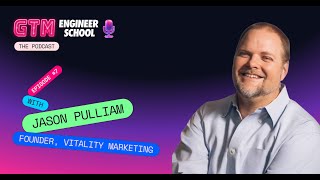
Jason Pulliam, founder of Vitality, explains GTM engineering as building infrastructure that turns signals into revenue. He walks through a mid-market M&A campaign that targeted 5,000 prospects, generated 50 replies and 5-6 deals, and turned a $40k spend into several hundred thousand in fees. He emphasizes messaging and authenticity over AI shortcuts.
Questions this video answers
"Building the infrastructure that turns signals into revenue."
~5,000 prospects (hosts also referenced ~6,000 earlier).
About 50 replies.
Around 5–6 deals (hosts mention six; Jason later says about five).
Campaign cost ≈ $40,000 and generated several hundred thousand dollars in fees.
Chapters
Hey, what's up, GTM Builders? It's Jared and Mateo, and you're back at GTM Engineer School, the podcast. Joining us today, we've got Jared. Jason Pulliam in the house. Yes. Founder and fractional CMO of Vitality marketing firm and one of Octave's most outspoken power users. Jason helps companies in the $1 to $20 million range, helps the founders rip the soggy offer label off their product, nail a hook and roll out quick win outbound plays that actually tie back to revenue. And that's what everybody wants. So if you are living on LinkedIn like you've seen his hot takes on deliverability, perplexity, power research, and why campaign quality always beats warmup tools every day of the week. So long before Vitality, Jason racked up ops creds, running enterprise software projects at documentation and even cutting his teeth at Best Buy. Geek Squad. Yes, that was his team's name. He's been automating chaos into process since Dial up for decades now. So today we're going to dig into his stack, his framework, and the tools he uses to prove ROI in 90 days or less. That's going to be awesome. Jason, welcome to the pod.
Thanks. The introduction is probably the most exhaustive I've heard, so I forgot that I even dealt with Dial up at one time in my life. So there's all your signals right there.
We're going to kick this off with a little bit of dictionary DHM Engineering. We all get this question a lot. What is it? How would you define it?
For me, the whole idea of GTM engineering. And for the record, since I've done marketing for so long, GTM always is Google Tag Manager. So it's always been like someone's taken my word and messed it up. So GTM Engineering, I always have to remind myself, is no longer Google Tag Manager. But to answer your question, ATM engineering is building the infrastructure that turns signals into revenue. So it's sales ops and marketing automation, but the tooling and the data are kind of where the decision making converges to move the money.
I think that might be the most succinct definition I've heard. Very useful. Turn signals into revenue. Yeah, that's great. So you have been around in the age before DTM engineering. What was it like then? What's it like now? What are the big differences? What can you do now you couldn't do then?
I think, really, when I think about, I've always liked automation. Messaging was actually second. So if I were a GTM engineer before, I probably would Be most obsessed about all of the cool signals and ways that you can run automations. But I guess you could say before the GTM engineering era, because I'm already looking at it from a timeframe. We were a slave to the tools. We had limited tools that we could use. Zapier was probably the most common and power user way to connect things. APIs didn't really exist. Most companies didn't feel the need to put an API out for you. So basically your stack dictated the motion and now the stack conforms to the motion. So builders design for control and not convenience and you can build some or all of your own stack. Now with lovable or cursor.
We're definitely going to want to get into that. But first we have the lightning round. Mateo. What does Jason win if he wins the lightning round?
Some hair I want. Can I have Mateo's hair?
That's going to be a hard one.
All right. What's second?
All right, you know it. Easy, easy answer, easy question. Maybe give us some colors as to why, but favorite CRM, HubSpot, Salesforce or ITO.
Neither. The SaaS moat is eroding, so I prefer a custom setup that adapts to my workflow, not the other way around. You can run a lot more than you think inside of clay and Even others like ReviOps, they store your data and then you can bring it back inside clay. So I like more flexibility than anything else. So even with high level, it's kind of like Zapier meets CRM meets something else. Like, I just think the bigger players of HubSpot and Salesforce are going to really have to rethink how they approach the marketplace because most of the time I found it easier to build something or the client's already contacted a developer and they've built something that just works better for their needs. So it's going to become far more niche.
Yeah. Never had. Never heard his perspective like, sounds super, super interesting. And if we switch gears to top LLMs clone versus ChatGPT.
Yeah. So what's your top? Another banger for you? I like Typing Mind because I want the cockpit and not the airplane. So when I'm wanting to use LLM, I'm not. I'm not looking for like the one that's going to solve all my problems. I'm looking for the one that's best for the role. If you've never tried Typing Mind, you can plug in every single large language model into it and then even have it run side by side. Because sometimes I don't know if I want the output of4.1 or if I want to see what GROK has to say. So I'll run it in tandem, asking it questions and it just goes down the screen and it keeps saying which one do you want to work off of? And you say this one. But it's, it's far greater than that even because of the fact that like for example, what's the newest GPT? Was that O3 Pro?
Oh, three.
Yes.
Yeah. And so I don't want to go pay $200 just to have access to it, but with typing mind, I can just type in my GPT API key and I can use it directly inside typing mind and ask it questions. So I just pay per API call instead of actually paying a monthly subscription. Also, it's just frustrating for me. I know this is a lightning round. This is not very lightning, is it? But you've touched on my spot. Yeah, but I don't like having to go have a hundred different subscriptions. So if you think about typing mine, you can go buy an open router subscription and then inside typing mine, drop your API key in and pull in every large language model you want. It's just all there. So there's my, my, my long analysis. So GPT and Manus do the heavy logic workbook manipulation and then Claude does any type of kind of project management if I use their desktop app. Cause I like their ui. So if I had to choose between those two, that's how I would choose.
I'm learning so much already, man. Keep it going. And top enrichment tool, probably clay because.
It'S kind of the zapier of our time. It's just a connector into everything. Even if I think about clay, I'm not even using the enrichment tools that they have native. I'm using their API and going and bringing in my own tools. But I really think at some point we will look back and say clay was the zapier of, of, of the yesteryear. So there you have it.
I love this metaphor, man. Top GTM engineering tool, Octave.
I mean, I guess you kind of alluded to it in the beginning, but messaging, no matter what else you do, if you don't have your messaging right, it doesn't matter how cool and automated and signal Red your, your whole GTM is. Go talk to some of the top guys who are sending huge amounts of mail. They're partnering with some real people who are solving real problems for clients. Like it's just, it's successful because what they're selling is successful. When Someone comes to me and has a product, I'm looking for a unique factor. I can't help you if what you're selling is just like everybody else. But most people do have a unique factor and they just haven't drawn it out. They haven't really sat down and said like here is really what it is. And the reason why is that it's hard to figure out what your value prop is, if it's your value prop. Because it's the curse of knowledge. You become the expert and you suddenly lose the ability to think in non abstract terms. The definition of being an expert is being able to think in abstract. But as soon as you can think in abstract now, you can't reverse out of it, you're stuck, you've gone down the path and you can't turn around. So having someone else come in and say, okay, you do some really neat stuff, you can answer and solve any problem, but at the end of the day, what do you do? And so Octave really kind of helps. After you figure out the answers to those core fundamental questions, you can talk to Octave about who has these problems and how can we talk to them about. And so it's just a great messaging like partner. Like we do a lot of work before we go into Octave, but once we're in Octave and we already know what our I call it the elevator pitch. What's our elevator pitch? If I can get to that point where it's that succinct, then I can go Octave, help me talk to CIOs, help me talk to CFOs, help me talk to this middle manager. And it can, and it can construct all that together and then what do.
You do from there? You bring it into play.
Yeah, you can do it in two different ways. I think a lot of people have seen myself and others use their high powered packages and say like, oh, I've got to do an AI one to one email for each person. It is slick, it is cool and it does take a lot of work to get it to there. But if you literally just use their entry level program and helped you figure out who your target market is and how to talk to them, you can build a standard template and send it out in cold email and it's still going to work. It doesn't have to be one to one to work, but the message has to stick for it to work. And so I really like how it helps me especially think about all the clients that I come into that I don't know their specialty market right away So I have to go research it and if I know enough about how they solve a problem, I can go into Octave and say, okay, Octave, how would I talk to this person? And they're like, okay, here's the top people you actually want to talk to. You want to talk to the grocery manager, not the CEO or like it's going to go and like kind of break down who the right target audience is and then it knows their pain points because you've given it broader sweeping strokes. And that's just another value of how it thinks about the problem. Sure it has really cool features where you can do one to one and have it draft emails, but even at a very fundamental level, it just helps you think out what are the problems you solve for these different categories of people.
And that happens while you're building out the library. Right.
And then don't that playbook. Yeah, yeah, they have the prospecting agents new. Heck, I don't think I've really even used it in production. I've played with a lot of the new features, but at a very fundamental day to day operation, it's the playbooks and who I'm targeting and what problems I'm solving for them. Because if you really know who you're going after inside and out, then you can really start to iterate on top of your messaging. Because every single time I start with a new client, as long as I think I can take their product and do something with it, I'm ready to go. I'm like, I don't know what the answer is, but I'm going to be able to solve it. So I start with that and then I build on top of it. And then every two weeks we're cycling the email and saying, okay, we tried this strategy. It got replies, but they were nos. Okay, well I got replies. So then I'm like, what could turn the no to a yes and or at least move it further down? Like, I don't want to just like, oh, I'm not interested. If I get that I can't do anything with it. But if they give me any inkling of a piece of information that says like, yeah, we do have that struggle. Okay, we got a live one, what are we going to do? And so it's like, okay, we got a, we got. I use typing mind and say okay, you know, and I feed it, here's the other value. Octave lets you download a playbook into just markdown format. You can load that back into typing mind or GPT, whatever you want and say, here's how they replied. I'm trying to continue this conversation. What can I say that's not going to scare them off? And then manually, we're making those replies in the beginning because after 60 days, we've built about. Turns out about 60. So 50 or 60 different replies in a Google sheet, and we've loaded that into Typing Mind as our human in the middle to do replies back to these clients. So when they say, like, oh, I have this objection, Typing Mind already has a knowledge base loaded up of all the replies that we've manually built, and now it's making the whole process to go faster.
So every couple of weeks you test a couple of new playbooks.
Yeah. So a lot of times we even move faster than building a new playbook. Now, sometimes we do build a new playbook, but other times, without even going back to Octave, we're just like, okay, the hook worked because Octave is helping you, like, get in and get replies. But then when they start to reply back with like, these nuances, we bring the subject matter expert, the client, into the loop and say, we, we don't know how to respond to this, but if you tell us what your reason is, we will clean it up. So, like, a lot of Times It's a WhatsApp, a Slack message where we're just like, here's the reply. Give me five bullet points of how to continue this conversation and how you solve it. And as soon as they do that, our team back on the backside has typing mine loaded up with that entire playbook. There's like the baseline, but then it's also got a Google Doc that we've created that has the replies that the client's already given us. So every time the client gives us new information, our playbook, combined with the Google Doc of replies that we've crafted, continues to educate our virtual assistants, our SDRs, whatever you want to call them, on how to reply to future messages. Because after 60 days, I can normally eliminate the subject matter expert, the founder, from the loop because we already know all the answers. But those first 60 days are really pivotal because we're talking to that subject matter expert every day, maybe five times a day. And like, this guy's interested, but he's not ready to book a time with you. How do we continue this conversation? But after about 60 different variations of that follow up, we know it. We're ready to go. We can go faster.
Fascinating. I know we dug in a little deep there, but that was truly the.
Most non lightning round ever.
I'm loving this lightning round. Guys, keep it going. And you know, there might be like, I'm, I'm actually like super curious to hear this one out. Like, just because we're, we already talked about off tip so much. But what's your most underrated GTM tool?
Email Bison and Email Guard. Nobody really talks about them. They're, they're kind of almost obscure. You can't even sign up for them live. You have to like make sure the product is a good fit for what you're trying to sell. But they play inside of the world of an email sequencer. So like an instantly or Smart Leads is kind of the two. I mean they're the two juggernauts of the world. But for what I want, I want such granular control. An Email Bison and Email Guard let me go deep on deliverability, which is the silent killer of most outbound emails.
Very cool. And so like you said, you can't sign up for them because they're still in beta or they're not in beta.
But they want to make sure that you're not going to destroy their platform. So you go on the website and say like, what are you going to be sending? And if you say like, I just plan to send a bunch of garbage out, then they don't want you on the platform because that's not who they're targeted for. So they're targeted for basically agencies. I don't think they're designed for a one off kind of situation. They want people who already know how to send cold email. This isn't their first rodeo, that kind of thing.
Power users first.
Yeah, yeah, exactly. Power users first. But that helps them limit the amount of tech support they have to give because they're not helping somebody for the first time set up their first email outbound campaign. Like if they're helping anybody, it's that there's some, you know, weird shift in the marketplace and they're like, okay, here's how you reconnect every 90 days. Your outlook account or something like that.
Love it. And so that marks the end of the most insightful and insight jam packed lightning round of the series today. And with that, let's switch gears and talk a bit more about system design. Like when you build GCM stacks for your clients, how do you approach that? What are the building blocks and the underlying principles of other process? Sure, walk us through you.
So fundamentally I care more about how it works than how fast it scales. And I think that's maybe that's not the most money making concept because I know some people have scaled quite large and they're quite successful. But I'm very curious about how everything ticks. Also, my clients don't have unlimited TAMs. So that total addressable market, or you might have heard spam, the tam, we don't have that option. We, we don't. We have a handful of people. I mean, at, at times I've had less than 2,000 people in the entire world that I could reach out to. So I can't afford to just keep trying different things at high volume. I have to have every single time something doesn't work, I'm going all the way back. If I get a bounce, I go all the way back into clay and see who I verified it with. I want to know like, why did that verifier bounce this email? Did they call it a valid, valid catch all like I want to know at that granular of a level. So I've run almost every email sequencer, enriched data through clay and even my own API stack and things like Airscale and Better Enrich are some of the obscure tools that people have probably never heard of. But if I can get access to the founders, I can ask a lot of the questions that I care about, like how did you actually get this data? Where did you get this data? How did you verify it? How does it flow from you to how I get it and then track it more? So that really is a very specific GTM type stack that I've built that fits my needs.
I love it. When you do do these builds, is there any trade offs that you incur in and if so, how do you approach that?
Yeah, there definitely is trade offs. I think when you're working with founders that are in beta or new products that aren't mass, you know, the general populace has heard of and used, you're trading the polish for raw power and visibility. I want to see every signal and more importantly every single, every single failure point. Most off of the shelf tools hide that and it's just, it's a cleaner user interface if you don't have the alarms ringing constantly.
Of course you got to need to, you got to apply some creativity and strategy to understand what the actual alpha is, specifically through your company, industry and product. Right?
Yeah. And I learned more from what doesn't work than what does work when it works. Especially when it works right off the bat. Great. But now I know that in how as soon as it fails, I already don't know why it fails and I have to still go through that learning pain. If it's kind of 50% working and 50% failing, then I can take the part that works and troubleshoot the part that doesn't. But I need all of those signals saying, this broke down here, this broke down here. So I can go, okay, do I need to clean the data better? Do I need to source the data better? Is my messaging off? I have to figure out all of these pieces. And so it's based on, I mean, did I get a reply? If I can get a reply, I know the data's pretty good as a live person on the other end. But then if they consistently say like, I'm not the right person, okay, where did we get this signal from in the first place that we thought they were the right person. So it gets that specific.
Makes sense. And if you get like we would. You would have only three tools in your GTF stack, then what would they be?
Yeah, that's like asking you to pick three of your best 50 kids. Like, that's, that's a tough question. But I guess if I had to pick three, it would be Email Bison, Octave, and Typing Mind. Those are everyday single use tools that we use. Everybody's trying to become the clay replicate. So I think that clay will be still the tool that we use. But if everybody's got a clay alternative, we'll just see where that goes. They're the juggernaut. So I had to eliminate one and it had to be unique because everybody says clay. So those three are probably the most unique to our workflow. Everybody uses clay.
I love that you're not the first guest who when asked this question, refer to the kids. Every kid's metaphor.
Oh, that's funny.
But you know, like, it just shows about the passion, like and like, passion for the craft of like GTM engineering professionals and the affection that we will develop for our tools.
Yeah, I think the only flip side to that is unlike kids where you like, you know, you love them and keep them forever, I think GTM engineers are really quick to be like dropped, drop this one on its head for one that does a better job because I'm married to some of my tools because they just do such a great job. But on early tools where they're not like my true kids yet, it's like, oh, you don't do this worthless to me. And I'm just drop them because I don't have time to invest in them. So that is the delineator.
I love it. So let's not be great parents for our tools.
They have to earn it.
Well said.
Well said.
Jason, let's talk about workflows. Would you be so kind as to walk us through, let's say your favorite, go to Marketplace, favorite one you built. And I'd love it if you could talk about a specific client project, maybe what the challenge was and how you strategized.
Yeah, yeah, okay. It would probably have to be a client that was a lower mid market M and A space. And they wanted to reach certain types of founders and owners who rarely responded to their existing outreach, let alone a sales pitch from a business broker, which is essentially what they became in the mind of their target. So we combined some deep researched emails with tactics from direct mail. Follow up, we built a highly qualified list down to their specific office addresses because that's going to come into play based on the client's own kind of napkin sketch criteria that they came up with. So the cold email included a line that said, I'm mailing you a package with more details to this address. But it was subtle to where I'm about to overnight you a package sight unseen. So they felt obligated to reply back whether or not it was the right address or not. So we weren't, we hoped that was the right address. But if it was wrong, they would say, whoa, whoa, whoa, that's not the right address. They didn't say don't send it. They said that's not the right address. So we knew the level of interest based on if they said either because sometimes they would say don't send me the package because they would feel bad. But it got my reply rate up. And so the other thing was we overnighted the packages. We didn't tell them this, but we overnighted them and stamped them confidential. So we didn't have that same human gatekeeper because these are owners and founders of, you know, lower mid market companies that we want to talk to. They probably have somebody doing all their mail form and saying, here's the stuff that matters. And I threw away all the junk. So we made that physical package to them so that it, it kind of made sure that they got that product.
Fantastic. You thought that through every level.
Yeah. And the interesting thing is with only, I think our targeting was 6,000 people in the US that they wanted to work with directly and it only had, I want to say, 50 people who replied and then six who turned into actually real deals and they turned that into a couple hundred thousand dollars worth of bottom line for them. So our, our $40,000 system worked and they're like, hey, can we do it again? And I'M like, okay, but now you have to come up with new targets. Like, we just can't keep sending to the same people over and over. But, you know, so how many packages.
How many people replied? How many did you send out to?
I think we had about 5,000 or less that were our targets. And we had 50 people who replied at some level of interest. And out of those 50 people who had some level, like we sent about 50 packages. So of those 50 people, they got about five who actually turned into money. So but if you take that $40,000 is what that campaign cost them, you know, start to finish and running it into several hundred thousand dollars in actual fees that they collected. So it was a win. Win.
That's, that's, that's wonderful. All right, we're going to shift gears and talk about future trends and skill sets, so get out your crystal ball.
Okay, well, if you know one of my favorite guys, Taleb writes the Black Swan, the further out that you are are projecting, the more likely you're full of shit. So, so, so just know the further out you're asking me to speculate, the more likely I'm just full of it.
Oh man. We all love some Black Swans events and I think like, we're in a time where like, we're just like the.
The space is ripe for so is. And the empirical evidence can be sometimes elusive because of the fact that AI can make things look like they're there when they're not.
Oh my God. Yeah, we should probably like exactly like question on this. What do you mean by that? Tell us more.
Authenticity and brand are going to matter in the AI. So I mean, I guess that really is a forward thinking one that I'm, I guess even though it's forward thinking, I'm already saying that I think it, I think it's good. That's a good one. Now in an age that it, everything is now free and unlimited and it looks real, but it's fake. In an age of fake, being authentic now stands out. So if you can be authentic, your brand now matters more. Because if everybody's selling the same stuff and doing the same stuff, then what makes you different? It's your brand and your history. I think even when people are doing hiring now, they're going back to your LinkedIn and looking at like, what have you published that is significant or meaningful?
Very, very cool, man. Yeah. And I mean, obviously, you know, like, authenticity can be very subjective, right? And like truth can be also manipulated. So like, I'm just like interested as to how you define that authenticity. And how do you also like verify that? You know, like considering it's so easy to, to package, I guess.
Yeah. And it's funny that you say package. I looked at the yogurt I ate today and on the top of it it said with room for toppings. And I was like, that's just a fancy way of saying that you didn't fill it to the top. Like marketers, we ruin everything. So when it comes to authenticity though, your brand is a collection of people believing in you or not believing in you. And it depends at what stage you're at in that brand. But when I look at other people and I was telling you about some of the products that I'm testing and using for enrichment, it's because I can talk to the founder and I can kind of vet out like, okay, where exactly did you source this? And if they're elusive to my questions, then I know like you're just reselling it from someone else, but if they know exactly how they got it and how it got to them, you can kind of use that fact finding mission to understand. And it's the same if you buy inboxes for cold email. The further you are away from the source, how can you make decisions about that? Because you're too far away from 80% of the answers are within 20ft of where the work's being done. I love that saying, but it applies to us sourcing and cleaning and getting signals and how much noise is in that signal. It is totally about the skill that I guess you kind of alluded to is you kind of have to be good at vetting out the bs. So I guess as marketers, I think sometimes we're a little bit better at that because it's the same BS sometimes that they put out.
So yeah, stay close to the source and basically build experience. And if you want taste, you know, like to distinguish like the chocolate from the non chocolate.
Yeah, yeah. And, and even, I mean you bring up taste, but that's another place that AI can't compete with a real human. So if you have a history of, you know, design can go and create videos, movies, pictures, animations right now, but AI doesn't have good taste necessarily. It does what you tell it to do. So that may not even have been your, your direction you were going, but it really triggered a key thing for me. And how can GTM engineers stay ahead right now? It's not just knowledge. I mean, AI has all the knowledge, so that's commoditized. But taste quality and thought process that AI can't replicate. Because when you ask AI a question, you've already given it parameters on how to answer. That's, that's all that's left for humans to do now is have, have a level of taste and expertise that AI can't replicate.
What else is there that you think GTM engineers should really learn about to stay ahead?
Study great copywriters. They laughed when I sat down at the piano. If you've done any kind of copywriting, that is John Caples and he's just one of the many who is a direct response copywriter. I'm going down a rabbit trail already. But I find so often when people are looking to do this GTM engineering, it's just what is the hottest, fastest, latest and greatest stuff. But if you're working on marketing and direct response copywriting, you want to go back to the people who actually were the first to like solve it at a large scale. They were putting stuff in magazines like some of these guys go back to like the 20s, like. But their, their logic still holds true because it's a fundamental principle of direct response marketing. So I'm never looking for the latest and greatest in copywriting. I'm still looking for how can I take like Eugene Schwartz breakthrough advertising book, dump it into AI and then say, okay, now you're Eugene. Help me think about this problem in a different way. And so Gary Halbert and David Ogilvy, like, those are some of the great, some direct response that I like to leverage. And here's a secret. Where's my. This is another book that you should read. This is a great book. It's called Made to Stick. And so. But the secret is AI, it's copyrighted material so you can't talk to it. But if you gut the book. I'm trying to. I just gutted the guts of the book and I scanned it in. Now that's my knowledge base. And now I can go and say, okay, Chip and Dan Heath, I've got a question leveraging how you think about this issue. And now they're going to tell me exactly how they would leverage it because they have the entire book as their corpus of knowledge. So that's, that's maybe that's my tip.
I think this is worth sharing with our listeners. So you read the book and what do you do? Do you take pictures like page by page and then uploaded those pics?
No, no, I, I bought a commercial scanner so I can do it in five minutes. The hardest part is when it's A nice hard hardback book. It hurts me at some kind of level to cut a perfectly good book. So I even the ironic part though is that they literally have duct tape on the book. And so I was like, oh, so I'm going to really just duct tape the book back together again and it's like now it's more authentic.
So that made me, that made you feel like a little less guilty about it.
Yeah, yeah.
It's for a good reason.
Yeah. I don't know if you've ever worked in a retail chain that sold paperback, but they don't actually send the books back. If you don't sell them, they cut the COVID off on a paperback book. I'm like, well, I'm just pretending to that this book didn't sell and I can cut the spine and the COVID off, but for some reason the hardback still pains me a little bit to destroy it. But it's not really destroyed, it's just a PDF.
And last but not least, like now, you know, like we talked about a bit about, about some skill sets that, you know, GTM engineers should learn about.
Yeah.
How would you advise those aspiring ones to actually go out there and acquire these skills?
I would focus on building your own database of outbound in the sense of subject embody and tone so you can start to see your pattern. So if you've built 50 different email campaigns with a hundred different subject line embodies, track how many replies you got per one and then you can go dump it back into AI and say what are the patterns across these and why do you think they worked? Because you need to spitball and say how do I talk to these, this segment, this icp? Even better because once you can figure out how your ICP thinks, it answers a lot of other questions downstream. So if you solve the upstream struggle of what problem am I solving for my icp? It solves a lot of other downstream problems. Which is ironically another book by Dan and Cheap Hith is Going Upstream to solve problems. So Dan, this is for you.
Shout out to Dan.
Jason, for somebody that is just getting going with go to Market Engineering, maybe they've been doing it six months or so and they've got, you know, six or eight hours this weekend. What's a good use of their time to, to up their game to get a little bit further. Like what's a practical tech that listeners can, can implement?
Man, I'm so stuck on learning more, more more fundamental of the messaging than anything else. That's my, my, my biggest call out is like learn better messaging, spend eight hours even. Again, if you had to pick one book to help you understand messaging, it would be the Made to Stick book. If you read that book, you will so much more understand why some of your camp because you're going to see your campaigns and your messaging, you're going to go, I'm not leveraging that at all. And then it's because it's a very practical book. It's not at a high level where you have to pick it apart. Some of the other books are a little bit more academic in nature, I feel like. But Made to Stick is like down in the weeds. Like here's how you think about it and here's examples. So if you have 8 hours, read.
Made to stick just like buy 10 copywriting folks got them apart the whole week like doing that.
Yeah, I spent like 300 bucks on a scanner and haven't looked back since. I've just been cutting and scanning.
Jason, where can listeners connect with you?
Sure, sure. LinkedIn is probably the best place to find me. I mean you can check more about me on my website, but LinkedIn probably has a better feel of what I'm focused on, what I care about and it's easy way to message me.
Fantastic. Well, this was really wonderful, Jason. I thoroughly enjoyed the conversation.
Same.
Today. In this conversation Jason explained how go to market engineering turns signals into revenue. Turning signals into revenue. One of the best definitions I've heard. Using tools like clay, Octave typing, Mind email Bison, email guard, Airscale and better enriched to nail deliverability, craft precise messaging and crush these outbound strategies. So from Jason's lightning fast insights on LLMs very unique takes to describing a killer M and a campaign that turned 50 replies into six big deals. Jason showed us that understanding your unique value prop and being laser focused on quality beats volume every time. So thank you again Jason for your time today and I hope we get to stay in touch with you.
Thanks for having me.
Thanks a lot Jason. That was awesome.
More from Matteo

Roll Claude out from one laptop to the whole GTM org | Sam Gong & Zach Vidibor









